
Q: Would you describe for readers why and how you chose to create a protagonist with extraordinary sensory perception?
A: I guess you could say I’ve always felt at home with “otherworldly” people—those drawn to metaphysical explorations, including the development of intuitive capacities.
Starting in childhood, occasionally I’ve met individuals whose uncanny ability to access information instantly, with reasonable accuracy, raises questions of altered perception and nonlinear ways of knowing. Throughout decades of reading, study, and experiential learning, I’ve explored the often disparaged paranormal and spiritual dimensions of consciousness that can guide human choice: signs, visions, unusual perceptions, and dreams.
In my protagonist, Avery Conlon, I wanted to create someone who embodies and also wrestles with those dimensions. Not as a fantasy figure, but as a complex human character at the centre of a literary novel. An individual who, like anyone struggling with being different in a mainstream culture, confronts challenges.
Here in Canada, a hundred years ago, what would happen with such a person? And for that matter, what challenges do individuals claiming to have heightened perceptual abilities experience in our society today?
That raises the subject of research—one that’s particularly important to me as an author of historical fiction, writing in the tradition of literary realism.
In the 21st century, we may be tempted to take for granted that books on metaphysical subject matter are available for research. Nonfiction authors’ investigations of the “supernatural,” once relegated to bookstores’ back-corner occult sections (my old 1980s haunts), have been recast as studies of “supernormal” phenomena, finding prominence on shelves of increasing length.
Principles of quantum science, bordering on the mystical, and for years considered the realm of a few brilliant, unconventional scholars, have been distilled into works now accessible to a broader readership.
Publications by self-described mediums and psychics are more common and popular than ever, as are accounts of near-death experiences, instances of non-local conscious awareness, communications with nonphysical beings, and so on.
Yet the emergence of such books and other resources does not make the ideas they contain mainstream. Arguably, the veracity and meaning of such claims is ever open to interpretation and challenge.
Max Planck, the originator of quantum theory, said science would never explain the essential mystery of our universe—let alone our individual lives—because “we cannot get behind consciousness.” What is consciousness? Who are we? What is this plane of existence, and what (if anything) lies beyond it? What is intuition? And what is possible when an individual embraces and cultivates their intuitive faculty?
Among certain traditional, Indigenous people, an old proverb serves as both a guidepost and measure of a society’s health, and a warning: Those who lose dreaming are lost. When I look at our present-day world, I feel the relevance of that warning.
How do people with enhanced perceptual abilities navigate in a prevailing culture that does not accept or relate to their gifts? Are they dismissed as crazy? Cut out of high-level decision-making? If so, at what cost?
What becomes of a society in which leaders rely on only a portion of our human faculties—that is, on logic, observable facts, and the emotional comfort of social norms?
Those are some of the questions I hope River of Dreams raises. I wanted to write the novel in such a way that even a devout physicalist can enjoy it for the story and suspense. To do that, I had to find Avery’s unique voice and character—her own questions. I also had to bring her narrative to life through sensory details, so that the reader may experience her world as real and recognizable, and Avery’s perspective as one that doesn’t push views. But simply points to possibility.
And of course, she works in a 1920s mental hospital. What would a clairvoyant nurse do in such a place? Keep her abilities a secret? Or risk being viewed as “mad” or “feeble-minded,” and unfit to do her work? The work of helping women go free.
Today’s health care system, with its impressive scientific advances (to which I owe my life), nevertheless falls short of providing solutions for many suspended in long states of disease. Increasingly, individuals have turned to complementary, alternative and often intuitive modalities, seeking greater peace, physical ease, and mental wellness.
Is it possible that, in a world fixated on outward frontiers of scientific technology, our greatest frontier, as yet to be universally acknowledged and developed, lies within?
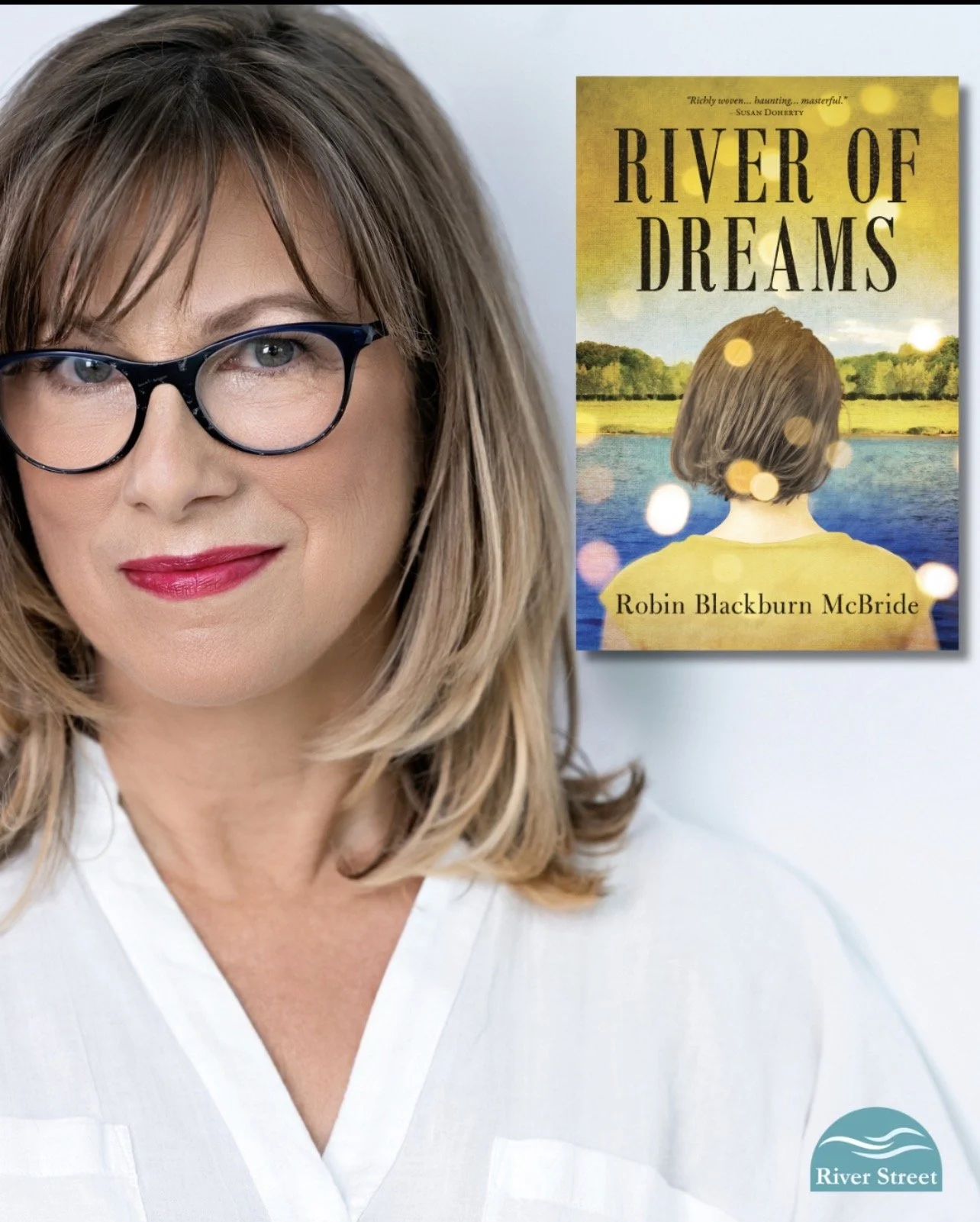
About River of Dreams (Guernica Editions, 2026):
A near-tragic accident. A life-changing phenomenon. A calling she couldn’t foresee.
Toronto, 1914. Avery Conlon’s world turns upside down in an instant. Overhearing a comment that casts doubt on her blood ties with the mother raising her, the despairing twelve-year-old runs away—but ends up falling through a river of ice. Dragged out and on the edge of death, she awakens with secret, heightened powers of perception… and a vision of a strange woman.
Learning to navigate her new abilities to sense what others cannot, and dreaming repeatedly of a mysterious silvery boy, Avery vows to track down the truth of her past. As a young adult in the 1920s, she becomes a nurse at a hospital for the insane where her gift for healing leads to possible answers about her mother, Avery’s second sight, and whether her uncertain future can include real love.
Will Avery step into her greatest destiny?
In this enthralling narrative of one woman’s journey, author Robin Blackburn McBride explores the power of intuition and giving voice to the silenced. And as the character grows from a vulnerable young girl to a strong person seeking to take charge of her fate, readers will delight in this suspenseful tale of self-discovery and romance.
River of Dreams is a captivating work of metaphysical fiction. If you like feminist themes, historical settings, and elements of the supernatural, then you’ll love Robin Blackburn McBride’s enchanting story.
About the author:
Robin Blackburn McBride is the author of two novels, River of Dreams and The Shining Fragments, and book of poetry, In Green, all published by Guernica Editions. Her short stories and poems have appeared in a variety of North American literary magazines. Find Robin on Substack at Awakening Wonder.