
Q: Your novel London Gothic has been described as a “propulsive read”, “a funerary-edged love letter to southwestern Ontario”, and a "murder mystery”. Did you set out to write a page-turning crime novel?
A: The short answer is: no. The long answer is, of course, longer and more complicated.
A few years ago I stumbled across excerpts from an interview of Canadian novelist Timothy Findlay by Graeme Gibson (Margaret Atwood’s late husband), where Gibson said that Findlay’s first novel, Last of the Crazy People, reminded him of “Southern Gothic”. Findlay replied that it was – in fact it was Southern Ontario Gothic. I had not heard the term before but I ruminated on it, especially since I was born and raised in the heart of Southwestern Ontario — London. When the image of a father and son burying a body late at night in a field came to me (as it does to one), I decided to pursue the image through this genre of Southern Ontario Gothic.
I read, for the most part, “literary” fiction, and consider myself a literary writer – knowing full well how pretentious that sounds. Suffice it to say that I focus more on character and place than I do on plot. And my approach to writing involves creating a comprehensive outline, making extensive notes of characters and places, so I began by focusing on everything around “gothic”. The only gothic literature I could recall reading was Mary Shelley’s Frankenstein, so I dove into Edgar Allen Poe and H P Lovecraft, adding in Stephen King’s The Shining for good measure and, for something completely different, re-reading Toni Morrison’s Beloved.
After all of that, however, I was interested in creating my version of Southern Ontario Gothic which meant there was nothing supernatural happening. I came to describe London Gothic as a literary novel where monsters are the actual people in our lives and ghosts are the memories that haunt us. The image of a father and son burying a body became the opening scene and understanding what had happened, and why, tied everything together. I needed to focus on what was revealed and when. I understood that pacing would be critical. So, on the one hand, I approached London Gothic by focusing on character and setting – place became fundamental in order to show the reader southwestern Ontario, particularly the city of London. Yet, on the other hand, I had to pay attention to the events that surrounded the murder. I structured the novel with alternating chapters to explore the lives of the people concerned during the 1970s – the murder takes place in 1975 – and the revelations made during the chapters set around the Victoria Day long weekend in 1984.
When I finished a draft that I was happy with and shared it with a few readers for feedback, the consistent reaction was that the novel was a “real page-turner”. I remember sending the first hundred pages or so to DarkWinter Press and when Suzanne Craig-Whytock responded it was for me to immediately send the rest of the novel because she desperately needed to know what happened. Obviously, I was thrilled with the response but I took a step back to consider it and I quickly realized the power that plot has on readers. Not a startling revelation, for sure, but an interesting experience for me. Ken Harvey, a fellow writer and good friend, once told me that when he taught writing he would tell his students to read mystery novels in order to learn plot. From first hand knowledge I now understand the truth of that advice.
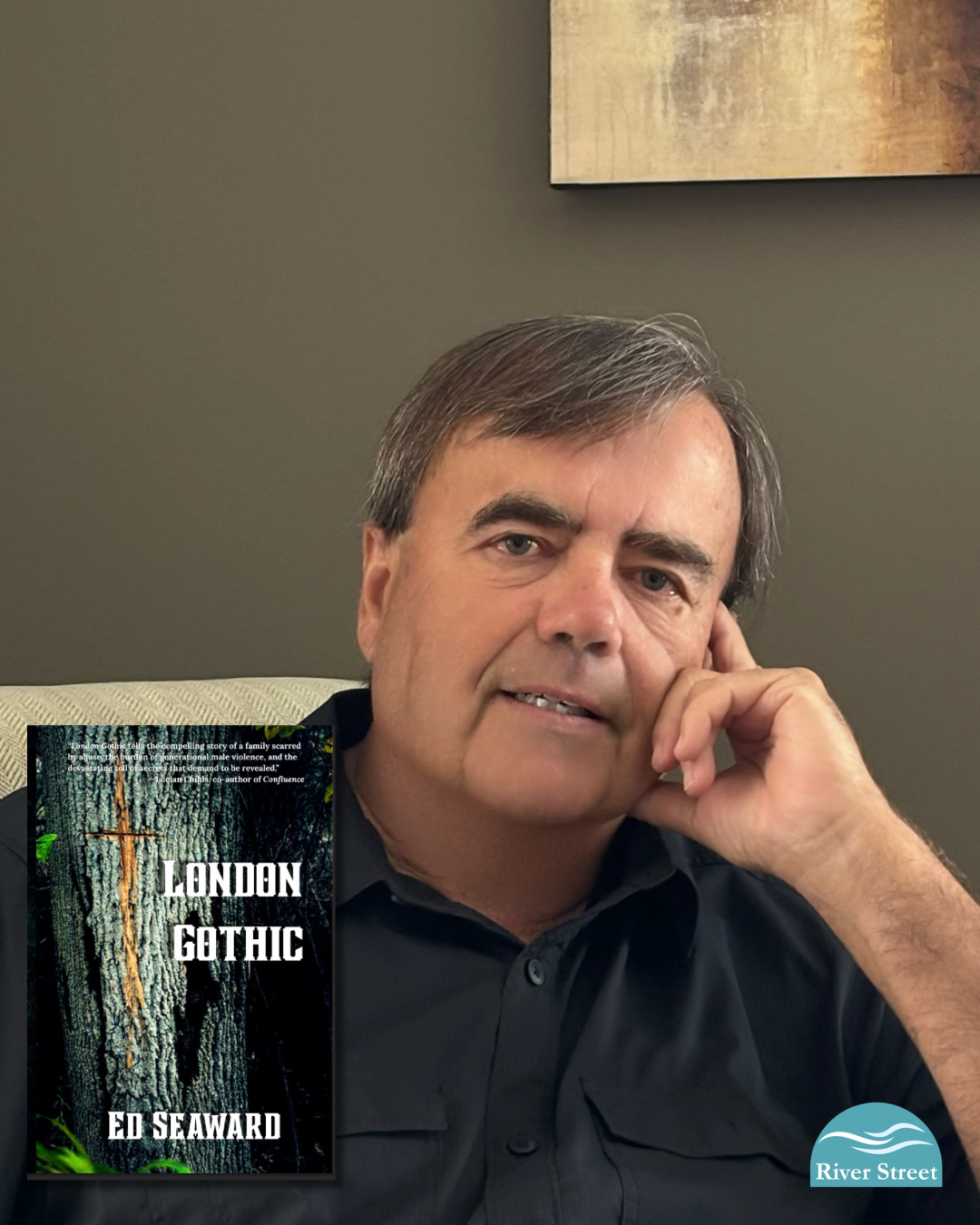
More about London Gothic (October 2, 2026 with Dark Winter Press):
In 1975, John Caine and his nineteen year old son Ricky bury a woman near a clump of trees in an open field on the rural outskirts of London, Ontario. In 1984, seventeen year old Bethany Caine is haunted by the disappearance of her mother nine years previous. Her father and brother insist Thelma Caine abandoned them one night, evidenced by her brief goodbye note. Having already escaped the house dominated by her brutish father to live with her lover, university student Angela, Bethany presses much older brother Ricky to reveal what actually happened to their mother.
Structured along alternating timelines, with chapters exploring the Caine family in the 1970s interspersed with chapters set around the Victoria Day long weekend in 1984, London Gothic unfolds a story of violence and incest as those who truly love and support Bethany attempt to uncover the mystery of Thelma Caine’s disappearance.
Ed Seaward’s novel London Gothic will be published by Dark Winter Press in October, 2026. His debut novel Fair was published in 2020 by The Porcupine’s Quill. Awarded the Silver Medal in Urban Fiction by the 2021 Independent Book Awards, Fair was also shortlisted for the Canadian Authors Association’s 2021 Fred Kerner Award. His screenplay, Mother Daughter Happiness was a finalist at the 2019 Pasadena International Film Festival.
Ed’s web publication Profiles From The Bright Side Of The Road features writers, actors, artists, environmentalists, family and friends. The Newfoundland family series, “It’s Sharpe to Stay Home”, was republished by Downhome Magazine.
After 30 years in the corporate world, Ed now writes full-time. He and his wife Barb live in Georgetown, Ontario.