
Content note: Excerpt contains suicide and grief.
Prologue
I’d booked the comfort option to take us to the funeral home. The Uber that arrived was a luxury town car with tinted windows, like something that would pull up at a red carpet. We climbed in and sat across from each other, our faces turned to opposite windows—me, my ex-husband Andrew and our twelve-year-old daughter, Frida. We rode in silence, each of us watching Toronto go by, the city hollowed out by the COVID lockdown. Streets empty, November sky washed out. It felt like grief had fallen over the whole world. People were dying from COVID, and my child had died from suicide, and we were all weighted beneath the same lead blanket.
I had screamed my throat raw the day before, and I was ready to scream more. I felt electrified, on high alert. I’d called the police, the hospital, the coroner, yelling at whoever I could reach: “When can I come see them? When can I come?” A mother sees her child first. She should be able to see them last. But this primal right couldn’t be honoured because families weren’t allowed to enter the coroner’s office during COVID.
I yelled enough at the right person that finally a loophole emerged. Funeral homes could show bodies to small groups. So Mars had been transported by ambulance from the coroner’s office downtown to a funeral home in suburban Mississauga. I’d chosen one that backed onto the big green field of my old high school. It was also the only funeral home whose name I knew. During COVID, it was passing for a morgue.
I had called earlier in the day and ordered them not to touch Mars’s body before I could get there. I hated the idea that they might dress them up like a doll or put makeup on their face. I wanted to see them as they were, no matter what they looked like.
Mars had been pried out from under the second subway car at Ossington Station. This had taken hours, I was warned, as if I might not be able to handle the state of Mars’s body. But I needed to see it. If I didn’t, I knew without question that I wouldn’t survive this loss. And anyway, what was there to warn me of now? What could possibly be worse than the worst thing?
While we were in the Uber, my phone rang. “I’m the pathologist who performed the autopsy,” said the woman on the other end. “I just wanted to tell you . . . the body is recognizable.” She spoke slowly and deliberately, as if she knew what I had been bracing for. The pancake. The steam-rolled cartoon character. She seemed to understand that I had fully expected that Mars would be unidentifiable, and she wanted to assuage my fear. But what she didn’t know was that it didn’t matter. I would have wanted to see them if they were headless.
Still, she provided some relief. To recognize Mars was better, of course. In taking the time to call, I felt like this pathologist, a stranger, had extended an act of mercy to me. I wondered if she was a mother herself and knew what I needed to hear. In the forty-eight hours since Mars’s death, there had already been so many gestures of kindness, and they kept coming and coming.
I ended the call and turned to Andrew and Frida, breathless. “They said the body is recognizable! They said we’ll know it’s Mars!”
Frida nodded and looked away. Andrew shook his head. I understood why they couldn’t meet my excitement. Was this what passed for good news now? I saw us in my mind’s eye, this newly shaped family, being carried along the highway in a ridiculous town car, each of us submerged in our own private agony.
My phone rang again. This time it was the funeral director. “We know you’re on the way, and we know you’ve asked for us not to touch the body. But do you want us to shut his eyes and his mouth?” I didn’t have it in me to correct the pronouns.
After a suicide, there are logistics—question after question about what to do and who to talk to. Getting information from police, transit officials, doctors. Giving information to family, school, friends. I work in film and TV, and I know how to keep a production moving through the inevitable crises. In the two days that had passed since Mars’s death, I could feel myself operating in producer mode. It was comforting, in a way, to have all these questions to answer. A distraction. But now I was confronted with a new question: Do you want us to shut the eyes and mouth of your child? How does a mother answer this question?
I thought for a moment about Mars’s mouth agape. They would hate that. “Yes, close their mouth.”
But the eyes, those hazel eyes. Blue for so many years, then hazel.
“If you close their eyes, can I open them back up?” I asked. “No,” she said. “We have to sew them.”
I turned to Andrew. “They want to know if we want the eyes open or closed.”
“Please close them,” Andrew said quickly.
Frida said she’d drive with us but she didn’t want to come inside. My sister would take her to my brother’s house down the street once we got there. Andrew came in to support me, but he felt no need to see the body. I suppose he didn’t think the body was Mars, just the case that held Mars. I understood but I kept thinking of something I’d read years before. The mother of a child who’d been murdered in the mass shooting at Sandy Hook had described the need to look directly at her son’s body, even though his face had been ripped apart by bullets. She said that, as his mother, she was responsible for his body not only in life but also in death. She couldn’t block out the reality of how he looked when he was dead any more than she could turn away from him in life. “If I am going to shut my eyes to that, I am not his mother,” she said. “I had to bear it.”
I moved the phone closer to my ear and asked the funeral director, “What would you do?”
She said, “We think you’ll prefer it if we close them.” She sounded protective, like there was something she didn’t want me to see.
“Okay, then,” I said. “Close them.” I hung up and turned back to the grey window.
My heart hadn’t stopped racing for two days.
Opening the door, I saw Mars at the other end of the viewing room, laid out at a makeshift altar lit with candles. It was a giant, empty room, but even at a distance, I recognized Mars’s familiar softness in the face, the shock of dyed red hair. I heard myself screaming and broke into a sprint. I thought: This is what I should have done that day. I should have run to the subway station. But I hadn’t, even when the calls and texts were coming in, even when it was becoming clear that the announcement all along the Bloor line about “the incident at Ossington Station” was my kid on the tracks.
Why didn’t I run the ten minutes from my house to the subway? I still ask myself this question, and I still don’t have a good answer. Paralyzed, in some way. Denial. I had no capacity to picture their suicide, despite the signs and struggles of the months before. It was too big to take in, like standing at the bottom of a skyscraper and looking up, trying to see it all at once. A failure of imagination. How could I have run toward the subway when it didn’t exist?
But now I ran, like I was trying to get there in time. I ran to my fourteen-year-old kid who had just been transported from a freezer, now lying on a table in a medical gown, their body resting on garbage bags, presented like this was a working morgue.
What I felt, overwhelmingly, was gratitude. For two days, Mars’s death had existed in the abstract, shaped by the words of other people. Now I was finally able to see my child.
I had missed them, and here they were.
Someone had placed Mars’s glasses, miraculously un-scratched, on their face, which looked rounder. The muscles had relaxed and softened, hiding those beautiful high cheekbones. I could see the dashes of acne on their skin. I should have done more to help them with skincare. I put my fingers on their cold lips. I ran my hands over the gown, memorizing their body. I could feel a piece missing, like a shark bite, under their left arm. I saw that their hands were scraped, the knuckles swollen. It occurred to me that their fists had met the grill of the train. Did they think they could stop it, like a superhero? This idea almost knocked me over. I grabbed their hands, holding them.
Andrew had dropped onto a bench, head bowed. He had no desire to look. He’s a writer. I knew he’d write this one day. But I’m a documentary filmmaker by trade, and I make sense of the world through images. I was seized by a compulsion to take pictures. “Do I do it?” I asked Andrew, still holding Mars’s hands. “Can I do it?”
“If you do it,” he said, “you have to bury those pictures so far away that no one ever sees them.”
I knew he meant that I had to keep any pictures far away from Frida, and I said yes, of course, she’d never see them. The pictures were for me alone, and so I took out my phone and started documenting, like I always do. I filmed and cried, stroking the hair away from Mars’s closed eyes, over the thin thread of stitches that ran along the lids. The light in the room seemed to flicker, and it struck me as entirely logical that the veil between the living and the dead would be rippling.
My instinct had been right: It was imperative to see the body. Granted, I was totally out of my mind; I felt like I’d taken a hit of LSD. But laying hands on Mars’s body had been a sacred act, something that would help me make it out of the grief—for Frida, for myself. The how of that survival, that was the unknown. I could feel my inner commander rising, preparing to confront the future without Mars, to make my way through the disaster. Maybe part of me hoped that the pictures I was taking would be points on a map that I could turn to.
I cried and I filmed and I sang to Mars. When I’d become a mom, I hadn’t known any nursery rhymes and I’d felt guilty about it. Bad mom, unfit for the role. But I did know some Christmas carols. “Silent Night” sounded sort of like a lullaby to me, so that song became our bedtime ritual. Even when I was travelling for work, I’d call and sing it over the phone. When I was tired, I’d drop verses or sing it superfast. When we were being silly, I’d sing it slow jam or opera style.
One night when Mars was three, they’d stopped me at the words Sleep in heavenly peace.
“What’s heaven?” Mars asked, frowning.
I remember fumbling around, telling them that it’s a place you go when you die. I think I told them that Christians believed there were angels and clouds in heaven, and God takes care of you there. I’m sure I would have run through other theologies too, and they would have watched me intently like they always did, listening hard. I probably told them about how Buddhists believe there are many realms and some are happy and peaceful, like heaven, but they don’t last. I wonder if I told them about suffering or enlightenment? Whatever I said, they fixed on the concept of death and they didn’t like it.
“Why are you sending me there?” Mars asked. I was surprised and also a little proud. It was a smart question. There’s often something terrifying baked into the songs and fairy tales we share with children. Mars was on to us.
“We’ll change it,” I said. We adjusted the lyrics and instead of sending Mars to sleep in “heavenly peace” I sent them to sleep in their bed. The little shift seemed to soothe them and I sang it this way almost every single night for twelve-and-a-half years.
In the funeral home, I bent down close and started singing. When I got to that part, I paused and sang it the way it was written: Sleep in heavenly peace.
Sleep had always been so hard for Mars, especially in those last months of their life. I sang those words over and over, too many times, still clutching their hand, hoping to conjure some rest.
Excerpt from Ground Control: Losing My Child to Suicide by Marlo Miazga, with Katrina Onstad. Published by Penguin Random House Canada, January 26, 2027. Copyright Marlo Miazga. Shared with permission.
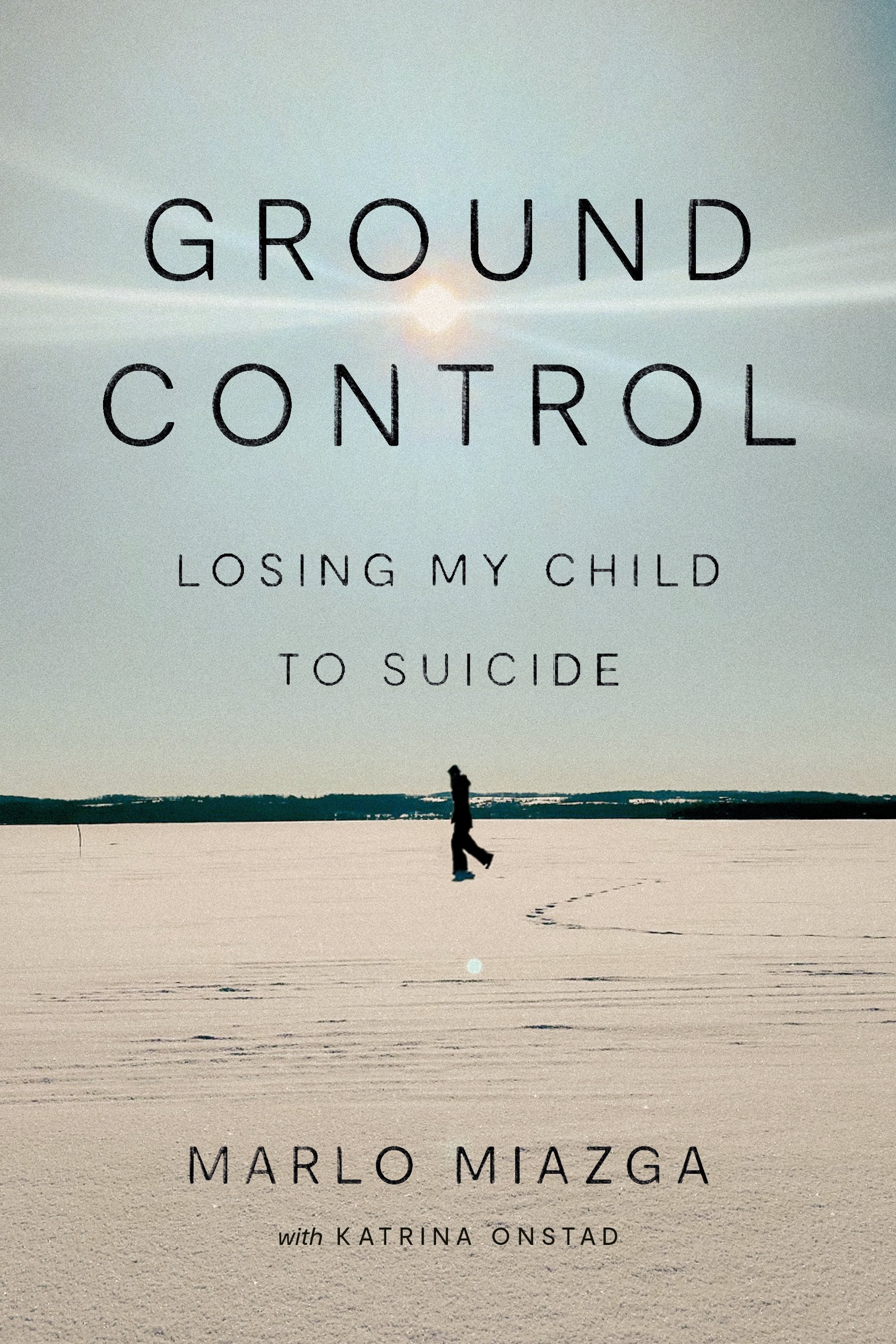
A raw and unflinching memoir about a mother’s search for answers after her child’s suicide.
Suicide is a trajectory, one that confounds those left behind.
When Marlo Miazga’s fourteen-year-old child, Mars, dies by suicide after less than a year of visible mental health struggle, her world fractures overnight. While in the throes of unimaginable grief, Miazga begins a relentless investigation to understand how a bright, sensitive, deeply loved child could slip beyond reach.
Her search takes her through a fragmented healthcare system struggling to support children in crisis, into Mars’s online community where pain is shared in coded language adults rarely see, and inward to confront guilt, love, anger and the unbearable weight of unanswered questions.
Raw, intimate and unsparing, Ground Control lays bare the reality of losing a child to suicide while refusing silence or stigma. Miazga writes with fierce honesty about parenting a curious and complex child, about what was visible and what was hidden, and about the questions that remain when a life ends too soon.
More than a memoir about grief, Ground Control is an act of love, a demand for better systems, and a lifeline for anyone trying to understand how tragedy happens and how to continue afterward.
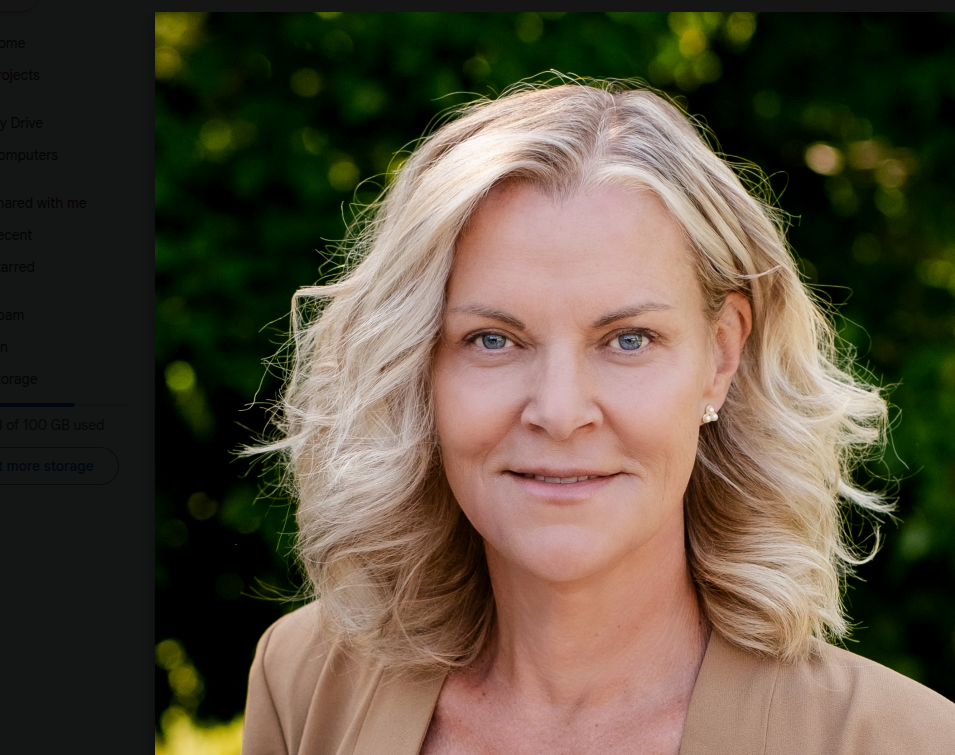
MARLO MIAZGA is an award-winning film and television creator and producer whose work has reached audiences worldwide. She recently founded M Media, where she is now in production on a documentary feature to accompany her memoir. Marlo lives and works in both Milford and Toronto, Ontario, with her daughter, Frida.
KATRINA ONSTAD is an award-winning novelist, journalist and podcast producer whose work has appeared in publications including The New York Times Magazine, Toronto Life and The Guardian. She lives in Toronto with her family.