
Excerpt from The Fall Down Effect by Liz Johnston
River travelled softly along the boundary line between sleep and waking. Somewhere off to the side, he was aware of Mom and his sisters talking, the motion of the car. But he was also wandering through a deep dark wood, looking for Fern. Someone or something had taken her. He couldn’t see the sky through the tree canopy and didn’t know if it was day or night. He just knew he had to find her. Looking up from the long, shadowy path ahead of him, he watched a giant cedar slowly tip and fall across his way, its roots tearing out of the ground in horrifying silence. He woke with a start. The car was turning off the highway.
Fern was next to him, and Sylvia sat in the front with Mom. He blinked and rubbed his eyes. His face against the rolled-up window, he bent his neck to look past the close treetops to the inky sky. The dream had already vanished, but this felt like a dream too. He wondered if his sisters knew where they were going or why Dad wasn’t here.
As if reading his mind, Fern asked, “Why did Dad stay home?”
“He didn’t want to come.” Mom hunched over the steering wheel, looking for something, trying to see farther into the darkness. “He’s showing his colours as he gets older,” she said.
River imagined Dad, shirt off on a hot day, revealing unexpected stripes of blue and green on his skin.
“What do you mean?” Sylvia asked.
“Nothing. We don’t need him.”
They were slowing, turning even farther into the woods. The car felt like an animal, a lumbering, legged creature.
“Where are we?” River asked.
“We’re going to stop the loggers,” said Fern. She said it as if he was stupid for asking. He didn’t even know what her answer meant. She was only a year older than him, but she acted like she knew so much more.
They stopped. “Are we stuck?” he said.
“You’ve got to give Maeve a bit more credit.” Mom smiled over her shoulder. “This old girl’s been down rougher roads than this.”
“Is this even a road? Are we allowed to drive here?” Sylvia said.
“Please, Syl.”
River leaned forward to look through the front window at the path ahead of them. The way was wide enough for the car, more than wide enough, but rough and rutted. They moved forward, Maeve plodding on step by step.
River yawned loudly. Fern gave him a disgusted look.
“You guys haven’t been awake this early since you were babies,” Mom said cheerfully. “We’ll beat the crew in, I’m sure.”
River looked back out the window, into the tunnel of tree trunks. He didn’t want anyone to cut them down. But he didn’t know how he and his sisters were supposed to stop a crew of lumberjacks. He pictured hulking men, bigger than Dad, axes resting on their shoulders. He pictured semi-trucks and tall yellow tank-like vehicles, a whole set like the Tonkas he got handed down from his Vancouver cousin, bearing in on their little car. Across the seat from him, Fern sat determined and brave. Excited.
“Are we there yet?” he asked.
From The Fall-Down Effect © 2026 by Liz Johnston. Used with permission of Book*hug Press.
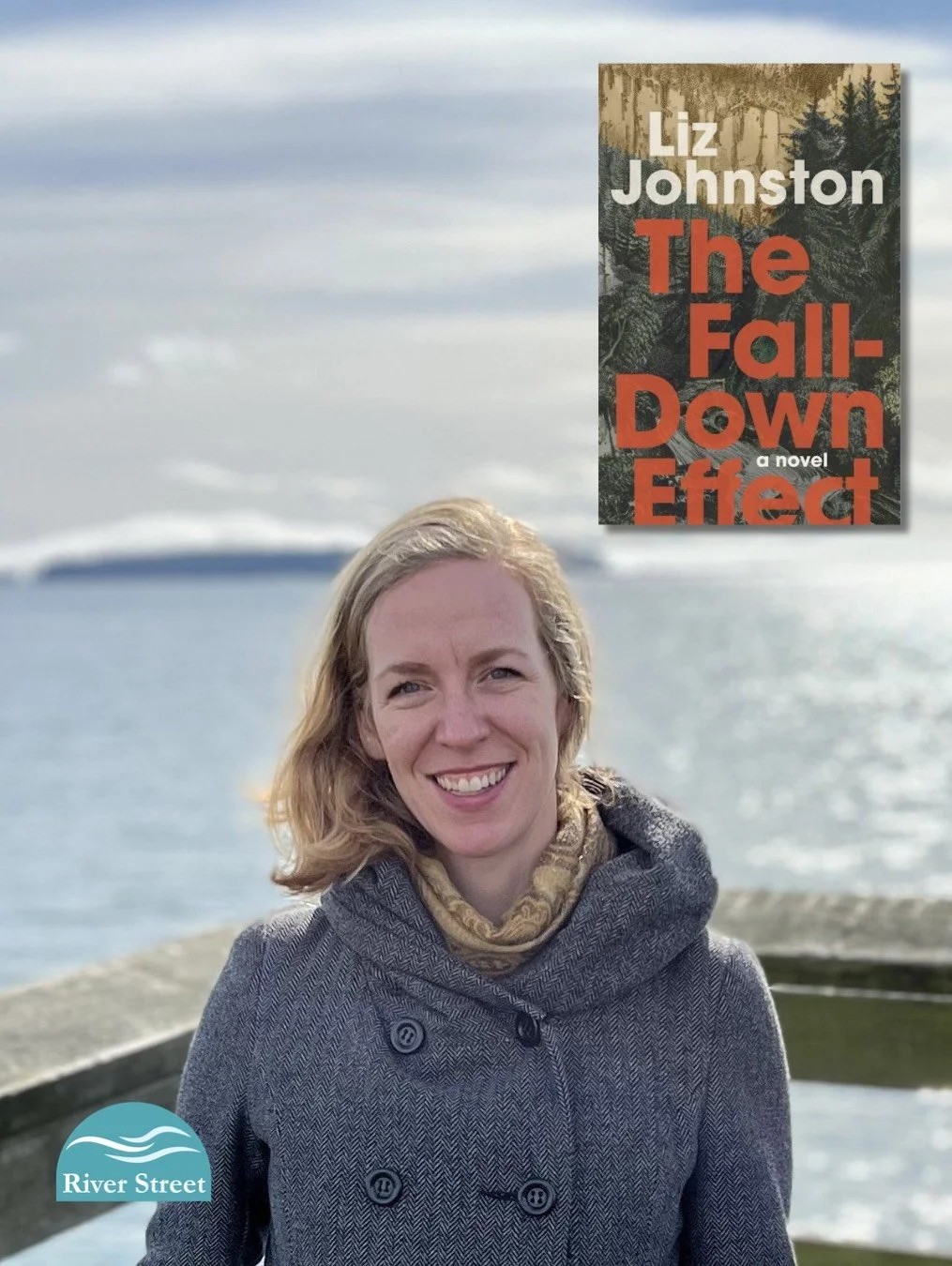
The Fall-Down Effect by Liz Johnston, published by Book*hug Press, April 21, 2026
Exploring protest, climate change, and fractured family relationships, Liz Johnston’s eagerly anticipated debut novel, The Fall-Down Effect, asks what we really owe people in our lives when we are fighting for a greater cause.
As a child in the late 1980s, Fern is the wild heart of her tree-hugging family—quick-tempered and yearning to spend every minute in the woods of the small Pacific Northwest logging town where they live. She is also most like her environmental activist mother, Lynn, who chafes against the demands of motherhood and yearns for the protests of her youth. As tensions escalate, Lynn leaves her partner, Tom, and their three children, telling herself she will devote her life more fully to fighting for the earth.
At nineteen, Fern commits her own radical act of protest in the town, which authorities label ecoterrorism. When Fern goes underground, her parents and siblings—responsible grad student Sylvia and budding artist River—struggle to make sense of her actions while also trying to cover up her absence. Fern’s secret proves impossible to keep, and when she becomes a wanted woman, the rest of the family trades blame. Years later, when Lynn takes shelter from a forest fire in the home she left so many years before, the family is forced to confront their regrets during a fraught, baggage-filled reunion.
Liz Johnston grew up in Revelstoke, B.C., and now lives and writes in Toronto. Her essays and short stories have appeared in Poets & Writers, The Fiddlehead, The Humber Literary Review, Grain, The Antigonish Review, and The Cardiff Review. Johnston is an editor of Brick, A Literary Journal. The Fall-Down Effect is her debut novel.