

BLOG
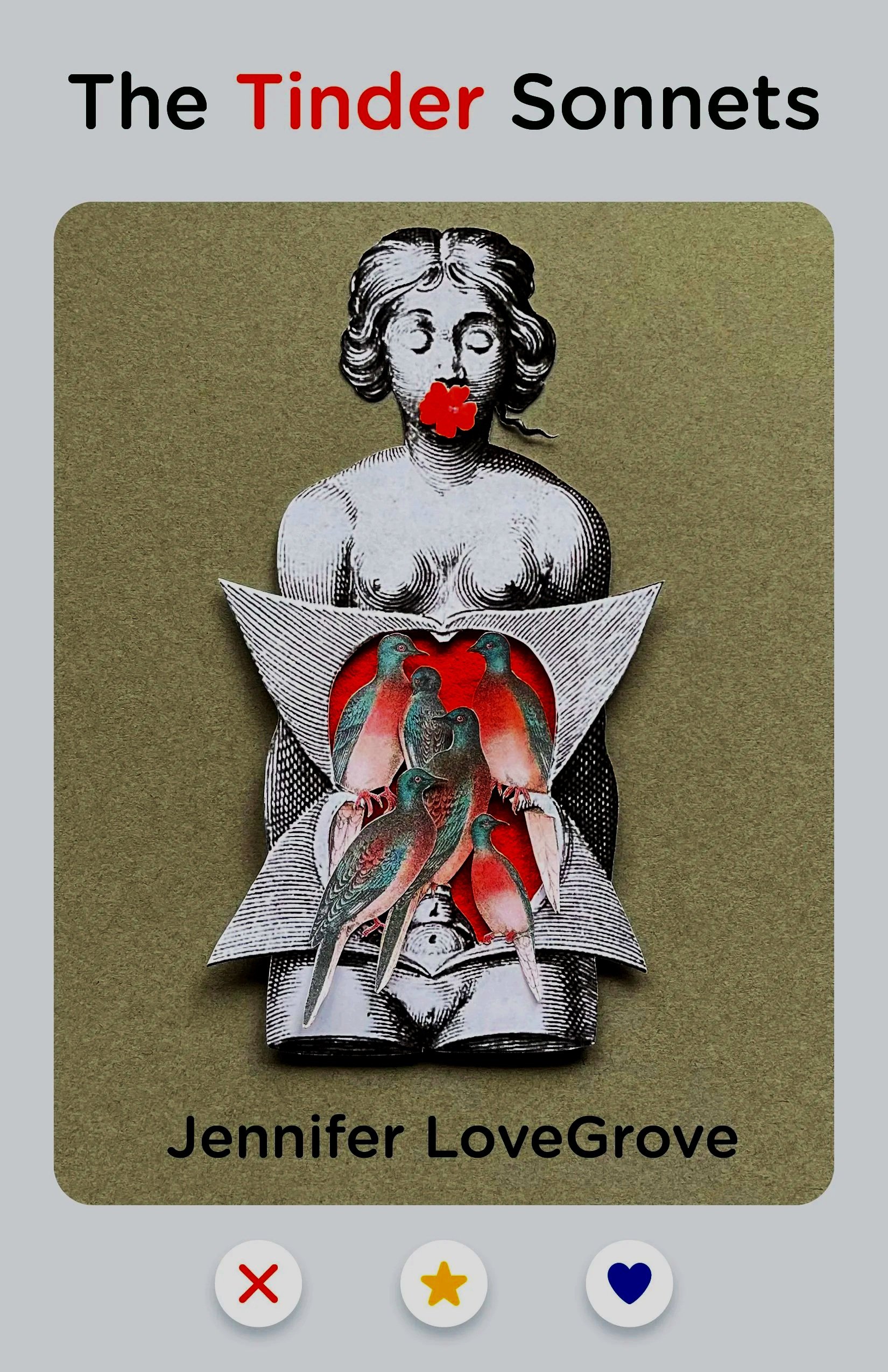
Excerpt from The Tinder Sonnets by Jennifer LoveGrove
Fresh loroco, importing banned. Oblong
little smugglers, edible blossoms, green-
sheathed, pale inside. Insipid. Pandemic
first date in rain. Sipping cheap white wine from
a pink plastic cup, SLUT scrawled across the
bus shelter. I text a friend a selfie.
Fernaldia pandurata and Diabrotica adelpha get symbiotic in Christie Pits
Fresh loroco, importing banned. Oblong
little smugglers, edible blossoms, green-
sheathed, pale inside. Insipid. Pandemic
first date in rain. Sipping cheap white wine from
a pink plastic cup, SLUT scrawled across the
bus shelter. I text a friend a selfie.
At least you don’t have herpes, she says, plus
a broken toe. Tastes green, like broccoli,
artichoke, or chard. Overtones of nuts.
High in niacin. Most vigorous vine,
finely pubescent, minutely hairy.
Upper leaves blunt at the base, the lower,
cordate. Heart-shaped. Bright pulse on tongue. The buds
an aphrodisiac, the root — poison.
Hands soft despite knife nicks, scorch scars. Nimble
tease, wet lips to collarbone as I come.
Between lockdowns, opens a restaurant
on his birthday. Then robbed, twice. Menus and
trauma monologues: curled fetal in the
back of his car after a bong hit, sure
of being hunted. The bridgetop panic
attack in New York for a death metal
show. How he sold his car and never drove
again. I offer doomsday cults, psych wards,
stitches, suicides. I may have been a
refugee, but you’re from Dunnville! Festive,
invasive, an orange-necked crop killer —
hard flea, tough to slaughter, dirty daughter.
Second date, asks if he can slap me. Where?
Third date, so worried he’s having a stroke.
Arteries tangled like reasons he thinks
his father left. We agree on nothing.
I win every debate. He admits that
it’s a turn-on. He pulls my hair when I
suck his cock, but never when I ask him
to. The midnight phone calls reading aloud
our worst reviews: This book’s so depressing!
or Why all the chopped cabbage?! I’m always
hungriest on the nights I most need sleep,
when every small delicacy unfurls
a threat. Don’t let go of me, he whimpers,
then recoils when I whisper, You can stay.
"Fernaldia pandurata and Diabrotica adelpha get symbiotic in Christie Pits" from Tinder Sonnets © 2026 by Jennifer LoveGrove. Used with permission of Book*hug Press.
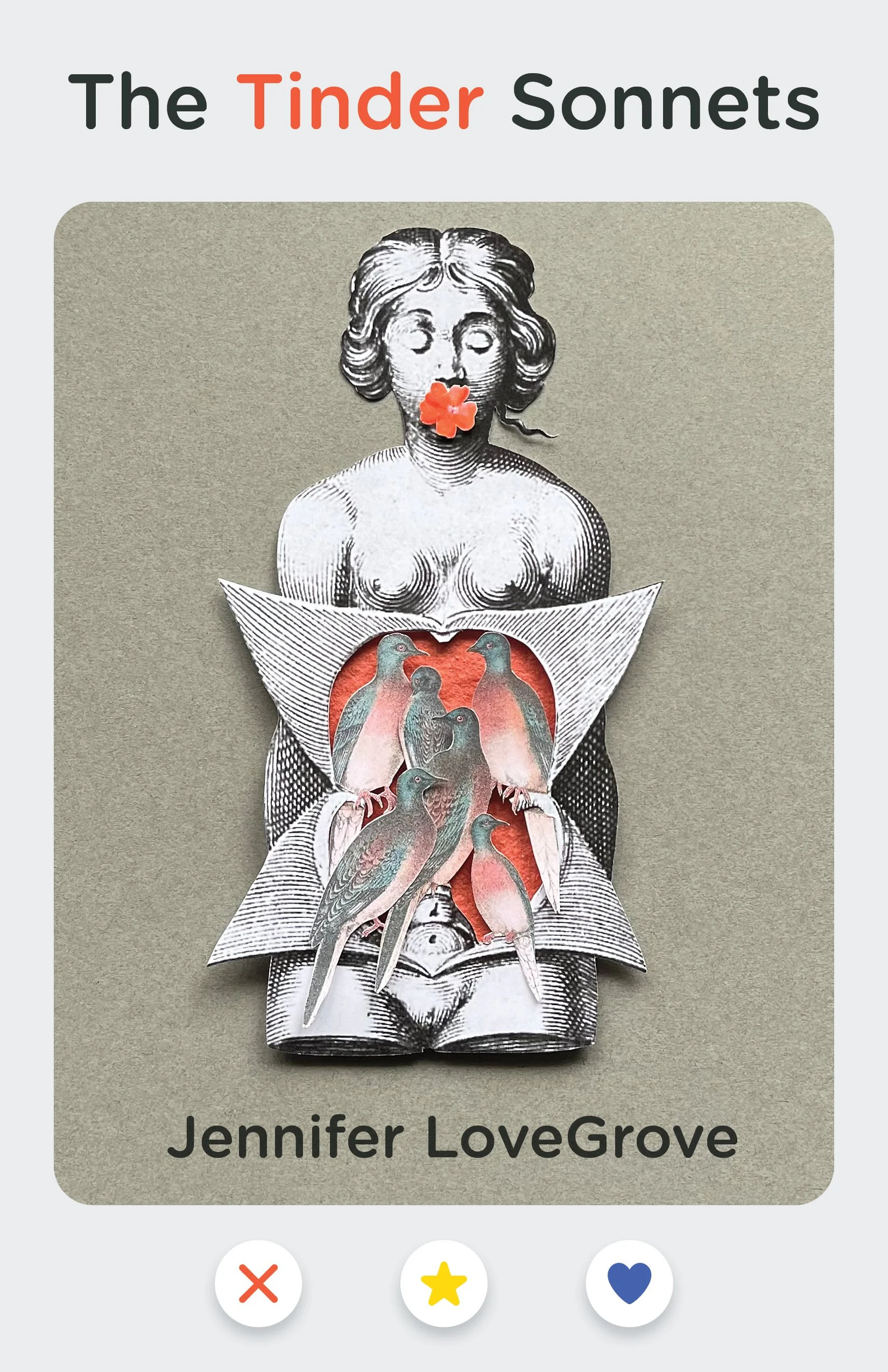
From acclaimed writer Jennifer LoveGrove comes an electric poetry collection exploring female sexual desire, contemporary dating, misogyny, and middle age that reflects and embodies our social media-saturated times.
Unabashedly confessional and radically vulnerable, The Tinder Sonnets rallies against the long-standing demand that “women of a certain age” politely accept being rendered non-sexual. Each poem is based on a date, relationship, or contemporary dating insight, and highlights how misogyny impacts the way we connect in the modern world–or don’t.
Juxtaposing folklore and the natural world against the digital sphere of texting and dating apps, this is poetry that defies invisibility and instead confronts and subverts it through a discerning feminist lens. While experimenting with the traditional form of the sonnet, these sonically textured poems are playful and wry, erotic and joyful, all while refusing to shy away from palpable anger, frustration, and disappointment.
Centering strength and resilience in the face of a resurgence of misogynistic chauvinism, The Tinder Sonnets is a staunch refusal to recede from view, to cede sexual space, or to be quiet and polite.
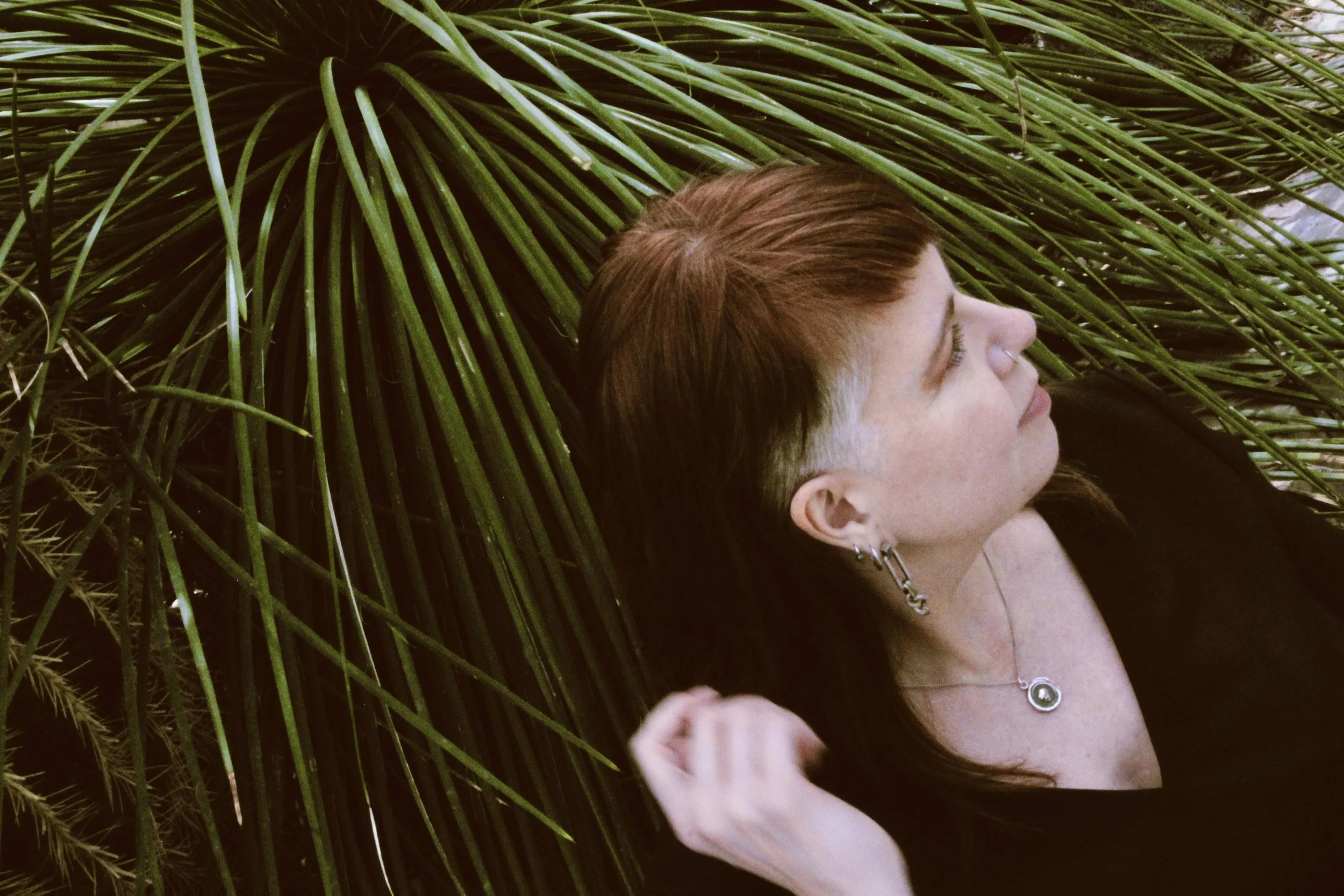
Photo credit: Sharon Harris
JENNIFER LOVEGROVE is the author of the Giller Prize–longlisted novel Watch How We Walk, as well as three poetry collections: Beautiful Children with Pet Foxes (longlisted for the Raymond Souster Award), I Should Never Have Fired the Sentinel and The Dagger Between Her Teeth. She is currently working on a new novel, and creative nonfiction. She divides her time between downtown Toronto and Squirrel Creek Retreat in rural Ontario.
Excerpt from How I Bend Into More by Tea Gerbeza
Based on Tea Gerbeza’s experience with scoliosis, How I Bend Into More (Palimpsest Press, 2024) re-articulates selfhood in the face of ableism and trauma. Meditating on pain, consent, and disability, this long poem builds a body both visually and linguistically, creating a multimodal space that forges Gerbeza’s grammar of embodiment as an act of reclamation.
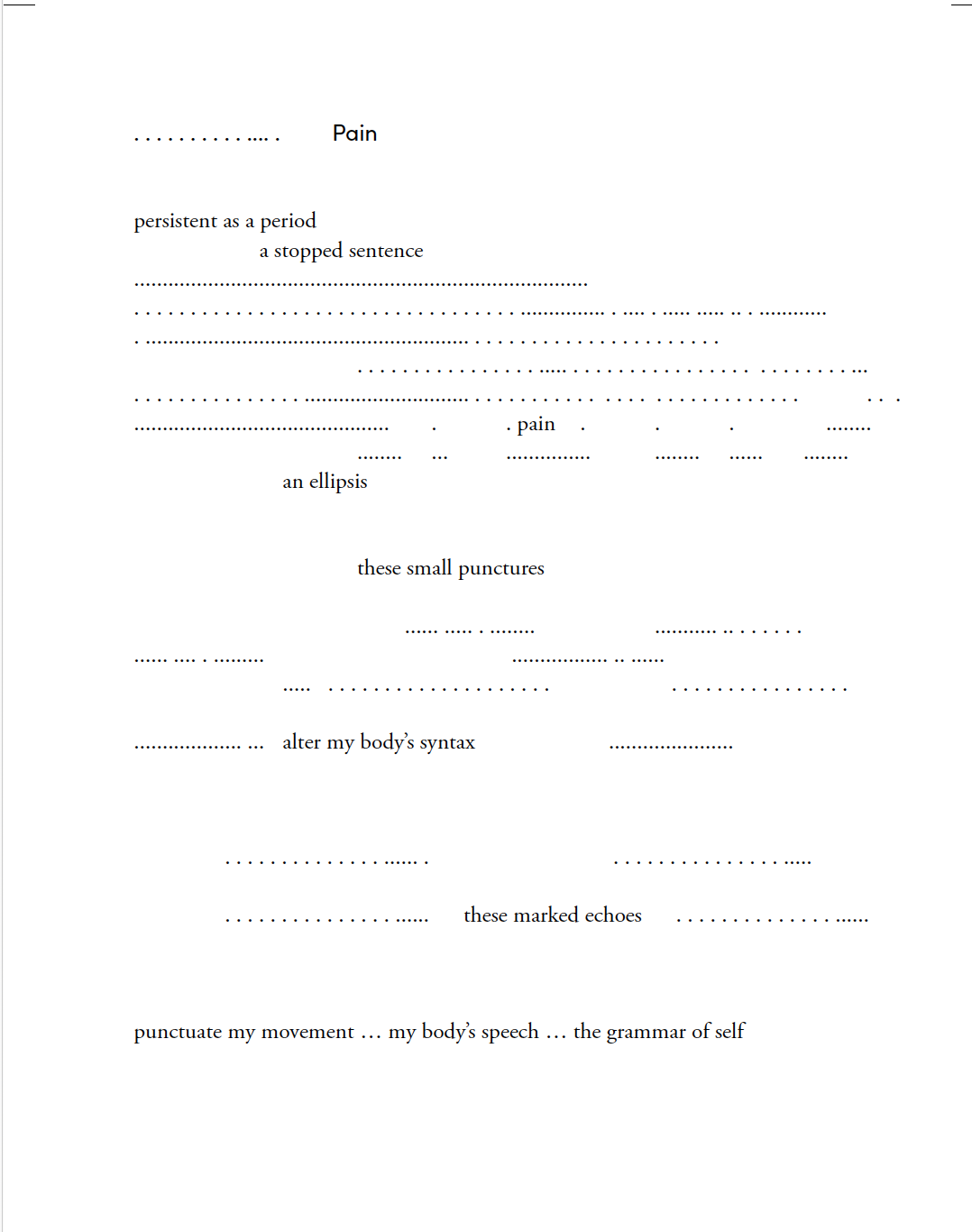
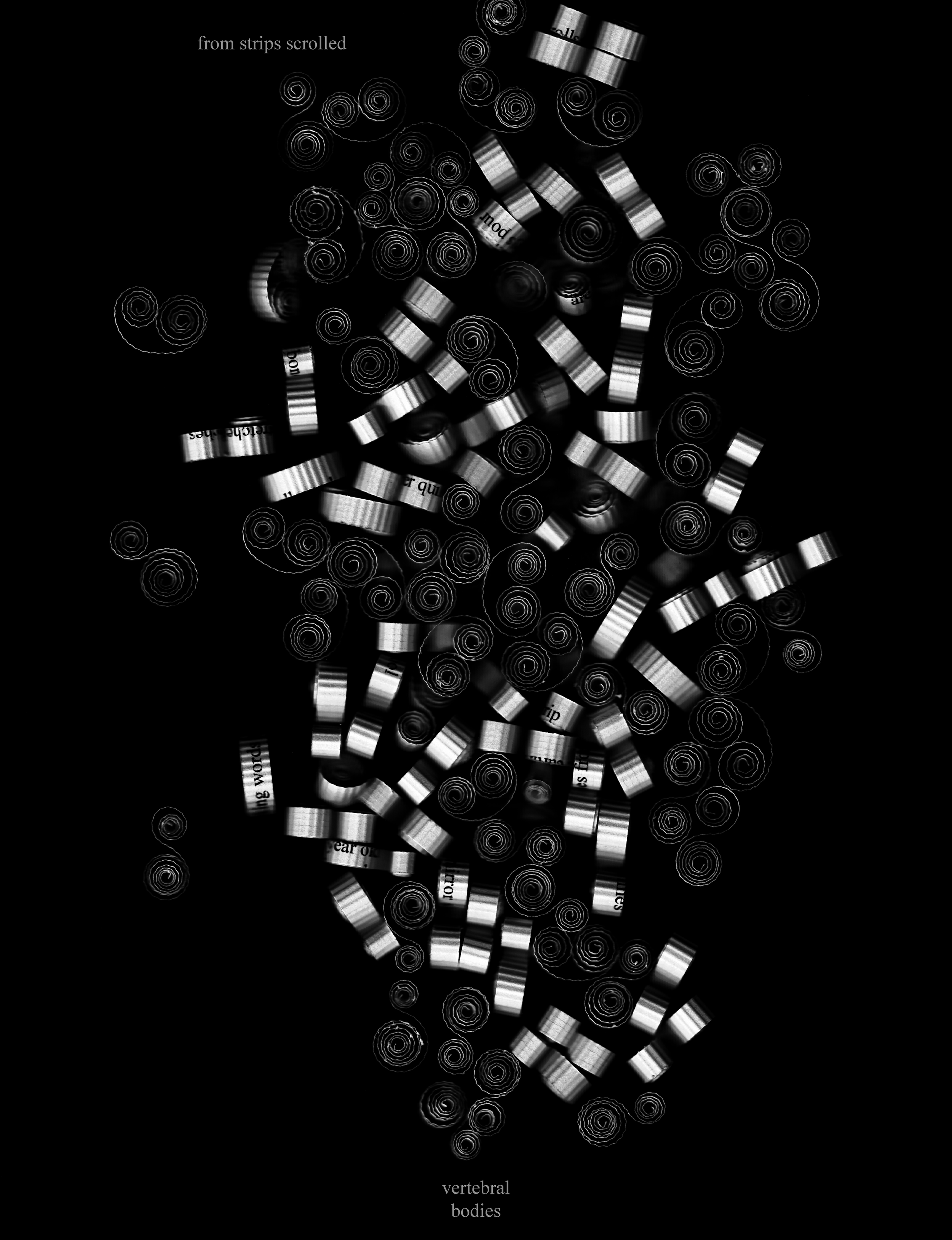
Excerpt from How I Bend Into More by Tea Gerbeza. Published by Palimpsest Press. Copyright Tea Gerbeza, 2024. Reprinted with permission.
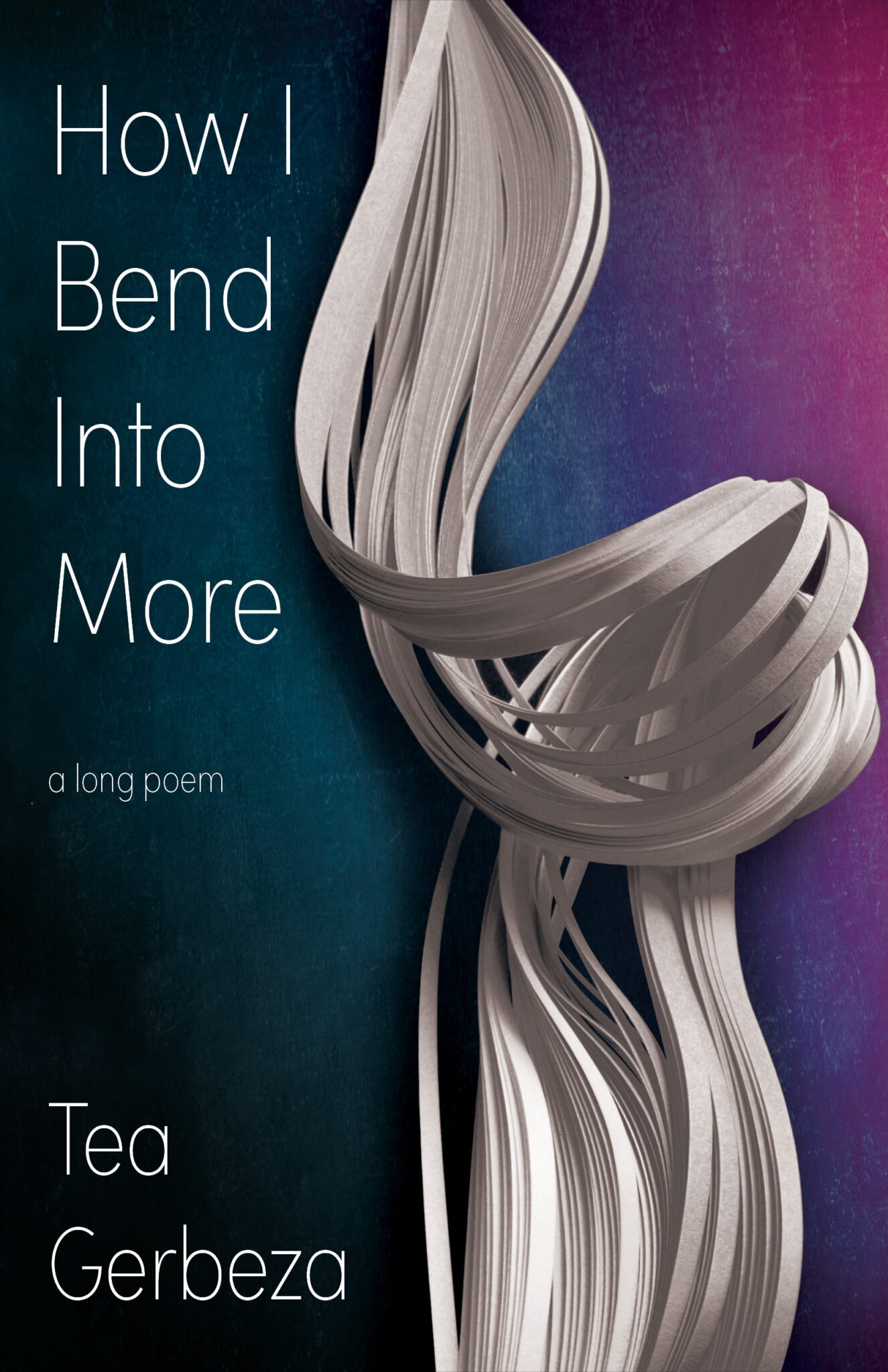
Based on Tea Gerbeza’s experience with scoliosis, How I Bend Into More (Palimpsest Press, 2024) re-articulates selfhood in the face of ableism and trauma. Meditating on pain, consent, and disability, this long poem builds a body both visually and linguistically, creating a multimodal space that forges Gerbeza’s grammar of embodiment as an act of reclamation. Paper-quilled shapes represent the poet’s body on the page; these shapes weave between lines of verse and with them the reclaimed disabled body is made. How I Bend Into More is a distinctive poetic debut that challenges ableist perceptions of normalcy, and centers “the double architecture / of ( metamorphosis (.”

Tea Gerbeza is the author of How I Bend Into More (Palimpsest Press, 2025), which was a finalist for the Writers’ Trust 2025 Dayne Ogilvie Prize for 2SLGBTQ+ emerging writers. She is a neuroqueer, disabled poet, writer, editor, and multimedia artist creating in oskana kâ-asastêki in Treaty 4 territory (Regina, SK) and on the Homeland of the Métis. She primarily works with paper in her visual art, but also creates digital works on her scanner (scanography). Her writing and artwork focus on themes of reclaiming disabled identity, disability justice, the Bosnian-Croatian diaspora, queer platonic friendships, and the complexities of pain. Her artwork has been exhibited at The Art Gallery of Regina. Tea has a very loud laugh, and is one of four Pain Poets.
Most recently, Tea was a finalist for YWCA Regina’s 2026 Women of Distinction awards in the Igniting Equity category. In 2023, She was recognized by SK Arts as one of 75 strong emerging artists that makes the future of Saskatchewan arts exciting. Tea’s poem “Body of the Day” was a People’s Choice Award finalist in Contemporary Verse 2’s 2024 2-Day Poem Contest. In 2022, Tea won the Ex-Puritan’s Austin Clarke Prize in Literary Excellence for poetry. She also made the longlist for Room magazine’s 2022 Short Forms contest. Her scanograph, “My Father Catches Me Confronting Memory,” won an Honourable Mention in Room magazine’s 2020 Cover Art Contest, and she was a finalist for Palette Poetry’s 2021 Emerging Poet Prize.
Tea holds a BA (Hons.) in English (2017) and an MA in Creative Writing and English from the University of Regina (2019). Tea’s thesis work for her MA was SSHRC funded. She also holds an MFA in Writing from the University of Saskatchewan (2021).
Photo of Tea by Ali Lauren.
Excerpt from WOMEN AMONG MONUMENTS Solitude, Permission, and the Pursuit of Female Genius by Kasia Van Schaik
This story begins in 2022, Padua, midwinter. Across the city a debate is raging. It concerns a woman whose name I only recently learned: Elena Lucrezia Cornaro Piscopia, the first woman in the world to earn a Ph.D. City councillors Margherita Colonnello and Simone Pillitteri have proposed to place a statue of Piscopia in the town square — a notable historical woman to join the effigies of notable historical men. This suggestion has sparked outrage across the country.
This story begins in 2022, Padua, midwinter. Across the city a debate is raging. It concerns a woman whose name I only recently learned: Elena Lucrezia Cornaro Piscopia, the first woman in the world to earn a Ph.D. City councillors Margherita Colonnello and Simone Pillitteri have proposed to place a statue of Piscopia in the town square — a notable historical woman to join the effigies of notable historical men. This suggestion has sparked outrage across the country.
It hadn’t occurred to me to type “first woman Ph.D.” into Google. I kicked myself for my lack of curiosity. After all, I was going to be the first woman in my family to earn a doctorate. It had been the hardest thing I’d attempted in my life so far, partly because I still felt, deep down, that I wasn’t entitled to the pursuit of an intellectual or creative life. I felt I was getting away with something, fooling the academy, and it was only a matter of time until I was exposed. As I’ve come to understand, this isn’t an uncommon experience, particularly for first-generation scholars, or scholars who have disabilities, or who identify as queer, BIPOC, or women.
I wondered if Piscopia had felt this way, too. As a woman in the 1600s, she’d had to fight for her education. Piscopia was born to unmarried parents, a peasant woman and a nobleman. Her father tried to arrange betrothals for his daughter, but she rebuffed each suitor’s advances, preferring the company of her harpsichord and philosophy books. Women weren’t allowed to enter university at the time, but her father was able to pull a few strings for his prodigious daughter. Even then, the residing Cardinal Gregorio Barbarigo opposed Piscopia’s request to graduate with a doctorate in theology, arguing that it was a “mistake” for a woman to become a “doctor.” He eventually let her graduate with a degree in philosophy instead.
I looked up the year 1678. Le Griffon, the first European ship to sail on the Great Lakes of North America, prepares for her maiden voyage. The first fire engine company in what will become the United States goes into service in Boston. The Pilgrim’s Progress, a text that 334 years later I’d be forced to read in an undergraduate literature class, is published in London, England. Rebel Chinese general Wu Sangui takes the imperial crown and dies of dysentery months later; Franco-Dutch battles are instigated, ceasefires called, and in Padua, at the age of thirty-two, Piscopia receives her Ph.D.
•••
At almost 90,000 square metres, Prato della Valle, or “Meadow of the Valley,” is the second-largest square in Europe. At its centre is a green island surrounded by a small canal and bordered by two rings of statues, all of historical men. I recognize some of the names: Galileo, father of observable astronomy; the artist Mantegna, famous for his use of perspective and anatomical detail; and the eighteenth-century sculptor Canova, renowned for turning stone into flesh.
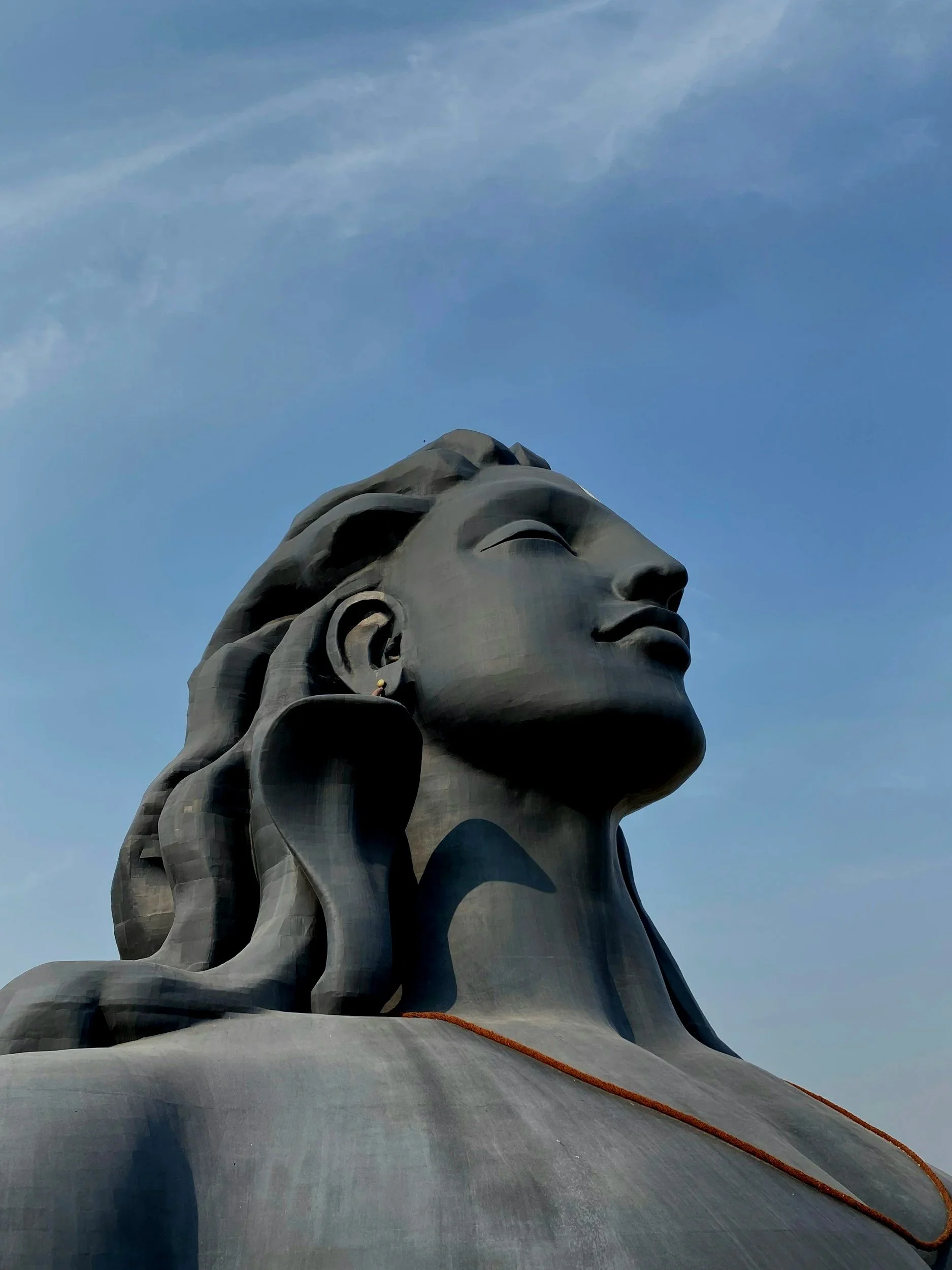
Two of the pedestals in Padua’s elliptical square are empty. It seemed fitting, the city councillors proposed, that Piscopia might rest on one of the empty pedestals, that hers might become the first monument honouring a woman in the city’s historic centre. As art historian Federica Arcoraci points out, spending time among the square’s all-male statues has “an impact on our lives and collective imagination,” and the “Prato della Valle regulation of 1776 never ... prohibited the representation of women.”
Across the country, critics protested Piscopia’s inclusion in the square. Some claimed that a statue of the first woman Ph.D. would be out of context with the square’s history. Others believed that to include a female statue within the pantheon of male statues would be an act of “cancel culture.”
Colonnello and Pillitteri walked back their original proposal, but they still insisted that a statue of a woman be allowed in the square. It didn’t have to be Piscopia — they were willing to erect her monument elsewhere. But the city had to decide on another historical woman instead — for instance, the nineteenth-century painter Elisabetta Benato-Beltrami or the writer Gualberta Alaide Beccari.
“The important thing,” said Colonnello, “is that we have raised the debate about the underrepresentation of women among monuments and it is now very clear to all politicians that we need a very good statue of a woman in a very good place.” She pressed on: “We now need to decide where and who. But I think we will eventually settle on the square — it is very huge and there is lots of space.”
I looked up an image of Prato della Valle. Colonnello is right. At the size of almost two football fields, it’s massive.
Why was there such opposition to the inclusion of a woman in such an enormous space? It appeared that the controversy wasn’t about the square itself but what the square symbolized. It represented the boys’ club, cultural memory, the legacy of genius. The square represented representation itself.
What the Piscopia debate exposed wasn’t just the scarcity of statues celebrating notable women — of the thousands of statues in Italy, fewer than two hundred depict women — but the historical resistance to simply recognizing women’s achievements. This resistance isn’t unique to Italy.
After reading about Elena Piscopia, I went walking through the squares, parks, and boulevards of Montreal, my own city. This was where I’d lived for much of my life — a place I kept returning to for its promise of art, freedom, and community. Yet, like the Prato della Valle, it was still filled with statues of European men.
Where were the women? I found myself asking this as I stood below the Sir George-Étienne Cartier monument at the foot of Mont Royal. Not the angels and goddesses but the monuments to historical women. Where could I find them?
Excerpt from Women Among Monuments by Kasia Van Schaik. Published by Dundurn Press. Copyright Kasia Van Schaik, 2026. Reprinted with permission.
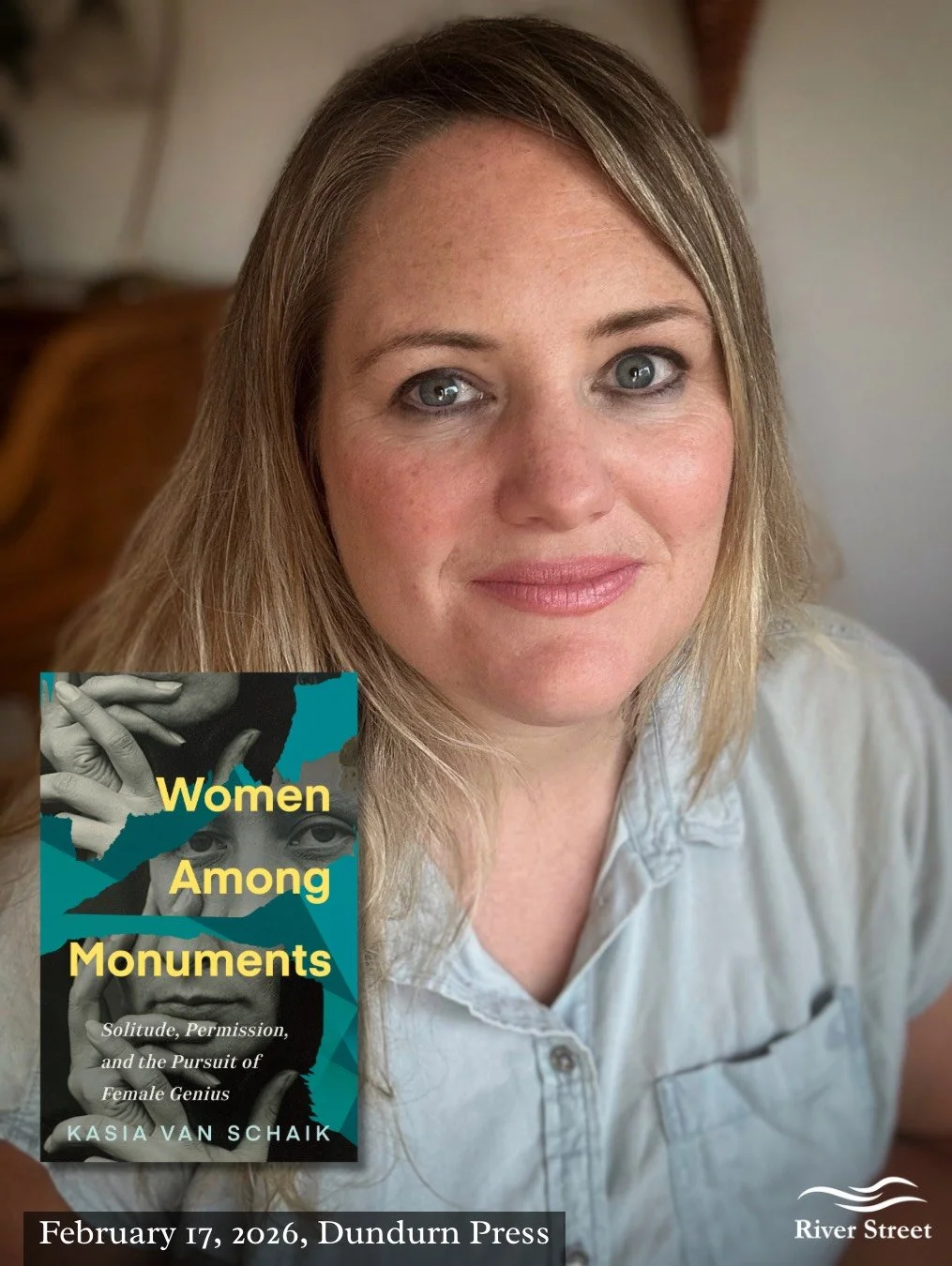
Women Among Monuments by Kasia Van Schaik
About Women Among Monuments:
A lyrical meditation on the enduring obstacles women artists and writers face in a world still unaccustomed to recognizing female genius.
What does it take for a woman to don the mantle of genius — a title long reserved for male artists? From her studies in Montreal to a dead-end job in Berlin, a midnight tour of Paris, a bankrupt art residency on the Toronto Islands, and a mysterious sculpture garden in the Karoo desert, South African—Canadian author and professor Kasia Van Schaik considers what it means for a young woman to call herself an artist and claim a creative life.
Drawing on a diverse web of literary and cultural sources and artistic icons — from Georgia O’Keeffe to Ana Mendieta, Gertrude Stein to Jamaica Kincaid, Leslie Marmon Silko to Bernadette Mayer — Women Among Monuments asks, What, beyond a room of one’s own, are the necessary conditions for female genius? Where does the inner flint of artistic permission come from? What is the oxygen that keeps it burning?
In her memoir interwoven with incisive biographies of female solitude, constraint, and perseverance, Van Schaik blazes a trail for more inclusive artmaking practices, communities, and monuments.
Kasia Van Schaik is the author of the linked story collection We Have Never Lived On Earth, which was longlisted for the Scotiabank Giller Prize. Her writing has appeared in Electric Literature, the LA Review of Books, the Best Canadian Poetry, and the CBC. Kasia holds a PhD in English Literature from McGill University and lives in Montreal.
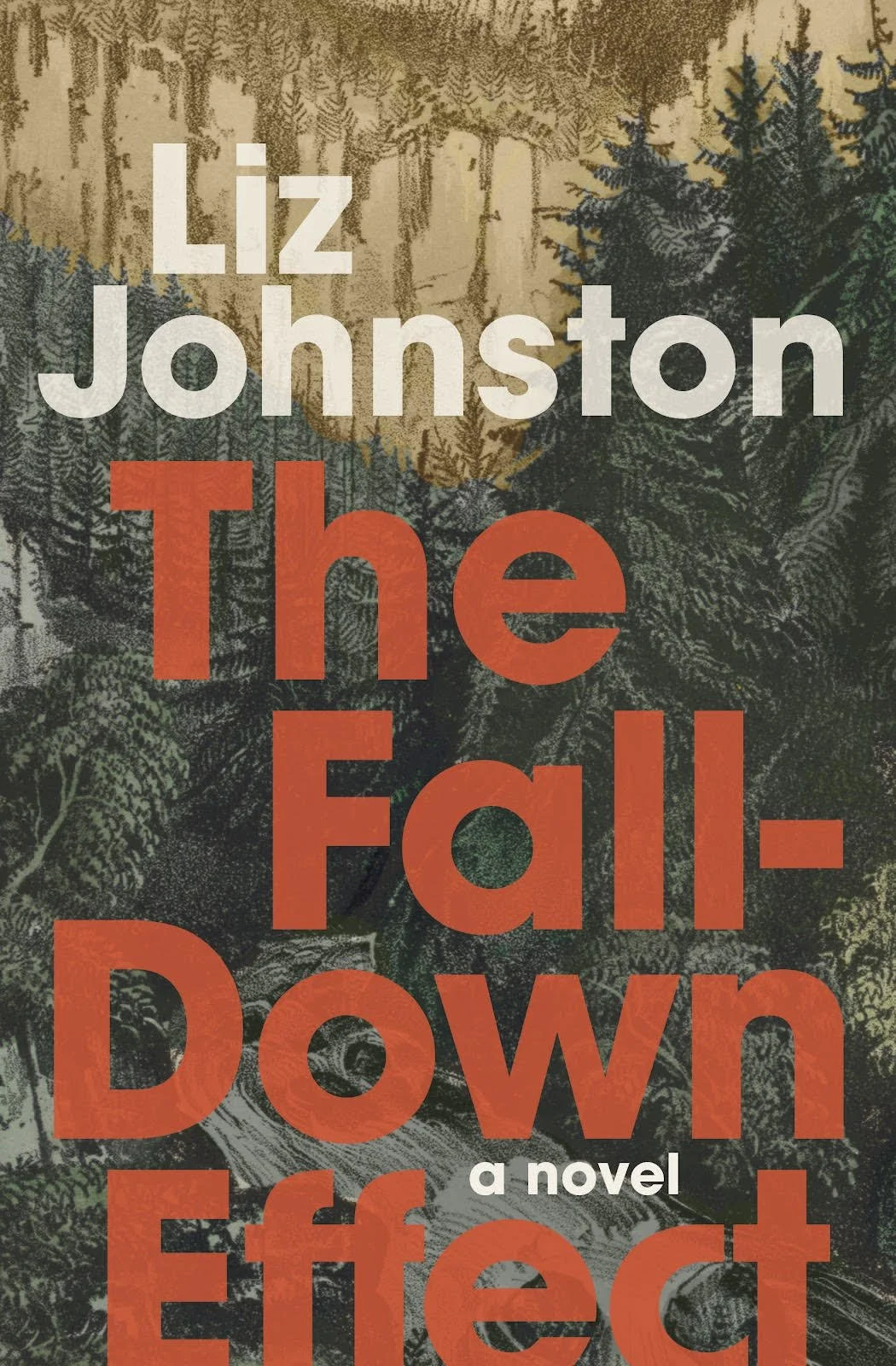
Excerpt from The Fall Down Effect by Liz Johnston
River travelled softly along the boundary line between sleep and waking. Somewhere off to the side, he was aware of Mom and his sisters talking, the motion of the car. But he was also wandering through a deep dark wood, looking for Fern. Someone or something had taken her. He couldn’t see the sky through the tree canopy and didn’t know if it was day or night. He just knew he had to find her. Looking up from the long, shadowy path ahead of him, he watched a giant cedar slowly tip and fall across his way, its roots tearing out of the ground in horrifying silence. He woke with a start. The car was turning off the highway.
River travelled softly along the boundary line between sleep and waking. Somewhere off to the side, he was aware of Mom and his sisters talking, the motion of the car. But he was also wandering through a deep dark wood, looking for Fern. Someone or something had taken her. He couldn’t see the sky through the tree canopy and didn’t know if it was day or night. He just knew he had to find her. Looking up from the long, shadowy path ahead of him, he watched a giant cedar slowly tip and fall across his way, its roots tearing out of the ground in horrifying silence. He woke with a start. The car was turning off the highway.
Fern was next to him, and Sylvia sat in the front with Mom. He blinked and rubbed his eyes. His face against the rolled-up window, he bent his neck to look past the close treetops to the inky sky. The dream had already vanished, but this felt like a dream too. He wondered if his sisters knew where they were going or why Dad wasn’t here.
As if reading his mind, Fern asked, “Why did Dad stay home?”
“He didn’t want to come.” Mom hunched over the steering wheel, looking for something, trying to see farther into the darkness. “He’s showing his colours as he gets older,” she said.
River imagined Dad, shirt off on a hot day, revealing unexpected stripes of blue and green on his skin.
“What do you mean?” Sylvia asked.
“Nothing. We don’t need him.”
They were slowing, turning even farther into the woods. The car felt like an animal, a lumbering, legged creature.
“Where are we?” River asked.
“We’re going to stop the loggers,” said Fern. She said it as if he was stupid for asking. He didn’t even know what her answer meant. She was only a year older than him, but she acted like she knew so much more.
They stopped. “Are we stuck?” he said.
“You’ve got to give Maeve a bit more credit.” Mom smiled over her shoulder. “This old girl’s been down rougher roads than this.”
“Is this even a road? Are we allowed to drive here?” Sylvia said.
“Please, Syl.”
River leaned forward to look through the front window at the path ahead of them. The way was wide enough for the car, more than wide enough, but rough and rutted. They moved forward, Maeve plodding on step by step.
River yawned loudly. Fern gave him a disgusted look.
“You guys haven’t been awake this early since you were babies,” Mom said cheerfully. “We’ll beat the crew in, I’m sure.”
River looked back out the window, into the tunnel of tree trunks. He didn’t want anyone to cut them down. But he didn’t know how he and his sisters were supposed to stop a crew of lumberjacks. He pictured hulking men, bigger than Dad, axes resting on their shoulders. He pictured semi-trucks and tall yellow tank-like vehicles, a whole set like the Tonkas he got handed down from his Vancouver cousin, bearing in on their little car. Across the seat from him, Fern sat determined and brave. Excited.
“Are we there yet?” he asked.
From The Fall-Down Effect © 2026 by Liz Johnston. Used with permission of Book*hug Press.
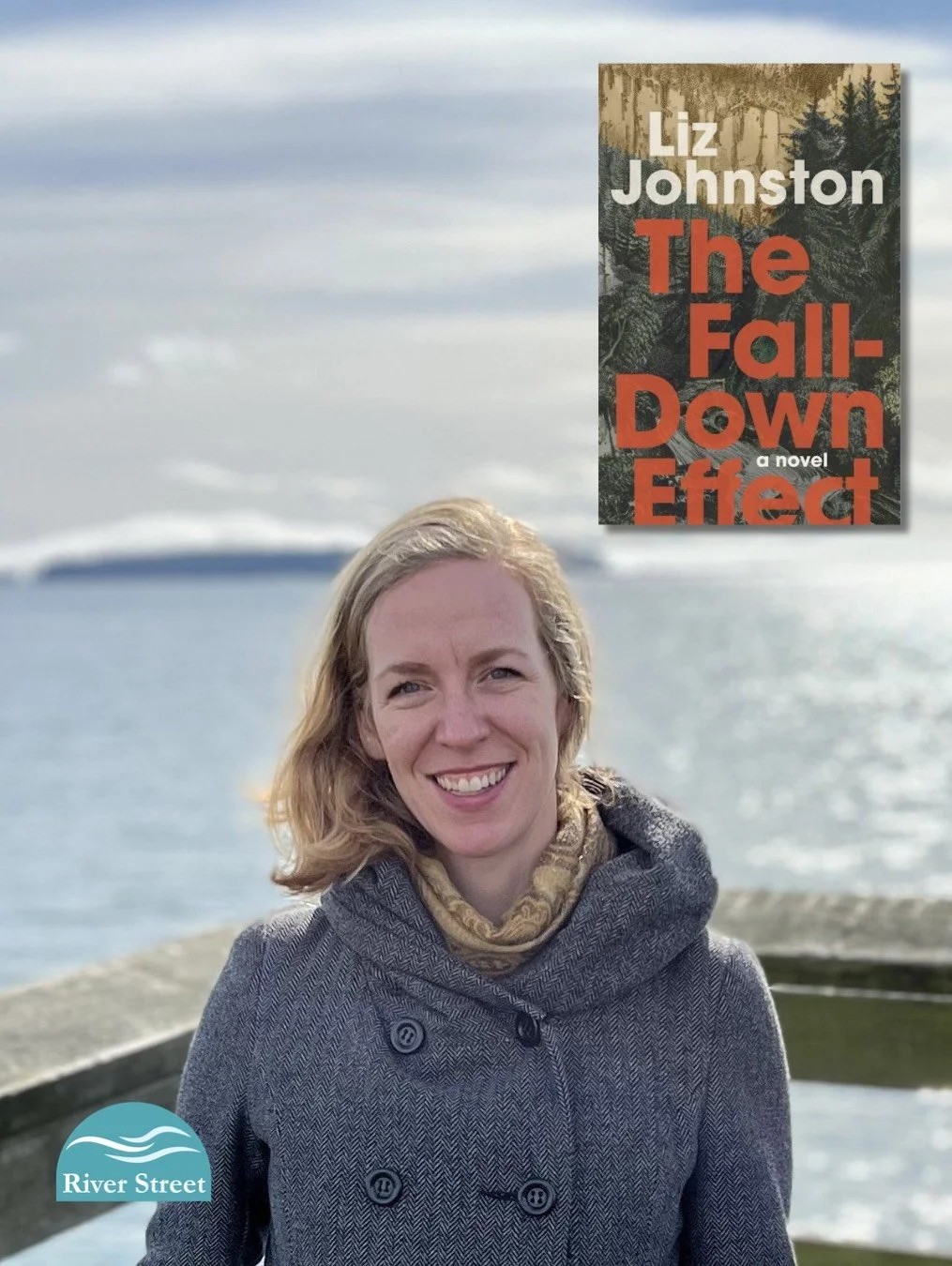
The Fall-Down Effect by Liz Johnston, published by Book*hug Press, April 21, 2026
Exploring protest, climate change, and fractured family relationships, Liz Johnston’s eagerly anticipated debut novel, The Fall-Down Effect, asks what we really owe people in our lives when we are fighting for a greater cause.
As a child in the late 1980s, Fern is the wild heart of her tree-hugging family—quick-tempered and yearning to spend every minute in the woods of the small Pacific Northwest logging town where they live. She is also most like her environmental activist mother, Lynn, who chafes against the demands of motherhood and yearns for the protests of her youth. As tensions escalate, Lynn leaves her partner, Tom, and their three children, telling herself she will devote her life more fully to fighting for the earth.
At nineteen, Fern commits her own radical act of protest in the town, which authorities label ecoterrorism. When Fern goes underground, her parents and siblings—responsible grad student Sylvia and budding artist River—struggle to make sense of her actions while also trying to cover up her absence. Fern’s secret proves impossible to keep, and when she becomes a wanted woman, the rest of the family trades blame. Years later, when Lynn takes shelter from a forest fire in the home she left so many years before, the family is forced to confront their regrets during a fraught, baggage-filled reunion.
Liz Johnston grew up in Revelstoke, B.C., and now lives and writes in Toronto. Her essays and short stories have appeared in Poets & Writers, The Fiddlehead, The Humber Literary Review, Grain, The Antigonish Review, and The Cardiff Review. Johnston is an editor of Brick, A Literary Journal. The Fall-Down Effect is her debut novel.

Excerpt from Shoebox by Sean Paul Bedell
On one warm summer day, the heat was stifling in University Station. As always, I waited, poised, coiled like a spring. When the tones chimed, I would be ready to strike.
I was relieved when we got paged out for a call.
I hit the bay door switch, Fletch started the truck and I jumped in. He hit the lights and siren and we took off. The siren’s wails echoed off the apartment blocks and office towers. Our rig’s lights reflected in the windows of the shops at street level.
On one warm summer day, the heat was stifling in University Station. As always, I waited, poised, coiled like a spring. When the tones chimed, I would be ready to strike.
I was relieved when we got paged out for a call.
I hit the bay door switch, Fletch started the truck and I jumped in. He hit the lights and siren and we took off. The siren’s wails echoed off the apartment blocks and office towers. Our rig’s lights reflected in the windows of the shops at street level.
I hadn’t been a medic for long, especially compared to Fletch. On every call two questions jumped to my mind: What will I find? How will I fix it?
I’d learn that, as a medic, I would arrive in someone’s life, interact with them and their family, their loved ones. I’d be thrust into their lives on their worst day. If things work out, I become their hero. I had no flowing cape, no mask covering my eyes; the only logo I wore was the crest on my shoulder with the serpent twirling around the pole. With the stethoscope that dan gled from my neck and my bare hands, I’d invoke miracles.
Many times, I would show up in their life, and based on experience or gut, or both, I knew I couldn’t work any miracles that day. There was no magic that would save them. For them, or at least their bereaved family members, it would be a recurring night of darkness, forever. This scene, with my ugly mug front and centre in their nightmare, emerges as a repeating curse they’re forced to live with. Bad calls, where I can’t charm a snake out of the basket and score a save, happen on average at least once a shift. At a minimum of four shifts a week, in the year that I’ve been a medic, I’ve become a rank ghost to over a hundred families.
When I started as a medic, I was afraid to use the word “died.” But that’s what they teach us in paramedic school. We need to be clear with people when we’re talking about death. I can’t use euphemisms like ‘gone to a better place’ or ‘leaving this world’ or ‘moving on.’ Sometimes people don’t grasp the finality of what I’m trying to say to them. My instructor at paramedic school, Roland MacLeod, was a brain with a wicked sense of humour. He said, “They think, oh, okay what better place? Toronto?”
—Excerpt from Shoebox by Sean Paul Beddell, NoN Publishing, 2025. Copyright 2025, Sean Paul Beddell. Reprinted with permission.
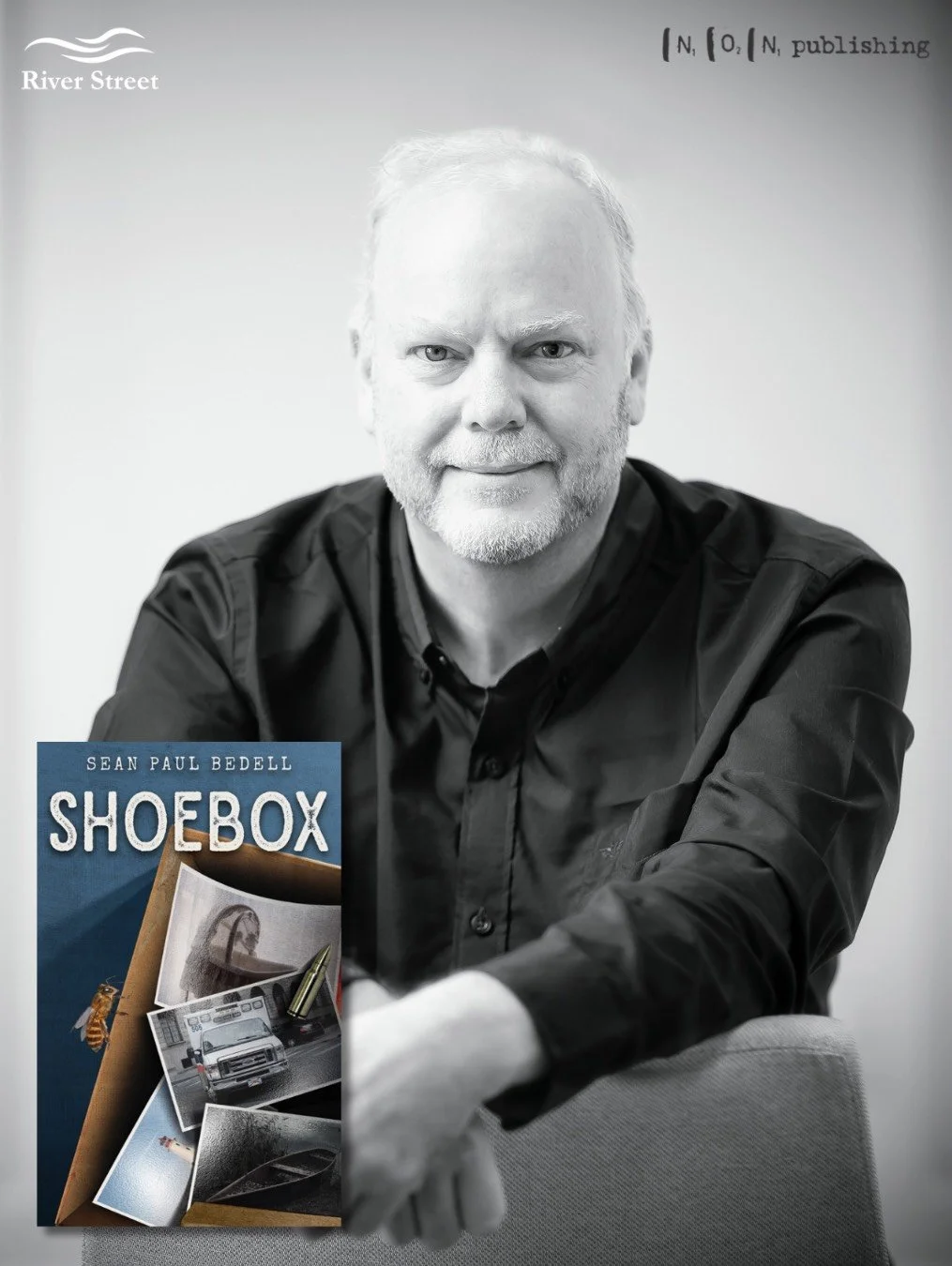
More about Shoebox:
In this gritty and emotional exploration of the human condition, Steve Lewis, a dedicated paramedic, faces the devastating aftermath of a fatal accident that casts a dark shadow over his once-passionate commitment to saving lives. Plagued by guilt and grief, he finds his career, family, and very existence hanging in the balance as he navigates the complexities of trauma both personal and professional. As Steve grapples with the high stakes of his job amidst the scrutiny of a community that admires yet questions him, each life he saves rekindles his passion for his work, reminding him of the profound connections he can forge through compassion and care. A compelling and visceral journey of personal redemption and triumph over adversity, Shoebox explores the human spirit's capacity for healing.
About Sean Paul Beddell:
Author of the novel Somewhere There’s Music, Sean Paul Bedell has been writing and publishing for more than 30 years. A longtime paramedic and captain with the fire service, he lives with his wife Lisa in Dartmouth, Nova Scotia.

Excerpt from Lockers are for Bearcats Only by Mallory Tater
With an unnaturally faint heart, I clasp
rooted qualms that match my own:
fears hidden in worn rock,
fears that rest in vertebral gaps.
SUN GONE
With an unnaturally faint heart, I clasp
rooted qualms that match my own:
fears hidden in worn rock,
fears that rest in vertebral gaps.
Cora—she is the tallest.
She climbs in dark, and I write
our names in clay with a thin,
child-legged branch. All the way
up now; the sand and Cora’s legs meld,
grit rains down from her feet
into my open mouth. I wish Cora
would fall, only in dream,
so she won’t feel the rocks,
the enormity of the rocks below
where I stand and speak of things
too faint. If I could see Cora now
I’d see the winding sky has shrunk her,
but we would watch the damp
vectors of mountains.
She would pause in binding worship,
she would pause,
every reef of her bones
would pause.
EARTHQUAKE KIT
I gorge on chickpeas, undrained and stinking,
under the bed, saved for our earthquake kit—
that day, we all anticipate
Vancouver to be ensorcelled by one stoned
and shoulder-chipped God.
Boundary Bay will draw a high fever.
Mount Baker will headache with fear.
We will hide under ourselves,
whisper we should have moved
to Pembroke or Antigonish when we got grants.
Tonight, it’s not that I planned
to eat our cluster of rations—Nature Valley bars,
canned pickerel, homemade fruit leather—
it’s that grief clutched me and would not let
me walk. I could not walk the serpentine
trail down Cambie Street to No Frills
for orange juice and frozen pizza.
I could not walk to Kia Foods
for kale and brown bread.
I can eat grief now. I trim wrappers with scissors,
brine my lips with small, tinned fish,
all those bones, my mouth gnathic in missing you.
I took one of her velour sweaters
from your closet. I wear it often. I did not steal
her Ariana Grande CLOUD perfume
but I sprayed it on my wrists and neck.
I did snap a photo of a photo—her beautiful childhood
self on a toboggan—
gap-toothed, forever-girl, winter
splashed on her cheeks. When we were girls
we’d weave our hair together until we were conjoined,
we’d wear g-strings and tell lies to our moms,
we’d tell lies about ourselves to each other
under the glow of lava and ice fiber lamps,
all because we were bored and breathing.
My survival has become silent—
it’s not legumes, an emergency radio, AA batteries.
I am not afraid of The Big One.
I am not afraid of some drunk God.
I am afraid of what I can do without her.
And how she can’t see me doing it.

Mallory Tater and her poetry collection, Lockers are for Bearcats Only (Palimpest Press, February 15, 2025)
Lockers are for Bearcats Only by Mallory Tater offers poetry that traces the complexities of grief, the importance of destigmatizing dialogue around suicide, and the beauty and complicated core of girlhood friendships while improving our collective understanding of mental health awareness and suicide prevention in an approachable, concrete, and empathetic way.
The poems spill out from the confluence of grief and water. After losing one of her closest friends, the poet began swimming laps—part meditation, part therapy, part escapism—immersed in the depths of the public pool. There, she found herself haunted by the strange tension between fitness / surrender and memory / motion where ghosts of girlhood, catholicism, and addiction rose to the surface.
These themes haunt Lockers Are for Bearcats Only – a tender, unguarded exploration of loss, embodiment, and the currents that carry us through life with and without those who shaped us.
About Mallory Tater:
Mallory Tater is the author of This Will Be Good: Poems (Book*Hug Press, 2018), The Birth Yard: A Novel (HarperCollins, 2020), and Soft Tissue: A Novel (forthcoming, ECW Press, 2027). She was the publisher of Rahila’s Ghost Press, a now-retired chapbook press. Mallory currently lives in Vancouver, where she teaches at the University of British Columbia’s School of Creative Writing. Lockers are for Bearcats Only is her second poetry collection.

Excerpt from Into the D/Ark by David Elias
The Ark loomed before her now, a green monolith in a sea of white, like a land mass all its own that by its sheer size was able to alter the course of the storm. Martha watched the snow sweep up onto the wide plane of its sprawling roof, slide in wide swaths along the incline until it crested over the peak in swirls and eddies, sifted down the far side to cascade gently over the edge, settle along the wall in a long line white.
The Ark loomed before her now, a green monolith in a sea of white, like a land mass all its own that by its sheer size was able to alter the course of the storm. Martha watched the snow sweep up onto the wide plane of its sprawling roof, slide in wide swaths along the incline until it crested over the peak in swirls and eddies, sifted down the far side to cascade gently over the edge, settle along the wall in a long line white.
Standing there was a little like the Grand Canyon, or Niagara Falls or the Rocky Mountains. The sudden comprehension of scale. Of what it meant to feel small. She moved toward the near wall, out of the wind now, and stepped up onto the snow bank, sharp-edged and hardened, through the veil of snow drifting down off the roof and into the hollow, sheltered space, a few feet wide, between the green wall of the Ark and the snow. Flakes showered down from the roof in crystal hisses, cascaded over her like a white and powdery falls as she walked along until she reached the corner of the building and stepped around it, back into the wind. Stayed close to the wall until she came to the same small door she remembered from her last visit, tried the latch and when it offered no resistance, pushed it open far enough to step inside.
The world changed instantly from blinding white to blinding black. Light poured in through the open door like an invasion, a violation of what must have been, until a moment ago, total darkness. Martha waited for her eyes to adjust, her breath visible in smoky clouds that vanished beyond the sharp straight lines of the light’s boundaries. It was very cold inside, much colder than outdoors. There was a heaviness to the cold in here. A weight of something sucking heat out of her body. A dampness. In the hollow quiet, the yawning dark, an eagerness to swallow up everything - light, heat, sound. Martha took a few steps in, listened. The only sound the snow sweeping across the long slope of the roof, washing over her like the glassy whisper of sand on a wide ocean beach.
The darkness beyond the edge of the light from the doorway seemed liquid, to be flowing away from her as she strained to push the boundaries of her vision deeper into it. Snow was streaming in through the open door now, fanning out over the dirt floor like a white luminescent bridal veil, and as it grew, reflected more and more light into the chamber, up into the rafters, until Martha could make out a faint skeleton of trusses and beams overhead, like the ribcage of some oceanic leviathan that had swallowed her whole.
She walked through the widening pool of light until she reached the edge, stopped, a little unsteady on her feet, swayed from side to side as though she might have descended below the decks of a massive wooden vessel at sea in a storm. Now and then a creak came down out of the rafters as the Ark shifted and groaned in the wind. A tall oak timber, stripped of its bark, rose up before her like the mast of a ship and disappeared into the rafters above. She ran her fingers along its surface, slapped at the smooth wood with a satisfying smack, like a hand on naked flesh that echoed into the vast chamber. A ladder leaned against the far side of the timber, climbed along it to where the light hardly reached. Next to it hung a set of ropes that led up into the rafters. A dark mass on the ground, not far from the base of the ladder. The vague shape of a figure crouched low. The indistinct shadow of someone crumpled into a kneeling position.
Martha drew closer and saw that it was a human shape, perched on its haunches, utterly still. And then she could make out the long black coat, the wide-brimmed hat, brought her hand to her mouth, leaned in closer to examine her brother, touch a finger to his hands, translucent and pale as snow, clasped before him, fingers entwined, as though praying, follow the faint pattern of frost over his face, lifeless eyes turned up, as though in a moment of exquisite, frozen rapture.
She straightened and put one hand on the ladder to steady herself, followed his gaze up into the rafters to try and see what it was her brother had been so fixated on but the darkness there was impossible to penetrate. She stepped onto the first rung, pulled herself up onto the second, turned to look up but still the dark would not yield. There was something up there. She thought of climbing back down but then she remembered the box of wooden matches she’d picked up on her way out, knowing she was coming here, fumbled through her pockets and brought them out. With one arm locked around the wrung of the ladder she slid open the box and took out three matches, bunched them together, scraped them along the side of the box. An orange light burst forth and she climbed, head down, watching her footfalls as she ascended the ladder, held up the burning matches and found herself at eye level with a pair of naked blue feet, one resting over the other, a spike driven through both, turned her wide eyes up long enough to see Clarence, head resting on his chest, arms spread eagle, staring back down at her. The matches burned her fingers now and she cried out, launched herself backward through the air, arms wide, like a diver.
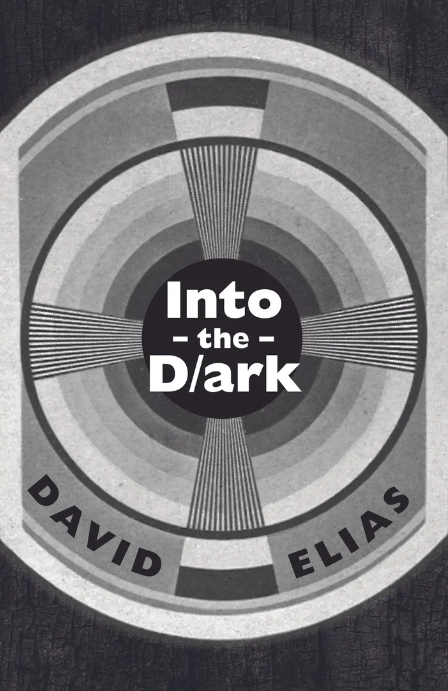
Bring home Into the D/Ark by David Elias, published by Radiant Press, 2025.
About Into the D/Ark:
Rose Martens struggles with the aftermath of a terrible fire that has left her sons, Jake and Isaac, horribly disfigured. The boys have gone to live in an abandoned house they’ve named Bachelor’s Paradise, where they spend all their time watching American network television. Their father Clarence works day and night in his blacksmith shop, producing bizarre metallic creations no one can make any sense of. Martha Wiebe returns to the stifling conformity of the valley to discover that her brother Abe, a preacher, has abandoned his congregation to devote himself to the construction of “The Ark”, a massive and mysterious edifice whose purpose he will not divulge. When the first major snowstorm of the year roars into the valley, it unleashes a chain of bizarre events that the valley may never recover from.
Praise for David Elias:
“Winnipeg writer David Elias fashions scenes that are literally breathtaking: sometimes because of the sheer beauty and insight of the passage; sometimes because of the bone-chilling tenor of the description. Both aspects demonstrate the potency and reach of Elias’s writing.”
— Winnipeg Free Press, October 12, 2008, Marjorie Anderson, (Review of Waiting for Elvis)
About David Elias:
David Elias is the author of seven books, most recently The Truth about the Barn: A Voyage of Discovery and Contemplation, published by Great Plains Publications. It was featured in the Winnipeg Free Press as one of the top titles for 2020. His most recent work of fiction is an historical novel, Elizabeth of Bohemia: A Novel about Elizabeth Stuart, the Winter Queen. It was published in 2019 by ECW Press, and was a finalist for The Margaret Lawrence Award for Fiction at The Manitoba Book Awards. His previous works have been up for numerous awards including the McNally Robinson Book of the Year, the Amazon First Novel Award, and The Journey Prize. His short stories, novel excerpts, and poetry have appeared in literary magazines and anthologies across the country, and in addition to writing he spends time as a mentor, creative writing instructor, and editor. He lives in Winnipeg, Canada.

Excerpt from The Chorus Beneath Our Feet by Melanie Schnell
It is a cool spring morning, and a boy and a girl are running, breathless and laughing, in ragged circles around their backyard. The girl gallops clumsily, just out of reach of the bigger boy’s grasp. The two-storey house behind them is faded white clapboard, the paint chipped and peeling at the edges. An old shed crouches at its flank, its low roof sagging beneath the weight of tree droppings and decades-long neglect. The sun shines through smudged clouds onto the damp grass. They are both barefoot, and their heels and toes are numb. The tips of fungi tendrils, intertwined in the grass roots and searching upward from dark earth, touch their soles.
Mary and Jes (1991)
It is a cool spring morning, and a boy and a girl are running, breathless and laughing, in ragged circles around their backyard. The girl gallops clumsily, just out of reach of the bigger boy’s grasp. The two-storey house behind them is faded white clapboard, the paint chipped and peeling at the edges. An old shed crouches at its flank, its low roof sagging beneath the weight of tree droppings and decades-long neglect. The sun shines through smudged clouds onto the damp grass. They are both barefoot, and their heels and toes are numb. The tips of fungi tendrils, intertwined in the grass roots and searching upward from dark earth, touch their soles.
The nine-year-old boy is tall and muscled from climbing and bike-riding and playing shinny games on the street, which last well past his bedtime. The sun tucks itself farther upward behind the clouds as he bounds up the porch steps, slapping the screen door shut behind him. He begins counting, the syllables guttural through the woven mesh: one-hippopotamus, two-hippopotamus … The boy’s voice fades inside the big house as the girl heaves the splintered boards up behind the old shed high enough to wedge her body through to its dim inside world of damp, musty soil, clicking insects, scurrying rodents.
She squeezes herself into the darkest corner and waits for her brother to find her, while beneath her, moist fungal enzymes crawl upward to kiss and consume the light bones of a dead animal, twisting and curving through jaw, teeth, eye sockets, skull.
The network below her spreads outward, spreads downward, growing, thriving, listening.
From: Mary Blackwell treehugs@hotmail.com
To: Jes Blackwell blackwelljes@gmail.com
Monday, August 18, 2004, at 10:35 a.m.
Dear Jes,
Imagine this: You grasp the edge of the industrial-grass carpet in your hands, its edges curling up to the end of the world, and your knuckles whiten and bleed against the stiff plastic blades, and with the effort of Thor, you pull it up. There is a sucking sound as you peel it back, there are acres of it, it’s been waiting so long for you to do this, you peel it back and away for miles and miles, and it satisfies like a long-rotten tooth throbbing and screaming in your jaw, finally pulled.
And here we see the life that lies beneath: rodent bones, mouldy acorns, mud-streaked stones, a toy ring. A tin can, rusted and empty. A rectangle of glass, half a dirty plastic cup. Small skulls. Decaying stink of fungus. Refuse, treasure, braided together. And, presently, what we don’t want to see faces us: what’s been buried too long has come up to the light.
This is what the earth does. Each year what lies beneath gently pulses upward by another millimetre, another centimetre. Ever so slowly the secrets push upward. And after a million years, then thousands, then hundreds of years, it becomes this year, this day, and what has been so long buried finally faces the sun’s scorch. We must bear witness to the chorus beneath our feet, in all its entangled darkness and light. This is, in fact, what we’ve come here to do.
I hope you will come home soon.
Love,
Mary
Mary (April 18, 2011, 5:25 a.m.)
In the beginning, there was a tree.
These are words that begin a story. But each story of the Great Tree is different: Yggdrasil, the Norse tree of life, with Odin losing an eye; the Christian tree in the garden of good and evil, with the evil snake luring Adam and Eve to sin; the Ashvattha tree, under which the Buddha gained enlightenment. This story will be different, too. Everything is being unearthed now, and how will it all end? They will soon learn — those who uproot the tree — of the secrets she houses deep beneath her.
The air in the park is heavy with dew. With silence. Mist hugs the trees, the bushes, the park benches. There are no people. I steady my body on the platform as I untie the rope and release it from my waist. Light has begun to peek through the canopy of leaves. The dawn is breaking up the dark. I push my back against the trunk and stretch, ready myself for the fall. Down below, bright green shoots poke through dead brown grass. The yellow police tape is dirty and trampled upon. I look up to the emerging light through the latticework of leaves: It hurts my eyes.
I press my soles on each branch as I descend, then I jump from the bottom branch to the grass below. The dew kisses my scarred toes, sending a shiver up my calves. I take my sandals from my poncho pocket and slip them on.
I look up to her now. They call her the Harron Tree, named after the park. She told me her real name, though: Oman. I say goodbye to her in my mind, but she doesn’t respond. Her sadness is an ache in my heart. She stopped talking days ago, with the death of the child. As I turn away, everything in me wants to run back, to save her, to save them. But I can’t. There is somewhere else I must be.
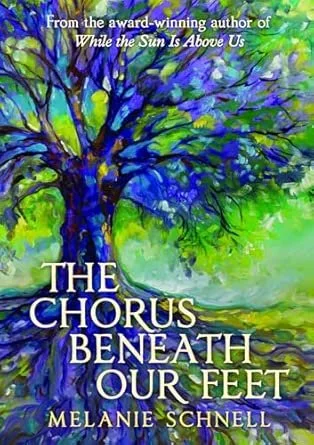
Bring home The Chorus Beneath Our Feet (Radiant Press, 2025)
About The Chorus Beneath Our Feet:
A grief-stricken soldier accompanies his best friend’s body home after eight years away, only to find his nonspeaking sister, Mary, missing and wanted for questioning by the police in the murder of an infant in the city’s central park. As Mary’s life hangs in the balance, Jes must follow the obscure clues she has left behind, the only way to find her and absolve her of wrongdoing. In his labyrinthine search, the mystery of the park’s infamous Harron tree and its connection to his sister, and their community, is slowly revealed. The Chorus Beneath Our Feet explores buried secrets, and the human desire for healing and connection.
“With her sharp, clear-eyed prose Melanie Schnell has created a symbiosis between past and present where the two relentlessly interrogate each other to unearth a story that’s both old and new, a story as disturbing as it is redeeming for the estranged siblings at its heart.”
— Iryn Tushabe, author of Everything is Fine Here
About Melanie Schnell:
Melanie Schnell’s novel, While the Sun is Above Us, was shortlisted for The Fiction Award and Book of the Year award and won the Saskatchewan First Book Award and The City of Regina Award in 2013. The novel has been listed as part of the ELA A30 curriculum in both Public and Catholic schools across Saskatchewan. Melanie has published long and short fiction, creative nonfiction, and poetry. Her fiction placed second in the City of Regina Awards in 2010 and 2017. She is currently Assistant Professor of Creative Writing, Rhetoric and Composition at the University of Regina. She lives in Regina, Saskatchewan.

Excerpt from Honeydew by Ben Zalkind
The four subversives dug into their backpacks with nervous, twitching fingers. They unzipped the vinyl and openedthe lunchboxes fully to allow themselves full range ofmovement. A pair of nitrile gloves was balled up at the bottom of each of their floppy packs. With as little motion as they could manage, they pulled them over their fingers and up to their wrists.
The four subversives dug into their backpacks with nervous, twitching fingers. They unzipped the vinyl and openedthe lunchboxes fully to allow themselves full range ofmovement. A pair of nitrile gloves was balled up at the bottom of each of their floppy packs. With as little motion as they could manage, they pulled them over their fingers and up to their wrists.
“We’ve done it all,” Honeydew continued, his froggishvoice pinched with the exertion of shouting. “Who made space tourism possible? And who built the Agora District in downtown Bonneville with robot rickshaws, stop signs that give you directions, and tons of brand spanking new jobs?”
“You did,” the crowd chanted. “Ho-ney-dew! Ho-ney-dew!Ho-ney-dew!”
The nerd emperor in the electric blue earthsuit thrust hisgloved hands in the air. “But you didn’t just come here to hear me boast like a proud dad about all the great stuff my ace Substrate employees have done. You want the swag.”
He turned to meet a young woman handing him a T-shirtcannon. One-handed, he aimed the translucent bazooka at oneof the balconies.
The audience whipped toward the target in unison. A smallboy clutching his mother’s neck took the balled-up fabric square in the face.
The crowd leapt to its feet and laughed at the child’smisfortune. With his mother’s prodding, he held up the extra-large Substrate-logoed shirt, his eyes wet with tears.
“God, he almost knocked that kid out,” Liz said to Rose.“Let’s do it now.”
Rose nudged the other two with a surreptitious elbow.Vashti blinked her assent. Barnabas’s lips peeled back to revealcrowded, straight teeth, like little cinderblocks.
Just as they had practiced, they each withdrew from their lunchboxes a tightly packed ball of Substrate TopSoyl. The soft black shreds were speckled with bits of gold and orange andwhite, which adhered nicely into a sphere with the heft and texture of clay.
They waited until the audience simmered and peoplesettled back into their translucent fold-up seats. Then, the foursome shot to their feet. They had one vanishingly slight chance of this thing working, they knew. In a fluid,synchronized motion, they withdrew their hands from their backpacks and loosed their missiles with the full force of their overhand strength.
Vashti’s loose cluster disaggregated into a shower of dampclumps, which fell onto the heads of the audience below. Liz’s struck the railing before her, bisecting the oblong hunk and sending its hemispheres falling lamely into the cup holder of an unlucky patron. Rose, the once all-state women’s softball catcher, splattered the stage with ersatz mud, some of which polluted the faux magma floes with bits of calico grit.
It was a good throw, but this was Barnabas’ golden moment. He unfurled his long, ungainly arm and liberated hisprojectile with impressive force. It whizzed through the air and stayed intact, rocketing toward its mark with a sniper’saccuracy. It caught Honeydew flush in the Substrate insigniapainted on the chest of his earthsuit.
The moment of impact dilated in Liz’s perception. Thesting of her failure to launch gave way to a thrill of glory.Honeydew’s arms splayed out and he let out a guttural grunt.His boyish face contorted into a mask of confusion and fear.The assembled gasped in concert.
“Hell yes!” Barnabas shouted into the momentary silencethat followed.
But his celebration was short-lived. Honeydew’s sentinelswere on the gang within what seemed like seconds. Where they came from was anyone’s guess.
—Excerpt from Honeydew by Ben Zalkind. Published by Radiant Press, 2025. Reprinted with permission. Copyright Ben Zalkind.
Read our interview with Ben here.
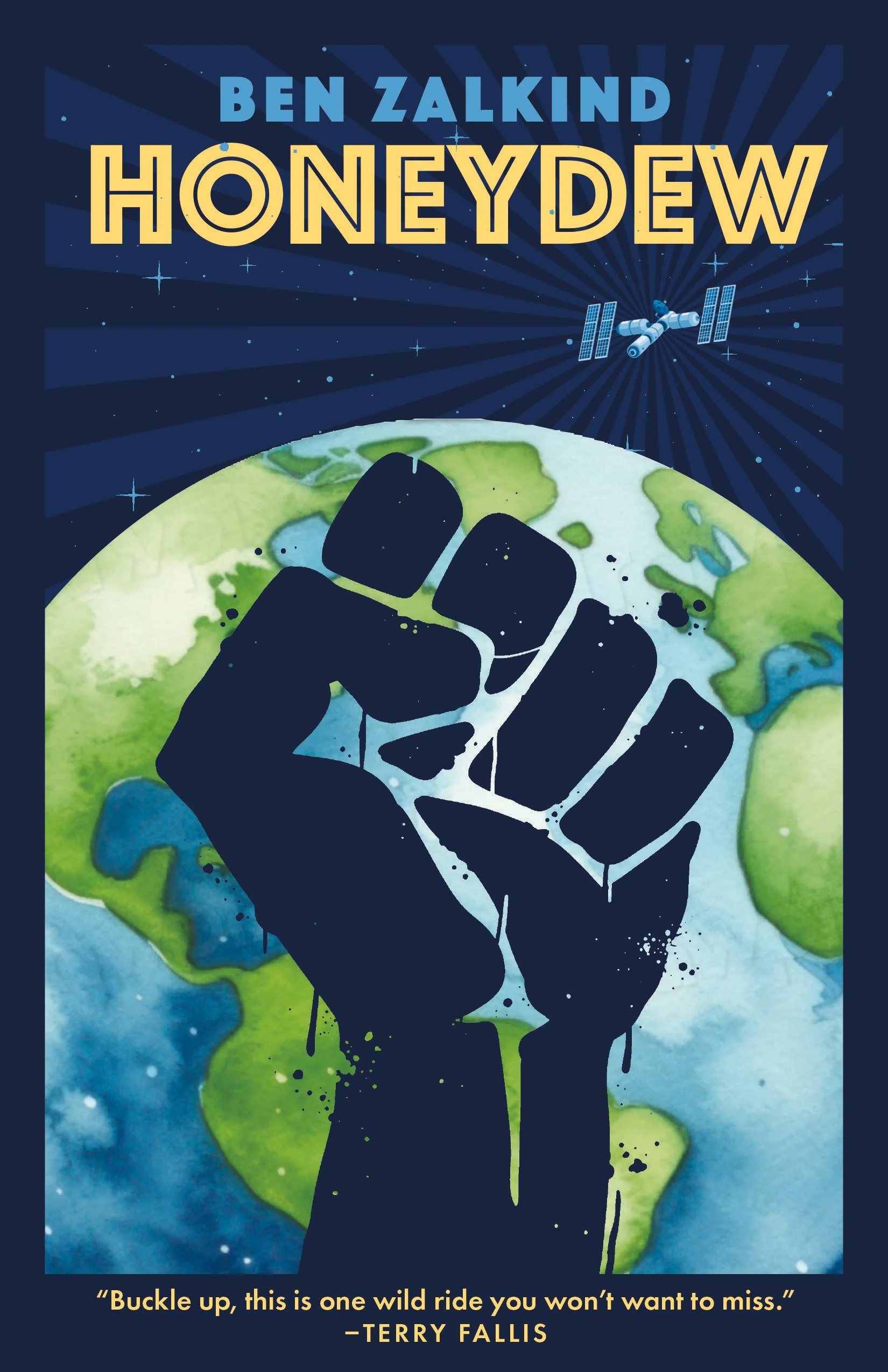
About Honeydew:
Rose Gold can’t catch a break. Her latest “golden opportunity” has given way to a madcap adventure through the soft underbelly of Bonneville City. She finds herself cast in the role of renegade mentor and hero to a trio of idealistic young rebels. Together, they perpetrate an act of subversion targeting “future-mover” and celebrity CEO Moses Honeydew, which puts them in the crosshairs of his Substrate Inc.
Along the way, they join forces with family-doctor-by-day and fixer-by-night, Dr. Hansjorg Winteregg, and go on the lam. Meanwhile, there are rumours about Honeydew’s private space station, The Visionary, which may or may not have forced its first passengers into working off their debt. Rose’s boss and his crew go missing. Honeydew announces his plan to take a manned submersible drill to Earth’s mantle to burnish his brand as a fearless and impossibly cool maverick.
With her faithful charges by her side, Rose finds herself at the centre of an unfolding conspiracy. Did she ever truly have a hand on the rudder of fate? And what chance does a quartet of second-rate saboteurs have against a multinational corporation with a vendetta and a trillion-dollar market capitalization?
Bring home Honeydew.

Ben Zalkind lives and works in Calgary, Canada. His debut novel, Honeydew, was released by Radiant Press in October 2025. A Salt Lake City native and naturalized Western Canadian, Ben is happiest outdoors, where he can cycle, drink coffee, and adventure with his wife and fellow traveller.

Excerpt from NMLCT by Paul Vermeersch
Poetry that explores our “post-truth” society, NMLCT holds up a mirror not only to nature, but also to its unnatural distortions and facsimiles. Imagine The Matrix retold by the reanimated cyborg bodies of the Brothers Grimm.
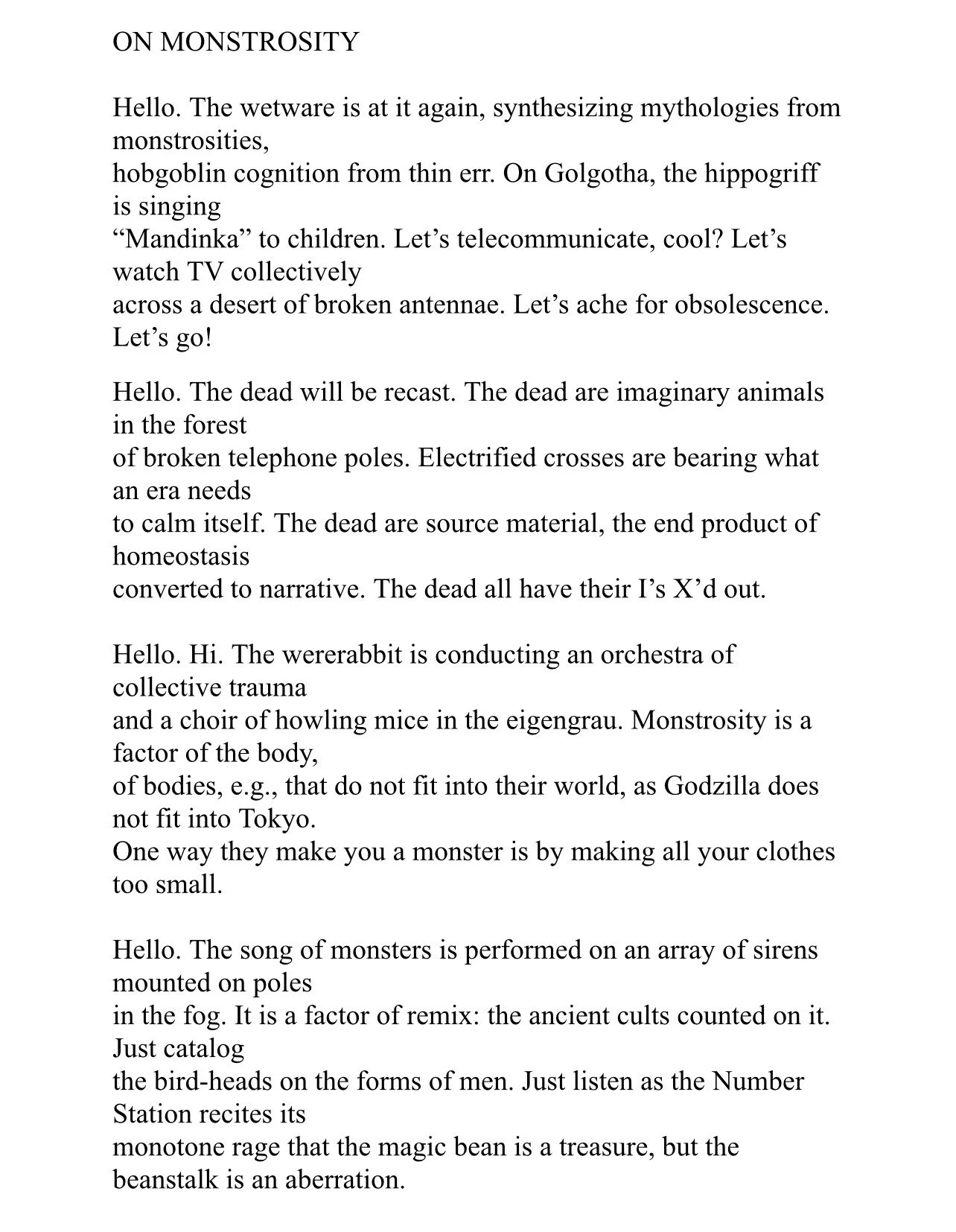
Excerpt from NMLCT by Paul Vermeersch. Published by ECW Press. Copyright Paul Vermeersch. Reprinted with permission.
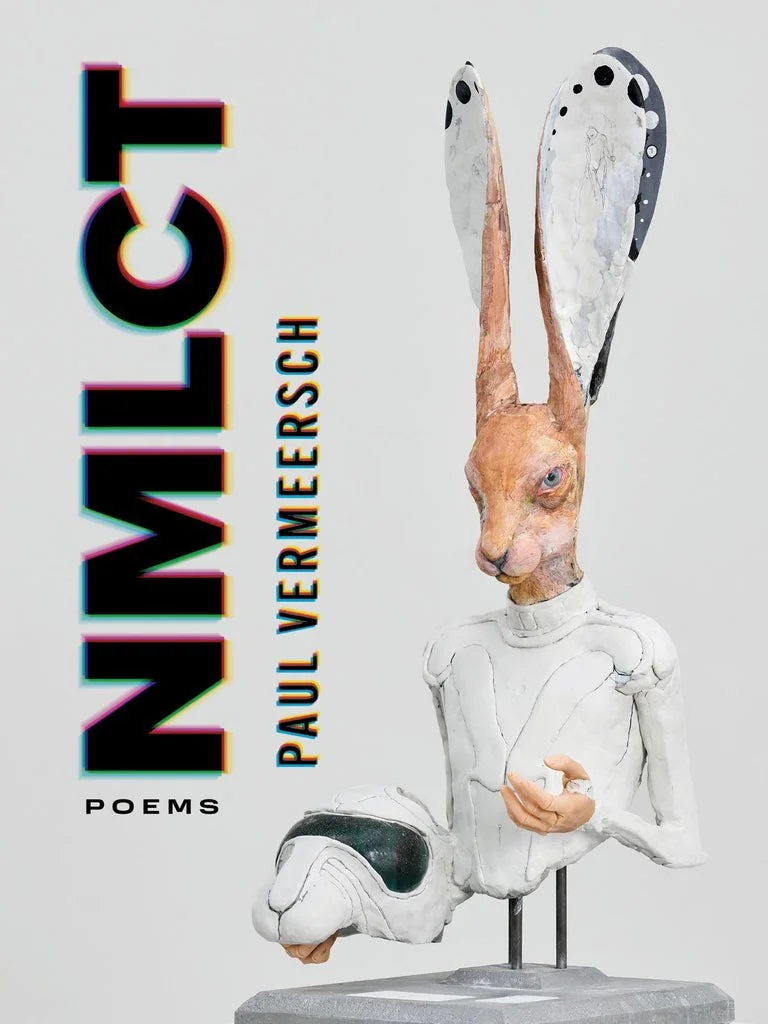
About NMLCT:
Poetry that explores our “post-truth” society, NMLCT holds up a mirror not only to nature, but also to its unnatural distortions and facsimiles. Imagine The Matrix retold by the reanimated cyborg bodies of the Brothers Grimm.
“Paul Vermeersch has become more daring and emphatic with every poetry collection, and this book is a blistering mourner’s lament: audacious, brutal, compassionate, and darkly ecstatic. ‘What on earth,’ he asks, ‘has happened here, and when? Who is the astronaut and who is the ape?’” — Stuart Ross, author of The Book of Grief and Hamburgers and The Sky Is a Sky in the Sky
Fables and fairy tales collide with virtual reality, artificial intelligence, and monstrous myths in a world where no one knows what to believe. In his eighth book of poems, Paul Vermeersch responds to the increasing difficulty of knowing what is real and what isn’t, what is our genuine experience and what is constructed for us by The Algorithm. In a “post-truth” society rife with simulations, misinformation, and computer-generated hallucinations, these poems explore the relationship between the synthetic and the authentic as they raise hope for the possibility of escape from MCHNCT (Machine City) to NMLCT (Animal City), where the promise of “real life” still exists.
All precisely 16 lines long — identically formed as though mass-produced — these poems are themselves artificial creations, products of the imagination, sometimes disorienting but always vivid. In NMLCT, Vermeersch gives us his answer to an existence in thrall to the artificial. But it also foretells a different future, one where the air and the grass and the trees, and all the life they engender, might always be genuine and sensed and safe.
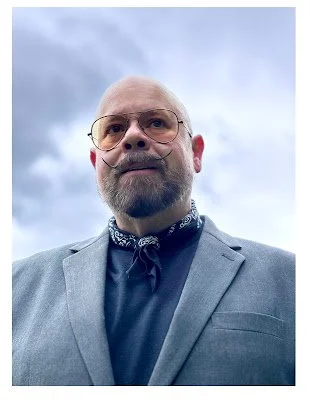
Photo of Paul Vermeersch by Bianca Spence
Paul Vermeersch is a poet, multimedia artist, and literary editor. His last book of poetry was Shared Universe: New and Selected Poems 1995–2020. A professor of creative writing and publishing at Sheridan College, he also edits his own imprint, Buckrider Books, for Wolsak & Wynn Publishers. He lives in Toronto, ON.

Excerpt from The Haunting of Modesto O'Brien by Brit Griffin
Lily released the arm of Mr. Johnstone and turned to look at Coffin. “I think you have me confused with someone else. I’m Theodora Bow, here with the travelling show. Colleen Bawn? Perhaps you’ve seen it?”
Coffin, grinning now, said, “You can certainly act. But you can’t lie about those violet eyes of yours, can you?”
Lily rested her hand on Johnstone’s arm to bring him along with her as she took a few steps towards Coffin. She sighed and said, “Sir, you really are confused,” and then smiling patiently turned to Mr. Johnstone and said, “Mr. Johnstone, what colour are my eyes?”
Lily released the arm of Mr. Johnstone and turned to look at Coffin. “I think you have me confused with someone else. I’m Theodora Bow, here with the travelling show. Colleen Bawn? Perhaps you’ve seen it?”
Coffin, grinning now, said, “You can certainly act. But you can’t lie about those violet eyes of yours, can you?”
Lily rested her hand on Johnstone’s arm to bring him along with her as she took a few steps towards Coffin. She sighed and said, “Sir, you really are confused,” and then smiling patiently turned to Mr. Johnstone and said, “Mr. Johnstone, what colour are my eyes?”
He flushed deeply, said, “Miss Bow, by all accounts they appear to be a dark brown to me.”
She turned to Coffin and said, “You see, as Mr. Johnstone can attest, I am not your lady friend, now please, if you don’t mind, I have business to attend to.”
“I know damn well you’re Lily Nail. You and that crazy sister of yours are up here running some sort of swindle.” He then said to the men mesmerized by the scene unfolding before them, “She robbed some fellas back in Butte of their hard-earned money. Not sure what kind of women’s trickery she’s using here, but that there is Lily Nail and there’s a reward on her head. I know that as sure as my name’s Tom Coffin.”
“What an unfortunate name sir, and though I cannot attest to the veracity of your name, I do know the colour of my own eyes. And as everyone here can plainly see with their own eyes, they are brown, not violet. Now I really must be off. I am in quite a hurry,” she said, even as she was still moving slowly towards him.
“Hurrying off to church?”
“The Mining Recording office. I have a claim to register.”
“A prospector as well as an actress Lily?”
“As I said, my name is Miss Bow. And actually, I have an agent working on my behalf,” she was saying as she continued towards him, “A Mr. Campbell, and I believe he has done well by me.”
Coffin frowned. “Campbell?”
“Yes, a Mr. Campbell. I suppose you know his eye colour as well.” A few men snickered and by now Lily was right at his table, able to view the cards laid out there, most face up, the men at the table having just finishing a round.
“What claim?” asked Coffin.
“Oh, I’m really not too sure. Not that it is any of your concern, but Mr. Campbell just said a piece of ground had become available owing to some tragedy. He said other prospectors working in the same area were reluctant to work the property. He further explained that the area had great promise even though there had been accidents, then of course stories began to circulate. Mr. Campbell explained that miners were a superstitious lot. But of course, a woman does not have the same opportunities as a man, we can’t afford such superstitions, so I took it.”
There was a murmur through the crowd, and a man leaning on the bar called, “Out at Kerr Lake?”
“Oh maybe, that sounds familiar.” Smiling, asked him, “Am I going to be rich?”
The man glanced uneasily at the others around him but didn’t answer.
“You’re staking out at Kerr Lake?” Coffin asked.
“As I said, I really can’t say for sure as I was relying on the good nature of Mr. Campbell to assist me. Just before he left town, he contacted me to say he had finalized everything, and I was to stop by the Mining Recorder’s office and pick up my documents. So that is where I’m off to.”
“I was working with Campbell.”
Lily said, “Is that right? Well good luck to you sir”, and then glancing back down at his cards said, “Oh goodness yes, you certainly will be needing it,” her pale hand now reaching and spreading out the cards, murmured, “my, my that is quite the hand you have there.”
“This is poker darling, not one of your parlour games,” Coffin said.
“The cards never lie.”
“What’s he got, Miss,” a man along the bar called out, “a dead man’s hand?” A few men laughing.
“No, he has a pair of fours, and an eight and seven of clubs, and the ace of spades.”
“Not taking home the pot with that one,” someone yelled, and again laughter.
“Oh, but it’s quite the hand.”
“Shut your mouth,” Coffin said, now reddening, mad, not used to being laughed at.
Lily said, “But there is so much to see here, and it’s a bit more complicated than the dead man’s hand. See, look here, this one, the diamond,” then glancing up at Coffin asked, “Sorry, sir? What was your name again?”
A man at the bar shouted, “Coffin.”
“Yes, of course, pardon me, Mr. Coffin,” she said, then focused her attention on the cards, touched the four of diamonds, said, “Seems like you must have a friend you shouldn’t be trusting.”
“That’d be Shitty!” the man at the bar shouted, getting another few laughs.
“And this one, your eight of clubs, a card of caution, for coveting. Do you covet something Mr. Coffin? And here again, dear me, yet another caution with your four of clubs. Imperiled by your short temper perhaps?”
Coffin could not but help glance down at the cards as she said, “But these last two, they really help tell your story. The seven of clubs, danger from a member of the opposite sex, goodness, that could spell rack and ruin for you Mr. Coffin.”
“What about the ace?” the man at the bar calling out.
“Oh that’s simple. Death. Perhaps in a duel. How old fashioned.”
Coffin grabbed her hand, his grip strong, said, “Get out of here.”
“If you want me to leave, sir, you will need to release my hand.”
He stared at her for a few long seconds as she stared back, the men watching rapt, and she said, “Let go of me.”
Then Coffin jerked his hand away as if burned, “You little bitch, I’ll be seeing you later, you can bet on that Lily Nail.”
Excerpt from The Haunting of Modesto O’Brien by Brit Griffin. Reprinted by permission of Latitude 46 Publishing. Copyright Brit Griffin, 2025.
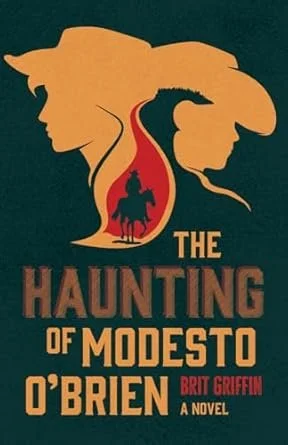
The Haunting of Modesto O’Brien by Brit Griffin, published by Latitude 46 Publishing.
About The Haunting of Modesto O’Brien:
A gothic tale from deep within the boreal forest…
Violence and greed have intruded into a wild and remote land. It’s 1907, and silver fever has drawn thousands of men into a fledgling mining camp in the heart of the wilderness. Modesto O’Brien, fortune-teller and detective, is there too - but he isn’t looking for riches. He’s seeking revenge.
O’Brien soon finds himself entangled with the mysterious Nail sisters, Lucy and Lily. On the run from their past and headed for trouble, Lily turns to O’Brien when Lucy goes missing. But what should have been a straightforward case of kidnapping pulls O’Brien into a world of ancient myths, magic, and male violence.
As he searches for Lucy, O’Brien fears that dark forces are emerging from the ravaged landscape. Mesmerized by a nightmarish creature stalking the wilderness, and haunted by his past, O’Brien struggles to maintain his grip on reality as he faces hard choices about loyalty, sacrifice, and revenge.
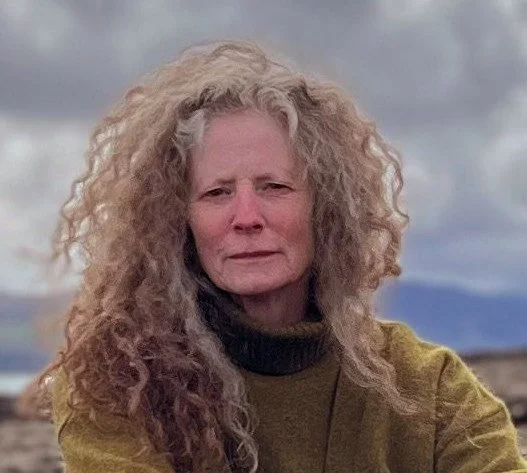
Author Brit Griffin.
ABOUT BRIT GRIFFIN:
Brit Griffin is the author of the climate-fiction Wintermen trilogy (Latitude 46) and has written essays, musings, and articles for various publications. Griffin spent many years as a researcher for the Timiskaming First Nation, an Algonquin community in northern Quebec. She lives in Cobalt, northern Ontario, where she is the mother of three grown daughters. These days, she divides her time between writing and caring for her unruly yard.

Excerpt from Long Exposure
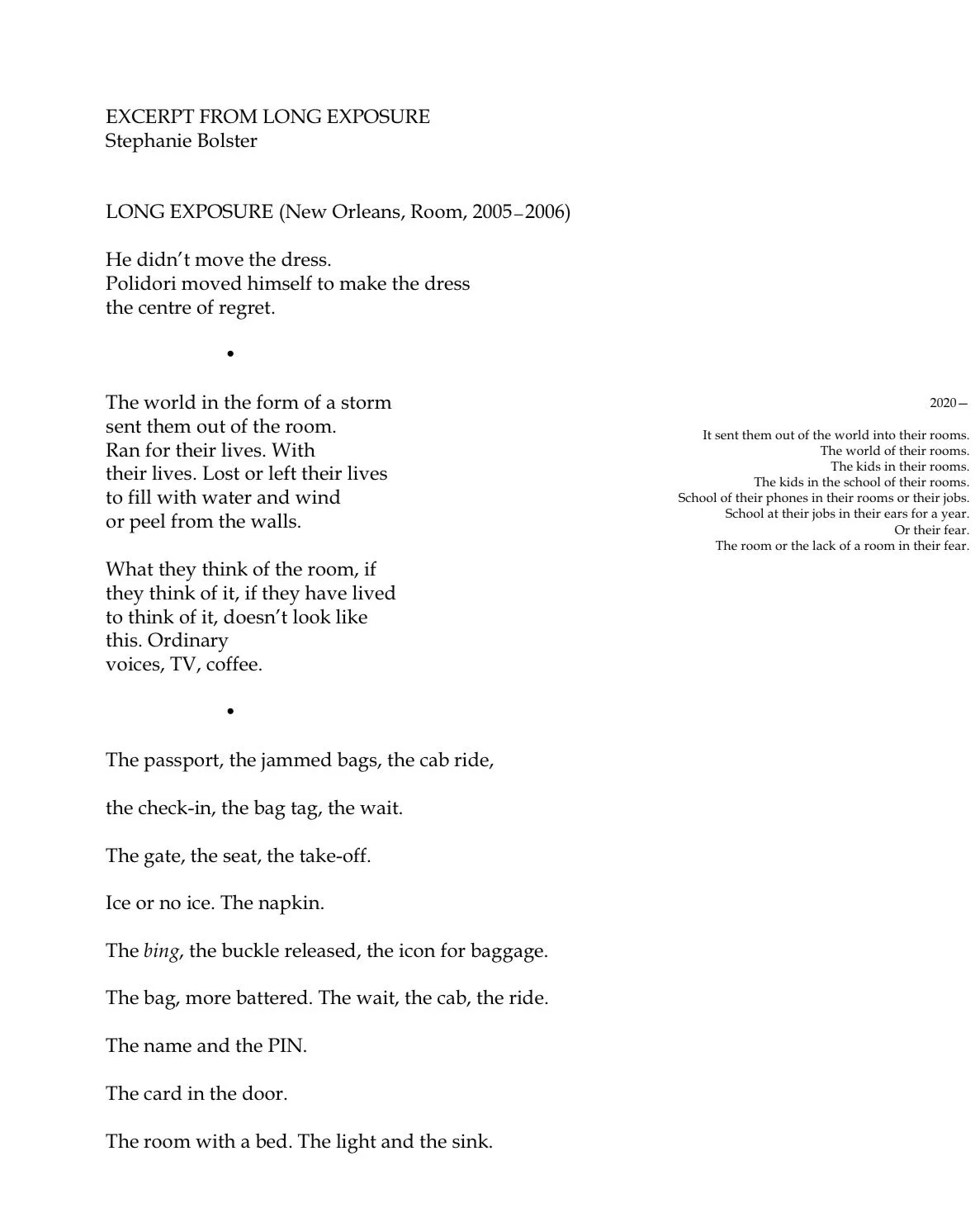
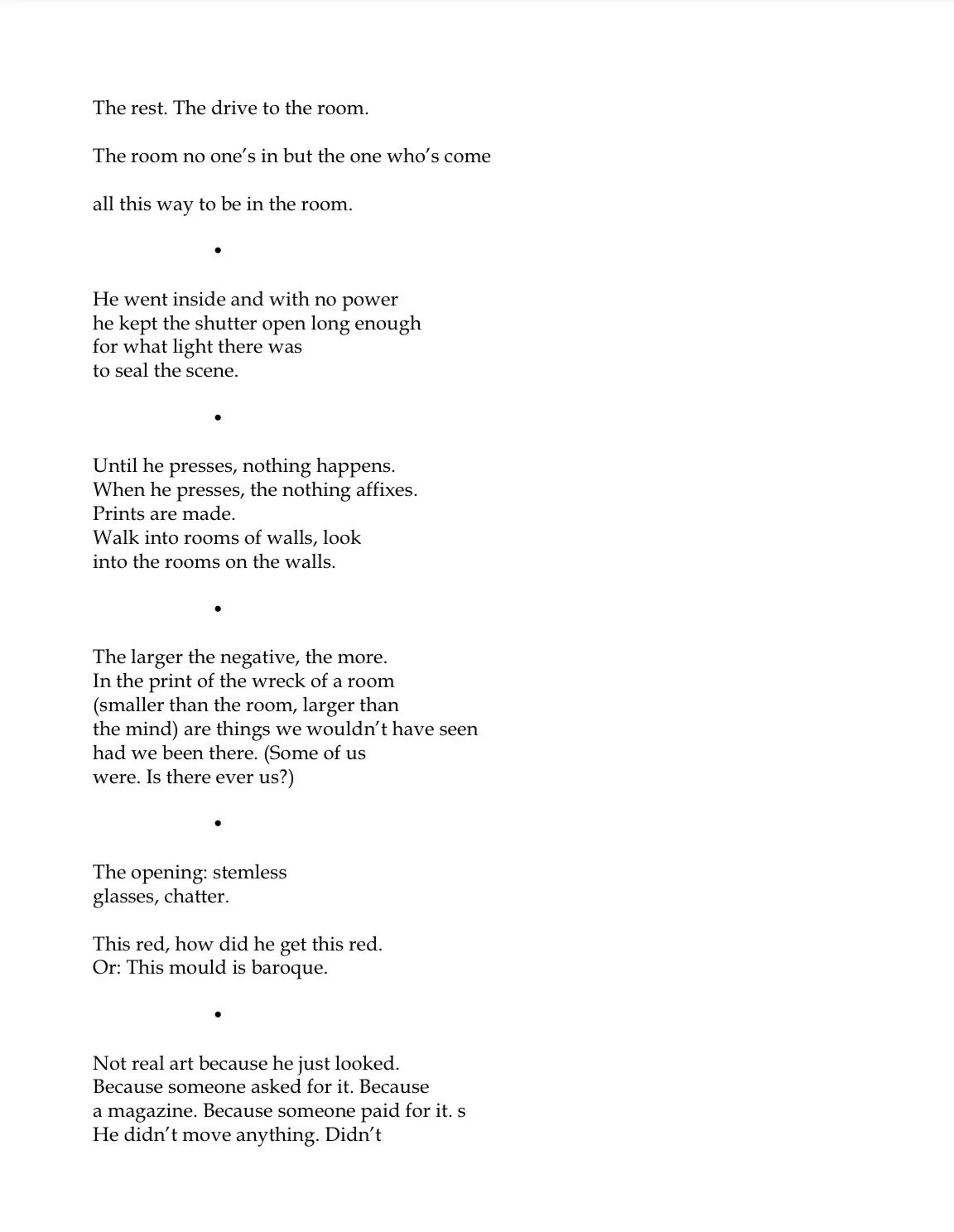
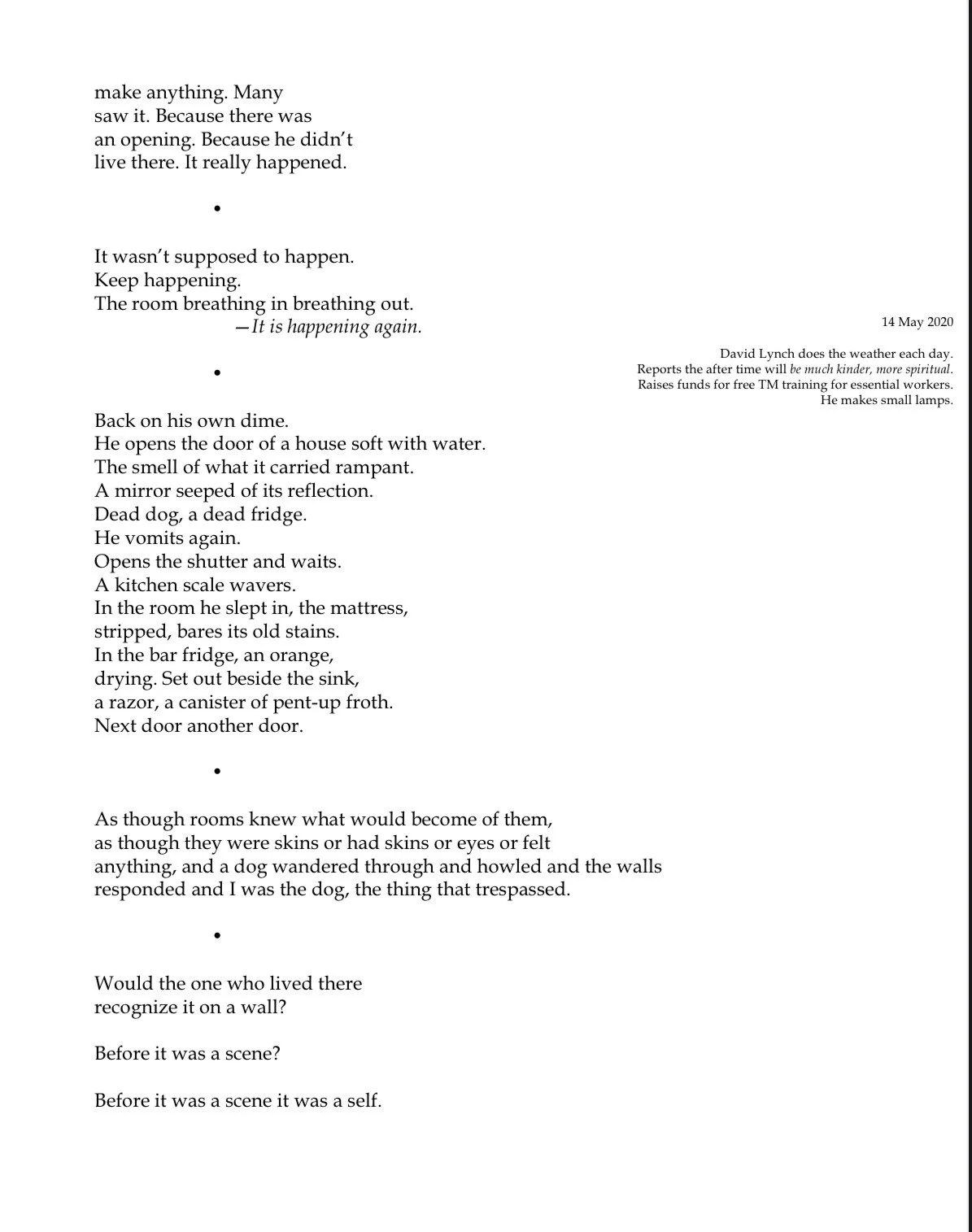
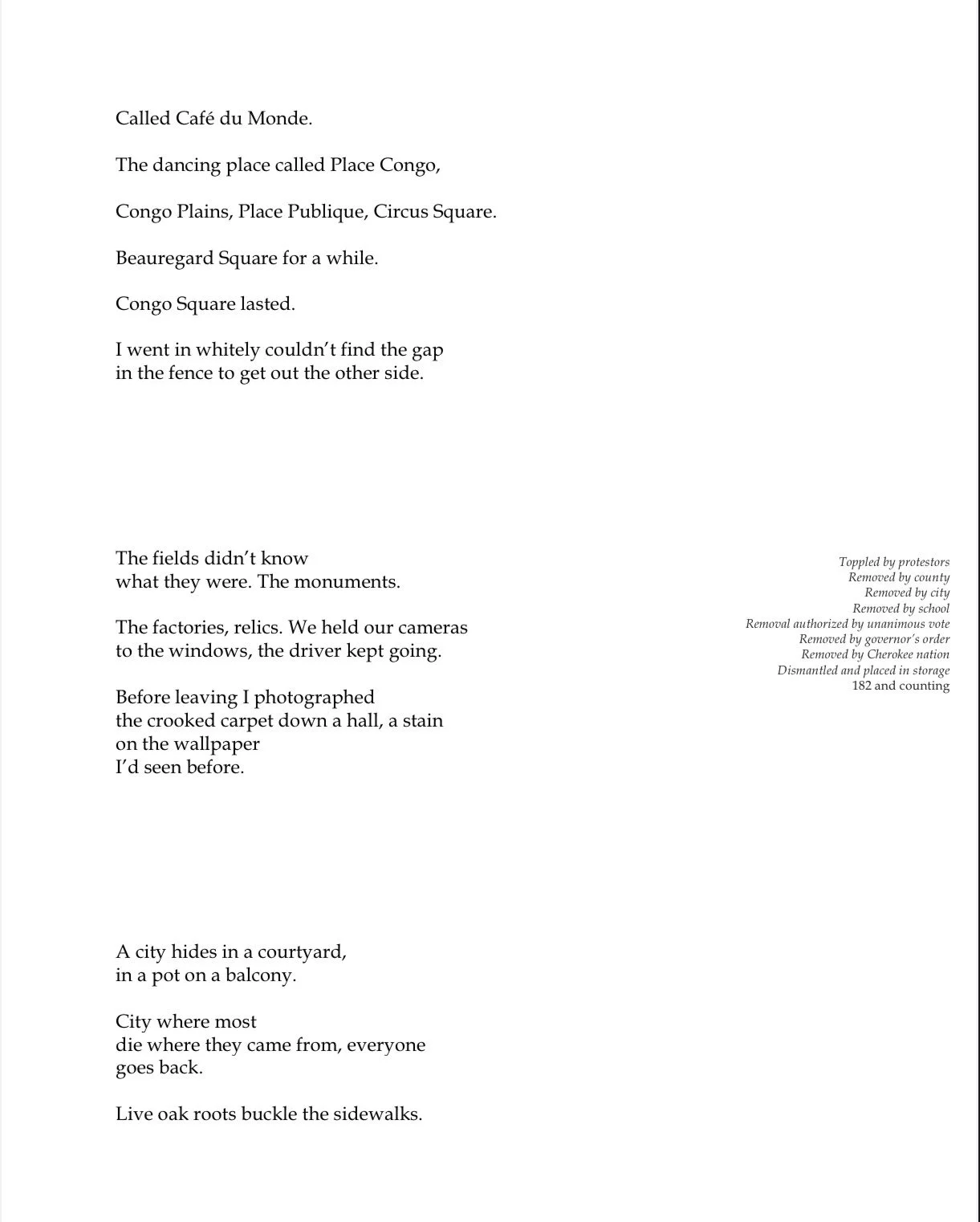
After Hurricane Katrina, the photographer Robert Polidori flew to New Orleans to document the devastation. In the wreckage he witnessed, and in her questions about what she saw in what he saw, Stephanie Bolster found the beginnings of a long poem. Those questions led to unexpected places; meanwhile, life kept pouring in. The ensuing book, Long Exposure, is Bolster’s fifth, a roaming, associative exploration of disasters and their ongoing aftermaths, sufferings large and small, and the vulnerability and value of our own lives. Incremental, unsettling, Long Exposure rushes to and through us.
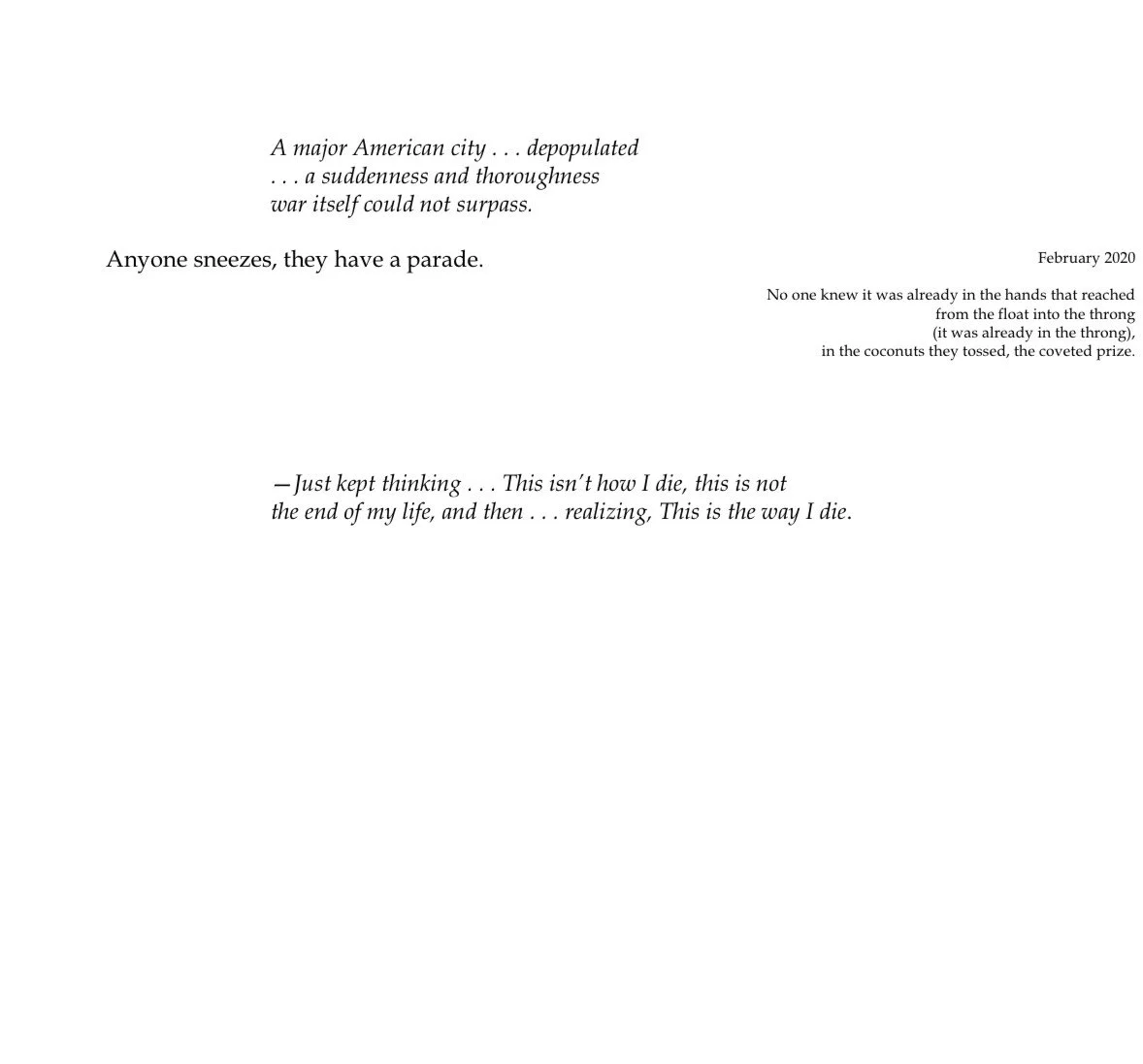
Excerpt from Long Exposure by Stephanie Bolster. Reprinted by permission of Palimpsest Press.

Long Exposure by Stephanie Bolster
After Hurricane Katrina, the photographer Robert Polidori flew to New Orleans to document the devastation. In the wreckage he witnessed, and in her questions about what she saw in what he saw, Stephanie Bolster found the beginnings of a long poem. Those questions led to unexpected places; meanwhile, life kept pouring in. The ensuing book, Long Exposure, is Bolster’s fifth, a roaming, associative exploration of disasters and their ongoing aftermaths, sufferings large and small, and the vulnerability and value of our own lives. Incremental, unsettling, Long Exposure rushes to and through us.

Stephanie Bolster has published four books of poetry, the most recent of which, A Page from the Wonders of Life on Earth, appeared with Brick Books in 2011 and was a finalist for the Pat Lowther Award. Her first book, White Stone: The Alice Poems (Véhicule Press, 1998) won the Governor General’s and the Gerald Lampert Awards, and her second, Two Bowls of Milk (McClelland & Stewart, 1999), won the Archibald Lampman Award and was a finalist for the Trillium Award. Her work has been translated into French (Pierre Blanche: poèmes d’Alice, Les Éditions du Noroît, 2007), Spanish, German, and Serbo-Croatian. She edited The Best Canadian Poetry in English 2008 (Tightrope), the inaugural volume in that ongoing series; and co-edited Penned: Zoo Poems (Signal/Véhicule, 2009). Born in Vancouver, she grew up in Burnaby, BC, now lives in Pointe-Claire, Québec on the Mohawk (Kanien’kehá:ka) territory of Skaniatará:ti, and has taught creative writing at Concordia University in Montréal since 2000.

Excerpt from Ajar by Margo LaPierre
Do you like my braids? Pinterest taught me.
Curls come tumbling.
I have a room just for this. Night terrors and vanity.
Pigeons, rroux rroux.
Rroux, rroux. It sounds like American poets.
Sounds like opaque familiarity.
Manic Wire
Do you like my braids? Pinterest taught me.
Curls come tumbling.
I have a room just for this. Night terrors and vanity.
Pigeons, rroux rroux.
Rroux, rroux. It sounds like American poets.
Sounds like opaque familiarity.
Words can be barriers to define self, concisely.
Call me modal (a helping verb): domestic, gullible.
Or fierce. Woo me. Count me among the wombed
wombing. Periodically cocooning.
Time flattens.
Medication insulates the raw copper wire.
Do something about heavy doorways.
Push or something.
Curtains could be plusher, tender.
Fear the slender monster where the waves
part ways.
Light.
Keep out light
-hearted nurses with their blue
triage forms.
Scratchy upholstering.
Too many beeps to calm down.
What is it to have this body?
High, a ceiling light,
or a spent weapon, holstered.
Exoskeleton
A grasshopper thuds in flight: my scapula.
My shoulder aches thanks to pavement’s pull.
My tibia: a mongoose hiding in all this flesh,
hoarding eggs. My throat: a highway, surging.
So why can’t I speak? The warm bath
of time floats around me, cooling.
I am always leaving: the being beyond the word.
My kneecaps are heartbeats, hibernating bears.
Phalanges: fish spines laid out along a sandy lake.
Blood clots run through me monthly
like so many blackberries. Firefly children
test the word mother before I wake.
Smother fire before it burns the curtains. An abyss
beyond that word’s promise: mother. Parent?
What about platelet? Or blood not mixed, or bones
not formed? What shaky instrument do I have
with which to prolong life: hips? That’s it?
Hysterosonogram
I have seen three perinatal psychiatrists
this month; each one’s advice
goes against the others’
and everything I’ve been warned about
for a decade.
Their questions of my history make me
red with light inside. It aches.
I wear a sheet while the doctor
inserts a catheter, balloon.
On the monitor my uterus: a planet
where hurt is the mother tongue.
Light skidding over valleys and ridges: a site
resistant to damage.
Light blipping over ova and striated flesh:
pomegranate gems.
Afterward, a neighbourhood walk.
The five p.m. sun will slick
eavestroughs golden, starburst windows.
I will bring my face into the flares
above the hard snow,
my body booming
with old griefs.
I was told there would be pain.
It’s not the pain I remember.
The pain I remember hooks like light
through an open stitch.
Ahead, in the sky, a percussion of pigeons.
Ahead, in the street, a leashed dog.
Excerpt from Ajar © 2025 by Margo LaPierre. Reprinted by permission of Guernica Editions.

Ajar by Margo LaPierre, published by Guernica Editions (October 31, 2025)
More about Ajar:
The poems in Ajar navigate the physical and psychological dangers of womanhood through the flattening lens of mood disorder. Psychosis isn’t the opposite of reality—it’s another perceptual system. If neurotypical thought measures the world in centimetres, this collection measures it in inches, gallons, amperes. Ajar celebrates radical recovery from gendered violence and psychotic paradigm shifts, approaching madness through prismatic inquiry. As time converges within us, we find new ways to heal and grow. From the emergency room to the pharmacy to the fertility clinic to the dis/comfort of home and memory, this collection humanizes bipolar psychosis.

Margo LaPierre (Photo credit: Curtis Perry)
More about Margo LaPierre:
Margo LaPierre is a writer and freelance literary editor. With multi-genre work published in The Ex-Puritan, CV2, Room, PRISM, and Arc, among others, she has won national awards for her poetry, fiction, and editing. She holds an MFA in Creative Writing from UBC. Ajar is her second poetry collection.

Excerpt from A Quilting of Scars by Lucy E.M. Black
Larkin was fifty-one now, almost the same age as his father was when he’d died a quarter century before. And in the last while Larkin had been thinking about his own mortality. About how the past could feel more present the further away you got from it.
Larkin turned and stood motionless, looking at the dark that hid the open fields and beyond them the dense bush surrounding the farm. He was remembering.
Larkin was fifty-one now, almost the same age as his father was when he’d died a quarter century before. And in the last while Larkin had been thinking about his own mortality. About how the past could feel more present the further away you got from it.
Larkin turned and stood motionless, looking at the dark that hid the open fields and beyond them the dense bush surrounding the farm. He was remembering. Entering the house from the back door—the only door that ever got used—Larkin walked straight into the kitchen. The room astonished anyone who saw it for the first time, painted as it was entirely in a shocking, rosy pink. It had been his Ma’s choice, and she’d loved it. His Pa had done it up for her one winter before Larkin was born. The shelves, the cupboards, and even the chairs were painted to match.
“It’s a wonder,” his Pa once said, “that she dint want the floorboards done as well.”
Larkin had laughed. “Shush now, Pa, you’ll be givin’ her ideas.”
He kicked off his boots impatiently and headed upstairs to his bedroom. There he moved across the floor in his stocking feet and knelt down stiffly beside his bedstead. Reaching beneath the overhang of the quilt, he withdrew a flattened flour sack from under the bed. Then, leaning heavily upon the mattress, he pushed himself upright and made his way downstairs again to the kitchen, where he lay the sack and its contents upon the table.
Seated now in a chair thick with paint, he pulled the sack closer. He glanced around quickly. Then, slowly and tenderly, Larkin inserted his hand into the sack and drew out a large scrapbook, its deep blue cover marked at each corner with a delicate pattern of winding vines. Hesitating for only a moment, he opened the cover and pressed it down before him. Larkin nodded, as if to acknowledge a familiar friend. Finally, he began to read the yellowed bits of newspaper that had been carefully glued to brittle, unbending pages.
The clippings came from The Murton County Chronicle. Beside each was the date, written in his mother’s flowing hand, the ink faded now. The first was dated August 8, 1871, almost forty years back.
FIRE BLAZES IN MURTON!
Volunteer firefighters were out in full force Sunday night two miles west of the village after neighbours spotted a blaze. The coroner’s office has stated that two bodies were found in the burned-out farmhouse while another man is under doctor’s care with serious burns to his hands and feet. The fire department continues to investigate.
Then, on August 15th:
SKINNERS LAID TO REST
Funerals were held in Murton for Silas and Elgin Skinner. Both men, father and son, died on Cemetery Hill the night of August 7th. The Skinner farmhouse and barn burned to the ground on the same evening. On the night of the fire, flames from the barn were seen to soar sixty feet in the air. The funerals were well attended by community members who recalled the Skinners as “nice, old-fashioned folk.” They were laid to rest in the Murton Memorial Cemetery. A luncheon was held following the service at the United Methodist Church Hall.
And February 13th, six months later:
MURDER IN CEMETERY HILL!!
Investigators now confirm that they are building a case for murder concerning the suspicious deaths of two men in a farmhouse fire near Murton. The community was shocked to learn that Silas and Elgin Skinner suffered stab wounds prior to the tragic blaze in which the family home and barn were consumed six months ago. A thirteen-year-old boy was badly injured in the fire. He has not been charged with any wrongdoing but remains under the watchful eye of the police.
Larkin sat back from the table and groaned softly. Paul Skinner—the thirteen-year-old who’d remained carefully unnamed in the story, the younger son of Silas—had been his childhood friend. He hadn’t seen or heard from him for twenty years. In their youth, however, they had a closeness he’d not known with anyone else.
Closing the scrapbook, Larkin slid it back into the flour sack and stood stiffly. After pushing aside the chair, he stepped across the kitchen to stow the sack in the sideboard. The face of the north wind puffed at him from the wooden chair’s pressed back. He grimaced at the carving as he hobbled from the room.
It was a bright-lit night with the moon almost full, casting a white glow inside the house. Larkin looked around at his surroundings and smiled. Sure, it was too large for an old bachelor living alone, but it was where he’d been born, and felt as much a part of him as did his legs or arms or feet.
He’d been told that his Pa had ordered the fine red brick from a brickyard near the town line, and that the men had dragged skids of it across the county as soon as the ground froze hard. The windows and quoins were of a soft butter-yellow brick, edging the structure with elegance. Apparently, his Ma had always wanted a “bay winder,” and so Pa had managed two of them, one on top of the other.
The house was built tall, three storeys high, with steeply pitched gables. His father had been a tall man and didn’t want to be stooping over in the rooms. The ceilings on the main floor were fifteen feet high, ten feet on the second, eight feet on the third. There were two parlours, one at the front of the house and one at the back, providing an escape from the blistering sun depending upon the time of day. Upstairs were five bedrooms as well as a little room for washing up and personal conveniences. The third floor had never been finished; it remained an open, expansive attic with unspoiled views stretching across the countryside.
Larkin especially loved the third floor. As a boy he would climb upstairs during a storm to hear the rain pounding overhead. He took a secret delight in being seated close to the raging tempest while the house protected him from the elements. The attic was where he often played his solitary games, wondering what it would be like to have a brother or a sister to share in his childhood.
Another baby in the house was not meant to be. His Ma’s stomach was swollen from time to time with a promise of sorts but nothing ever came of it. When he was young he had wondered aloud, “Why doan Pa reach in and pull it out by the leg like he do with a calf?” When his folks heard this he was given only a vague answer about “God’s timing” that made no sense to him.
Excerpt from A Quilting of Scars by Lucy E.M. Black © 2025 by Lucy E.M. Black. Reprinted by permission of Now or Never Publishing.

A Quilting of Scars by Lucy E.M. Black (Now or Never Publishing)
About A Quilting of Scars:
Filled with the pleasure of recognizable yet distinctively original characters and a deftly drawn sense of time and place, A Quilting of Scars brings to life a story of forbidden love, abuse and murder. Pulsing with repressed sexuality and guilt, Larkin Beattie reveals the many secrets he has kept hidden throughout his lonely life. The character-driven narrative is a meditation on aging and remorse, offering a rich account of the strictures and rhythms of farming in the not-so-distant past, highlighting the confines of a community where strict moral codes are imposed upon its members and fear of exposure terrifies queer youth. As Larkin reflects upon key events, his recollections include his anger at the hypocrisy of the church, and the deep grief and loneliness that have marked his path. There is a timelessness to this story which transcends the period and resonates with heart-breaking relevance.

Lucy E.M. Black
About Lucy E.M. Black:
Lucy E.M. Black (she/her/hers) is the author of The Marzipan Fruit Basket, Eleanor Courtown, Stella’s Carpet, The Brickworks, Class Lessons: Stories of Vulnerable Youth and A Quilting of Scars. Her award-winning short stories have been published in Britain, Ireland, USA and Canada in literary journals and magazines including Cyphers Magazine, the Hawai’i Review, The Antigonish Review, the Queen’s Quarterly and others. She co-ordinates Heart of the Story, an author reading series in Port Perry, writes book reviews for The Miramichi Reader, serves as literary chair for Scugog Arts, is a dynamic workshop presenter, experienced interviewer and freelance writer. She lives with her partner in the small lakeside town of Port Perry, Ontario, the traditional territory of the Mississaugas of Scugog Island, First Nations.

Excerpt from The Character Actor Convention by Guy Elston
My sister says How could you
bring a child into this world.
I get it—not like galvanised iron
is the ideal nest lining.
Traditional Nest Material
Crows and magpies using anti-bird spikes
to build nests, researchers find
My sister says How could you
bring a child into this world.
I get it—not like galvanised iron
is the ideal nest lining.
Who’d choose polycarbonate
spikes in the morning,
needle pricks at night? But why
let the world win. Am I right?
I don’t know about bring, but
I’d toss a kid into the mix.
Breed ‘em tough. Malicious compliance
I’d teach, if the tarmac stinks
shit wherever, if the phone rings constantly
faux-ring constantly back.
I wouldn’t rather not exist.
City blocks function as NICU incubator,
smog clouds my biological clockface
but I swear the apocalypse
is always incoming, for all epochs. Like
the half-portion of peanut butter
slicked in the jar—won’t you scrape,
twirl your knife like a feather?
As a father, I’d come to terms.
I’d spread further. Even here, even now.
“Traditional Nest Material”, excerpted from The Character Actor Convention © 2025 by Guy Elston. Reprinted by permission of The Porcupine’s Quill.

The Character Actor Convention by Guy Elston, published by The Porcupine’s Quill, 2025.
About The Character Actor Convention:
A pumpkin writes a letter to his father. A sheep recalls a revolution, and love. Hydrogen pens a tell all exposé of Oxygen. The Stick Insect Orders His Tomb. Napoleon counts waves and cheats at cards. A sunflower seeks answers – why sun? A crow considers children in this cruel, spiky world. And all the while, character actors gather for the endless convention...
Guy Elston’s debut is a curious smorgasbord of personas, voices and (un)natural perspectives. Through impossible encounters and strange viewpoints an insistent, ever-shifting ‘I’ questions its relation to itself. Wist, wit, and obsession rise like tides, are forgotten, and start fresh. Authenticity is always just round the corner.
The Character Actor Convention is not urgent, timely or topical. It’s something else.

Guy Elston
About Guy Elston:
Guy Elston was born and raised in Oxford, UK. After various jobs, journeys and other lifetimes he surfaced in Toronto in 2020. He has an MA in History from the University of Amsterdam. Since moving to Canada his poetry has been published by The Malahat Review, Canadian Literature, Event, The Literary Review of Canada, Vallum, The Antigonish Review and other journals. His chapbook Automatic Sleep Mode was published by Anstruther Press in 2023. His debut full-length collection, The Character Actor Convention, is forthcoming from The Porcupine's Quill in 2025. Guy lives in Toronto and can be found at poetry events. He’s a member of the Meet the Presses collective and is a first reader for Untethered magazine.

Excerpt from What Shade of Brown by John Brady McDonald
Someone said today
That I belong to the
“Cree Race”
Well, madam,
Allow me to educate
As well as disseminate
That which I wish to illuminate
What one they tried to eradicate
Permit me to
Elucidate….
Someone Said Today
Someone said today
That I belong to the
“Cree Race”
Well, madam,
Allow me to educate
As well as disseminate
That which I wish to illuminate
What one they tried to eradicate
Permit me to
Elucidate….
There is no “race.”
It is the common shared experience
The unbroken line of
Fifteen thousand years
of my relations
my family
my ancestors
living, thriving, surviving
in the land between
those Great Lakes
and those Rocky Mountains
you see, madam,
it is
Generation after Generation
Surviving these winters
While hunting in those forests
Fishing in those waters
Hunkered down against
Anything the prairie
Or the woodlands
Could throw at us
If there is such a thing as a
“Cree Race”, madam,
It would be the race to eliminate
The historical, allegorical and colonial way of thinking
That placed those words into your mind
Upon your tongue
And past your teeth.
“Someone Said Today”, excerpted from What Shade of Brown. © 2025 by John Brady McDonald. Reprinted by permission of Radiant Press.

What Shade of Brown. © 2025 by John Brady McDonald. Published by Radiant Press.
More about What Shade of Brown:
Passionate poetry and prose exploring the experience of an Indigenous person who feels like a stranger in a strange land, not quite accepted because of his light skin but also undermined by a settler-colonial society. Lyrical and heartfelt, bewildered and shaken, the poet struggles to find a connection to his family and lost culture.

John Brady McDonald
More about John Brady McDonald:
John Brady McDonald is a Nêhiyawak-Métis writer, artist, historian, musician, playwright, actor and activist born and raised in Prince Albert, Saskatchewan. He is from the Muskeg Lake Cree Nation and the Mistawasis Nêhiyawak. He is the author of several books, and his written works have been published and presented around the globe. Kitotam, a poetry collection, was published by Radiant Press in 2021, and Carrying It Forward, a book of essays, was published in 2022 and won the Saskatchewan Book Award for Non-fiction and the Indigenous Peoples’ Writing Award. He is also an acclaimed public speaker, who has presented in venues across the globe, such as the Ânskohk Aboriginal Literature Festival, the Black Hills Seminars on Reclaiming Youth, the Appalachian Mountain Seminars, the Edmonton and Fort McMurray Literary Festival, the Eden Mills Writers’ Festival and the Ottawa International Writers Festival. A noted polymath, John lives in Northern Saskatchewan.

Excerpt from A Town With No Noise by Karen Smythe
I insisted on having time off this Christmas, which I’ve covered at the café for three years running, to spend the holidays with my mother in Copper Cliff. I’ve had my old room back during visits home ever since my grandmother died five years ago. My mother had moved Sigrid into the apartment for the last two years of her life. She never told me why she made that decision, even when I questioned whether it was the right thing to do, to keep Besta out of a hospital, especially when I knew they had never gotten along.
DECEMBER
I insisted on having time off this Christmas, which I’ve covered at the café for three years running, to spend the holidays with my mother in Copper Cliff. I’ve had my old room back during visits home ever since my grandmother died five years ago. My mother had moved Sigrid into the apartment for the last two years of her life. She never told me why she made that decision, even when I questioned whether it was the right thing to do, to keep Besta out of a hospital, especially when I knew they had never gotten along.
During the drive I think about the last time I had driven up, when my car’s alternator died en route and I’d had to call the CAA to tow me to a garage in Parry Sound. My mother gave me money for Christmas that year, which helped me to pay off most of what I’d had to charge to my credit card to get the car going again.
I haven’t been home in years, but everything looks the same: the wide streets with no sidewalks, old maples on front lawns of modest, wooden bungalows, with a pizza place and a Tim Hortons the only restaurants in town. The Stack—which made the town famous in its day, before the CN Tower was built, for being the tallest structure in the world—still stands, though it isn’t functional anymore; it had been built to solve Copper Cliff’s pollution problem, by pushing the smelter’s poisons up so high in the air that the wind would blow it all someplace else, to become an issue for other people.
My mother must have been looking out her kitchen window as I parked in the lot behind the low-rise building, because she is waiting on the landing for me.
“Hey, Ma! How are you?”
“I’m so happy to see you! You’re still driving that old car?”
“Well, it refuses to die. It has over two hundred thousand klicks on it, but Volkswagens can go over three.”
“I hope it has a good heater, since you have a tarp for a roof. Come on, I’ll make some tea to warm you up.”
Mom looks heavier to me; she seems to have forgotten her golden rule, “If you can pinch an inch, lose it.” Nonetheless, we nibble on the deep-fried fattigmann and the pepperspisser cookies she’d made a few days before my arrival as we catch up. I told her about how the freelance assignment I’d taken from Nick didn’t turn out as planned.
“I got sidetracked from the story when I found out what went on at the vineyards that I was supposed to be promoting. I met one of the foreign workers at a winery and he told me about the horrendous circumstances he and his friends were in. When I got home, I did some research about the situation and got involved with some people who’d organized, to push the government to take action.” I open my laptop and show my mother my blog posts, which had been cited by the group and helped them to get the attention of local politicians.
“I’m so proud of you, honey.”
“Thanks Ma. I want to do more writing like that, about issues under the surface. About things people don’t know about, or don’t want to know about.”
She was smiling at me. “I always thought you should be a writer. You have more going for you than most people who pour coffee for a living.”
“You can’t live on words alone, Ma. Plus, I think you have to hit a certain age before you have anything to say. It took me this long to stumble onto a story—one I wasn’t even supposed to be writing about.”
“I have an idea for a project you could write about,” she says, with a sheepish look on her face. “You could write about immigrants who came here after the war. You could tell your grandmother’s story.”
“Maybe,” I say, stalling and trying to be polite. “She was hardly a typical immigrant, though.” I pause and think of Besta. “She was a tough old broad.”
“I can’t blame her, really. She had a pretty hard life.”
I stop licking sweetened whipped cream from the electric beaters left lying on the kitchen counter. “That’s the first time I’ve heard you say anything like that about Besta. You used to tell me how cruel she could be to you. Like the time she hid in a neighbour’s apartment when you were six, and you got home from school and were calling and calling for her, crying, but she wouldn’t answer.”
“That’s true. She finally walked in and said, ‘Surprise!’ and laughed at the tear stains on my face. She was trying to toughen me up, she said.”
“She was strict when she looked after me. Remember that time when I went for a bike ride to get away from her after she’d scolded me for something, and I took a bad fall? You stopped sending me to spend summers with her, after that.”
“Yes, I did. But I’ve been feeling more sympathetic toward her lately. Maybe it’s because I’m getting close to the age she was when her cancer was diagnosed.”
“Ma, you’re not feeling well?”
“I’m fine, Sam. I get checked every couple of years, don’t worry. You should, too, when you get to be forty or so, by the way.”
“Yeah, yeah. My doctor knows the family history. We’ll be onto it.”
“You know,” she says, softly, “it wasn’t until after my mother died that I was able to forgive her.” Her voice trembled as if she were about to cry, which is not her nature. “I don’t want that to happen between us, Sam.”
“What are you talking about?” I put my hand on hers. “Why so sad? I have no grudges against you.”
“Not now, maybe.”
“I can’t think of anything you could do that I wouldn’t forgive, Ma.”
“We’ll see.”
Excerpt from A Town with No Noise. © 2025 by Karen Smythe. Reprinted by permission of Palimpsest Press.

A Town with No Noise by Karen Smythe (Palimpsest Press, 2025)
About A Town with No Noise:
Samara and J., a struggling young couple, are off to J.’s birthplace, Upton Bay, a small town turned upscale theatre and winery destination. Sam has been hired by an editor friend to write a promotional piece about the place while she and J. stay with his grandfather Otto, a prominent businessman in his day.
But their visit does not go as planned. Sam’s explorations of Upton’s tourist attractions lead her to ugly truths behind the quaint little town’s façade—discoveries that are counterpointed with vignettes of the town’s wealthy, elderly ruling class, painting a different picture than the one Sam’s friend expects her to provide. Tensions between Sam and J. worsen as J.’s true nature emerges and Sam begins to question both his values and his family’s past—especially after Otto tells them stories about his time as a German soldier during WW2.
Back in the city, Sam’s opinions and judgments about what is right and wrong are tested when a shocking truth surfaces about her grandmother’s flight from Norway after the war, profoundly changing Sam’s understanding of who she is and who she wants to become.
In A Town with No Noise, fact and fiction combine to ask difficult questions about the communities we build, questions that are as relevant today as ever: Who stays? Who is chased away? And who decides?

ABOUT KAREN SMYTHE:
Karen Smythe is the author of the novel This Side of Sad (Goose Lane Editions, 2017), the story collection Stubborn Bones (Polestar/Raincoast, 2001), and the ground-breaking critical study Figuring Grief: Gallant, Munro, and the Poetics of Elegy (McGill-Queen’s U.P., 1992). In the 90s, she was the guest fiction editor for The Wascana Review and fiction editor for the Pottersfield Portfolio, and she also guest edited the Michael Ondaatje issue of Essays on Canadian Writing. Several of Karen’s short stories have appeared in Canadian literary journals including The Fiddlehead, Grain, and The Antigonish Review. A Town with No Noise is her second novel. She currently lives in Guelph, Ontario
Excerpt from What to feel, how to feel by Shane Neilson
We call it Frink, and Frink it has been since he was able to demand “drink.” Frink it remains, though Frink is specific in a way only his family can know: a carbonated drink from McDonalds as dispensed by an accessible self-serve fountain (a pox on behind-the-counter tyrannical control!). Though cup sizes have escalated over the years, Frink’s always come as an earned reward. Frink as the meaning of life; Frink as the purest joy; Frink as the promise at the end of a long day pining for Frink; Frink if, and only if, one is Good. Frink because he is Good. Consider Frink to be your sex, your drug, your rash internet purchase, but also your wholesome chaste handhold with a first date at a carnival, your sleep stuffy, your comfortable around-the-house lived-in sweater. Frink for a blissful, refill-laden hour. Then the return to normal frinkless life.
Excerpt from “McDonaldsing into the Future-Death”
We call it Frink, and Frink it has been since he was able to demand “drink.” Frink it remains, though Frink is specific in a way only his family can know: a carbonated drink from McDonalds as dispensed by an accessible self-serve fountain (a pox on behind-the-counter tyrannical control!). Though cup sizes have escalated over the years, Frink’s always come as an earned reward. Frink as the meaning of life; Frink as the purest joy; Frink as the promise at the end of a long day pining for Frink; Frink if, and only if, one is Good. Frink because he is Good. Consider Frink to be your sex, your drug, your rash internet purchase, but also your wholesome chaste handhold with a first date at a carnival, your sleep stuffy, your comfortable around-the-house lived-in sweater. Frink for a blissful, refill-laden hour. Then the return to normal frinkless life.
*
At the Toronto Zoo, a spooked middle-aged woman walks alongside a much younger, frowning woman, their age difference thirty years, at least. Woman the Younger seems in a hurry; Older moves in a way I know: slow, subtly uncoordinated, arms slightly flexed. Her clothes (pastel polyester pants, an unflattering white blouse) fit poorly. Her thick, slightly sticky hair is shaped like a hard hat. Ungroomed, not unsightly or unkempt. In contrast, Younger dresses stylishly, in an actual dress – Van Goghian, blue with yellow erupting sunflowers. After a few more seconds of observation, I realize that these two probably unrelated people – they are different races, there is no affection – have been brought together in a care relationship. Older, who’s intellectually disabled in some way, is being led by hand-pull, not hand-hold. Ah. Like my son, she can’t move any faster, it seems. She’s not resisting, she just lacks a faster gear. Younger the Frustrated wants to get somewhere. Always, an abled somewhere to hurry to on the way to another Important Place. Older could be fearful about anything, I suppose. To be fair, Younger could want to get elsewhere for any reason, perhaps a reasonable one. In my gut, though, I interpret this scene as a disabled person taken out on an excursion by a personal support worker, easy gig for them. The relationship is both paid and overtly uncaring. It’s happened before – I sense Older accepts the lack of concern as the cost of coming to the zoo. I ask you: when you were a child, unable to arrange a trip to McDonalds, the movie theatre, or the zoo on your own, wasn’t it enough to just go? When I turn my head to see if anyone else notices the pair, I witness everyone else involved in their own lives, couples and families, my own son and daughter fighting over who saw the first polar bear. Kaz says “Me!” Aria says, “No, me!” I wouldn’t come here if I didn’t love them. I wouldn’t take them if I didn’t love them. I am privileged to love them. They are privileged to be loved. Is that right? That shouldn’t be right.
*
Kaz is late for the special van that couriers him and a few other disabled children to Galt Collegiate. By this point in our lives together, my self-appointed job title is “Leaving Specialist.” From the time he entered kindergarten until now, a strong organizational structure conveyors, coerces, and coaxes Kaz to leave the house in the morning. First, music from downstairs. Then, I climb the stairwell and call to him from his doorway. (Lately, he picks his own clothes.) Then, breakfast after he removes his Invisalign. Breakfast’s intricate movements: for the past few days, he’s attempted to choose an item or two from the fridge. Item choice influences pacing because peanut butter takes minutes to spread on crackers, an apple thirty seconds to slice. Breakfast is carefully arranged – he gets a halfway warning, a 5-minute warning, and then an absolute final warning to leave the table and dress for outside. Ding, louder ding, loudest ding. Waiting by the door, of course, are his bookbag (packed with a lunch made by his mother that he won’t eat, but which we must pack else the school will call us to bring one he also won’t eat), coat, and boots. I have streamlined everything, economized all. Milk in the fridge stands ready to pour, his go-to foods always accounted for and facing frontward, otherwise the routine will be disturbed, Kaz will angrify, and his chances of catching the bus reduce. If we fall behind, there is but one absolute truth and certainty: he will not, cannot accelerate. The factory installed a single low gear. If we fall behind, no admonishment can quicken him. This deep understanding of intellectually disabled (ID) physics enables me to discern the nature of care relationships in the wild. When I encounter ID people in public, I watch their carers. Are the carers in a hurry, at odds with their charges, or in synch? My son may never know this until the day I am gone, but the fact that much has been cleared away for him, that preparation and expertise smooth his progress, is a mark of love through action. Love is also that I understand he cannot be made to go faster, that slowness is his nature. If I were to shout and scare him as I was myself so often scared as a child, then he would startle, yet not move faster and quicker. And when I see him startle, I see myself, and I never want to see myself that way again, too scared to even move. Too heavy to move.
*
At the Toronto Zoo, I order an iced lemonade for Kaz and a croissant for my daughter Aria. Kaz savours the liquid, nursing it for over an hour; my daughter gobbles the croissant. Next to the entrance to Africa Savanna, Kaz sets his lemonade down on a concrete railing and tries to locate the biggest lion, but they hide from the sun, undetectable. When he turns back to his lemonade, yellowjackets swarm the rim. He looks up to me, asks me to get them away. Though I’m not scared of being stung, I know that stinging will happen with so many wasps crawling on the top, several already past the straw aperture soon to reach the sugar water. Plus, he shouldn’t drink the thing now that the wasps are in there. Plus, I want to teach him to respect danger. So I say “Let’s leave the juice for them. They’re yellow. It’s yellow. Yellow things go together.” But he does not accept my silly reasoning and begins to rage, screaming about his Frink, how it’s his, how he should still have it, noowwwwwwwww. The meltdown continues for another thirty minutes. The lions refuse movement, too.
*
Two women sit across a coffee shop table from a middle-aged man. He smiles oddly, askance from them both. Only one woman speaks to him, often in a sing-song voice about his “treat.” Every few minutes, she asks, “Do you want your treat?” Each time, he nods in return, says, “frozey lemonade” while continuing to smile. The one that doesn’t speak to him continues to not speak to him. In a minute, the one that talks to him leaves the table, soon returning with a yellow semisolid liquid in a large plastic cup that she places in front of him. The one who doesn’t speak to the man mentions her previous night spent with a boyfriend and how much of an asshole he is. Apparently, he’s handsy and cheap. The one who singsongs to the man responds with a generic sympathy no more authentic than her singsong interactions with the man. Now it’s her turn to talk, and she describes an aggressive client, pausing only to coo to the man who smiles oddly, who is not aggressive, no no, he is good, good. She talks to him like a dog. Then she complains about another client who soils himself and needs constant watching, otherwise he’ll run away. The one who doesn’t talk to the man mentions how much she hates her ex-boyfriend, who always walked around the house naked. Though she didn’t exactly hate how good he was in bed. The singsong woman watches the liquid level in the smiling man’s cup, as I do: the meniscus vibrates slightly as trucks rumble by the drive-through window. How often does the group home send someone to take him here? How often does he get his treat? Is treating the only activity he does outside the home? Is there anyone to love him?
*
From the time he could walk, Kaz helped me take out the garbage. Once a week, we used to drag the blue, grey, and green containers streetside. Early on, he play-helped, but even when he contributed nothing except trouble, running underfoot, chucking Frink containers out of the bins, overturning the bins, and shoving bins onto the street, I considered this activity his ‘job’ and he would be rewarded with apple juice after we finished. As he became older, repetitively shown what to do week after week, year after year, and given so much juice, he eventually became able to perform the task himself. Once he completes a cycle (garbage out in the morning, bins back in the evening) correctly, without cueing, then the reward comes: a trip to the McDonalds on Main. Frink, from the fountain, classic mix: two-thirds Nestea, one-third red Fruitopia. The visit has its own ritual: we try to sit in the same place in the restaurant, across from the fish tank. We locate the sucker fish who hides in the hollow tree. We look for anyone else disabled. I don’t say what I often wonder: who will take him to McDonalds after I am dead? I know the answer already. Either no one, or people who don’t care about him. After a refill, we leave.
*
Another restaurant, this time Mandarin on King Street in Kitchener. Mando is Kaz’s favourite – he can see all the buffet items and pick exactly what he wants. Fries, onion rings, gravy, and California roll sushi, an undeviating selection. Everyone else at the table – Janet, Aria, me – drink water, Aria with double ice because I spoon out mine and make the exchange. Kaz gets iced tea. Across from us, a disabled pair of young men sit at a small rectangular table. One of the men is dressed as life-size Super Mario, red cap, suspenders, the whole deal. The other man has pronounced retrognathia and strabismus. I hear a speech impediment, a heavy lisp but also dysphonia to boot. As I eat my undeviating meal, chicken fried rice and chicken balls, I map the dynamic between them. Super Mario makes several trips to the buffet, his heaping plates scarfed down and replaced with more. He’s genial, always answering “Yes” to the other’s pleas to hang out after dinner, to hang out at other times. “Let’s hang out later” says the pulled-back jaw man after perhaps the two-dozenth “Yes” to the same question. It’s unclear if the man has been stood up or ghosted by Super Mario before, or whether his anxiety reflects being ignored by others. He pulls out his phone and shows Super Mario something. Retrognathia giggles, Super Mario guffaws. “Isn’t this fun?” Retrognathia asks for the tenth time, adding a new variant, “This is so fun, isn’t it?” As per the ritual, “Yes” comes as response. In time, the waiter comes by, asks “How are you going to pay?” in what I deem a not un-nice way, a not-mean way. A regular way. The normal way. Super Mario points wordlessly to Retrognathia, who volunteers that he will pay. I can tell that this was the deal. Retrognathia’s credit card doesn’t work on tap, so the waiter inserts it into the machine for him, but Retrognathia doesn’t know his passcode. Retrognathia calls someone on the phone, places it on speaker. Someone I assume is his mother patiently recites his code over and over again, a code for a card that is quite possibly hers. The code doesn’t work even when the waiter puts in the numbers. The waiter looks to Super Mario. “Can you pay?” he asks, but Super Mario smiles and says that he cannot. “Can your parents come and fix this?” he asks both of them. Have they been here before? Does he know they have parents? Realizing this interaction is attracting a lot of staring, the waiter commands the two men to stand up and move to the front of the restaurant where the manager will “work things out.” When I finish eating ten minutes later, I walk past the two men sitting at the front. Super Mario stares ahead happily. Retrognathia talks down into his phone, an image of an old woman looking back at him.
*
Excerpt from Shane Neilson’s Imaginary Last Will and Testament, as Written on a Brown McDonalds Napkin Using Red (Provided) Crayon
For my son:
1. Frinks, once weekly
2. Spotify account
3. Gorilla stuffy, medium size
4. Computer with Garageband
5. Someone to love
Excerpt from What to feel, how to feel: Lyric essays on neurodivergence and neurofatherhood © 2025 by Shane Neilson. Reprinted by permission of Palimpsest Press.
In What to feel, how to feel, Shane Neilson dazzles in the lyric essay form. Focusing on non-neurotypicality, Neilson investigates his supposed difference of self while also holding to account society’s construction of that difference, moving from his early childhood to adulthood and then back again in terms of a neurodivergent fathering of his own son. Covering subjects that have yet to receive attention in Canadian literature, including how the medical profession discriminates against its own, Neilson’s poetic accounts of stigma and self-discovery interleavened with literary history mark a first in our letters.

Shane Neilson. Photo credit: Zdenka Neilson
About Shane Neilson:
Shane Neilson is a mad and autistic poet-physician who practices in Guelph, Ontario and who teaches health humanities at the Waterloo Regional Campus of McMaster University. His prose has appeared in the Walrus, Maisonneuve, Image, the Globe and Mail, and many other places.

Special Mother's Day excerpt from Widow Fantasies by Hollay Ghadery
River Street’s Founder Hollay Ghadery is an award-winning author as well as a mother of four humans and a multitude of furred and feathered bairn. As a special Mother’s Day gift to all, she’s agreed to share one of the most beloved stories from her short fiction collection, Widow Fantasies, which was released in 2024 with Gordon Hill Press.
As many critics have noted, in Hollay’s stories, there is a chorus of voices that sing to the multiple ways people can be women and mothers…or not. This inclusive and rangy mosiac has made Widow Fantasies a must-read for short fiction lovers, and we are proud to say, has introduced many members of our community to the wonderful world of flash fiction.
River Street’s Founder Hollay Ghadery is an award-winning author as well as a mother of four humans and a multitude of furred and feathered bairn. As a special Mother’s Day gift to all, she’s agreed to share one of the most beloved stories from her short fiction collection, Widow Fantasies, which was released in 2024 with Gordon Hill Press.
As many critics have noted, in Hollay’s stories, there is a chorus of voices that sing to the multiple ways people can be women and mothers…or not. This inclusive and rangy mosiac has made Widow Fantasies a must-read for short fiction lovers, and we are proud to say, has introduced many members of our community to the wonderful world of flash fiction.
Keep reading for Hollay’s story, “Jaws”.

Widow Fantasies by Hollay Ghadery, published by Gordon Hill Press.
jaws
What if the other fish don’t like her? That was my first thought, and it’s not as silly as it sounds. One never stops being a mother and Jaws was too sweet for her own good. Always had been. Originally, Jaws was one of two goldfish we brought home from the Nowruz bazaar seven years ago, and the other fish—a nasty, mottled thing of white and black—had pecked and picked on Jaws mercilessly. But we found the bully floating wide-eyed and belly up before the final new year celebration on Sizdah Bedar.
Thanks to God.
My second thought was that I would never speak to Reza again. Son of a dog, I told him I liked her in the house with me. But I leave for a day to get Keyvan settled in his dorm and he dumps Jaws in our pond.
What kind of life was that for a fish? Reza stabbed his finger toward the pond, spit flying from his mouth. Stuck in a tank in a house with you all day?
Goldfish aren’t as stupid as people.
Or as people think.
By our second year together, Jaws would eat her flakes right from my fingers. She’d respond to her dinner bell, bobbing excitedly when I rang it at mealtimes.
Whenever I walked by her tank, she’d swim out from behind the screen of her silk plants and follow me back and forth as I dusted and vacuumed and folded laundry. I tried to show Reza how incredible it was—she knew my face—but he only complained the tank was beginning to stink and didn’t I have anything better to do with my time? We should have had more children, he’d say.
1
Keyvan used to be amazed by her tricks until he wasn’t. She doesn’t know you, Mom. She probably can’t even see you. You’re just a blob or shadow or something.
When Reza’s mistress died last year, Jaws was the only one I let see me cry. She understood: it was my loss as much as his. The woman had been oxygen to our little bowl of stagnant water. She’d given me room to breathe.
Now light from shattered glass ricochets skyward from the driveway. A few minutes after I’d heaved the empty tank at Reza’s head, I heard the pop of gravel under his tires as he shot out onto the road. Good riddance to him. I was sorry about the tank though. I hadn’t been thinking.
I lower myself to the grass beside the pond. The cherry blossom tree is alive with bees and soft pink petals freckle the water’s surface. Jaws must be hidden somewhere in the weeds. I see a few of the black moors, the flash of a white and yellow fish, but no sign of Jaws’ telltale Tiger Lily scales. A fern green, three-legged frog sits like a mound of melting butter on a lily pad. He croaks a sonic, deep belch.
Do frogs eat goldfish?
There are at least half a dozen other fish in our decorative pond, but other than plugging in the de-icer every winter, I’ve never thought much about them. They were here when we bought the property and existed fine without my intervention. Even when a green heron began hunting around the water, baiting its surface with twigs and insects, I hadn’t worried. I stood at the living room window and watched, describing the scene to Jaws. She stared at me with her unblinking copper eyes and agreed: life was much better inside.
I put my hand in the pond water and splash a little. “Mahi koochik? Are you there?”
The three-legged frog belches again and leaps into the water. I splash some more, stirring up algae so the pond’s surface becomes opaque.
I think of all the time I spent by the pond with Keyvan when he was a child, watching larvae and tadpoles grow. How did I never think to check if the frogs were eating the goldfish?
I get up and run. Bursting into the house, I find the dinner bell where I left it: on the table where her tank used to be. I’m ringing the bell before I’m even back out the door. “Jaws, bia! Come!”
I continue to ring desperately until two unmistakable orange nares poke through the scum. I scoop her into overflowing palmfuls of water and we greet each other, gasping.
Excerpt from Widow Fantasies by Hollay Ghadery © 2024 by Hollay Ghadery. Published by Gordon Hill Press.
More about Widow Fantasies:
Fantasies are places we briefly visit; we can’t live there. The stories in Widow Fantasies deftly explore the subjugation of women through the often subversive act of fantasizing. From a variety of perspectives, through a symphony of voices, Widow Fantasies immerses the reader in the domestic rural gothic, offering up unforgettable stories from the shadowed lives of girls and women.
"Every story in this book feels like jumping into a lake, like the flare of heat in your throat after a shot, like missing a step on the way down the stairs at night. These are works all the more powerful for their brevity. Hollay Ghadery’s book, in short, has made me a convert to the flash fiction genre." Jade Wallace, for The Miramichi Reader

Hollay and her beautiful brood.
Hollay Ghadery is an award-winning Iranian-Canadian multi-genre writer living in rural Ontario on Anishinaabe land. Fuse, her acclaimed memoir of mixed-race identity and mental illness, was published by Guernica Editions’ MiroLand imprint in 2021 and won the 2023 Canadian Bookclub Award for Nonfiction/Memoir. Her debut collection of poetry, Rebellion Box, was released with Radiant Press in April 2023. Hollay's short-fiction collection, Widow Fantasies, came out with Gordon Hill Press in 2024. Hollay is a board member of the League of Canadian Poets, the co-chair of the League's BIPOC committee, as well as the Poet Laureate of the region in which she lives, and a Poetry, Canadian Studies, and Literature podcast host on The New Books Network. Hollay is also a host of HOWL—the literary arts show—on 89.5 CIUT FM, a member of The Writers Union of Canada, the Creative Nonfiction Collective, and the National Book Critics Circle.

Excerpt from Home Fires Burn by Anthony Bidulka
John gazed down at his bloody, raw hands. Curlicues of peeling skin had frozen and snapped off, falling into a crimson mound of snow and wood shards, all that was left of the fence post. The car’s windows and doors, even its hood and trunk, scratched and dented but otherwise intact, had all been subjected to a brutal beating.
Prologue I
John gazed down at his bloody, raw hands. Curlicues of peeling skin had frozen and snapped off, falling into a crimson mound of snow and wood shards, all that was left of the fence post. The car’s windows and doors, even its hood and trunk, scratched and dented but otherwise intact, had all been subjected to a brutal beating.
Turning his back on the cruelly impenetrable vehicle, John allowed his body to flag, using the solidity of the car’s frame to hold himself up while he tried to catch his ragged breath. The intense, violent effort had caused him to sweat profusely. As he’d grown hotter, he’d torn the scarf from his neck and tossed it to the ground. He now considered retrieving it, but the effort seemed Herculean. He needed rest. But there was no time for rest.
John Whatley was not done for. There was still hope. He had to keep moving. Constant movement would stave off the conditions intent on killing him, at least until he found help or a place to shelter. The Saskatchewan countryside is littered with homesteads, grain storage units, even an abandoned farmyard would do. He just had to find one. Just one. Then he could get out of the cold, out of the wind. Out of death’s grasp. If he couldn’t find shelter, if no one came for him, then he would damn well keep moving until he reached the city of Livingsky, until he found his way home. He was in a challenging situation, he could admit that much, but he also knew without doubt, that the same persistence that had served him so well in building a successful business would serve him now too.
Gingerly, he crouched down and reached out to reclaim the scarf, tugging to free it from where the warmth of his sweat had caused the fabric to freeze to the ground. Refastening it for optimum protection, and more determined than ever, John buried his battered hands within the pockets of his jacket and stamped his boots to loosen the treads of snow.
As he collected himself, an unwelcome, stubborn truth emerged in his brain like a mind thistle. On average, fifteen people die from hyperthermia/exposure in Saskatchewan every year. It was a grim statistic that most people in the province were aware of, having heard it over and over again throughout their lives. In the past, John would scoff at the warnings, thinking to himself: what idiot living in Saskatchewan wouldn’t have the common sense to be prepared? Shivering in the remote darkness, he grumbled out loud: Idiot, meet John. John, meet Idiot.
Idiot not not, people needed him. He’d been a good man, helped a great many people. He’d lived a good life. He most certainly did not deserve to have it end this way. So it was with surprise when, after wiping away a build-up of delicate snowflakes from his face—when did it start snowing?—John looked up and saw the unexpected.
On the horizon. A diffused halo. It was…Livingsky. My god, it’s Livingsky!
He’d obviously made excellent progress. He would swear the twinkling skyline was not there even a few seconds ago. The city was closer than he’d dared to hope. His plan was working.
John noted that his limbs felt sluggish, but fortunately the cold had become less of an issue as time passed. Knowing his horrific dilemma would soon be over was probably helping his body withstand the elements. Hope was a powerful thing. Never forget that, he told himself, repeating it in his head like a mantra.
With more effort than he expected he’d need, John urged his torso to move. If he was going to assess his progress, he’d need to turn around and look behind him, find the car in the distance (if it was even still visible). But, strangely, his body resisted. Instead of moving forward, it rolled, slowly, cumbersomely, rotating until it wedged itself into a crook of something big and solid.
What the…?
John’s confusion turned to surprise, then shock, then back to surprise. In that horrible moment he realized he wasn’t on the road, halfway to Livingsky. He wasn’t even upright. He was on the ground, cheek and jowl flattened against icy snow, lying next to his car.
Excerpt from Home Fires Burn by Anthony Bidulka © 2025 by Anthony Bidulka. Reprinted by permission of Stonehouse Publishing.

Home Fires Burn by Anthony Bidulka, published by Stonehouse Publishing.
ABOUT HOME FIRES BURN:
From the author of Crime Writers of Canada Best Crime Novel, Going to Beautiful, comes the final, standalone book of the Merry Bell trilogy. A celebrated philanthropist is found slumped against his car, frozen to death. Trans private investigator Merry Bell is hired by his son, country music star Evan Whatley, to find out the truth behind what really happened on that desolate stretch of road. As Merry’s investigation uncovers old wounds that never healed, her own are revealed as she confronts her pre-transition past and questions the boundaries of family and friendship.

About Anthony Bidulka:
Anthony Bidulka’s books have been shortlisted for Crime Writers of Canada Awards of Excellence, Saskatchewan Book Awards, a ReLit award, and Lambda Literary Awards. Flight of Aquavit was awarded the Lambda Literary Award for Best Men’s Mystery, making Bidulka the first Canadian to win in that category. In 2023, in addition to being shortlisted for a Saskatchewan Book Award and Alberta Book Publishing Award, Going to Beautiful won an Independent Publisher Book Award being named Gold Medalist as the 2023 Canada West Best Overall Fiction novel and was awarded the Crime Writers of Canada Award of Excellence as Canada’s Best Crime Novel for 2023.