

BLOG

10 Amazing Books to Add to Your 2026 Reading Challenge
2026 is well underway with spring fast approaching, and there have already been lots of great books by small presses released to start off the year. But there are plenty more coming out soon and it’s never too late to add to your reading challenge, whether you’ve set an official one on Goodreads, joining many other avid readers, or something more casual, such as a list of titles you’ve been meaning to get to before the year is out. However you like to enjoy your reading, without further ado, here are 10 books published by Canadian small presses that you should consider adding to your 2026 reading challenge, and why they deserve to be there.
By Michael Schmidt
2026 is well underway with spring fast approaching, and there have already been lots of great books by small presses released to start off the year. But there are plenty more coming out soon and it’s never too late to add to your reading challenge, whether you’ve set an official one on Goodreads, joining many other avid readers, or something more casual, such as a list of titles you’ve been meaning to get to before the year is out. However you like to enjoy your reading, without further ado, here are 10 books published by Canadian small presses that you should consider adding to your 2026 reading challenge, and why they deserve to be there.
Stan on Guard by K.R. Wilson, published March 1, 2026 with Guernica Editions
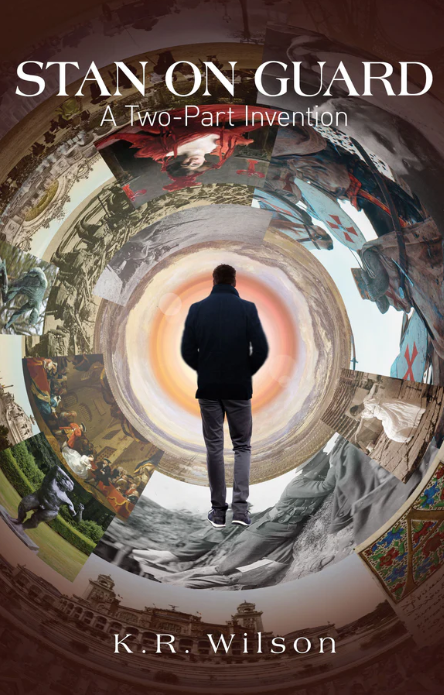
the follow-up to Wilson’s novel Call Me Stan: A Tragedy in Three Millennia, which was long-listed for the 2022 Leacock Medal for Humour
a gripping story that spans genres-- tragedy, comedy, historical fiction-- and multiple eras of history, from a retelling of the Odysseus story, through the Great War and its horrors, to present day Toronto
lead characters are immortals, including the protagonist Stan, a Hittite who has seen and experienced many things over the centuries, and his adversary, an immortal Trojan princess named Tróán
Yield by Jamie Forsythe, forthcoming with Wolsak & Wynn, April 2026
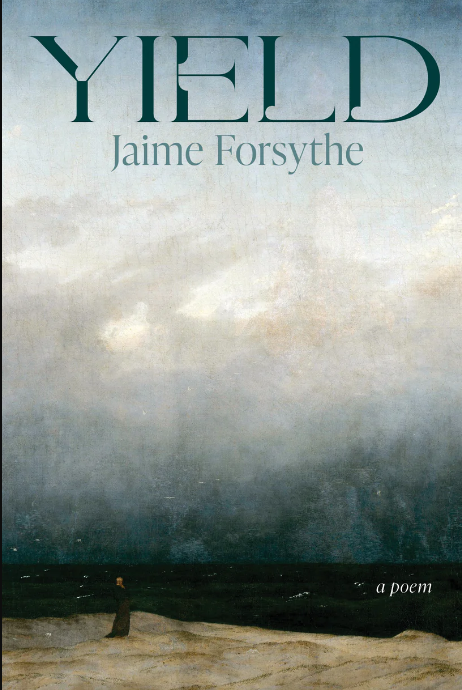
the third poetry collection from Nova Scotian writer Forsythe, Yield is a book-length poem you won’t be able to forget once you pick it up
set against the alluring backdrop of the Maritime coastline where the land converges with the sea and follows a mother navigating a postpartum world
features a unique, dreamlike writing style that involves repeated waves of couplets, bringing to life memorable images that will stick with you and showcasing Forsythe’s impressive command of language
The Fall-Down Effect by Liz Johnston, published by Book*hug Press, April 21, 2026
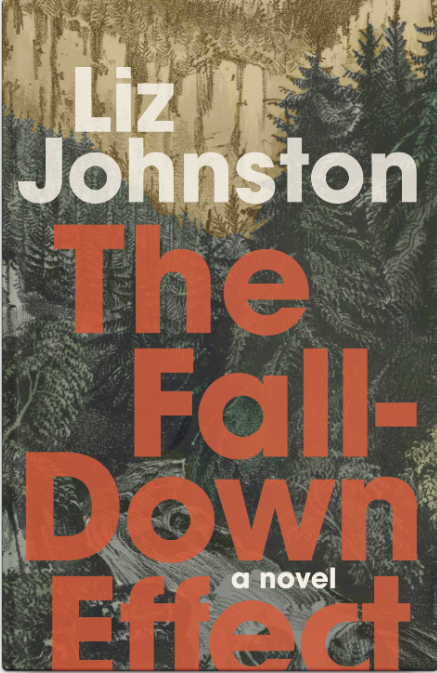
an exciting debut novel featured in several anticipated book previews, such as The Grind, MER Journal and Quill & Quire
centred on the themes of climate change and environmental protest-- if you’re someone with a keen eye for this important contemporary topic, The Fall-Down Effect is a title you won’t want to miss
a second major theme, and no less enthralling, is that of fractured family relationships and the drama that can arise from the dynamics between loved ones, crafted in compelling fashion that will hook you right from the first page
Wound Archive by Anna Veprinska forthcoming with Gordon Hill / The Porcupines Quill, April 2026
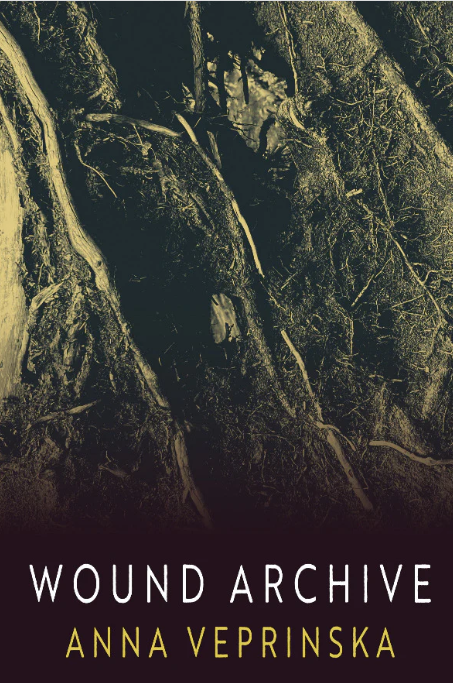
a collection of poems that explore a poignant and captivating subject as its central theme: the end of a relationship and the beginning of an invisible illness, both happening at the same time
for poetry lovers, but also for anyone wanting to experiment with their reading preferences, as the collection has a minimalist poetry style
the poems explore how language can be turned upside down, both figuratively and formally, and demonstrate how brevity is able to hold the expansiveness of ache and deep-seated wounds
Seldom Seen Road, by John Degen, forthcoming with Latitude 46 Publishing, May 7, 2026

a thrilling murder mystery set in a small, northern Canadian town brimming with secrets waiting to be uncovered, and the first novel in a new murder-mystery series
follow along with protagonist and amateur sleuth Mark Roth as he attempts to solve the murder despite lacking any official detective experience, often putting himself in the eye of danger in his pursuit of the truth
unique to the genre, Mark works alongside two family members, his cousin a constable and his daughter a criminologist, who each bring their dynamics and skillsets to the task
The Instrument Must Not Matter by Christine Fischer Guy, forthcoming with Wolsak & Wynn, May 12, 2026
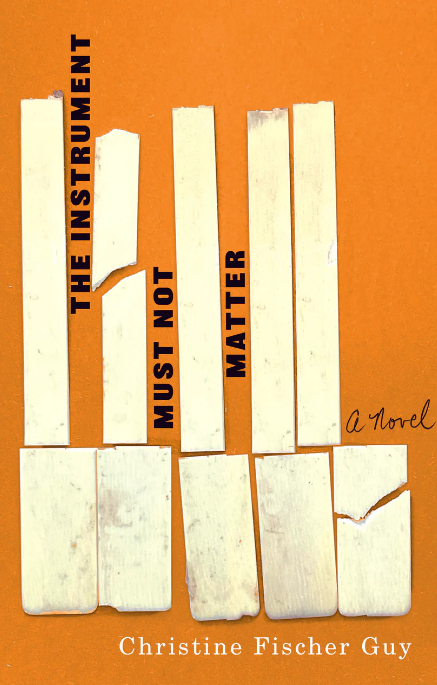
an enchanting, coming-of-age story about a gifted young pianist named Lila Rys as she strives to accomplish her dream of becoming a brilliant performer and bring music back to her family, which was stifled by the Soviet Regime
follow Lila’s journey as she moves from Prague to New York City and navigates a new world and studies under a famous teacher, all the while struggling to live up to high expectations
a romantic encounter with a renegade female pianist, and the discovery of powerful family secrets that the protagonist and her family will be forced to reckon with
Here’s to Letting Go by Blaine Thornton, forthcoming with Latitude 46 Publishing, May 21, 2026
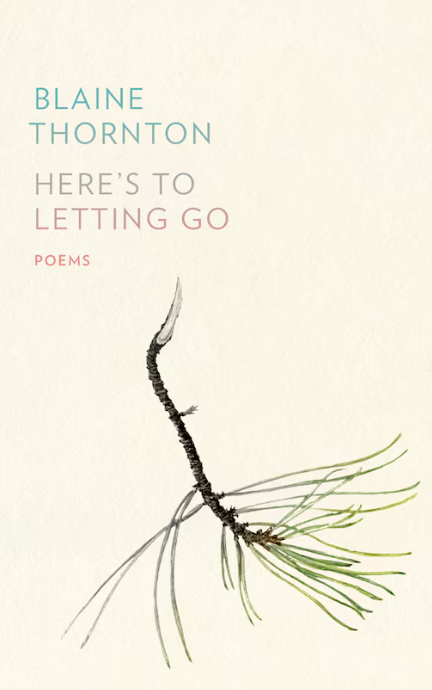
a touching, thought-provoking poetry collection that blends poetry and prose to explore the intersectional experiences of queerness, homelessness, and mental illness-- shining a light on stories that often go untold
told from the perspective of a young trans, non-binary person, weaving their memories of escaping home and having to survive in the loneliest of places into a narrative sure to compel and widen your worldview
Thornton reveals what it takes to come back, to survive hardships, and find a path towards healing and acceptance
Not All Dragons by David Ly, forthcoming with Wolsak & Wynn, May 2026
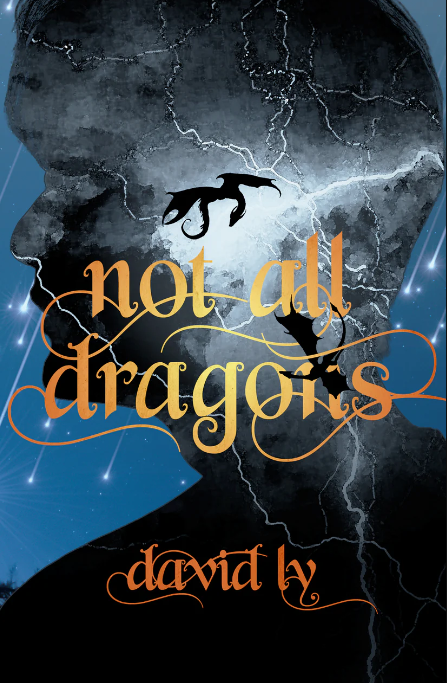
for readers who love speculative fiction, step into a strange, mesmerizing fantasy world called Lanilia, a place where magic and myth flow free
the protagonist Rhys is a descendant of dragons known as a draykin, though he has lost his wings after a tragedy and wakes with no memory of his prior life
a fresh take on the classic tropes of dragons and destiny, and a dangerous, thrilling quest for acceptance and understanding in which Rhys teams up with a mermaid and goes on an unforgettable journey
Half-Earth by Blair Trewartha, forthcoming with Palimpsest Press, May 15, 2026
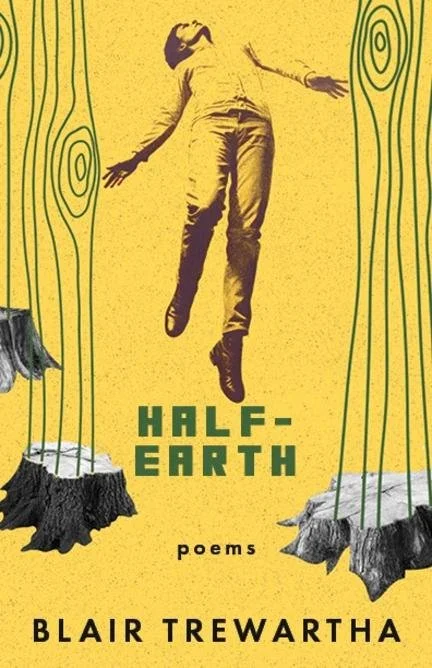
the second full-length poetry collection from one of Canada’s finest contemporary poets, delving into what it means to survive in a world where climate crises and the rise of Artificial Intelligence are ever-prevalent disruptions
experience a masterful demonstration of language as Trewartha weaves dreamlike narratives and digs up scenes of deep history that connect to the themes of family and illness, as well as asking how to move forward in an uncertain future
unforgettable imagery that includes moments of the past and the future paired together, including but not limited to: prehistoric tusks frozen in foreign tundra, firestorms, the zeitgeist by algorithm, and a toddler’s visualization of death
Take This for the Pain: Essays on Writing and Lifeby Alex Boyd, forthcoming with Palimpsest Press, June 15, 2026
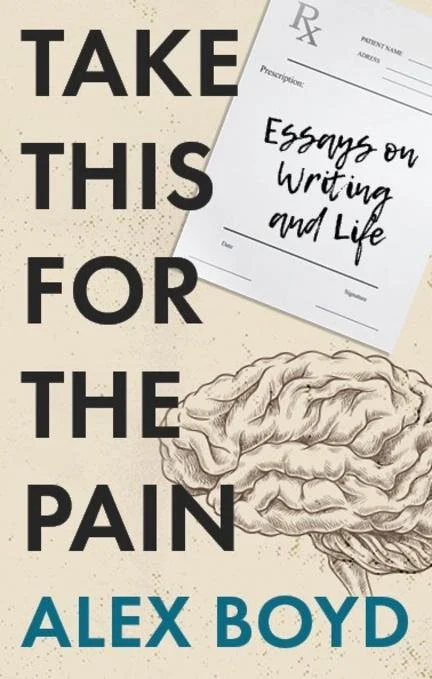
a curious look at how art and culture has changed in the modern world, a world that continues to change rapidly, pulling from twenty-five years of essays, reviews, and articles to explore an array of topics from faith to aging, to industrialism and bookshops
if you’ve ever wondered about the value of poetry in the 21st-century, or whether graffiti is a true art form, this is a read for you, from an award-winning author and editor who’s written for The Globe and Mail, among other publications
includes reviews that dive into overlooked yet deeply worthy books that any literature-enthusiast will find interesting
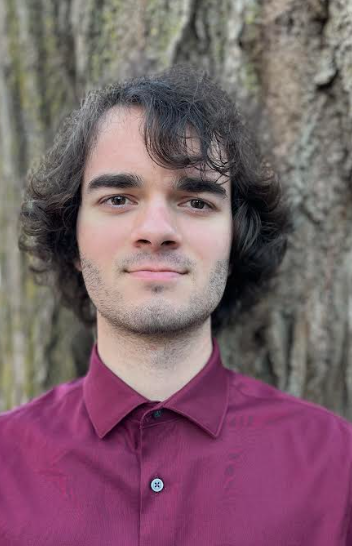
About the author:
Michael Schmidt is an emerging writer from the quiet woods and fields of rural Southern Ontario, with a keen interest in telling stories that explore the fantastical. He completed a BA for English and Creative Writing at Western University in 2022, and then went on to study publishing at Centennial College in 2024. He's had poetry featured in Blank Spaces Magazine. You can find him on Instagram and X (formerly Twitter) as @theepictom_ .
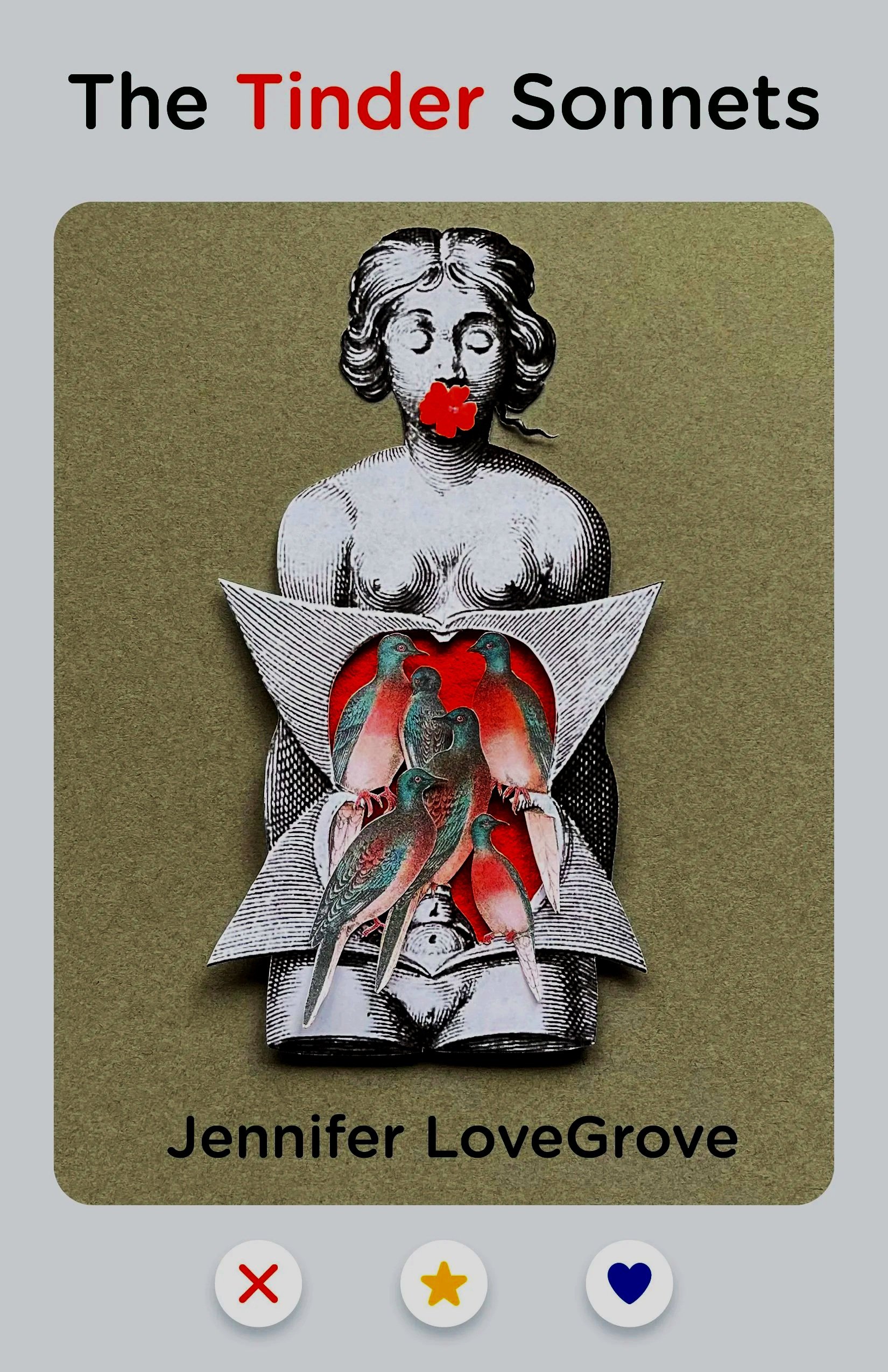
Excerpt from The Tinder Sonnets by Jennifer LoveGrove
Fresh loroco, importing banned. Oblong
little smugglers, edible blossoms, green-
sheathed, pale inside. Insipid. Pandemic
first date in rain. Sipping cheap white wine from
a pink plastic cup, SLUT scrawled across the
bus shelter. I text a friend a selfie.
Fernaldia pandurata and Diabrotica adelpha get symbiotic in Christie Pits
Fresh loroco, importing banned. Oblong
little smugglers, edible blossoms, green-
sheathed, pale inside. Insipid. Pandemic
first date in rain. Sipping cheap white wine from
a pink plastic cup, SLUT scrawled across the
bus shelter. I text a friend a selfie.
At least you don’t have herpes, she says, plus
a broken toe. Tastes green, like broccoli,
artichoke, or chard. Overtones of nuts.
High in niacin. Most vigorous vine,
finely pubescent, minutely hairy.
Upper leaves blunt at the base, the lower,
cordate. Heart-shaped. Bright pulse on tongue. The buds
an aphrodisiac, the root — poison.
Hands soft despite knife nicks, scorch scars. Nimble
tease, wet lips to collarbone as I come.
Between lockdowns, opens a restaurant
on his birthday. Then robbed, twice. Menus and
trauma monologues: curled fetal in the
back of his car after a bong hit, sure
of being hunted. The bridgetop panic
attack in New York for a death metal
show. How he sold his car and never drove
again. I offer doomsday cults, psych wards,
stitches, suicides. I may have been a
refugee, but you’re from Dunnville! Festive,
invasive, an orange-necked crop killer —
hard flea, tough to slaughter, dirty daughter.
Second date, asks if he can slap me. Where?
Third date, so worried he’s having a stroke.
Arteries tangled like reasons he thinks
his father left. We agree on nothing.
I win every debate. He admits that
it’s a turn-on. He pulls my hair when I
suck his cock, but never when I ask him
to. The midnight phone calls reading aloud
our worst reviews: This book’s so depressing!
or Why all the chopped cabbage?! I’m always
hungriest on the nights I most need sleep,
when every small delicacy unfurls
a threat. Don’t let go of me, he whimpers,
then recoils when I whisper, You can stay.
"Fernaldia pandurata and Diabrotica adelpha get symbiotic in Christie Pits" from Tinder Sonnets © 2026 by Jennifer LoveGrove. Used with permission of Book*hug Press.
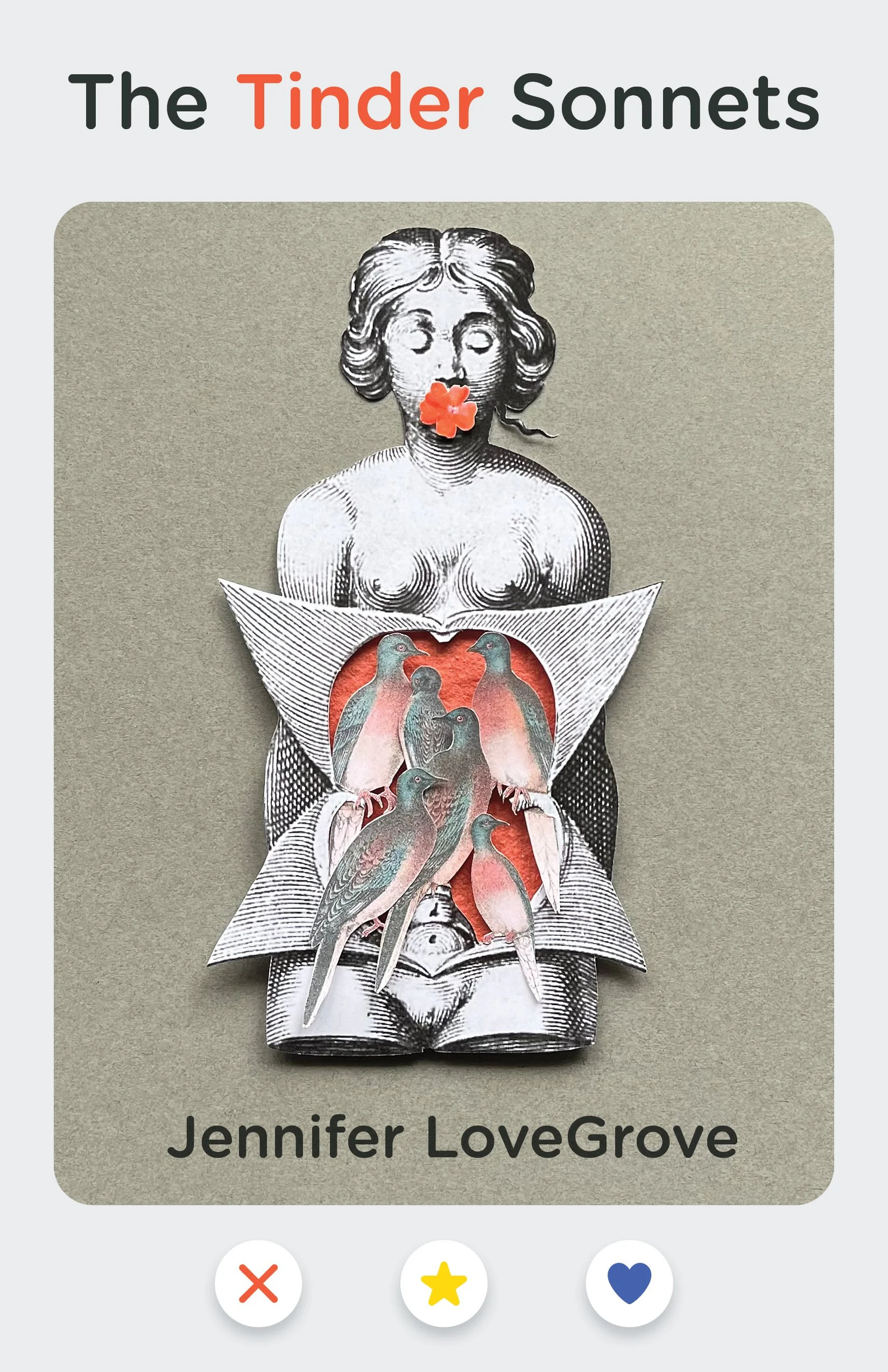
From acclaimed writer Jennifer LoveGrove comes an electric poetry collection exploring female sexual desire, contemporary dating, misogyny, and middle age that reflects and embodies our social media-saturated times.
Unabashedly confessional and radically vulnerable, The Tinder Sonnets rallies against the long-standing demand that “women of a certain age” politely accept being rendered non-sexual. Each poem is based on a date, relationship, or contemporary dating insight, and highlights how misogyny impacts the way we connect in the modern world–or don’t.
Juxtaposing folklore and the natural world against the digital sphere of texting and dating apps, this is poetry that defies invisibility and instead confronts and subverts it through a discerning feminist lens. While experimenting with the traditional form of the sonnet, these sonically textured poems are playful and wry, erotic and joyful, all while refusing to shy away from palpable anger, frustration, and disappointment.
Centering strength and resilience in the face of a resurgence of misogynistic chauvinism, The Tinder Sonnets is a staunch refusal to recede from view, to cede sexual space, or to be quiet and polite.
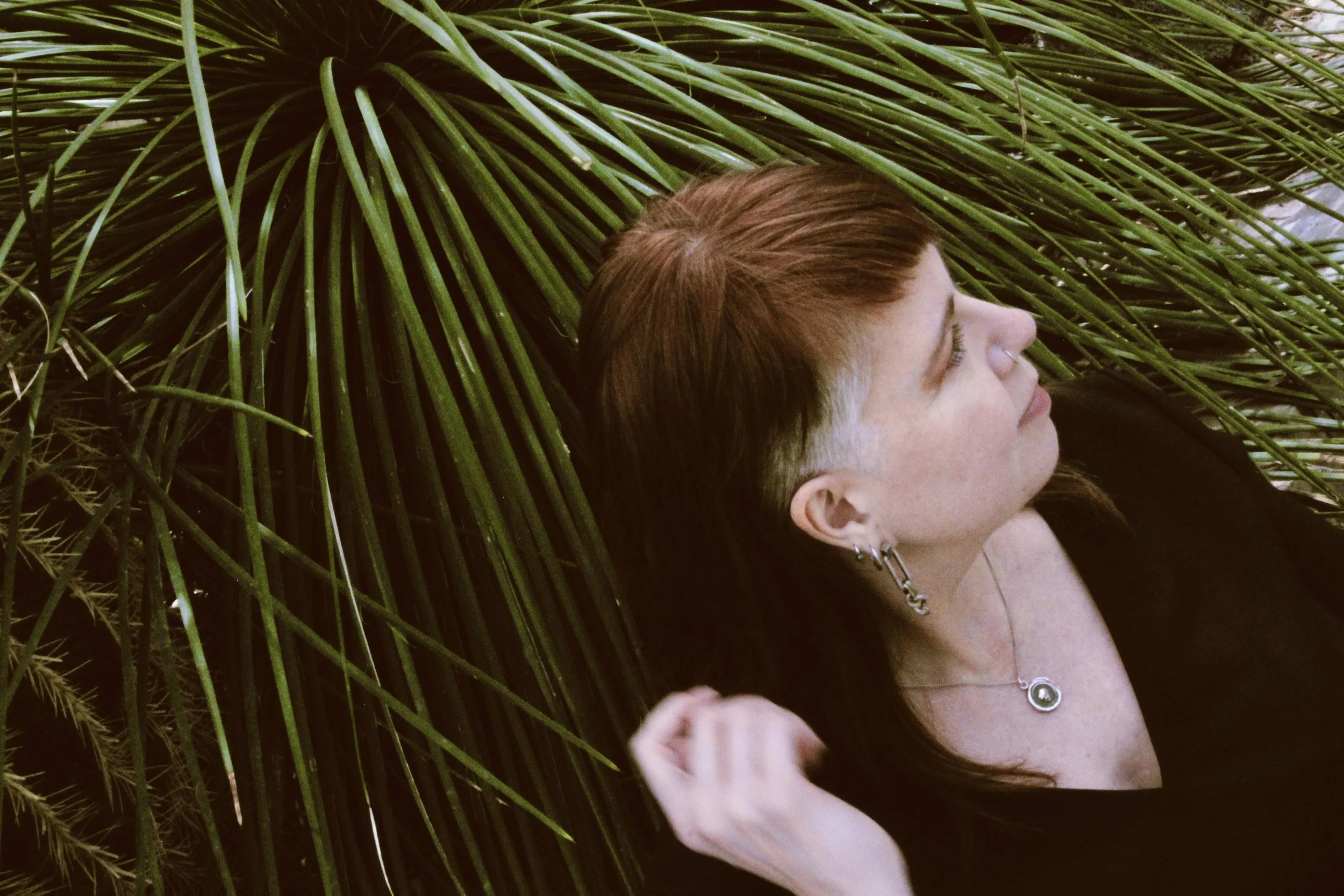
Photo credit: Sharon Harris
JENNIFER LOVEGROVE is the author of the Giller Prize–longlisted novel Watch How We Walk, as well as three poetry collections: Beautiful Children with Pet Foxes (longlisted for the Raymond Souster Award), I Should Never Have Fired the Sentinel and The Dagger Between Her Teeth. She is currently working on a new novel, and creative nonfiction. She divides her time between downtown Toronto and Squirrel Creek Retreat in rural Ontario.
Power Q & A with K.R. Wilson
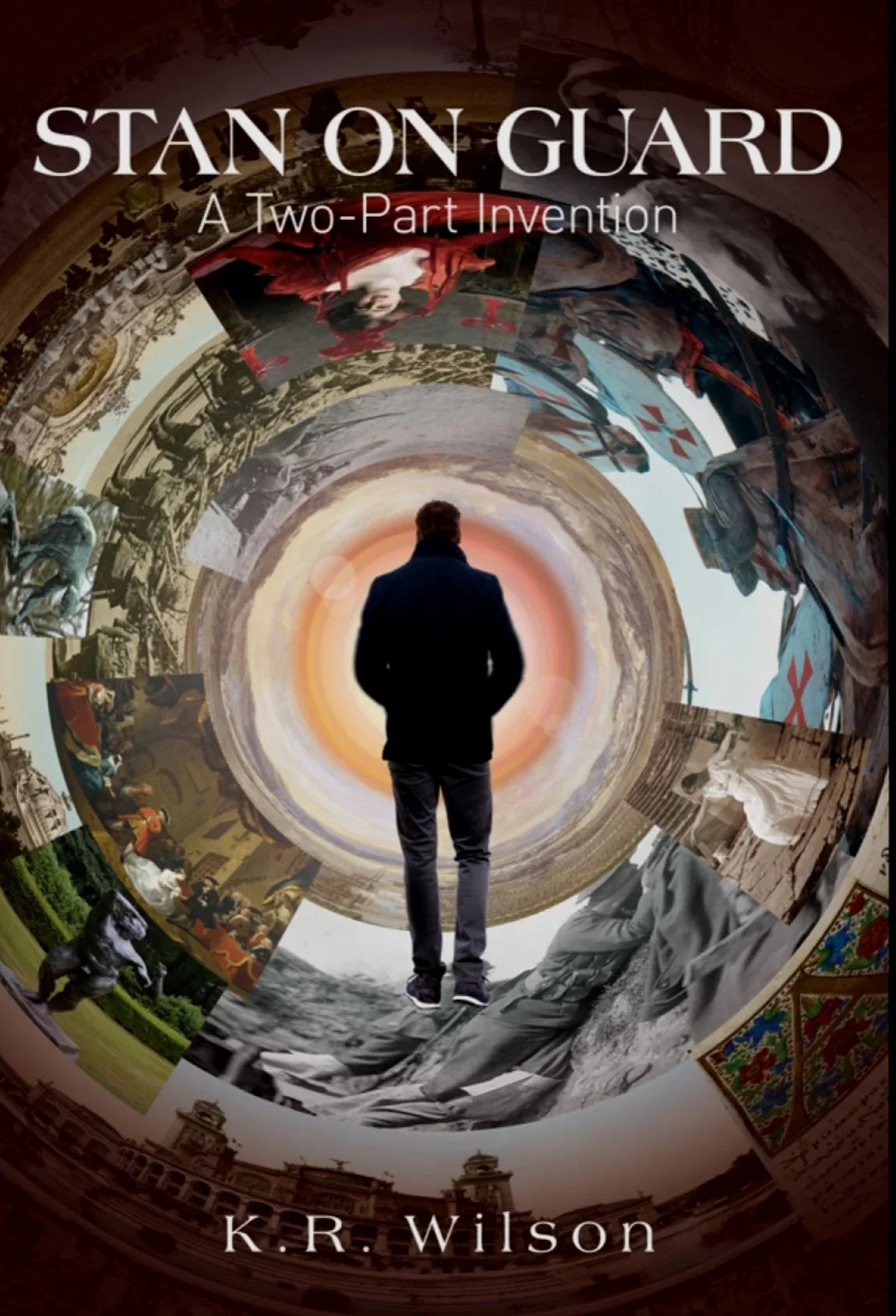
Ishtanu (call him Stan) is a Hittite immortal keeping his head down in Toronto and recounting some of his experiences. Tróán is an immortal Trojan princess who thought she’d killed Stan in post-war Berlin but who now knows he survived. Yes, technically Stan can die. He has just managed not to for 3200 years.
Q: You’re novel Stan on Guard: A Two-Part Invention, was just released by Guernica Editions. Why write a novel about an immortal? Hasn’t that been done to, um, death?
A: Historical fiction can be pretty earnest sometimes. Making my narrator immortal meant I could approach each historical period through his jaded, present day perspective and give him a wry, anachronistic voice that has made him enormously fun to write. And to read, I hope.
About Stan on Guard: A Two-Part Invention:
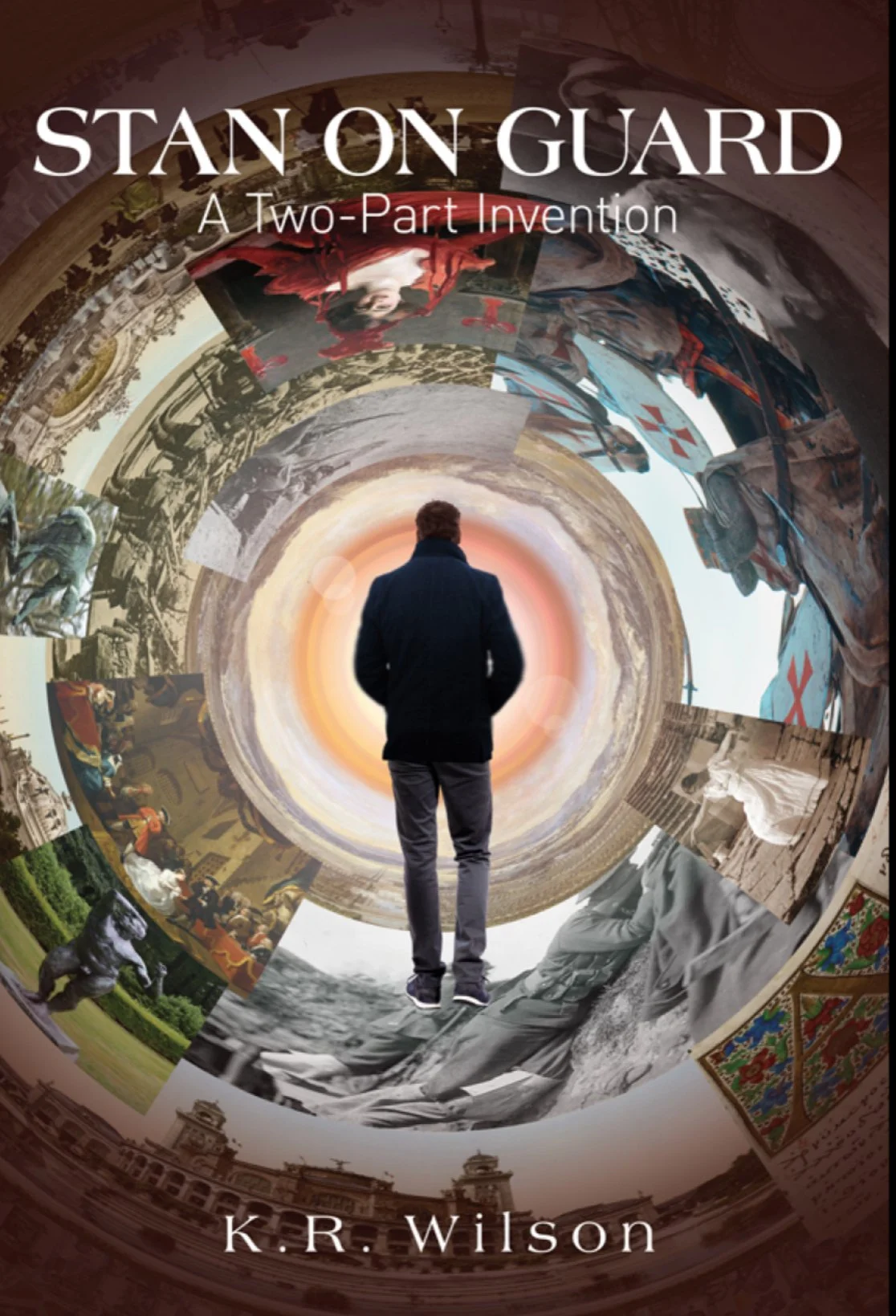
Ishtanu (call him Stan) is a Hittite immortal keeping his head down in Toronto and recounting some of his experiences. Tróán is an immortal Trojan princess who thought she’d killed Stan in post-war Berlin but who now knows he survived. Yes, technically Stan can die. He has just managed not to for 3200 years.
As their stories braid together toward a final reckoning they take us through, among other things, a subversive retelling of the Odysseus story, the resistance of pagan Lithuania against Papal crusaders, the decline of Friedrich Nietzsche in a German clinic, the arts scene in belle epoque Paris, and the descent of Europe into the horrors of the Great War.
Strap in.
Stan On Guard is the follow-up to K. R. Wilson’s tragical-comical-historical novel Call Me Stan: A Tragedy in Three Millennia, which was long-listed for the 2022 Leacock Medal for Humour.
About K.R. Wilson:
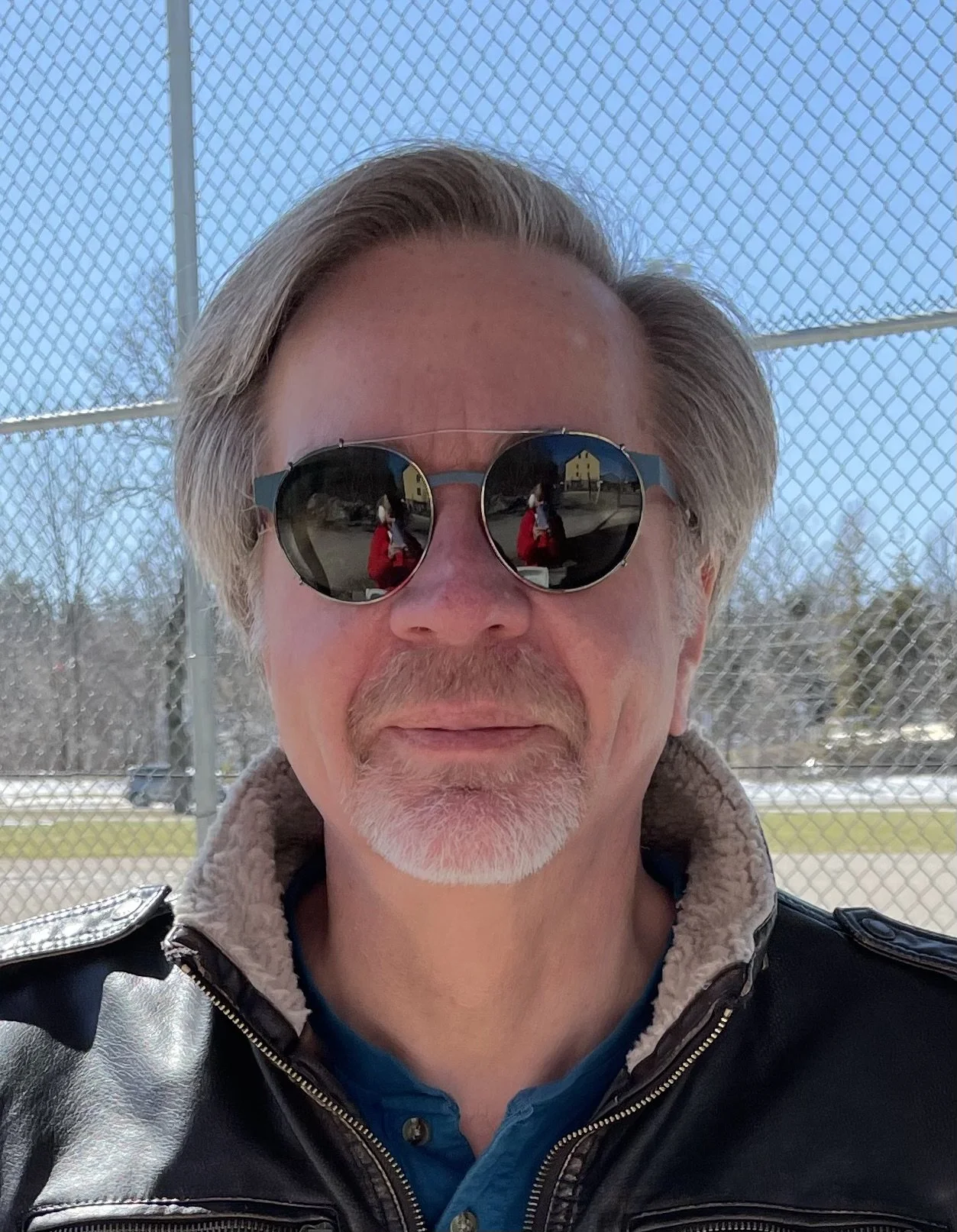
K. R. Wilson’s novel An Idea About My Dead Uncle won the inaugural Guernica Prize in 2018, and his novel Call Me Stan was long-listed for the 2022 Leacock Medal. His work has appeared in various literary journals and the flash fiction anthology This Will Only Take a Minute.
Excerpt from How I Bend Into More by Tea Gerbeza
Based on Tea Gerbeza’s experience with scoliosis, How I Bend Into More (Palimpsest Press, 2024) re-articulates selfhood in the face of ableism and trauma. Meditating on pain, consent, and disability, this long poem builds a body both visually and linguistically, creating a multimodal space that forges Gerbeza’s grammar of embodiment as an act of reclamation.
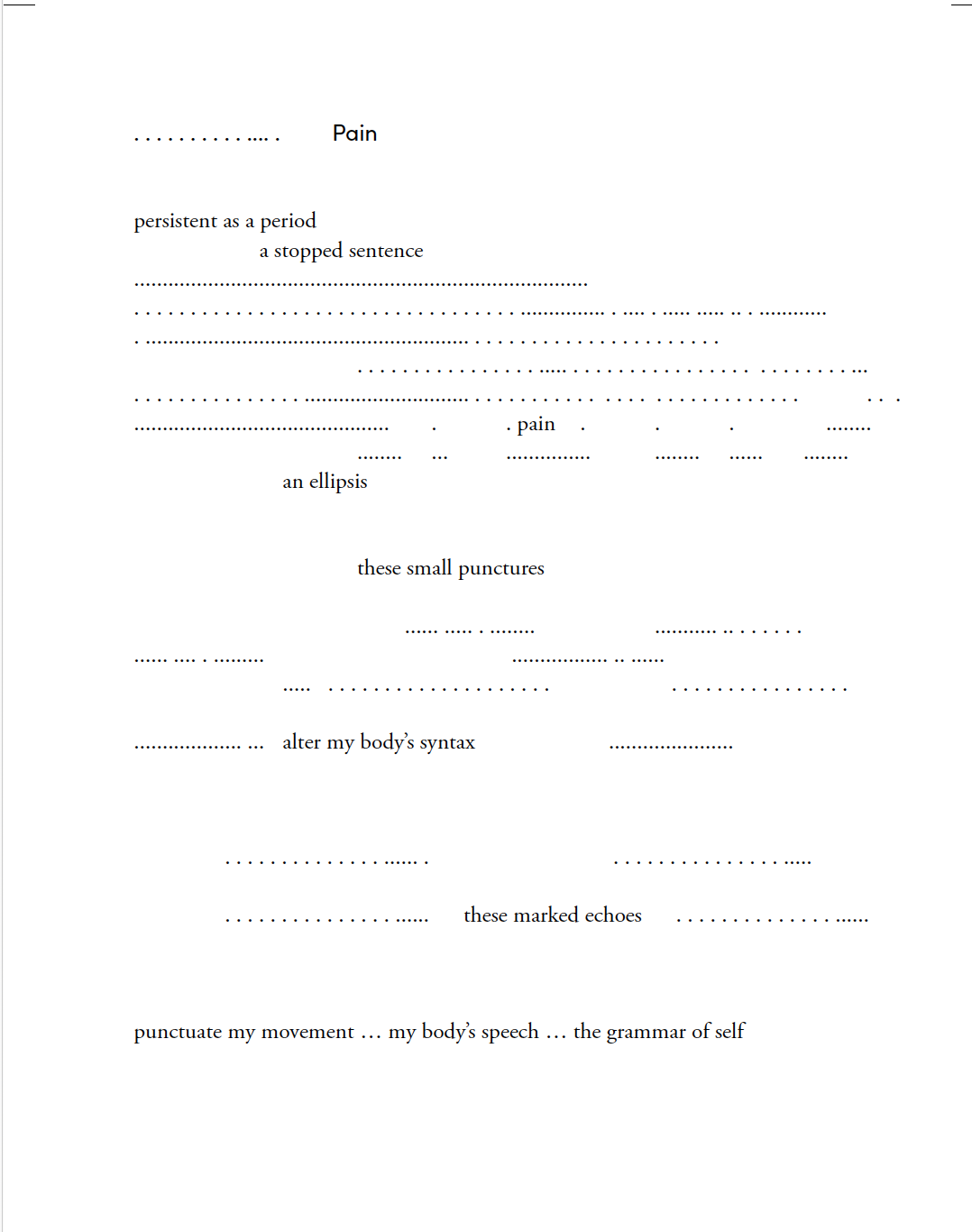
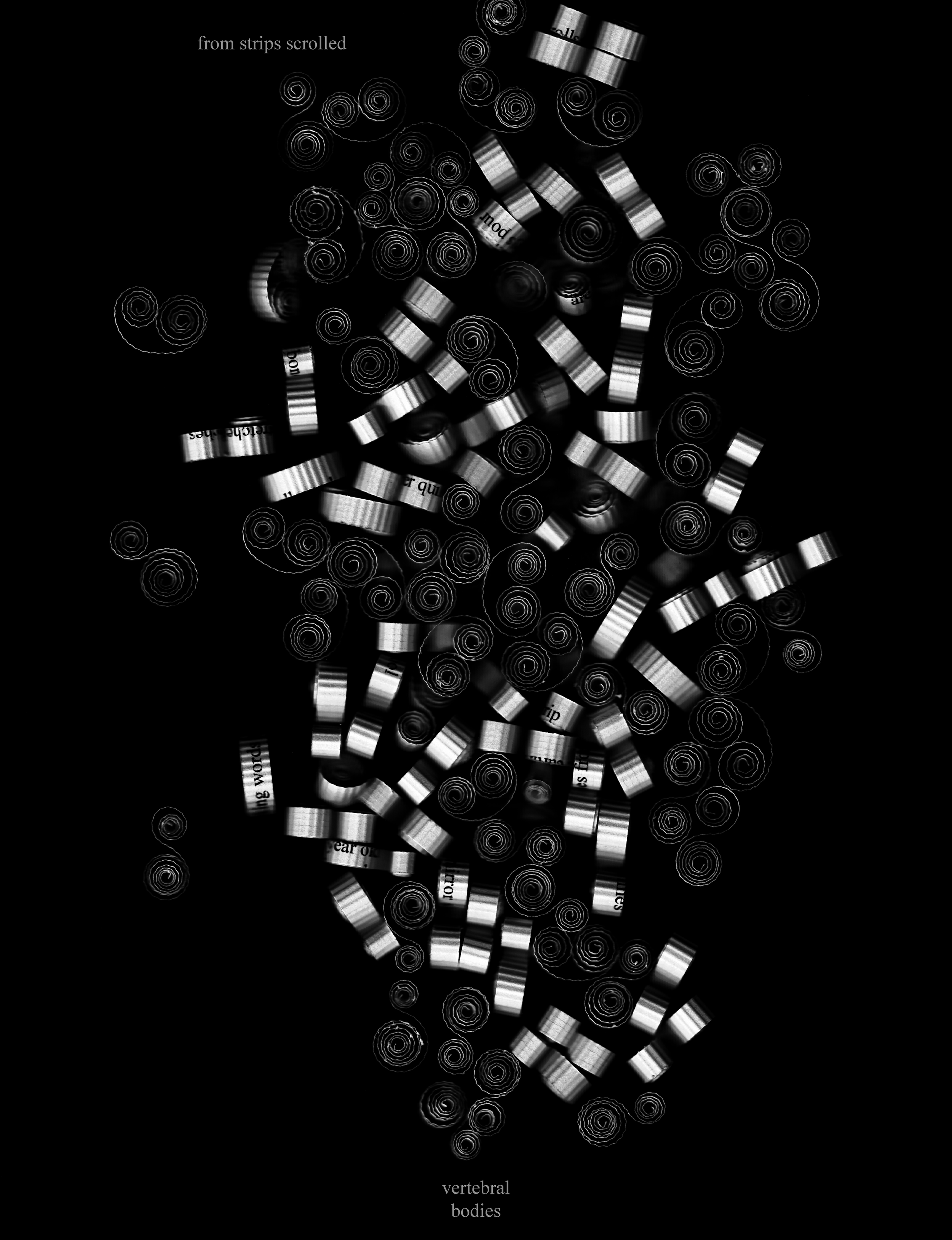
Excerpt from How I Bend Into More by Tea Gerbeza. Published by Palimpsest Press. Copyright Tea Gerbeza, 2024. Reprinted with permission.
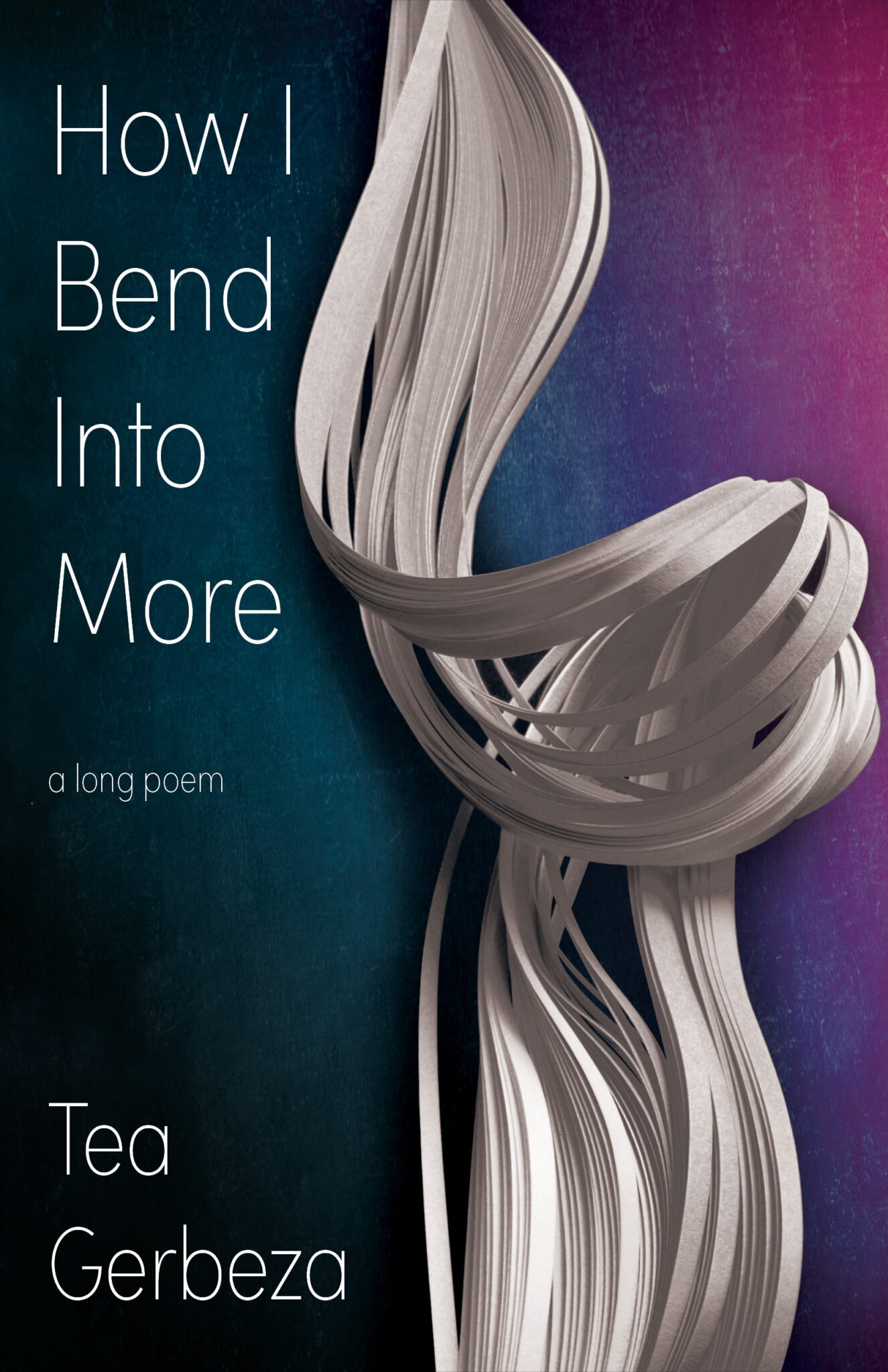
Based on Tea Gerbeza’s experience with scoliosis, How I Bend Into More (Palimpsest Press, 2024) re-articulates selfhood in the face of ableism and trauma. Meditating on pain, consent, and disability, this long poem builds a body both visually and linguistically, creating a multimodal space that forges Gerbeza’s grammar of embodiment as an act of reclamation. Paper-quilled shapes represent the poet’s body on the page; these shapes weave between lines of verse and with them the reclaimed disabled body is made. How I Bend Into More is a distinctive poetic debut that challenges ableist perceptions of normalcy, and centers “the double architecture / of ( metamorphosis (.”

Tea Gerbeza is the author of How I Bend Into More (Palimpsest Press, 2025), which was a finalist for the Writers’ Trust 2025 Dayne Ogilvie Prize for 2SLGBTQ+ emerging writers. She is a neuroqueer, disabled poet, writer, editor, and multimedia artist creating in oskana kâ-asastêki in Treaty 4 territory (Regina, SK) and on the Homeland of the Métis. She primarily works with paper in her visual art, but also creates digital works on her scanner (scanography). Her writing and artwork focus on themes of reclaiming disabled identity, disability justice, the Bosnian-Croatian diaspora, queer platonic friendships, and the complexities of pain. Her artwork has been exhibited at The Art Gallery of Regina. Tea has a very loud laugh, and is one of four Pain Poets.
Most recently, Tea was a finalist for YWCA Regina’s 2026 Women of Distinction awards in the Igniting Equity category. In 2023, She was recognized by SK Arts as one of 75 strong emerging artists that makes the future of Saskatchewan arts exciting. Tea’s poem “Body of the Day” was a People’s Choice Award finalist in Contemporary Verse 2’s 2024 2-Day Poem Contest. In 2022, Tea won the Ex-Puritan’s Austin Clarke Prize in Literary Excellence for poetry. She also made the longlist for Room magazine’s 2022 Short Forms contest. Her scanograph, “My Father Catches Me Confronting Memory,” won an Honourable Mention in Room magazine’s 2020 Cover Art Contest, and she was a finalist for Palette Poetry’s 2021 Emerging Poet Prize.
Tea holds a BA (Hons.) in English (2017) and an MA in Creative Writing and English from the University of Regina (2019). Tea’s thesis work for her MA was SSHRC funded. She also holds an MFA in Writing from the University of Saskatchewan (2021).
Photo of Tea by Ali Lauren.
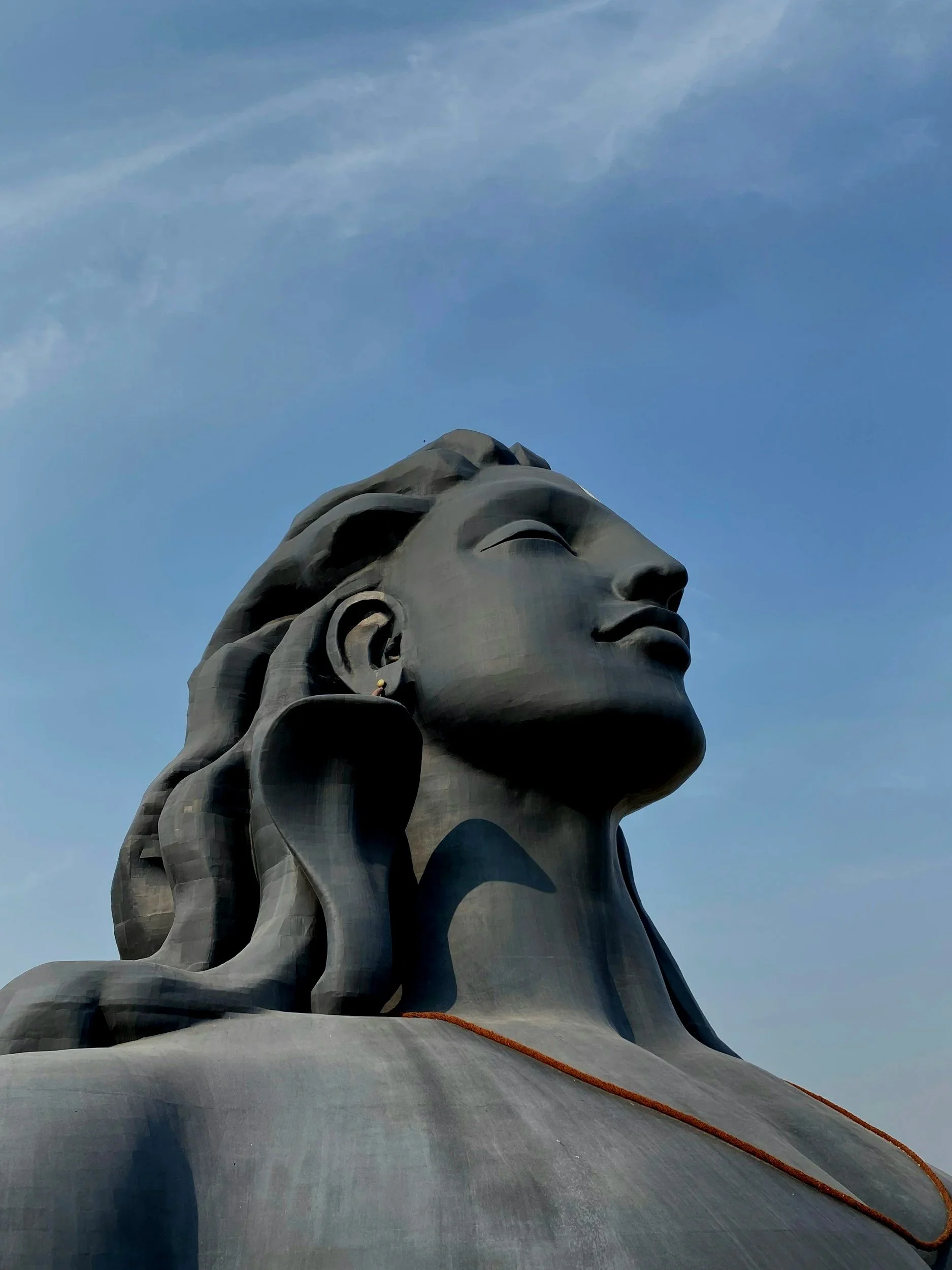
Excerpt from WOMEN AMONG MONUMENTS Solitude, Permission, and the Pursuit of Female Genius by Kasia Van Schaik
This story begins in 2022, Padua, midwinter. Across the city a debate is raging. It concerns a woman whose name I only recently learned: Elena Lucrezia Cornaro Piscopia, the first woman in the world to earn a Ph.D. City councillors Margherita Colonnello and Simone Pillitteri have proposed to place a statue of Piscopia in the town square — a notable historical woman to join the effigies of notable historical men. This suggestion has sparked outrage across the country.
This story begins in 2022, Padua, midwinter. Across the city a debate is raging. It concerns a woman whose name I only recently learned: Elena Lucrezia Cornaro Piscopia, the first woman in the world to earn a Ph.D. City councillors Margherita Colonnello and Simone Pillitteri have proposed to place a statue of Piscopia in the town square — a notable historical woman to join the effigies of notable historical men. This suggestion has sparked outrage across the country.
It hadn’t occurred to me to type “first woman Ph.D.” into Google. I kicked myself for my lack of curiosity. After all, I was going to be the first woman in my family to earn a doctorate. It had been the hardest thing I’d attempted in my life so far, partly because I still felt, deep down, that I wasn’t entitled to the pursuit of an intellectual or creative life. I felt I was getting away with something, fooling the academy, and it was only a matter of time until I was exposed. As I’ve come to understand, this isn’t an uncommon experience, particularly for first-generation scholars, or scholars who have disabilities, or who identify as queer, BIPOC, or women.
I wondered if Piscopia had felt this way, too. As a woman in the 1600s, she’d had to fight for her education. Piscopia was born to unmarried parents, a peasant woman and a nobleman. Her father tried to arrange betrothals for his daughter, but she rebuffed each suitor’s advances, preferring the company of her harpsichord and philosophy books. Women weren’t allowed to enter university at the time, but her father was able to pull a few strings for his prodigious daughter. Even then, the residing Cardinal Gregorio Barbarigo opposed Piscopia’s request to graduate with a doctorate in theology, arguing that it was a “mistake” for a woman to become a “doctor.” He eventually let her graduate with a degree in philosophy instead.
I looked up the year 1678. Le Griffon, the first European ship to sail on the Great Lakes of North America, prepares for her maiden voyage. The first fire engine company in what will become the United States goes into service in Boston. The Pilgrim’s Progress, a text that 334 years later I’d be forced to read in an undergraduate literature class, is published in London, England. Rebel Chinese general Wu Sangui takes the imperial crown and dies of dysentery months later; Franco-Dutch battles are instigated, ceasefires called, and in Padua, at the age of thirty-two, Piscopia receives her Ph.D.
•••
At almost 90,000 square metres, Prato della Valle, or “Meadow of the Valley,” is the second-largest square in Europe. At its centre is a green island surrounded by a small canal and bordered by two rings of statues, all of historical men. I recognize some of the names: Galileo, father of observable astronomy; the artist Mantegna, famous for his use of perspective and anatomical detail; and the eighteenth-century sculptor Canova, renowned for turning stone into flesh.
Two of the pedestals in Padua’s elliptical square are empty. It seemed fitting, the city councillors proposed, that Piscopia might rest on one of the empty pedestals, that hers might become the first monument honouring a woman in the city’s historic centre. As art historian Federica Arcoraci points out, spending time among the square’s all-male statues has “an impact on our lives and collective imagination,” and the “Prato della Valle regulation of 1776 never ... prohibited the representation of women.”
Across the country, critics protested Piscopia’s inclusion in the square. Some claimed that a statue of the first woman Ph.D. would be out of context with the square’s history. Others believed that to include a female statue within the pantheon of male statues would be an act of “cancel culture.”
Colonnello and Pillitteri walked back their original proposal, but they still insisted that a statue of a woman be allowed in the square. It didn’t have to be Piscopia — they were willing to erect her monument elsewhere. But the city had to decide on another historical woman instead — for instance, the nineteenth-century painter Elisabetta Benato-Beltrami or the writer Gualberta Alaide Beccari.
“The important thing,” said Colonnello, “is that we have raised the debate about the underrepresentation of women among monuments and it is now very clear to all politicians that we need a very good statue of a woman in a very good place.” She pressed on: “We now need to decide where and who. But I think we will eventually settle on the square — it is very huge and there is lots of space.”
I looked up an image of Prato della Valle. Colonnello is right. At the size of almost two football fields, it’s massive.
Why was there such opposition to the inclusion of a woman in such an enormous space? It appeared that the controversy wasn’t about the square itself but what the square symbolized. It represented the boys’ club, cultural memory, the legacy of genius. The square represented representation itself.
What the Piscopia debate exposed wasn’t just the scarcity of statues celebrating notable women — of the thousands of statues in Italy, fewer than two hundred depict women — but the historical resistance to simply recognizing women’s achievements. This resistance isn’t unique to Italy.
After reading about Elena Piscopia, I went walking through the squares, parks, and boulevards of Montreal, my own city. This was where I’d lived for much of my life — a place I kept returning to for its promise of art, freedom, and community. Yet, like the Prato della Valle, it was still filled with statues of European men.
Where were the women? I found myself asking this as I stood below the Sir George-Étienne Cartier monument at the foot of Mont Royal. Not the angels and goddesses but the monuments to historical women. Where could I find them?
Excerpt from Women Among Monuments by Kasia Van Schaik. Published by Dundurn Press. Copyright Kasia Van Schaik, 2026. Reprinted with permission.
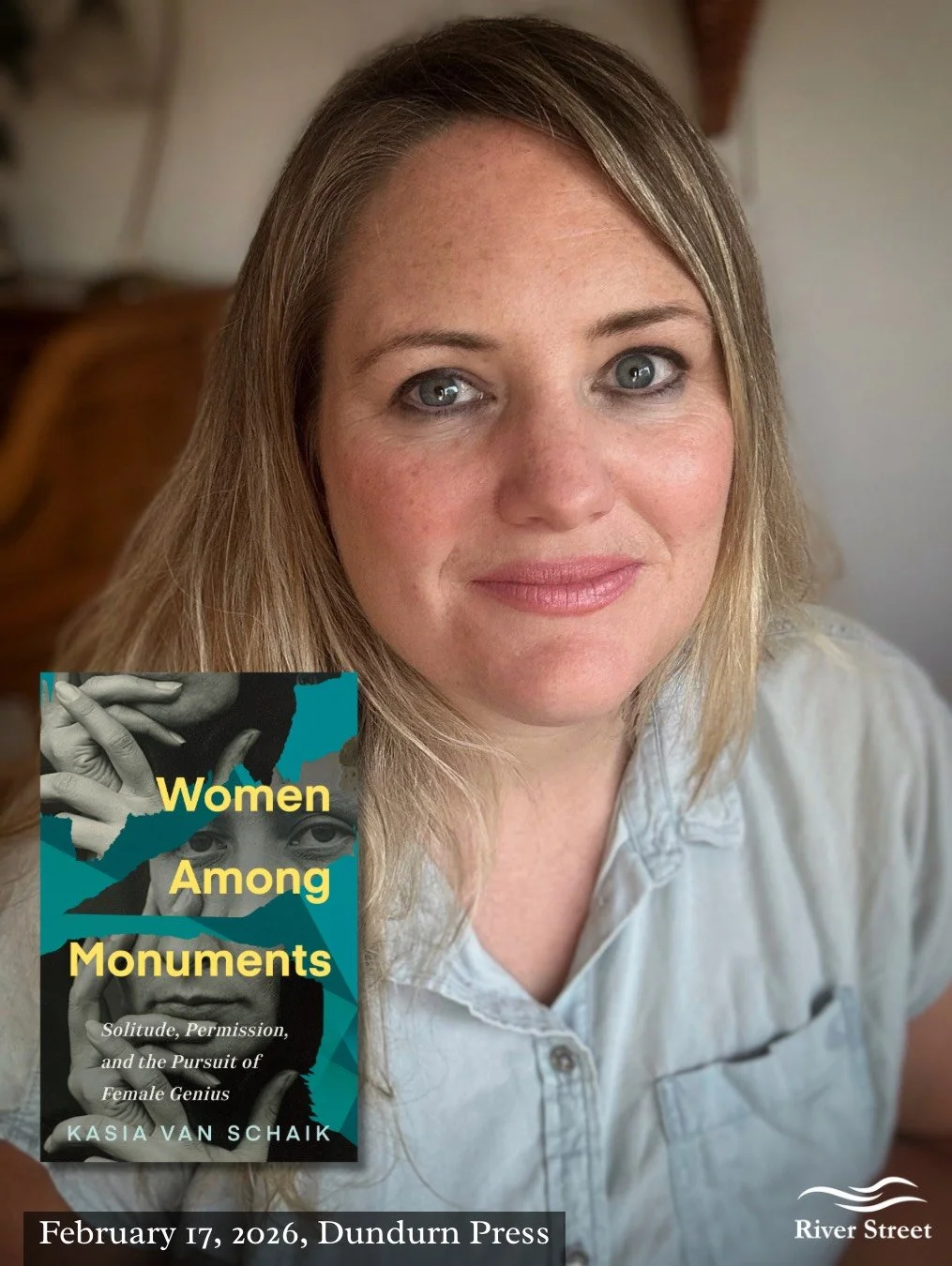
Women Among Monuments by Kasia Van Schaik
About Women Among Monuments:
A lyrical meditation on the enduring obstacles women artists and writers face in a world still unaccustomed to recognizing female genius.
What does it take for a woman to don the mantle of genius — a title long reserved for male artists? From her studies in Montreal to a dead-end job in Berlin, a midnight tour of Paris, a bankrupt art residency on the Toronto Islands, and a mysterious sculpture garden in the Karoo desert, South African—Canadian author and professor Kasia Van Schaik considers what it means for a young woman to call herself an artist and claim a creative life.
Drawing on a diverse web of literary and cultural sources and artistic icons — from Georgia O’Keeffe to Ana Mendieta, Gertrude Stein to Jamaica Kincaid, Leslie Marmon Silko to Bernadette Mayer — Women Among Monuments asks, What, beyond a room of one’s own, are the necessary conditions for female genius? Where does the inner flint of artistic permission come from? What is the oxygen that keeps it burning?
In her memoir interwoven with incisive biographies of female solitude, constraint, and perseverance, Van Schaik blazes a trail for more inclusive artmaking practices, communities, and monuments.
Kasia Van Schaik is the author of the linked story collection We Have Never Lived On Earth, which was longlisted for the Scotiabank Giller Prize. Her writing has appeared in Electric Literature, the LA Review of Books, the Best Canadian Poetry, and the CBC. Kasia holds a PhD in English Literature from McGill University and lives in Montreal.
Review of Guy Elston’s The Character Actor Convention by Callista Markotich
Let us accept the crowd-fostered confusion of person. Let us precariously enjoy the close-call near-cliché which hugs us with homely familiarity: are we nearly there yet? Let us reconsider the title: The Character Actor Convention. Convention – is this the only Convention we may find? Or not?
Let imagination Uber you there.
Say you’re this Convention’s keynote. You’ll be in the Grand Ballroom looking out at the attendees. You’d better be at the top of your game, addressing the wild, earnest characters there assembled. There’s room for insecurity – there’s this, from the actors:
We applaud, but it could be an act.
Here in the title poem, the characters are slippery, we and they blend, and there’s that guy, yes, him and one startling you, and the imitable, inimitable I, at first, casual and in charge:
at the fin, I pocket my lanyard, picture you,
front centre on a billboard, sigh performatively
while fading to black
and then, poof! self-extracted from the speaker’s function, bringing no closure to this meet.
I had a final line — I forget.
The convention closes, as ever, on a question:
Are we nearly them yet?
Let us accept the crowd-fostered confusion of person. Let us precariously enjoy the close-call near-cliché which hugs us with homely familiarity: are we nearly there yet? Let us reconsider the title: The Character Actor Convention. Convention – is this the only Convention we may find? Or not?
For Guy Elston employs conventions. For example, well-chosen direction and flow of some poems come through the canal of an epigraph; an epigraph chosen to introduce, inspire, illuminate and add authority. Guy Elston does not turn his back on this convention, But, a poet of invention, humour and courage, he upheaves the convention early and airily and as readily as is fair.
For example, here is the epigraph, from Wikipedia, that introduces The Great Sheep Panic of 1888
…when tens of thousands of sheep fled from various fields across some 200 square miles of Oxfordshire.
Immediately, in the first line, the author creates a segue:
It’s that word panic
I take offense to.
And he’s off! In this poem he creates a nostalgic monologue by a survivor (sheep) who waxes poetic on the panic, which is really much grander thing: a revolt, its opening complete with a small selection of vernacular expressions which (irritatingly) trivialize such heroic purpose:
Are you feeling Ok?
Do you need a snack?
Here are figureheads,
…big horns suited our purpose,
but Benny wasn’t the real brains, or brawn;
martyred leaders,
Ruby, with her wolf -sharp hooves,
with her rabbit pellet eyes … leading the herd;
and true believers.
…and footrot Leon,
he believed more than anyone.
Here are the tragic remainders, reminders, regrets,
Thing is, it’s not just the fence,
the dogs, the whistles, the shearing,
and a sadness, a sense of futility.
I know she had a final epiphany.
She just never told us what it was.
His epigraph ably steers us, unsuspecting, from panic to mock epic, with sympathy for the sheep.
At times Poet Guy Elson skydives into allusion, a convention, surely — sometimes into deeply respectable and cherished pieces of literature. Twice the dramatic titles of Robert Browning are launchpads for gypsy titles which roam the poems into simpler? terrain. From the beseeching oration in which The Bishop Orders His Tomb, we hear in the hyperbolic asks of the Bishop of Saint Praxed only the faintest echo as The Stick Insect Orders His Tomb. We hear the Bishop pleading with nephews—sons mine; my boys, he calls them, while the straight-speaking stick insect addresses “kids” and is not the least prescriptive in his wants. And, though the Bishop seeks motifs and materials of epic grandeur, deeply desiring to better and best a rival bishop, a cool inversion awaits us, if we reduce his wants to this:
Put me where I may look at him! Here is the Bishop, active and vengeful.
For Elston’s Stick Insect ultimately asks this:
Bury me somewhere,
anywhere, I might be sensed. Here is the Stick Insect, passively existential.
But, finally, Stick Insect, too, lays one kind of unkind common denominator in which he too seeks a certain satisfaction:
One vanity.
Let me stick in one giant’s maw.
Too, Guy’s title His Last Cigarette has an auntie in a high place, on a cold-hearted Duke’s wall. The title My Last Duchess by Robert Browning is evoked in a swish; “the curtains I have drawn for you” open in this poem too, as Cigarette confesses his yearns, hopes and dreams. The “he” of this poem has evidently decreed it: My last cigarette. Pity the Duchess. Pity the cigarette, their shared mortal question:
Why stamp me out, so cinematic?
With poetic aplomb and hocus-pocus, the author is capable of igniting that conventional sentinel of poetic response, affect. In Produce, the speaker of the poem, a pumpkin, addresses his fame-seeking father, directly:
Dear Father.
Poor Father.
The poem is sad. It is full of entreaty. In spite of greedy futility of parental desire for fame, a selfishly motivated kind of love, akin to the phenomena of Svengalian control, it sorrows for a flawed and failed relationship. The setting, a necrotic autumn fair, is by itself is a symbol of fleeting glory and dying beauty. There is pathos:
Poor father.
Couldn’t you ever see,
just once, the future?
Can we agree that thes emotions are not unique to the pumpkin? Can we not think of cases where this very pain is not pumpkin pain? Rolling past the pumpkin personification, we can imagine a human sorrow, a child’s distress, and the pumpkin speaker helps us do so, when we consider that, heartrendingly, his pain is not merely for himself, but for the misguide sacrifices of his father:
(you)…wrapped me at night.
Fed your life into mine.
Poor father.
That’s Guy Elson’s offering.
The same thing happens in The Whale. We’re at the portal of the affective domain with the first line:
I never really knew my dad.
And then, the diction of the poem passes us from the ready-at-hand anthromorphism into a sense of all-too-human dejection and helplessness. There is the steady flow of futility in the poem, as the whale mourns his opaque genesis. Who wouldn’t ?
God provided a huge fish.
God’s casual creative wave. How dismissive.
Worse than silent seas, passing ships, no echo-song.
Then, it’s bound to pluck the heartstrings of a poet, that a poem saved Jonah in the belly of the whale!. Don’t we hope that’s true? A light shines! We think about this. We think about how scripture is poetic, and the whale and all, are scriptural. And besides, there a life-line for us to grab here:
No-one’s big enough to swallow poetry.
We can feel emotional about that.
Joan of Arc’s appearance in The Stake, which initiates the collection, does it too, for me, at least. My heart has always been warmed by Joan. She is a hero, a feminine character breaking the mould, already sung, not only in hagiographic literature, but by other poets, and Guy Eston gives her a laugh at the end of the first poem. I find that moving.
Oh, I’ll burn, Joan laughs.
I do every time.
And I feel edified that she is in charge:
Your move.
I really like that.
When Joan appears again, in For a Good Time (this may be idiosyncratic), I respond. I enjoy reading her name again in this collection, and that a reverse Joan of Arc can be envisioned:
Stop getting burnt.
The treatment of my favourite martyr in The Character Actor Convention touches me, in that ineffable way that poetry can, and must.
There are other examples. In No More Worlds, Guy Elston uses a homely geography to create an ownership. Personally, I “see” that cement square on Queen and Bathhurst in my mind’s eye. I almost see Golden Alex, or someone akin. Does the poet know how affirming that is? Surely.
You will leave this convention with plenty of swag!
There are sonic mementos: sink-eyed, days-crazed; cicada backtracked sticky,
and cameo images that turn mnemonic; wolf in a tree, prick eared, wet-eyed.
There are catchy, keeper turns of phrase: If why is not the question, neither’s how
and
adjectives are the canned laughter of language
and unique juxtapositions: wolf-sharp hooves/rabbit pellet eyes …
Unpack that bag and array the curios along the worktable and try them as titles to see if they wouldn’t jettison us into marvel and fantasmagoria. In contrast, Guy Elson’s style is to title his poems straight; poems exactly about what the titles suggests. But if his title does not promise an extraordinary content: (Sunday Drive, Automatic Feeder,) the legerdemain begins. The Work is suddenly about mushrooms. Their work. Other poems which have more exotic titles, such as Halloween Training for Horses and Dead Pheasant at Casa de Montejo tidily stay precisely within the realm of what the title provocatively suggests.
Examine Sunday Drive. The title smacks of Americana. In the first lines we are treated to Pepsi and confronted with the consumer image of the strip mall. See the ad in your mind’s eye? A two -tone Chevrolet practically swings into being; there’s a fun-loving frivolity to the exclamation marks employed in the poem, Sunday Drive! But here the drivers are lab rats, albeit, the scientists learned joy from training them. That’s how Guy Elston takes us in!
Blow a kiss. The poem ends, nevertheless, with a rare explicit tug on our human conscience:
….Race the raised expressway
Separating us from our indifference.
In Automatic Feeder, the title again unveils the subject. It is truly just an automatic feeder. But in the opening line it is the speaker of the poem who addresses the soulless machine:
I’d spend every moment of my life
below you mouth open , hoping, gaping
After savouring the musicality of open, hoping, note the stance of ambiguous reliance on the purveyor of nutrition. There is mourning for active food-procurement, the adventure and possibility of surprise and reward:
so this is how it ends, my prowl, my sleuth.
and the poem closes with a juxtaposition of bravado and capitulation:
….I am the ship’s cat
the captain is going down with, singing hymns
or purring at plastic.
Suppose we’re not alone in the room, reading this book. This happens: an eyebrow rise /a smile /a chuckle /a belly laugh. Husband, wife, roomie, “other” says: What? And we can’t express it simply – we say: You have to read this poem!
The poem H20, for instance, initiates hilariety by becoming, immediately, an address to O by H. and beginning with the query:
O, were you really worth
two of me?
Humour is sustained by the poet’s loyalty to the scientific concepts of H and O, and their elemental marriage in H2O, in which the H recalls the partners at times together:
drip drip
plonk
but, jibing, remembering O’s insults and H’s own retorts:
A fork in a world of soup
you called me. A dick
in a world of dicks
….
air headed
puffed up
grandiose
H recalls the cosmic:
For a spell the planet turned
to our yearly release
but H sees O finally in a dubious role on earth:
Last I heard
you were dosing up wildfires
Yet, H anchors his address with a nostalgic touch of sentiment:
But O,
when we were fresh,
when we flowed…
I Swear is a another very funny poem which ….. allow me: You have to read this poem!
Three Star Resort determinedly offers bathetically humorous images, painting a slightly-off vacation venue, tongue in cheek, its diction suggesting the not-quite-OK stay (note brackets):
(a friend of a friend checks themselves out).
It is a resort of last resort, exercising the ambiguity and reality that attend the choice:
How lucky we are to know how lucky we are.
Would we stay again?
We’d have no choice.
Funny, not funny, funny.
Finally, from the ultimate poem To Whoever is Writing Me, this luscious line:
You are confused.
Guy Elston, you may mean me. Yes, I have been confused, often, deliciously, provocatively so. I feel my right brain poised to make meaning and settle appreciatively in its director’s chair, while my left brain plays jacks in the sand with the kids. I could quote The Whale.
That’s my problem.
Recently, somewhere very accessible – maybe on Facebook – I read this statement: “The things I enjoy reading most are the ones that make me think, sometimes a bit uncomfortably”. Whether or not I’m a full yea on that, I can relax. No need for discomfort; in his poem The Whale, generous Guy Elston gives us cover:
No-one’s big enough to swallow poetry.
If that’s not reassuring enough, there’s an assertion in Dead Pheasant at Casa de Montejo that secures us comfortably within the norm:
…the only universal human word
is huh?
Note should be taken though, it is the dead hare who gives this assurance.
—reviewed by Callista Markotich
Callista Markotich has enjoyed a life-long career as a teacher, principal and Superintendent of Education in Eastern Ontario. Her poems appear in numerous Canadian reviews and quarterlies from The Antigonish Review through Vallum and in several American and British magazines and journals. Her poetry has received first and second place awards and a placement in the League of Canadian Poets Poem in Your Pocket campaign. It has been short-listed and Honorably Mentioned in several Canadian contests and nominated for a Pushcart Prize and the National Magazine Awards. Her suite, Edward, was a finalist in the 2023 Gwendolyn MacEwen Poetry Award and the 2024 Toad Hall Chapbook Contest, with The Poets Corner. She is a contributing editor for Arc Poetry. Callista’s first collection, Wrap in a Big White Towel (2024) was published by Frontenac House. Callista lives gratefully on the banks of Lake Ontario, traditional territory of the Anishinaabe and Haudenosaunee nation, in Kingston Ontario, with her husband Don of fifty-nine years.
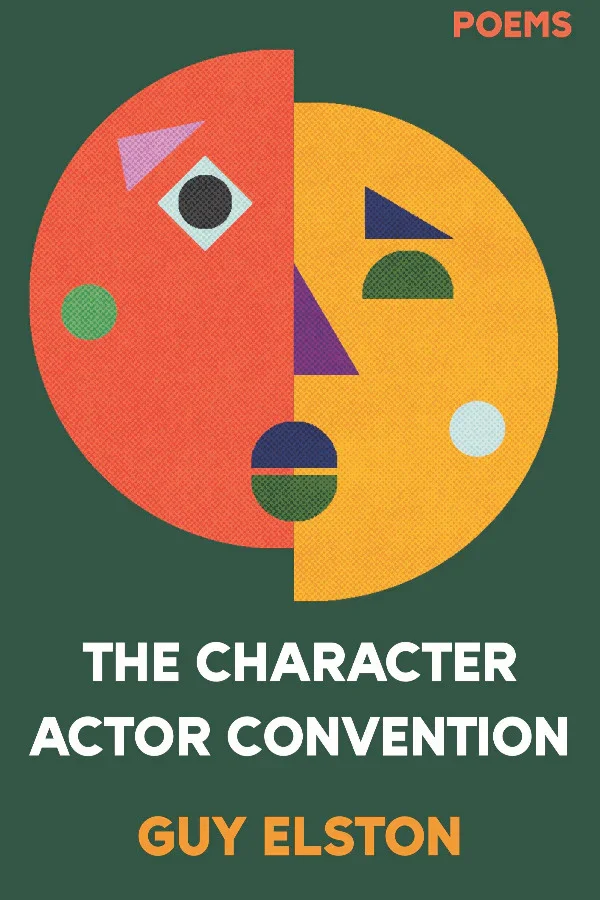
The Character Actor Convention by Guy Elston, Gordon Hill Press/The Porqupine’s Quill, 2025.

Review: Rod Carley Reviews Stan on Guard by K.R Wilson
STAN ON GUARD is meticulously well-researched, but Wilson never lets historical fact get in the way of a wildly inventive, absurdist romp -- each period pitstop is a novella unto itself.
Stan is on the run.
And it’s been that way for 3,000 years.
Wise-cracking Stan is back in K.R. Wilson’s new novel STAN ON GUARD (sequel to Call Me Stan), on a century-spanning, outrageous odyssey.
Stan is immortal and while that may sound like a dream life, it’s a far murkier and lonelierproposition, especially when you’re being hunted by your nemesis, an immortal Trojan princess named Tróán, whose vengeance will stop at nothing. Living forever has its challenges.
From hanging out with a douchebag named Odysseus (Homer got it wrong) to taking long walks in an insane asylum with a mad Nietzsche to fighting for the Germans in World War I and faking his way to Canada, Stan’s historical shenanigans are a treat. He does whatever it takes to evade Tróán, learning the tricks of the survival trade century by century.
Meantime, Tróán takes on Polish Hussars, Lithuanian warriors, and the golden horde of medieval Russia before finding herself a baroness in 19th century Paris hosting salons and crossing paths with the likes of Rodin and Isadora Duncan – all the while obsessively pursuing Stan.
Rollicking.
Riveting.
Remarkable.
STAN ON GUARD is meticulously well-researched, but Wilson never lets historical fact get in the way of a wildly inventive, absurdist romp — each period pitstop is a novella unto itself. Highly recommended.
By: Rod Carley, award-winning author of RUFF
Rod Carley is the award-winning author ofRUFF (2024), GRIN REAPING (2022), KINMOUNT (2020), and A Matter of Will(2017). He’s been long listed for the Leacock Medal for Humour 3 times and has twice received the Silver Medal from the Independent Publisher Book Awards plus the Bronze Award for Humour from Foreword Review INDIES. He was a Finalist for 2023 Next Generation Indie Book Award for Humor, the 2021 Carter V. Cooper Short Fiction Prize, and the 2023 ReLit Award for Best Short Fiction. He is co-founder of the St. Lawrence Writers Festival in Brockville, ON. Last spring, he was Writer in Residence at the Toronto Reference Library.www.rodcarley.ca
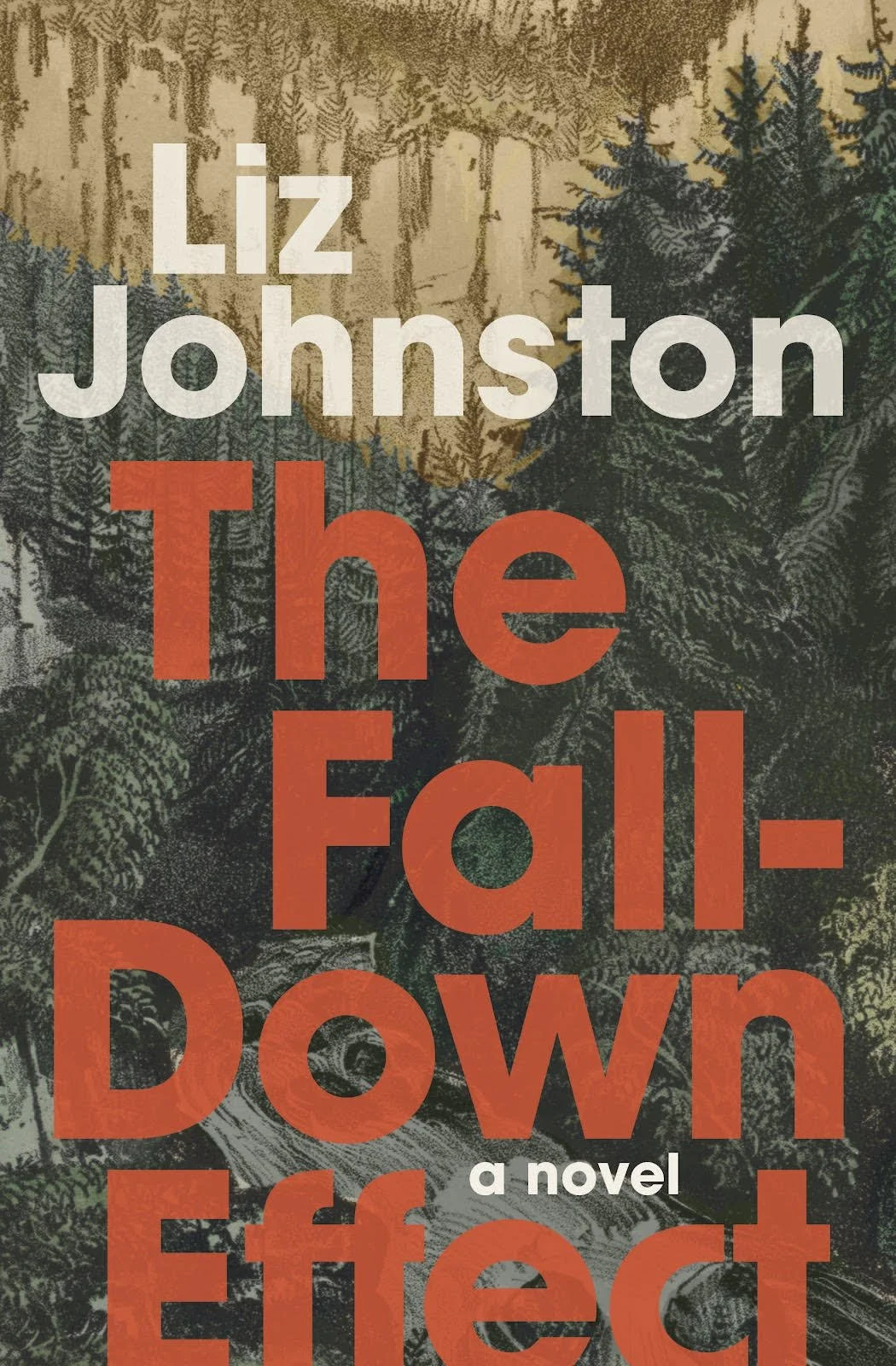
Excerpt from The Fall Down Effect by Liz Johnston
River travelled softly along the boundary line between sleep and waking. Somewhere off to the side, he was aware of Mom and his sisters talking, the motion of the car. But he was also wandering through a deep dark wood, looking for Fern. Someone or something had taken her. He couldn’t see the sky through the tree canopy and didn’t know if it was day or night. He just knew he had to find her. Looking up from the long, shadowy path ahead of him, he watched a giant cedar slowly tip and fall across his way, its roots tearing out of the ground in horrifying silence. He woke with a start. The car was turning off the highway.
River travelled softly along the boundary line between sleep and waking. Somewhere off to the side, he was aware of Mom and his sisters talking, the motion of the car. But he was also wandering through a deep dark wood, looking for Fern. Someone or something had taken her. He couldn’t see the sky through the tree canopy and didn’t know if it was day or night. He just knew he had to find her. Looking up from the long, shadowy path ahead of him, he watched a giant cedar slowly tip and fall across his way, its roots tearing out of the ground in horrifying silence. He woke with a start. The car was turning off the highway.
Fern was next to him, and Sylvia sat in the front with Mom. He blinked and rubbed his eyes. His face against the rolled-up window, he bent his neck to look past the close treetops to the inky sky. The dream had already vanished, but this felt like a dream too. He wondered if his sisters knew where they were going or why Dad wasn’t here.
As if reading his mind, Fern asked, “Why did Dad stay home?”
“He didn’t want to come.” Mom hunched over the steering wheel, looking for something, trying to see farther into the darkness. “He’s showing his colours as he gets older,” she said.
River imagined Dad, shirt off on a hot day, revealing unexpected stripes of blue and green on his skin.
“What do you mean?” Sylvia asked.
“Nothing. We don’t need him.”
They were slowing, turning even farther into the woods. The car felt like an animal, a lumbering, legged creature.
“Where are we?” River asked.
“We’re going to stop the loggers,” said Fern. She said it as if he was stupid for asking. He didn’t even know what her answer meant. She was only a year older than him, but she acted like she knew so much more.
They stopped. “Are we stuck?” he said.
“You’ve got to give Maeve a bit more credit.” Mom smiled over her shoulder. “This old girl’s been down rougher roads than this.”
“Is this even a road? Are we allowed to drive here?” Sylvia said.
“Please, Syl.”
River leaned forward to look through the front window at the path ahead of them. The way was wide enough for the car, more than wide enough, but rough and rutted. They moved forward, Maeve plodding on step by step.
River yawned loudly. Fern gave him a disgusted look.
“You guys haven’t been awake this early since you were babies,” Mom said cheerfully. “We’ll beat the crew in, I’m sure.”
River looked back out the window, into the tunnel of tree trunks. He didn’t want anyone to cut them down. But he didn’t know how he and his sisters were supposed to stop a crew of lumberjacks. He pictured hulking men, bigger than Dad, axes resting on their shoulders. He pictured semi-trucks and tall yellow tank-like vehicles, a whole set like the Tonkas he got handed down from his Vancouver cousin, bearing in on their little car. Across the seat from him, Fern sat determined and brave. Excited.
“Are we there yet?” he asked.
From The Fall-Down Effect © 2026 by Liz Johnston. Used with permission of Book*hug Press.
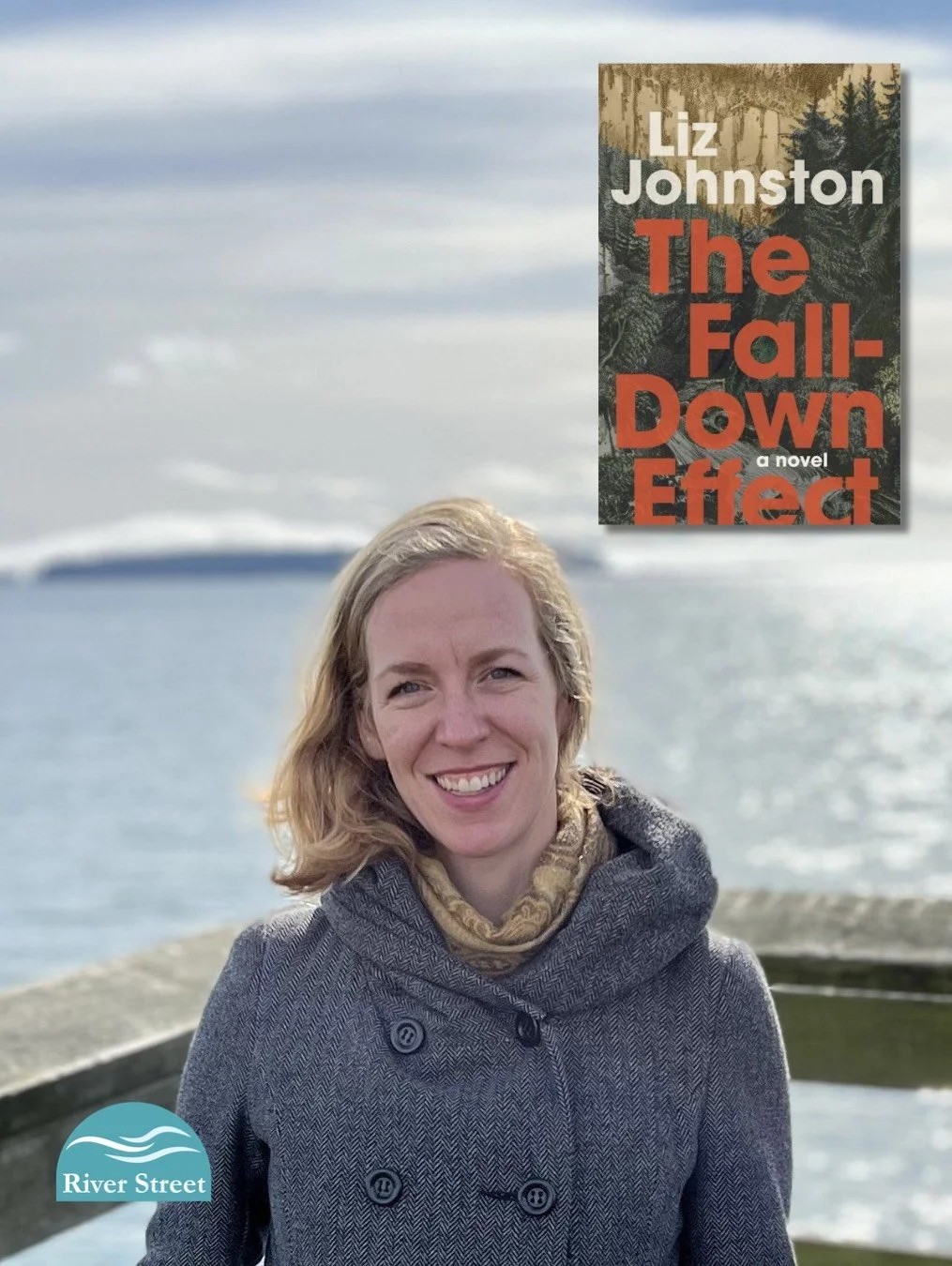
The Fall-Down Effect by Liz Johnston, published by Book*hug Press, April 21, 2026
Exploring protest, climate change, and fractured family relationships, Liz Johnston’s eagerly anticipated debut novel, The Fall-Down Effect, asks what we really owe people in our lives when we are fighting for a greater cause.
As a child in the late 1980s, Fern is the wild heart of her tree-hugging family—quick-tempered and yearning to spend every minute in the woods of the small Pacific Northwest logging town where they live. She is also most like her environmental activist mother, Lynn, who chafes against the demands of motherhood and yearns for the protests of her youth. As tensions escalate, Lynn leaves her partner, Tom, and their three children, telling herself she will devote her life more fully to fighting for the earth.
At nineteen, Fern commits her own radical act of protest in the town, which authorities label ecoterrorism. When Fern goes underground, her parents and siblings—responsible grad student Sylvia and budding artist River—struggle to make sense of her actions while also trying to cover up her absence. Fern’s secret proves impossible to keep, and when she becomes a wanted woman, the rest of the family trades blame. Years later, when Lynn takes shelter from a forest fire in the home she left so many years before, the family is forced to confront their regrets during a fraught, baggage-filled reunion.
Liz Johnston grew up in Revelstoke, B.C., and now lives and writes in Toronto. Her essays and short stories have appeared in Poets & Writers, The Fiddlehead, The Humber Literary Review, Grain, The Antigonish Review, and The Cardiff Review. Johnston is an editor of Brick, A Literary Journal. The Fall-Down Effect is her debut novel.
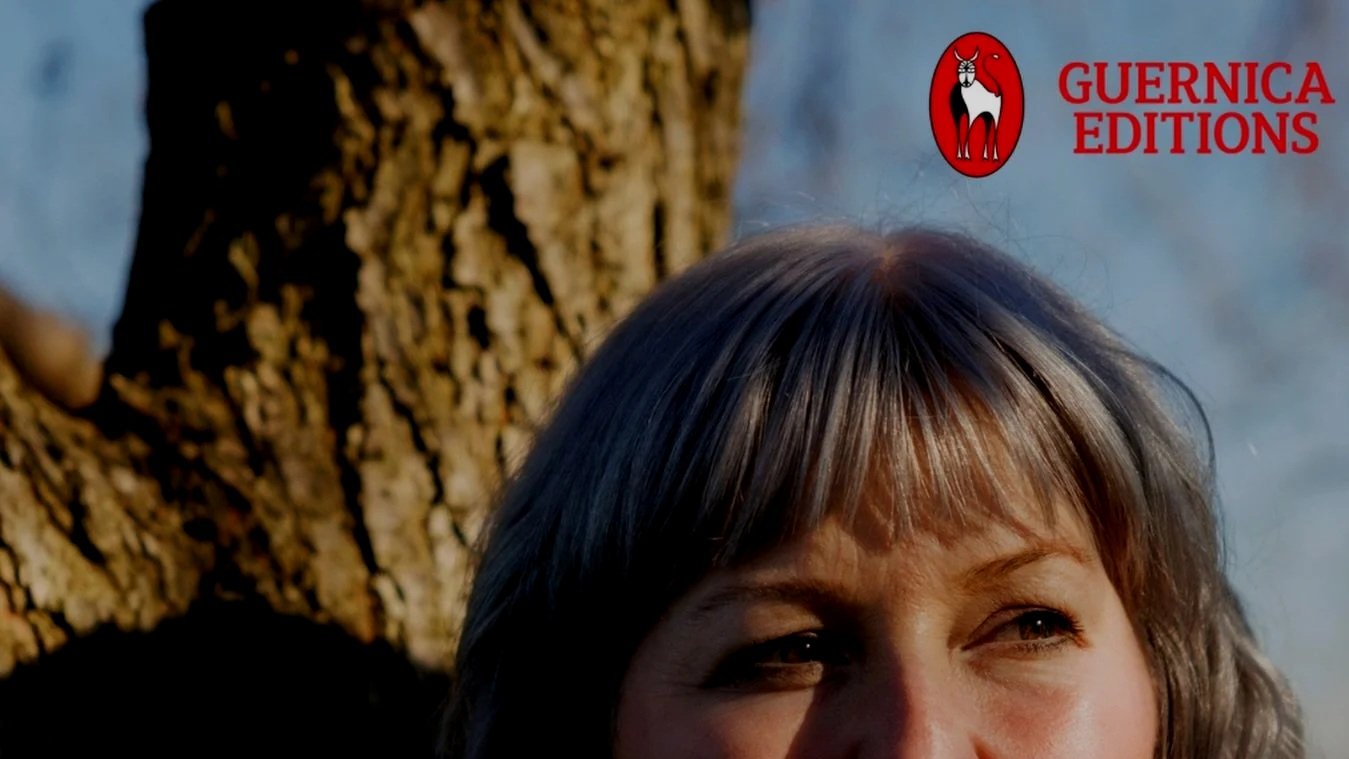
Power Q & A with Alison Gadsby
There is a story in the collection that doesn’t work, or it’s not doing what it really needed to do when I dreamed it to life years ago. I don’t know if every reader could pick it out before reading this, but I think some might.
Q: Is there a story in your collection, Breathing is How Some People Stay Alive (Guernica Editions, 2026), you wish you could revise or change in some way?
A: Yes. There is a story in the collection that doesn’t work, or it’s not doing what it really needed to do when I dreamed it to life years ago. I don’t know if every reader could pick it out before reading this, but I think some might.
This story came to life after I had spent two weeks in NH losing things – from car keys to my phone, to my bathing suit, my running shoes – and on that trip I lost an expensive pair of sunglasses. We’ve never had a lot of money, but at that time, we were in such deep debt that I knew I’d never be able to replace them. They weren’t even mine, my brother took them from the lost and found at work – after they went unclaimed for six months.
The person who loses things all the time is haunted by the one thing, the one person, he lost, and cannot get back – his sister, who was abducted as a child while in his care. These lost things, or losing track of things, carries through to adulthood where he now writes children’s books. He’s created a popularfictional world where his sister lives, so that he doesn’t have to admit she’s gone, that he lost her.
This loss, the grief, is a fracture that never heals. He limps around unable to connect thoughts and as his dead sister’s 30thbirthday approaches and a detective from the past shows up with evidence that she is, in fact, dead, the main character trips over every thought and cannot function.
I revised this story dozens of times. It has been rejected by a handful of literary magazines. And it was in the final edits with the publisher that my own thoughts fractured and I realized why I couldn’t get inside of it and feel that any part of the story belonged to me. I wanted to remove it entirely, but as a connected collection, two of the characters exist elsewhere and what happens in this story feeds the narrative of later stories.
I wrote the first draft the year my dad died.
Diagnosed with a rare blood disorder, I had dismissed his mortality as easily as one might drop a set of car keys on a table. He once begged me to let him stay over in Toronto an extra night, and I rejected him, told him it would be too complicated. My parents didn’t have a pleasant divorce, and it was my daughter’s birthday that weekend. He was in hospital a week later, dead three months after that.
In all the revisions, I never once made the connection. My father wasn’t a lost child, a set of car keys. Convinced I was trying to write some kind of murder mystery with a provocative hook, I didn’t feel the pain until it was too late. I’d thrown a stone into a swimming pool and now I had to stand on the edge staring at the bottom without any way to retrieve it. I’d written into the story places of my childhood that are most emotionally connected to my dad, to my trauma. The Welland Canal. Orchard Park. St. Alfred’s Church. The QEW. I still can’t drive over the Burlington Skyway without thinking about him, and here I’d written a story about a man who sleep-drives from Toronto to St. Catharines to fish around a dirty creek for evidence his sister is still alive.
Once There Was A World is in the middle of the book, and when you read it, I want you to know that I lost something and there are days, weeks, sometimes months when I dream about how I might get it all back.
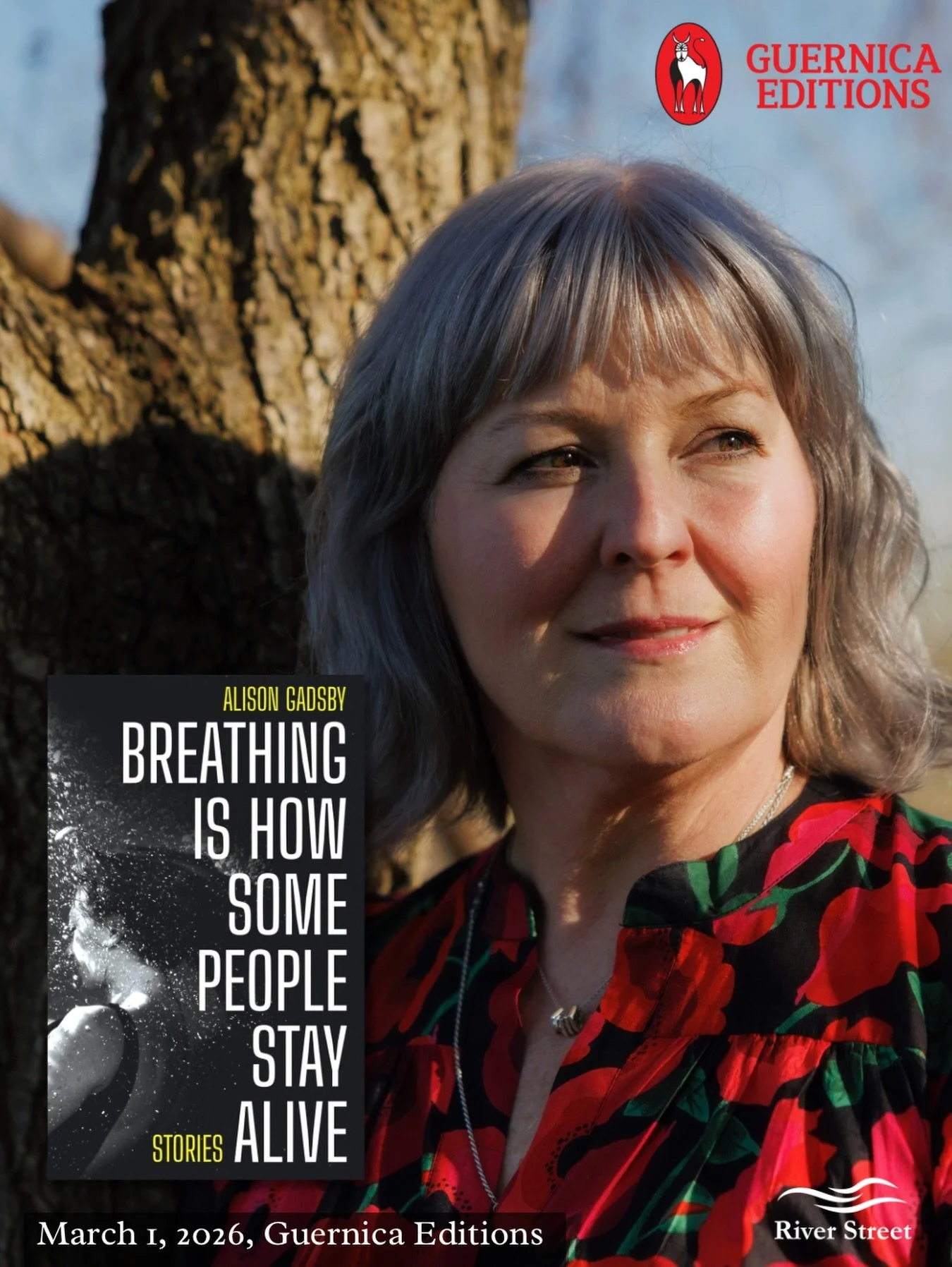
Breathing Is How Some People Stay Alive blurs the lines between horror, catastrophic speculative fiction, and psychological realism in a collection that might best be described as weird fiction. These connected stories offer dark reconstructions of lives brimming with desperate loneliness. They allow us to bear witness to the life-altering love of sisters, brothers, mothers… the life-altering love that buoys them as they struggle to stay afloat in the wake of childhoods they merely survived.
Alison Gadsby writes in Tkaronto/Toronto where she lives in a multigenerational home that includes several dogs. Her writing has appeared in various literary journals, including Blank Spaces, The Temz Review, The Ex-Puritan, Blue Lake Review and more. She is the founder/host of Junction Reads, a prose reading series.

Excerpt from Shoebox by Sean Paul Bedell
On one warm summer day, the heat was stifling in University Station. As always, I waited, poised, coiled like a spring. When the tones chimed, I would be ready to strike.
I was relieved when we got paged out for a call.
I hit the bay door switch, Fletch started the truck and I jumped in. He hit the lights and siren and we took off. The siren’s wails echoed off the apartment blocks and office towers. Our rig’s lights reflected in the windows of the shops at street level.
On one warm summer day, the heat was stifling in University Station. As always, I waited, poised, coiled like a spring. When the tones chimed, I would be ready to strike.
I was relieved when we got paged out for a call.
I hit the bay door switch, Fletch started the truck and I jumped in. He hit the lights and siren and we took off. The siren’s wails echoed off the apartment blocks and office towers. Our rig’s lights reflected in the windows of the shops at street level.
I hadn’t been a medic for long, especially compared to Fletch. On every call two questions jumped to my mind: What will I find? How will I fix it?
I’d learn that, as a medic, I would arrive in someone’s life, interact with them and their family, their loved ones. I’d be thrust into their lives on their worst day. If things work out, I become their hero. I had no flowing cape, no mask covering my eyes; the only logo I wore was the crest on my shoulder with the serpent twirling around the pole. With the stethoscope that dan gled from my neck and my bare hands, I’d invoke miracles.
Many times, I would show up in their life, and based on experience or gut, or both, I knew I couldn’t work any miracles that day. There was no magic that would save them. For them, or at least their bereaved family members, it would be a recurring night of darkness, forever. This scene, with my ugly mug front and centre in their nightmare, emerges as a repeating curse they’re forced to live with. Bad calls, where I can’t charm a snake out of the basket and score a save, happen on average at least once a shift. At a minimum of four shifts a week, in the year that I’ve been a medic, I’ve become a rank ghost to over a hundred families.
When I started as a medic, I was afraid to use the word “died.” But that’s what they teach us in paramedic school. We need to be clear with people when we’re talking about death. I can’t use euphemisms like ‘gone to a better place’ or ‘leaving this world’ or ‘moving on.’ Sometimes people don’t grasp the finality of what I’m trying to say to them. My instructor at paramedic school, Roland MacLeod, was a brain with a wicked sense of humour. He said, “They think, oh, okay what better place? Toronto?”
—Excerpt from Shoebox by Sean Paul Beddell, NoN Publishing, 2025. Copyright 2025, Sean Paul Beddell. Reprinted with permission.
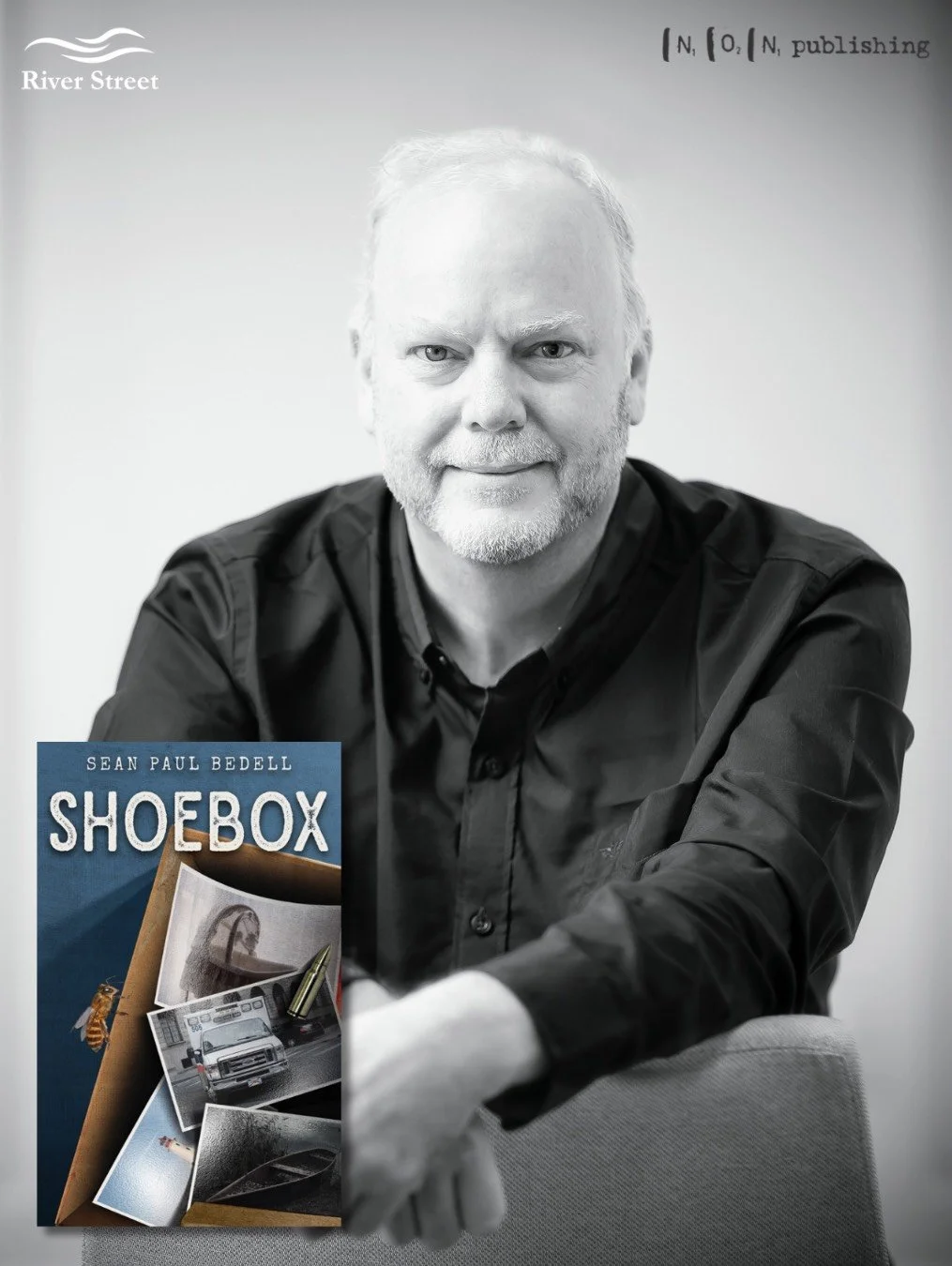
More about Shoebox:
In this gritty and emotional exploration of the human condition, Steve Lewis, a dedicated paramedic, faces the devastating aftermath of a fatal accident that casts a dark shadow over his once-passionate commitment to saving lives. Plagued by guilt and grief, he finds his career, family, and very existence hanging in the balance as he navigates the complexities of trauma both personal and professional. As Steve grapples with the high stakes of his job amidst the scrutiny of a community that admires yet questions him, each life he saves rekindles his passion for his work, reminding him of the profound connections he can forge through compassion and care. A compelling and visceral journey of personal redemption and triumph over adversity, Shoebox explores the human spirit's capacity for healing.
About Sean Paul Beddell:
Author of the novel Somewhere There’s Music, Sean Paul Bedell has been writing and publishing for more than 30 years. A longtime paramedic and captain with the fire service, he lives with his wife Lisa in Dartmouth, Nova Scotia.
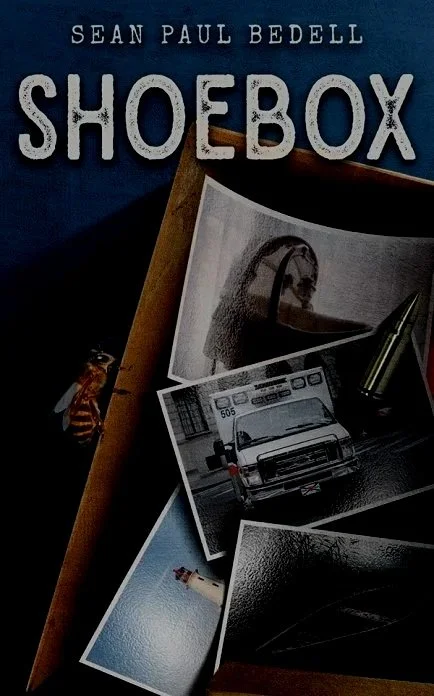
Power Q & A with Sean Paul Bedell
I wrote the book in the ‘gritty realism’ style. That’s intentional, I want my readers to feel, see, smell and touch – everything that the main character, Steve Lewis, does. I want them trudging to calls in his work boots. Though it’s fiction, Shoebox is loosely based on calls I did or ones my crew mates were involved in.
Q: In the novel Shoebox (NoN Publishing, 2025), the paramedic characters deal with trauma and the stress of the job in different ways. Are those portrayals realistic? And what about when you worked as a medic? How did you deal with the stress and the adverse experiences you witnessed?
A: Pranking and laughter is a short-term release for the after-call, adrenaline-fuelled tension. But the laughing, the pranks, using food, coffee, small talk, or watching a movie as distractions, is only a placebo. I hope the book shows that. The stress and memory of the trauma is buried inside and will work its way to the surface. In the story, Steve struggles because he can’t recognize and process all the emotion he feels, not only from his work but from his home life too.
In the story, Steve and his fellow medics are not only co-workers they’re roommates too. When I first started working ambulance, we worked 48-hour shifts. We lived, ate, and bunked together. We dealt not only with the stress and issues of calls, but interpersonal relationships of sharing living space with people including some with annoying habits. Add in too much caffeine and not enough sleep to the stress of constantly being hyper vigilant, and the atmosphere could tense up.
Beyond the paramedic-firefighter angle though, I’m a writer. I created a story to engage people and drive the reader to want to find out what happens next. I need readers to feel and root for a character that has become ’real’ for them. Beyond trauma and stresses of the job, I wanted to create a person people are compelled to find out what happens next for him. I told the story in first person so people could experience what Steve and the others do. I based it on typical calls to make the story as real as possible.
For me, some calls unfolded the way they were meant to. Whether the outcomes were good or bad, those natural-feeling calls don’t linger in my mind. I’ve made peace with those calls knowing I’d done all I could, that I’d followed my protocols to the letter. I have a natural acceptance of their outcomes.
Others – sudden and unexpected events in otherwise healthy people, or trauma, often with the young – children and babies – or situations where people were going on with their regular existence and something beyond their control barges into their life and changes it forever or snuffs it out. Those ones I know will be with me forever, deep in my memories, but always there, lingering below the surface. It never takes much for those memories to roar back.
The second guessing and the doubts can be excruciating. Even if calls are textbook perfect, sometimes things turn out badly. Accepting that is a challenge. It’s hard to live with. It’s easier to beat yourself up over something – something big or small – that I could have, that I should have done, to make things turn out okay. Not everything turns out okay. Calls that turn out stellar because of some intervention I did, stay with me too, but in a positive way. They keep me buoyed during and after the rough ones.
I was never diagnosed with PTSD, but many of my colleagues were. I never sought help for any issues stemming from my first responder work. In retrospect, I’m sure I had issues related to my work. When I first started, the ‘tough guy’ persona was prevalent. It has changed for the better over the years. As a profession, as a calling, and as a society, asking for help can be a weakness. Struggling to process what you’ve experienced is an internal flaw to be ashamed of. I say this: asking for help is no weakness; it is the greatest sign of strength. Asking for help and putting in the effort to understand is a good way to begin healing.
To this day, I avoid some streets in Halifax where I’ve done calls, they trigger a flood of memories I don’t want. Other times simple, everyday things that were present during one bad call or another, bring back a box load of mental souvenirs I’d rather forget. An unremarkable sound, odour or object was etched into my brain during a call that didn’t end well. Feelings are never ‘out of nowhere.’ Somehow a subtle trigger touched the recesses of my brain and brings a vivid reality to the top of my mind.
Writing this book was cathartic for me. I wrestled with my demons by putting ink on the page and creating the realistic life of a medic. Shoebox tells the story of one person who struggles with loss, grief, and guilt. He navigates through life, work, and family the best he can. He makes mistakes, he gets some things right. I created him with everything real that makes us human – despair, sadness, loneliness; but also hope and love and joy.
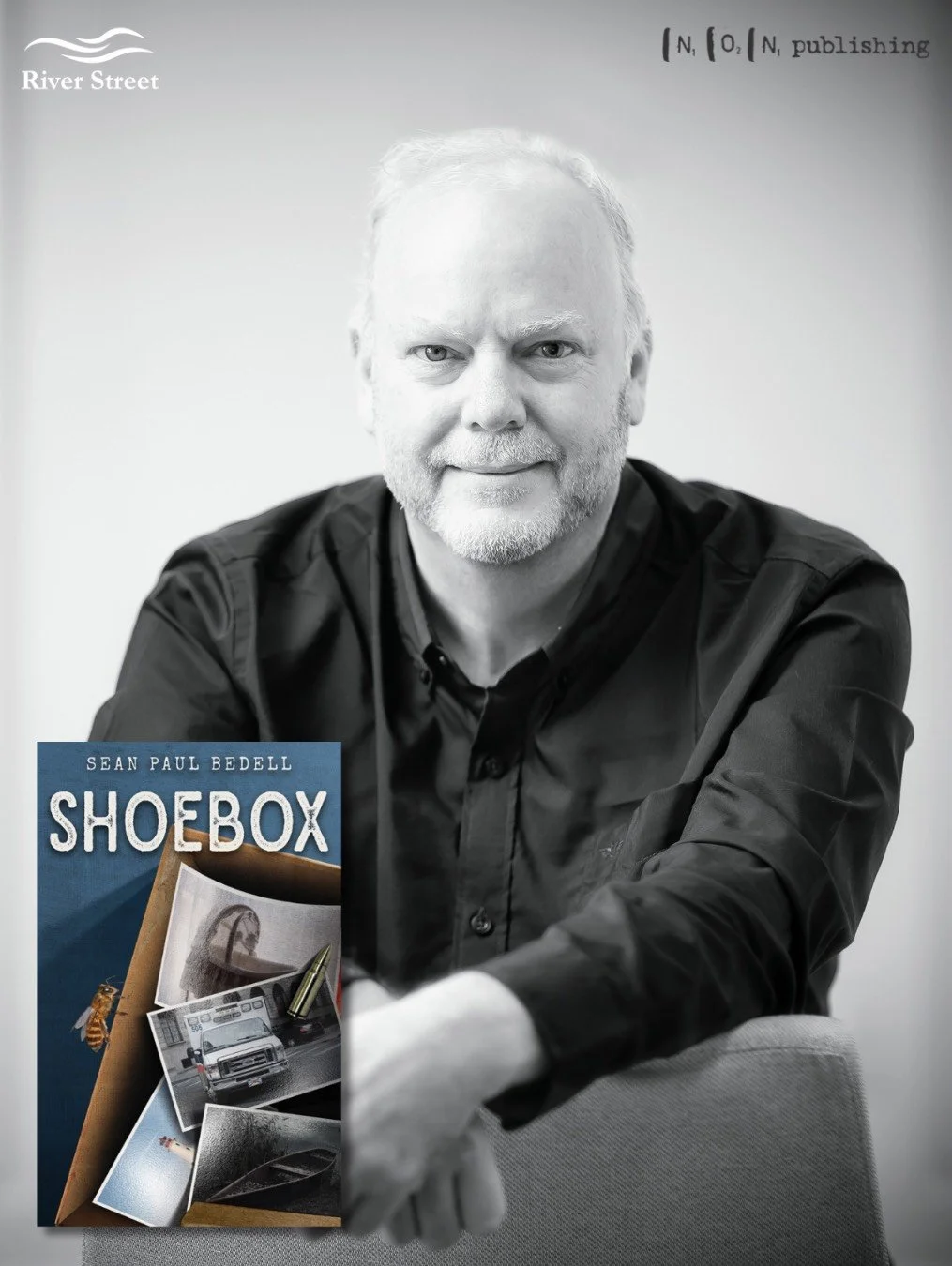
More about Shoebox:
In this gritty and emotional exploration of the human condition, Steve Lewis, a dedicated paramedic, faces the devastating aftermath of a fatal accident that casts a dark shadow over his once-passionate commitment to saving lives. Plagued by guilt and grief, he finds his career, family, and very existence hanging in the balance as he navigates the complexities of trauma both personal and professional. As Steve grapples with the high stakes of his job amidst the scrutiny of a community that admires yet questions him, each life he saves rekindles his passion for his work, reminding him of the profound connections he can forge through compassion and care. A compelling and visceral journey of personal redemption and triumph over adversity, Shoebox explores the human spirit's capacity for healing.
About Sean Paul Beddell:
Author of the novel Somewhere There’s Music, Sean Paul Bedell has been writing and publishing for more than 30 years. A longtime paramedic and captain with the fire service, he lives with his wife Lisa in Dartmouth, Nova Scotia.
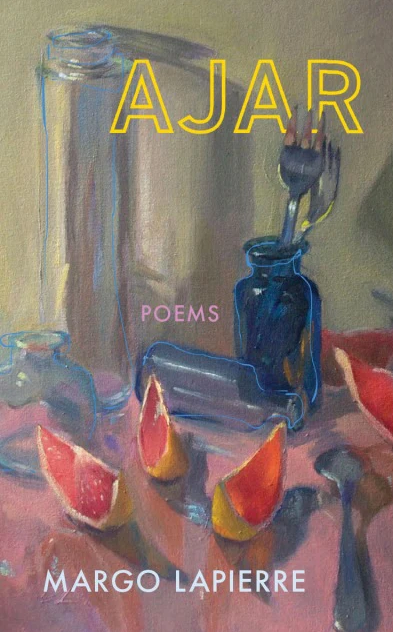
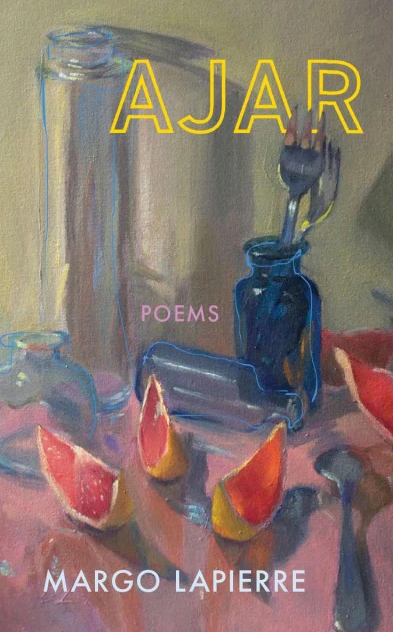
That Was Me Haunting Me: A Review of Margo LaPierre’s Ajar: Poems by Tea Gerbeza
Margo LaPierre’s Ajar is a poignant collection on LaPierre’s experience with bipolar disorder 1 with psychotic features. This collection is not one that shies away from harsh realities of Madness; instead LaPierre reclaims and makes real the Mad self with tender honesty. Ajar is an account of “what it is to have [LaPierre’s] body” and how the ill self cannot be separate from the “well” self.
Margo LaPierre’s Ajar is a poignant collection on LaPierre’s experience with bipolar disorder 1 with psychotic features. This collection is not one that shies away from harsh realities of Madness; instead LaPierre reclaims and makes real the Mad self with tender honesty. Ajar is an account of “what it is to have [LaPierre’s] body” and how the ill self cannot be separate from the “well” self.
LaPierre makes terrific use of form to communicate the various ways in which the body becomes a palimpsest of experience and knowledge. For instance, there are several Centos (a poetic form that relies on multiple poets’ lines to form one coherent voice) in the book. Through this engagement with other poets, the act of constructing a Cento becomes a metaphor for assembling disparate selves.
A major repetition throughout the book is that the self is haunting themselves: “I mistook real for unreal and I haunted me.” “I haunted me” is a repeated phrase that traces the book and takes on more meaning as we encounter more of LaPierre’s experiences. This deliberate self haunting is itself a palimpsest of timelines existing at once, past-present-future converging as it often does for the speaker’s Mad self. In fact, the speaker acknowledges that their experience of bipolar disorder 1 with psychotic features is one that blurs and blends time. This blending of timelines suggests that a body does not separate its memories like the mind does. Instead, a body remembers with no linearity, and all bodily experiences exist at once. Therefore, there cannot be a separation between the Mad self and the “well” self. They will always exist together.
LaPierre’s speaker asks, “if we are echo only, what sonic boom will shock the gloom right out of this place?” There is a sense of loss here because if the speaker is merely an echo, how will they tell what needs to be told? LaPierre answers this question by enacting a body-telling through ghosts, selves haunting selves, palimpsests, centos. She shows how a self disassociated eventually comes back and makes space for past selves.
In the poem “Characteristics of Nonlinear Systems,” the past is the body and what happens to her—a flu, a “mysterious cold spot,” and how the past ripples throughout the body again and again. This cyclical ripple can oftentimes be confusing, but it also becomes a natural rhythm for the Mad self. The speaker also recognizes that their body experiences “hysteresis”: “the name / for stress in an organism / or object when effects / of the stressor lag.” This definition is an important one when addressing the catastrophic effects of gendered physical violence and how the body remembers those events. These effects lag, sometimes take years to show up in the bodymind. In the subsequent poem, “Brute,” LaPierre writes, “Hysteresis is the past / gripping the body.” The offset “g” in the poem makes the line read two ways: the past is ripping the body and the past is gripping the body. This dual meaning points to how trauma nestles in a body, how it lives within the mundane. Mundanity becomes an integral aspect of Ajar in discussing how bipolar disorder 1 affects daily life. There is a kitchen that leads to a patio and a “slanted rooftop perfect for writing”, and yet among these positive mundanities, LaPierre slips in how she tried to die by suicide. Ajar does not romanticize suicide or villainize it; instead, suicidality is shown to be a symptom of bipolar disorder 1 with psychotic features that the speaker copes with, something that comes with living “in this body.” There are moments of desire to die, but also moments with a desire to live. There is no cure for bipolar disorder 1, but LaPierre makes it clear that there are ways to understand, to have tools to survive. With other symptoms like delusions and the perception of time being permanently altered, Ajar asks how do we put words to such things? How do we parse the real from the unreal?
I don’t think Ajar wants its reader to be able to parse the real from the unreal because it becomes clear that regardless of what is “unreal,” the experience the speaker has is real to her body and self in that moment. In “Chatoyant,” we are told, “It’s delusion only because I lift myself from our mutual system of reality. My mind sees what now means. I contain my past, present, future self, existing simultaneously. I’m complete. I have access to all my timeline.” This access the speaker mentions is a wisdom of the Mad self. A realization that frees the Mad self from a system that doesn’t cohere with LaPierre’s experiential knowledge, a knowledge that is incredibly important in healing and reclaiming the self. While LaPierre’s poems spend ample time focusing on remembrances all the selves in the book have, there is a significant shift in “On Friendship” where the mind doesn’t remember, but the body does. LaPierre writes, “I don’t remember this” when her friends tell her that she insisted on wearing heels to the hospital. Memory here is fraught, only given through other people. The self, then, only exists in what the body knows, in an unknowable language one needs to work to understand. Ajar’s self does this work.
Later in the collection, the speaker states, “As I write this poem, I revisit me.” This change in pattern from a self haunting a self to one revisiting signals an important shift to how the Mad self is perceived. To visit is an act of connection, which leads us to LaPierre’s affirmation and reclamation of the Mad self. LaPierre writes, “I am old and aimless as the sun, and just as radiant.” Describing the self as “radiant” is indicative of a small act of reclamation. Then, in “Regeneration,” LaPierre makes an even more powerful statement: “I am cell renewal, membranes kissing / within my body project: / tongue and speech turn / silence inside out—look, grace.” Here, the self finally sees themselves as grace. The self reclaims the Mad self and embraces them.
Margo LaPierre’s Ajar reminds us that there is power in connecting to the selves we are taught to separate from. She reminds us that we are recurring like the sun in the sky. Ajar is an exquisite book, one that I will turn to again and again in the years to come.
—by Tea Gerbeza
About Ajar:
The poems in Ajar navigate the physical and psychological dangers of womanhood through the flattening lens of mood disorder. Psychosis isn’t the opposite of reality—it’s another perceptual system. If neurotypical thought measures the world in centimetres, this collection measures it in inches, gallons, amperes. Ajar celebrates radical recovery from gendered violence and psychotic paradigm shifts, approaching madness through prismatic inquiry. As time converges within us, we find new ways to heal and grow. From the emergency room to the pharmacy to the fertility clinic to the dis/comfort of home and memory, this collection humanizes bipolar psychosis.
Margo LaPierre is a writer and freelance literary editor. With multi-genre work published in The Ex-Puritan, CV2, Room, PRISM, and Arc, among others, she has won national awards for her poetry, fiction, and editing. She holds an MFA in Creative Writing from UBC. Ajar is her second poetry collection.
Tea Gerbeza (she/her) is the author of How I Bend Into More (Palimpsest Press, 2025). She is a neuroqueer, disabled poet, writer, editor, and multimedia artist.
Power Q & A with Conor Mc Donnell
My non-clinical academic interests and research have been in medication safety for nearly 30 years now. In 1998 I witnessed a fatal medication error that significantly impacted all involved. In 2011, I set up the first Medication Safety Program at SickKids hospital with a particular focus on reducing harm caused by opioid errors and accidental tenfold overdosing.
Q: Your long poem, What We Know So Far is…(Wolsak & Wynn) touches on many salient themes, as the title—which is a nod to the news cycle—indicates. One of the topics we picked up on is the opioid crisis. Would you tell us about how your experience with opioid misuse and abuse as a physician feeds into your work as a poet?
A: My non-clinical academic interests and research have been in medication safety for nearly 30 years now. In 1998 I witnessed a fatal medication error that significantly impacted all involved. In 2011, I set up the first Medication Safety Program at SickKids hospital with a particular focus on reducing harm caused by opioid errors and accidental tenfold overdosing.
In 2017, our friend died from an accidental opioid ingestion while visiting the U.S. Over the next year or two, I read a lot around the opioid crisis and moved my research interests to opioid stewardship. In 2020, I set up the PrOPSR program (Perioperative Opioid Stewardship Program of Research) with the remit of decreasing excessive prescribing of opioids at time of discharge from hospital post-surgery without causing untreated pain in the home. Our work has met with huge success and our program won a coveted international award in New Orleans in 2024. While accepting that prize, I learned that my brother’s wife was terminally ill with cancer, and a few months later, at home in Ireland for her burial, I slept in their guestroom, surrounded by medical supplies and a large amount of prescription opioids. My current work examines humane ways to remove unused opioids from homes of bereaved families after the loss of a child receiving palliative care in the community.
I have written poems about opioids, addiction, and the consequences. One such poem, Qui Vincit, was runner-up in The Fiddlehead’s Ralph Gustaffson Poetry Prize.
About What We Know So Far is…:
The Irish word for shadow, “scáth,” is also our word for shelter.
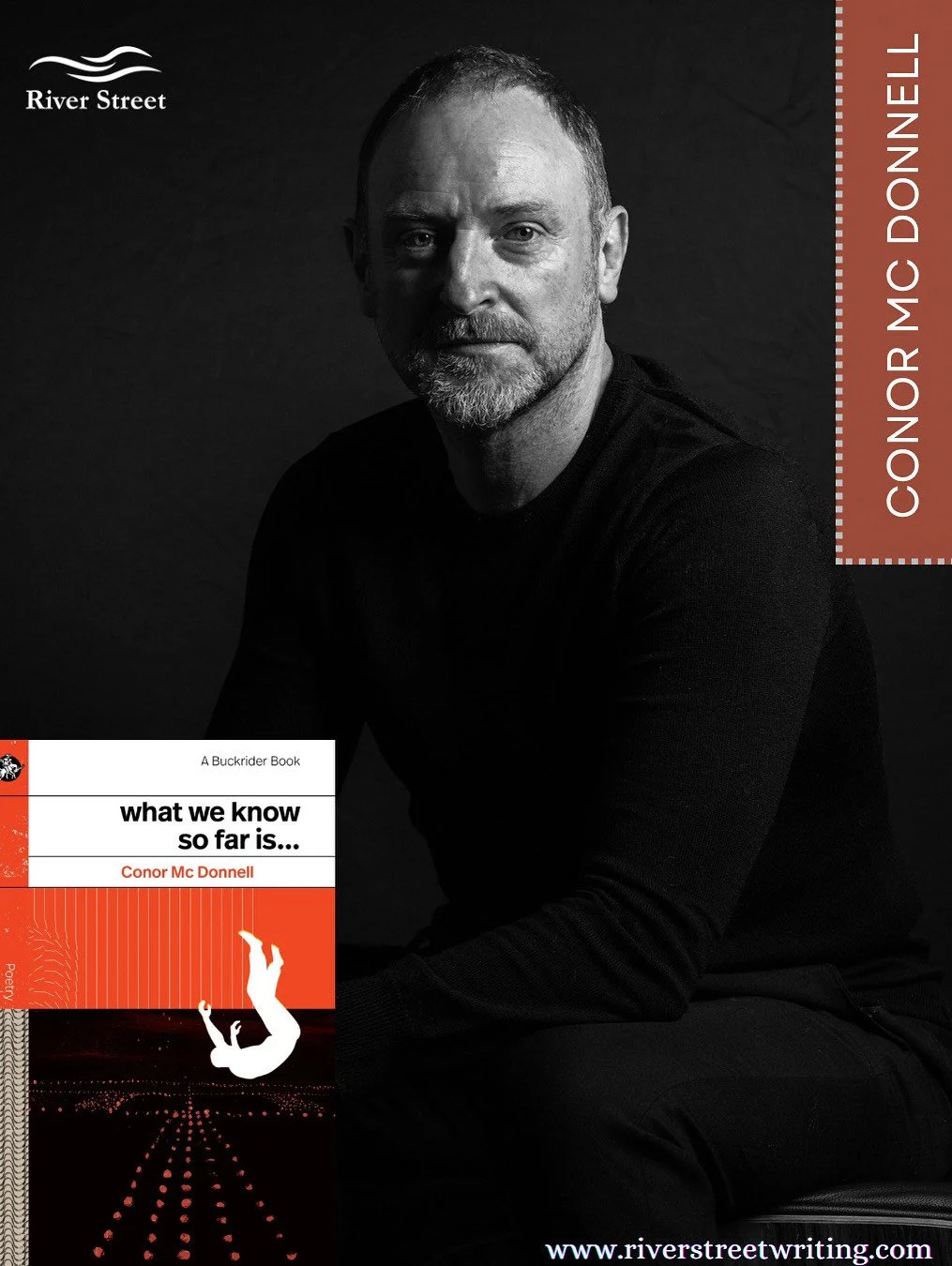
In a powerful long poem that captures the disquiet of our age with cinematic language and imagery, Conor Mc Donnell’s What We Know So Far Is … harkens back to the previous century in its daring. Drawing from his Irish heritage, his experience as a pediatrician and many other sources, Mc Donnell has created a work that echoes the scope of T.S. Eliot’s The Waste Land and Hart Crane’s The Bridge. Both ecstatic and challenging, the lines of the poem are filled with allusions and references, with biology shading into history into cultures both ancient and contemporary, where words are predators and “memes disseminate cultural-genes.” Through it all runs Mc Donnell’s fascination with language, ever shifting, beguiling, mutating, virus-like. In these questioning, DNA-like lines, Mc Donnell shows us how to unmake and remake our understanding of the world.
About Conor Mc Donnel:
Dr. Conor Mc Donnell is a poet and physician at the Hospital for Sick Children, Toronto. He is the author of two collections of poems (most recently, This Insistent List) and three chapbooks. His poetry has appeared in various Canadian and international publications as well as noted medical journals such as JAMA and CMAJ. He is an associate professor at the University of Toronto and editor in chief of Case Repertory, a Narrative-Based Medicine Lab publication that seeks to engage and promote the voice of the patient in collaboration with their health-carers. He is a frequently invited international lecturer on pediatric perioperative care, error prevention and opioid stewardship, and he is current vice-president of the Canadian Pediatric Anesthesia Society.
Power Q & A with Brad Smith
One might think that Billy changes his mind about the tawdry game of politics because he gets to see it up close and personal. As Mark Twain once noted, “Politicians and diapers should be changed often – and for the same reason.”
Q: At the beginning of Billy Crawford’s Double Play (Wolsak & Wynn, 2025), the protagonist states that he cares nothing about politics and never has cared about it. What makes Billy change his mind?
A: One might think that Billy changes his mind about the tawdry game of politics because he gets to see it up close and personal. As Mark Twain once noted, “Politicians and diapers should be changed often – and for the same reason.” But that is not why Billy changes his outlook. He becomes involved with Jessie and the better he gets to know her, the more he begins to see the world through her eyes, and he realizes how a certain politician’s corrupt motives will affect Jessie personally. She could lose the something dear to her – her family farm. It’s that realization that finally compels Billy to take the political landscape seriously—and to take action. O— as Freddy Mercury sang—it’s that crazy little thing called love.
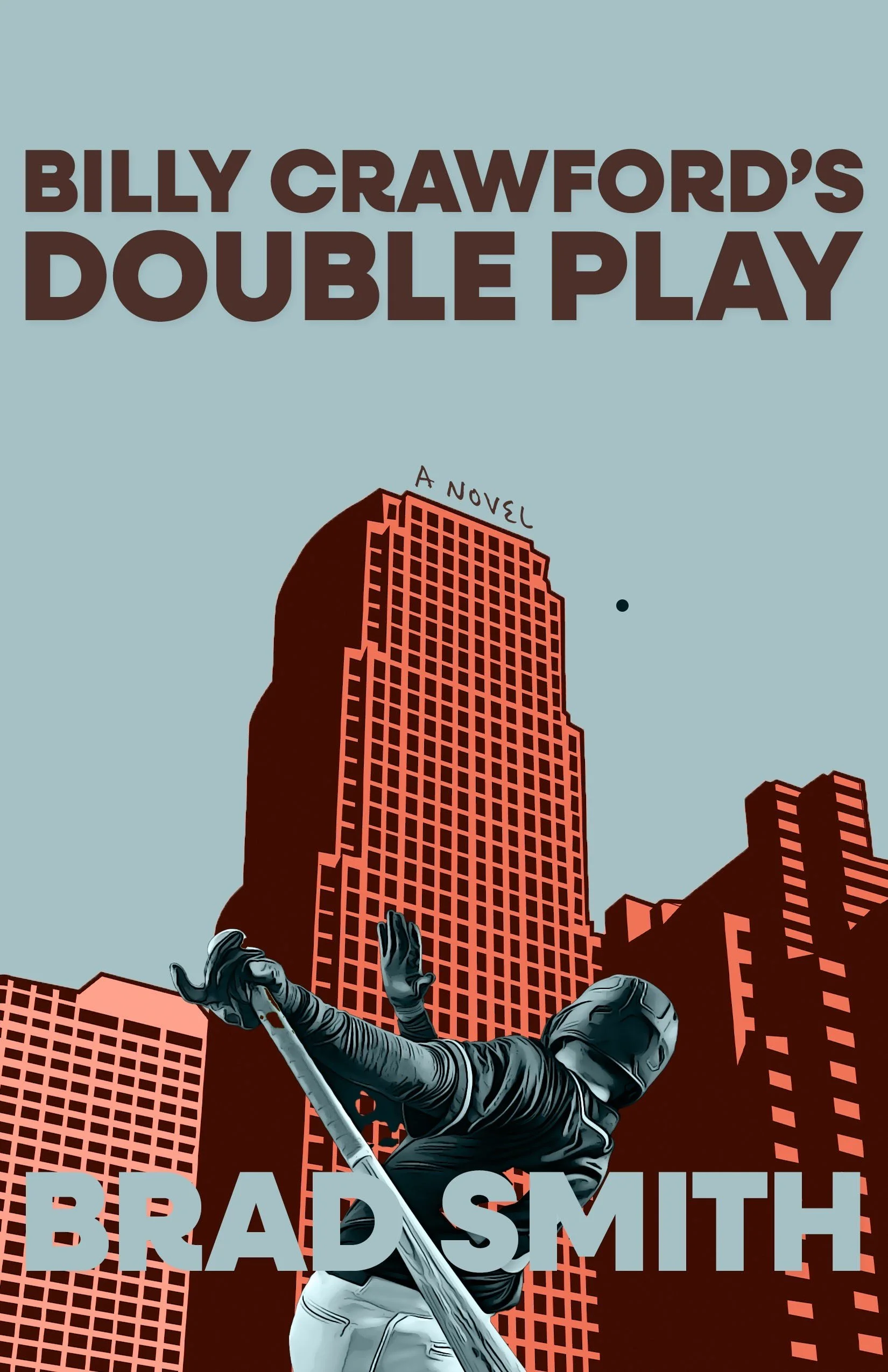
About Billy Crawford’s Double Play (Wolsak & Wynn, 2025):
Everything is legal – if you can get away with it.
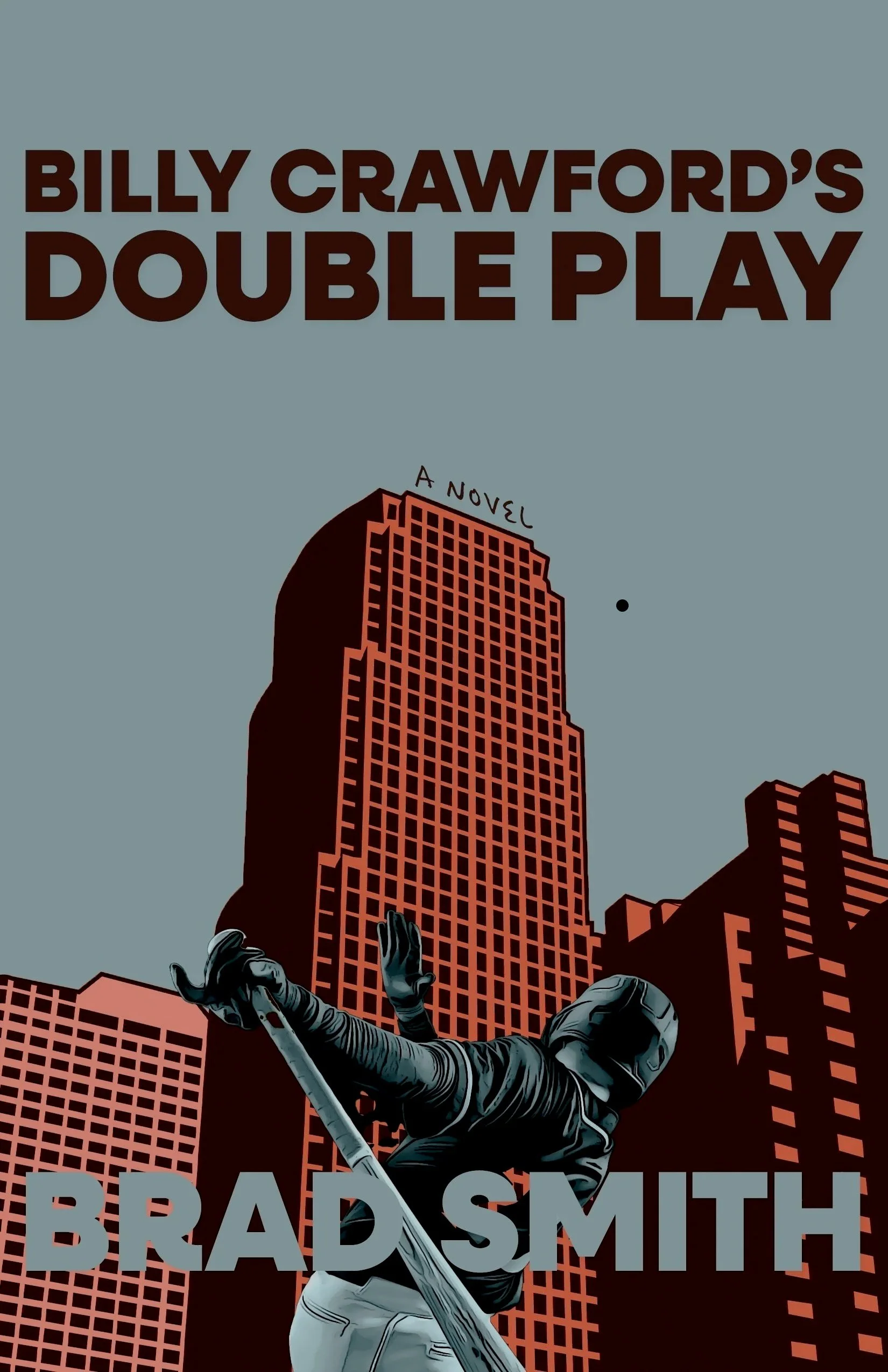
Billy Crawford is a hero. The star of the Rose City Rounders, the baseball player has been thrilling fans of the city for years. But Billy’s not as young as he used to be and his tendency to play hard is catching up with him. A string of losses for the Rounders puts his position at risk as the team’s owner, local developer Carroll Miller, doesn’t like being associated with anything that loses. Miller’s thinking of making changes, and not just at the team. When he decides to enter politics Billy suddenly finds himself facing an offer he can’t refuse.
In this wise-cracking, fast-paced novel, Brad Smith lampoons today’s scandal-ridden politics and politicians. But among the laughter, Smith also shows us there can be hope, and even integrity, where we least expect it.
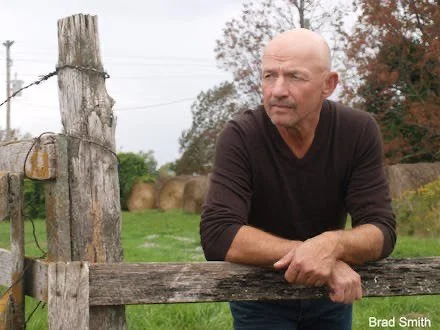
Award-winning author Brad Smith is a novelist and screenwriter, born and raised in southern Ontario. Billy Crawford’s Double Play is his fifteenth novel. His 2019 novel – The Return of Kid Cooper – won the Spur Award for Best Western Traditional Novel from the Western Writers of America. His novels One-Eyed Jacks and Copperhead Road were shortlisted for the Dashiell Hammett Prize. He adapted his book All Hat to feature film, starring Keith Carradine and Luke Kirby. He now lives in a ninety-year-old farmhouse near the north shore of Lake Erie, where he tinkers, respectively, on his vintage cars and his golf swing.

Power Q & A with Mallory Tater
I discovered my love of swimming in 2019. One of my best friends had just died, and I was searching for escapism—away from screens, away from work, and, in some ways, away from my own body. The weightlessness of being submerged in the public pool eased my angst and softened the tension and grief in my neck and shoulders. The quiet beneath the water cleared my mind. The rhythm I could build toward, channel, and disrupt brought me a sense of control and steadiness. Stripping down my body and taking a warm shower before and after felt reverent. Small talk with strangers—those quiet good mornings in the lobby and the lanes—became part of the day’s calm order. The pool, like the poem, became a place of repetition, refining, and resistance.
Q: How do the practices of swimming and poetics intersect?
A: I discovered my love of swimming in 2019. One of my best friends had just died, and I was searching for escapism—away from screens, away from work, and, in some ways, away from my own body. The weightlessness of being submerged in the public pool eased my angst and softened the tension and grief in my neck and shoulders. The quiet beneath the water cleared my mind. The rhythm I could build toward, channel, and disrupt brought me a sense of control and steadiness. Stripping down my body and taking a warm shower before and after felt reverent. Small talk with strangers—those quiet good mornings in the lobby and the lanes—became part of the day’s calm order. The pool, like the poem, became a place of repetition, refining, and resistance.
The poetic line is like a length—it’s a unit of offering, brief and intentional. Like a chosen stroke, a line engages with a complete thought, opening it into being through movement and language. Like poetry, swimming is the complete interaction of the body. Like swimming, poetry is a practice that commits to being adrift. It is active, afloat. As there are different strokes in swimming, there are different poetic forms expressing both constraint and release.
In my creative practice, I consistently write poems in response to inquiries I wish to address—and these inquiries often surface at the pool while I swim lengths. While writing Lockers, I always surfaced back to the world of competitive athletics: the cultural impact sports have on youth, their mental and physical health, and the ways they haunt the adult body. Other recurring themes include grief, girlhood, and memory. In the book’s titular long poem, the speaker contemplates death, the body, gender roles, and language while watching a swim team of skilled athletes warm up before practice. It’s an act of vicarious envy for their talent and fear for their vulnerability.
Poetry lives in community, but also in the solitary urge to create—like a public pool where we are alone together. Our bodies pass in a shared liminality, each holding strength in individuality, like the poetic voice itself. Swimmers thrive among swimmers; poets thrive among poets. To read water is to swim in a poem: immersion, fluidity, and sensory awareness merge in a call that welcomes all of our bodies into this shared language.

Lockers are for Bearcats Only by Mallory Tater offers poetry that traces the complexities of grief, the importance of destigmatizing dialogue around suicide, and the beauty and complicated core of girlhood friendships while improving our collective understanding of mental health awareness and suicide prevention in an approachable, concrete, and empathetic way.
The poems spill out from the confluence of grief and water. After losing one of her closest friends, the poet began swimming laps—part meditation, part therapy, part escapism—immersed in the depths of the public pool. There, she found herself haunted by the strange tension between fitness / surrender and memory / motion where ghosts of girlhood, catholicism, and addiction rose to the surface.
These themes haunt Lockers Are for Bearcats Only – a tender, unguarded exploration of loss, embodiment, and the currents that carry us through life with and without those who shaped us.
About Mallory Tater:
Mallory Tater is the author of This Will Be Good: Poems (Book*Hug Press, 2018), The Birth Yard: A Novel (HarperCollins, 2020), and Soft Tissue: A Novel (forthcoming, ECW Press, 2027). She was the publisher of Rahila’s Ghost Press, a now-retired chapbook press. Mallory currently lives in Vancouver, where she teaches at the University of British Columbia’s School of Creative Writing. Lockers are for Bearcats Only is her second poetry collection.

Excerpt from Lockers are for Bearcats Only by Mallory Tater
With an unnaturally faint heart, I clasp
rooted qualms that match my own:
fears hidden in worn rock,
fears that rest in vertebral gaps.
SUN GONE
With an unnaturally faint heart, I clasp
rooted qualms that match my own:
fears hidden in worn rock,
fears that rest in vertebral gaps.
Cora—she is the tallest.
She climbs in dark, and I write
our names in clay with a thin,
child-legged branch. All the way
up now; the sand and Cora’s legs meld,
grit rains down from her feet
into my open mouth. I wish Cora
would fall, only in dream,
so she won’t feel the rocks,
the enormity of the rocks below
where I stand and speak of things
too faint. If I could see Cora now
I’d see the winding sky has shrunk her,
but we would watch the damp
vectors of mountains.
She would pause in binding worship,
she would pause,
every reef of her bones
would pause.
EARTHQUAKE KIT
I gorge on chickpeas, undrained and stinking,
under the bed, saved for our earthquake kit—
that day, we all anticipate
Vancouver to be ensorcelled by one stoned
and shoulder-chipped God.
Boundary Bay will draw a high fever.
Mount Baker will headache with fear.
We will hide under ourselves,
whisper we should have moved
to Pembroke or Antigonish when we got grants.
Tonight, it’s not that I planned
to eat our cluster of rations—Nature Valley bars,
canned pickerel, homemade fruit leather—
it’s that grief clutched me and would not let
me walk. I could not walk the serpentine
trail down Cambie Street to No Frills
for orange juice and frozen pizza.
I could not walk to Kia Foods
for kale and brown bread.
I can eat grief now. I trim wrappers with scissors,
brine my lips with small, tinned fish,
all those bones, my mouth gnathic in missing you.
I took one of her velour sweaters
from your closet. I wear it often. I did not steal
her Ariana Grande CLOUD perfume
but I sprayed it on my wrists and neck.
I did snap a photo of a photo—her beautiful childhood
self on a toboggan—
gap-toothed, forever-girl, winter
splashed on her cheeks. When we were girls
we’d weave our hair together until we were conjoined,
we’d wear g-strings and tell lies to our moms,
we’d tell lies about ourselves to each other
under the glow of lava and ice fiber lamps,
all because we were bored and breathing.
My survival has become silent—
it’s not legumes, an emergency radio, AA batteries.
I am not afraid of The Big One.
I am not afraid of some drunk God.
I am afraid of what I can do without her.
And how she can’t see me doing it.

Mallory Tater and her poetry collection, Lockers are for Bearcats Only (Palimpest Press, February 15, 2025)
Lockers are for Bearcats Only by Mallory Tater offers poetry that traces the complexities of grief, the importance of destigmatizing dialogue around suicide, and the beauty and complicated core of girlhood friendships while improving our collective understanding of mental health awareness and suicide prevention in an approachable, concrete, and empathetic way.
The poems spill out from the confluence of grief and water. After losing one of her closest friends, the poet began swimming laps—part meditation, part therapy, part escapism—immersed in the depths of the public pool. There, she found herself haunted by the strange tension between fitness / surrender and memory / motion where ghosts of girlhood, catholicism, and addiction rose to the surface.
These themes haunt Lockers Are for Bearcats Only – a tender, unguarded exploration of loss, embodiment, and the currents that carry us through life with and without those who shaped us.
About Mallory Tater:
Mallory Tater is the author of This Will Be Good: Poems (Book*Hug Press, 2018), The Birth Yard: A Novel (HarperCollins, 2020), and Soft Tissue: A Novel (forthcoming, ECW Press, 2027). She was the publisher of Rahila’s Ghost Press, a now-retired chapbook press. Mallory currently lives in Vancouver, where she teaches at the University of British Columbia’s School of Creative Writing. Lockers are for Bearcats Only is her second poetry collection.

Writing Book Reviews: A Beginners Guide to Getting Started
Want to start writing editorial book reviews? This is a great way to strengthen the literary community, gain publication credits, network, get free books, and even make a little cash (usually $25 to $125 per review, although not every outlet offers payment).
Want to start writing editorial book reviews? This is a great way to strengthen the literary community, gain publication credits, network, get free books, and even make a little cash (usually $25 to $125 per review, although not every outlet offers payment).
I’ve reviewed dozens of books and now assign reviews as an editor myself. This guide breaks down everything you need to know: where to pitch, how to find books, what the process looks like, and which reviewers to follow for inspiration.

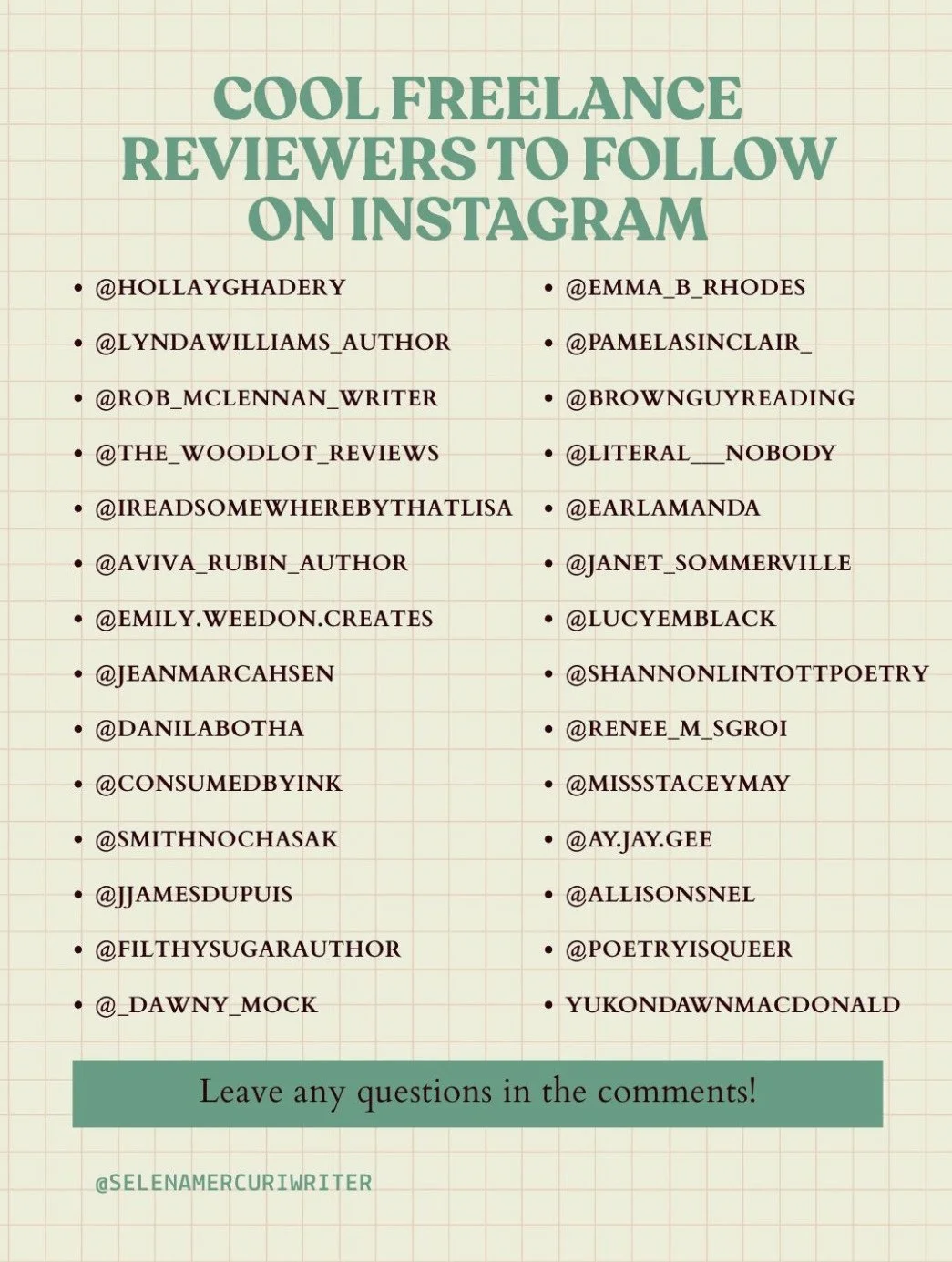

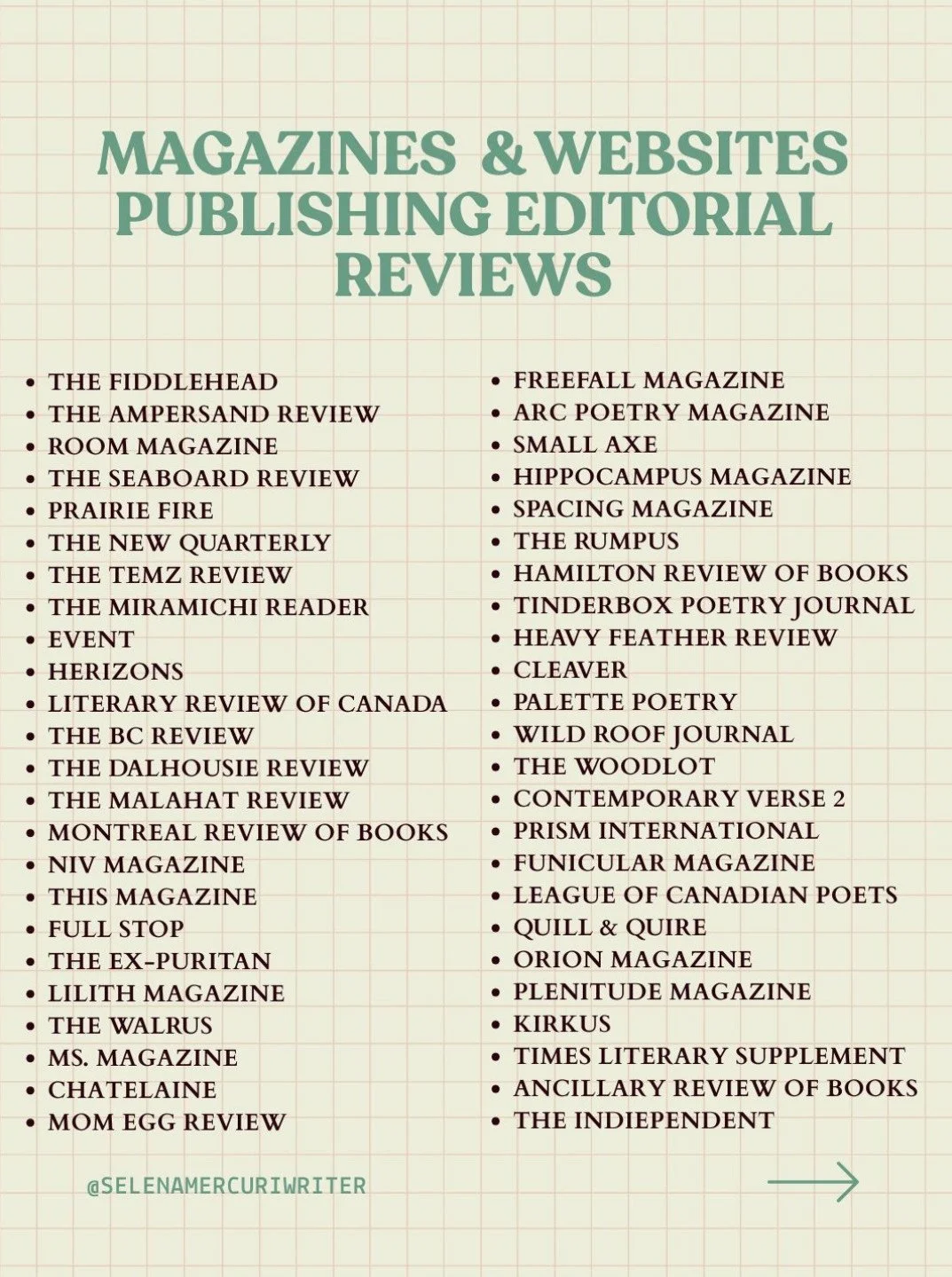


Michelle Hardy reviews Reem Gaafar’s A Mouth Full of Salt (Invisible Publishing, 2025)
In her debut novel, A Mouth Full of Salt (Invisible Publishing 2025), author, physician, and filmmaker Reem Gaafar inspires readers to study some of the complex history between Sudan and South Sudan. Gaafar’s novel zigzags along the fringes of western science and cultural belief; contemplates how the Nile gives but also takes away; and challenges how formal education compares with life experience. Gaafar moderates these intersections with sensitivity and care.
Review of Reem Gaafar’s A Mouth Full of Salt, Invisible Publishing, 2025
Written by Michelle Hardy
In her debut novel, A Mouth Full of Salt (Invisible Publishing 2025), author, physician, and filmmaker Reem Gaafar inspires readers to study some of the complex history between Sudan and South Sudan. Gaafar’s novel zigzags along the fringes of western science and cultural belief; contemplates how the Nile gives but also takes away; and challenges how formal education compares with life experience. Gaafar moderates these intersections with sensitivity and care. The tales of her three female protagonists are fantastically “Other” while also domestically mundane. Each woman is affected by the actions of her family, her community, and her government. However, none of the women are simple representations of any of these assemblies. Originating from a story Gaafar heard years ago about a child who died under the care of his grandparents, A Mouth Full of Salt has grown into an award-winning novel about ordinary people experiencing multifaceted tragedies while living complex lives.
Part I opens in 1989 Sudan. A village on the Nile is deluged with misfortune. The geopolitical climate of the country teems with disaster as well. Because the Nile flooded catastrophically the year before, the prime minister’s radiobroadcasts call for people to stay strong and support one another through this year’s tough economic times. Here we meet Fatima, a teenage girl awaiting high school exam results that could deliver her from witchy superstitious rural life to the city: “where there were the young and old women in their sparkling white tobs; carrying their handbags; walking to and from their workplaces at government offices, the bank, the training institutes, and the post office.” The details of urban women’s attire and occupations kindle Fatima’s hope and desire, but it is the pronoun “their” which catches my eye. By emphasizing “their handbags” or “their workplaces” Fatima draws my attention to her belief that educated women enjoy some freedom and individual rights. Additionally, Gaafar’s descriptors “young and old” confirm that the education of Sudanese women is not a new concept. Next, we meet Sulafa— a wife and mother who returns from a journey to find women weeping over the potential drowning of her child who was left in the care of her in-laws. Or at least, they are pretending to weep. Drama ensues as strands of western science and education swirl around a shadowy outsider suspected of sorcery. Gaafar drops clues that could be fact or fiction and sometimes submerges a storyline for so long I forget about it, until mention of a character bubbles up again and reminds me there are still mysteries remaining to be solved. Chaos reigns throughout this novel. Patriarchal principles are tested by women’s rights. Flames lick at the livelihood of a village. And through all the spectacle and commotion unnoticeably rolls a mail truck, containing Fatima’s highly anticipated high school exam results.
Part II shifts the narrative frame to 1943. Characters jounce back and forth between South Sudan and Sudan. Newly married Nyamakeem, Gaafar’s third female protagonist, finds herself assaulted by racism, language barriers, family members, and shame. The culture and beliefs of the Arabic North, the African South, and Christianity collide. Time passes until readers arrive at the peak of Nyamakeem’s crises set against the 1956 backdrop of a politically violent, post-colonial Sudan. Part III concludes with shocking confessions and wearied discussions of systemic racism and tribal politics. Education remains up in the air while western aid, wearing “shiny shoes” a “leather belt” and an “ironed shirt tucked into ironed trousers” bumbles into the village on the back of an ass.
Fabric is the most recurrent element in my notes for A Mouth Full of Salt. Clothes are tied to politics, race, and religion. Garments set people apart: women wear tobs in the North, lawas in the South, and the shoulder over which fabric is draped matters. In scenes of distress and deliberation, Gaafar draws my attention to discrepancies between characters’ head coverings. For example, as village men await the macabre emergence of the body of the boy who may have drowned, “opinions appear to rank in importance and authority according to the size and height of the speaker’s turban.” In this scene, the missing boy’s father stands noticeably apart from the others. He wears a cap, not a turban, and does not join the men’s discussion. Gaafar does not elaborate on the cap, leaving readers to their own conclusions. In another instance, Fatima’s uneducated, camel-trading, prospective young husband recalls rumours he’s heard about the city where “women walked around with their heads uncovered and sat next to men in university halls and parks and buses. He wondered if Fatima would do the same if she left the village to study in Khartoum. He wondered if he would mind.” I admire how this unschooled young man contemplates the possibility of his future wife’s education. When (if) ambitious young Fatima marries this potentially progressive young man, she will receive fabrics, passed down through the matriarchy to her.
In Fatima’s village, hazards of fire and water abound, and venomous scorpions skitter about— one more peril Gaafar employs repeatedly to wrack my readerly nerves. I keep wondering which character is going to get bit. Late in the novel, after confessions have been made and secrets revealed, an unaccompanied Fatima rushes out into the night. Her prospective young husband sees her and frowns: “Why are you running down the street like a boy? And at his time? It’s almost dark. And there are scorpions everywhere.” Fatima responds with stinging insolence and in a flash, the young man kicks off his sandal. Fatima gasps and raises her arm to ward off what she assumes will be a blow.
Although danger courses through everyone’s lives, risks associated with childbirth are exacerbated. Reem Gaafar, who is also a physician, handles the subject of female genital mutilation (FGM) with a firm but compassionate touch. Sulafa laments how the practice is “one of the many intolerable burdens of their womanhood that plagued their existence, and one which they continued to inflict on their own daughters despite all the misery it caused them in every stage of their lives.” As I read details of a young mother suffering through horrific FGM-related childbirth complications, I am also confounded this practice endures. With a subtle nod toward its possible eradication, Gaafar’s character Sulafa vows never to let a daughter, should she ever be blessed to have one, “go through such a thing.”
Traditions of the past mesh with potential for future change. This notion pervades Gaafar’s novel, and the two-for-one concept is nowhere more aptly contained than in the title A Mouth Full of Salt. This phrase embodies an ancient Sudanese proverb describing the taste in one’s mouth after a great loss. However, Gaafar also uses salt to alternative effect. While hiding in the city and struggling to make ends meet, an ostracized Nyamakeem meets a friendly couple and invites them for dinner. As she prepares a humble meal, her guests present their hostess gift: a pouch of Kombo salt. Nyamakeem squeals with delight. She “could not remember the last time she had enjoyed a meal so much. With the unique distilled salt—so out of place in Khartoum—the Kombo dish was elevated to another level, and she ate happily as she listened to her new friends describing their aspirations for their new life in the North.” Nyamakeem’s future is uncertain. Fear threatens to drown or suffocate her, perhaps like a mouth full of salt. But this small gift temporarily alleviates her distress, evokes faded memories, and conjures for her, a taste of home.
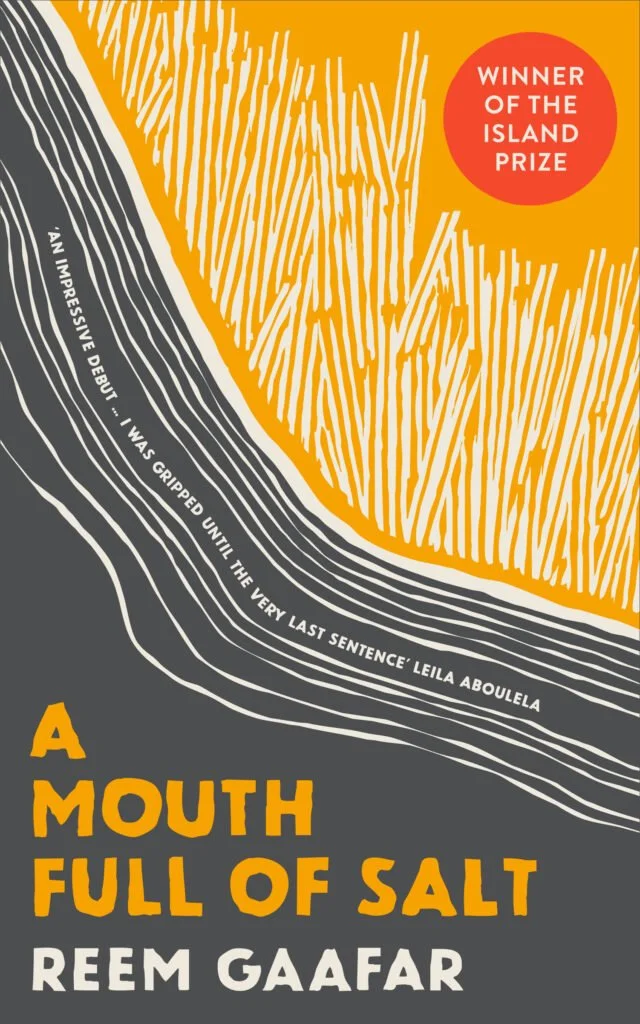
A Mouth Full of Salt by Reem Gaarfar (Invisible Publishing, 2025)
Reem Gaafar is a writer, physician, and filmmaker. Her writing has appeared in African Arguments, African Feminism, Teakisi, Andariya and 500 Words Magazine, among other outlets. Her short story “Light of the Desert” was published in I Know Two Sudans. Her short story “Finding Descartes” was published in Relations: An Anthology of African and Diaspora Voices. A Mouth Full of Salt is her debut novel and Winner of the 2023 Island Prize. Gaafar lives in Canada with her husband and three sons.
Michelle Hardy is a professional freelance developmental editor and book reviewer.
Michelle transitioned to a freelance developmental editing career after retiring as a high school English teacher. She completed a master’s degree in English at the University of Regina in 2012, and obtained an editing certificate from Simon Fraser University in 2021. A member of Editors Canada and the Editorial Freelancers Association, she lives in Victoria, British Columbia.
Michelle’s book reviews have been published in print and online in Atticus Review, Freefall Magazine, The Malahat Review, Prism Magazine, Event Magazine, On the Seawall, and Arc Poetry. Michelle also includes brief reviews of literature @mhardy_editor on Instagram.
Excerpt from Into the D/Ark by David Elias
The Ark loomed before her now, a green monolith in a sea of white, like a land mass all its own that by its sheer size was able to alter the course of the storm. Martha watched the snow sweep up onto the wide plane of its sprawling roof, slide in wide swaths along the incline until it crested over the peak in swirls and eddies, sifted down the far side to cascade gently over the edge, settle along the wall in a long line white.
The Ark loomed before her now, a green monolith in a sea of white, like a land mass all its own that by its sheer size was able to alter the course of the storm. Martha watched the snow sweep up onto the wide plane of its sprawling roof, slide in wide swaths along the incline until it crested over the peak in swirls and eddies, sifted down the far side to cascade gently over the edge, settle along the wall in a long line white.
Standing there was a little like the Grand Canyon, or Niagara Falls or the Rocky Mountains. The sudden comprehension of scale. Of what it meant to feel small. She moved toward the near wall, out of the wind now, and stepped up onto the snow bank, sharp-edged and hardened, through the veil of snow drifting down off the roof and into the hollow, sheltered space, a few feet wide, between the green wall of the Ark and the snow. Flakes showered down from the roof in crystal hisses, cascaded over her like a white and powdery falls as she walked along until she reached the corner of the building and stepped around it, back into the wind. Stayed close to the wall until she came to the same small door she remembered from her last visit, tried the latch and when it offered no resistance, pushed it open far enough to step inside.
The world changed instantly from blinding white to blinding black. Light poured in through the open door like an invasion, a violation of what must have been, until a moment ago, total darkness. Martha waited for her eyes to adjust, her breath visible in smoky clouds that vanished beyond the sharp straight lines of the light’s boundaries. It was very cold inside, much colder than outdoors. There was a heaviness to the cold in here. A weight of something sucking heat out of her body. A dampness. In the hollow quiet, the yawning dark, an eagerness to swallow up everything - light, heat, sound. Martha took a few steps in, listened. The only sound the snow sweeping across the long slope of the roof, washing over her like the glassy whisper of sand on a wide ocean beach.
The darkness beyond the edge of the light from the doorway seemed liquid, to be flowing away from her as she strained to push the boundaries of her vision deeper into it. Snow was streaming in through the open door now, fanning out over the dirt floor like a white luminescent bridal veil, and as it grew, reflected more and more light into the chamber, up into the rafters, until Martha could make out a faint skeleton of trusses and beams overhead, like the ribcage of some oceanic leviathan that had swallowed her whole.
She walked through the widening pool of light until she reached the edge, stopped, a little unsteady on her feet, swayed from side to side as though she might have descended below the decks of a massive wooden vessel at sea in a storm. Now and then a creak came down out of the rafters as the Ark shifted and groaned in the wind. A tall oak timber, stripped of its bark, rose up before her like the mast of a ship and disappeared into the rafters above. She ran her fingers along its surface, slapped at the smooth wood with a satisfying smack, like a hand on naked flesh that echoed into the vast chamber. A ladder leaned against the far side of the timber, climbed along it to where the light hardly reached. Next to it hung a set of ropes that led up into the rafters. A dark mass on the ground, not far from the base of the ladder. The vague shape of a figure crouched low. The indistinct shadow of someone crumpled into a kneeling position.
Martha drew closer and saw that it was a human shape, perched on its haunches, utterly still. And then she could make out the long black coat, the wide-brimmed hat, brought her hand to her mouth, leaned in closer to examine her brother, touch a finger to his hands, translucent and pale as snow, clasped before him, fingers entwined, as though praying, follow the faint pattern of frost over his face, lifeless eyes turned up, as though in a moment of exquisite, frozen rapture.
She straightened and put one hand on the ladder to steady herself, followed his gaze up into the rafters to try and see what it was her brother had been so fixated on but the darkness there was impossible to penetrate. She stepped onto the first rung, pulled herself up onto the second, turned to look up but still the dark would not yield. There was something up there. She thought of climbing back down but then she remembered the box of wooden matches she’d picked up on her way out, knowing she was coming here, fumbled through her pockets and brought them out. With one arm locked around the wrung of the ladder she slid open the box and took out three matches, bunched them together, scraped them along the side of the box. An orange light burst forth and she climbed, head down, watching her footfalls as she ascended the ladder, held up the burning matches and found herself at eye level with a pair of naked blue feet, one resting over the other, a spike driven through both, turned her wide eyes up long enough to see Clarence, head resting on his chest, arms spread eagle, staring back down at her. The matches burned her fingers now and she cried out, launched herself backward through the air, arms wide, like a diver.
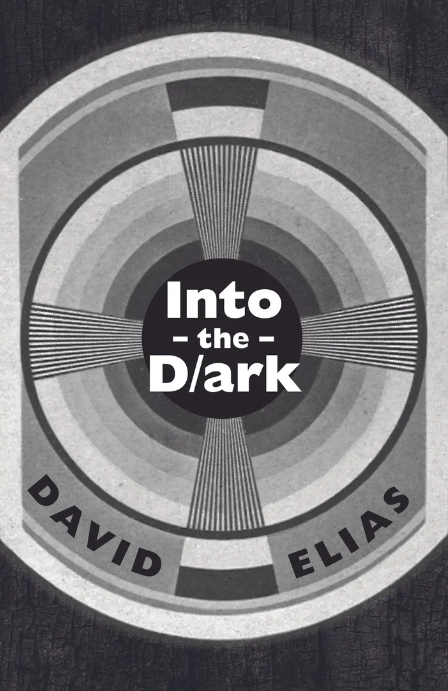
Bring home Into the D/Ark by David Elias, published by Radiant Press, 2025.
About Into the D/Ark:
Rose Martens struggles with the aftermath of a terrible fire that has left her sons, Jake and Isaac, horribly disfigured. The boys have gone to live in an abandoned house they’ve named Bachelor’s Paradise, where they spend all their time watching American network television. Their father Clarence works day and night in his blacksmith shop, producing bizarre metallic creations no one can make any sense of. Martha Wiebe returns to the stifling conformity of the valley to discover that her brother Abe, a preacher, has abandoned his congregation to devote himself to the construction of “The Ark”, a massive and mysterious edifice whose purpose he will not divulge. When the first major snowstorm of the year roars into the valley, it unleashes a chain of bizarre events that the valley may never recover from.
Praise for David Elias:
“Winnipeg writer David Elias fashions scenes that are literally breathtaking: sometimes because of the sheer beauty and insight of the passage; sometimes because of the bone-chilling tenor of the description. Both aspects demonstrate the potency and reach of Elias’s writing.”
— Winnipeg Free Press, October 12, 2008, Marjorie Anderson, (Review of Waiting for Elvis)
About David Elias:
David Elias is the author of seven books, most recently The Truth about the Barn: A Voyage of Discovery and Contemplation, published by Great Plains Publications. It was featured in the Winnipeg Free Press as one of the top titles for 2020. His most recent work of fiction is an historical novel, Elizabeth of Bohemia: A Novel about Elizabeth Stuart, the Winter Queen. It was published in 2019 by ECW Press, and was a finalist for The Margaret Lawrence Award for Fiction at The Manitoba Book Awards. His previous works have been up for numerous awards including the McNally Robinson Book of the Year, the Amazon First Novel Award, and The Journey Prize. His short stories, novel excerpts, and poetry have appeared in literary magazines and anthologies across the country, and in addition to writing he spends time as a mentor, creative writing instructor, and editor. He lives in Winnipeg, Canada.

Power Q & A with David Elias
The setting for Into the D/ark is a relatively isolated farming community in the early nineteen sixties. With the recent arrival of American network television, the larger world has begun to make its way into the daily lives of the characters living in this insulated folk society.
Q: The assassination of John F. Kennedy in November of 1963 runs through much of the narrative in this novel. It intermingles in a variety of ways with the characters and events you portray. Why does it play such a prominent role in the book?
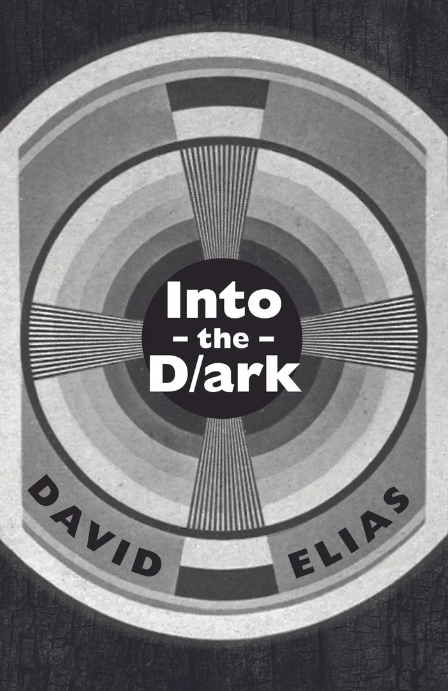
Bring home Into the D/Ark by David Elias, published by Radiant Press, 2025.
A: The setting for Into the D/ark is a relatively isolated farming community in the early nineteen sixties. With the recent arrival of American network television, the larger world has begun to make its way into the daily lives of the characters living in this insulated folk society. A transmission tower has been erected just across the U.S. border, and suddenly they find themselves able to watch popular American programming on the primitive black and white televisions they have smuggled into their living rooms from the J.C. Penny store just across the border. But then their viewing pleasure is suddenly interrupted by live broadcasts covering the Kennedy assassination and its aftermath. This marks the first time in history that the media covers a news story in this way.
Many of the characters in the book are already traumatized by the events of their own lives, and now they find themselves caught up in this deeply disturbing pervasive narrative streaming at them through their television sets. The favorite shows they use to escape their own suffering are suddenly and repeatedly pre-empted by live coverage of things like Jack Ruby shooting Lee Harvey Oswald at point blank range as he’s led out of the Sherriff’s office in downtown Dallas. Add to this the advent of the idea being put forth at the time by Marshall McLuhan, who coins the phrase “the medium is the message”, and you have the confluence of many streams pouring into a watershed moment in history. And the characters in the novel, barely able to manage their own lives, are caught up in all of it.

David Elias is the author of seven books, most recently The Truth about the Barn: A Voyage of Discovery and Contemplation, published by Great Plains Publications. It was featured in the Winnipeg Free Press as one of the top titles for 2020. His most recent work of fiction is an historical novel, Elizabeth of Bohemia: A Novel about Elizabeth Stuart, the Winter Queen. It was published in 2019 by ECW Press, and was a finalist for The Margaret Lawrence Award for Fiction at The Manitoba Book Awards. His previous works have been up for numerous awards including the McNally Robinson Book of the Year, the Amazon First Novel Award, and The Journey Prize. His short stories, novel excerpts, and poetry have appeared in literary magazines and anthologies across the country, and in addition to writing he spends time as a mentor, creative writing instructor, and editor. He lives in Winnipeg, Canada.