

BLOG

Excerpt from The Chorus Beneath Our Feet by Melanie Schnell
It is a cool spring morning, and a boy and a girl are running, breathless and laughing, in ragged circles around their backyard. The girl gallops clumsily, just out of reach of the bigger boy’s grasp. The two-storey house behind them is faded white clapboard, the paint chipped and peeling at the edges. An old shed crouches at its flank, its low roof sagging beneath the weight of tree droppings and decades-long neglect. The sun shines through smudged clouds onto the damp grass. They are both barefoot, and their heels and toes are numb. The tips of fungi tendrils, intertwined in the grass roots and searching upward from dark earth, touch their soles.
Mary and Jes (1991)
It is a cool spring morning, and a boy and a girl are running, breathless and laughing, in ragged circles around their backyard. The girl gallops clumsily, just out of reach of the bigger boy’s grasp. The two-storey house behind them is faded white clapboard, the paint chipped and peeling at the edges. An old shed crouches at its flank, its low roof sagging beneath the weight of tree droppings and decades-long neglect. The sun shines through smudged clouds onto the damp grass. They are both barefoot, and their heels and toes are numb. The tips of fungi tendrils, intertwined in the grass roots and searching upward from dark earth, touch their soles.
The nine-year-old boy is tall and muscled from climbing and bike-riding and playing shinny games on the street, which last well past his bedtime. The sun tucks itself farther upward behind the clouds as he bounds up the porch steps, slapping the screen door shut behind him. He begins counting, the syllables guttural through the woven mesh: one-hippopotamus, two-hippopotamus … The boy’s voice fades inside the big house as the girl heaves the splintered boards up behind the old shed high enough to wedge her body through to its dim inside world of damp, musty soil, clicking insects, scurrying rodents.
She squeezes herself into the darkest corner and waits for her brother to find her, while beneath her, moist fungal enzymes crawl upward to kiss and consume the light bones of a dead animal, twisting and curving through jaw, teeth, eye sockets, skull.
The network below her spreads outward, spreads downward, growing, thriving, listening.
From: Mary Blackwell treehugs@hotmail.com
To: Jes Blackwell blackwelljes@gmail.com
Monday, August 18, 2004, at 10:35 a.m.
Dear Jes,
Imagine this: You grasp the edge of the industrial-grass carpet in your hands, its edges curling up to the end of the world, and your knuckles whiten and bleed against the stiff plastic blades, and with the effort of Thor, you pull it up. There is a sucking sound as you peel it back, there are acres of it, it’s been waiting so long for you to do this, you peel it back and away for miles and miles, and it satisfies like a long-rotten tooth throbbing and screaming in your jaw, finally pulled.
And here we see the life that lies beneath: rodent bones, mouldy acorns, mud-streaked stones, a toy ring. A tin can, rusted and empty. A rectangle of glass, half a dirty plastic cup. Small skulls. Decaying stink of fungus. Refuse, treasure, braided together. And, presently, what we don’t want to see faces us: what’s been buried too long has come up to the light.
This is what the earth does. Each year what lies beneath gently pulses upward by another millimetre, another centimetre. Ever so slowly the secrets push upward. And after a million years, then thousands, then hundreds of years, it becomes this year, this day, and what has been so long buried finally faces the sun’s scorch. We must bear witness to the chorus beneath our feet, in all its entangled darkness and light. This is, in fact, what we’ve come here to do.
I hope you will come home soon.
Love,
Mary
Mary (April 18, 2011, 5:25 a.m.)
In the beginning, there was a tree.
These are words that begin a story. But each story of the Great Tree is different: Yggdrasil, the Norse tree of life, with Odin losing an eye; the Christian tree in the garden of good and evil, with the evil snake luring Adam and Eve to sin; the Ashvattha tree, under which the Buddha gained enlightenment. This story will be different, too. Everything is being unearthed now, and how will it all end? They will soon learn — those who uproot the tree — of the secrets she houses deep beneath her.
The air in the park is heavy with dew. With silence. Mist hugs the trees, the bushes, the park benches. There are no people. I steady my body on the platform as I untie the rope and release it from my waist. Light has begun to peek through the canopy of leaves. The dawn is breaking up the dark. I push my back against the trunk and stretch, ready myself for the fall. Down below, bright green shoots poke through dead brown grass. The yellow police tape is dirty and trampled upon. I look up to the emerging light through the latticework of leaves: It hurts my eyes.
I press my soles on each branch as I descend, then I jump from the bottom branch to the grass below. The dew kisses my scarred toes, sending a shiver up my calves. I take my sandals from my poncho pocket and slip them on.
I look up to her now. They call her the Harron Tree, named after the park. She told me her real name, though: Oman. I say goodbye to her in my mind, but she doesn’t respond. Her sadness is an ache in my heart. She stopped talking days ago, with the death of the child. As I turn away, everything in me wants to run back, to save her, to save them. But I can’t. There is somewhere else I must be.
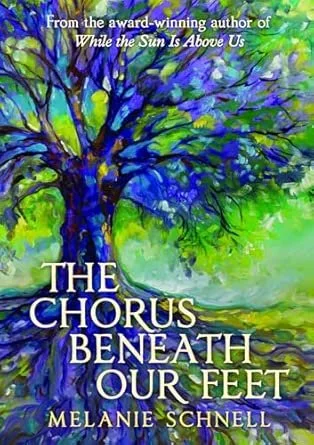
Bring home The Chorus Beneath Our Feet (Radiant Press, 2025)
About The Chorus Beneath Our Feet:
A grief-stricken soldier accompanies his best friend’s body home after eight years away, only to find his nonspeaking sister, Mary, missing and wanted for questioning by the police in the murder of an infant in the city’s central park. As Mary’s life hangs in the balance, Jes must follow the obscure clues she has left behind, the only way to find her and absolve her of wrongdoing. In his labyrinthine search, the mystery of the park’s infamous Harron tree and its connection to his sister, and their community, is slowly revealed. The Chorus Beneath Our Feet explores buried secrets, and the human desire for healing and connection.
“With her sharp, clear-eyed prose Melanie Schnell has created a symbiosis between past and present where the two relentlessly interrogate each other to unearth a story that’s both old and new, a story as disturbing as it is redeeming for the estranged siblings at its heart.”
— Iryn Tushabe, author of Everything is Fine Here
About Melanie Schnell:
Melanie Schnell’s novel, While the Sun is Above Us, was shortlisted for The Fiction Award and Book of the Year award and won the Saskatchewan First Book Award and The City of Regina Award in 2013. The novel has been listed as part of the ELA A30 curriculum in both Public and Catholic schools across Saskatchewan. Melanie has published long and short fiction, creative nonfiction, and poetry. Her fiction placed second in the City of Regina Awards in 2010 and 2017. She is currently Assistant Professor of Creative Writing, Rhetoric and Composition at the University of Regina. She lives in Regina, Saskatchewan.

Power Q & A with Brockton Writers Series
We love live literary events. Festivals, reading series, bookstore book launches: we are just about always game for a good ol’ bibliofest. We also know that many of these events operate by the mercy of grants, volunteers, and long, hard, and often thankless hours. No one who loves books and literature should take these vital initiatives for granted. Not only do authors often depend on them to create more awareness for their work, but our culture depends on them to keep the literary arts vibrant. That’s why we reached out to one of of favourite downtown Toronto reading series, Brockton Writers, and asked them to be a guest this month on our Power Q & A series.
We love live literary events. Festivals, reading series, bookstore book launches: we are just about always game for a good ol’ bibliofest. We also know that many of these events operate by the mercy of grants, volunteers, and long, hard, and often thankless hours. No one who loves books and literature should take these vital initiatives for granted. Not only do authors often depend on them to create more awareness for their work, but our culture depends on them to keep the literary arts vibrant. That’s why we reached out to one of of favourite downtown Toronto reading series, Brockton Writers, and asked them to be a guest this month on our Power Q & A series.
We had one particular question in mind that we wanted to pose, and they were gracious enough to answer.
Welcome to River Street, Brockton Writers!
Donate to Brockton Wrtiers Series here.
What is one thing you think people don’t understand about running a reading series?
“After volunteering for BWS for the past two years, I've come to appreciate running a reading series as a continuous learning experience. There's always work that needs doing — promotions, social media, grant writing, etc. — so there are always opportunities to develop new skills. More than any particular set of skills or any previous experience in event planning, what it takes to run a reading series is a lot of initiative and a self-starting attitude. You've got to be willing to constantly evolve, to anticipate and put out fires, to keep up with the changing landscape of the publishing industry and the literary community. On one hand, that might sound a little daunting; on the other hand, I also think it's quite exciting, having the opportunity and the freedom to say "Hey, I want to try doing XYZ," and then ... just being able to do it.”
—Fei Dong (they/them) is a writer and editor based in Toronto, Canada. A graduate of University of Waterloo's Computer Science program and Centennial College's Publishing – Book, Magazine and Electronic program, they’re an editorial assistant at Cormorant Books and a board member at BIPOC of Publishing in Canada. Passionate about literary advocacy in Canadian publishing, they have volunteered their writing and editing services to a charity zine, a storytelling festival, and a flash fiction magazine.
“One thing I’ve come to understand after working with BWS for the past year is how many authors rely on events like ours to connect with their community and get their work out there. Many of our authors’ books are with small publishers which can’t muster big publicity budgets, so there’s a big demand among those authors to be featured in a reading series like BWS. And of course, we pay them for their time and energy, which isn’t always a given for emerging writers. It’s an amazing reciprocal relationship where we get to meet and learn from great authors, and they get a platform for their work.”
—Iris Robbins-Larrivee (she/they) is a graduate of McGill University’s Linguistics program and Centennial College’s Publishing program. Iris has completed an internship with Emond Publishing and continues to work with Emond as a freelance proofreader. She volunteers with the Brockton Writers Series as the Promotions Coordinator, and with Davenport-Perth Neighbourhood Community Health Centre as an Adult Literacy Tutor. Iris is passionate about helping people from all walks of life tell their stories.
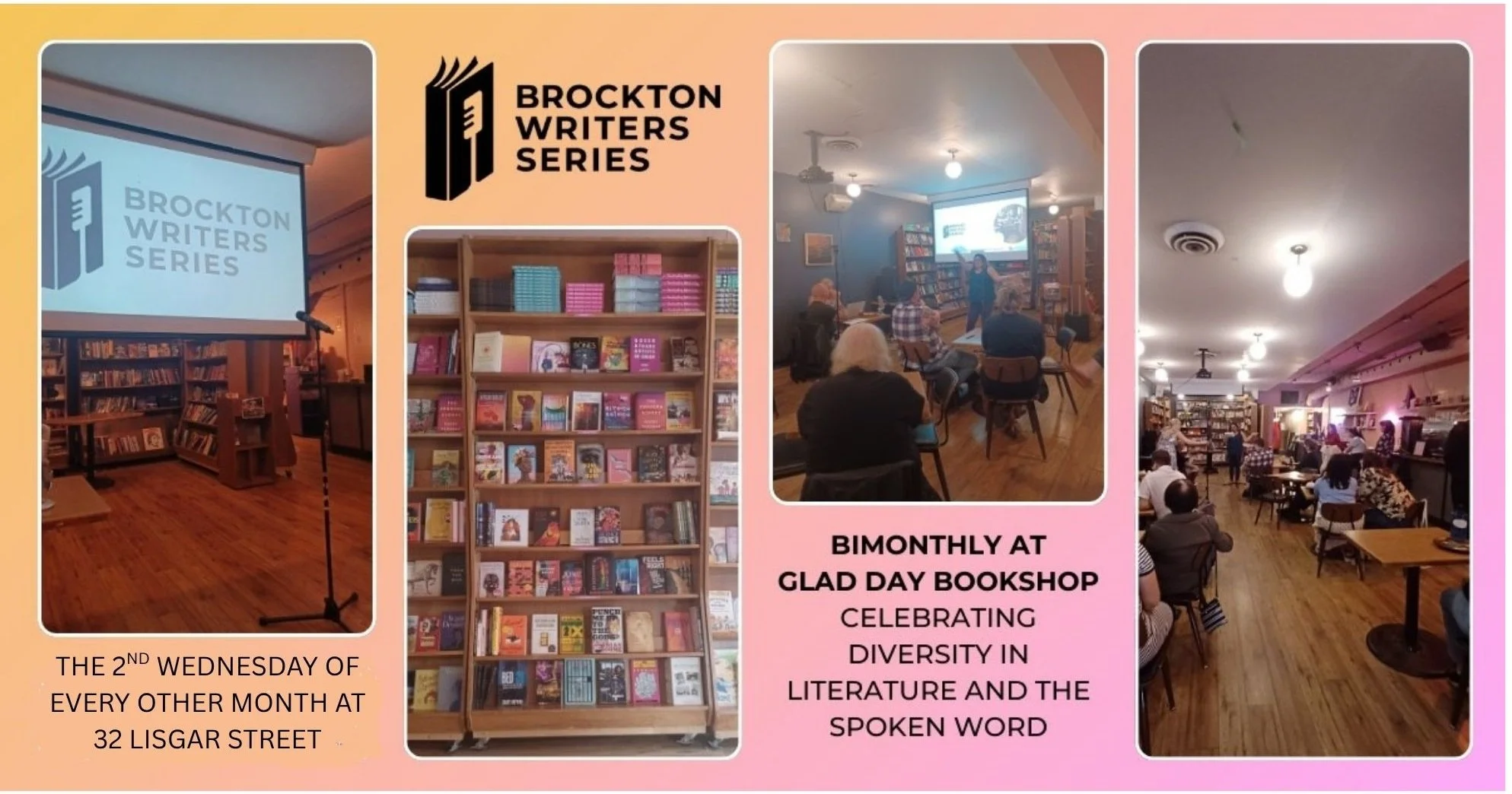
Photo courtesy of Brockton Writers Series.
The best thing about working for BWS is the great diversity of writers and voices you're exposed to. The hardest thing is building and retaining an audience for the events. There's lots to do in Toronto on any given evening, and it's difficult to be seen among the crowd.
—Nancy Kay Clark (she/her) is the editor and publisher of CommuterLit.com and is a long-time magazine writer and editor. Her speculative short fiction has been featured in Neo-Opsis magazine, Polar Borealis, Utopia Science Fiction magazine and others. She was shortlisted for the Writers’ Union of Canada Postcard Story Contest and CANSCAIP's (Canadian Society of Children’s Authors, Illustrators and Performers) annual Writing for Children competition. She self-published a middle-grade novel in 2018. Nancy is Brockton’s financial manager, and she curates the guest speakers and writes the newsletters for Brockton Writers Series.
I think what people don’t always understand about a literary series is actually the attending part, not the running of it! Everyone is welcome, it’s a very casual environment, you don’t have to know all the authors and their work to come. I think it might feel intimidating for people to come to these events, but it really shouldn’t be.
—Evgenia Shestunova (she/her) is an immigrant from Kyiv, Ukraine, who came to Toronto in 2015. She is a recent graduate of Centennial College’s Book and Magazine program and is currently working as a Publishing Operations Assistant at Penguin Random House. She is passionate about showcasing emerging writers and giving marginalized voices a platform.

Photo courtesy of Brockton Writers Series. Follow Brockton Writers Series on YouTube.
I think people may not understand how much work it is. I like to think we make it look easy, but it’s not, especially when you have the values we do: dedication to a physically accessible venue, commitment to paying our authors, etc. We have to be able to problem-solve on the fly, manage a wide variety of expectations from authors and publishers, and collaborate effectively as a team to do what we do with Brockton.
I also think people may not understand that reading series, locally at least, are fun, friendly events that are valuable for their entertainment and community-building, whether or not you’re actually a fan of the readers presenting that night. It’s a cheap night out – there’s never a cover charge – and you might find an author you’re interested in who you hadn’t known of before. But even if you don’t, you’re not committing to reading or buying a book just by showing up. I also think it’s an underutilized date night option. Assuming you want to date people who read, why not go to a reading series, which is shorter and cheaper than a movie, and afterward you can discuss the readings to find if your literary tastes align? It’s low-risk because aligned literary tastes are a nice to have, but not a dealbreaker. Hey, Tinder, hit us up for a corporate sponsorship! 😊
—Dorianne Emmerton (she/her) grew up in rural Northern Ontario and now lives in Toronto with chosen family, a kid, and an ill-tempered black cat. Her short stories have been published in Eavesdrop Magazine, Luna Station Quarterly, Room Magazine; The Fantasist; Daily Science Fiction; The Bronzeville Bee; The Audient Void; Nevertheless (Tesseracts Twenty-One); and more. She also has a personal essay in the anthology A Family By Any Other Name: Exploring Queer Relationships. Dorianne is currently querying one novel and writing another, while occasionally writing for the pop culture site Biff Bam Pop! For the past few years she has been the lead organizer of the Bi+ Arts Festival. Previous activities include hosting a radio show on CIUT, reviewing live performance events for Mooney On Theatre, and participating in the Diaspora Dialogues writing mentorship program, under the guidance of Martin Mordecai.
Other Volunteers:
Kiri Stockwood (she/her) is a writer and editor living in Toronto, Canada. She is a recent graduate of Centennial College’s Publishing program, which concluded with an internship at the indie publisher Renaissance Press. Kiri has contributed to a number of publications as an editor and has a short story published with Plenitude Magazine. With a passion for storytelling and helping others tell their own stories, she is looking forward to continuing her career in publishing. Kiri is currently volunteering as a grant writer for Brockton Writers Series.
Marcela Arevalo (she/her) is a graduate of Northern Private University’s Communication program and a current student in Centennial College’s Publishing program. With over seven years of experience in digital marketing, she is currently specializing in publishing and contributing to On The Danforth as a Marketing Manager and writer. Marcela is eager to start her career in the Canadian publishing industry and to become part of the book world as both a writer and publisher, something she is deeply passionate about.
Donate to Brockton Wrtiers Series here.

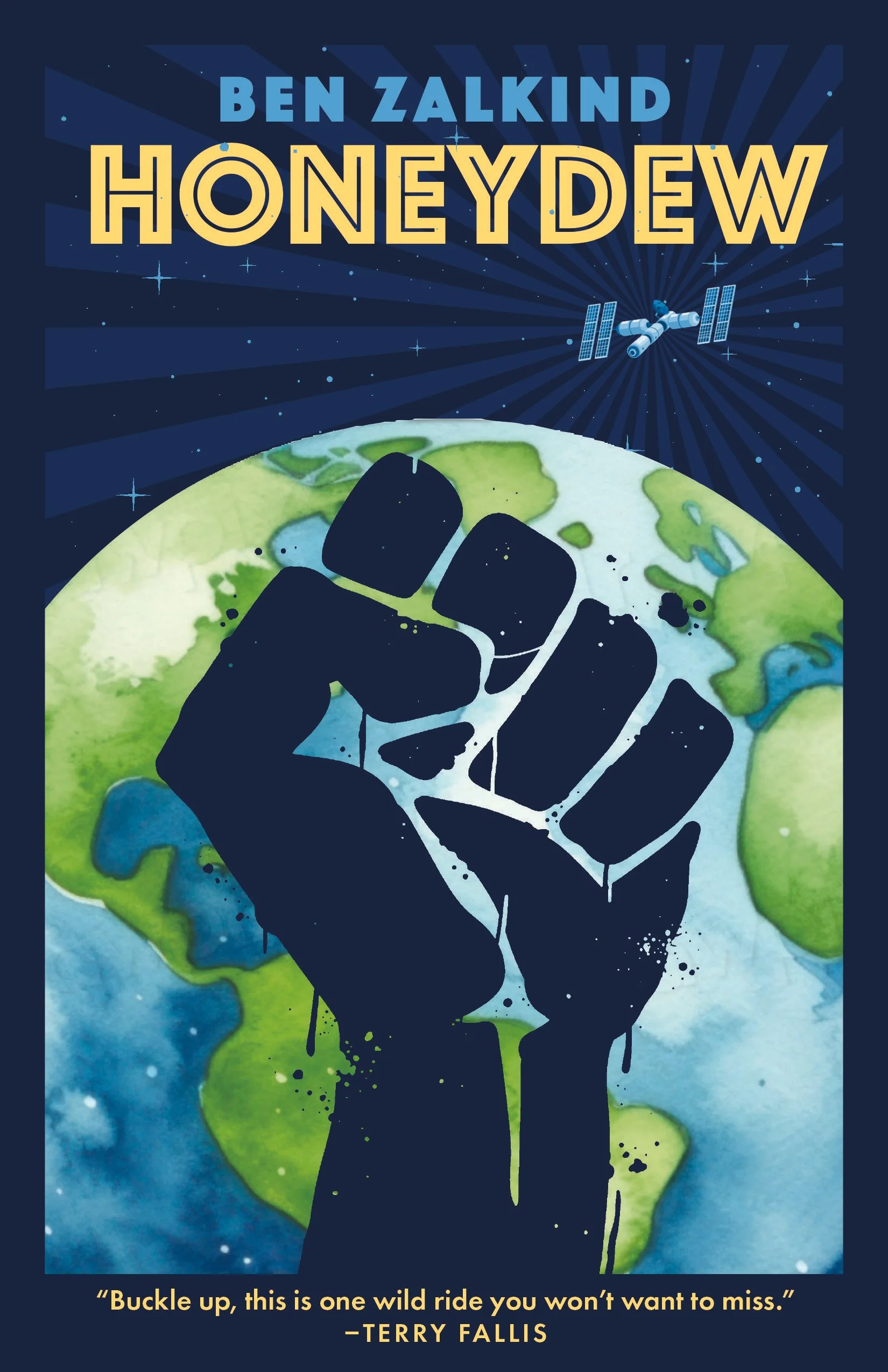
Excerpt from Honeydew by Ben Zalkind
The four subversives dug into their backpacks with nervous, twitching fingers. They unzipped the vinyl and openedthe lunchboxes fully to allow themselves full range ofmovement. A pair of nitrile gloves was balled up at the bottom of each of their floppy packs. With as little motion as they could manage, they pulled them over their fingers and up to their wrists.
The four subversives dug into their backpacks with nervous, twitching fingers. They unzipped the vinyl and openedthe lunchboxes fully to allow themselves full range ofmovement. A pair of nitrile gloves was balled up at the bottom of each of their floppy packs. With as little motion as they could manage, they pulled them over their fingers and up to their wrists.
“We’ve done it all,” Honeydew continued, his froggishvoice pinched with the exertion of shouting. “Who made space tourism possible? And who built the Agora District in downtown Bonneville with robot rickshaws, stop signs that give you directions, and tons of brand spanking new jobs?”
“You did,” the crowd chanted. “Ho-ney-dew! Ho-ney-dew!Ho-ney-dew!”
The nerd emperor in the electric blue earthsuit thrust hisgloved hands in the air. “But you didn’t just come here to hear me boast like a proud dad about all the great stuff my ace Substrate employees have done. You want the swag.”
He turned to meet a young woman handing him a T-shirtcannon. One-handed, he aimed the translucent bazooka at oneof the balconies.
The audience whipped toward the target in unison. A smallboy clutching his mother’s neck took the balled-up fabric square in the face.
The crowd leapt to its feet and laughed at the child’smisfortune. With his mother’s prodding, he held up the extra-large Substrate-logoed shirt, his eyes wet with tears.
“God, he almost knocked that kid out,” Liz said to Rose.“Let’s do it now.”
Rose nudged the other two with a surreptitious elbow.Vashti blinked her assent. Barnabas’s lips peeled back to revealcrowded, straight teeth, like little cinderblocks.
Just as they had practiced, they each withdrew from their lunchboxes a tightly packed ball of Substrate TopSoyl. The soft black shreds were speckled with bits of gold and orange andwhite, which adhered nicely into a sphere with the heft and texture of clay.
They waited until the audience simmered and peoplesettled back into their translucent fold-up seats. Then, the foursome shot to their feet. They had one vanishingly slight chance of this thing working, they knew. In a fluid,synchronized motion, they withdrew their hands from their backpacks and loosed their missiles with the full force of their overhand strength.
Vashti’s loose cluster disaggregated into a shower of dampclumps, which fell onto the heads of the audience below. Liz’s struck the railing before her, bisecting the oblong hunk and sending its hemispheres falling lamely into the cup holder of an unlucky patron. Rose, the once all-state women’s softball catcher, splattered the stage with ersatz mud, some of which polluted the faux magma floes with bits of calico grit.
It was a good throw, but this was Barnabas’ golden moment. He unfurled his long, ungainly arm and liberated hisprojectile with impressive force. It whizzed through the air and stayed intact, rocketing toward its mark with a sniper’saccuracy. It caught Honeydew flush in the Substrate insigniapainted on the chest of his earthsuit.
The moment of impact dilated in Liz’s perception. Thesting of her failure to launch gave way to a thrill of glory.Honeydew’s arms splayed out and he let out a guttural grunt.His boyish face contorted into a mask of confusion and fear.The assembled gasped in concert.
“Hell yes!” Barnabas shouted into the momentary silencethat followed.
But his celebration was short-lived. Honeydew’s sentinelswere on the gang within what seemed like seconds. Where they came from was anyone’s guess.
—Excerpt from Honeydew by Ben Zalkind. Published by Radiant Press, 2025. Reprinted with permission. Copyright Ben Zalkind.
Read our interview with Ben here.
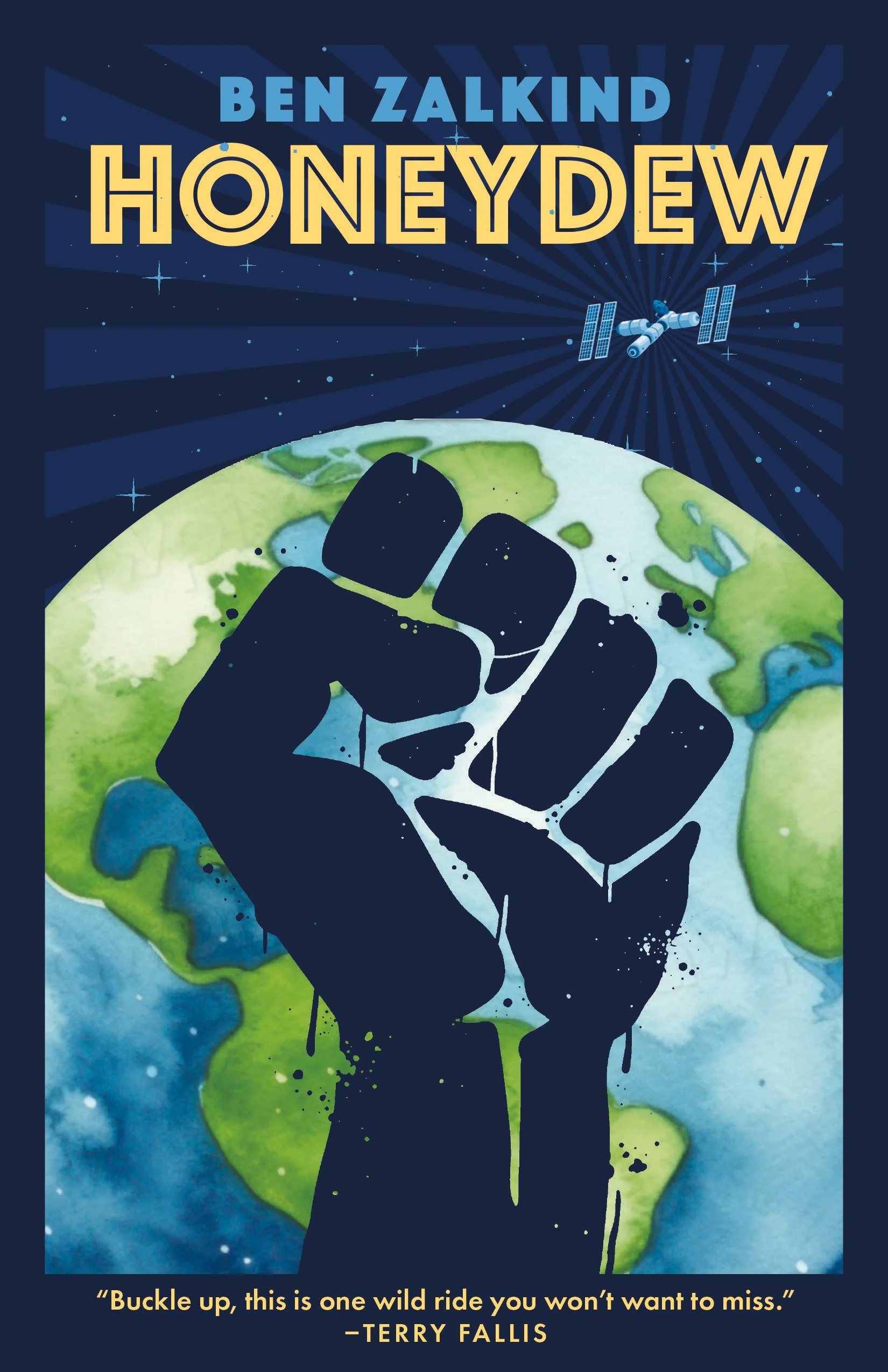
About Honeydew:
Rose Gold can’t catch a break. Her latest “golden opportunity” has given way to a madcap adventure through the soft underbelly of Bonneville City. She finds herself cast in the role of renegade mentor and hero to a trio of idealistic young rebels. Together, they perpetrate an act of subversion targeting “future-mover” and celebrity CEO Moses Honeydew, which puts them in the crosshairs of his Substrate Inc.
Along the way, they join forces with family-doctor-by-day and fixer-by-night, Dr. Hansjorg Winteregg, and go on the lam. Meanwhile, there are rumours about Honeydew’s private space station, The Visionary, which may or may not have forced its first passengers into working off their debt. Rose’s boss and his crew go missing. Honeydew announces his plan to take a manned submersible drill to Earth’s mantle to burnish his brand as a fearless and impossibly cool maverick.
With her faithful charges by her side, Rose finds herself at the centre of an unfolding conspiracy. Did she ever truly have a hand on the rudder of fate? And what chance does a quartet of second-rate saboteurs have against a multinational corporation with a vendetta and a trillion-dollar market capitalization?
Bring home Honeydew.

Ben Zalkind lives and works in Calgary, Canada. His debut novel, Honeydew, was released by Radiant Press in October 2025. A Salt Lake City native and naturalized Western Canadian, Ben is happiest outdoors, where he can cycle, drink coffee, and adventure with his wife and fellow traveller.

9 Spooky Must-Read Books By Canadian Authors
River Street pals, it’s officially spooky season. What better way to celebrate than with shivers up your spine, goosebumps upon your flesh, and a feeling like something—or someone—is creeping behind you…
By Olivia (iammadeofbooks_)
River Street pals, it’s officially spooky season. What better way to celebrate than with shivers up your spine, goosebumps upon your flesh, and a feeling like something—or someone—is creeping behind you… and by that I mean, diving into some spooky Canadian must-read books! These nine titles are from Canadian authors who delve into the supernatural, the mysterious, or the whimsical, all with unnerving and eerie (and sometimes fun) undertones. Without further ado, let’s sink our teeth into these five spooky books by Canadian authors!
The Haunting of Modesto O'Brien by Brit Griffin
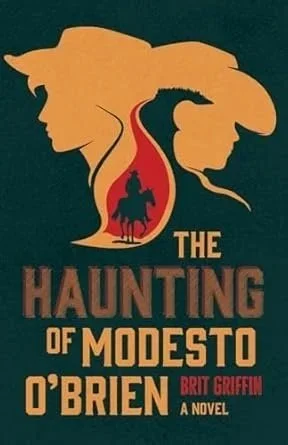
Deep into the boreal forest, circa 1907, Modesto O’Brien is out for revenge. Arm in arm with the mysterious Nail sisters, something sinister awaits this trio. For when one sister goes missing, O’Brien is thrown head-first into a world of ancient myths, magic, and violence. With nightmarish creatures lurking around the corner and darkness emanating off of the landscape, the most sinister part may just be O’Brien’s own past. A gothic tale of loyalty, sacrifice, and revenge, this historical thriller will be sure to leave you unsettled and thoroughly entertained.
Villain Hitting for Vicious Little Nobodies by Lindsay Wong (out January 13, 2026)
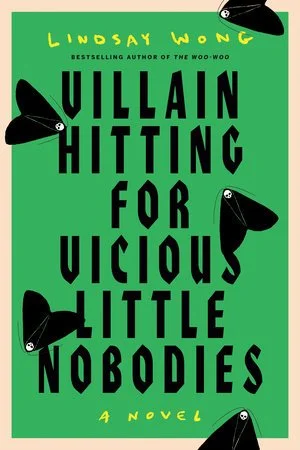
A cast of witch-grandmothers and undead corpse-kid-sisters set the scene for an at once funny and horrific– beautiful and gruesome– tale of trying– and failing– to outrun your ghosts. Locinda Lo signs her life away to become a corpse bride to a highest bidder in order to solve her financial woes, and before she knows it, she’s preparing to be an afterlife bride-to-be. Only, her grandmother’s past, both a feared and revered Villain Hitter and a witchy curse-monger with a long legacy that precedes her, intertwines with Locinda’s own. Speaking on the societal pressures placed on Chinese women, you’re going to want to preorder (or request from your library) this daring upcoming Canadian horror novel.
The Wonder Lands War by Peter Darbyshire

We first met Cross, immortal angel hunter, in The Mona Lisa Sacrifice, where a mortal soul was trapped in deceased Christ’s body. Now, Cross is back for a new quest; a hunt to find Alice who was taken through a whirlpool by a mad Noah and his apocalyptic ark. Cross journeys across the world to rescue Alice, encountering murderous immortals, famous libraries, and magical texts, all while aided by the faerie queen. Finally reaching the Wonder Lands, will Cross find Alice before the angels do? At once entertaining and magical, with a dash of mythology and folklore, Darbyshire’s fourth addition to the Cross series will leave you hooked.
Green Fuse Burning by Tiffany Morris
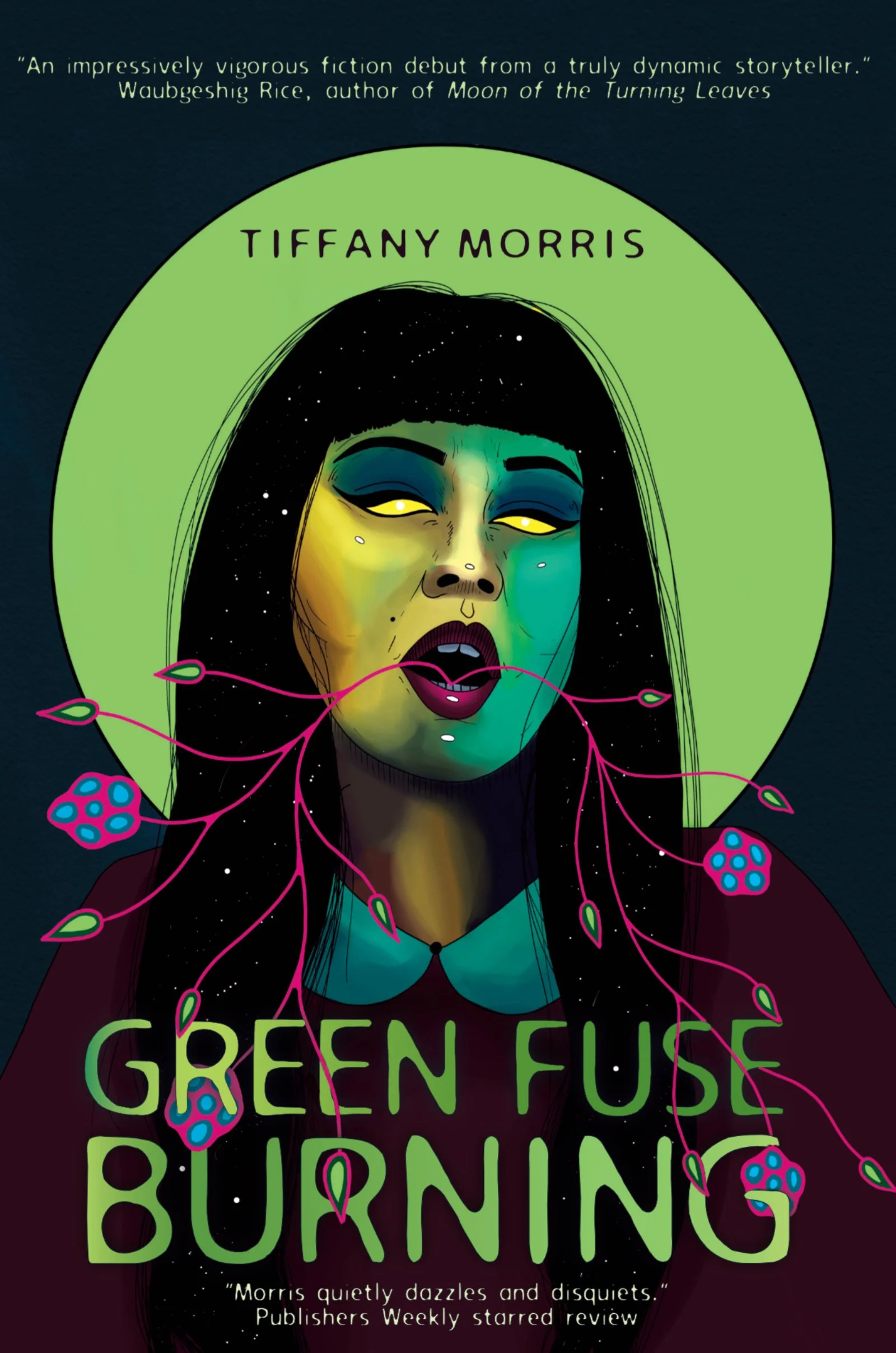
After her father dies, Mi’kmaq artist Rita grieves the loss of the connection to her culture, history and family. Rita’s girlfriend, in response to her grief, wins Rita an isolated week away to paint– exactly where her recently deceased father grew up. But when she arrives at the cabin, things are not as they seem; suspicious neighbours, mysterious sounds outside the cabin, and dark visions swarm Rita, becoming more and more all-consuming. Haunting, creepy, and oh-so mesmerizing, this eco-horror book from a Mi’kmaw writer promises strangeness and spookiness to the max.
Queer Little Nightmares edited by David Ly & Daniel Zomparelli
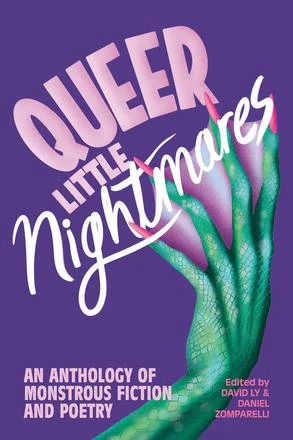
This anthology flips the monsters you know and love on their head, giving them a queer twist that celebrates the identities that have always been a metaphor for the marginalized in monstrous literature. What if your favourite cosplayer was actually a real-life minotaur? What if that howling you hear at night is really a pubescent werewolf? What if that monster you have feared is now shown to you in a different, more queer light? In a world where queers and monsters have been portrayed as one and the same, the queer writers of the anthology ask their readers to consider what it means to be– and love– a monster? Spooky, philosophical, and oh-so human (sometimes in a very not-human way), this collection is a must-read for any time of the year.
The Midnight Project by Christy Climenhage

On the eve of an ecological collapse, billionaire Burton Sykes visits Re-Gene-eration to look into genetically engineering a way for all of humanity to survive. Raina and Cedric, both genetic engineers, know their work is partially at fault for the upcoming catastrophe, and agree to help Sykes—whether they want to or not. But trust is a fickle thing, and this highly entertaining near-future sci-fi thriller novel explores just how far one will go to stop clinging to the past—maybe even to save humanity in the process. This at once hopeful and horrific story is sure to leave you questioning what it means to be human in an unsettling world frighteningly close to our own.
The Dark King Swallows the World by Robert G. Penner
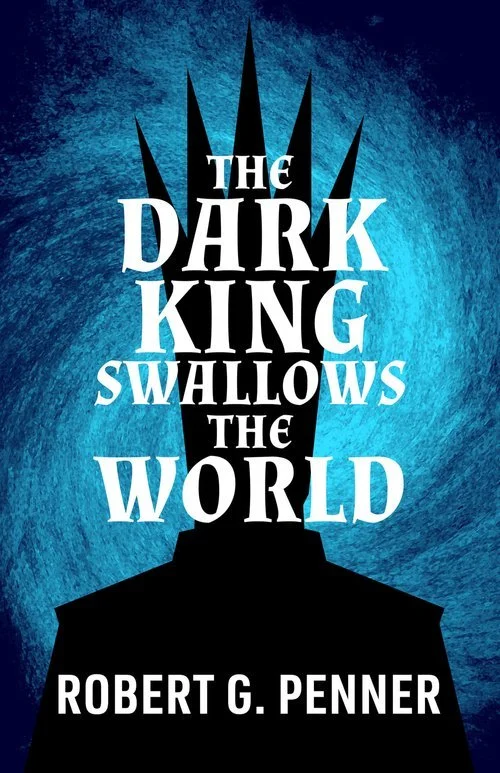
In WWII era Cornwall, a tragic car crash claims Nora’s brother’s life. Only Nora believes his death was not an accident: she believes her mother’s new acquaintance, self-professed necromancer Olaf Winter, is responsible. What follows is Nora’s journey– full of faeries, giants, and homunculi– to get back her brother, and ultimately her mother’s heart. Nora eventually confronts the Dark King in the land of the dead in this spellbinding, thought-provoking mystical-realism novel by a Canadian author.
River, Diverted by Jamie Tennant

Step into this dark fairytale that is at once a tale of creativity, hope, grief, and an exploration of the fickleness of memory. When super successful slasher writer River Black receives a strange book in the mail, she travels to Japan to seek answers and recount past memories. Only her memory may not be as reliable as she once thought, and the mysterious book is only posing more questions. For lovers of monster movies, pop culture references, and self discovery stories, this captivating read is as mystical as it comes.
The Creation of Half-Broken People by Siphiwe Gloria Ndlovu

Gloriously gothic and beautifully bold, Yale University’s Windham–Campbell Prize winner Siphiwe Gloria Ndlovu weaves a tale of a woman with no name who has mysterious visions. Working at a museum filled with the owner’s artifacts from exploits in Africa, she is at first happy with her position, until crossing paths with protestors outside of the museum, the leader of whom is, to our nameless heroine, not real. The story takes readers through a haunted castle as the nameless woman confronts the secrets of her past. Exploring complex colonial history through the present people “half-broken” by the stigmas of race and mental illness, this ode to the classic gothic genre is a haunting tale of magic and love.
Your spooky TBR wishes are our command with these nine monstrous, mysterious, mythical and magical reads that are sure to rock your senses, entertain your mind, and transport you to new and exciting lands full of intrigue and mystery. You’re welcome, fellow readers– get ready for some spooks!!
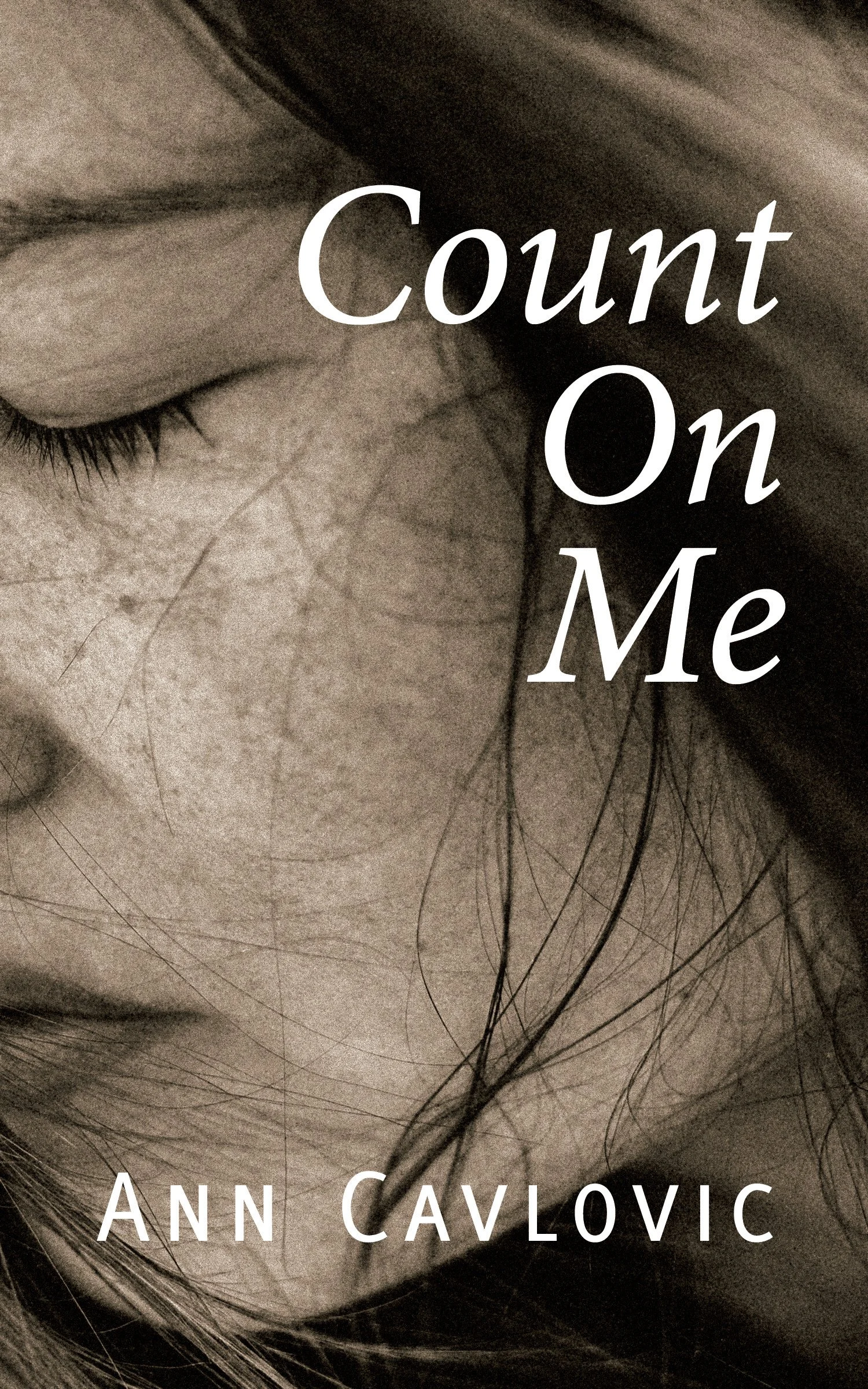
How I researched the hidden realities of elder abuse by Ann Cavlovic
Research for my novel began in the hallways of my parents’ nursing home, where I watched too many intense family dramas explode right in front of me. How did family relationships turn so ugly? Did those siblings get along when they were younger? How common is elder abuse?
Count on Me (Guernica Editions, 2025) exposes how a family can fracture when aging parents grow frail and debts from the past resurface. Filled with hope and humour amid the realities of elder abuse, this is a story about how we come to feel entitled to someone else’s money, what it takes to break cycles across generations, and how human relationships can rise above the transactional.
How I researched the hidden realities of elder abuse
By Ann Cavlovic
Research for my novel began in the hallways of my parents’ nursing home, where I watched too many intense family dramas explode right in front of me. How did family relationships turn so ugly? Did those siblings get along when they were younger? How common is elder abuse?
From there, my own experiences navigating the system of long-term care – which nothing in our culture prepares you for, by the way – blended with research to shape the story.
I first started in the typical places: journal articles, newspapers, elder care networks, StatsCan, and basic online searches. But desk research only gets you so far, and the internet is a rabbit hole. I prefer talking to humans. So, when I came across something interesting, I’d try to reach out to an expert. For example, early on I read an article in the Walrus about how hospital-induced delirium can be mistaken for dementia, leading to all kinds of trouble. But the expert quoted in the article subsequently wrote a letter to the editor criticizing how the journalist had handled the issue. I reached out to the expert with assurances that I wasn’t aiming to throw physicians under the bus, and despite his busy schedule, he agreed to be interviewed. Not only did this help me understand the nuances and ensure that an important turning point in the novel was medically plausible, it also gave me fresh ideas to add to the story.
Informed conversations beat algorithms, of this I’m sure.
I went on to interview nurses, lawyers, family physicians, bankers, funeral home directors, and social workers. I also had informal chats with people willing to fact-check things like the setting, cultural references, workplace details, single-parenting, and more. Several people I interviewed went on to generously respond to non-infrequent barrages of weird questions via text (Dr. Anne Nancekievill was a superhero.) You’ll see many of their names in the acknowledgements, although some preferred to remain anonymous.
It's important to emphasize that with every person I contacted, I presented myself as a writer with previous publications but no guarantee that my novel would ever go anywhere. Even still, my success rate at landing interviews or discussions was at least 85%. I remain (pleasantly) floored by how many people are willing to offer their time to help a writer, even a relatively untested one, if you just ask nicely.
I also talked to everyone I could who had an ageing family member in their care, along with many seniors living in care homes. What struck me was how many people wrestle with some aspect of elder care yet feel like their situation is unusual. I think I know why. Our culture absolutely sucks at talking about this phase of life. When I researched other novels dealing with elder abuse – let alone just the realities of aging – I was shocked at how few exist. And none of them dealt with abuse perpetrated by a family member. Instead, the “villain” was the butler (yes, literally, the butler did it), or the housekeeper, nurse, or “gold digger” girlfriend – all cliches. Movies were even worse; the Netflix film I Care a Lot featured a court-appointed guardian as the villain, mixing in mafia bribery, a few kidnappings, burning houses – all to make it, you know, relatable.
My research also helped me better interpret stories in the media about elder abuse, which often depict rather sensational stories of a nurse-turned-evil (Elizabeth Wettlaufer is a prime example). But “bad apples” are rare, and this unfairly casts a shadow on the legions of nurses – often racialized Canadians – who are doing incredibly demanding and important work with a level of care I know I couldn’t handle. The nurses at my parents’ nursing home were heroes (while their top bosses were a different story, mind you). There’s no way I’d perpetuate stereotypes about them in my writing.
The good news is that all this research has convinced me there are some very basic things that elders and families can do to prevent things going sour. We often want to avoid this stuff though. And I get it, it’s not fun. One senior said if her children fought after she died she’d haunt them from the grave. May I instead recommend more practical strategies: consulting with your lawyer, getting paperwork in order and clearly communicated, taking the time to understand care options before it’s an emergency, and/or having a difficult but necessary conversation with adult children before it’s too late. My website includes some links to resources.
If you’re not geeked-out yet, buckle up, there’s more!
Another massive area of research was around the Canada Revenue Agency audits of environmental charities that took place circa 2015, which factors into the novel’s sub-plot. I sifted through roughly 4,000 pages of pre-existing Access to Information requests (known as ATIPs), delivered on two CDs; I had to find an old computer to read them. My Friday evening routine for several weeks became: a) get a glass of wine, b) listen to Begonia on repeat, and c) sift through the documents. This was a needle-in-a-haystack exercise, but I found some really great needles. This may have only boiled down to a dozen paragraphs in Count on Me, but important ones. It also helped me form some minor characters – that woman in the meeting minutes who was shot down when you actually had a great point… I see you! Someone else I spontaneously interviewed outside a CRA office (when trying to understand what the furniture looked like) spawned another minor character.
I also was able to interview several of Canada’s top environmental leaders about those audits – which seemed to only target groups opposed to new oil and gas pipelines. This was one of the highest privileges of my research process.
I highly encourage writers to reach out for interviews. Imposter syndrome is not your friend. Not only did I get juicier, more nuanced information than I might have from printed sources (as wonderful as they are), the conversations in and of themselves enriched my life.
About Ann Cavlovic:
Ann Cavlovic’s fiction and creative non-fiction have appeared in Canadian literary magazines and news media such as Event, The Fiddlehead, Grain, PRISM international, The Globe & Mail, and CBC. She lives in Western Quebec. www.anncavlovic.com

Excerpt from NMLCT by Paul Vermeersch
Poetry that explores our “post-truth” society, NMLCT holds up a mirror not only to nature, but also to its unnatural distortions and facsimiles. Imagine The Matrix retold by the reanimated cyborg bodies of the Brothers Grimm.
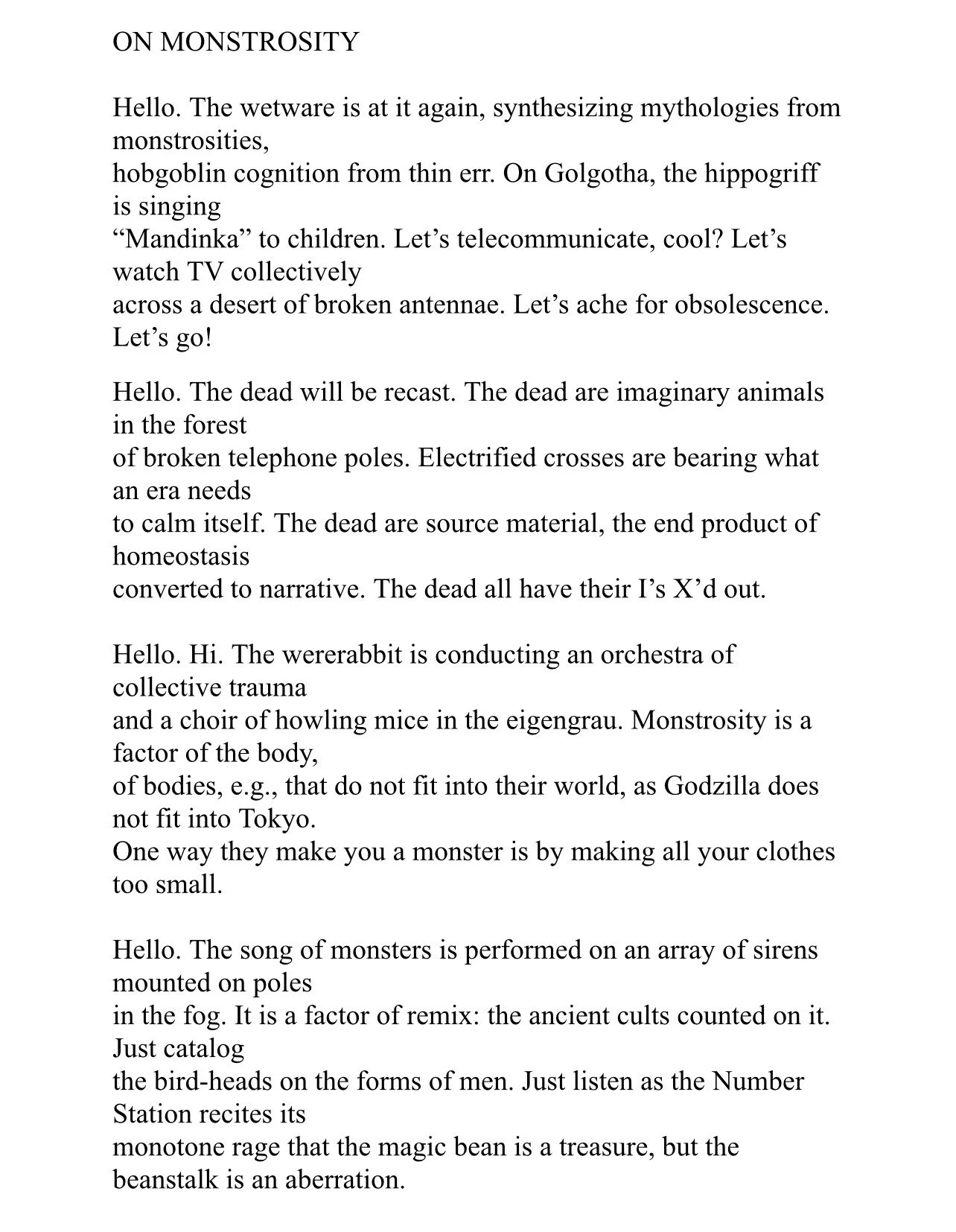
Excerpt from NMLCT by Paul Vermeersch. Published by ECW Press. Copyright Paul Vermeersch. Reprinted with permission.
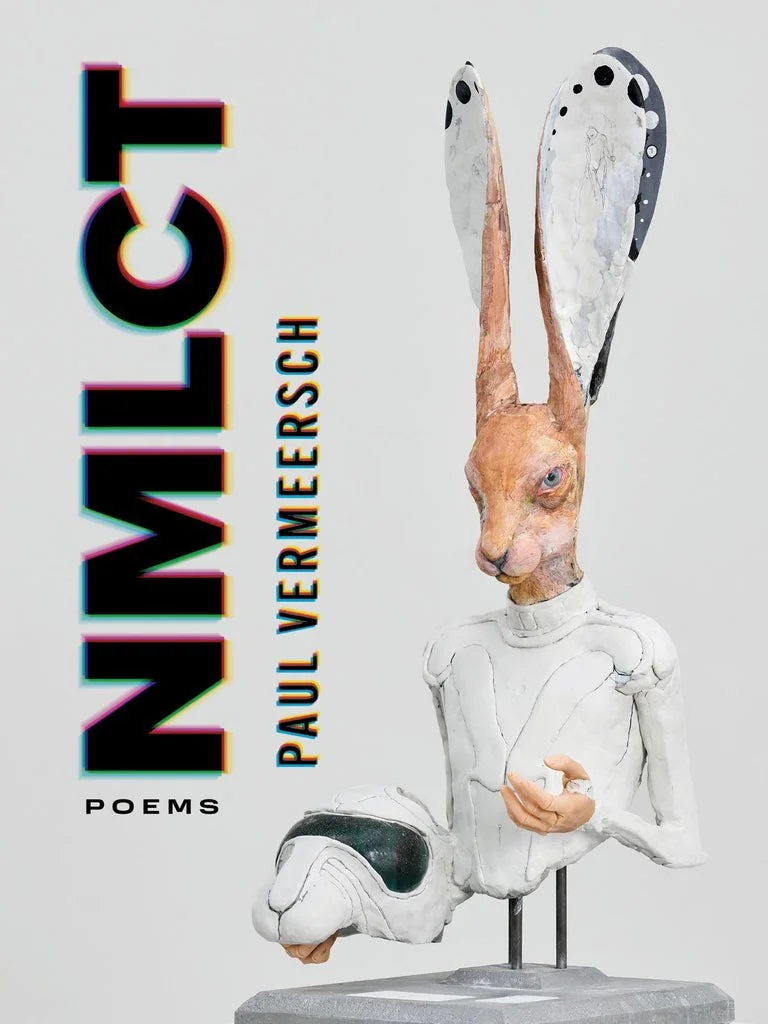
About NMLCT:
Poetry that explores our “post-truth” society, NMLCT holds up a mirror not only to nature, but also to its unnatural distortions and facsimiles. Imagine The Matrix retold by the reanimated cyborg bodies of the Brothers Grimm.
“Paul Vermeersch has become more daring and emphatic with every poetry collection, and this book is a blistering mourner’s lament: audacious, brutal, compassionate, and darkly ecstatic. ‘What on earth,’ he asks, ‘has happened here, and when? Who is the astronaut and who is the ape?’” — Stuart Ross, author of The Book of Grief and Hamburgers and The Sky Is a Sky in the Sky
Fables and fairy tales collide with virtual reality, artificial intelligence, and monstrous myths in a world where no one knows what to believe. In his eighth book of poems, Paul Vermeersch responds to the increasing difficulty of knowing what is real and what isn’t, what is our genuine experience and what is constructed for us by The Algorithm. In a “post-truth” society rife with simulations, misinformation, and computer-generated hallucinations, these poems explore the relationship between the synthetic and the authentic as they raise hope for the possibility of escape from MCHNCT (Machine City) to NMLCT (Animal City), where the promise of “real life” still exists.
All precisely 16 lines long — identically formed as though mass-produced — these poems are themselves artificial creations, products of the imagination, sometimes disorienting but always vivid. In NMLCT, Vermeersch gives us his answer to an existence in thrall to the artificial. But it also foretells a different future, one where the air and the grass and the trees, and all the life they engender, might always be genuine and sensed and safe.
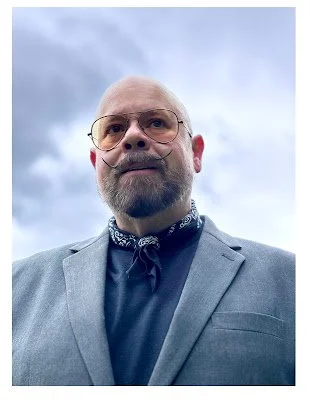
Photo of Paul Vermeersch by Bianca Spence
Paul Vermeersch is a poet, multimedia artist, and literary editor. His last book of poetry was Shared Universe: New and Selected Poems 1995–2020. A professor of creative writing and publishing at Sheridan College, he also edits his own imprint, Buckrider Books, for Wolsak & Wynn Publishers. He lives in Toronto, ON.

Power Q & A with David Giuliano
This past May, I turned sixty-five. Pearl, my beloved, asked what I wanted for my birthday. When she turned sixty-five, she wanted a party. I booked a local venue and chef, put together a 1970s top-ten playlist, and a birth-to-sixty-five video to the tune of “What I Like About You,” by the Romantics. It was a blast.
Me? I wanted a casket. I had stumbled on the Fiddlehead Casket Kits website. “Build your own pine casket in under 30 minutes with this handcrafted casket kit,” it said, “delivered directly to your door.”
I told Pearl, “I want a casket for my birthday.”
Q: How did writing The Upending of Wendall Forbes affect you?
A: This past May, I turned sixty-five. Pearl, my beloved, asked what I wanted for my birthday. When she turned sixty-five, she wanted a party. I booked a local venue and chef, put together a 1970s top-ten playlist, and a birth-to-sixty-five video to the tune of “What I Like About You,” by the Romantics. It was a blast.
Me? I wanted a casket. I had stumbled on the Fiddlehead Casket Kits website. “Build your own pine casket in under 30 minutes with this handcrafted casket kit,” it said, “delivered directly to your door.”
I told Pearl, “I want a casket for my birthday.”
“Okay,” she said.
I wanted a “handcrafted, environmentally friendly … locally made with Eastern Canadian pine casket.” I didn’t know why. I had no plan or desire to die anytime soon. Quite the opposite. I want to truly live. I had, however, spent the previous four years writing about the fictional Wendall and Ruby Forbes, who are twenty years my senior. They got me thinking about entering the final quarter of my life.
I am not in a hurry to use a casket, but I like the idea of having one nearby, reminding me, like Wendall and Ruby do, to love life, to pay attention, to listen, to play and create, and to love vulnerably. No one lives forever. At sixty-five, the possibility of dying becomes more imminent. I wanted a daily reminder to suck the marrow out of life. So, I ordered the kit and sent an email to four of our closest friends. Subject line: Strawberry, Rhubarb Crisp, Ice Cream and Casket Building.
On my birthday, I stacked the pine boards in the living room, poured wine for our friends, lit a candle and read Mary Oliver’s poem, “When Death Comes.”
It begins:
When death comes
like the hungry bear in autumn;
when death comes and takes all the bright coins from his purse
to buy me, and snaps the purse shut;
It is more about life than it is about death:
When it’s over, I want to say: all my life
I was a bride married to amazement.
I was the bridegroom, taking the world into my arms.
And:
I don’t want to end up simply having visited this world.
Our friends assembled the casket and moved it into my writing room, next to my desk, where it serves as a bookshelf. For now. “Love the idea of a simple pine casket, but won’t need it for a while? Put it to work right now!” Suggested the Fiddlehead website. “This bookshelf option adds 5 adjustable solid pine shelves.”
I am gradually adding items to the shelves that feel sacred: the fire pot from my days learning and teaching spiritual direction; the Star Blanket gifted to me by Anishinaabe elders, and the stole from my time as moderator of The United Church of Canada; a cross made of horseshoe nails and copper wire; copies of my books. Each item is a symbol, telling a story I carry.
Then we savoured the crisp and ice cream, our friendship and the end of the wine. It was a rich, perfect and early night. We’re getting old.

Friends!
Leonard Cohen told Interview Magazine, “To keep our hearts open is probably the most urgent responsibility you have as you get older.” Writing The Upending of Wendall Forbes reminded me to keep my heart open.

The Upending of Wendall Forbes by David Giuliano
About The Upending of Wendall Forbes:
Wendall and Ruby Forbes are confronting the vagaries of aging boomers: – sleeplessness, loneliness, memory loss, and the fear Ruby is showing signs of dementia. A blizzard hits their small town of Twenty-Six Mile House and a remarkable, perhaps unbelievable, band of strangers — : an Indigenous Colombian refugee, his environmental academic wife, an environmental academic, and their child; a young man on an accidental journey quest; a teenage activist and her ten-year-old gay half-brother; and a sleep consultant in from Indianapolis —– all take refuge in the Forbeses’ home.
In this heartwarming, funny, wise, and hopeful story, the companionship of strangers, a foul-mouthed raven, and a lynx, restore Wendall and Ruby’s hope for the future.

About David Giuliano:
David Giuliano is an award-winning writer of fiction and non-fiction. His first novel, The Undertaking of Billy Buffone (Latitude 46, 2021), was awarded the 2022 Bressani Prize for Fiction. It’s Good to Be Here: Stories We Tell About Cancer is a memoir about the power of story to heal. Postcards from the Valley, a collection of essays, was a Canadian bestseller. He has also published two illustrated children’s books. David lives on the north shore of Lake Superior.

Excerpt from The Haunting of Modesto O'Brien by Brit Griffin
Lily released the arm of Mr. Johnstone and turned to look at Coffin. “I think you have me confused with someone else. I’m Theodora Bow, here with the travelling show. Colleen Bawn? Perhaps you’ve seen it?”
Coffin, grinning now, said, “You can certainly act. But you can’t lie about those violet eyes of yours, can you?”
Lily rested her hand on Johnstone’s arm to bring him along with her as she took a few steps towards Coffin. She sighed and said, “Sir, you really are confused,” and then smiling patiently turned to Mr. Johnstone and said, “Mr. Johnstone, what colour are my eyes?”
Lily released the arm of Mr. Johnstone and turned to look at Coffin. “I think you have me confused with someone else. I’m Theodora Bow, here with the travelling show. Colleen Bawn? Perhaps you’ve seen it?”
Coffin, grinning now, said, “You can certainly act. But you can’t lie about those violet eyes of yours, can you?”
Lily rested her hand on Johnstone’s arm to bring him along with her as she took a few steps towards Coffin. She sighed and said, “Sir, you really are confused,” and then smiling patiently turned to Mr. Johnstone and said, “Mr. Johnstone, what colour are my eyes?”
He flushed deeply, said, “Miss Bow, by all accounts they appear to be a dark brown to me.”
She turned to Coffin and said, “You see, as Mr. Johnstone can attest, I am not your lady friend, now please, if you don’t mind, I have business to attend to.”
“I know damn well you’re Lily Nail. You and that crazy sister of yours are up here running some sort of swindle.” He then said to the men mesmerized by the scene unfolding before them, “She robbed some fellas back in Butte of their hard-earned money. Not sure what kind of women’s trickery she’s using here, but that there is Lily Nail and there’s a reward on her head. I know that as sure as my name’s Tom Coffin.”
“What an unfortunate name sir, and though I cannot attest to the veracity of your name, I do know the colour of my own eyes. And as everyone here can plainly see with their own eyes, they are brown, not violet. Now I really must be off. I am in quite a hurry,” she said, even as she was still moving slowly towards him.
“Hurrying off to church?”
“The Mining Recording office. I have a claim to register.”
“A prospector as well as an actress Lily?”
“As I said, my name is Miss Bow. And actually, I have an agent working on my behalf,” she was saying as she continued towards him, “A Mr. Campbell, and I believe he has done well by me.”
Coffin frowned. “Campbell?”
“Yes, a Mr. Campbell. I suppose you know his eye colour as well.” A few men snickered and by now Lily was right at his table, able to view the cards laid out there, most face up, the men at the table having just finishing a round.
“What claim?” asked Coffin.
“Oh, I’m really not too sure. Not that it is any of your concern, but Mr. Campbell just said a piece of ground had become available owing to some tragedy. He said other prospectors working in the same area were reluctant to work the property. He further explained that the area had great promise even though there had been accidents, then of course stories began to circulate. Mr. Campbell explained that miners were a superstitious lot. But of course, a woman does not have the same opportunities as a man, we can’t afford such superstitions, so I took it.”
There was a murmur through the crowd, and a man leaning on the bar called, “Out at Kerr Lake?”
“Oh maybe, that sounds familiar.” Smiling, asked him, “Am I going to be rich?”
The man glanced uneasily at the others around him but didn’t answer.
“You’re staking out at Kerr Lake?” Coffin asked.
“As I said, I really can’t say for sure as I was relying on the good nature of Mr. Campbell to assist me. Just before he left town, he contacted me to say he had finalized everything, and I was to stop by the Mining Recorder’s office and pick up my documents. So that is where I’m off to.”
“I was working with Campbell.”
Lily said, “Is that right? Well good luck to you sir”, and then glancing back down at his cards said, “Oh goodness yes, you certainly will be needing it,” her pale hand now reaching and spreading out the cards, murmured, “my, my that is quite the hand you have there.”
“This is poker darling, not one of your parlour games,” Coffin said.
“The cards never lie.”
“What’s he got, Miss,” a man along the bar called out, “a dead man’s hand?” A few men laughing.
“No, he has a pair of fours, and an eight and seven of clubs, and the ace of spades.”
“Not taking home the pot with that one,” someone yelled, and again laughter.
“Oh, but it’s quite the hand.”
“Shut your mouth,” Coffin said, now reddening, mad, not used to being laughed at.
Lily said, “But there is so much to see here, and it’s a bit more complicated than the dead man’s hand. See, look here, this one, the diamond,” then glancing up at Coffin asked, “Sorry, sir? What was your name again?”
A man at the bar shouted, “Coffin.”
“Yes, of course, pardon me, Mr. Coffin,” she said, then focused her attention on the cards, touched the four of diamonds, said, “Seems like you must have a friend you shouldn’t be trusting.”
“That’d be Shitty!” the man at the bar shouted, getting another few laughs.
“And this one, your eight of clubs, a card of caution, for coveting. Do you covet something Mr. Coffin? And here again, dear me, yet another caution with your four of clubs. Imperiled by your short temper perhaps?”
Coffin could not but help glance down at the cards as she said, “But these last two, they really help tell your story. The seven of clubs, danger from a member of the opposite sex, goodness, that could spell rack and ruin for you Mr. Coffin.”
“What about the ace?” the man at the bar calling out.
“Oh that’s simple. Death. Perhaps in a duel. How old fashioned.”
Coffin grabbed her hand, his grip strong, said, “Get out of here.”
“If you want me to leave, sir, you will need to release my hand.”
He stared at her for a few long seconds as she stared back, the men watching rapt, and she said, “Let go of me.”
Then Coffin jerked his hand away as if burned, “You little bitch, I’ll be seeing you later, you can bet on that Lily Nail.”
Excerpt from The Haunting of Modesto O’Brien by Brit Griffin. Reprinted by permission of Latitude 46 Publishing. Copyright Brit Griffin, 2025.
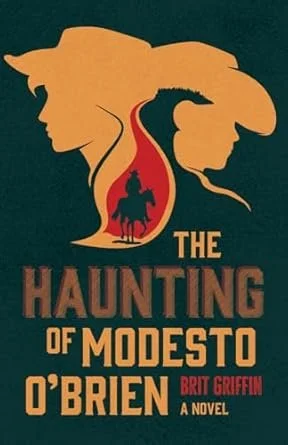
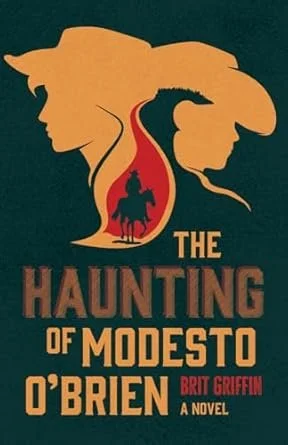
The Haunting of Modesto O’Brien by Brit Griffin, published by Latitude 46 Publishing.
About The Haunting of Modesto O’Brien:
A gothic tale from deep within the boreal forest…
Violence and greed have intruded into a wild and remote land. It’s 1907, and silver fever has drawn thousands of men into a fledgling mining camp in the heart of the wilderness. Modesto O’Brien, fortune-teller and detective, is there too - but he isn’t looking for riches. He’s seeking revenge.
O’Brien soon finds himself entangled with the mysterious Nail sisters, Lucy and Lily. On the run from their past and headed for trouble, Lily turns to O’Brien when Lucy goes missing. But what should have been a straightforward case of kidnapping pulls O’Brien into a world of ancient myths, magic, and male violence.
As he searches for Lucy, O’Brien fears that dark forces are emerging from the ravaged landscape. Mesmerized by a nightmarish creature stalking the wilderness, and haunted by his past, O’Brien struggles to maintain his grip on reality as he faces hard choices about loyalty, sacrifice, and revenge.
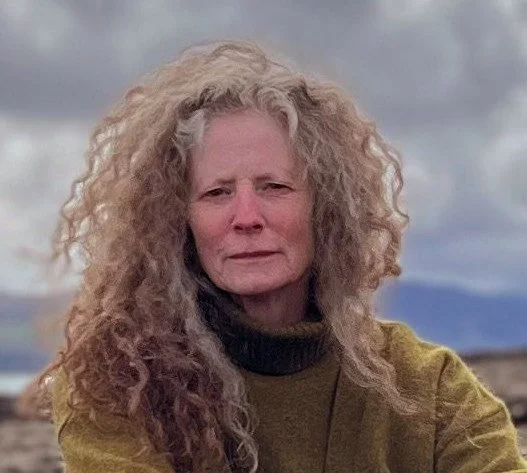
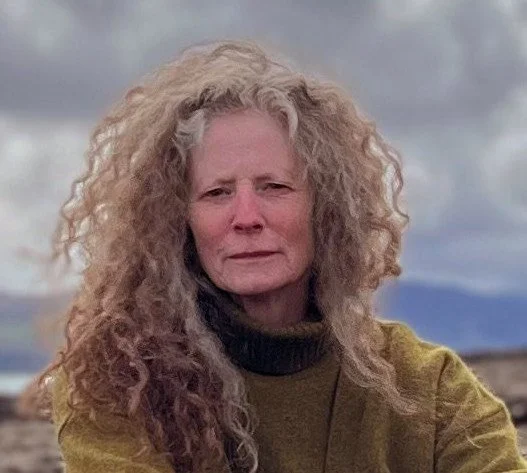
Author Brit Griffin.
ABOUT BRIT GRIFFIN:
Brit Griffin is the author of the climate-fiction Wintermen trilogy (Latitude 46) and has written essays, musings, and articles for various publications. Griffin spent many years as a researcher for the Timiskaming First Nation, an Algonquin community in northern Quebec. She lives in Cobalt, northern Ontario, where she is the mother of three grown daughters. These days, she divides her time between writing and caring for her unruly yard.
Power Q & A with Brit Griffin
It is maybe odd to only write about where I live — all four of my novels are set in and around Cobalt, and most of my musings & reflections are also generated from this landscape. Odd maybe, but I feel a sense of the imperative to pay attention to the land I inhabit. Scrappy and used up as it is, and still showing the scars of short-lived but hyper-industrial activity, it is a place worth seeing, as in discovering the minutiae, the magic, the vulnerabilities, and the joy, in and of and around this place that I inhabit. It seems to me now obvious, though I wish I had seen it sooner in my life, that any hope we have of being better, of finding a way of being in the world that is non-destructive, lies in seeking atonement from the land we inhabit, its creatures and beings, wherever that happens to find us.
Q: In The Haunting of Modesto O’Brien, the setting seems very important to the story, seems very grounded in a particular place. Why set it in the real-life town of Cobalt?
A: It is maybe odd to only write about where I live — all four of my novels are set in and around Cobalt, and most of my musings & reflections are also generated from this landscape. Odd maybe, but I feel a sense of the imperative to pay attention to the land I inhabit. Scrappy and used up as it is, and still showing the scars of short-lived but hyper-industrial activity, it is a place worth seeing, as in discovering the minutiae, the magic, the vulnerabilities, and the joy, in and of and around this place that I inhabit. It seems to me now obvious, though I wish I had seen it sooner in my life, that any hope we have of being better, of finding a way of being in the world that is non-destructive, lies in seeking atonement from the land we inhabit, its creatures and beings, wherever that happens to find us.
Because it seems to me that the land teaches us things that we have forgotten. But what happens when we are dislocated, removed, moved, from the place that was the homeland of our people — when a person is severed from their connection to their homeland? If this tracery of wisdom and old knowledge comes from a relationship with the land, from understanding and being guided by these age-old traditions and stories and lore, how does one get their moral bearings without them? That is what I was trying to think about in The Haunting of Modesto O’Brien.
For most of us in this country, we are not in our homelands. Where I live is the traditional territory of Timiskaming First Nation, an Algonquin community who have been here for thousands of years. This is their homeland. Their stories and their wisdoms travel through the treetops, glide through the deep waters, live in the rocks. They are not mine. I can learn from, and be respectful, yes, but they are not mine to browse and select from, to pick and choose from. So even as I live here, even as I nurture my ability to know and respect this place, there is a foreignness to it all, an outofplaceness that I try to understand through in my writing. Forge a hybrid? Start from scratch? Not sure, but I keep thinking and writing, because to me it is one of the most important, what? Quests? Maybe, sounds old, fairy tale borne. Maybe that is the word. A quest for atonement across the real/imagined/blurred landscape that I travel every day.
The Haunting of Modesto O’Brien by Brit Griffin, published by Latitude 46 Publishing.
About The Haunting of Modesto O’Brien:
A gothic tale from deep within the boreal forest…
Violence and greed have intruded into a wild and remote land. It’s 1907, and silver fever has drawn thousands of men into a fledgling mining camp in the heart of the wilderness. Modesto O’Brien, fortune-teller and detective, is there too - but he isn’t looking for riches. He’s seeking revenge.
O’Brien soon finds himself entangled with the mysterious Nail sisters, Lucy and Lily. On the run from their past and headed for trouble, Lily turns to O’Brien when Lucy goes missing. But what should have been a straightforward case of kidnapping pulls O’Brien into a world of ancient myths, magic, and male violence.
As he searches for Lucy, O’Brien fears that dark forces are emerging from the ravaged landscape. Mesmerized by a nightmarish creature stalking the wilderness, and haunted by his past, O’Brien struggles to maintain his grip on reality as he faces hard choices about loyalty, sacrifice, and revenge.
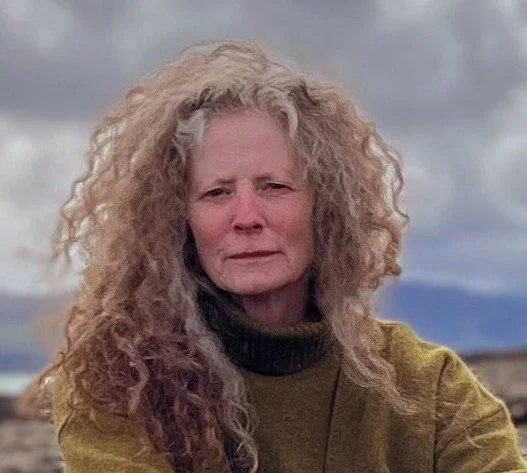
Author Brit Griffin.
About Brit Griffin:
Brit Griffin is the author of the climate-fiction Wintermen trilogy (Latitude 46) and has written essays, musings, and articles for various publications. Griffin spent many years as a researcher for the Timiskaming First Nation, an Algonquin community in northern Quebec. She lives in Cobalt, northern Ontario, where she is the mother of three grown daughters. These days, she divides her time between writing and caring for her unruly yard.

Power Q & A with Melanie Schnell
Several years ago the idea of what exists beneath the ground, beneath our feet, began to worry itself away in my brain. It all began with learning about the scores of indigenous children who died at the Residential Schools. Then I read more stories of mass graves being unearthed, such as hundreds of infant remains at a former home for unwed mothers in Ireland, and a mass grave recently discovered in Syria from Assad’s crackdown on protestors.
Q: What gave you the idea to include a tree as a central character in your novel, The Chorus Beneath Our Feet?
Several years ago the idea of what exists beneath the ground, beneath our feet, began to worry itself away in my brain. It all began with learning about the scores of Indigenous children who died at the Residential Schools. Then I read more stories of mass graves being unearthed, such as hundreds of infant remains at a former home for unwed mothers in Ireland, and a mass grave recently discovered in Syria from Assad’s crackdown on protestors.
Then I started reading books about trees and their root systems, and the massive and complex worlds of fungi, and how without subterranean fungi, we wouldn’t exist. Nothing would. I thought about all the skeletons—human and animal and insect—trillions of them, that lay deep in the ground, along with the fungi and soil and clay, and insects and moss and the massive root systems of plants and trees. And how all of this connects us to our past, and the horrors that lay beneath us as we walk above it on our bipedal bodies, trying to survive in a fleeting, precarious world.
The more I learned about trees, and how they communicate, the more the central tree in the novel—which had been there from the beginning, from the first image I had of the story—clarified. What if what was beneath us could speak? Who or what could be that vessel, who or what could act as their voice?
I knew this particular story wouldn’t be complete unless the tree was able to speak to its own stories of the past, in an attempt to complete a cycle of sorts between the present of the novel and a difficult chapter of our human history.
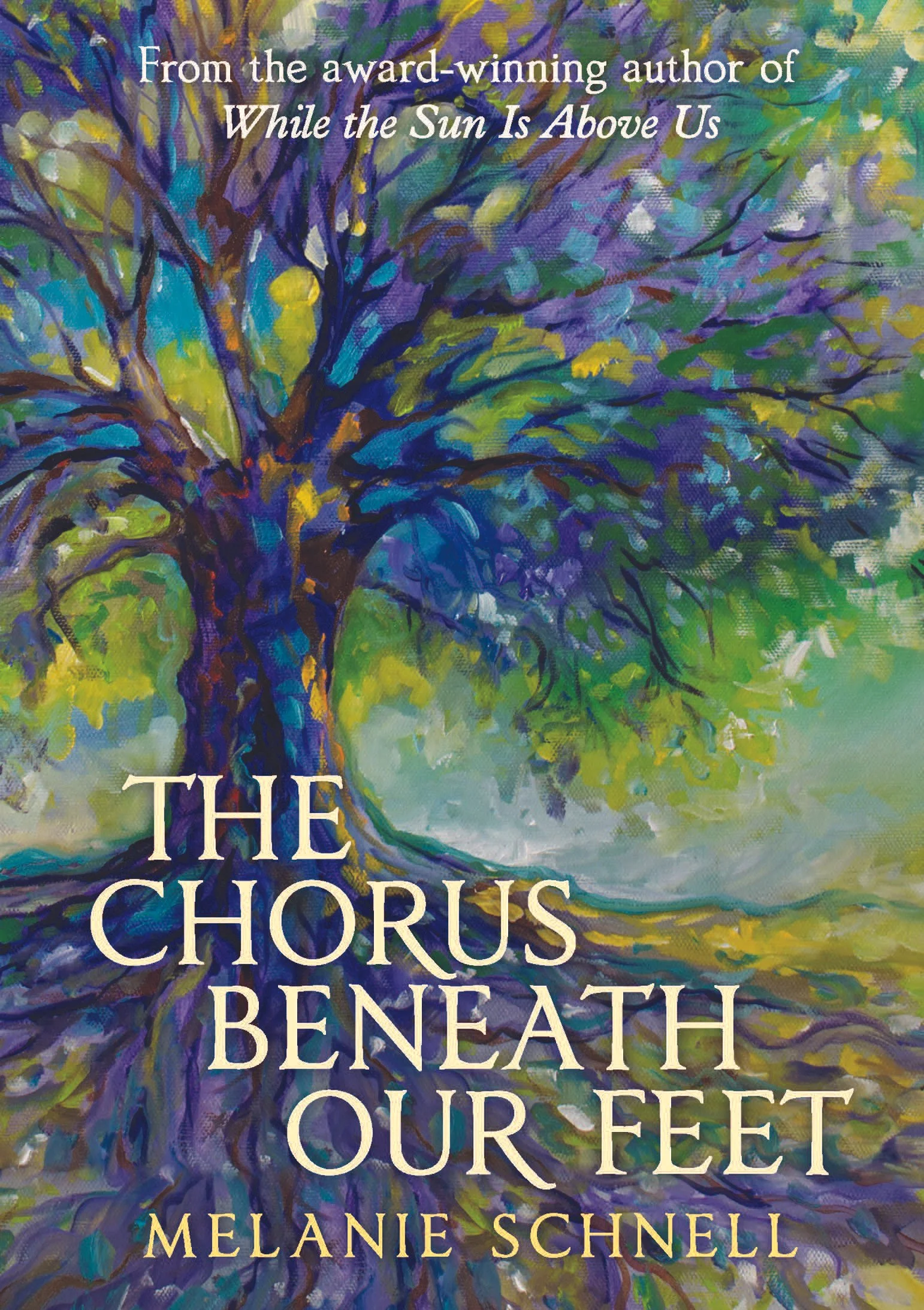
The Chorus Beneath Our Feet by Melanie Schnell, published by Radiant Press.
More about The Chorus Beneath Our Feet:
A grief-stricken soldier accompanies his best friend's body home after eight years away, only to find his mute sister, Mary, missing and wanted for questioning by the police in the murder of an infant in the city's central park. As Mary's life hangs in the balance, Jes must follow the obscure clues she has left behind, the only means to find her and absolve her of wrongdoing. In his labyrinthine search, the mystery of the park's infamous Harron tree and its connection to his sister, and their community, is slowly revealed.

Author Melanie Schnell
About Melanie Schnell:
Melanie Schnell’s novel, While the Sun is Above Us, was shortlisted for The Fiction Award and Book of the Year award and won the Saskatchewan First Book Award and The City of Regina Award in 2013. The novel has been listed as part of the ELA A30 curriculum in both Public and Catholic schools across Saskatchewan. Melanie has published long and short fiction, creative nonfiction, and poetry. Her fiction placed second in the City of Regina Awards in 2010 and 2017. She is currently Assistant Professor of Creative Writing, Rhetoric and Composition at the University of Regina. She lives in Regina, Saskatchewan.

Power Q & A with Ben Zalkind
Satire is tricky. In a free society, it can be a form of entertainment, which confirms for its audience the idiocy and silliness of “that thing we enlightened people are against.” In dicier milieus, such as Putin’s Russia, satire cannot be reckless, lest it disappear. It has to be clever, damning, and opaque enough to cloak its true purpose, which is as a tool of resistance. Making fun of our overlords is serious, political business.
Q: Ben, your debut novel, Honeydew (Radiant Press, October 2025), seems to be a winking satire lampooning tech bros, surveillance capitalism, and maybe even the futility of resistance itself. Many readers look to fiction to sharpen and clarify what might otherwise look smudged and fuzzy, but it’s difficult to figure out where you stand. What do you mean for us to take from your book?
A: Satire is tricky. In a free society, it can be a form of entertainment, which confirms for its audience the idiocy and silliness of “that thing we enlightened people are against.” In dicier milieus, such as Putin’s Russia, satire cannot be reckless, lest it disappear. It has to be clever, damning, and opaque enough to cloak its true purpose, which is as a tool of resistance. Making fun of our overlords is serious, political business.
Here in North America, our most popular satire takes the form of visual media, such as The (late) Colbert Report and South Park, which seem to look right into their targets’ eyes as they subject them to ridicule. This style, though often funny, is at odds with the tradition of literary satire, which tends to lean more comfortably into ambiguity. Some of our finest contemporary satirical novels, such as Paul Beatty’s The Sellout, are satirical only insofar as we can gather. Beatty famously denies that he is a satirical author, though his very funny novel about a man who tries to reinstate slavery in a fictionalized California is, to my mind at least, a crackling and devastating takedown of the idea of a post-racial society in the same US that witnessed George Floyd’s murder.
Honeydew, is most certainly a satirical novel. It is also a farce, equal parts A Confederacy of Dunces and The Monkey Wrench Gang, about a quartet of feckless wannabe saboteurs who have the right idea but can't quite follow through. I know there will be a temptation to see clear topical references in my characters, especially Moses Honeydew himself, who, I'll admit, does bear some resemblance to a few of our less impressive overlords. But my intention was not just to remark on the absurdity of our tech-saturated world. I also wanted to create my own. And Honeydew’s got everything: A billionaire tech bro who plans to pilot a submersible drill to Earth’s mantle, a criminal kingpin who bankrolls an anarchist collective, a Swiss family doctor moonlighting as a spook, and even a direct action splinter cell composed entirely of elderly activists. Though the story shares some of our reality, it also exists in its own milieu, maybe a bit like Boots Riley's Sorry to Bother You, Mervyn Peake's Gormenghast series, Terry Pratchett’s Discworld, and even P.G. Wodehouse’s Edwardian Britain that never was.
I permitted myself the freedom to make my characters eccentric and the setting surreal. And I agree that there is something unsettling beneath Honeydew's humour. Though many of us face the welter of social, climate, and economic injustice with courage and wisdom, Honeydew's freedom fighters resort to harebrained schemes. This is not a commentary so much as a prism through which I filtered my own bewilderment. In my story, I always punch straight up, and I trust readers, who tend to be cleverer than the authors they read, will clock the story as a satire, a comedy, and, in its own way, a pointed critique, not of the resistance, of which I consider myself a part, but the frame in which all of us are forced to resist.
About Honeydew:
Rose Gold can’t catch a break. Her latest “golden opportunity” has given way to a madcap adventure through the soft underbelly of Bonneville City. She finds herself cast in the role of renegade mentor and hero to a trio of idealistic young rebels. Together, they perpetrate an act of subversion targeting “future-mover” and celebrity CEO Moses Honeydew, which puts them in the crosshairs of his Substrate Inc.
Along the way, they join forces with family-doctor-by-day and fixer-by-night, Dr. Hansjorg Winteregg, and go on the lam. Meanwhile, there are rumours about Honeydew’s private space station, The Visionary, which may or may not have forced its first passengers into working off their debt. Rose’s boss and his crew go missing. Honeydew announces his plan to take a manned submersible drill to Earth’s mantle to burnish his brand as a fearless and impossibly cool maverick.
With her faithful charges by her side, Rose finds herself at the centre of an unfolding conspiracy. Did she ever truly have a hand on the rudder of fate? And what chance does a quartet of second-rate saboteurs have against a multinational corporation with a vendetta and a trillion-dollar market capitalization?

Ben Zalkind lives and works in Calgary, Canada. His debut novel, Honeydew, will be released by Radiant Press in October 2025. A Salt Lake City native and naturalized Western Canadian, Ben is happiest outdoors, where he can cycle, drink coffee, and adventure with his wife and fellow traveller.

Power Q & A with Stephanie Bolster
The timing of the book’s release was coincidental, though it’s a fortunate coincidence in that Katrina and the subsequent levee breaches that wreaked such devastation in New Orleans are back in the public consciousness and may make readers more interested in the perspective the book offers. Sadly, the inequalities the disaster highlighted are even more acute now than they were then, and the climate change that contributed to the storm has only worsened.
Q: Hurricane Katrina made landfall on August 29, 2005. Given that the storm and its aftermath are a primary subject of Long Exposure, did you time the book’s publication to coincide with the 20th anniversary?
A: The timing of the book’s release was coincidental, though it’s a fortunate coincidence in that Katrina and the subsequent levee breaches that wreaked such devastation in New Orleans are back in the public consciousness and may make readers more interested in the perspective the book offers. Sadly, the inequalities the disaster highlighted are even more acute now than they were then, and the climate change that contributed to the storm has only worsened.
I had visited New Orleans twice before Katrina, so I paid particular attention to the news stories during the storm. The extent of the chaos and devastation, and the human suffering caused not only by the storm itself but by systemic failures and inequalities, shocked me.
In 2009, I visited a retrospective of Robert Polidori’s work at the Musée d’art contemporain in Montréal. I had been drawn to his photographs of New Orleans and Chernobyl since first seeing them several years earlier, but had avoided writing about them because I worried the subject matter was too predictable, given that I have often written about photographs and that I tend to be drawn to bleak subjects. I was also uncomfortable with the voyeurism of the photographs, which depict human-centered spaces (often private homes) in the absence of the humans who lived and worked there. And I was even more uncomfortable with my own interest in this material.
In the museum that day, I realized that the only way to write about these photographs would be to interrogate my own fascination. I had done something similar in exploring my ambivalence about zoos, but this felt like a riskier, more difficult kind of questioning. I knew I wanted the work that would become Long Exposure to be a book-length poem. I wanted it to centre perspective and work associatively. I had no idea how to write it.
The structural, aesthetic, and ethical challenges this project posed are part of the reason I worked on it for so long. I was also raising two children and teaching creative writing full-time. After a decade, I thought the project was finished, but as I read through the manuscript in the first few months of the COVID pandemic, I couldn’t help seeing connections between events and experiences of that time and many passages in the book. So the project kept expanding, and could have continued to expand had I not decided that I needed to move on.
When Palimpsest accepted the book and I learned that it would appear in 2025, I wasn’t thinking about the Katrina anniversary. I wish we could mark this anniversary by focusing on positive societal and systemic changes that have happened since, as indeed there have been some. But many of those are in the process of being lost, certainly in the U.S. Much of the Lower Ninth Ward, the area most devastated by the levee breaches, has yet to be rebuilt. I stopped working on this book, but the urgency I felt in writing it is not over.

About Long Exposures:
After Hurricane Katrina, the photographer Robert Polidori flew to New Orleans to document the devastation. In the wreckage he witnessed, and in her questions about what she saw in what he saw, Stephanie Bolster found the beginnings of a long poem. Those questions led to unexpected places; meanwhile, life kept pouring in. The ensuing book, Long Exposure, is Bolster’s fifth, a roaming, associative exploration of disasters and their ongoing aftermaths, sufferings large and small, and the vulnerability and value of our own lives. Incremental, unsettling, Long Exposure rushes to and through us.
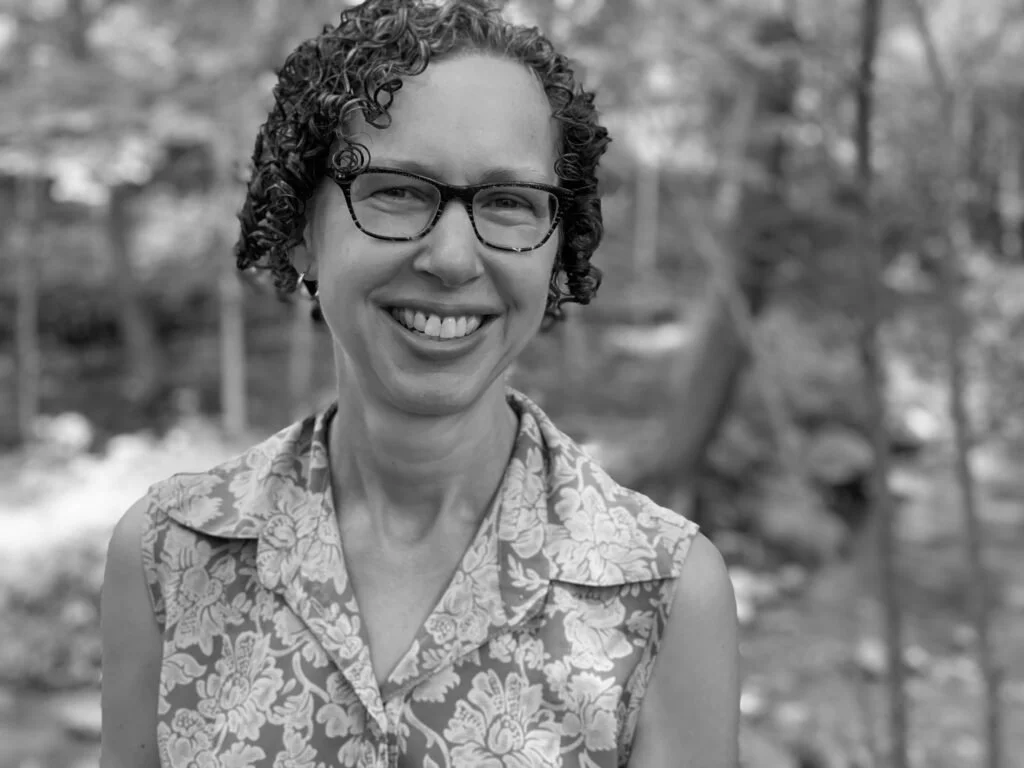
About Stephanie Bolster:
Stephanie Bolster’s latest book of poetry, Long Exposure, began as an exploration of Robert Polidori’s photographs of New Orleans and Chernobyl, and extended inward and outward from there. Her first book, White Stone: The Alice Poems, won the Governor General’s Award and the Gerald Lampert Award and was translated into French (Pierre Blanche). Her poems have also been translated into Spanish, German, and Serbo-Croatian. Editor of The Best Canadian Poetry in English 2008 and The Ishtar Gate: Last and Selected Poems by the late Ottawa poet Diana Brebner, and co-editor of Penned: Zoo Poems, she was born in Vancouver and grew up in Burnaby, BC. She has been a professor of creative writing at Concordia University since 2000 and lives in Pointe-Claire, on the Mohawk (Kanien’kehá:ka) territory of Skaniatara:ti.
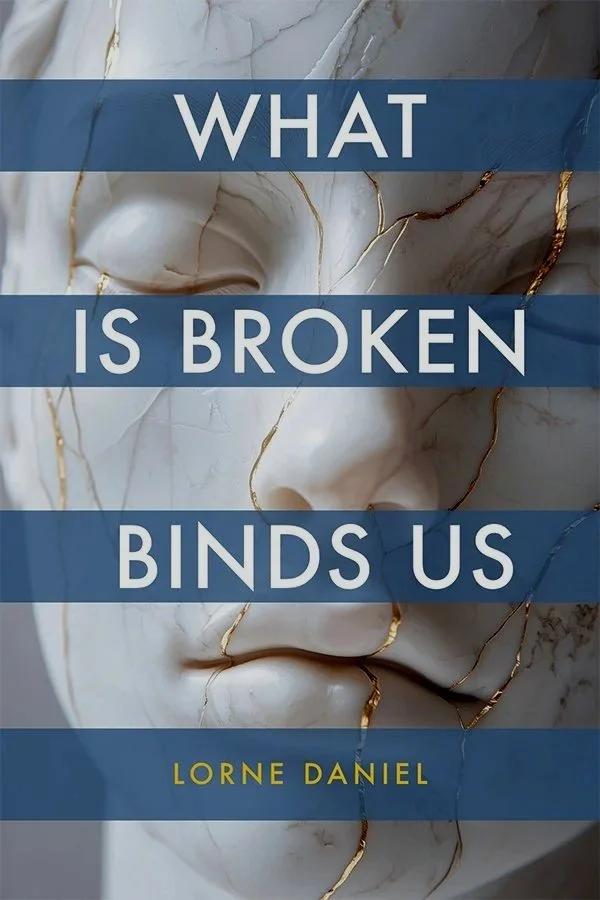
Addiction, Family, and the Story Behind Lorne Daniel's What is Broken Binds Us
“I initially wrote the story of our family’s journey purely to record what was happening as it happened,” says poet and retired communications consultant Lorne Daniel about his poetry collection What is Broken Binds Us. “The addictive behaviours, the anger, the borderline housing challenges disrupted and changed week by week, month by month, over years and stretched into decades,” he says of one son’s journey. “While we tried to support him, it was often a real challenge to track what was happening, even to track where he was.”
Addiction, Family, and the Story Behind Lorne Daniel's What is Broken Binds Us
“I initially wrote the story of our family’s journey purely to record what was happening as it happened,” says poet and retired communications consultant Lorne Daniel about his poetry collection What is Broken Binds Us. “The addictive behaviours, the anger, the borderline housing challenges disrupted and changed week by week, month by month, over years and stretched into decades,” he says of one son’s journey. “While we tried to support him, it was often a real challenge to track what was happening, even to track where he was.”
As a writer, Daniel began to form his rough notes into something others could understand. “I found that short poems that just shared incidents from the journey were the best form because readers can pick up on the chaos, the jumble of a path that is not simple and not straight.” Even so, he grappled for a long time over whether to share the poems beyond family and friends.
“What convinced me to publish the very personal poems in this book with a broader readership was the experience of running into so many people who have been on similar journeys, but feel disconnected,” Daniel says. “In our society, the narratives often don’t fit the real lived experiences of families. ‘Troubled teens’ don’t always find a way through those troubles, parents become exhausted looking for answers, and there may not always be answers.”
“On multiple occasions,” Daniel says, “we went for years without hearing from our son. Sadly, those were more peaceful times than the full-on crises times.”
“Every family that experiences addictions and mental health challenges is unique, but there are emotional characteristics that we have in common. What is Broken Binds Us is my small gesture of connection.”

What is Broken Binds Us by Lorne Daniel, published by University of Calgary Press.
What is Broken Binds Us is a collection of poems of the disruptions and emotional tremors that shape us: enslaved families broken and dispersed, histories hidden, addiction and estrangement, and the shocks of bodily trauma.
What is Broken Binds Us shares stories of loss, absence, acceptance, and hope. Returning to the page after a long absence, poet Lorne Daniel provides a unique perspective on crisis that balances raw emotion with vulnerability, thoughtfulness, and care.
In seven sections, Daniel braids the stories of empire, personal traumas, addiction and family estrangement, shifting emergencies, and the wisdom of elders and the natural world. Lessons in Emergency Preparedness traces accident, injury and recovery, facing the trauma of a sudden loss of physical competence through the metaphorical and literal breaks of a shattered body and the slow movement towards mending. When the Tributaries Ran Rich unravels empire and a five-century narrative of hard-working immigrants with the discovery of enslavement in family records, forcing a deep reconsideration of the truth of the past. Episodic Tremor & Slip speaks of the tectonic shifts in family life that occur when facing substance abuse, addiction, and mental health struggles, of the pain of estrangement and the love that continues. In the Family Name is a reflection on time, on people, and on the natural world that revisits and turns over all that came before, exploring it from new angles.
Lorne Daniel writes with calm, conversational assurance. These poems are accessible and evocative, speaking from their specificity to the many people who have faced injury, estrangement, struggle, and pain, and must carry it—and carry on.

Lorne Daniel is a Canadian poet and non-fiction writer. He has been deeply engaged in the literary community, including the emergence of a Canadian prairie poetry scene in the 1970s. He has publsihed four books of poetry, edited anthologies and literary journals, and written freelance journalism. His work has been published in dozens of anthologies, journals, newspapers and magazines in Canada, the U.S. and the U.K. Lorne lives on the traditional territories of the Lək̓ʷəŋən people in Victoria, BC.

Excerpt from Votive by Annick MacAskill
Votive considers various forms of devotion and our often fraught attempts to respond to “our confusion, our curiosity.” These are poems concerned with the way we use stories, old and new, to connect our experiences, and the way we persist in our quest for love, hope, and meaning when language falters —“What we couldn’t say we found in the skies.” MacAskill’s great gift resides in her facility for coaxing things evasive and intuitive into crisp form and language, in voicing what “so quickly I /knew and knew and knew.”
Votive
Somehow I had made my way there
to the point and height of my aunt's elbow,
witness to the quiet precision
of her understated ceremony,
the drop of coins and one long match
and the docile flock of that white wax,
chubby geese gathered in the suggestion of night
that lay off the altar to the right.
Where they went I cannot name—
those liquefying emissaries
or my aunt's wishes, whatever it was
that she held tight that morning—but I saw the light,
and then was swallowed by its heat, great
as the molten sea that rushed beneath my feet.
from Votive by Annick MacAskill, Gaspereau Press, 2024

About Votive:
Votive considers various forms of devotion and our often fraught attempts to respond to “our confusion, our curiosity.” These are poems concerned with the way we use stories, old and new, to connect our experiences, and the way we persist in our quest for love, hope, and meaning when language falters —“What we couldn’t say we found in the skies.” MacAskill’s great gift resides in her facility for coaxing things evasive and intuitive into crisp form and language, in voicing what “so quickly I /knew and knew and knew.”
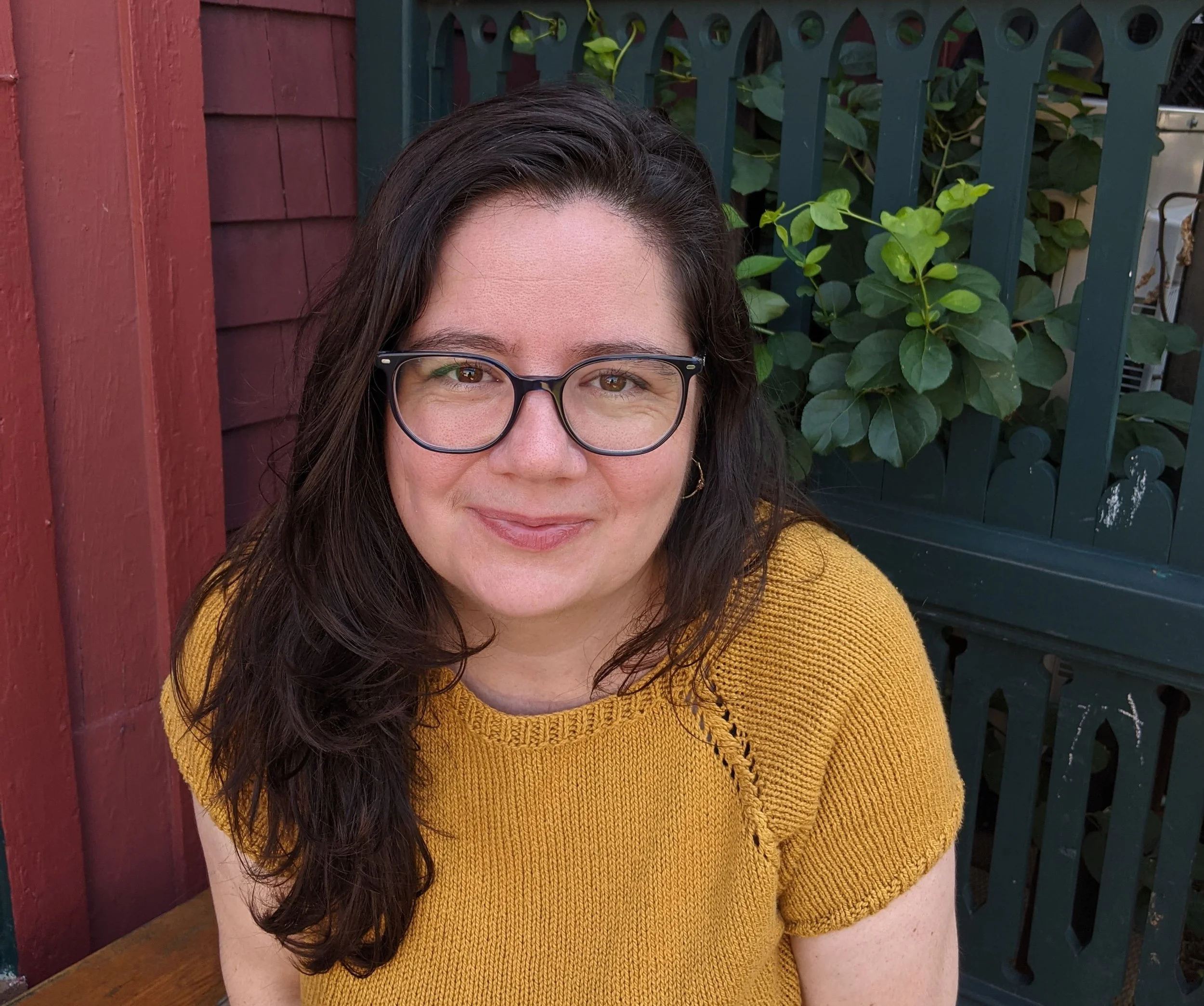
About Annick MacAskill:
Annick MacAskill was the winner of a 2022 Governor General’s Literary Award for her poetry collection Shadow Blight. Her previous collections include Murmurations, No Meeting Without Body, and two chapbooks—Brotherly Love: Poems of Sappho and Charaxos and five from hem. MacAskill is a member of Room Magazine’s Growing Room Collective and publisher of micropress Opaat Press. She lives in Kjipuktuk/Halifax, NS.

Excerpt from Long Exposure
After Hurricane Katrina, the photographer Robert Polidori flew to New Orleans to document the devastation. In the wreckage he witnessed, and in her questions about what she saw in what he saw, Stephanie Bolster found the beginnings of a long poem. Those questions led to unexpected places; meanwhile, life kept pouring in. The ensuing book, Long Exposure, is Bolster’s fifth, a roaming, associative exploration of disasters and their ongoing aftermaths, sufferings large and small, and the vulnerability and value of our own lives. Incremental, unsettling, Long Exposure rushes to and through us.
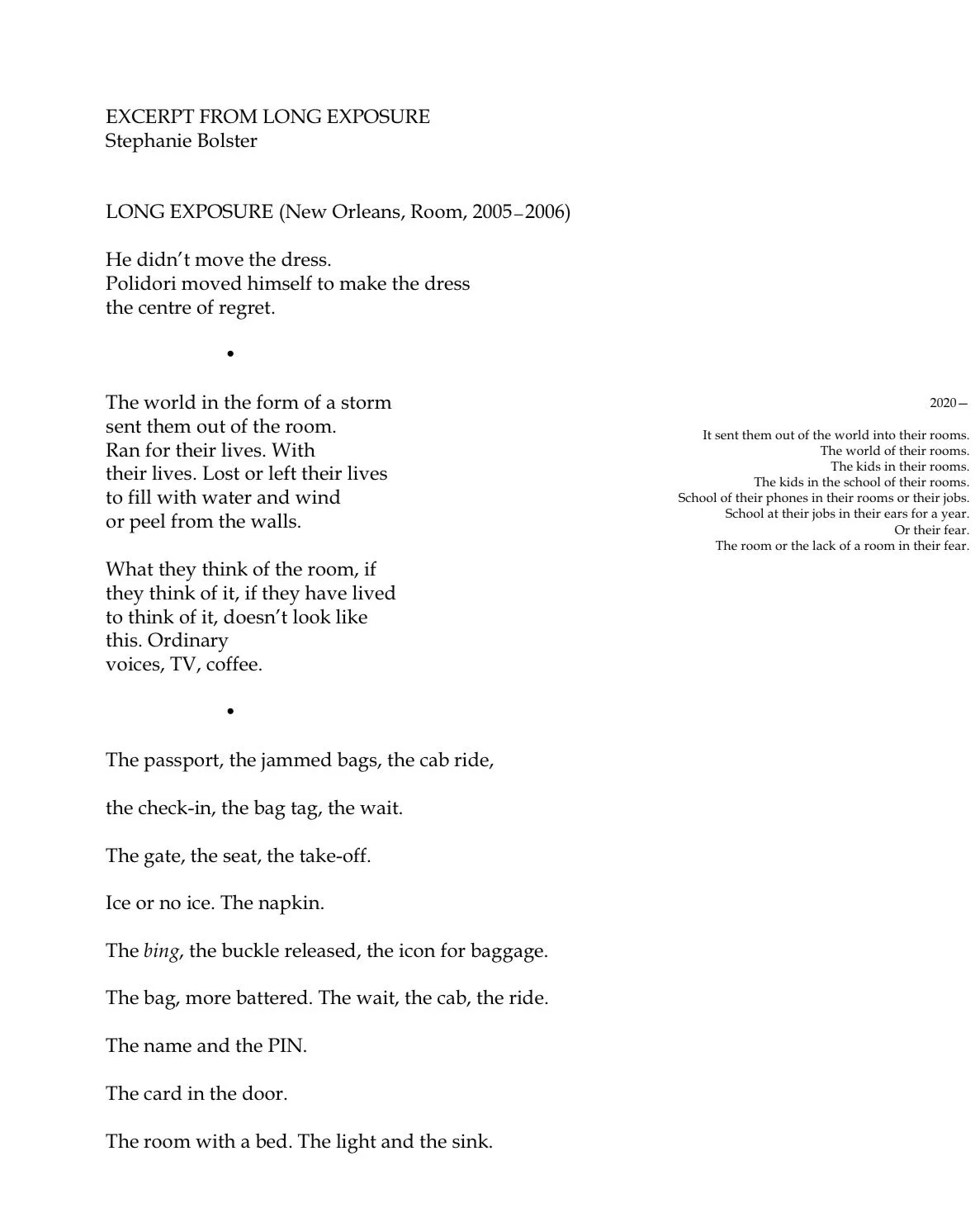
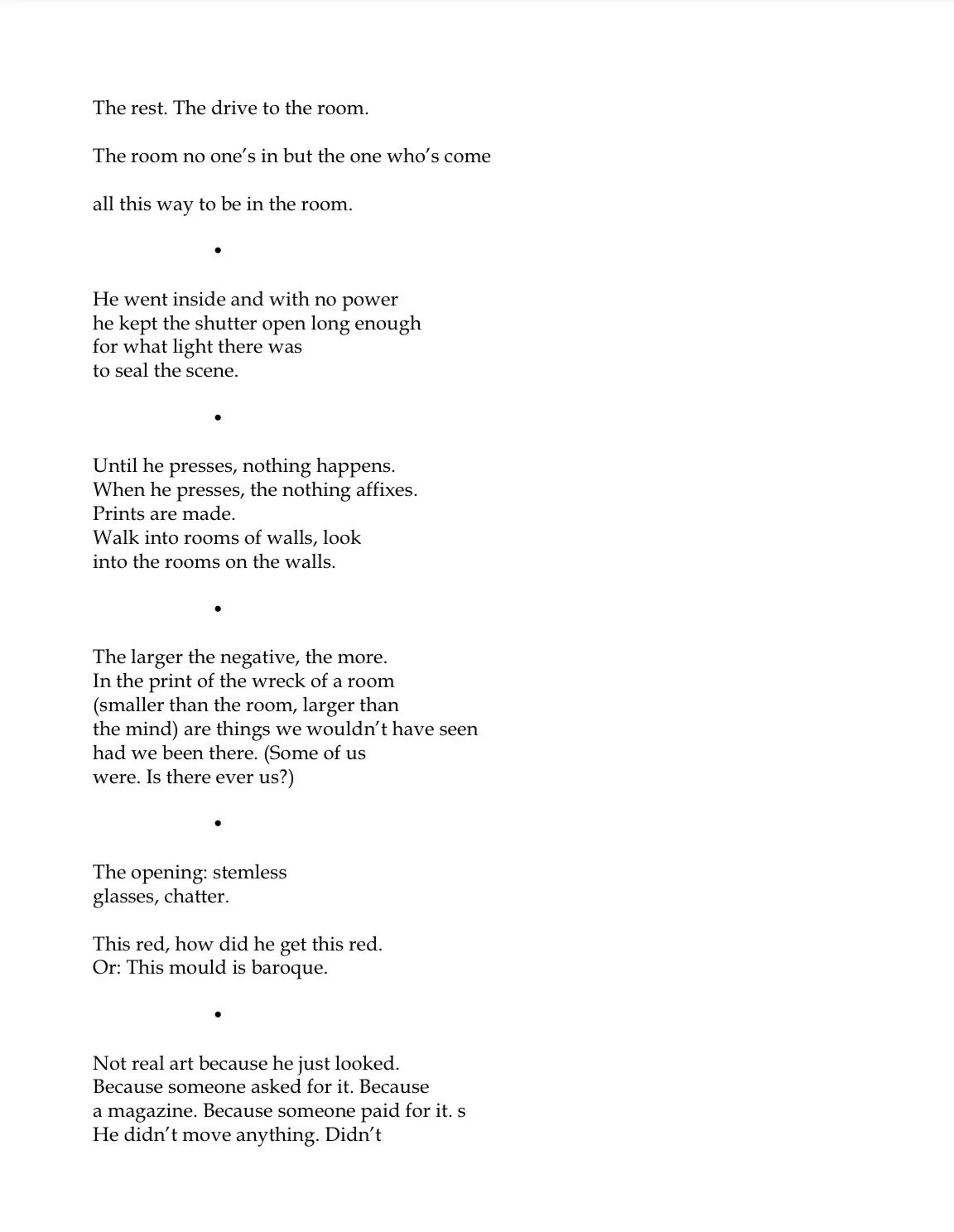
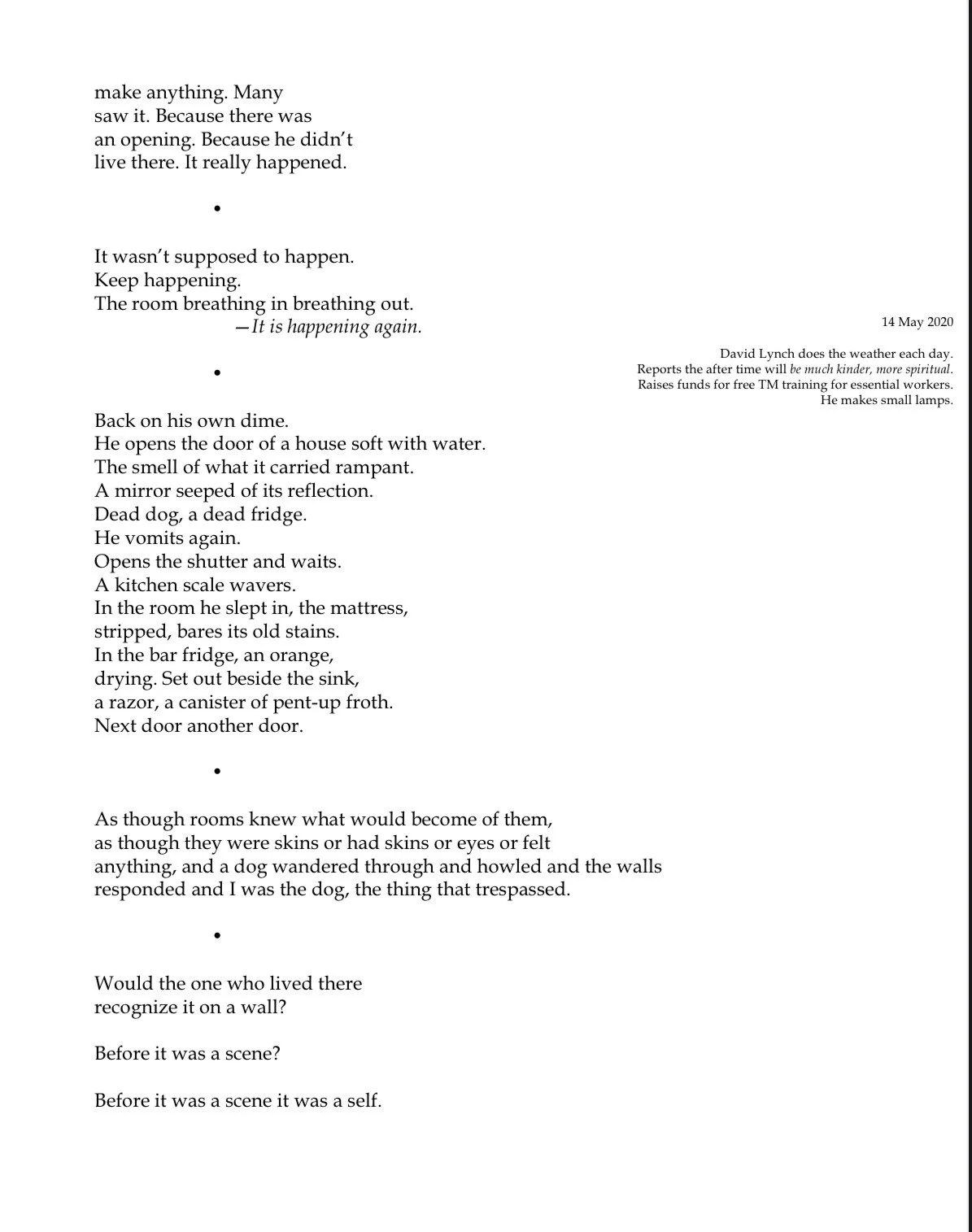
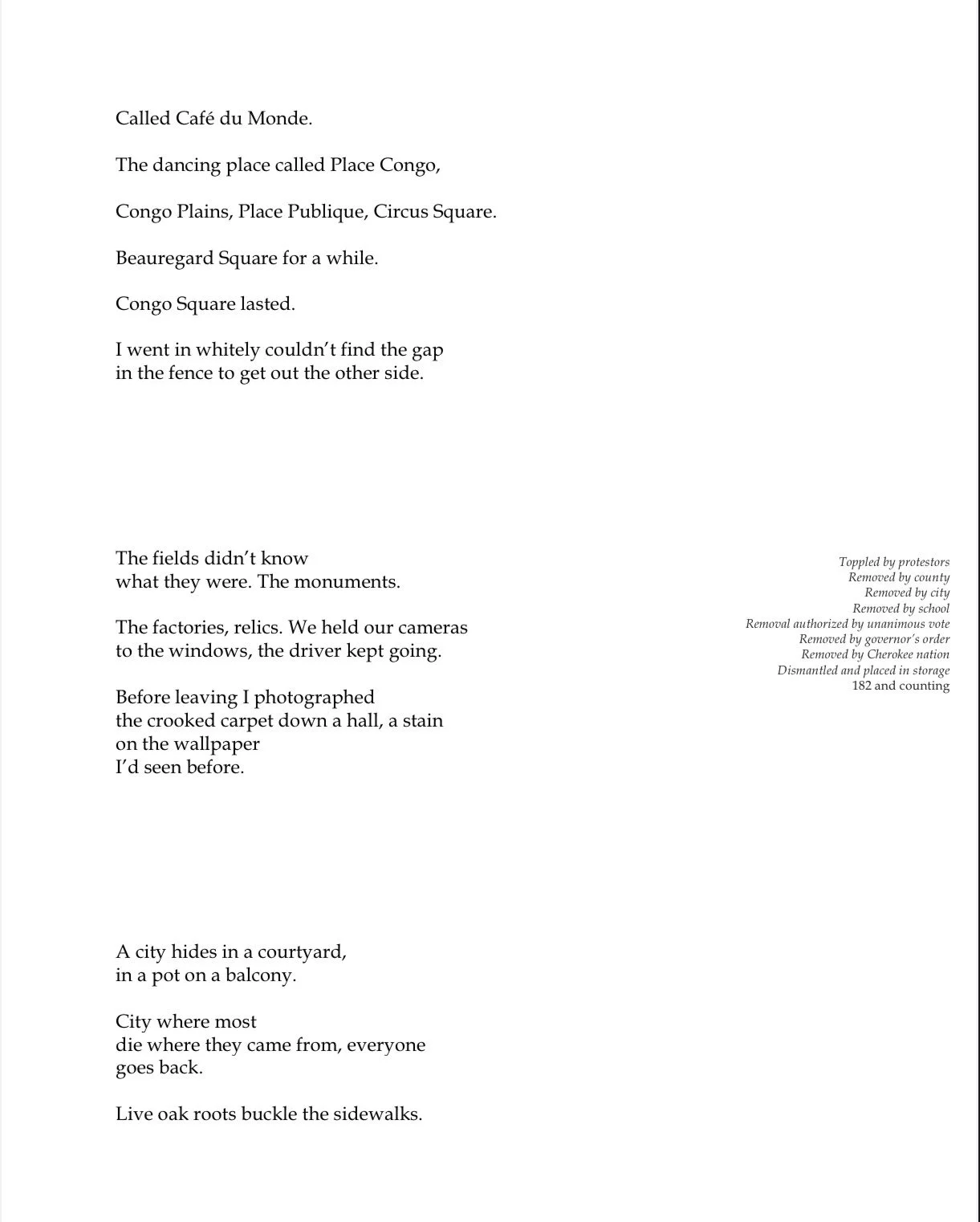
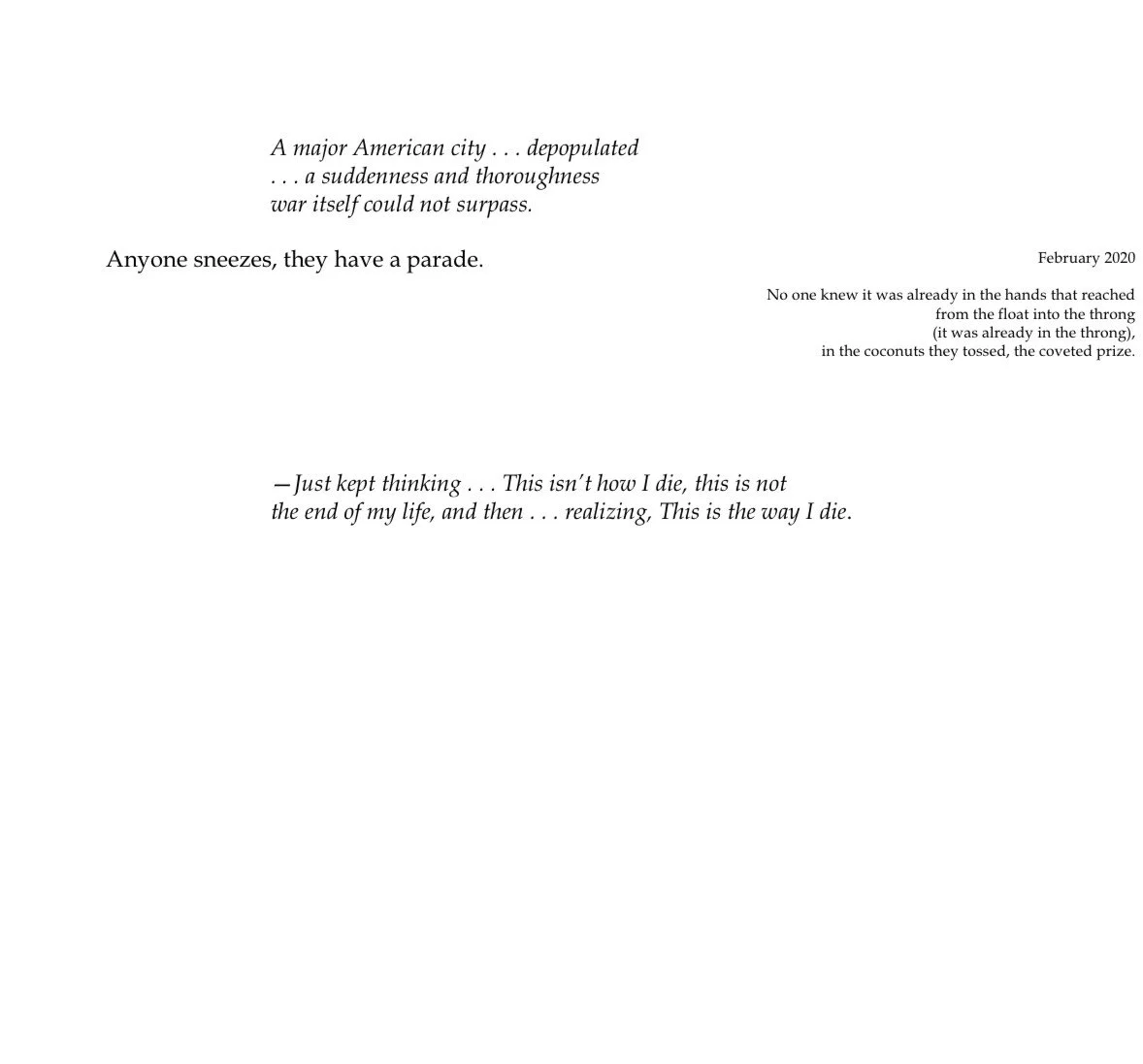
Excerpt from Long Exposure by Stephanie Bolster. Reprinted by permission of Palimpsest Press.
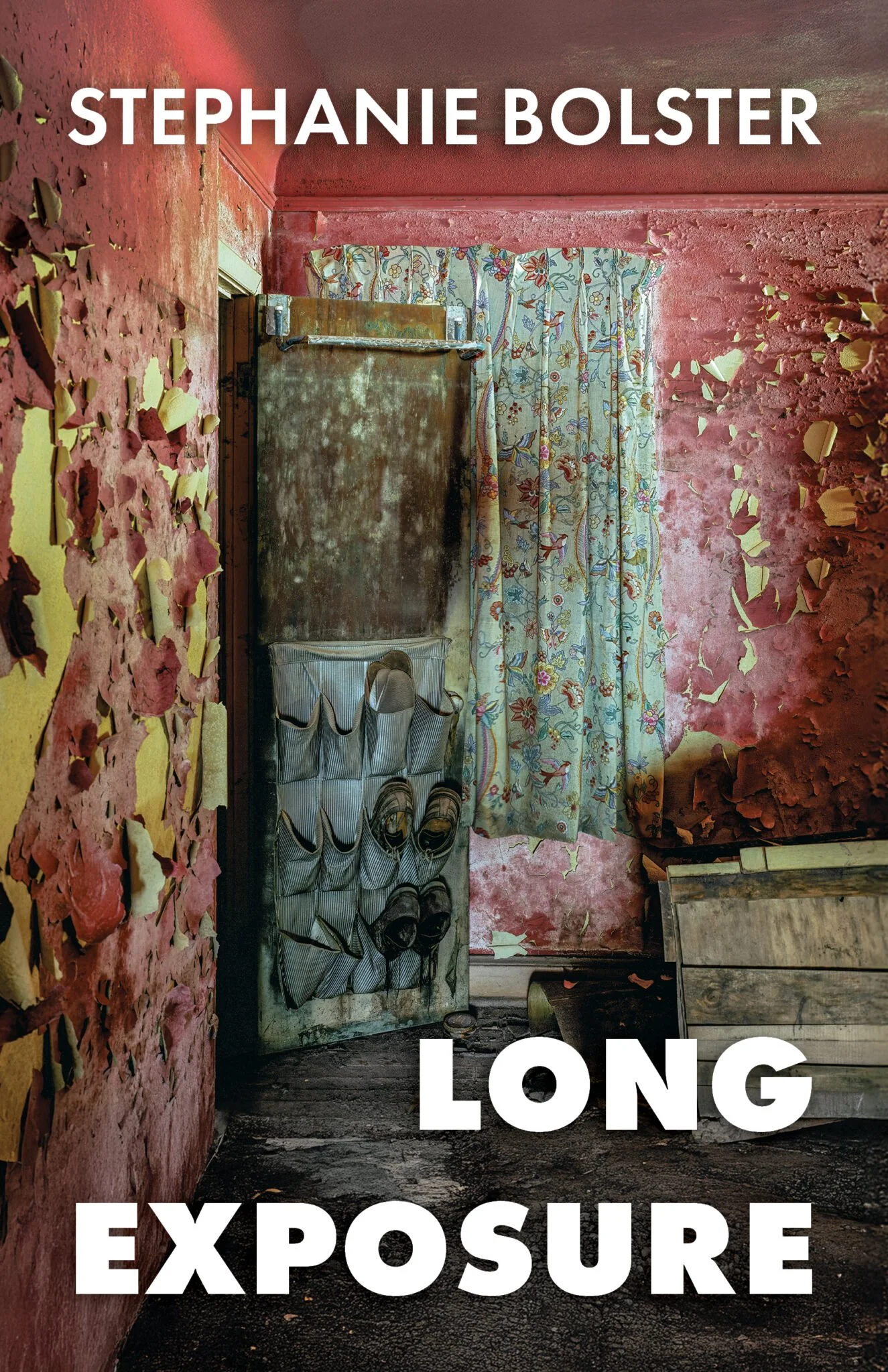
Long Exposure by Stephanie Bolster
After Hurricane Katrina, the photographer Robert Polidori flew to New Orleans to document the devastation. In the wreckage he witnessed, and in her questions about what she saw in what he saw, Stephanie Bolster found the beginnings of a long poem. Those questions led to unexpected places; meanwhile, life kept pouring in. The ensuing book, Long Exposure, is Bolster’s fifth, a roaming, associative exploration of disasters and their ongoing aftermaths, sufferings large and small, and the vulnerability and value of our own lives. Incremental, unsettling, Long Exposure rushes to and through us.

Stephanie Bolster has published four books of poetry, the most recent of which, A Page from the Wonders of Life on Earth, appeared with Brick Books in 2011 and was a finalist for the Pat Lowther Award. Her first book, White Stone: The Alice Poems (Véhicule Press, 1998) won the Governor General’s and the Gerald Lampert Awards, and her second, Two Bowls of Milk (McClelland & Stewart, 1999), won the Archibald Lampman Award and was a finalist for the Trillium Award. Her work has been translated into French (Pierre Blanche: poèmes d’Alice, Les Éditions du Noroît, 2007), Spanish, German, and Serbo-Croatian. She edited The Best Canadian Poetry in English 2008 (Tightrope), the inaugural volume in that ongoing series; and co-edited Penned: Zoo Poems (Signal/Véhicule, 2009). Born in Vancouver, she grew up in Burnaby, BC, now lives in Pointe-Claire, Québec on the Mohawk (Kanien’kehá:ka) territory of Skaniatará:ti, and has taught creative writing at Concordia University in Montréal since 2000.

Power Q & A with Sean Minogue
I know I’m hardly the first writer to use my hometown as a setting for a fictional story. I came upon this totally by accident, though. When I set out to “become” a writer in my early twenties, I was trying to latch onto anything except where I grew up. And that’s not because I had negative feelings about Sault Ste. Marie – I just hadn’t processed anything about my experiences there.
Q: Why did you want to write about your hometown in Prodigals (Latitude 46 Publishing, 2025)?
A: I know I’m hardly the first writer to use my hometown as a setting for a fictional story. I came upon this totally by accident, though. When I set out to “become” a writer in my early twenties, I was trying to latch onto anything except where I grew up. And that’s not because I had negative feelings about Sault Ste. Marie – I just hadn’t processed anything about my experiences there.
My roots in northern Ontario aren’t that deep, but they don’t exist anywhere else. My family moved there shortly before I turned ten years old. The next decade of my life shaped the way I see the world. I wouldn’t be who I am without the “Soo.”
Prodigals didn’t start out as a story about one specific place. It took a few drafts before I realized that I was channeling something bred into me. As the play evolved through workshops and rehearsals, I let the references get more specific. But, while I do mention Algoma Steel and Roberta Bondar, I’d like to think that it’s the type of humour, the characters’ uncertainty about themselves, and their anxious responses to the world “out there” that make this a Sault Ste. Marie story.
As a writer, I think it’s a gift to have complicated feelings about your hometown. There’s a poem that nails this uneasy fondness. “In Defense of Small Towns” by Oliver de la Paz starts with “When I look at it, it’s simple, really. I hated life there.” but then goes on to detail the narrator’s deep affection for his past:
I’m still in love. And when I wake up, I watch my son yawn,
and my mind turns his upswept hair into cornstalks
at the edge of a field. Stillness is an acre, and his body
idles, deep like heavy machinery. I want to take him back there,
to the small town of my youth and hold the book of wildflowers
open for him, and look. I want him to know the colors of horses,
- “In Defense of Small Towns” by Oliver De La Paz (read here)
Now that I have my own family, I’ve taken them to the Soo and shown them how the city has changed from the one I remember. We’ve eaten in the new restaurants and I’ve told them stories about my old bands playing in concert venues that no longer exist. The differences will grow deeper as I get older and live elsewhere. But that only encourages me to write more about the place I knew.
Prodigals by Sean Minogue (Latitude 46, 2025).
About Prodigals:
When a big-city dreamer from a small northern Ontario city returns to his hometown to testify in a murder trial, he faces old uncovered wounds in his circle of friends and discovers that his missed opportunities are more than just regrets.

About Sean Minogue:
Sean Minogue has written for film, television, and theatre. His stories, poetry, and essays have appeared in Lithub, ARC Poetry Magazine, The Algomian, Maudlin House, THIS Magazine, Full Stop, and The Globe and Mail. Turnstone Press just published his debut novel, Terminal Solstice. Sean’s acclaimed play, Prodigals, premiered as a feature film in 2017. Latitude 46 Publishing is releasing it as a book in August 2025. Sean lives in Toronto.

River Street Reviews: Mariam Pirbhai reviews In Crisis, On Crisis: Essays in Troubled Times by James Cairns
Tell me, who would you want by your side at a time of crisis, personal or other?
I imagine it might be someone to help navigate us through this haze of unpredictable futures and tempestuous presents with collective wisdom culled from an informative range of sources: political, historical, philosophical, economic, sociological, classical, contemporary, local, global. Someone perspicacious enough to ably distil this gathered knowledge but introspective enough not to look for easy answers, pat solutions. Someone who can anticipate your various and sundry interrogations and objections—all those what ifs, why-nots and buts—with openness and latitude.
Review of James Cairns’ In Crisis, On Crisis: Essays in Troubled Times (Wolsak & Wynn, 2025)
Tell me, who would you want by your side at a time of crisis, personal or other?
I imagine it might be someone to help navigate us through this haze of unpredictable futures and tempestuous presents with collective wisdom culled from an informative range of sources: political, historical, philosophical, economic, sociological, classical, contemporary, local, global. Someone perspicacious enough to ably distil this gathered knowledge but introspective enough not to look for easy answers, pat solutions. Someone who can anticipate your various and sundry interrogations and objections—all those what ifs, why-nots and buts—with openness and latitude. Someone who has looked into the eye of a personal tornado and lived to tell the tale. Someone who knows, with the clarity of hindsight and foresight, that surviving the next set of crises calls for that rarefied balance of self-compassion and gratitude to those communities—familial, social, spiritual—that provide us shelter in a storm.
If a book can be the companion one wants by one’s side at a time of crisis, personal or other, then let that book be James Cairns’ In Crisis, on Crisis: Essays in Troubled Times (Wolsak & Wynn, 2025). In this at once prescient and self-reflective collection of essays, Cairns thoughtfully examines various types of crises: the crisis of democracy, the crisis of truth in a “post-truth” world, and the environmental crisis. He also considers “crisis,” more broadly, as abstractions or chimeras demanding equal parts critical attention and equal parts personal scrutiny; and he considers crisis as sociopolitical reality tugging at the fabric of our shared humanity at a time when there is nothing hyperbolic about a father fearing a flash flood might swallow his children playing by a riverside, or when national myths of unity and liberal humanism continue to hide the truths of “Indigenous dispossession, the truth of economic equality, the truth of corporate pillaging . . . of violence against marginalized peoples.”
At the centre of these at once intellectually far-ranging and deeply personal ruminations, Cairns approaches the so-called age of “permacrisis” as a father, as a university professor and social justice activist, and by way of his own struggle with addiction, deftly walking us through what is a carefully researched collection in a way that never seems heavy-handed or overwhelming. And we, the reader, are invited to walk alongside him, as we ponder the nature of crisis, itself, and what it calls upon us to remember, acknowledge, respond to and, perhaps, imagine anew.

More about In Crisis, On Crisis: Essays in Troubled Times :
Drawing on social research, pop culture and literature, as well as on his experience as an activist, father and teacher, James Cairns explores the ecological crisis, Trump's return to power amid the so-called crisis of democracy, his own struggle with addiction and other moments of truth facing us today. In a series of insightful essays that move deftly between personal, theoretical and historical approaches he considers not only what makes something a crisis, but also how to navigate the effect of these destabilizing times on ourselves, on our families and on the world.

About James Cairns:
James Cairns lives with his family in Paris, Ontario, on territory that the Haldimand Treaty of 1784 recognizes as belonging to the Six Nations of the Grand River in perpetuity. He is a professor in the Department of Indigenous Studies, Law and Social Justice at Wilfrid Laurier University, where his courses and research focus on political theory and social movements. James is a staff writer at the Hamilton Review of Books, and the community relations director for the Paris-based Riverside Reading Series. James has published three books with the University of Toronto Press, most recently, The Myth of the Age of Entitlement: Millennials, Austerity, and Hope (2017), as well as numerous essays in periodicals such as Canadian Notes & Queries, the Montreal Review of Books, Briarpatch, TOPIA, Rethinking Marxism and the Journal of Canadian Studies. James’ essay “My Struggle and My Struggle,” originally published in CNQ, appeared in Biblioasis’s Best Canadian Essays, 2025 anthology.

Mariam Pirbhai is a creative writer and academic. She is the award-winning author of a short story collection titled Outside People and Other Stories, a novel titled Isolated Incident, and a book of creative nonfiction titled Garden Inventories: Reflections on Land, Place and Belonging. She has also authored several academic works on diasporic, postcolonial and world literature, including Mythologies of Migration, Vocabularies of Indenture: Novels of the South Asian Diaspora in Africa, the Caribbean and Asia-Pacific. Mariam was born in Pakistan and lived in England, the United Arab Emirates and the Philippines before her family immigrated to Canada in the late 1980s. She completed her Ph.D. in English at the University of Montreal, for which she received the Governor General’s Gold Medal. Mariam lives and works in Waterloo, where she enjoys photographing and painting the natural landscapes of southwestern Ontario.

Excerpt from Ajar by Margo LaPierre
Do you like my braids? Pinterest taught me.
Curls come tumbling.
I have a room just for this. Night terrors and vanity.
Pigeons, rroux rroux.
Rroux, rroux. It sounds like American poets.
Sounds like opaque familiarity.
Manic Wire
Do you like my braids? Pinterest taught me.
Curls come tumbling.
I have a room just for this. Night terrors and vanity.
Pigeons, rroux rroux.
Rroux, rroux. It sounds like American poets.
Sounds like opaque familiarity.
Words can be barriers to define self, concisely.
Call me modal (a helping verb): domestic, gullible.
Or fierce. Woo me. Count me among the wombed
wombing. Periodically cocooning.
Time flattens.
Medication insulates the raw copper wire.
Do something about heavy doorways.
Push or something.
Curtains could be plusher, tender.
Fear the slender monster where the waves
part ways.
Light.
Keep out light
-hearted nurses with their blue
triage forms.
Scratchy upholstering.
Too many beeps to calm down.
What is it to have this body?
High, a ceiling light,
or a spent weapon, holstered.
Exoskeleton
A grasshopper thuds in flight: my scapula.
My shoulder aches thanks to pavement’s pull.
My tibia: a mongoose hiding in all this flesh,
hoarding eggs. My throat: a highway, surging.
So why can’t I speak? The warm bath
of time floats around me, cooling.
I am always leaving: the being beyond the word.
My kneecaps are heartbeats, hibernating bears.
Phalanges: fish spines laid out along a sandy lake.
Blood clots run through me monthly
like so many blackberries. Firefly children
test the word mother before I wake.
Smother fire before it burns the curtains. An abyss
beyond that word’s promise: mother. Parent?
What about platelet? Or blood not mixed, or bones
not formed? What shaky instrument do I have
with which to prolong life: hips? That’s it?
Hysterosonogram
I have seen three perinatal psychiatrists
this month; each one’s advice
goes against the others’
and everything I’ve been warned about
for a decade.
Their questions of my history make me
red with light inside. It aches.
I wear a sheet while the doctor
inserts a catheter, balloon.
On the monitor my uterus: a planet
where hurt is the mother tongue.
Light skidding over valleys and ridges: a site
resistant to damage.
Light blipping over ova and striated flesh:
pomegranate gems.
Afterward, a neighbourhood walk.
The five p.m. sun will slick
eavestroughs golden, starburst windows.
I will bring my face into the flares
above the hard snow,
my body booming
with old griefs.
I was told there would be pain.
It’s not the pain I remember.
The pain I remember hooks like light
through an open stitch.
Ahead, in the sky, a percussion of pigeons.
Ahead, in the street, a leashed dog.
Excerpt from Ajar © 2025 by Margo LaPierre. Reprinted by permission of Guernica Editions.

Ajar by Margo LaPierre, published by Guernica Editions (October 31, 2025)
More about Ajar:
The poems in Ajar navigate the physical and psychological dangers of womanhood through the flattening lens of mood disorder. Psychosis isn’t the opposite of reality—it’s another perceptual system. If neurotypical thought measures the world in centimetres, this collection measures it in inches, gallons, amperes. Ajar celebrates radical recovery from gendered violence and psychotic paradigm shifts, approaching madness through prismatic inquiry. As time converges within us, we find new ways to heal and grow. From the emergency room to the pharmacy to the fertility clinic to the dis/comfort of home and memory, this collection humanizes bipolar psychosis.

Margo LaPierre (Photo credit: Curtis Perry)
More about Margo LaPierre:
Margo LaPierre is a writer and freelance literary editor. With multi-genre work published in The Ex-Puritan, CV2, Room, PRISM, and Arc, among others, she has won national awards for her poetry, fiction, and editing. She holds an MFA in Creative Writing from UBC. Ajar is her second poetry collection.

Power Q & A with Lorne Daniel
Some of the poems about family estrangement in this book started simply with me wanting to record what was going on – to create a record. But then, I have an urge to do more with it, to explore the nuances of the experiences and to create relationships.
Q: Your poetry collections, What is Broken Binds Us (University of Calgary Press), explores some significant disruptions: addiction and mental health challenges, family estrangement and an unexpected ancestral connection to slavery. How does poetry arise from these difficult realities?
A: As a writer, I’m interested in making meaning, but also in making life meaningful. Life events deliver experiences, and we are guaranteed big helpings of grief and upset and joy. I explore these, initially, so that I can see life more clearly myself. Some of the poems about family estrangement in this book started simply with me wanting to record what was going on – to create a record. But then, I have an urge to do more with it, to explore the nuances of the experiences and to create relationships. What are the connections between this event and that sense of concern or well-being? What does this remind me of? What images are dancing around in my subconscious as I jot down the ‘facts’ of an incident? Why? I don’t set out to answer every question, because life never answers every question. But the poetry becomes one way of processing life. When things begin to fall into place in a poem, to create some clarity for me, the creative work also starts to become something that other people can relate to. There are inevitably points of resonance in the human experience, when is its artfully reflected in a poem or painting or sculpture. The difficult life experiences can become something of deeper value.
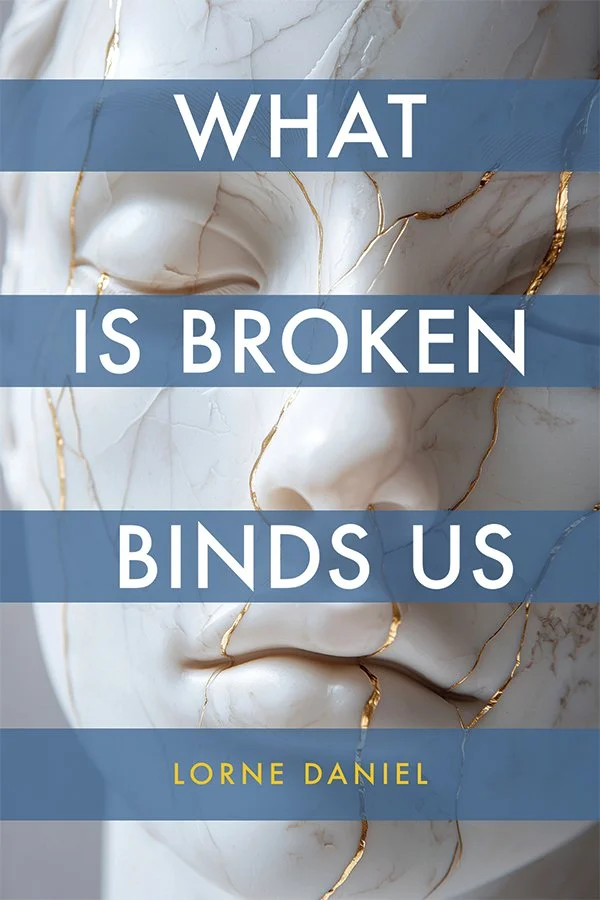
What is Broken Binds Us by Lorne Daniel (University of Calgary Press)
What is Broken Binds Us is a collection of poems of the disruptions and emotional tremors that shape us: enslaved families broken and dispersed, histories hidden, addiction and estrangement, and the shocks of bodily trauma.
What is Broken Binds Us shares stories of loss, absence, acceptance, and hope. Returning to the page after a long absence, poet Lorne Daniel provides a unique perspective on crisis that balances raw emotion with vulnerability, thoughtfulness, and care.
In seven sections, Daniel braids the stories of empire, personal traumas, addiction and family estrangement, shifting emergencies, and the wisdom of elders and the natural world. Lessons in Emergency Preparedness traces accident, injury and recovery, facing the trauma of a sudden loss of physical competence through the metaphorical and literal breaks of a shattered body and the slow movement towards mending. When the Tributaries Ran Rich unravels empire and a five-century narrative of hard-working immigrants with the discovery of enslavement in family records, forcing a deep reconsideration of the truth of the past. Episodic Tremor & Slip speaks of the tectonic shifts in family life that occur when facing substance abuse, addiction, and mental health struggles, of the pain of estrangement and the love that continues. In the Family Name is a reflection on time, on people, and on the natural world that revisits and turns over all that came before, exploring it from new angles.
Lorne Daniel writes with calm, conversational assurance. These poems are accessible and evocative, speaking from their specificity to the many people who have faced injury, estrangement, struggle, and pain, and must carry it—and carry on.

Lorne Daniel
About Lorne Daniel:
Lorne Daniel is a Canadian poet and non-fiction writer. He has been deeply engaged in the literary community, including the emergence of a Canadian prairie poetry scene in the 1970s. He has publsihed four books of poetry, edited anthologies and literary journals, and written freelance journalism. His work has been published in dozens of anthologies, journals, newspapers and magazines in Canada, the U.S. and the U.K. Lorne lives on the traditional territories of the Lək̓ʷəŋən people in Victoria, BC.

Excerpt from A Quilting of Scars by Lucy E.M. Black
Larkin was fifty-one now, almost the same age as his father was when he’d died a quarter century before. And in the last while Larkin had been thinking about his own mortality. About how the past could feel more present the further away you got from it.
Larkin turned and stood motionless, looking at the dark that hid the open fields and beyond them the dense bush surrounding the farm. He was remembering.
Larkin was fifty-one now, almost the same age as his father was when he’d died a quarter century before. And in the last while Larkin had been thinking about his own mortality. About how the past could feel more present the further away you got from it.
Larkin turned and stood motionless, looking at the dark that hid the open fields and beyond them the dense bush surrounding the farm. He was remembering. Entering the house from the back door—the only door that ever got used—Larkin walked straight into the kitchen. The room astonished anyone who saw it for the first time, painted as it was entirely in a shocking, rosy pink. It had been his Ma’s choice, and she’d loved it. His Pa had done it up for her one winter before Larkin was born. The shelves, the cupboards, and even the chairs were painted to match.
“It’s a wonder,” his Pa once said, “that she dint want the floorboards done as well.”
Larkin had laughed. “Shush now, Pa, you’ll be givin’ her ideas.”
He kicked off his boots impatiently and headed upstairs to his bedroom. There he moved across the floor in his stocking feet and knelt down stiffly beside his bedstead. Reaching beneath the overhang of the quilt, he withdrew a flattened flour sack from under the bed. Then, leaning heavily upon the mattress, he pushed himself upright and made his way downstairs again to the kitchen, where he lay the sack and its contents upon the table.
Seated now in a chair thick with paint, he pulled the sack closer. He glanced around quickly. Then, slowly and tenderly, Larkin inserted his hand into the sack and drew out a large scrapbook, its deep blue cover marked at each corner with a delicate pattern of winding vines. Hesitating for only a moment, he opened the cover and pressed it down before him. Larkin nodded, as if to acknowledge a familiar friend. Finally, he began to read the yellowed bits of newspaper that had been carefully glued to brittle, unbending pages.
The clippings came from The Murton County Chronicle. Beside each was the date, written in his mother’s flowing hand, the ink faded now. The first was dated August 8, 1871, almost forty years back.
FIRE BLAZES IN MURTON!
Volunteer firefighters were out in full force Sunday night two miles west of the village after neighbours spotted a blaze. The coroner’s office has stated that two bodies were found in the burned-out farmhouse while another man is under doctor’s care with serious burns to his hands and feet. The fire department continues to investigate.
Then, on August 15th:
SKINNERS LAID TO REST
Funerals were held in Murton for Silas and Elgin Skinner. Both men, father and son, died on Cemetery Hill the night of August 7th. The Skinner farmhouse and barn burned to the ground on the same evening. On the night of the fire, flames from the barn were seen to soar sixty feet in the air. The funerals were well attended by community members who recalled the Skinners as “nice, old-fashioned folk.” They were laid to rest in the Murton Memorial Cemetery. A luncheon was held following the service at the United Methodist Church Hall.
And February 13th, six months later:
MURDER IN CEMETERY HILL!!
Investigators now confirm that they are building a case for murder concerning the suspicious deaths of two men in a farmhouse fire near Murton. The community was shocked to learn that Silas and Elgin Skinner suffered stab wounds prior to the tragic blaze in which the family home and barn were consumed six months ago. A thirteen-year-old boy was badly injured in the fire. He has not been charged with any wrongdoing but remains under the watchful eye of the police.
Larkin sat back from the table and groaned softly. Paul Skinner—the thirteen-year-old who’d remained carefully unnamed in the story, the younger son of Silas—had been his childhood friend. He hadn’t seen or heard from him for twenty years. In their youth, however, they had a closeness he’d not known with anyone else.
Closing the scrapbook, Larkin slid it back into the flour sack and stood stiffly. After pushing aside the chair, he stepped across the kitchen to stow the sack in the sideboard. The face of the north wind puffed at him from the wooden chair’s pressed back. He grimaced at the carving as he hobbled from the room.
It was a bright-lit night with the moon almost full, casting a white glow inside the house. Larkin looked around at his surroundings and smiled. Sure, it was too large for an old bachelor living alone, but it was where he’d been born, and felt as much a part of him as did his legs or arms or feet.
He’d been told that his Pa had ordered the fine red brick from a brickyard near the town line, and that the men had dragged skids of it across the county as soon as the ground froze hard. The windows and quoins were of a soft butter-yellow brick, edging the structure with elegance. Apparently, his Ma had always wanted a “bay winder,” and so Pa had managed two of them, one on top of the other.
The house was built tall, three storeys high, with steeply pitched gables. His father had been a tall man and didn’t want to be stooping over in the rooms. The ceilings on the main floor were fifteen feet high, ten feet on the second, eight feet on the third. There were two parlours, one at the front of the house and one at the back, providing an escape from the blistering sun depending upon the time of day. Upstairs were five bedrooms as well as a little room for washing up and personal conveniences. The third floor had never been finished; it remained an open, expansive attic with unspoiled views stretching across the countryside.
Larkin especially loved the third floor. As a boy he would climb upstairs during a storm to hear the rain pounding overhead. He took a secret delight in being seated close to the raging tempest while the house protected him from the elements. The attic was where he often played his solitary games, wondering what it would be like to have a brother or a sister to share in his childhood.
Another baby in the house was not meant to be. His Ma’s stomach was swollen from time to time with a promise of sorts but nothing ever came of it. When he was young he had wondered aloud, “Why doan Pa reach in and pull it out by the leg like he do with a calf?” When his folks heard this he was given only a vague answer about “God’s timing” that made no sense to him.
Excerpt from A Quilting of Scars by Lucy E.M. Black © 2025 by Lucy E.M. Black. Reprinted by permission of Now or Never Publishing.

A Quilting of Scars by Lucy E.M. Black (Now or Never Publishing)
About A Quilting of Scars:
Filled with the pleasure of recognizable yet distinctively original characters and a deftly drawn sense of time and place, A Quilting of Scars brings to life a story of forbidden love, abuse and murder. Pulsing with repressed sexuality and guilt, Larkin Beattie reveals the many secrets he has kept hidden throughout his lonely life. The character-driven narrative is a meditation on aging and remorse, offering a rich account of the strictures and rhythms of farming in the not-so-distant past, highlighting the confines of a community where strict moral codes are imposed upon its members and fear of exposure terrifies queer youth. As Larkin reflects upon key events, his recollections include his anger at the hypocrisy of the church, and the deep grief and loneliness that have marked his path. There is a timelessness to this story which transcends the period and resonates with heart-breaking relevance.

Lucy E.M. Black
About Lucy E.M. Black:
Lucy E.M. Black (she/her/hers) is the author of The Marzipan Fruit Basket, Eleanor Courtown, Stella’s Carpet, The Brickworks, Class Lessons: Stories of Vulnerable Youth and A Quilting of Scars. Her award-winning short stories have been published in Britain, Ireland, USA and Canada in literary journals and magazines including Cyphers Magazine, the Hawai’i Review, The Antigonish Review, the Queen’s Quarterly and others. She co-ordinates Heart of the Story, an author reading series in Port Perry, writes book reviews for The Miramichi Reader, serves as literary chair for Scugog Arts, is a dynamic workshop presenter, experienced interviewer and freelance writer. She lives with her partner in the small lakeside town of Port Perry, Ontario, the traditional territory of the Mississaugas of Scugog Island, First Nations.