

BLOG

9 Spooky Must-Read Books By Canadian Authors
River Street pals, it’s officially spooky season. What better way to celebrate than with shivers up your spine, goosebumps upon your flesh, and a feeling like something—or someone—is creeping behind you…
By Olivia (iammadeofbooks_)
River Street pals, it’s officially spooky season. What better way to celebrate than with shivers up your spine, goosebumps upon your flesh, and a feeling like something—or someone—is creeping behind you… and by that I mean, diving into some spooky Canadian must-read books! These nine titles are from Canadian authors who delve into the supernatural, the mysterious, or the whimsical, all with unnerving and eerie (and sometimes fun) undertones. Without further ado, let’s sink our teeth into these five spooky books by Canadian authors!
The Haunting of Modesto O'Brien by Brit Griffin
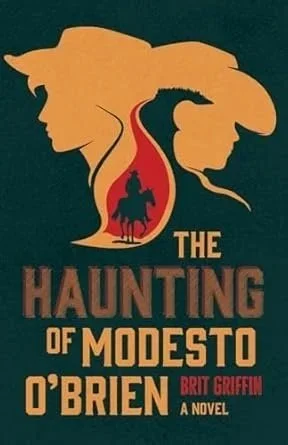
Deep into the boreal forest, circa 1907, Modesto O’Brien is out for revenge. Arm in arm with the mysterious Nail sisters, something sinister awaits this trio. For when one sister goes missing, O’Brien is thrown head-first into a world of ancient myths, magic, and violence. With nightmarish creatures lurking around the corner and darkness emanating off of the landscape, the most sinister part may just be O’Brien’s own past. A gothic tale of loyalty, sacrifice, and revenge, this historical thriller will be sure to leave you unsettled and thoroughly entertained.
Villain Hitting for Vicious Little Nobodies by Lindsay Wong (out January 13, 2026)
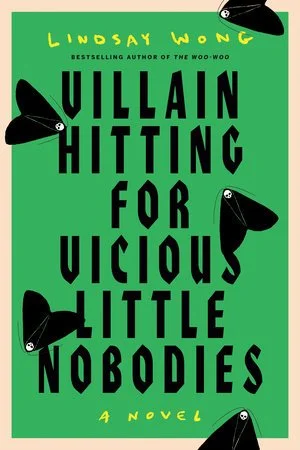
A cast of witch-grandmothers and undead corpse-kid-sisters set the scene for an at once funny and horrific– beautiful and gruesome– tale of trying– and failing– to outrun your ghosts. Locinda Lo signs her life away to become a corpse bride to a highest bidder in order to solve her financial woes, and before she knows it, she’s preparing to be an afterlife bride-to-be. Only, her grandmother’s past, both a feared and revered Villain Hitter and a witchy curse-monger with a long legacy that precedes her, intertwines with Locinda’s own. Speaking on the societal pressures placed on Chinese women, you’re going to want to preorder (or request from your library) this daring upcoming Canadian horror novel.
The Wonder Lands War by Peter Darbyshire

We first met Cross, immortal angel hunter, in The Mona Lisa Sacrifice, where a mortal soul was trapped in deceased Christ’s body. Now, Cross is back for a new quest; a hunt to find Alice who was taken through a whirlpool by a mad Noah and his apocalyptic ark. Cross journeys across the world to rescue Alice, encountering murderous immortals, famous libraries, and magical texts, all while aided by the faerie queen. Finally reaching the Wonder Lands, will Cross find Alice before the angels do? At once entertaining and magical, with a dash of mythology and folklore, Darbyshire’s fourth addition to the Cross series will leave you hooked.
Green Fuse Burning by Tiffany Morris
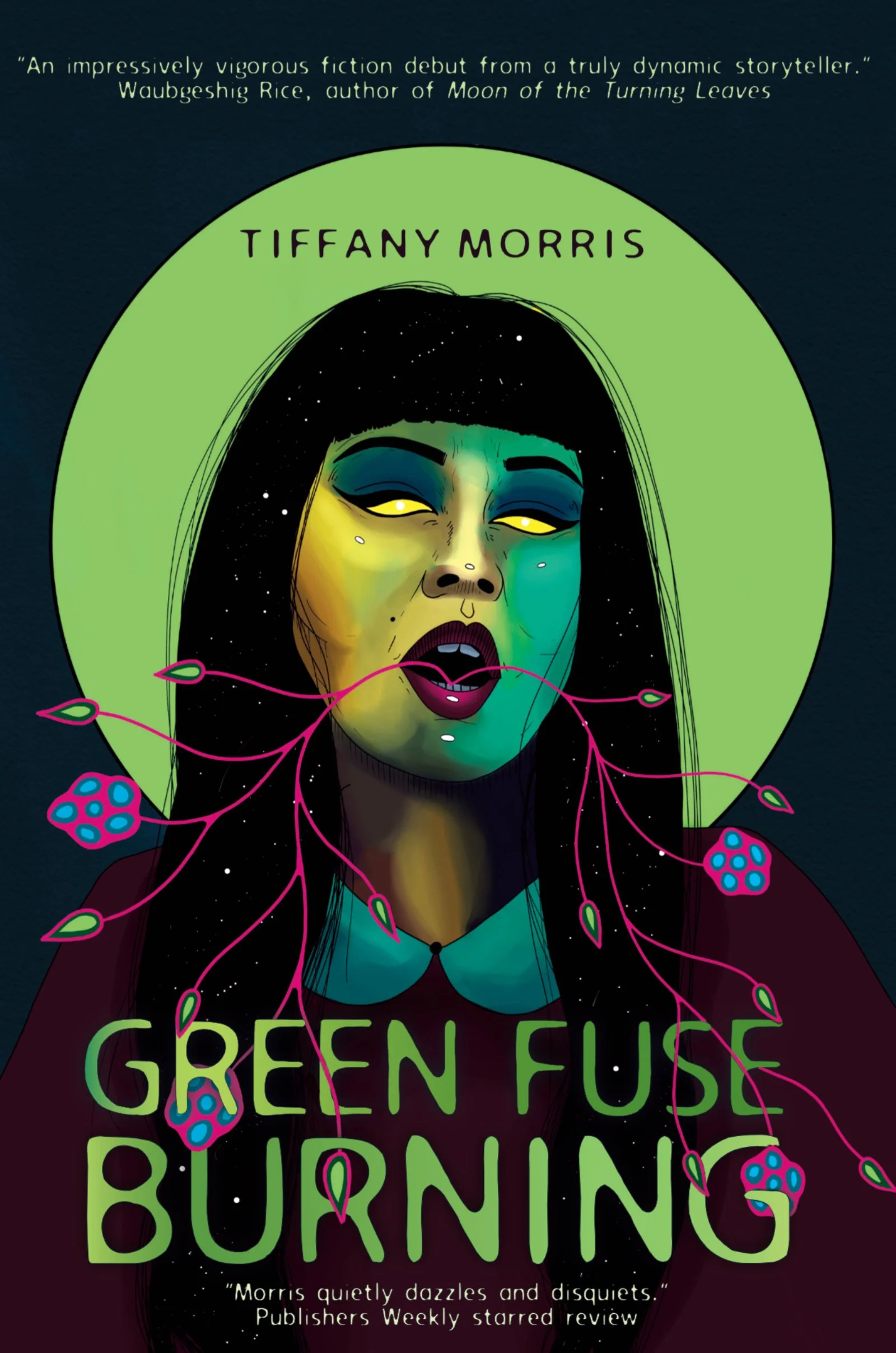
After her father dies, Mi’kmaq artist Rita grieves the loss of the connection to her culture, history and family. Rita’s girlfriend, in response to her grief, wins Rita an isolated week away to paint– exactly where her recently deceased father grew up. But when she arrives at the cabin, things are not as they seem; suspicious neighbours, mysterious sounds outside the cabin, and dark visions swarm Rita, becoming more and more all-consuming. Haunting, creepy, and oh-so mesmerizing, this eco-horror book from a Mi’kmaw writer promises strangeness and spookiness to the max.
Queer Little Nightmares edited by David Ly & Daniel Zomparelli
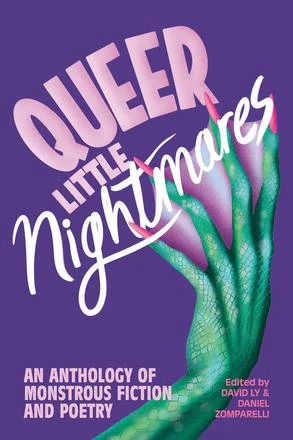
This anthology flips the monsters you know and love on their head, giving them a queer twist that celebrates the identities that have always been a metaphor for the marginalized in monstrous literature. What if your favourite cosplayer was actually a real-life minotaur? What if that howling you hear at night is really a pubescent werewolf? What if that monster you have feared is now shown to you in a different, more queer light? In a world where queers and monsters have been portrayed as one and the same, the queer writers of the anthology ask their readers to consider what it means to be– and love– a monster? Spooky, philosophical, and oh-so human (sometimes in a very not-human way), this collection is a must-read for any time of the year.
The Midnight Project by Christy Climenhage

On the eve of an ecological collapse, billionaire Burton Sykes visits Re-Gene-eration to look into genetically engineering a way for all of humanity to survive. Raina and Cedric, both genetic engineers, know their work is partially at fault for the upcoming catastrophe, and agree to help Sykes—whether they want to or not. But trust is a fickle thing, and this highly entertaining near-future sci-fi thriller novel explores just how far one will go to stop clinging to the past—maybe even to save humanity in the process. This at once hopeful and horrific story is sure to leave you questioning what it means to be human in an unsettling world frighteningly close to our own.
The Dark King Swallows the World by Robert G. Penner
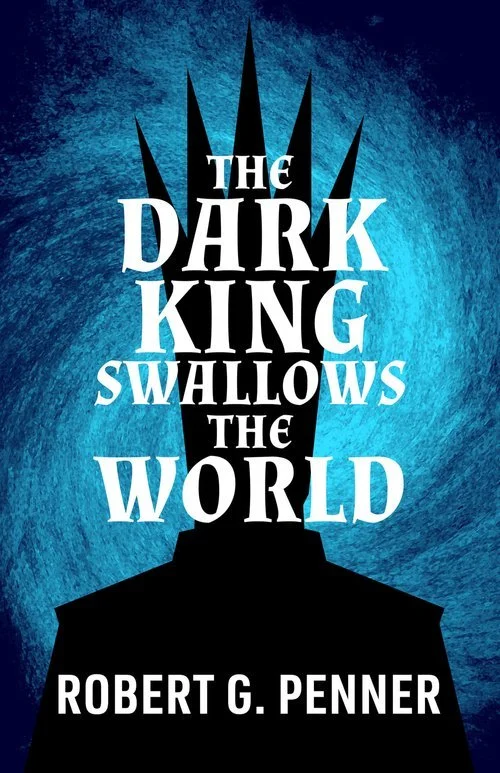
In WWII era Cornwall, a tragic car crash claims Nora’s brother’s life. Only Nora believes his death was not an accident: she believes her mother’s new acquaintance, self-professed necromancer Olaf Winter, is responsible. What follows is Nora’s journey– full of faeries, giants, and homunculi– to get back her brother, and ultimately her mother’s heart. Nora eventually confronts the Dark King in the land of the dead in this spellbinding, thought-provoking mystical-realism novel by a Canadian author.
River, Diverted by Jamie Tennant

Step into this dark fairytale that is at once a tale of creativity, hope, grief, and an exploration of the fickleness of memory. When super successful slasher writer River Black receives a strange book in the mail, she travels to Japan to seek answers and recount past memories. Only her memory may not be as reliable as she once thought, and the mysterious book is only posing more questions. For lovers of monster movies, pop culture references, and self discovery stories, this captivating read is as mystical as it comes.
The Creation of Half-Broken People by Siphiwe Gloria Ndlovu

Gloriously gothic and beautifully bold, Yale University’s Windham–Campbell Prize winner Siphiwe Gloria Ndlovu weaves a tale of a woman with no name who has mysterious visions. Working at a museum filled with the owner’s artifacts from exploits in Africa, she is at first happy with her position, until crossing paths with protestors outside of the museum, the leader of whom is, to our nameless heroine, not real. The story takes readers through a haunted castle as the nameless woman confronts the secrets of her past. Exploring complex colonial history through the present people “half-broken” by the stigmas of race and mental illness, this ode to the classic gothic genre is a haunting tale of magic and love.
Your spooky TBR wishes are our command with these nine monstrous, mysterious, mythical and magical reads that are sure to rock your senses, entertain your mind, and transport you to new and exciting lands full of intrigue and mystery. You’re welcome, fellow readers– get ready for some spooks!!
How I researched the hidden realities of elder abuse by Ann Cavlovic
Research for my novel began in the hallways of my parents’ nursing home, where I watched too many intense family dramas explode right in front of me. How did family relationships turn so ugly? Did those siblings get along when they were younger? How common is elder abuse?
Count on Me (Guernica Editions, 2025) exposes how a family can fracture when aging parents grow frail and debts from the past resurface. Filled with hope and humour amid the realities of elder abuse, this is a story about how we come to feel entitled to someone else’s money, what it takes to break cycles across generations, and how human relationships can rise above the transactional.
How I researched the hidden realities of elder abuse
By Ann Cavlovic
Research for my novel began in the hallways of my parents’ nursing home, where I watched too many intense family dramas explode right in front of me. How did family relationships turn so ugly? Did those siblings get along when they were younger? How common is elder abuse?
From there, my own experiences navigating the system of long-term care – which nothing in our culture prepares you for, by the way – blended with research to shape the story.
I first started in the typical places: journal articles, newspapers, elder care networks, StatsCan, and basic online searches. But desk research only gets you so far, and the internet is a rabbit hole. I prefer talking to humans. So, when I came across something interesting, I’d try to reach out to an expert. For example, early on I read an article in the Walrus about how hospital-induced delirium can be mistaken for dementia, leading to all kinds of trouble. But the expert quoted in the article subsequently wrote a letter to the editor criticizing how the journalist had handled the issue. I reached out to the expert with assurances that I wasn’t aiming to throw physicians under the bus, and despite his busy schedule, he agreed to be interviewed. Not only did this help me understand the nuances and ensure that an important turning point in the novel was medically plausible, it also gave me fresh ideas to add to the story.
Informed conversations beat algorithms, of this I’m sure.
I went on to interview nurses, lawyers, family physicians, bankers, funeral home directors, and social workers. I also had informal chats with people willing to fact-check things like the setting, cultural references, workplace details, single-parenting, and more. Several people I interviewed went on to generously respond to non-infrequent barrages of weird questions via text (Dr. Anne Nancekievill was a superhero.) You’ll see many of their names in the acknowledgements, although some preferred to remain anonymous.
It's important to emphasize that with every person I contacted, I presented myself as a writer with previous publications but no guarantee that my novel would ever go anywhere. Even still, my success rate at landing interviews or discussions was at least 85%. I remain (pleasantly) floored by how many people are willing to offer their time to help a writer, even a relatively untested one, if you just ask nicely.
I also talked to everyone I could who had an ageing family member in their care, along with many seniors living in care homes. What struck me was how many people wrestle with some aspect of elder care yet feel like their situation is unusual. I think I know why. Our culture absolutely sucks at talking about this phase of life. When I researched other novels dealing with elder abuse – let alone just the realities of aging – I was shocked at how few exist. And none of them dealt with abuse perpetrated by a family member. Instead, the “villain” was the butler (yes, literally, the butler did it), or the housekeeper, nurse, or “gold digger” girlfriend – all cliches. Movies were even worse; the Netflix film I Care a Lot featured a court-appointed guardian as the villain, mixing in mafia bribery, a few kidnappings, burning houses – all to make it, you know, relatable.
My research also helped me better interpret stories in the media about elder abuse, which often depict rather sensational stories of a nurse-turned-evil (Elizabeth Wettlaufer is a prime example). But “bad apples” are rare, and this unfairly casts a shadow on the legions of nurses – often racialized Canadians – who are doing incredibly demanding and important work with a level of care I know I couldn’t handle. The nurses at my parents’ nursing home were heroes (while their top bosses were a different story, mind you). There’s no way I’d perpetuate stereotypes about them in my writing.
The good news is that all this research has convinced me there are some very basic things that elders and families can do to prevent things going sour. We often want to avoid this stuff though. And I get it, it’s not fun. One senior said if her children fought after she died she’d haunt them from the grave. May I instead recommend more practical strategies: consulting with your lawyer, getting paperwork in order and clearly communicated, taking the time to understand care options before it’s an emergency, and/or having a difficult but necessary conversation with adult children before it’s too late. My website includes some links to resources.
If you’re not geeked-out yet, buckle up, there’s more!
Another massive area of research was around the Canada Revenue Agency audits of environmental charities that took place circa 2015, which factors into the novel’s sub-plot. I sifted through roughly 4,000 pages of pre-existing Access to Information requests (known as ATIPs), delivered on two CDs; I had to find an old computer to read them. My Friday evening routine for several weeks became: a) get a glass of wine, b) listen to Begonia on repeat, and c) sift through the documents. This was a needle-in-a-haystack exercise, but I found some really great needles. This may have only boiled down to a dozen paragraphs in Count on Me, but important ones. It also helped me form some minor characters – that woman in the meeting minutes who was shot down when you actually had a great point… I see you! Someone else I spontaneously interviewed outside a CRA office (when trying to understand what the furniture looked like) spawned another minor character.
I also was able to interview several of Canada’s top environmental leaders about those audits – which seemed to only target groups opposed to new oil and gas pipelines. This was one of the highest privileges of my research process.
I highly encourage writers to reach out for interviews. Imposter syndrome is not your friend. Not only did I get juicier, more nuanced information than I might have from printed sources (as wonderful as they are), the conversations in and of themselves enriched my life.
About Ann Cavlovic:
Ann Cavlovic’s fiction and creative non-fiction have appeared in Canadian literary magazines and news media such as Event, The Fiddlehead, Grain, PRISM international, The Globe & Mail, and CBC. She lives in Western Quebec. www.anncavlovic.com

Ever think about publishing a chapbook? Montreal poet Carolyne Van Der Meer answers common chapbook questions
Ever think about publishing a chapbook?
Chapbooks are short collections of poetry that can range from just under 10 pages to just under 50 pages—and we love them! Chapbooks can be a perfect one-sitting poetry immersion.
We are delighted to have Montreal poet Carolyne Van Der Meer join us for an appropriately brief but powerful interview on chapbooks.

Carolyne Van Der Meer’s chapbook Birdology is an exploration of loss of memory, of autonomy—and ultimately of the loved ones themselves. Against a backdrop of urban and natural environments filled with everyday birds, she considers how our relationships with our parents evolve as they age, need us more—and eventually leave us. Through a quintet of flash essays and a handful of poems, Van Der Meer moves through what she calls the “spell of grief,” accompanied by flocks of gulls, house sparrows and rock pigeons.


Ever think about publishing a chapbook?
Chapbooks are short collections of poetry that can range from just under 10 pages to just under 50 pages—and we love them! Chapbooks can be a perfect one-sitting poetry immersion.
We are delighted to have Montreal poet Carolyne Van Der Meer join us for an appropriately brief but powerful interview on chapbooks.
Carolyne’s wonderful chapbook, Birdology, will be published in May by Montreal-based micro-press, Cactus Press.
Why publish a chapbook? Why not wait and publish a full book of poetry?
Publishing a chapbook is a great way to get your stuff out there, especially if you are an emerging poet. And for any poet, it’s a way to experiment with new work without committing to a full collection. The other thing is it’s fast! The lead time for publishing a chapbook can be quite short so you are not waiting a year or three to see your work in print. And finally, you can decide to self-publish a chapbook, which is an inexpensive way of doing all of the above: getting your new, experimental work out there quickly. Nothing says you can’t also be pushing towards publishing a full collection and you are doing this while you wait.
What is one piece of advice you have to poets thinking about publishing a chapbook?
Make sure you do your homework. Have a good look at all the chapbook publishing options in Canada so you can see where your collection fits best. And also, decide whether you actually want a publisher or whether you want to go it alone. There are plenty of reasons for doing one or the other. Just make sure you explore your own goals, desires and expectations before you decide.
What are some of your favourite chapbook presses in Canada?
Of course, I am rather biased about Cactus Press as they have taken me on. But that’s not all there is to it—Cactus has given a home to both emerging and experienced poets—this combined with their beautiful designs has given a real richness to the Montreal poetry scene.
But other Canadian chapbook publishers I like are Raven Chapbooks (imprint of Rainbow Publishers) on Salt Spring Island in BC; Agatha Press in Edmonton; Anstruther Press in Toronto; Gasperau Press in Kentville, NS; Turret House Press in Montreal; and Baseline Press in London. All these publishers produce original concepts on beautiful paper—and some are hand-sewn. Stunning to hold—and behold.

Some thoughts on accuracy and research in historical fiction: A special feature by Tim Welsh
I recently read Robert Penner’s The Dark King Swallows the World, a novel set in Cornwall during World War II. I liked it a lot, and was surprised to learn that a few (of the otherwise uniformly positive) reviews had called it out for a lack of historical accuracy.
My initial response was: who cares? Complaining about historical accuracy in a work of fiction seems, to me, like bragging about being the best at doing homework. Missing the point, a little obnoxious.
I recently read Robert Penner’s The Dark King Swallows the World, a novel set in Cornwall during World War II. I liked it a lot, and was surprised to learn that a few (of the otherwise uniformly positive) reviews had called it out for a lack of historical accuracy.
My initial response was: who cares? Complaining about historical accuracy in a work of fiction seems, to me, like bragging about being the best at doing homework. Missing the point, a little obnoxious.

The Dark King Swallows the World by Robert Penner, published by Radiant Press.
Perhaps I’m being overly defensive here. My debut novel, Ley Lines, (Guernica Editions, 2025) takes place during the Klondike Gold Rush. It’s also full of errors and inaccuracies. And while I haven’t received a ton of feedback on book’s historical fidelity, or lack thereof, I’m sure that a significant portion of historical fiction readers would bristle at the liberties I’ve taken with time and place. (However, there’s only one way to find out: go buy it, please.)
Penner’s book is literary fantasy; Ley Lines I would describe as ‘psychedelic Canadiana,’ though magic realism works, too. Neither is historical fiction in the strictest sense of the word. So what do we, as writers of weird, playful fiction, who work in a historical milieu, owe to the historical record?
I can’t speak for Penner, but for me, the choice of the Klondike as a setting was deeply personal, and not the result of any scholarship on my part. I was inspired by Robert Service’s famous poems, “The Shooting of Dan McGrew” and “The Cremation of Sam McGee” — in particular, the illustrated 80s versions featuring Ted Harrison’s artwork.
Service was a bit of an interloper in the Klondike — he was a banker and a journalist, and he arrived in the Yukon years after the initial rush. Most of his poetry was based on twice-told tales and old prospectors’ lore. So already, we’re at a few degrees of removal from historical accuracy; Harrison, in the 1970s and 1980s, illustrating poems that were themselves based on second- or third-hand accounts of the 1890s gold rush. And me, in 2025, taking that as inspiration. Each step adding another layer of embellishment and idiosyncracy.
Of course you can’t build an entire novel off a few paintings. The weird, fantastic world I wanted to create — like Harrison’s paintings — had to have some basis in reality.

Ley Lines by Tim Welsh, published by Guernica Editons
When I did start doing actual research, I was very adamant that I look to sources offline. This, I felt, was an important strategic decision: as vast as the internet is, it seems to regurgitate the same anecdotes constantly. I would be embarrassed if someone called me out for, say, having a character use the wrong type of drill. But I’d be mortified if someone thought I drew inspiration from a viral post on Reddit.
So, Pierre Burton, to start. Burton’s Klondike: The Last Great Gold Rush, 1896-1899 is the definitive nonfiction account of the era. I knew I would have to make peace with it. I got about 1/3 of the way through, then read selectively when I felt like I needed to know more about a specific town, or topic, etc.
There were things I found myself weirdly hung up on: when did the rivers thaw in the spring of 1901? Could the Pinkertons have made it to the Klondike? Who really shot Soapy Smith?
There were also many things I chose to leave in, despite their anachronism or incongruity with the historical record. (I will leave it to the sleuths in A Writer of History’s readership to ferret these out — which, again, you can do ‘til your heart’s content, once you’ve bought the book.)
But all of these decisions — what to include, what to ignore — were secondary to the larger project of the book. Did it follow its own internal logic? Was the plot consistent with the themes I was interested in? Did the jokes land?
Ultimately, to praise a book for its level of research seems to me to be a bit of a backhanded compliment. Research, and the degree to which we use it or ignore it, is an artistic choice, alongside all the other things that make fiction great: style, plot, character, etc. No amount of research can make up for a book that lacks the other characteristics of great fiction.
That said, I get why people expect some degree of accuracy in historical fiction. One of the joys of a good book is that it takes us to new places — whether it’s Cornwall in WWII, the Yukon at the tail end of the Gold Rush, or somewhere not in the history books at all.
But those places will always exist in tension with reality. Whether or not a book successfully reconciles that tension shouldn’t be the only criteria by which we judge it.
—Tim Welsh
More about Ley Lines:
Set in the waning days of the Klondike Gold Rush, Ley Lines begins in the mythical boom town of Sawdust City, Yukon Territory. Luckless prospector Steve Ladle has accepted an unusual job offer: accompany a local con artist to the unconquered top of a nearby mountain. What he finds there briefly upends the town’s fading fortunes, attracting a crowd of gawkers and acolytes, while inadvertently setting in motion a series of events that brings about the town’s ruin.
In the aftermath, a ragtag group of characters is sent reeling across the Klondike, struggling to come to grips with a world that has been suddenly and unpredictably upturned. As they attempt to carve out a place for themselves, our protagonists reckon with the various personal, historical and supernatural forces that have brought them to this moment.
A wildly inventive, psychedelic odyssey, Ley Lines flips the frontier narrative on its ear, and heralds the arrival of an exciting new voice in Canadian fiction.

Tim Welsh
About Tim Welsh:
Tim Welsh was born in Ithaca, New York in 1980. He was raised in Ottawa, Ontario and attended Queen’s University and Carleton University, graduating with an MA in English Literature. Since then, he’s lived in New York City and Oaxaca, Mexico, played bass in a punk band, and managed a failing art gallery. Tim Welsh lives in Toronto with his wife and two children. Ley Lines is his first novel.

A Workshop Junkie Comes Clean
The last time I attended a writing workshop was in 2014. It was the Tone + Text opera workshop in Vadstena, Sweden at the Vadstena Akademien, a school for opera artists. I was there as a librettist. This was part two of the workshop, which lasted four days, culminating in a showcase of scenes written by librettists who had been paired with composers at part one, also a 4-day affair that took place the previous year.
By: Steven Mayoff
The last time I attended a writing workshop was in 2014. It was the Tone + Text opera workshop in Vadstena, Sweden at the Vadstena Akademien, a school for opera artists. I was there as a librettist. This was part two of the workshop, which lasted four days, culminating in a showcase of scenes written by librettists who had been paired with composers at part one, also a 4-day affair that took place the previous year.
Prior to Tone + Text, I had been attending writing workshops on a fairly regular basis since 2003, at least one, and more often two, a year. With only a couple of exceptions, the majority of these were not merely one-day sessions, but rather fairly intensive week-long workshops. I would describe these as sleepaway camps for writers.
Since those last workshop in Sweden, I have often wondered about this decade of attending writing workshops. I suppose I could have taken a creative writing course at some university, but I doubt it would have been the same. I was in the fortunate position of being able to devote much of my time to writing. The workshops were brief respites from the solitude of my efforts. I was also able to take a variety of workshops that addressed my interest in different forms of writing.
But somewhere along the way, the brief respites became necessary stopgaps.
In 2000, I was still living in Toronto. A playwright friend had suggested that we adapt one of my short stories into a radio play and use it to apply to a radio drama workshop at the CBC. We were accepted into the workshop and developed our rough script into a 10-minute radio play, which aired on CBC the following year, after I had moved to Prince Edward Island. We then wrote a second 10-minute radio play, which aired in 2002. We also attended a second radio drama workshop, this one involving collaborations with composers in Banff, Alberta in 2003. This produced a third 10-minute play, airing that same year.
But the workshop that got me hooked and really started me on my decade-long jag was the Maritime Writing Workshop in 2004 at the University of New Brunswick campus in Fredericton. I didn’t know what to expect and I was nervous. Of the different categories of workshops – poetry, art criticism and fiction – I chose the latter. Along with my application, I had to submit a story that I wanted to work on. I brought a story that I had been sending out to various magazines without much luck. Although in my late 40s, I was still something of an emerging writer with a slowly growing number of literary journal publications under my belt. Perhaps this workshop would illuminate the hidden flaws in this particular story and possibly suggest some helpful tips for getting it into print.
On the first day, after we had registered and been shown to our rooms in the on-campus residence, the writers met with their respective instructors and fellow group members in a brief orientation session that would be followed by an informal meet-and-greet. There were ten of us in total. We sat in a circle, regarding each other warily, as our instructor, the short story writer Richard Cumyn, gamely tried to get us to talk about ourselves. And while everybody seemed nice enough, no shyer or bolder than myself, I started to have doubts about how beneficial this week would be for me.
My fears were quickly dispelled after we broke out of our groups to wander and mingle with each other. I found myself in casual conversation with Richard. He immediately wanted to talk about my story. To my surprise he had a couple of suggestions to improve it. What struck me was the passion he had for writing. It didn’t surprise me to find out he had been a high school teacher. He reminded me of the few good ones I’d had back in the day, the kind that made learning an adventure. Late 40s or not, I suddenly felt the fire in my belly that can shed years off anyone’s psyche. That night in my room I found myself mulling over his advice and happily concocted possible new scenes to write. Things were happening faster than I had expected and I felt pleased.
Even more pleasing was how quickly our group gelled, evident from the first proper session together. A genuine camaraderie seemed to be emerging, not to mention mutual respect for each other’s work. The spirit of constructive criticism was apparent in our assessment of each other’s stories. Unfettered by the fear of hurting a fellow writer’s feelings we always spoke plainly, pointing out flaws, making suggestions, but always with the intention of supporting whoever was in the hot seat.
The suggestions that Richard had made about my story on that first day resulted in me writing two new scenes. I finished first drafts in time for the morning when it was my turn to be in the hot seat. After the group had assessed my story, I read the new scenes to them. I didn’t have that much experience reading to an audience, yet there I was reading these scenes aloud to the group, giving them nuance and point of view, eliciting laughter from my audience. From that moment something in me changed. To say I fell hard for the workshop experience would be a vast understatement when you consider that I went to another week-long workshop only a month later.
That one was with Tapestry New Opera Works in Toronto. The Composer/Librettist Laboratory, or the Lib/Lab for short, was a yearly event. My playwright friend, with whom I’d written the radio plays, had done it, so I thought I’d give it a shot and applied. Although I consider myself primarily a fiction writer, I also write poetry and song lyrics. I had collaborated on a sung-through modernized adaptation of The Picture of Dorian Gray, with a long-time composing partner, so I did have some experience as a librettist, although that was not a requirement to get in the workshop.
The Lib/Lab had four librettists, four composers, two accompanists on piano and six opera-trained singers (three male, three female). There were two instructors, one for the composers and one for the librettists. Librettists and composers were paired together, given a theme, and had to write short scenes, which would then be performed by the singers. It was essentially a series of tag-team matches as, throughout the week, each librettist got to write with each composer and the scenes were performed at the end of each day. There was a certain amount of overlapping, which was nerve-wracking, especially for the composers, but also great fun.
In an attempt to gain some insight as to what drew me to writing workshops, I will look at the years I attended all of the Great Blue Heron Writing Workshops, which took place for one week every summer from 2005 to 2010 at the St Francis Xavier University campus in Antigonish, Nova Scotia. It was there, maybe not so coincidentally, that I first heard the term “workshop junkie” although not pertaining to me specifically. Nevertheless, the term lodged itself in my consciousness and I often wondered if that was what I had become. I still took my interest in going to workshops as a positive sign of my commitment to being a writer and an integral part of my development. I considered my attendance to be part of my ongoing education. There were many things I liked about writing workshops in general and the Great Blue Heron Writing Workshops in particular.
I liked the camaraderie, being with people who were there because of their interest in writing. Some participants, like myself, had published and worked at their writing with serious intent, while others had never written anything before but wanted to improve their ability in expressing themselves on paper or word processor screen. There were many people from other professions, mostly doctors, although once there was a young minister with whom I had some interesting conversations. I remember a psychiatrist who read us an amazing poem about her conflicted feelings when having to commit a patient to an institution.
No matter what brought any of my fellow participants there or their degree of writing experience, I truly felt we were all on a level playing field in wanting to become better writers. While those of us who may have been more accomplished could offer advice to others, I also felt that the so-called neophytes had something to offer as well: an almost innocent sense of wonder that served to remind everyone, or me at any rate, that passion and curiosity, rather than ambition, were at the heart of writing well.
I also liked the instructors and I had some pretty good ones, with whom I felt privileged to study under. Anne Simpson for poetry was one of the GBHWW’s organizers and had won the Griffin Poetry Prize for her collection Loop. Sheldon Currie for screenwriting, even though he was mainly a fiction writer, was best known for his novel The Glace Bay Miner’s Museum, which had been adapted into the film Margaret’s Museum starring Helena Bonham Carter. I also took poetry with Anne Compton, winner of the Governor General’s Award for her collection, Procession. There was Alistair MacLeod, the well-respected writer of short fiction, whose novel No Great Mischief won the Dublin Literary Award. I took fiction workshops with him in 2007 and 2009. In Great Blue Heron’s final year of 2010, I took playwriting with actor, director and playwright Daniel MacIvor, who had won the Siminovitch Prize among many other theatre awards.
It was in that final year that, with teasing affection, I was presented with the Great Blue Heron Writing Workshop’s Extreme Participant Award for returning year after year. The award was a slim folder with brochures from every year of the workshop’s existence. I was touched, even proud, and yet, somewhere in the back of my mind, I questioned what it really said about me. Still, even if there was a silent rebuke in the honour, I accepted it with good humour and what I considered to be a healthy dose of humility.
Looking back, one thing that kept me returning to Great Blue Heron was the noticeable (by me at least) change in my personality. In general, I am a textbook example of an introvert. In groups of two or more I tend to listen rather than speak, unless I have something very specific to contribute. But at the Great Blue Heron, I found myself becoming more outgoing and social. It was a change of personality that I welcomed in myself. Possibly because of the novelty of it. Or possibly, I felt I had found my tribe.
But the main lure was the opportunity to bring with me a work-in-progress and, by the end of the week, be able to return home, knowing what I had to do to take the story, poem or play to the next level. Whatever other pros or cons there were in attending all those workshops, that was what mattered most to me. Being able to push ahead and improve whatever I was working on. It was all part of the process of developing myself as a writer, no matter what anyone else thought.
And I soon became aware of what some thought and the perceived drawbacks of going to workshops for so many years. My first clue came during a week-long workshop in Prince Edward Island.
During some free time away from the group, my instructor and I were chatting about the workshop and the dynamics of our group. My instructor then said she was surprised to have me in the group, that I seemed more like a colleague than a student. I wasn’t sure how to take this. At first it felt like a compliment. I sometimes found that certain instructors treated me seriously as a writer. This was yet another reason I often returned to the workshop environment. While I had some writer friends, it was in workshops that I often felt genuinely recognized as a writer.
I suppose I used workshops as a substitute for not having the kind of recognition I craved after I started getting published.
But when I thought more about my instructor’s comment, how she felt more inclined to treat me like a peer, it seemed that maybe I had outgrown writing workshops but didn’t know how to let go. It was strange to think of my instructor’s comment and feel so empowered yet kind of humiliated at the same time, although I’m sure it was not her intention to make me feel that way.
The second clue was from a much more straightforward comment, this time from an ex-instructor with whom I had stayed in touch for a number of years after our workshop experience together. My second book, a novel, had just come out. My ex-instructor also had a new book coming out and one of us had suggested a straight swap. I’m not sure how workshops came up. Possibly I had mentioned doing the opera workshop in Sweden.
My ex-instructor’s comment left no room for interpretation. He advised me flat out to stop going to workshops because, with two books out now, workshops had become a liability for me. If others in the writing and publishing communities saw that I was still going to workshops it would undermine my credibility. No one would take me seriously as a writer, even though I was getting my work published.
I don’t mind admitting that such a blunt piece of advice was a small blow to my self-confidence, but only because I knew beyond any doubt that what he was saying was true. I was disappointed in myself for not seeing it on my own. Or more to the point, for seeing it and choosing to ignore it.
This gave rise to a different backlash within myself: a need to defend my choices. All I wanted was to facilitate my development as a writer. So what if I did it by going to workshops? Why did I have to knuckle under to the public perception others might have had of me? What’s wrong with experienced writers going to workshops to get a fresh perspective on their ingrained notions of the craft? Why couldn’t I continue going to workshops just as long as it was still working for me?
But then I had to ask myself if workshops were indeed still working for me.
If I was being honest with myself, I had to recognize that, at times, I felt as if I was covering old territory in workshop sessions. I knew I was at a point where this phase of my writing life, the workshop phase, was over. I suppose I was merely embarrassed that I had to be given gentle and maybe not-so-gentle reminders by my ex-mentors.
Yet, I have no regrets.
One of the best things I learned in workshops that served me well later on, was how to critique another writer’s work in group sessions. It was not easy to do at first, because you want to say something intelligent and not come off sounding like an idiot in front of everyone. But on the other hand, it did become easier because it’s always easier to look objectively at someone else’s work rather than your own. And when I started to consider the advice I gave other writers about their work, and then asked myself whether I was taking my own advice, I found the key to what is the most important technique a writer needs to learn: self-editing. Going back to reread one’s own work as if it was somebody else’s. A bit of playacting to fool oneself into a semblance of objectivity.
I met many interesting people during my workshopping years. I even made a few friends who I still stay in touch with to this day. And I won’t lie, I sometimes miss the excitement of arriving on the first day and the relief of going home on the last day. Workshops started off as a nice break from my day-to-day struggles with procrastination and triumphs of productivity. Then they became something else, a substitute for something I lacked: that sense of coming to terms with my journey. Not just the slowness of it, but the big fat question mark that always seemed to loom at the end of the road. Workshops started off as stepping stones toward the writing career that I thought was my due. Then they became bubbles of pretence, a kind of rehearsal for some expected arrival.
While I still justify my years of writing workshops as an ongoing education, it’s been all these years away from them that have become the true learning experience. A change of attitude: the slow transition from coveting a writing career that might or might not be in the cards for me to recognizing, accepting and valuing the writing life that I have been carving out for myself all this time. It still includes struggles and self-doubt and periods when packing it all in feels all too tempting. I guess the only reason I haven’t given it up yet is the same as when I relax with a good book or beaver away at a story. I just want to know what happens next.

Author Steven Mayoff.
About Steven Mayoff:
Steven Mayoff (he/him) was born and raised in Montreal. His fiction and poetry have appeared in literary journals across Canada, the U.S. and abroad. He is the author of the story collection Fatted Calf Blues, winner of the 2010 PEI Book Award for Fiction; the novel Our Lady of Steerage; and two books of poetry Leonard’s Flat and Swinging Between Water and Stone. His acclaimed novel, The Island Gospel According to Samson Grief, was released by Radiant Press in 2023. Steven lives in Foxley River, PEI.