

BLOG
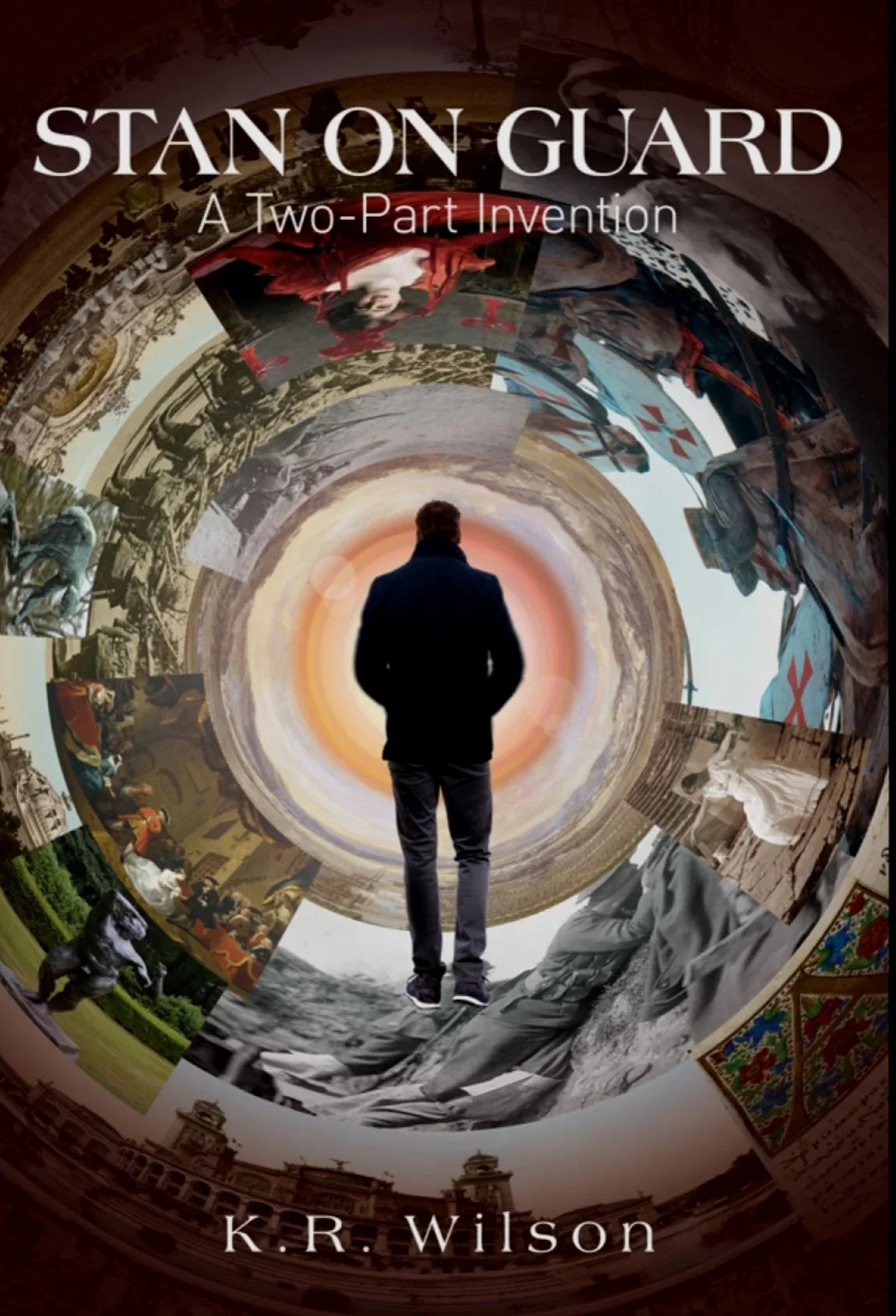
Power Q & A with K.R. Wilson
Ishtanu (call him Stan) is a Hittite immortal keeping his head down in Toronto and recounting some of his experiences. Tróán is an immortal Trojan princess who thought she’d killed Stan in post-war Berlin but who now knows he survived. Yes, technically Stan can die. He has just managed not to for 3200 years.
Q: You’re novel Stan on Guard: A Two-Part Invention, was just released by Guernica Editions. Why write a novel about an immortal? Hasn’t that been done to, um, death?
A: Historical fiction can be pretty earnest sometimes. Making my narrator immortal meant I could approach each historical period through his jaded, present day perspective and give him a wry, anachronistic voice that has made him enormously fun to write. And to read, I hope.
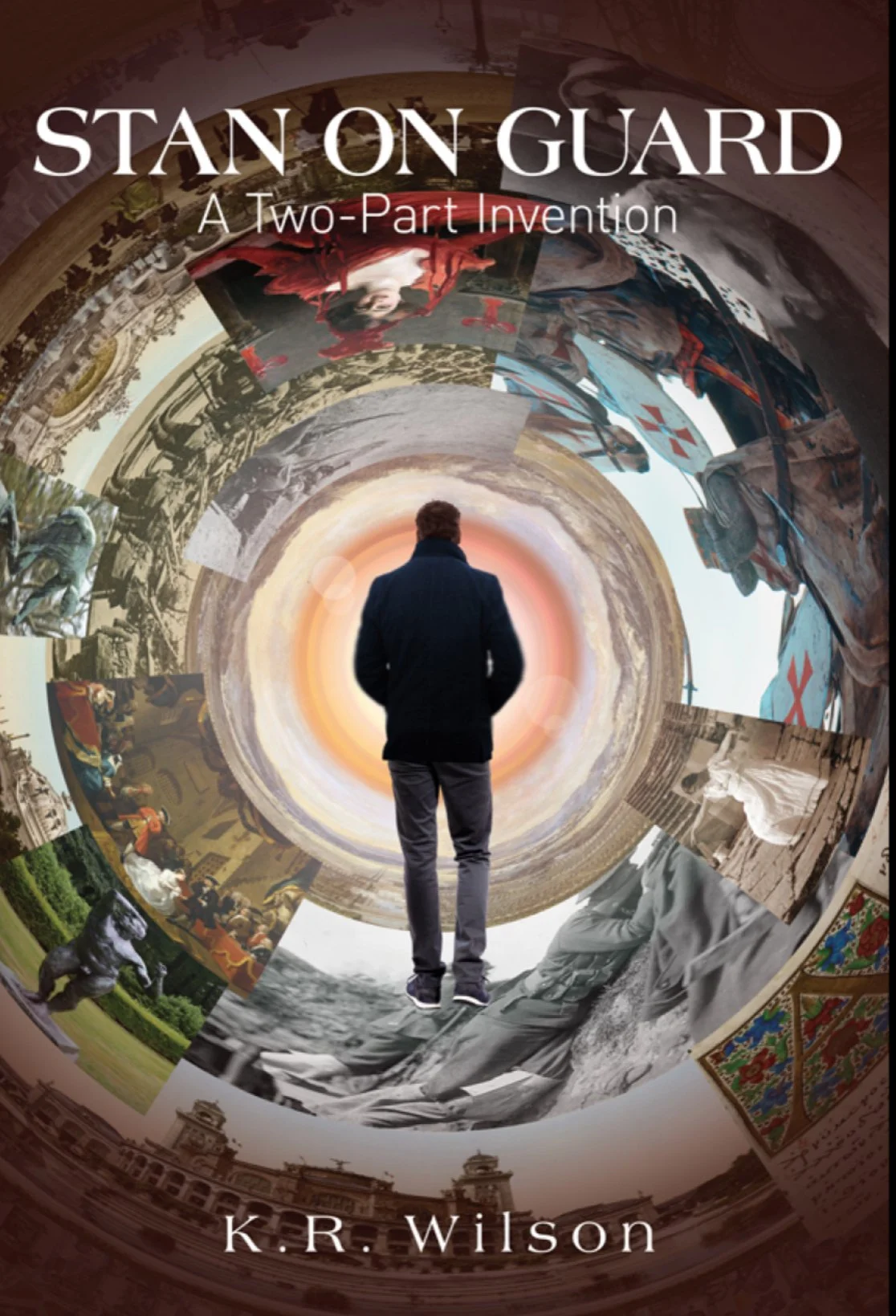
About Stan on Guard: A Two-Part Invention:
Ishtanu (call him Stan) is a Hittite immortal keeping his head down in Toronto and recounting some of his experiences. Tróán is an immortal Trojan princess who thought she’d killed Stan in post-war Berlin but who now knows he survived. Yes, technically Stan can die. He has just managed not to for 3200 years.
As their stories braid together toward a final reckoning they take us through, among other things, a subversive retelling of the Odysseus story, the resistance of pagan Lithuania against Papal crusaders, the decline of Friedrich Nietzsche in a German clinic, the arts scene in belle epoque Paris, and the descent of Europe into the horrors of the Great War.
Strap in.
Stan On Guard is the follow-up to K. R. Wilson’s tragical-comical-historical novel Call Me Stan: A Tragedy in Three Millennia, which was long-listed for the 2022 Leacock Medal for Humour.
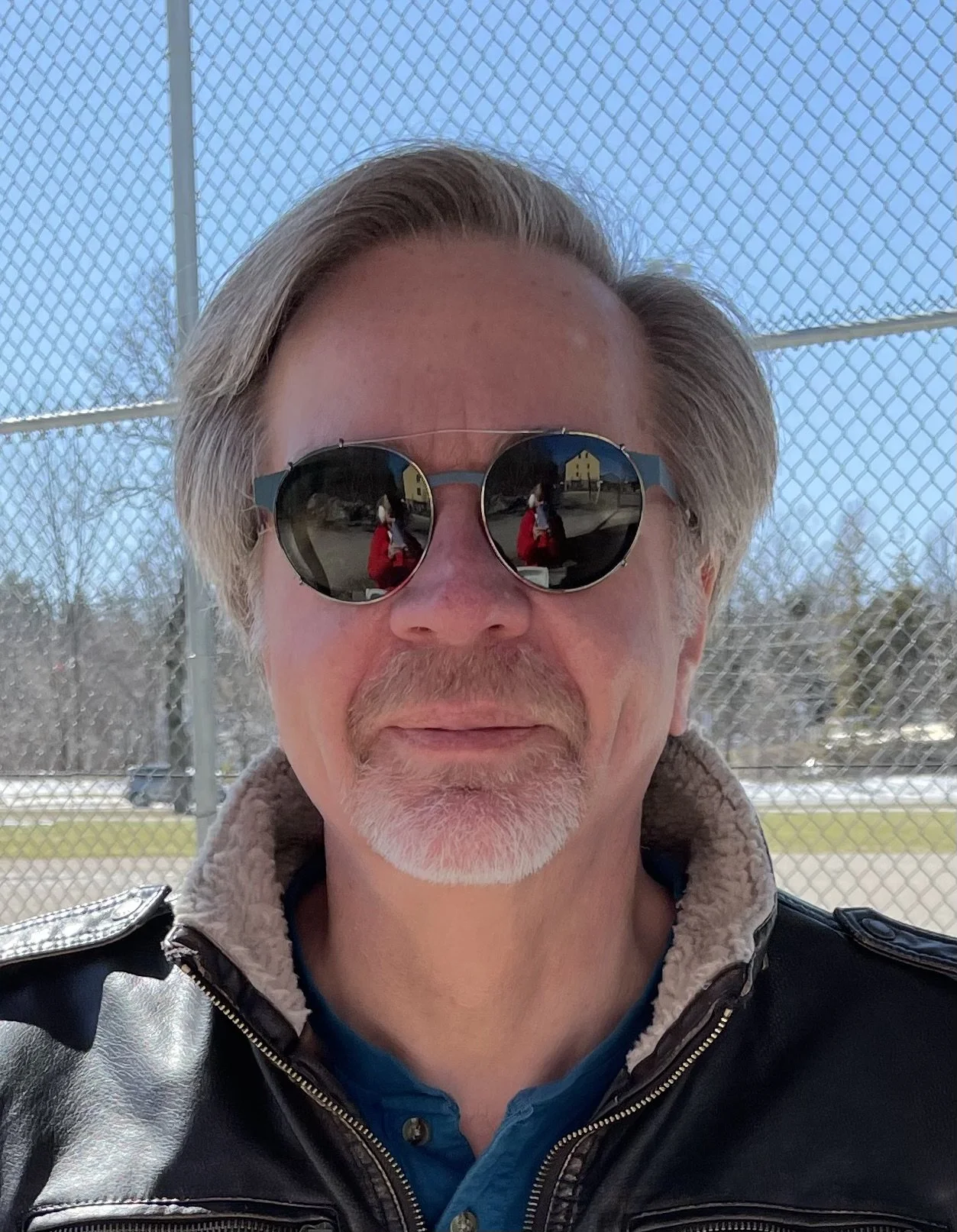
About K.R. Wilson:
K. R. Wilson’s novel An Idea About My Dead Uncle won the inaugural Guernica Prize in 2018, and his novel Call Me Stan was long-listed for the 2022 Leacock Medal. His work has appeared in various literary journals and the flash fiction anthology This Will Only Take a Minute.
Power Q & A with Alison Gadsby
There is a story in the collection that doesn’t work, or it’s not doing what it really needed to do when I dreamed it to life years ago. I don’t know if every reader could pick it out before reading this, but I think some might.
Q: Is there a story in your collection, Breathing is How Some People Stay Alive (Guernica Editions, 2026), you wish you could revise or change in some way?
A: Yes. There is a story in the collection that doesn’t work, or it’s not doing what it really needed to do when I dreamed it to life years ago. I don’t know if every reader could pick it out before reading this, but I think some might.
This story came to life after I had spent two weeks in NH losing things – from car keys to my phone, to my bathing suit, my running shoes – and on that trip I lost an expensive pair of sunglasses. We’ve never had a lot of money, but at that time, we were in such deep debt that I knew I’d never be able to replace them. They weren’t even mine, my brother took them from the lost and found at work – after they went unclaimed for six months.
The person who loses things all the time is haunted by the one thing, the one person, he lost, and cannot get back – his sister, who was abducted as a child while in his care. These lost things, or losing track of things, carries through to adulthood where he now writes children’s books. He’s created a popularfictional world where his sister lives, so that he doesn’t have to admit she’s gone, that he lost her.
This loss, the grief, is a fracture that never heals. He limps around unable to connect thoughts and as his dead sister’s 30thbirthday approaches and a detective from the past shows up with evidence that she is, in fact, dead, the main character trips over every thought and cannot function.
I revised this story dozens of times. It has been rejected by a handful of literary magazines. And it was in the final edits with the publisher that my own thoughts fractured and I realized why I couldn’t get inside of it and feel that any part of the story belonged to me. I wanted to remove it entirely, but as a connected collection, two of the characters exist elsewhere and what happens in this story feeds the narrative of later stories.
I wrote the first draft the year my dad died.
Diagnosed with a rare blood disorder, I had dismissed his mortality as easily as one might drop a set of car keys on a table. He once begged me to let him stay over in Toronto an extra night, and I rejected him, told him it would be too complicated. My parents didn’t have a pleasant divorce, and it was my daughter’s birthday that weekend. He was in hospital a week later, dead three months after that.
In all the revisions, I never once made the connection. My father wasn’t a lost child, a set of car keys. Convinced I was trying to write some kind of murder mystery with a provocative hook, I didn’t feel the pain until it was too late. I’d thrown a stone into a swimming pool and now I had to stand on the edge staring at the bottom without any way to retrieve it. I’d written into the story places of my childhood that are most emotionally connected to my dad, to my trauma. The Welland Canal. Orchard Park. St. Alfred’s Church. The QEW. I still can’t drive over the Burlington Skyway without thinking about him, and here I’d written a story about a man who sleep-drives from Toronto to St. Catharines to fish around a dirty creek for evidence his sister is still alive.
Once There Was A World is in the middle of the book, and when you read it, I want you to know that I lost something and there are days, weeks, sometimes months when I dream about how I might get it all back.
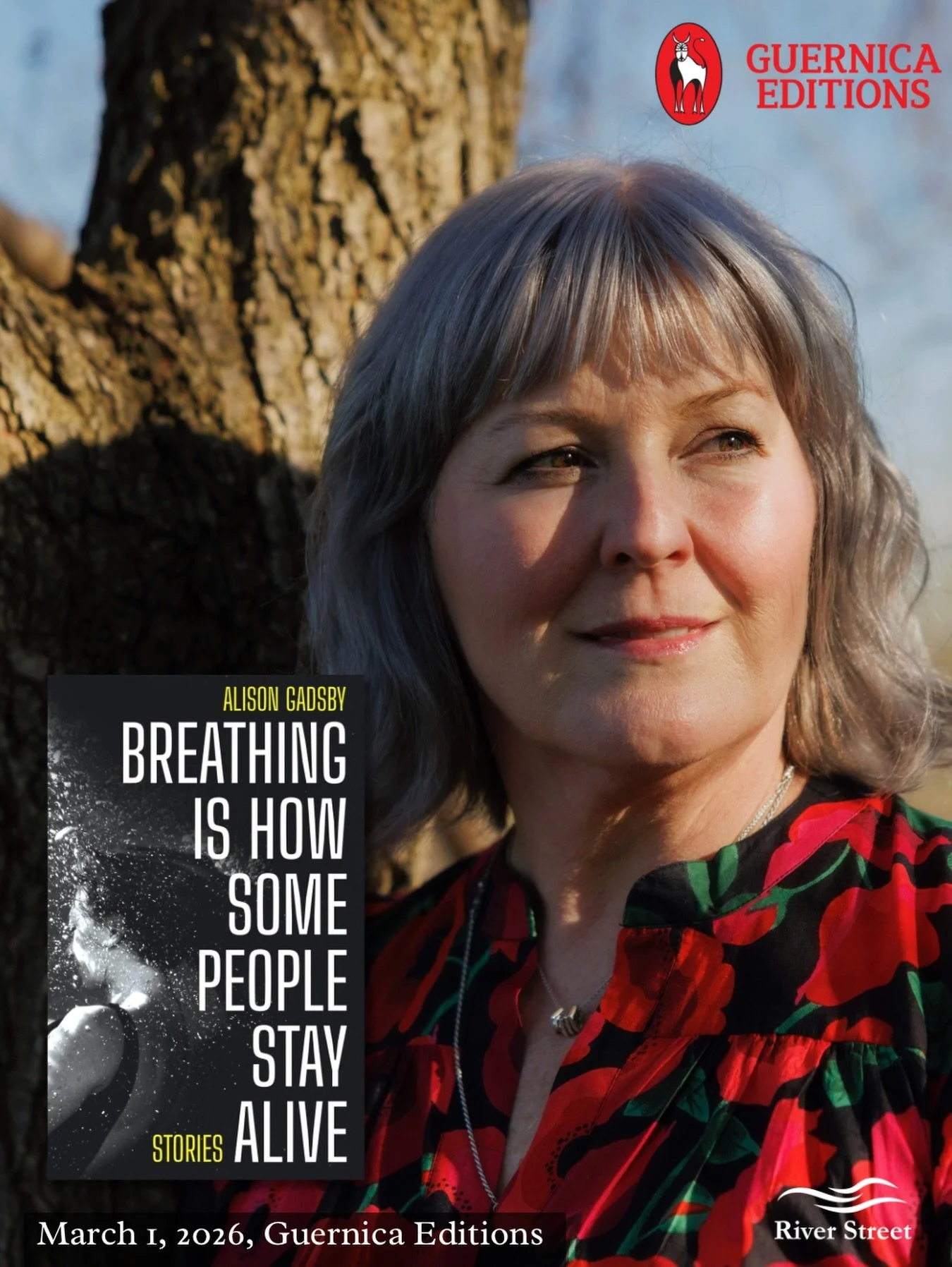
Breathing Is How Some People Stay Alive blurs the lines between horror, catastrophic speculative fiction, and psychological realism in a collection that might best be described as weird fiction. These connected stories offer dark reconstructions of lives brimming with desperate loneliness. They allow us to bear witness to the life-altering love of sisters, brothers, mothers… the life-altering love that buoys them as they struggle to stay afloat in the wake of childhoods they merely survived.
Alison Gadsby writes in Tkaronto/Toronto where she lives in a multigenerational home that includes several dogs. Her writing has appeared in various literary journals, including Blank Spaces, The Temz Review, The Ex-Puritan, Blue Lake Review and more. She is the founder/host of Junction Reads, a prose reading series.
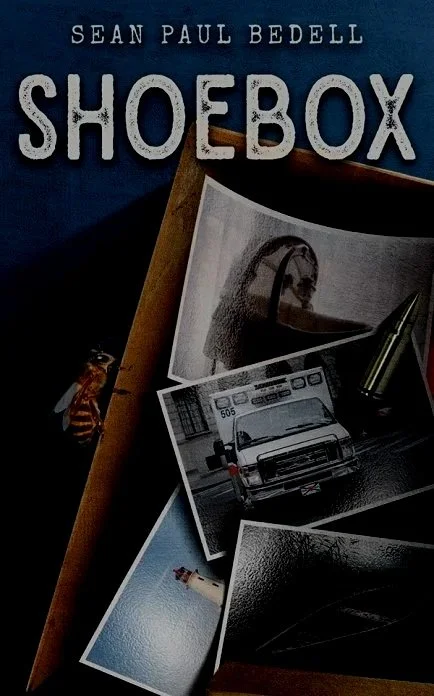
Power Q & A with Sean Paul Bedell
I wrote the book in the ‘gritty realism’ style. That’s intentional, I want my readers to feel, see, smell and touch – everything that the main character, Steve Lewis, does. I want them trudging to calls in his work boots. Though it’s fiction, Shoebox is loosely based on calls I did or ones my crew mates were involved in.
Q: In the novel Shoebox (NoN Publishing, 2025), the paramedic characters deal with trauma and the stress of the job in different ways. Are those portrayals realistic? And what about when you worked as a medic? How did you deal with the stress and the adverse experiences you witnessed?
A: Pranking and laughter is a short-term release for the after-call, adrenaline-fuelled tension. But the laughing, the pranks, using food, coffee, small talk, or watching a movie as distractions, is only a placebo. I hope the book shows that. The stress and memory of the trauma is buried inside and will work its way to the surface. In the story, Steve struggles because he can’t recognize and process all the emotion he feels, not only from his work but from his home life too.
In the story, Steve and his fellow medics are not only co-workers they’re roommates too. When I first started working ambulance, we worked 48-hour shifts. We lived, ate, and bunked together. We dealt not only with the stress and issues of calls, but interpersonal relationships of sharing living space with people including some with annoying habits. Add in too much caffeine and not enough sleep to the stress of constantly being hyper vigilant, and the atmosphere could tense up.
Beyond the paramedic-firefighter angle though, I’m a writer. I created a story to engage people and drive the reader to want to find out what happens next. I need readers to feel and root for a character that has become ’real’ for them. Beyond trauma and stresses of the job, I wanted to create a person people are compelled to find out what happens next for him. I told the story in first person so people could experience what Steve and the others do. I based it on typical calls to make the story as real as possible.
For me, some calls unfolded the way they were meant to. Whether the outcomes were good or bad, those natural-feeling calls don’t linger in my mind. I’ve made peace with those calls knowing I’d done all I could, that I’d followed my protocols to the letter. I have a natural acceptance of their outcomes.
Others – sudden and unexpected events in otherwise healthy people, or trauma, often with the young – children and babies – or situations where people were going on with their regular existence and something beyond their control barges into their life and changes it forever or snuffs it out. Those ones I know will be with me forever, deep in my memories, but always there, lingering below the surface. It never takes much for those memories to roar back.
The second guessing and the doubts can be excruciating. Even if calls are textbook perfect, sometimes things turn out badly. Accepting that is a challenge. It’s hard to live with. It’s easier to beat yourself up over something – something big or small – that I could have, that I should have done, to make things turn out okay. Not everything turns out okay. Calls that turn out stellar because of some intervention I did, stay with me too, but in a positive way. They keep me buoyed during and after the rough ones.
I was never diagnosed with PTSD, but many of my colleagues were. I never sought help for any issues stemming from my first responder work. In retrospect, I’m sure I had issues related to my work. When I first started, the ‘tough guy’ persona was prevalent. It has changed for the better over the years. As a profession, as a calling, and as a society, asking for help can be a weakness. Struggling to process what you’ve experienced is an internal flaw to be ashamed of. I say this: asking for help is no weakness; it is the greatest sign of strength. Asking for help and putting in the effort to understand is a good way to begin healing.
To this day, I avoid some streets in Halifax where I’ve done calls, they trigger a flood of memories I don’t want. Other times simple, everyday things that were present during one bad call or another, bring back a box load of mental souvenirs I’d rather forget. An unremarkable sound, odour or object was etched into my brain during a call that didn’t end well. Feelings are never ‘out of nowhere.’ Somehow a subtle trigger touched the recesses of my brain and brings a vivid reality to the top of my mind.
Writing this book was cathartic for me. I wrestled with my demons by putting ink on the page and creating the realistic life of a medic. Shoebox tells the story of one person who struggles with loss, grief, and guilt. He navigates through life, work, and family the best he can. He makes mistakes, he gets some things right. I created him with everything real that makes us human – despair, sadness, loneliness; but also hope and love and joy.
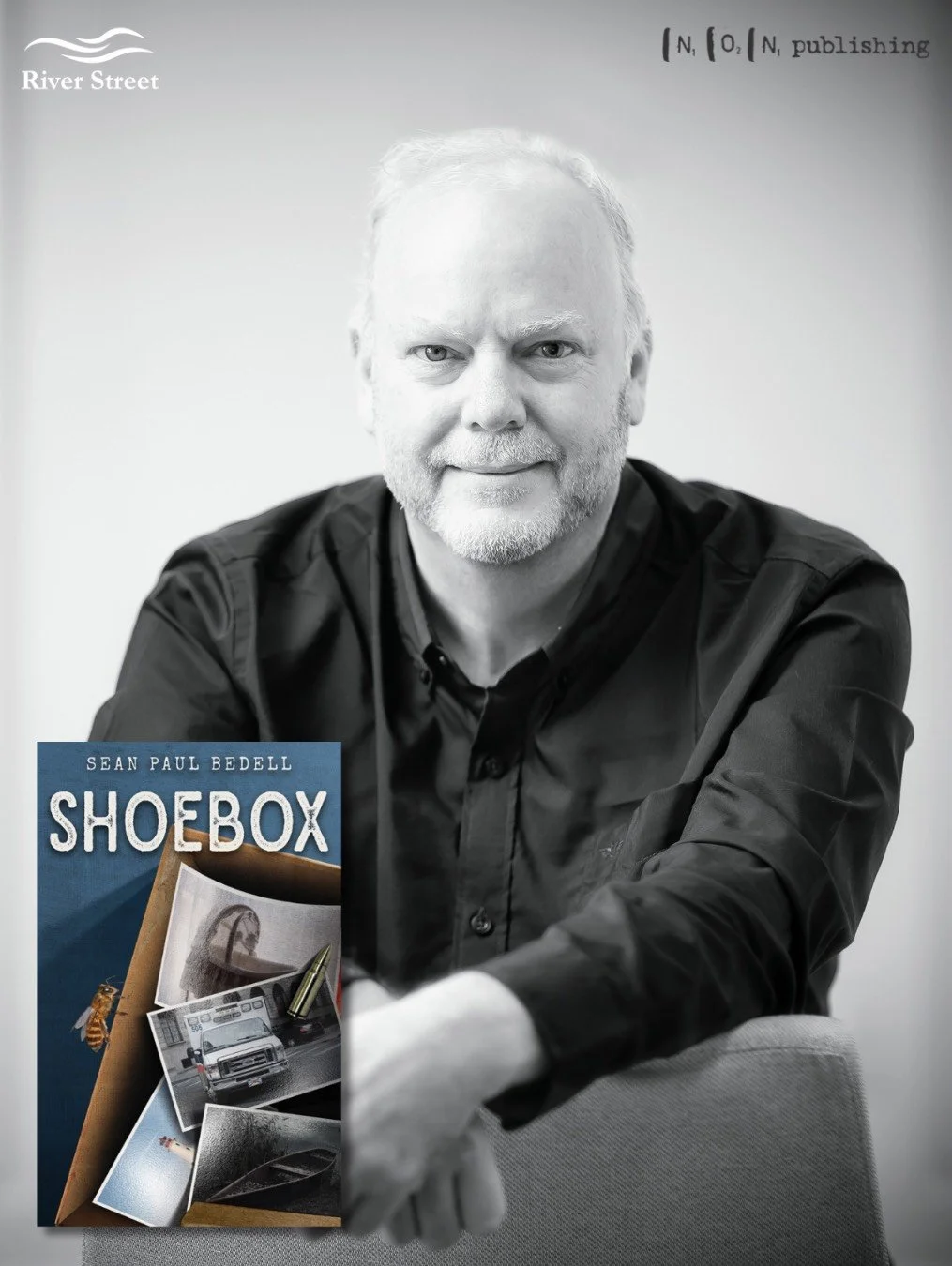
More about Shoebox:
In this gritty and emotional exploration of the human condition, Steve Lewis, a dedicated paramedic, faces the devastating aftermath of a fatal accident that casts a dark shadow over his once-passionate commitment to saving lives. Plagued by guilt and grief, he finds his career, family, and very existence hanging in the balance as he navigates the complexities of trauma both personal and professional. As Steve grapples with the high stakes of his job amidst the scrutiny of a community that admires yet questions him, each life he saves rekindles his passion for his work, reminding him of the profound connections he can forge through compassion and care. A compelling and visceral journey of personal redemption and triumph over adversity, Shoebox explores the human spirit's capacity for healing.
About Sean Paul Beddell:
Author of the novel Somewhere There’s Music, Sean Paul Bedell has been writing and publishing for more than 30 years. A longtime paramedic and captain with the fire service, he lives with his wife Lisa in Dartmouth, Nova Scotia.

Power Q & A with Mallory Tater
I discovered my love of swimming in 2019. One of my best friends had just died, and I was searching for escapism—away from screens, away from work, and, in some ways, away from my own body. The weightlessness of being submerged in the public pool eased my angst and softened the tension and grief in my neck and shoulders. The quiet beneath the water cleared my mind. The rhythm I could build toward, channel, and disrupt brought me a sense of control and steadiness. Stripping down my body and taking a warm shower before and after felt reverent. Small talk with strangers—those quiet good mornings in the lobby and the lanes—became part of the day’s calm order. The pool, like the poem, became a place of repetition, refining, and resistance.
Q: How do the practices of swimming and poetics intersect?
A: I discovered my love of swimming in 2019. One of my best friends had just died, and I was searching for escapism—away from screens, away from work, and, in some ways, away from my own body. The weightlessness of being submerged in the public pool eased my angst and softened the tension and grief in my neck and shoulders. The quiet beneath the water cleared my mind. The rhythm I could build toward, channel, and disrupt brought me a sense of control and steadiness. Stripping down my body and taking a warm shower before and after felt reverent. Small talk with strangers—those quiet good mornings in the lobby and the lanes—became part of the day’s calm order. The pool, like the poem, became a place of repetition, refining, and resistance.
The poetic line is like a length—it’s a unit of offering, brief and intentional. Like a chosen stroke, a line engages with a complete thought, opening it into being through movement and language. Like poetry, swimming is the complete interaction of the body. Like swimming, poetry is a practice that commits to being adrift. It is active, afloat. As there are different strokes in swimming, there are different poetic forms expressing both constraint and release.
In my creative practice, I consistently write poems in response to inquiries I wish to address—and these inquiries often surface at the pool while I swim lengths. While writing Lockers, I always surfaced back to the world of competitive athletics: the cultural impact sports have on youth, their mental and physical health, and the ways they haunt the adult body. Other recurring themes include grief, girlhood, and memory. In the book’s titular long poem, the speaker contemplates death, the body, gender roles, and language while watching a swim team of skilled athletes warm up before practice. It’s an act of vicarious envy for their talent and fear for their vulnerability.
Poetry lives in community, but also in the solitary urge to create—like a public pool where we are alone together. Our bodies pass in a shared liminality, each holding strength in individuality, like the poetic voice itself. Swimmers thrive among swimmers; poets thrive among poets. To read water is to swim in a poem: immersion, fluidity, and sensory awareness merge in a call that welcomes all of our bodies into this shared language.

Lockers are for Bearcats Only by Mallory Tater offers poetry that traces the complexities of grief, the importance of destigmatizing dialogue around suicide, and the beauty and complicated core of girlhood friendships while improving our collective understanding of mental health awareness and suicide prevention in an approachable, concrete, and empathetic way.
The poems spill out from the confluence of grief and water. After losing one of her closest friends, the poet began swimming laps—part meditation, part therapy, part escapism—immersed in the depths of the public pool. There, she found herself haunted by the strange tension between fitness / surrender and memory / motion where ghosts of girlhood, catholicism, and addiction rose to the surface.
These themes haunt Lockers Are for Bearcats Only – a tender, unguarded exploration of loss, embodiment, and the currents that carry us through life with and without those who shaped us.
About Mallory Tater:
Mallory Tater is the author of This Will Be Good: Poems (Book*Hug Press, 2018), The Birth Yard: A Novel (HarperCollins, 2020), and Soft Tissue: A Novel (forthcoming, ECW Press, 2027). She was the publisher of Rahila’s Ghost Press, a now-retired chapbook press. Mallory currently lives in Vancouver, where she teaches at the University of British Columbia’s School of Creative Writing. Lockers are for Bearcats Only is her second poetry collection.
Power Q & A with David Elias
The setting for Into the D/ark is a relatively isolated farming community in the early nineteen sixties. With the recent arrival of American network television, the larger world has begun to make its way into the daily lives of the characters living in this insulated folk society.
Q: The assassination of John F. Kennedy in November of 1963 runs through much of the narrative in this novel. It intermingles in a variety of ways with the characters and events you portray. Why does it play such a prominent role in the book?
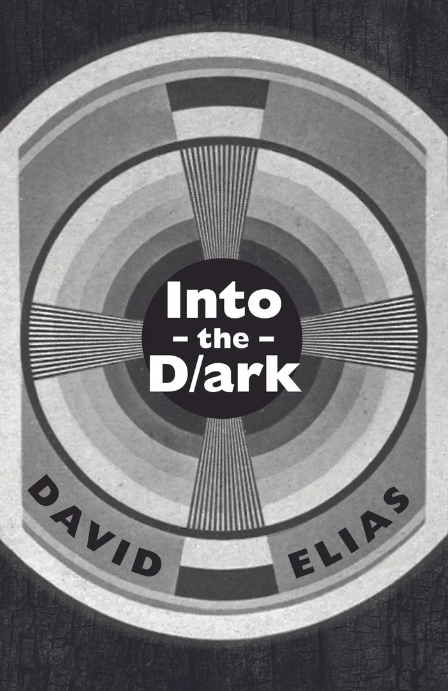
Bring home Into the D/Ark by David Elias, published by Radiant Press, 2025.
A: The setting for Into the D/ark is a relatively isolated farming community in the early nineteen sixties. With the recent arrival of American network television, the larger world has begun to make its way into the daily lives of the characters living in this insulated folk society. A transmission tower has been erected just across the U.S. border, and suddenly they find themselves able to watch popular American programming on the primitive black and white televisions they have smuggled into their living rooms from the J.C. Penny store just across the border. But then their viewing pleasure is suddenly interrupted by live broadcasts covering the Kennedy assassination and its aftermath. This marks the first time in history that the media covers a news story in this way.
Many of the characters in the book are already traumatized by the events of their own lives, and now they find themselves caught up in this deeply disturbing pervasive narrative streaming at them through their television sets. The favorite shows they use to escape their own suffering are suddenly and repeatedly pre-empted by live coverage of things like Jack Ruby shooting Lee Harvey Oswald at point blank range as he’s led out of the Sherriff’s office in downtown Dallas. Add to this the advent of the idea being put forth at the time by Marshall McLuhan, who coins the phrase “the medium is the message”, and you have the confluence of many streams pouring into a watershed moment in history. And the characters in the novel, barely able to manage their own lives, are caught up in all of it.

David Elias is the author of seven books, most recently The Truth about the Barn: A Voyage of Discovery and Contemplation, published by Great Plains Publications. It was featured in the Winnipeg Free Press as one of the top titles for 2020. His most recent work of fiction is an historical novel, Elizabeth of Bohemia: A Novel about Elizabeth Stuart, the Winter Queen. It was published in 2019 by ECW Press, and was a finalist for The Margaret Lawrence Award for Fiction at The Manitoba Book Awards. His previous works have been up for numerous awards including the McNally Robinson Book of the Year, the Amazon First Novel Award, and The Journey Prize. His short stories, novel excerpts, and poetry have appeared in literary magazines and anthologies across the country, and in addition to writing he spends time as a mentor, creative writing instructor, and editor. He lives in Winnipeg, Canada.

Power Q & A with Brockton Writers Series
We love live literary events. Festivals, reading series, bookstore book launches: we are just about always game for a good ol’ bibliofest. We also know that many of these events operate by the mercy of grants, volunteers, and long, hard, and often thankless hours. No one who loves books and literature should take these vital initiatives for granted. Not only do authors often depend on them to create more awareness for their work, but our culture depends on them to keep the literary arts vibrant. That’s why we reached out to one of of favourite downtown Toronto reading series, Brockton Writers, and asked them to be a guest this month on our Power Q & A series.
We love live literary events. Festivals, reading series, bookstore book launches: we are just about always game for a good ol’ bibliofest. We also know that many of these events operate by the mercy of grants, volunteers, and long, hard, and often thankless hours. No one who loves books and literature should take these vital initiatives for granted. Not only do authors often depend on them to create more awareness for their work, but our culture depends on them to keep the literary arts vibrant. That’s why we reached out to one of of favourite downtown Toronto reading series, Brockton Writers, and asked them to be a guest this month on our Power Q & A series.
We had one particular question in mind that we wanted to pose, and they were gracious enough to answer.
Welcome to River Street, Brockton Writers!
Donate to Brockton Wrtiers Series here.
What is one thing you think people don’t understand about running a reading series?
“After volunteering for BWS for the past two years, I've come to appreciate running a reading series as a continuous learning experience. There's always work that needs doing — promotions, social media, grant writing, etc. — so there are always opportunities to develop new skills. More than any particular set of skills or any previous experience in event planning, what it takes to run a reading series is a lot of initiative and a self-starting attitude. You've got to be willing to constantly evolve, to anticipate and put out fires, to keep up with the changing landscape of the publishing industry and the literary community. On one hand, that might sound a little daunting; on the other hand, I also think it's quite exciting, having the opportunity and the freedom to say "Hey, I want to try doing XYZ," and then ... just being able to do it.”
—Fei Dong (they/them) is a writer and editor based in Toronto, Canada. A graduate of University of Waterloo's Computer Science program and Centennial College's Publishing – Book, Magazine and Electronic program, they’re an editorial assistant at Cormorant Books and a board member at BIPOC of Publishing in Canada. Passionate about literary advocacy in Canadian publishing, they have volunteered their writing and editing services to a charity zine, a storytelling festival, and a flash fiction magazine.
“One thing I’ve come to understand after working with BWS for the past year is how many authors rely on events like ours to connect with their community and get their work out there. Many of our authors’ books are with small publishers which can’t muster big publicity budgets, so there’s a big demand among those authors to be featured in a reading series like BWS. And of course, we pay them for their time and energy, which isn’t always a given for emerging writers. It’s an amazing reciprocal relationship where we get to meet and learn from great authors, and they get a platform for their work.”
—Iris Robbins-Larrivee (she/they) is a graduate of McGill University’s Linguistics program and Centennial College’s Publishing program. Iris has completed an internship with Emond Publishing and continues to work with Emond as a freelance proofreader. She volunteers with the Brockton Writers Series as the Promotions Coordinator, and with Davenport-Perth Neighbourhood Community Health Centre as an Adult Literacy Tutor. Iris is passionate about helping people from all walks of life tell their stories.
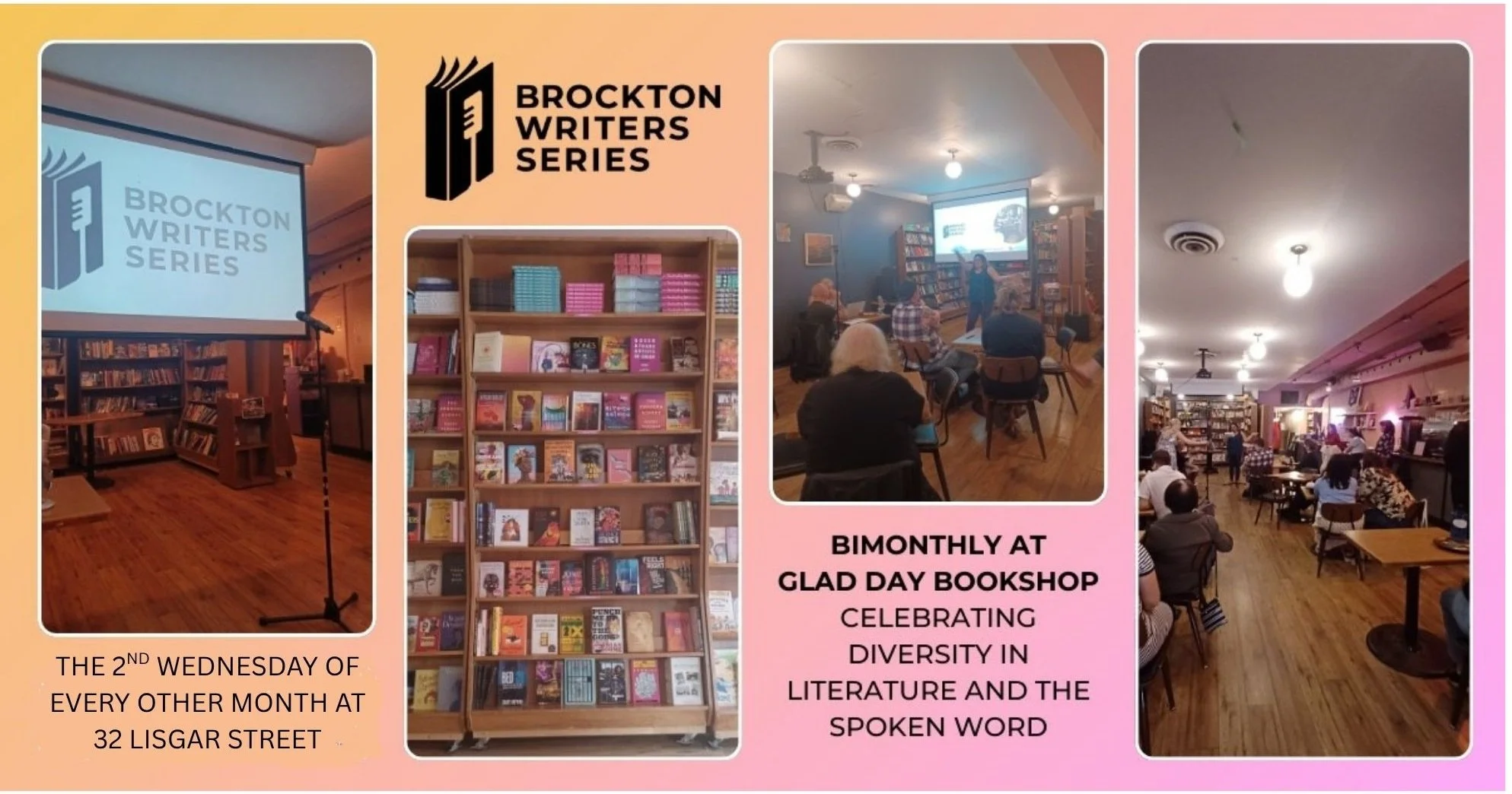
Photo courtesy of Brockton Writers Series.
The best thing about working for BWS is the great diversity of writers and voices you're exposed to. The hardest thing is building and retaining an audience for the events. There's lots to do in Toronto on any given evening, and it's difficult to be seen among the crowd.
—Nancy Kay Clark (she/her) is the editor and publisher of CommuterLit.com and is a long-time magazine writer and editor. Her speculative short fiction has been featured in Neo-Opsis magazine, Polar Borealis, Utopia Science Fiction magazine and others. She was shortlisted for the Writers’ Union of Canada Postcard Story Contest and CANSCAIP's (Canadian Society of Children’s Authors, Illustrators and Performers) annual Writing for Children competition. She self-published a middle-grade novel in 2018. Nancy is Brockton’s financial manager, and she curates the guest speakers and writes the newsletters for Brockton Writers Series.
I think what people don’t always understand about a literary series is actually the attending part, not the running of it! Everyone is welcome, it’s a very casual environment, you don’t have to know all the authors and their work to come. I think it might feel intimidating for people to come to these events, but it really shouldn’t be.
—Evgenia Shestunova (she/her) is an immigrant from Kyiv, Ukraine, who came to Toronto in 2015. She is a recent graduate of Centennial College’s Book and Magazine program and is currently working as a Publishing Operations Assistant at Penguin Random House. She is passionate about showcasing emerging writers and giving marginalized voices a platform.

Photo courtesy of Brockton Writers Series. Follow Brockton Writers Series on YouTube.
I think people may not understand how much work it is. I like to think we make it look easy, but it’s not, especially when you have the values we do: dedication to a physically accessible venue, commitment to paying our authors, etc. We have to be able to problem-solve on the fly, manage a wide variety of expectations from authors and publishers, and collaborate effectively as a team to do what we do with Brockton.
I also think people may not understand that reading series, locally at least, are fun, friendly events that are valuable for their entertainment and community-building, whether or not you’re actually a fan of the readers presenting that night. It’s a cheap night out – there’s never a cover charge – and you might find an author you’re interested in who you hadn’t known of before. But even if you don’t, you’re not committing to reading or buying a book just by showing up. I also think it’s an underutilized date night option. Assuming you want to date people who read, why not go to a reading series, which is shorter and cheaper than a movie, and afterward you can discuss the readings to find if your literary tastes align? It’s low-risk because aligned literary tastes are a nice to have, but not a dealbreaker. Hey, Tinder, hit us up for a corporate sponsorship! 😊
—Dorianne Emmerton (she/her) grew up in rural Northern Ontario and now lives in Toronto with chosen family, a kid, and an ill-tempered black cat. Her short stories have been published in Eavesdrop Magazine, Luna Station Quarterly, Room Magazine; The Fantasist; Daily Science Fiction; The Bronzeville Bee; The Audient Void; Nevertheless (Tesseracts Twenty-One); and more. She also has a personal essay in the anthology A Family By Any Other Name: Exploring Queer Relationships. Dorianne is currently querying one novel and writing another, while occasionally writing for the pop culture site Biff Bam Pop! For the past few years she has been the lead organizer of the Bi+ Arts Festival. Previous activities include hosting a radio show on CIUT, reviewing live performance events for Mooney On Theatre, and participating in the Diaspora Dialogues writing mentorship program, under the guidance of Martin Mordecai.
Other Volunteers:
Kiri Stockwood (she/her) is a writer and editor living in Toronto, Canada. She is a recent graduate of Centennial College’s Publishing program, which concluded with an internship at the indie publisher Renaissance Press. Kiri has contributed to a number of publications as an editor and has a short story published with Plenitude Magazine. With a passion for storytelling and helping others tell their own stories, she is looking forward to continuing her career in publishing. Kiri is currently volunteering as a grant writer for Brockton Writers Series.
Marcela Arevalo (she/her) is a graduate of Northern Private University’s Communication program and a current student in Centennial College’s Publishing program. With over seven years of experience in digital marketing, she is currently specializing in publishing and contributing to On The Danforth as a Marketing Manager and writer. Marcela is eager to start her career in the Canadian publishing industry and to become part of the book world as both a writer and publisher, something she is deeply passionate about.
Donate to Brockton Wrtiers Series here.

Power Q & A with David Giuliano
This past May, I turned sixty-five. Pearl, my beloved, asked what I wanted for my birthday. When she turned sixty-five, she wanted a party. I booked a local venue and chef, put together a 1970s top-ten playlist, and a birth-to-sixty-five video to the tune of “What I Like About You,” by the Romantics. It was a blast.
Me? I wanted a casket. I had stumbled on the Fiddlehead Casket Kits website. “Build your own pine casket in under 30 minutes with this handcrafted casket kit,” it said, “delivered directly to your door.”
I told Pearl, “I want a casket for my birthday.”
Q: How did writing The Upending of Wendall Forbes affect you?
A: This past May, I turned sixty-five. Pearl, my beloved, asked what I wanted for my birthday. When she turned sixty-five, she wanted a party. I booked a local venue and chef, put together a 1970s top-ten playlist, and a birth-to-sixty-five video to the tune of “What I Like About You,” by the Romantics. It was a blast.
Me? I wanted a casket. I had stumbled on the Fiddlehead Casket Kits website. “Build your own pine casket in under 30 minutes with this handcrafted casket kit,” it said, “delivered directly to your door.”
I told Pearl, “I want a casket for my birthday.”
“Okay,” she said.
I wanted a “handcrafted, environmentally friendly … locally made with Eastern Canadian pine casket.” I didn’t know why. I had no plan or desire to die anytime soon. Quite the opposite. I want to truly live. I had, however, spent the previous four years writing about the fictional Wendall and Ruby Forbes, who are twenty years my senior. They got me thinking about entering the final quarter of my life.
I am not in a hurry to use a casket, but I like the idea of having one nearby, reminding me, like Wendall and Ruby do, to love life, to pay attention, to listen, to play and create, and to love vulnerably. No one lives forever. At sixty-five, the possibility of dying becomes more imminent. I wanted a daily reminder to suck the marrow out of life. So, I ordered the kit and sent an email to four of our closest friends. Subject line: Strawberry, Rhubarb Crisp, Ice Cream and Casket Building.
On my birthday, I stacked the pine boards in the living room, poured wine for our friends, lit a candle and read Mary Oliver’s poem, “When Death Comes.”
It begins:
When death comes
like the hungry bear in autumn;
when death comes and takes all the bright coins from his purse
to buy me, and snaps the purse shut;
It is more about life than it is about death:
When it’s over, I want to say: all my life
I was a bride married to amazement.
I was the bridegroom, taking the world into my arms.
And:
I don’t want to end up simply having visited this world.
Our friends assembled the casket and moved it into my writing room, next to my desk, where it serves as a bookshelf. For now. “Love the idea of a simple pine casket, but won’t need it for a while? Put it to work right now!” Suggested the Fiddlehead website. “This bookshelf option adds 5 adjustable solid pine shelves.”
I am gradually adding items to the shelves that feel sacred: the fire pot from my days learning and teaching spiritual direction; the Star Blanket gifted to me by Anishinaabe elders, and the stole from my time as moderator of The United Church of Canada; a cross made of horseshoe nails and copper wire; copies of my books. Each item is a symbol, telling a story I carry.
Then we savoured the crisp and ice cream, our friendship and the end of the wine. It was a rich, perfect and early night. We’re getting old.

Friends!
Leonard Cohen told Interview Magazine, “To keep our hearts open is probably the most urgent responsibility you have as you get older.” Writing The Upending of Wendall Forbes reminded me to keep my heart open.

The Upending of Wendall Forbes by David Giuliano
About The Upending of Wendall Forbes:
Wendall and Ruby Forbes are confronting the vagaries of aging boomers: – sleeplessness, loneliness, memory loss, and the fear Ruby is showing signs of dementia. A blizzard hits their small town of Twenty-Six Mile House and a remarkable, perhaps unbelievable, band of strangers — : an Indigenous Colombian refugee, his environmental academic wife, an environmental academic, and their child; a young man on an accidental journey quest; a teenage activist and her ten-year-old gay half-brother; and a sleep consultant in from Indianapolis —– all take refuge in the Forbeses’ home.
In this heartwarming, funny, wise, and hopeful story, the companionship of strangers, a foul-mouthed raven, and a lynx, restore Wendall and Ruby’s hope for the future.

About David Giuliano:
David Giuliano is an award-winning writer of fiction and non-fiction. His first novel, The Undertaking of Billy Buffone (Latitude 46, 2021), was awarded the 2022 Bressani Prize for Fiction. It’s Good to Be Here: Stories We Tell About Cancer is a memoir about the power of story to heal. Postcards from the Valley, a collection of essays, was a Canadian bestseller. He has also published two illustrated children’s books. David lives on the north shore of Lake Superior.
Power Q & A with Brit Griffin
It is maybe odd to only write about where I live — all four of my novels are set in and around Cobalt, and most of my musings & reflections are also generated from this landscape. Odd maybe, but I feel a sense of the imperative to pay attention to the land I inhabit. Scrappy and used up as it is, and still showing the scars of short-lived but hyper-industrial activity, it is a place worth seeing, as in discovering the minutiae, the magic, the vulnerabilities, and the joy, in and of and around this place that I inhabit. It seems to me now obvious, though I wish I had seen it sooner in my life, that any hope we have of being better, of finding a way of being in the world that is non-destructive, lies in seeking atonement from the land we inhabit, its creatures and beings, wherever that happens to find us.
Q: In The Haunting of Modesto O’Brien, the setting seems very important to the story, seems very grounded in a particular place. Why set it in the real-life town of Cobalt?
A: It is maybe odd to only write about where I live — all four of my novels are set in and around Cobalt, and most of my musings & reflections are also generated from this landscape. Odd maybe, but I feel a sense of the imperative to pay attention to the land I inhabit. Scrappy and used up as it is, and still showing the scars of short-lived but hyper-industrial activity, it is a place worth seeing, as in discovering the minutiae, the magic, the vulnerabilities, and the joy, in and of and around this place that I inhabit. It seems to me now obvious, though I wish I had seen it sooner in my life, that any hope we have of being better, of finding a way of being in the world that is non-destructive, lies in seeking atonement from the land we inhabit, its creatures and beings, wherever that happens to find us.
Because it seems to me that the land teaches us things that we have forgotten. But what happens when we are dislocated, removed, moved, from the place that was the homeland of our people — when a person is severed from their connection to their homeland? If this tracery of wisdom and old knowledge comes from a relationship with the land, from understanding and being guided by these age-old traditions and stories and lore, how does one get their moral bearings without them? That is what I was trying to think about in The Haunting of Modesto O’Brien.
For most of us in this country, we are not in our homelands. Where I live is the traditional territory of Timiskaming First Nation, an Algonquin community who have been here for thousands of years. This is their homeland. Their stories and their wisdoms travel through the treetops, glide through the deep waters, live in the rocks. They are not mine. I can learn from, and be respectful, yes, but they are not mine to browse and select from, to pick and choose from. So even as I live here, even as I nurture my ability to know and respect this place, there is a foreignness to it all, an outofplaceness that I try to understand through in my writing. Forge a hybrid? Start from scratch? Not sure, but I keep thinking and writing, because to me it is one of the most important, what? Quests? Maybe, sounds old, fairy tale borne. Maybe that is the word. A quest for atonement across the real/imagined/blurred landscape that I travel every day.
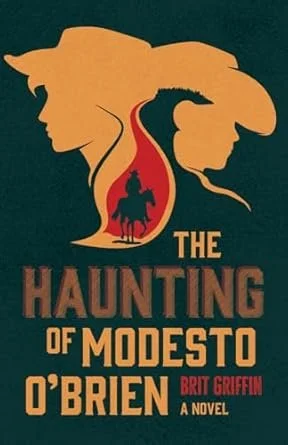
The Haunting of Modesto O’Brien by Brit Griffin, published by Latitude 46 Publishing.
About The Haunting of Modesto O’Brien:
A gothic tale from deep within the boreal forest…
Violence and greed have intruded into a wild and remote land. It’s 1907, and silver fever has drawn thousands of men into a fledgling mining camp in the heart of the wilderness. Modesto O’Brien, fortune-teller and detective, is there too - but he isn’t looking for riches. He’s seeking revenge.
O’Brien soon finds himself entangled with the mysterious Nail sisters, Lucy and Lily. On the run from their past and headed for trouble, Lily turns to O’Brien when Lucy goes missing. But what should have been a straightforward case of kidnapping pulls O’Brien into a world of ancient myths, magic, and male violence.
As he searches for Lucy, O’Brien fears that dark forces are emerging from the ravaged landscape. Mesmerized by a nightmarish creature stalking the wilderness, and haunted by his past, O’Brien struggles to maintain his grip on reality as he faces hard choices about loyalty, sacrifice, and revenge.
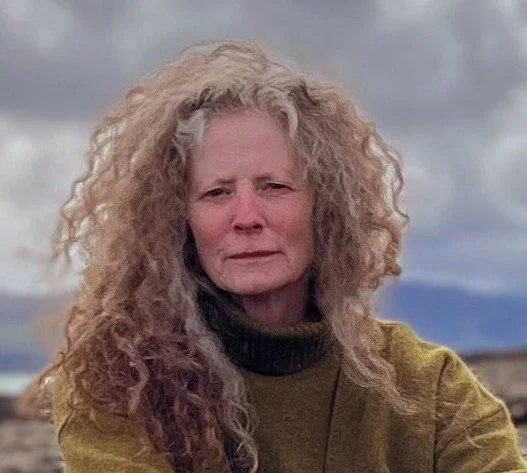
Author Brit Griffin.
About Brit Griffin:
Brit Griffin is the author of the climate-fiction Wintermen trilogy (Latitude 46) and has written essays, musings, and articles for various publications. Griffin spent many years as a researcher for the Timiskaming First Nation, an Algonquin community in northern Quebec. She lives in Cobalt, northern Ontario, where she is the mother of three grown daughters. These days, she divides her time between writing and caring for her unruly yard.

Power Q & A with Ben Zalkind
Satire is tricky. In a free society, it can be a form of entertainment, which confirms for its audience the idiocy and silliness of “that thing we enlightened people are against.” In dicier milieus, such as Putin’s Russia, satire cannot be reckless, lest it disappear. It has to be clever, damning, and opaque enough to cloak its true purpose, which is as a tool of resistance. Making fun of our overlords is serious, political business.
Q: Ben, your debut novel, Honeydew (Radiant Press, October 2025), seems to be a winking satire lampooning tech bros, surveillance capitalism, and maybe even the futility of resistance itself. Many readers look to fiction to sharpen and clarify what might otherwise look smudged and fuzzy, but it’s difficult to figure out where you stand. What do you mean for us to take from your book?
A: Satire is tricky. In a free society, it can be a form of entertainment, which confirms for its audience the idiocy and silliness of “that thing we enlightened people are against.” In dicier milieus, such as Putin’s Russia, satire cannot be reckless, lest it disappear. It has to be clever, damning, and opaque enough to cloak its true purpose, which is as a tool of resistance. Making fun of our overlords is serious, political business.
Here in North America, our most popular satire takes the form of visual media, such as The (late) Colbert Report and South Park, which seem to look right into their targets’ eyes as they subject them to ridicule. This style, though often funny, is at odds with the tradition of literary satire, which tends to lean more comfortably into ambiguity. Some of our finest contemporary satirical novels, such as Paul Beatty’s The Sellout, are satirical only insofar as we can gather. Beatty famously denies that he is a satirical author, though his very funny novel about a man who tries to reinstate slavery in a fictionalized California is, to my mind at least, a crackling and devastating takedown of the idea of a post-racial society in the same US that witnessed George Floyd’s murder.
Honeydew, is most certainly a satirical novel. It is also a farce, equal parts A Confederacy of Dunces and The Monkey Wrench Gang, about a quartet of feckless wannabe saboteurs who have the right idea but can't quite follow through. I know there will be a temptation to see clear topical references in my characters, especially Moses Honeydew himself, who, I'll admit, does bear some resemblance to a few of our less impressive overlords. But my intention was not just to remark on the absurdity of our tech-saturated world. I also wanted to create my own. And Honeydew’s got everything: A billionaire tech bro who plans to pilot a submersible drill to Earth’s mantle, a criminal kingpin who bankrolls an anarchist collective, a Swiss family doctor moonlighting as a spook, and even a direct action splinter cell composed entirely of elderly activists. Though the story shares some of our reality, it also exists in its own milieu, maybe a bit like Boots Riley's Sorry to Bother You, Mervyn Peake's Gormenghast series, Terry Pratchett’s Discworld, and even P.G. Wodehouse’s Edwardian Britain that never was.
I permitted myself the freedom to make my characters eccentric and the setting surreal. And I agree that there is something unsettling beneath Honeydew's humour. Though many of us face the welter of social, climate, and economic injustice with courage and wisdom, Honeydew's freedom fighters resort to harebrained schemes. This is not a commentary so much as a prism through which I filtered my own bewilderment. In my story, I always punch straight up, and I trust readers, who tend to be cleverer than the authors they read, will clock the story as a satire, a comedy, and, in its own way, a pointed critique, not of the resistance, of which I consider myself a part, but the frame in which all of us are forced to resist.
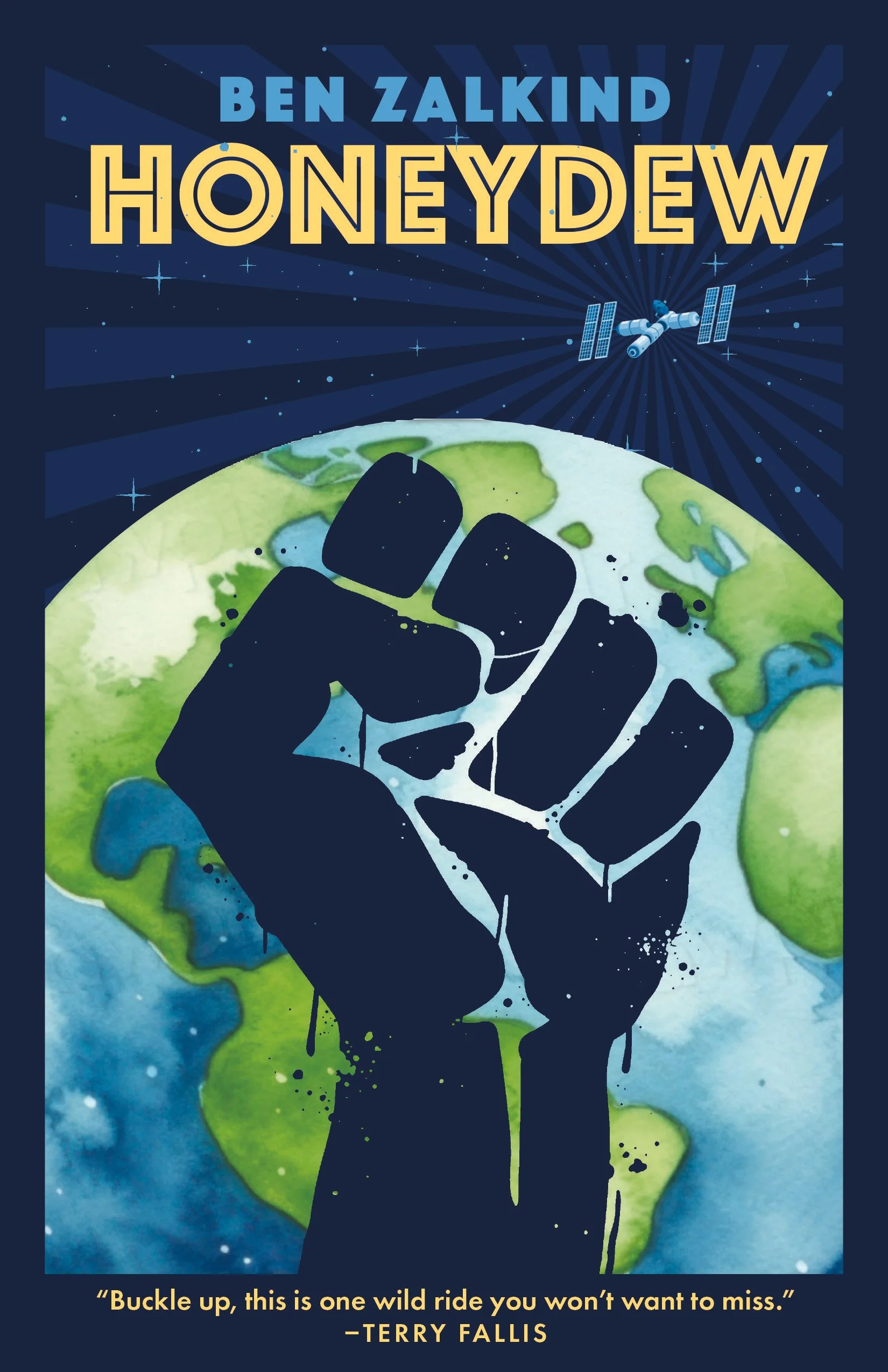
About Honeydew:
Rose Gold can’t catch a break. Her latest “golden opportunity” has given way to a madcap adventure through the soft underbelly of Bonneville City. She finds herself cast in the role of renegade mentor and hero to a trio of idealistic young rebels. Together, they perpetrate an act of subversion targeting “future-mover” and celebrity CEO Moses Honeydew, which puts them in the crosshairs of his Substrate Inc.
Along the way, they join forces with family-doctor-by-day and fixer-by-night, Dr. Hansjorg Winteregg, and go on the lam. Meanwhile, there are rumours about Honeydew’s private space station, The Visionary, which may or may not have forced its first passengers into working off their debt. Rose’s boss and his crew go missing. Honeydew announces his plan to take a manned submersible drill to Earth’s mantle to burnish his brand as a fearless and impossibly cool maverick.
With her faithful charges by her side, Rose finds herself at the centre of an unfolding conspiracy. Did she ever truly have a hand on the rudder of fate? And what chance does a quartet of second-rate saboteurs have against a multinational corporation with a vendetta and a trillion-dollar market capitalization?

Ben Zalkind lives and works in Calgary, Canada. His debut novel, Honeydew, will be released by Radiant Press in October 2025. A Salt Lake City native and naturalized Western Canadian, Ben is happiest outdoors, where he can cycle, drink coffee, and adventure with his wife and fellow traveller.

Power Q & A with Stephanie Bolster
The timing of the book’s release was coincidental, though it’s a fortunate coincidence in that Katrina and the subsequent levee breaches that wreaked such devastation in New Orleans are back in the public consciousness and may make readers more interested in the perspective the book offers. Sadly, the inequalities the disaster highlighted are even more acute now than they were then, and the climate change that contributed to the storm has only worsened.
Q: Hurricane Katrina made landfall on August 29, 2005. Given that the storm and its aftermath are a primary subject of Long Exposure, did you time the book’s publication to coincide with the 20th anniversary?
A: The timing of the book’s release was coincidental, though it’s a fortunate coincidence in that Katrina and the subsequent levee breaches that wreaked such devastation in New Orleans are back in the public consciousness and may make readers more interested in the perspective the book offers. Sadly, the inequalities the disaster highlighted are even more acute now than they were then, and the climate change that contributed to the storm has only worsened.
I had visited New Orleans twice before Katrina, so I paid particular attention to the news stories during the storm. The extent of the chaos and devastation, and the human suffering caused not only by the storm itself but by systemic failures and inequalities, shocked me.
In 2009, I visited a retrospective of Robert Polidori’s work at the Musée d’art contemporain in Montréal. I had been drawn to his photographs of New Orleans and Chernobyl since first seeing them several years earlier, but had avoided writing about them because I worried the subject matter was too predictable, given that I have often written about photographs and that I tend to be drawn to bleak subjects. I was also uncomfortable with the voyeurism of the photographs, which depict human-centered spaces (often private homes) in the absence of the humans who lived and worked there. And I was even more uncomfortable with my own interest in this material.
In the museum that day, I realized that the only way to write about these photographs would be to interrogate my own fascination. I had done something similar in exploring my ambivalence about zoos, but this felt like a riskier, more difficult kind of questioning. I knew I wanted the work that would become Long Exposure to be a book-length poem. I wanted it to centre perspective and work associatively. I had no idea how to write it.
The structural, aesthetic, and ethical challenges this project posed are part of the reason I worked on it for so long. I was also raising two children and teaching creative writing full-time. After a decade, I thought the project was finished, but as I read through the manuscript in the first few months of the COVID pandemic, I couldn’t help seeing connections between events and experiences of that time and many passages in the book. So the project kept expanding, and could have continued to expand had I not decided that I needed to move on.
When Palimpsest accepted the book and I learned that it would appear in 2025, I wasn’t thinking about the Katrina anniversary. I wish we could mark this anniversary by focusing on positive societal and systemic changes that have happened since, as indeed there have been some. But many of those are in the process of being lost, certainly in the U.S. Much of the Lower Ninth Ward, the area most devastated by the levee breaches, has yet to be rebuilt. I stopped working on this book, but the urgency I felt in writing it is not over.

About Long Exposures:
After Hurricane Katrina, the photographer Robert Polidori flew to New Orleans to document the devastation. In the wreckage he witnessed, and in her questions about what she saw in what he saw, Stephanie Bolster found the beginnings of a long poem. Those questions led to unexpected places; meanwhile, life kept pouring in. The ensuing book, Long Exposure, is Bolster’s fifth, a roaming, associative exploration of disasters and their ongoing aftermaths, sufferings large and small, and the vulnerability and value of our own lives. Incremental, unsettling, Long Exposure rushes to and through us.
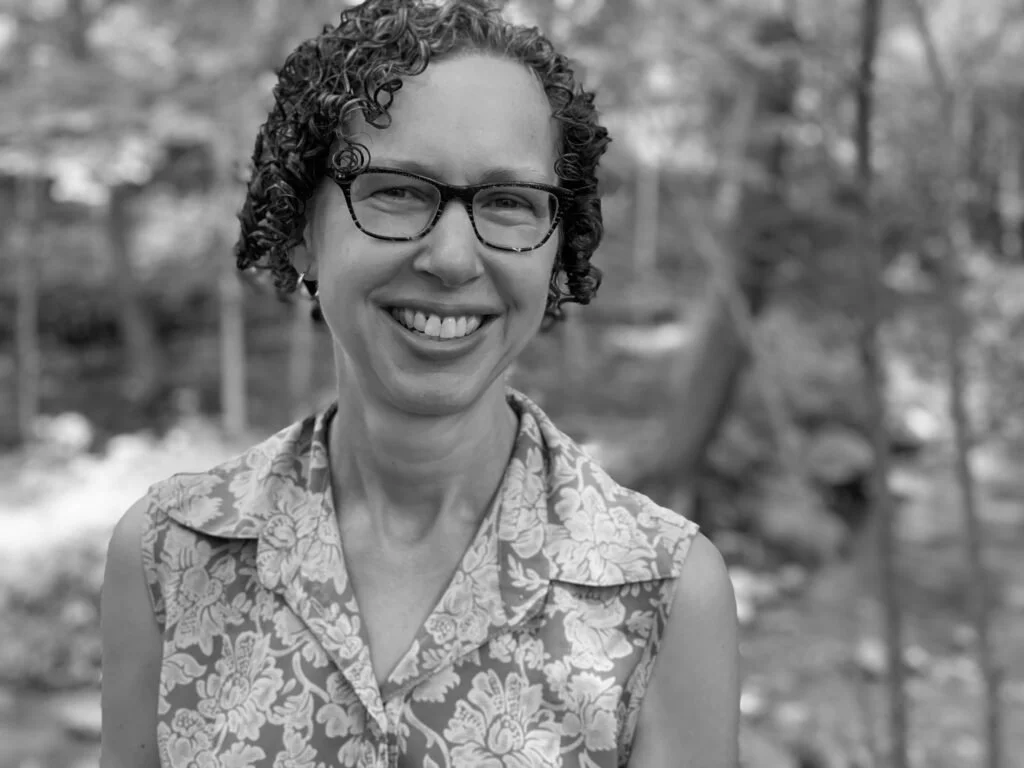
About Stephanie Bolster:
Stephanie Bolster’s latest book of poetry, Long Exposure, began as an exploration of Robert Polidori’s photographs of New Orleans and Chernobyl, and extended inward and outward from there. Her first book, White Stone: The Alice Poems, won the Governor General’s Award and the Gerald Lampert Award and was translated into French (Pierre Blanche). Her poems have also been translated into Spanish, German, and Serbo-Croatian. Editor of The Best Canadian Poetry in English 2008 and The Ishtar Gate: Last and Selected Poems by the late Ottawa poet Diana Brebner, and co-editor of Penned: Zoo Poems, she was born in Vancouver and grew up in Burnaby, BC. She has been a professor of creative writing at Concordia University since 2000 and lives in Pointe-Claire, on the Mohawk (Kanien’kehá:ka) territory of Skaniatara:ti.

Power Q & A with Sean Minogue
I know I’m hardly the first writer to use my hometown as a setting for a fictional story. I came upon this totally by accident, though. When I set out to “become” a writer in my early twenties, I was trying to latch onto anything except where I grew up. And that’s not because I had negative feelings about Sault Ste. Marie – I just hadn’t processed anything about my experiences there.
Q: Why did you want to write about your hometown in Prodigals (Latitude 46 Publishing, 2025)?
A: I know I’m hardly the first writer to use my hometown as a setting for a fictional story. I came upon this totally by accident, though. When I set out to “become” a writer in my early twenties, I was trying to latch onto anything except where I grew up. And that’s not because I had negative feelings about Sault Ste. Marie – I just hadn’t processed anything about my experiences there.
My roots in northern Ontario aren’t that deep, but they don’t exist anywhere else. My family moved there shortly before I turned ten years old. The next decade of my life shaped the way I see the world. I wouldn’t be who I am without the “Soo.”
Prodigals didn’t start out as a story about one specific place. It took a few drafts before I realized that I was channeling something bred into me. As the play evolved through workshops and rehearsals, I let the references get more specific. But, while I do mention Algoma Steel and Roberta Bondar, I’d like to think that it’s the type of humour, the characters’ uncertainty about themselves, and their anxious responses to the world “out there” that make this a Sault Ste. Marie story.
As a writer, I think it’s a gift to have complicated feelings about your hometown. There’s a poem that nails this uneasy fondness. “In Defense of Small Towns” by Oliver de la Paz starts with “When I look at it, it’s simple, really. I hated life there.” but then goes on to detail the narrator’s deep affection for his past:
I’m still in love. And when I wake up, I watch my son yawn,
and my mind turns his upswept hair into cornstalks
at the edge of a field. Stillness is an acre, and his body
idles, deep like heavy machinery. I want to take him back there,
to the small town of my youth and hold the book of wildflowers
open for him, and look. I want him to know the colors of horses,
- “In Defense of Small Towns” by Oliver De La Paz (read here)
Now that I have my own family, I’ve taken them to the Soo and shown them how the city has changed from the one I remember. We’ve eaten in the new restaurants and I’ve told them stories about my old bands playing in concert venues that no longer exist. The differences will grow deeper as I get older and live elsewhere. But that only encourages me to write more about the place I knew.
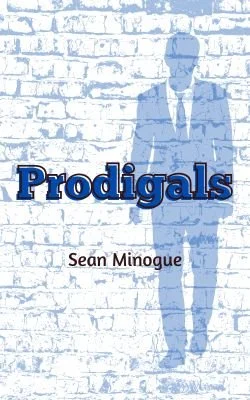
Prodigals by Sean Minogue (Latitude 46, 2025).
About Prodigals:
When a big-city dreamer from a small northern Ontario city returns to his hometown to testify in a murder trial, he faces old uncovered wounds in his circle of friends and discovers that his missed opportunities are more than just regrets.

About Sean Minogue:
Sean Minogue has written for film, television, and theatre. His stories, poetry, and essays have appeared in Lithub, ARC Poetry Magazine, The Algomian, Maudlin House, THIS Magazine, Full Stop, and The Globe and Mail. Turnstone Press just published his debut novel, Terminal Solstice. Sean’s acclaimed play, Prodigals, premiered as a feature film in 2017. Latitude 46 Publishing is releasing it as a book in August 2025. Sean lives in Toronto.

Power Q & A with Lorne Daniel
Some of the poems about family estrangement in this book started simply with me wanting to record what was going on – to create a record. But then, I have an urge to do more with it, to explore the nuances of the experiences and to create relationships.
Q: Your poetry collections, What is Broken Binds Us (University of Calgary Press), explores some significant disruptions: addiction and mental health challenges, family estrangement and an unexpected ancestral connection to slavery. How does poetry arise from these difficult realities?
A: As a writer, I’m interested in making meaning, but also in making life meaningful. Life events deliver experiences, and we are guaranteed big helpings of grief and upset and joy. I explore these, initially, so that I can see life more clearly myself. Some of the poems about family estrangement in this book started simply with me wanting to record what was going on – to create a record. But then, I have an urge to do more with it, to explore the nuances of the experiences and to create relationships. What are the connections between this event and that sense of concern or well-being? What does this remind me of? What images are dancing around in my subconscious as I jot down the ‘facts’ of an incident? Why? I don’t set out to answer every question, because life never answers every question. But the poetry becomes one way of processing life. When things begin to fall into place in a poem, to create some clarity for me, the creative work also starts to become something that other people can relate to. There are inevitably points of resonance in the human experience, when is its artfully reflected in a poem or painting or sculpture. The difficult life experiences can become something of deeper value.
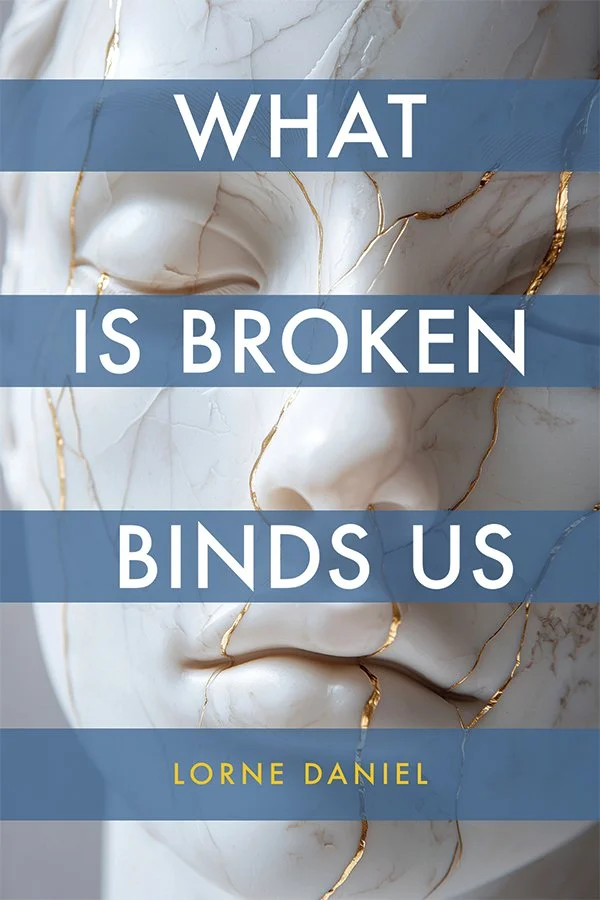
What is Broken Binds Us by Lorne Daniel (University of Calgary Press)
What is Broken Binds Us is a collection of poems of the disruptions and emotional tremors that shape us: enslaved families broken and dispersed, histories hidden, addiction and estrangement, and the shocks of bodily trauma.
What is Broken Binds Us shares stories of loss, absence, acceptance, and hope. Returning to the page after a long absence, poet Lorne Daniel provides a unique perspective on crisis that balances raw emotion with vulnerability, thoughtfulness, and care.
In seven sections, Daniel braids the stories of empire, personal traumas, addiction and family estrangement, shifting emergencies, and the wisdom of elders and the natural world. Lessons in Emergency Preparedness traces accident, injury and recovery, facing the trauma of a sudden loss of physical competence through the metaphorical and literal breaks of a shattered body and the slow movement towards mending. When the Tributaries Ran Rich unravels empire and a five-century narrative of hard-working immigrants with the discovery of enslavement in family records, forcing a deep reconsideration of the truth of the past. Episodic Tremor & Slip speaks of the tectonic shifts in family life that occur when facing substance abuse, addiction, and mental health struggles, of the pain of estrangement and the love that continues. In the Family Name is a reflection on time, on people, and on the natural world that revisits and turns over all that came before, exploring it from new angles.
Lorne Daniel writes with calm, conversational assurance. These poems are accessible and evocative, speaking from their specificity to the many people who have faced injury, estrangement, struggle, and pain, and must carry it—and carry on.

Lorne Daniel
About Lorne Daniel:
Lorne Daniel is a Canadian poet and non-fiction writer. He has been deeply engaged in the literary community, including the emergence of a Canadian prairie poetry scene in the 1970s. He has publsihed four books of poetry, edited anthologies and literary journals, and written freelance journalism. His work has been published in dozens of anthologies, journals, newspapers and magazines in Canada, the U.S. and the U.K. Lorne lives on the traditional territories of the Lək̓ʷəŋən people in Victoria, BC.

Power Q & A with Guy Elston
To put it simply, because I’m not that interested in myself. Which isn’t true, of course – what poet isn’t obsessed with themselves – but perhaps I'm not that interested in the front-facing, autobiographical concept of ‘Guy Elston’. Memory, identity, the cause and effect of life and its happenings – it’s all a sheer mountain face, senseless. I need an angle, a longer way round.
Q: Your debut collection The Character Actor Convention (The Porcupine’s Quill, 2025) is full of persona poems, monologues and dialogues. The speaker is variously an animal, an object, a chemical element, a season, even someone on a date with King Arthur. Why?
A: To put it simply, because I’m not that interested in myself. Which isn’t true, of course – what poet isn’t obsessed with themselves – but perhaps I'm not that interested in the front-facing, autobiographical concept of ‘Guy Elston’. Memory, identity, the cause and effect of life and its happenings – it’s all a sheer mountain face, senseless. I need an angle, a longer way round.
Poetry can be so many wonderful things, and there’s clearly no one superior model. It can be urgent, timely and important, absolutely. Or, the complete opposite. I like to see my poetry simply as a form of storytelling. I’m most interested in forgotten, impossible, niche encounters and viewpoints, the kind which can thrive best in the literary-popcorn realm of poems. A snatched glimpse through a window into a courtyard you never knew was there. Some kind of masked ritual is happening in the courtyard. Think Invisible Cities, but snack-sized.
This is not to say that my psyche doesn’t fill the book. If anything, the book is even more full of me than if I wrote straight confessional poetry. When I write from the POV of Jonah’s whale, for example, I’m not starting from scratch – I'm necessarily depositing a bunch of my own hang-ups and melodramas into the voice of the whale.
I guess the short answer is, persona poems and odd dialogues are my way of incorporating Emily Dickinson’s famous “Tell all the truth, but tell it slant” into my practice. I approach myself at a slant through these guises. If I see a flash of something I could be, or once was, or that might seem knowable to someone, somewhere, that’s my thrill. As for why – it’s simple. All I ever want is to make you both laugh and cry.

The Character Actor Convention by Guy Elston (The Porcupine’s Quill, 2025)
About The Character Actor Convention:
A pumpkin writes a letter to his father. A sheep recalls a revolution, and love. Hydrogen pens a tell all exposé of Oxygen. The Stick Insect Orders His Tomb. Napoleon counts waves and cheats at cards. A sunflower seeks answers – why sun? A crow considers children in this cruel, spiky world. And all the while, character actors gather for the endless convention...
Guy Elston’s debut is a curious smorgasbord of personas, voices and (un)natural perspectives. Through impossible encounters and strange viewpoints an insistent, ever-shifting ‘I’ questions its relation to itself. Wist, wit, and obsession rise like tides, are forgotten, and start fresh. Authenticity is always just round the corner.
The Character Actor Convention is not urgent, timely or topical. It’s something else.

Guy Elston
About Guy Elston:
Guy Elston was born and raised in Oxford, UK. After various jobs, journeys and other lifetimes he surfaced in Toronto in 2020. He has an MA in History from the University of Amsterdam. Since moving to Canada his poetry has been published by The Malahat Review, Canadian Literature, Event, The Literary Review of Canada, Vallum, The Antigonish Review and other journals. His chapbook Automatic Sleep Mode was published by Anstruther Press in 2023. His debut full-length collection, The Character Actor Convention, is forthcoming from The Porcupine's Quill in 2025. Guy lives in Toronto and can be found at poetry events. He’s a member of the Meet the Presses collective and is a first reader for Untethered magazine.

Power Q & A with Christy Climenhage
I hope that readers will take away the idea that just because we are capable of doing a thing, doesn’t mean we should do the thing. We need to use our own critical thinking and ethical judgement to determine our way forward and make decisions in a complex world. We live in an era of marvels where so much is possible. But just because something is possible doesn’t mean that it serves any kind of public good. We shouldn’t do it just because we can. This applies to genAI, it applies to resurrecting dire wolves (which were not resurrected at all, not really), and it applies to deep-sea mining. And of course, it applies to the central premise of my novel – adapting humans to live in the ocean depths.
Q: Christy, your near-future debut novel THE MIDNIGHT PROJECT (Wolsak & Wynn, 2025) deals with some serious issues ranging from the ethics of genetic engineering, the commodification of science to the perils of late-stage capitalism. What do you hope readers will take away from your novel?
A: I hope that readers will take away the idea that just because we are capable of doing a thing, doesn’t mean we should do the thing. We need to use our own critical thinking and ethical judgement to determine our way forward and make decisions in a complex world. We live in an era of marvels where so much is possible. But just because something is possible doesn’t mean that it serves any kind of public good. We shouldn’t do it just because we can. This applies to genAI, it applies to resurrecting dire wolves (which were not resurrected at all, not really), and it applies to deep-sea mining. And of course, it applies to the central premise of my novel – adapting humans to live in the ocean depths.
Science fiction is supposed to provide a cautionary tale to encourage people to use their own cognitive faculties to think ahead to the consequences of their actions. Dystopian tales are not meant to be inevitable roadmaps to the future, they are there to encourage sober second thought. In addition to entertaining readers, I hope my novel will spark some reflection on the role of big billionaires and venture capital in scientific endeavours, and the ethics of bespoke genetic engineering.
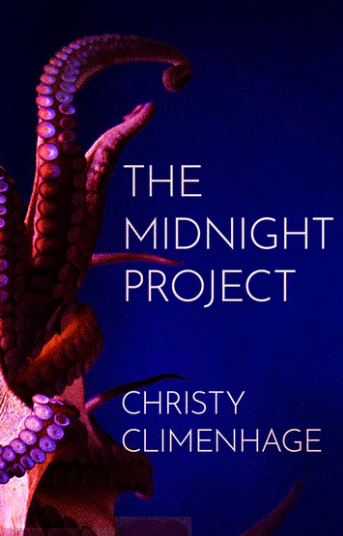
The Midnight Project by Christy Climenhage (Wolsak & Wynn, 2025)
About The Midnight Project :
When enigmatic billionaire Burton Sykes walks into Re-Gene-eration, a bespoke reproduction assistance clinic run by Raina and Cedric, two disgraced genetic engineers struggling to get by, they know they have a very unusual client. When Sykes asks them to genetically engineer a way for humanity to survive the coming ecological apocalypse, Raina is tempted. Bees are dying, crops are failing, and she knows her research is partly to blame. Could she help in some way? Though troubled, Cedric agrees to take part when it becomes clear their benefactor will do this with or without them. How else can he be sure their work won’t fall into the wrong hands? But can they really trust Mr. Sykes?
In this near-future science fiction thriller, Christy Climenhage has created a frighteningly real world on the verge of collapse. As disaster strikes, the two friends need to decide whether to cling to their old life or to let go and embrace a new path for humanity.
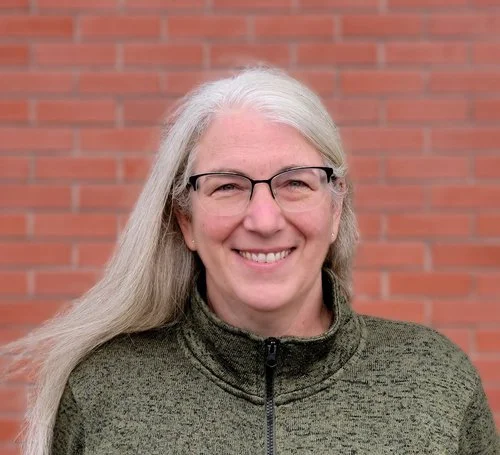
Christy Climenhage
Photo credit: Roger Czerneda
About Christy Climenhage:
Christy Climenhage was born in southern Ontario, Canada, and currently lives in a forest north of Ottawa. In between, she has lived on four continents. She holds a PhD from Cambridge University in Political and Social Sciences, and Masters’ degrees from the Norman Paterson School of International Affairs at Carleton University (International Political Economy) and the College of Europe (European Politics and Administration). She loves writing science fiction that pushes the boundaries of our current society, politics and technology. When she is not writing, you can find her walking her dogs, hiking or cross-country skiing.

Power Q & A with Aamir Hussain
The core inspiration of the story does come from my lived experience of coming from a family of Muslim women who are incredibly accomplished in many different fields and my attempt to reconcile this with the image of my faith in the West of being incredibly misogynistic and oppressive towards women. An image that has been a part of Western culture for hundreds of years but came into prominence as a part of the incessant drumbeats successfully justifying wars against Muslim Majority countries for the past few decades.
Q: In your novel, Under the Full and Crescent Moon (Dundurn Press, September 23, 2025) you have a very high concept of a Muslim Matriarchy. How important is that to the story?
A: The core inspiration of the story does come from my lived experience of coming from a family of Muslim women who are incredibly accomplished in many different fields and my attempt to reconcile this with the image of my faith in the West of being incredibly misogynistic and oppressive towards women. An image that has been a part of Western culture for hundreds of years but came into prominence as a part of the incessant drumbeats successfully justifying wars against Muslim Majority countries for the past few decades.
Much of the reading and research into Islam and the mechanics of Islamic Law (Sharia) I did was to delve into what it is about Islam that can allow both of these very different realities to exist simultaneously, especially since I did grow up in Saudi Arabia in the 1980's and early 90's which did hew very close to Western misogynistic stereotypes of Islamic society. I've always been very comfortable with the idea that there exist very different interpretations of Islam and as my conviction grew that the faith itself is able to accommodate even something as unintuitive as a matriarchy, the seeds of the story were firmly planted
But having done the research and having used it to create the setting and the core conflicts that drive the story, it is the characters that I have grown to view as the most important. Their triumphs, their failures, their strengths and flaws are what I have been most honoured to have attempted to capture. More than even the accuracy of the theology and history that I built the world on, I am worried about how believable the women are that I strived to portray in the pages of the novel. I want the growth of Khadija, the main character, from a fearful introvert to a fierce defender of her society to be relatable. I want her mentors, her rivals, her friends all to feel real.
I have been blessed to have had early readers, first among my circle of family and friends and, later, in a wider community of accomplished and talented editors and authors, and every bit of praise from the women among them has been an unimaginable source of relief.

Under the Full and Crescent Moon by Aamir Hussain (Dundurn Press, 2025)
About Under the Full and Crescent Moon:
In a battle of words and beliefs, a young woman must defend her city against zealotry during the Islamic Golden Age.
After his long-time scribe retires, Khadija’s father, the city’s leading jurist, offers his introverted daughter the opportunity to take on the role of his assistant. In accepting, Khadija is thrust into her community, the medieval hilltop city of Medina’tul-Agham, where she, as a motherless young woman, has spent little time. Led by Imam Fatima and guided by the Circle of Mothers, it is a matriarchy — the only one in the empire. Though forced to set aside her quiet life among the books and parchments of her family home, Khadija thrives, finding her power and place in the world with the support of her new friends and strong female mentors.
Yet Khadija’s idyllic new life is shattered when fanatical forces weaponize Sharia law to threaten the very fabric of the society. Using only the power of her parchment and quill, Khadija must win the support of the people and write fatwas to fight against injustice, or the peace and prosperity of her city will be nothing more than a footnote in the annals of history.

Aamir Hussain
About Aamir Hussain:
Aamir Hussain was born into a family of strong women in Pakistan, grew up in Saudi Arabia, and moved to Canada when he was fifteen years old. He works in the tech sector in Toronto. Under the Full and Crescent Moon is his debut novel. He lives in Milton, Ontario.

Power Q & A with Kevin Andrew Heslop
The work of a good book or a good art or an et cetera is to make it harder to live, to invite the reader to stretch beyond the settled narratives and reduplicative forms to which they’ve become habituated, an injunction ever the more keen in a world so stricken with capitalist call and response, itch and scratch, that the moral obligation to look longer, allow greater complexity to be revealed, and not categorically to encapsulate one’s satisfaction by acquiring the product of an echo is the greater.
Q: You have a book coming out this fall, The Writing on the Wind’s Wall: Dialogues about Medical Assistance in Dying (The Porcupine’s Quill, 2025)—a collection of moving, thought-provoking dialogues about Medical Assistance in Dying (MAiD) with a wide range of voices—doctors, doulas, faith leaders, survivors, and prospective recipients—set in the healthcare hub of London, Ontario. What question’s answer will make somebody buy a thing? In this case, your book?
A: In the context of this book, the trouble with the question-answer format are several. But don’t worry: dopamine comes later.
First, a question that can be answered is a bore, is a solved proof, partakes of an understanding of exchange whereby a need inherent in the opening is satisfied resolutely in the reply; worse than a linear A-B, it is A-Z, a beginning and an ending. This is not the work of the humanities; this is the work of marketing, the simple satisfaction of a need.
The work of a good book or a good art or an et cetera is to make it harder to live, to invite the reader to stretch beyond the settled narratives and reduplicative forms to which they’ve become habituated, an injunction ever the more keen in a world so stricken with capitalist call and response, itch and scratch, that the moral obligation to look longer, allow greater complexity to be revealed, and not categorically to encapsulate one’s satisfaction by acquiring the product of an echo is the greater.
Second and carrying on from there, an answer, being contained, is a product, is a complete thing, is separable from its environment, an individual ego bereft of an understanding of its context, unconnected to more than the dyad of commercial exchange in which it partakes.
Fourth, it is the product of what Paolo Freire calls the “banking model of education:” an answer replicates an old order, limned with Grecian dust, in which the questioner (the student), knowing nothing, appeals to the teacher (knowing everything), but this fundamentally neglects to recognize the subjectivity of the student (whom Freire calls the student-teacher in complement to the teacher-student, both of whom are enjoined to the process of conscientisization, of mutual liberation through continuous subjective exchange) while also anticipating that every student is equally blank of history—you hear overtones of Skinnerian and Pavlovian programmatic call-response/stimulus-reaction here—rather than full of unique experience, rich and complex and individuated. The same could be said for the interview format, which after over a decade in practice I’ve foregone in favour of dialogue.
Zebrath, if the sequencing of paragraphs “second” followed immediately by “fourth” troubled you, allow me to invite the poor proverbial cat out of the bag by offering a paragraph begun as this one is to remind you that the expected sequence in response to a simple provocation is not living reality but habit, rather what we might expect of the algorithm. When you are open to it, meaningful dialogue, like reality—trigger warning—is full of unexpected surprises by the provoked torsion and friction of whose incoming difference demands you differ yourself in response to the novel (which, #TLDR, this “answer” is becoming).
What I love about dialogue is exampled by the practice of a wonderful artist Pascal Hachem I spoke with a few days ago.
Pascal and I met following the installation of his first solo show in São Paulo which he created during a residency in Brasilia—to which he arrived, as he always arrives to residencies, with nothing more than a notebook. No paints, no glue, no objects or ideas preconceived and therefore unresponsive to the environment: he simply showed up with “trust” enough that what “dots” would need to be “connected” would present themselves simultaneous to his apprehension of how to connect them. The result was Whispering Skies, a relational cat’s cradle between Brasilia and Lebanon, analogizing the kite-fights of Brazil to the military drones forever whispering from Lebanese skies coupled with notice of locations that will be bombed, with or without warning, an element of Pascal’s representation of which was a tongue-in-cheek invocation of the smart phone locals will hold up from the street next to an anticipated bombing to watch; red string, evocative of the glass-covered string of battling kites, evocatively strewn along pieces of corrugated roof, themselves indicative of favelas, of stubborn life persisting despite, and connective personally to Pascal because of how he was taught in Lebanon to seek shelter under as many layers of roof as he could to survive—usually, because a storage space is often to be found in the ceiling of a bathroom in Lebanon, meaning these layered ceiling structures provide more protection from incoming explosives, in a bathroom—an edict made obsolete by the development and deployment of modern drone technology that will level a building with a single modern bomb; roofs which “I’m not used to this, but in Brasilia, the roof was like this: it depicts everything: one tiny lizard walking on the roof; it depicts one bird walking; it depicts the leaves and the wind, et cetera. So for me it was interesting to understand this project until one day, one mango fell on the roof. And this [incomprehensible]. And by forming this, it made the sound of, like, BOOM. Suddenly I was like—It’s interesting, because suddenly my perception of what’s the roof is completely different from what I’m surrounded. So, I said, I should place it and exchange it as a story because it’s very crucial and I’m amazed by nature how it’s very close to me—and I’m not against that, but—it was like a ping-pong of things between my experience of life and where I am now.” (Here is a link to Pascal’s show.)
Falafelth, many of the above words would have been characterized as run-on sentences and dismissed by institutions of learning that obstructed the education meaningful long-form dialogue would provide me through my twenties—along with extracurricular study and production of theatre and publication of poetry and art, music, and film criticism—a consequence of which dialogic practice is this book, The Writing on the Wind’s Wall: Dialogues about Medical Assistance in Dying, to which I’ll address myself more directly now.
The book is not written in the digressive, performative, syntactically complicated, and lexically stunting style of the foregoing. Rather the book is written for as wide an audience as possible because it aspires to an accessible act of service in line with the lives and careers of the two people whom by their fatal encounters with the Canadian healthcare industry prompted the book—my late father, a professional public servant of thirty-eight years in London, Ontario, a dedicated past president of the Optimist Club of Oakridge Acres, the local chapter of a charity designed to raise money for children’s sport, including what has become the world’s largest sledge-hockey tournament (The London Blizzard Invitational, which my dad helped found in the early aughts), retired professionally for nearly five years before a furious cancer spread throughout splitting his bones, a man entitled to MAiD but who for a fugue of reasons died without the good quick death he requested in Victoria Hospital on July 10th, 2020; and his mother, a nurse and teacher of forty years and a dedicated community servant for longer, a woman who was knitting sleeping bags for the unhoused until despite requesting MAiD died days after her 91st birthday by conscious phlegmatic asphyxiation at that same hospital on February 8th, 2025.
By the book I sought to catch and enlotus their tortures into polyphony defiant of public discourse as binary and it’s on the image of the lotus that I’ll close: as I aspired in microcosm here to do in response to an iterative invitation to partake of a banking model of education, the itch a scratch solves—capitalism as psoriasis—the lotus sits upon and among the swamp, transmuting the stink of the muck into many-petalled balance, fragrant presence, and radiant light; and so do I daily and so might we all aspire to that invitational act of transmutation in—I trust you’ll agree—fertile times.
P.S. Allow me to address you directly with an invitation. This book on Medical Assistance in Dying has led me to another, First Do No Harm: Ten Years as a Death Doctor, as well as that second book’s limited-series adaptation to the screen, Death Doctor, which I bring to your attention because I’m looking for visionary collaborators in the publishing and film-and-television industries to contribute to making these happen.
I’m also developing a feature film, The Phoenix, about the life and work of revolutionary theatre director Zé Celso, with Teatro Oficina of São Paulo, Brazil; a dystopian news-parodying sketch-comedy limited series; a dozen titles of world-class IP from leading Canadian publishers for adaptation to the screen; multiple books of dialogue with avant-garde artists from around the world; multiple books of formally unique poetry; and multiple collaborative art installations.
In addition to my work in the arts, as one of the first venture capital investors in Revolve Surgical, which recently made its first sale for pioneering a minimally invasive surgical robotic device capable of mending the splitting spine of a foetus in utero, I’m also actively seeking to engage additional companies in the field of medical robotics provided their ambit is to minimize suffering; and as an Ambassador for Green Field Paper Company, on whose recycled seed-paper two of my recent books have been published, and as Vice-Chair of the Board of Directors of Changing Ways, a non-profit in my hometown dedicated to ending violence against women, I’m always open to connections and collaborations in the non-profit, ecological, and social-justice sectors too.
If you wish to support my or my international community’s work in any way, or if you want to connect or collaborate on any imaginable project in any of the arts, you can always reach out to me at kevin@astoriapictures.ca.

The Writing on the Wind’s Wall: Dialogues about Medical Assistance in Dying (The Porcupine’s Quill, 2025) by Kevin Heslop.
About The Writing on the Wind’s Wall:
The Writing on the Wind’s Wall listens at length to the voices of those affected by 'Medical Assistance in Dying' in the city of London, Ontario, a national healthcare hub: a death doula, a sound-healer, a psychiatrist, a scholar, a doctor, a medium, an ethicist, a prospective recipient, a politician, a reverend, and several recipients' survivors. Facilitated by Kevin Andrew Heslop, these dialogues are informed by the work of a wide variety of cultural leaders, including Paolo Freire, John Cage, Li-Young Lee, Thích Nhất Hạnh, and Robert Hass. The collection documents how euthanasia, while in the spirit of individual liberty, increases proportional to the world’s socioeconomic, ideological, and (therefore) ecological unsustainability. The Writing on the Wind’s Wall is a testament to what a community felt and believed in the 2020s about living, and dying, together.

Kevin Andrew Heslop
About Kevin Andrew Heslop:
Kevin Andrew Heslop (b. 1992, Canada) is the author, most recently, of The Writing on the Wind’s Wall: Dialogues about Medical Assistance in Dying (The Porcupine’s Quill, 2025).
Currently serving his hometown as Vice-Chair of the Board of Changing Ways, a non-profit dedicated to ending violence against women, Kevin is also one of the first venture-capital investors in Revolve Surgical, which recently made its first sale for pioneering a minimally invasive surgical robotic device capable of mending the splitting spine of a foetus in utero, and an ambassador to Green Field Paper Company, on whose recycled seed-paper two of his recent books have been published.
Supported by the London, Ontario, and Canada Councils for the Arts, Kevin’s directorial work with Nicole Coenen—notably White, Things She Wants, and Ripley’s Aquarium—has won prizes from the Toronto Short Film Festival, the Vancouver Independent Film Festival, the Independent Shorts Awards, the Berlin Shorts Awards, and the Los Angeles International Film Festival, screening at dozens of festivals around the world. In 2022 he founded Astoria Pictures to develop, finance, and distribute projects in film and television for which to will serve as writer, director, and/or producer.
Kevin’s poetry has been published by The Blasted Tree Art Collective, Frog Hollow Press, Anstruther Press, Gordon Hill Press, Baseline Press, Rose Garden Press, and, mostly recently, The Fiddlehead; collaborative art installed with McIntosh Gallery, Westland Gallery, and Centre [3] for artistic and social practice; and dialogues amplified via Parrot Talks, The Miramichi Reader, and The Seaboard Review, a selection of which are forthcoming from Guernica Editions as Craft, Consciousness: Dialogues about the Arts (2027, vol. i & 2028, vol. ii).

Power Q & A with Lucy E.M. Black
This novel began in an antique store when I fell in love with a reproduction poster from May 1874. The splendid horse, young Netherby, was available as a proven foal-getter at $4 a single leap. I was charmed by the poster but also intrigued by the idea of a farmer advertising his horse’s services in this way. I began to wonder about the farmer and gradually Larkin’s story revealed itself and the novel unspooled.
Q: What do you most hope that readers will take from your novel, A Quilting of Scars (NoN Publishing, October 15, 2025)?
A: This novel began in an antique store when I fell in love with a reproduction poster from May 1874. The splendid horse, young Netherby, was available as a proven foal-getter at $4 a single leap. I was charmed by the poster but also intrigued by the idea of a farmer advertising his horse’s services in this way. I began to wonder about the farmer and gradually Larkin’s story revealed itself and the novel unspooled.

I was an educator for nearly thirty years and during that time, I interacted with many young people who were frightened of revealing their sexual identities to parents and family members. Many of them were certain that they would be shunned or sent for counselling to reprogram their inclinations. Sadly, many students I knew were asked to leave their family home as a result of such disclosures and spent weeks, if not months, couch-surfing while attempting to find a more sustainable living arrangement. It broke my heart to see young people turned away by the very individuals who should have embraced them and celebrated their life choices. As I reflected on this, I realized that the church had a role to play in perpetuating the kind of judgement that so damaged these beautiful young people.
And so, as the novel took shape and I came to know Larkin and his best friend Paul, it became important to me to tell their story – which is a love story of sorts and a celebration of male friendship. The setting is placed at the end of the 19th century when small-town Ontario was still very much under the influence of Victorian ideology. This is a period of tremendous growth and potential with huge advances in science and technology and yet the social mores, if you will, were much slower to change.
Placing Larkin’s story in rural Ontario allowed me to celebrate all that was worthwhile, even noble, about that period of farming history while also showing the treatment of such things as breast cancer, prostitution, child abuse and murder in the same period.
Finally, what I hope readers take away from A Quilting of Scars is more than a simple condemnation of those who judge the Larkins of this world, in the form of a deep realization of the vulnerability of young men like Paul and Larkin, both then and now. The murders and fire in the novel are a direct result of unchallenged cruelty and lack of compassion. The secrets that are kept throughout the story changed Larkin’s life and left him isolated and lonely. So much of our society has changed in the last hundred-years but what is so clear to me is how desperately we still need acceptance and unconditional love without judgement. If this novel brings those thoughts to the forefront for readers to consider, I will be grateful.

A Quilting of Scars by Lucy E.M Black, published by NoN Publishing
About A Quilting of Scars:
Filled with the pleasure of recognizable yet distinctively original characters and a deftly drawn sense of time and place, A Quilting of Scars brings to life a story of forbidden love, abuse and murder. Pulsing with repressed sexuality and guilt, Larkin Beattie reveals the many secrets he has kept hidden throughout his lonely life. The character-driven narrative is a meditation on aging and remorse, offering a rich account of the strictures and rhythms of farming in the not-so-distant past, highlighting the confines of a community where strict moral codes are imposed upon its members and fear of exposure terrifies queer youth. As Larkin reflects upon key events, his recollections include his anger at the hypocrisy of the church, and the deep grief and loneliness that have marked his path. There is a timelessness to this story which transcends the period and resonates with heart-breaking relevance.

Author Lucy E.M. Black
Lucy E.M. Black (she/her/hers) is the author of The Marzipan Fruit Basket, Eleanor Courtown, Stella’s Carpet, The Brickworks, Class Lessons: Stories of Vulnerable Youth and A Quilting of Scars. Her award-winning short stories have been published in Britain, Ireland, USA and Canada in literary journals and magazines including Cyphers Magazine, the Hawai’i Review, The Antigonish Review, the Queen’s Quarterly and others. She co-ordinates Heart of the Story, an author reading series in Port Perry, writes book reviews for The Miramichi Reader, serves as literary chair for Scugog Arts, is a dynamic workshop presenter, experienced interviewer and freelance writer. She lives with her partner in the small lakeside town of Port Perry, Ontario, the traditional territory of the Mississaugas of Scugog Island, First Nations.

Power Q & A with Daniel Coleman
The 16th and 17th century encounters between Indigenous people in Turtle Island and merchant sailors coming from Europe constitutes the meeting of two very different ways of seeing and living in the world, two very different approaches to trade. The French, Dutch, and English who arrived at the mouths of rivers flowing into the Atlantic were the envoys of a new way of making wealth. These were not aristocrats who stood to inherit their fathers’ land and properties, they were sailors from Europe’s emerging merchant class who were looking for trade goods and resources—spices from Asia, minerals from “El Dorado,” manufactured items from China or India. They had recently developed the capacity to navigate across huge oceans, and they were learning that they could become independently wealthy by exploring the world’s coastlands and islands and bringing back objects they could sell at home.
Q: Your book, Grandfather of the Treaties: Finding our Future Through the Wampum Covenant (Wolsak & Wynn, 2025) is being hailed as an essential read for Canadians looking to understand our nation’s complicated history. What do the founding wampum agreements have to offer us today?
A: They can teach us a better understanding of trade at a time when trade wars are giving us lots of grief. The 16th and 17th century encounters between Indigenous people in Turtle Island and merchant sailors coming from Europe constitutes the meeting of two very different ways of seeing and living in the world, two very different approaches to trade. The French, Dutch, and English who arrived at the mouths of rivers flowing into the Atlantic were the envoys of a new way of making wealth. These were not aristocrats who stood to inherit their fathers’ land and properties, they were sailors from Europe’s emerging merchant class who were looking for trade goods and resources—spices from Asia, minerals from “El Dorado,” manufactured items from China or India. They had recently developed the capacity to navigate across huge oceans, and they were learning that they could become independently wealthy by exploring the world’s coastlands and islands and bringing back objects they could sell at home.
These new bourgeoisie met Haudenosaunee people on the Hudson River, who were also traders. But traders of a very different mindset. These inhabitants of Turtle Island understood “trade” as conducted between all the beings of the living world, not just between humans. So they were interested in the goods that the Dutch brought in their ships—copper kettles or iron knife blades—but they knew that the plants and animals and water systems all around them were influenced by trade, not just the people. Trade, to them, meant that whoever was involved, including non-humans, were part of the equation of exchange. Good trade meant exchanging what was necessary to the flourishing of the entire environment.
This is what makes the early wampum agreements that the Haudenosaunee made with the Dutch and then with the English so unique and so relevant for us today. When the Haudenosaunee diplomats explained that the Two Row Wampum (circa 1613) represented the Dutch trading ship and their own canoes as two vessels traveling down the river of life, they were emphasizing that the agreement made between the two vessels’ “culture, beliefs, and laws” must benefit not just the people in the vessels but also the river itself, which, after all is what kept everyone afloat (let alone hydrated). The Two Row Wampum which was renewed as the “Silver Covenant of Friendship” wampum agreement with the British (1674) is as much ecological philosophy as it is political philosophy. To make peaceful, healthy agreements between humans was not a separate undertaking from making agreements to secure the peace of the land, the earth, the watershed. “No one can claim Mother Earth,” the Haudenosaunee said when they were working out the Two Row agreement with the Dutch, “except the faces rising in the earth to be born.” Those “faces” were like seeds, the embryos of future plants, animals, or humans. The point is that the wampum agreements that shaped Dutch and then British relations with Indigenous North Americans understood that the eco (Gk: “home”) of “economy” is the same as the eco of “ecology.”
The Covenant Chain-Two Row Wampum agreements have been called the “Grandfather of the Treaties,” because the British learned these ground rules for treaty-and-trade-making from them, and they went on to make wampum covenants with First Nations all across northeastern Turtle Island. They then expanded from these to the written and numbered treaties, so these principles lie latent in our country’s constitutional DNA. We need to renew these understandings today. Our ancestors’ first agreements for how to live in this continent, how to share the river of life, were framed within these ground rules—because, in the end, ground rules.
So many of our legal arrangements have been twisted away from these early agreements. The extractive and exploitative understanding of trade, which disregards non-humans as participants in, let alone beneficiaries of, trade, has polluted and abused the river of life. The current battles over trade tariffs show how twisted our understanding has become. An obsessive focus on asserting sovereignty over dead objects (“resources”), distracts us from trade agreements aimed at benefitting the faces waiting in the ground to be born.

Grandfather of the Treaties: Finding our Future Through the Wampum Covenant by Daniel Coleman (Wolsak & Wynn, 2025)
More about Grandfather of the Treaties: Finding our Future Through the Wampum Covenant:
Grandfather of the Treaties shares Coleman’s extensive study of Haudenosaunee wampum agreements with European nations. It was written in close consultation with many Indigenous scholars and shows how we can chart a new future for everyone living in what we now call Canada—Indigenous, settler, more recent arrival—by tracing wampum’s long-employed, now-neglected past. The Covenant Chain-Two Row treaty tradition models how to develop good minds so that we can live peacefully together on the river of life that sustains us all. It is a philosophy, an ethical system, a way of learning to live as relatives with our human and more-than-human neighbours. This covenant has been called the “grandfather of the treaties,” and is also considered the grandmother of Canada’s Constitution.

Daniel Coleman
More about Daniel Coleman:
Daniel Coleman is a recently retired English professor who is grateful to live in the traditional territories of the Haudenosaunee and Anishinaabe in Hamilton, Ontario. He taught in the Department of English and Cultural Studies at McMaster University. He studies and writes about Canadian Literature, whiteness, the literatures of Indigeneity and diaspora, the cultural politics of reading, and wampum, the form of literacy-ceremony-communication-law that was invented in by the people who inhabited the Great Lakes-St. Lawrence-Hudson River Watershed before Europeans arrived on Turtle Island.
Daniel has long been fascinated by the poetic power of narrative arts to generate a sense of place and community, critical social engagement and mindfulness, and especially wonder. Although he has committed considerable effort to learning in and from the natural world, he is still a bookish person who loves the learning that is essential to writing. He has published numerous academic and creative non-fiction books as an author and as an editor. His books include Masculine Migrations (1998), The Scent of Eucalyptus (2003), White Civility (2006; winner of the Raymond Klibansky prize), In Bed With the Word (2009), and Yardwork: A Biography of an Urban Place (2017, shortlisted for the RBC Taylor Prize).

Power Q & A with Karen Smythe
y novel began as a book about the hidden lives of wealthy retired people living in a fictional small town in Ontario that had transitioned from agricultural to a winery- and tourist-based economy. When one character with a past in wartime Germany emerged, threads opened up that I turned into storylines about the responsibility to remember and be accountable for atrocities in World War 2.
Q: Why did you decide to write a story about the Holocaust in Norway in your novel, A Town with No Noise (Palimpsest Press, 2025)?
A: My novel began as a book about the hidden lives of wealthy retired people living in a fictional small town in Ontario that had transitioned from agricultural to a winery- and tourist-based economy. When one character with a past in wartime Germany emerged, threads opened up that I turned into storylines about the responsibility to remember and be accountable for atrocities in World War 2.
My narrator is a young woman, Sam, whose ancestry is Norwegian, and after her working visit to the small town ends (she is there to write an article on tourism in the area), her focus shifts to another small town, this one in Occupied Norway. Sam learns about her extended family’s experience there under Nazi occupation—of which she knew nothing until now—and decides to write about it and post what she finds on her blog. Not many people know about what happened in Norway during and after World War 2: that there was a Jewish population there that was all but decimated; that children of German soldiers and Norwegian mothers were treated horribly; and that there was a level of complicity with which the country is still coming to terms. Sam’s character evolves as her knowledge of this history and her family’s role in it grows.
There are two Parts to the book, linked by the first-person narrator Sam; the related themes about privilege, power, history, and remembering and writing about the past also tie the two Parts together. In Part 1, I also introduced both a third-person narrator—who provides vignettes about the residents of the small town that Sam visits—as well as an omniscient narrative voice that speaks via footnotes. These techniques not only provide the reader with windows on the town and on the people that Sam doesn’t have access to, but also emphasize her unreliability as a narrator and the fact that individual perspectives (and what we think we know is true) are limited. In Part 2, Sam herself—an aspiring researcher and historian—uses footnotes in her writings to expand upon the historical research she is conducting about her family and about the Holocaust and the Norwegian Jewish population.
One of the key themes of the novel is that there is no single truth about the historical past, that it takes listening to many voices to piece together a version of truth that is, unavoidably, a mere representation of the past. So using footnotes and also interviews and other narrative forms within the novel allowed me to enact the theme, formally. This is the power of fiction, I believe—to provide multiple perspectives and stories that merge the personal and social threads with the historical, thereby using the imagination to garner empathy and a broader understanding of the human experience.

A Town with No Noise by Karen Smythe (Palimpsest Press, 2025)
About A Town with No Noise:
Samara and J., a struggling young couple, are off to J.’s birthplace, Upton Bay, a small town turned upscale theatre and winery destination. Sam has been hired by an editor friend to write a promotional piece about the place while she and J. stay with his grandfather Otto, a prominent businessman in his day.
But their visit does not go as planned. Sam’s explorations of Upton’s tourist attractions lead her to ugly truths behind the quaint little town’s façade—discoveries that are counterpointed with vignettes of the town’s wealthy, elderly ruling class, painting a different picture than the one Sam’s friend expects her to provide. Tensions between Sam and J. worsen as J.’s true nature emerges and Sam begins to question both his values and his family’s past—especially after Otto tells them stories about his time as a German soldier during WW2.
Back in the city, Sam’s opinions and judgments about what is right and wrong are tested when a shocking truth surfaces about her grandmother’s flight from Norway after the war, profoundly changing Sam’s understanding of who she is and who she wants to become.
In A Town with No Noise, fact and fiction combine to ask difficult questions about the communities we build, questions that are as relevant today as ever: Who stays? Who is chased away? And who decides?

ABOUT KAREN SMYTHE:
Karen Smythe is the author of the novel This Side of Sad (Goose Lane Editions, 2017), the story collection Stubborn Bones (Polestar/Raincoast, 2001), and the ground-breaking critical study Figuring Grief: Gallant, Munro, and the Poetics of Elegy (McGill-Queen’s U.P., 1992). In the 90s, she was the guest fiction editor for The Wascana Review and fiction editor for the Pottersfield Portfolio, and she also guest edited the Michael Ondaatje issue of Essays on Canadian Writing. Several of Karen’s short stories have appeared in Canadian literary journals including The Fiddlehead, Grain, and The Antigonish Review. A Town with No Noise is her second novel. She currently lives in Guelph, Ontario

Power Q & A with Connor Lafortune & Lindsay Mayhew
What surprised me the most about editing an anthology was the length of the process itself. When I was first approached to co-edit with Lindsay [Mayhew], I was surprised by the timeline. I could not imagine it taking over two years from initial conversations to publications.
Q: What was something that surprised you about co-editing the anthology, A Thousand Tiny Awakenings (Latitude 46, 2025)?
Connor Lafortune: What surprised me the most about editing an anthology was the length of the process itself. When I was first approached to co-edit with Lindsay [Mayhew], I was surprised by the timeline. I could not imagine it taking over two years from initial conversations to publications. However, I quickly realized that many of the pieces needed a lot of time in between. I learned to take my time and be patient throughout the process.
Something else that surprised me was the cohesion between all of the submissions. There was an incredible throughline among the poems and short stories. As an editor, I was surprised we could tell a larger story among its smaller pieces.
Miigwetch!
Lindsay Mayhew: This collection brought about many discoveries. I was especially surprised by the weight of responsibility I felt as an editor. The contributors trusted us not only with their art, but also their personal stories. We rarely discuss the importance of ethical practice as editors, but it’s a conversation I look forward to starting often!
It was an honour and delight to work on these pieces with the contributors. This experience has inspired me to continue editing, and I am excited for the never-ending learning involved.
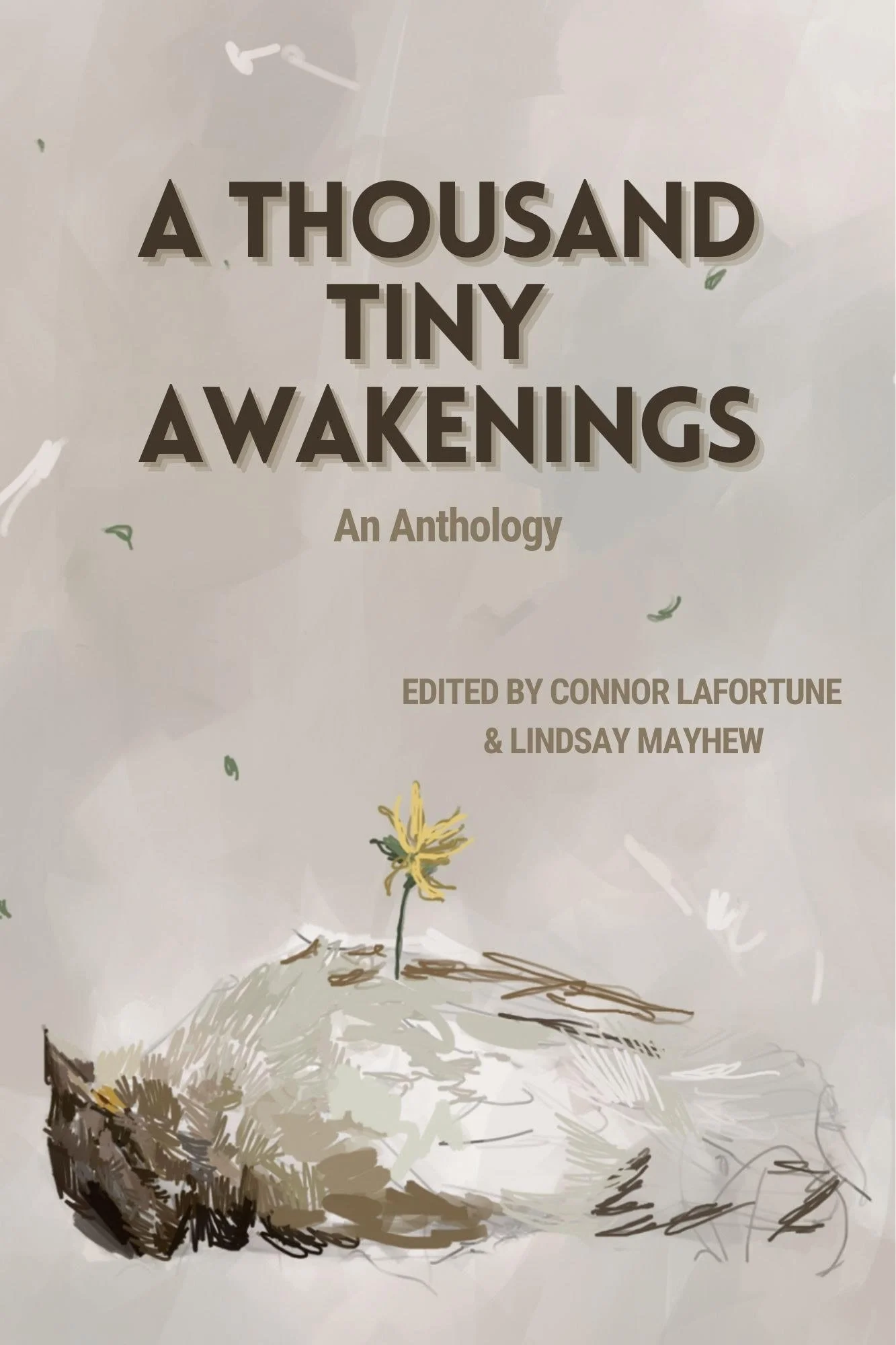
A Thousand Tiny Awakenings (Latitude 46), editied by Connor Lafortune and Lindsay Mayhew.
About A Thousand Tiny Awakenings (Latitude 46):
A Thousand Tiny Awakenings is a collection of genuine and heartfelt expressions from young and marginalized creators who challenge the oppressive structures that shape our world. These narratives, poems, and artworks echo across Turtle Island, transcending borders to offer a stirring testament to resilience and hope. Discover 15 young writers, and 23 unique and powerful pieces that embody the spirit of resistance and resurgence; uplifting the upcoming generation in their pursuit to dismantle boundaries that define their bodies, lives, and futures. Through art and storytelling, these voices call for action and inspire revolution, reminding us that our words have the power to transform the world.
A Thousand Tiny Awakenings features contributions by:
Carson Bohdi Michelle Delorme Brennan Gregoire
Waed Hasan Tyler Hein Jesse June-Jack
Kay Kassirer Nicole Robitaille Blaine Thornton
Lisa Shen Lindsay Mayhew Sydney Read
Connor Lafortune Ra'anaa Yaminah Ekundayo
Chimdi Kingsley-Emereuwa
About Connor Lafortune & LINDSAY MAYHEW:
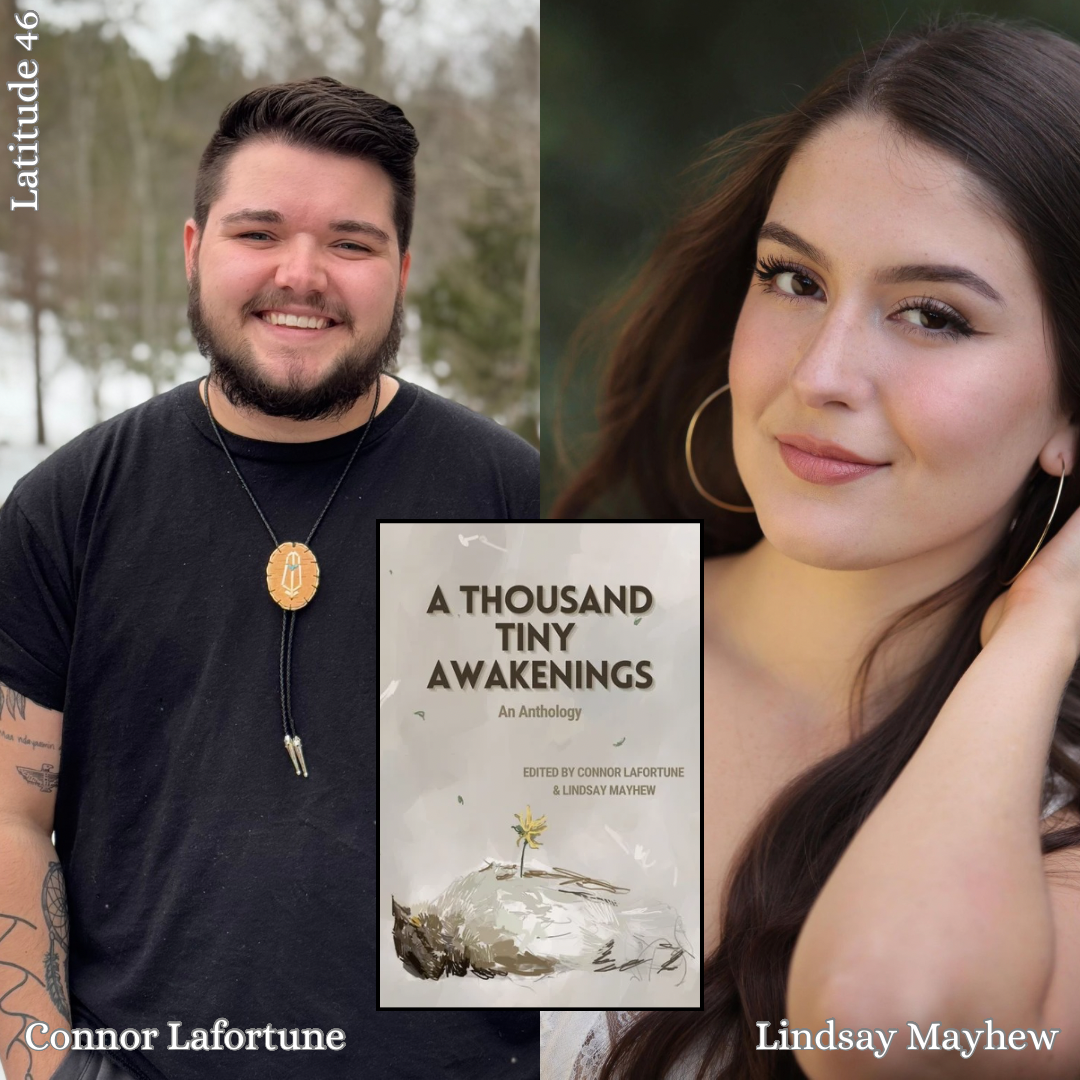
Connor Lafortune is from Dokis First Nation on Robinson Huron Treaty territory of 1850 in Northeastern Ontario. He works primarily in Life Promotion, harm-reduction, mental health, and Indigenous education. He completed his Bachelor’s Degree at Nipissing University with a Double Honors Major in Indigenous Studies and Gender Equality and Social Justice. He is currently in the Masters in Indigenous Relations at Laurentian University. Connor is Anishinaabek, Queer, and Francophone; he uses his understanding of the world to shape his creations as a writer, spoken word poet, and musician. Connor often combines the written word with traditional Indigenous beadwork and sewing to recreate the stories of colonization, showcase resilience, and imagine a new future. He recently released a single in collaboration with Juno Award winner G.R. Gritt titled “Qui crie au loup? ft. Connor Lafortune.” Above all else, Connor is an activist, a shkaabewis (helper), and a compassionate human being.
Lindsay Mayhew (she/her) is a spoken word artist, poet, and writer from Sudbury, Ontario. She recently graduated with a Master’s in English Literature from the University of Guelph. Lindsay is the multi-year champion of Wordstock Sudbury’s poetry slam, and she has featured in events across Ontario, including JAYU Canada, Hamilton’s 10th Fashion Week, and Nuit Blanche. She represented Canada in the 2024 Womxn of the World poetry slam. Lindsay’s written work is featured in multiple editions of Sulphur. Her spoken word and written work seeks to combine art and theory to voice feminist futures.