

BLOG
Review of Guy Elston’s The Character Actor Convention by Callista Markotich
Let us accept the crowd-fostered confusion of person. Let us precariously enjoy the close-call near-cliché which hugs us with homely familiarity: are we nearly there yet? Let us reconsider the title: The Character Actor Convention. Convention – is this the only Convention we may find? Or not?
Let imagination Uber you there.
Say you’re this Convention’s keynote. You’ll be in the Grand Ballroom looking out at the attendees. You’d better be at the top of your game, addressing the wild, earnest characters there assembled. There’s room for insecurity – there’s this, from the actors:
We applaud, but it could be an act.
Here in the title poem, the characters are slippery, we and they blend, and there’s that guy, yes, him and one startling you, and the imitable, inimitable I, at first, casual and in charge:
at the fin, I pocket my lanyard, picture you,
front centre on a billboard, sigh performatively
while fading to black
and then, poof! self-extracted from the speaker’s function, bringing no closure to this meet.
I had a final line — I forget.
The convention closes, as ever, on a question:
Are we nearly them yet?
Let us accept the crowd-fostered confusion of person. Let us precariously enjoy the close-call near-cliché which hugs us with homely familiarity: are we nearly there yet? Let us reconsider the title: The Character Actor Convention. Convention – is this the only Convention we may find? Or not?
For Guy Elston employs conventions. For example, well-chosen direction and flow of some poems come through the canal of an epigraph; an epigraph chosen to introduce, inspire, illuminate and add authority. Guy Elston does not turn his back on this convention, But, a poet of invention, humour and courage, he upheaves the convention early and airily and as readily as is fair.
For example, here is the epigraph, from Wikipedia, that introduces The Great Sheep Panic of 1888
…when tens of thousands of sheep fled from various fields across some 200 square miles of Oxfordshire.
Immediately, in the first line, the author creates a segue:
It’s that word panic
I take offense to.
And he’s off! In this poem he creates a nostalgic monologue by a survivor (sheep) who waxes poetic on the panic, which is really much grander thing: a revolt, its opening complete with a small selection of vernacular expressions which (irritatingly) trivialize such heroic purpose:
Are you feeling Ok?
Do you need a snack?
Here are figureheads,
…big horns suited our purpose,
but Benny wasn’t the real brains, or brawn;
martyred leaders,
Ruby, with her wolf -sharp hooves,
with her rabbit pellet eyes … leading the herd;
and true believers.
…and footrot Leon,
he believed more than anyone.
Here are the tragic remainders, reminders, regrets,
Thing is, it’s not just the fence,
the dogs, the whistles, the shearing,
and a sadness, a sense of futility.
I know she had a final epiphany.
She just never told us what it was.
His epigraph ably steers us, unsuspecting, from panic to mock epic, with sympathy for the sheep.
At times Poet Guy Elson skydives into allusion, a convention, surely — sometimes into deeply respectable and cherished pieces of literature. Twice the dramatic titles of Robert Browning are launchpads for gypsy titles which roam the poems into simpler? terrain. From the beseeching oration in which The Bishop Orders His Tomb, we hear in the hyperbolic asks of the Bishop of Saint Praxed only the faintest echo as The Stick Insect Orders His Tomb. We hear the Bishop pleading with nephews—sons mine; my boys, he calls them, while the straight-speaking stick insect addresses “kids” and is not the least prescriptive in his wants. And, though the Bishop seeks motifs and materials of epic grandeur, deeply desiring to better and best a rival bishop, a cool inversion awaits us, if we reduce his wants to this:
Put me where I may look at him! Here is the Bishop, active and vengeful.
For Elston’s Stick Insect ultimately asks this:
Bury me somewhere,
anywhere, I might be sensed. Here is the Stick Insect, passively existential.
But, finally, Stick Insect, too, lays one kind of unkind common denominator in which he too seeks a certain satisfaction:
One vanity.
Let me stick in one giant’s maw.
Too, Guy’s title His Last Cigarette has an auntie in a high place, on a cold-hearted Duke’s wall. The title My Last Duchess by Robert Browning is evoked in a swish; “the curtains I have drawn for you” open in this poem too, as Cigarette confesses his yearns, hopes and dreams. The “he” of this poem has evidently decreed it: My last cigarette. Pity the Duchess. Pity the cigarette, their shared mortal question:
Why stamp me out, so cinematic?
With poetic aplomb and hocus-pocus, the author is capable of igniting that conventional sentinel of poetic response, affect. In Produce, the speaker of the poem, a pumpkin, addresses his fame-seeking father, directly:
Dear Father.
Poor Father.
The poem is sad. It is full of entreaty. In spite of greedy futility of parental desire for fame, a selfishly motivated kind of love, akin to the phenomena of Svengalian control, it sorrows for a flawed and failed relationship. The setting, a necrotic autumn fair, is by itself is a symbol of fleeting glory and dying beauty. There is pathos:
Poor father.
Couldn’t you ever see,
just once, the future?
Can we agree that thes emotions are not unique to the pumpkin? Can we not think of cases where this very pain is not pumpkin pain? Rolling past the pumpkin personification, we can imagine a human sorrow, a child’s distress, and the pumpkin speaker helps us do so, when we consider that, heartrendingly, his pain is not merely for himself, but for the misguide sacrifices of his father:
(you)…wrapped me at night.
Fed your life into mine.
Poor father.
That’s Guy Elson’s offering.
The same thing happens in The Whale. We’re at the portal of the affective domain with the first line:
I never really knew my dad.
And then, the diction of the poem passes us from the ready-at-hand anthromorphism into a sense of all-too-human dejection and helplessness. There is the steady flow of futility in the poem, as the whale mourns his opaque genesis. Who wouldn’t ?
God provided a huge fish.
God’s casual creative wave. How dismissive.
Worse than silent seas, passing ships, no echo-song.
Then, it’s bound to pluck the heartstrings of a poet, that a poem saved Jonah in the belly of the whale!. Don’t we hope that’s true? A light shines! We think about this. We think about how scripture is poetic, and the whale and all, are scriptural. And besides, there a life-line for us to grab here:
No-one’s big enough to swallow poetry.
We can feel emotional about that.
Joan of Arc’s appearance in The Stake, which initiates the collection, does it too, for me, at least. My heart has always been warmed by Joan. She is a hero, a feminine character breaking the mould, already sung, not only in hagiographic literature, but by other poets, and Guy Eston gives her a laugh at the end of the first poem. I find that moving.
Oh, I’ll burn, Joan laughs.
I do every time.
And I feel edified that she is in charge:
Your move.
I really like that.
When Joan appears again, in For a Good Time (this may be idiosyncratic), I respond. I enjoy reading her name again in this collection, and that a reverse Joan of Arc can be envisioned:
Stop getting burnt.
The treatment of my favourite martyr in The Character Actor Convention touches me, in that ineffable way that poetry can, and must.
There are other examples. In No More Worlds, Guy Elston uses a homely geography to create an ownership. Personally, I “see” that cement square on Queen and Bathhurst in my mind’s eye. I almost see Golden Alex, or someone akin. Does the poet know how affirming that is? Surely.
You will leave this convention with plenty of swag!
There are sonic mementos: sink-eyed, days-crazed; cicada backtracked sticky,
and cameo images that turn mnemonic; wolf in a tree, prick eared, wet-eyed.
There are catchy, keeper turns of phrase: If why is not the question, neither’s how
and
adjectives are the canned laughter of language
and unique juxtapositions: wolf-sharp hooves/rabbit pellet eyes …
Unpack that bag and array the curios along the worktable and try them as titles to see if they wouldn’t jettison us into marvel and fantasmagoria. In contrast, Guy Elson’s style is to title his poems straight; poems exactly about what the titles suggests. But if his title does not promise an extraordinary content: (Sunday Drive, Automatic Feeder,) the legerdemain begins. The Work is suddenly about mushrooms. Their work. Other poems which have more exotic titles, such as Halloween Training for Horses and Dead Pheasant at Casa de Montejo tidily stay precisely within the realm of what the title provocatively suggests.
Examine Sunday Drive. The title smacks of Americana. In the first lines we are treated to Pepsi and confronted with the consumer image of the strip mall. See the ad in your mind’s eye? A two -tone Chevrolet practically swings into being; there’s a fun-loving frivolity to the exclamation marks employed in the poem, Sunday Drive! But here the drivers are lab rats, albeit, the scientists learned joy from training them. That’s how Guy Elston takes us in!
Blow a kiss. The poem ends, nevertheless, with a rare explicit tug on our human conscience:
….Race the raised expressway
Separating us from our indifference.
In Automatic Feeder, the title again unveils the subject. It is truly just an automatic feeder. But in the opening line it is the speaker of the poem who addresses the soulless machine:
I’d spend every moment of my life
below you mouth open , hoping, gaping
After savouring the musicality of open, hoping, note the stance of ambiguous reliance on the purveyor of nutrition. There is mourning for active food-procurement, the adventure and possibility of surprise and reward:
so this is how it ends, my prowl, my sleuth.
and the poem closes with a juxtaposition of bravado and capitulation:
….I am the ship’s cat
the captain is going down with, singing hymns
or purring at plastic.
Suppose we’re not alone in the room, reading this book. This happens: an eyebrow rise /a smile /a chuckle /a belly laugh. Husband, wife, roomie, “other” says: What? And we can’t express it simply – we say: You have to read this poem!
The poem H20, for instance, initiates hilariety by becoming, immediately, an address to O by H. and beginning with the query:
O, were you really worth
two of me?
Humour is sustained by the poet’s loyalty to the scientific concepts of H and O, and their elemental marriage in H2O, in which the H recalls the partners at times together:
drip drip
plonk
but, jibing, remembering O’s insults and H’s own retorts:
A fork in a world of soup
you called me. A dick
in a world of dicks
….
air headed
puffed up
grandiose
H recalls the cosmic:
For a spell the planet turned
to our yearly release
but H sees O finally in a dubious role on earth:
Last I heard
you were dosing up wildfires
Yet, H anchors his address with a nostalgic touch of sentiment:
But O,
when we were fresh,
when we flowed…
I Swear is a another very funny poem which ….. allow me: You have to read this poem!
Three Star Resort determinedly offers bathetically humorous images, painting a slightly-off vacation venue, tongue in cheek, its diction suggesting the not-quite-OK stay (note brackets):
(a friend of a friend checks themselves out).
It is a resort of last resort, exercising the ambiguity and reality that attend the choice:
How lucky we are to know how lucky we are.
Would we stay again?
We’d have no choice.
Funny, not funny, funny.
Finally, from the ultimate poem To Whoever is Writing Me, this luscious line:
You are confused.
Guy Elston, you may mean me. Yes, I have been confused, often, deliciously, provocatively so. I feel my right brain poised to make meaning and settle appreciatively in its director’s chair, while my left brain plays jacks in the sand with the kids. I could quote The Whale.
That’s my problem.
Recently, somewhere very accessible – maybe on Facebook – I read this statement: “The things I enjoy reading most are the ones that make me think, sometimes a bit uncomfortably”. Whether or not I’m a full yea on that, I can relax. No need for discomfort; in his poem The Whale, generous Guy Elston gives us cover:
No-one’s big enough to swallow poetry.
If that’s not reassuring enough, there’s an assertion in Dead Pheasant at Casa de Montejo that secures us comfortably within the norm:
…the only universal human word
is huh?
Note should be taken though, it is the dead hare who gives this assurance.
—reviewed by Callista Markotich
Callista Markotich has enjoyed a life-long career as a teacher, principal and Superintendent of Education in Eastern Ontario. Her poems appear in numerous Canadian reviews and quarterlies from The Antigonish Review through Vallum and in several American and British magazines and journals. Her poetry has received first and second place awards and a placement in the League of Canadian Poets Poem in Your Pocket campaign. It has been short-listed and Honorably Mentioned in several Canadian contests and nominated for a Pushcart Prize and the National Magazine Awards. Her suite, Edward, was a finalist in the 2023 Gwendolyn MacEwen Poetry Award and the 2024 Toad Hall Chapbook Contest, with The Poets Corner. She is a contributing editor for Arc Poetry. Callista’s first collection, Wrap in a Big White Towel (2024) was published by Frontenac House. Callista lives gratefully on the banks of Lake Ontario, traditional territory of the Anishinaabe and Haudenosaunee nation, in Kingston Ontario, with her husband Don of fifty-nine years.
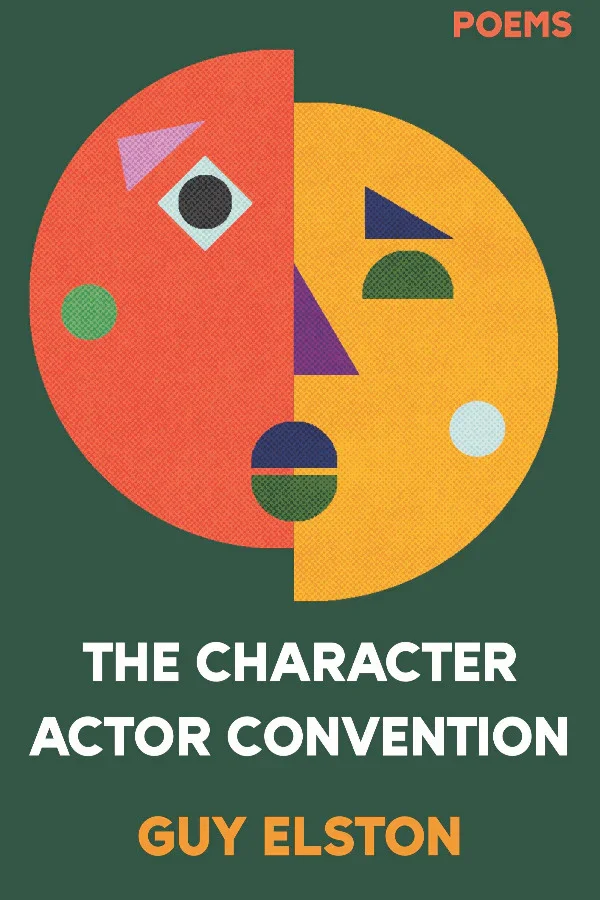
The Character Actor Convention by Guy Elston, Gordon Hill Press/The Porqupine’s Quill, 2025.

Review: Rod Carley Reviews Stan on Guard by K.R Wilson
STAN ON GUARD is meticulously well-researched, but Wilson never lets historical fact get in the way of a wildly inventive, absurdist romp -- each period pitstop is a novella unto itself.
Stan is on the run.
And it’s been that way for 3,000 years.
Wise-cracking Stan is back in K.R. Wilson’s new novel STAN ON GUARD (sequel to Call Me Stan), on a century-spanning, outrageous odyssey.
Stan is immortal and while that may sound like a dream life, it’s a far murkier and lonelierproposition, especially when you’re being hunted by your nemesis, an immortal Trojan princess named Tróán, whose vengeance will stop at nothing. Living forever has its challenges.
From hanging out with a douchebag named Odysseus (Homer got it wrong) to taking long walks in an insane asylum with a mad Nietzsche to fighting for the Germans in World War I and faking his way to Canada, Stan’s historical shenanigans are a treat. He does whatever it takes to evade Tróán, learning the tricks of the survival trade century by century.
Meantime, Tróán takes on Polish Hussars, Lithuanian warriors, and the golden horde of medieval Russia before finding herself a baroness in 19th century Paris hosting salons and crossing paths with the likes of Rodin and Isadora Duncan – all the while obsessively pursuing Stan.
Rollicking.
Riveting.
Remarkable.
STAN ON GUARD is meticulously well-researched, but Wilson never lets historical fact get in the way of a wildly inventive, absurdist romp — each period pitstop is a novella unto itself. Highly recommended.
By: Rod Carley, award-winning author of RUFF
Rod Carley is the award-winning author ofRUFF (2024), GRIN REAPING (2022), KINMOUNT (2020), and A Matter of Will(2017). He’s been long listed for the Leacock Medal for Humour 3 times and has twice received the Silver Medal from the Independent Publisher Book Awards plus the Bronze Award for Humour from Foreword Review INDIES. He was a Finalist for 2023 Next Generation Indie Book Award for Humor, the 2021 Carter V. Cooper Short Fiction Prize, and the 2023 ReLit Award for Best Short Fiction. He is co-founder of the St. Lawrence Writers Festival in Brockville, ON. Last spring, he was Writer in Residence at the Toronto Reference Library.www.rodcarley.ca
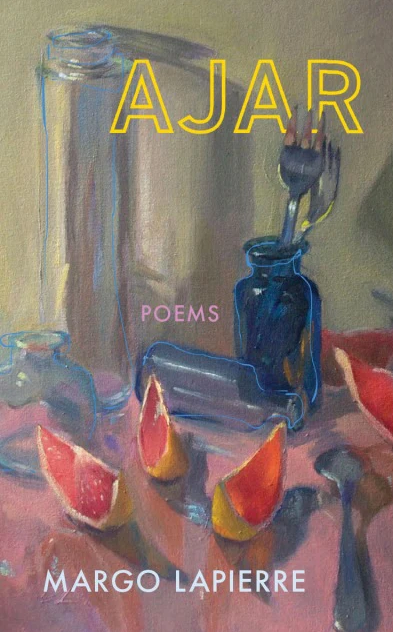
That Was Me Haunting Me: A Review of Margo LaPierre’s Ajar: Poems by Tea Gerbeza
Margo LaPierre’s Ajar is a poignant collection on LaPierre’s experience with bipolar disorder 1 with psychotic features. This collection is not one that shies away from harsh realities of Madness; instead LaPierre reclaims and makes real the Mad self with tender honesty. Ajar is an account of “what it is to have [LaPierre’s] body” and how the ill self cannot be separate from the “well” self.
Margo LaPierre’s Ajar is a poignant collection on LaPierre’s experience with bipolar disorder 1 with psychotic features. This collection is not one that shies away from harsh realities of Madness; instead LaPierre reclaims and makes real the Mad self with tender honesty. Ajar is an account of “what it is to have [LaPierre’s] body” and how the ill self cannot be separate from the “well” self.
LaPierre makes terrific use of form to communicate the various ways in which the body becomes a palimpsest of experience and knowledge. For instance, there are several Centos (a poetic form that relies on multiple poets’ lines to form one coherent voice) in the book. Through this engagement with other poets, the act of constructing a Cento becomes a metaphor for assembling disparate selves.
A major repetition throughout the book is that the self is haunting themselves: “I mistook real for unreal and I haunted me.” “I haunted me” is a repeated phrase that traces the book and takes on more meaning as we encounter more of LaPierre’s experiences. This deliberate self haunting is itself a palimpsest of timelines existing at once, past-present-future converging as it often does for the speaker’s Mad self. In fact, the speaker acknowledges that their experience of bipolar disorder 1 with psychotic features is one that blurs and blends time. This blending of timelines suggests that a body does not separate its memories like the mind does. Instead, a body remembers with no linearity, and all bodily experiences exist at once. Therefore, there cannot be a separation between the Mad self and the “well” self. They will always exist together.
LaPierre’s speaker asks, “if we are echo only, what sonic boom will shock the gloom right out of this place?” There is a sense of loss here because if the speaker is merely an echo, how will they tell what needs to be told? LaPierre answers this question by enacting a body-telling through ghosts, selves haunting selves, palimpsests, centos. She shows how a self disassociated eventually comes back and makes space for past selves.
In the poem “Characteristics of Nonlinear Systems,” the past is the body and what happens to her—a flu, a “mysterious cold spot,” and how the past ripples throughout the body again and again. This cyclical ripple can oftentimes be confusing, but it also becomes a natural rhythm for the Mad self. The speaker also recognizes that their body experiences “hysteresis”: “the name / for stress in an organism / or object when effects / of the stressor lag.” This definition is an important one when addressing the catastrophic effects of gendered physical violence and how the body remembers those events. These effects lag, sometimes take years to show up in the bodymind. In the subsequent poem, “Brute,” LaPierre writes, “Hysteresis is the past / gripping the body.” The offset “g” in the poem makes the line read two ways: the past is ripping the body and the past is gripping the body. This dual meaning points to how trauma nestles in a body, how it lives within the mundane. Mundanity becomes an integral aspect of Ajar in discussing how bipolar disorder 1 affects daily life. There is a kitchen that leads to a patio and a “slanted rooftop perfect for writing”, and yet among these positive mundanities, LaPierre slips in how she tried to die by suicide. Ajar does not romanticize suicide or villainize it; instead, suicidality is shown to be a symptom of bipolar disorder 1 with psychotic features that the speaker copes with, something that comes with living “in this body.” There are moments of desire to die, but also moments with a desire to live. There is no cure for bipolar disorder 1, but LaPierre makes it clear that there are ways to understand, to have tools to survive. With other symptoms like delusions and the perception of time being permanently altered, Ajar asks how do we put words to such things? How do we parse the real from the unreal?
I don’t think Ajar wants its reader to be able to parse the real from the unreal because it becomes clear that regardless of what is “unreal,” the experience the speaker has is real to her body and self in that moment. In “Chatoyant,” we are told, “It’s delusion only because I lift myself from our mutual system of reality. My mind sees what now means. I contain my past, present, future self, existing simultaneously. I’m complete. I have access to all my timeline.” This access the speaker mentions is a wisdom of the Mad self. A realization that frees the Mad self from a system that doesn’t cohere with LaPierre’s experiential knowledge, a knowledge that is incredibly important in healing and reclaiming the self. While LaPierre’s poems spend ample time focusing on remembrances all the selves in the book have, there is a significant shift in “On Friendship” where the mind doesn’t remember, but the body does. LaPierre writes, “I don’t remember this” when her friends tell her that she insisted on wearing heels to the hospital. Memory here is fraught, only given through other people. The self, then, only exists in what the body knows, in an unknowable language one needs to work to understand. Ajar’s self does this work.
Later in the collection, the speaker states, “As I write this poem, I revisit me.” This change in pattern from a self haunting a self to one revisiting signals an important shift to how the Mad self is perceived. To visit is an act of connection, which leads us to LaPierre’s affirmation and reclamation of the Mad self. LaPierre writes, “I am old and aimless as the sun, and just as radiant.” Describing the self as “radiant” is indicative of a small act of reclamation. Then, in “Regeneration,” LaPierre makes an even more powerful statement: “I am cell renewal, membranes kissing / within my body project: / tongue and speech turn / silence inside out—look, grace.” Here, the self finally sees themselves as grace. The self reclaims the Mad self and embraces them.
Margo LaPierre’s Ajar reminds us that there is power in connecting to the selves we are taught to separate from. She reminds us that we are recurring like the sun in the sky. Ajar is an exquisite book, one that I will turn to again and again in the years to come.
—by Tea Gerbeza
About Ajar:
The poems in Ajar navigate the physical and psychological dangers of womanhood through the flattening lens of mood disorder. Psychosis isn’t the opposite of reality—it’s another perceptual system. If neurotypical thought measures the world in centimetres, this collection measures it in inches, gallons, amperes. Ajar celebrates radical recovery from gendered violence and psychotic paradigm shifts, approaching madness through prismatic inquiry. As time converges within us, we find new ways to heal and grow. From the emergency room to the pharmacy to the fertility clinic to the dis/comfort of home and memory, this collection humanizes bipolar psychosis.
Margo LaPierre is a writer and freelance literary editor. With multi-genre work published in The Ex-Puritan, CV2, Room, PRISM, and Arc, among others, she has won national awards for her poetry, fiction, and editing. She holds an MFA in Creative Writing from UBC. Ajar is her second poetry collection.
Tea Gerbeza (she/her) is the author of How I Bend Into More (Palimpsest Press, 2025). She is a neuroqueer, disabled poet, writer, editor, and multimedia artist.

Michelle Hardy reviews Reem Gaafar’s A Mouth Full of Salt (Invisible Publishing, 2025)
In her debut novel, A Mouth Full of Salt (Invisible Publishing 2025), author, physician, and filmmaker Reem Gaafar inspires readers to study some of the complex history between Sudan and South Sudan. Gaafar’s novel zigzags along the fringes of western science and cultural belief; contemplates how the Nile gives but also takes away; and challenges how formal education compares with life experience. Gaafar moderates these intersections with sensitivity and care.
Review of Reem Gaafar’s A Mouth Full of Salt, Invisible Publishing, 2025
Written by Michelle Hardy
In her debut novel, A Mouth Full of Salt (Invisible Publishing 2025), author, physician, and filmmaker Reem Gaafar inspires readers to study some of the complex history between Sudan and South Sudan. Gaafar’s novel zigzags along the fringes of western science and cultural belief; contemplates how the Nile gives but also takes away; and challenges how formal education compares with life experience. Gaafar moderates these intersections with sensitivity and care. The tales of her three female protagonists are fantastically “Other” while also domestically mundane. Each woman is affected by the actions of her family, her community, and her government. However, none of the women are simple representations of any of these assemblies. Originating from a story Gaafar heard years ago about a child who died under the care of his grandparents, A Mouth Full of Salt has grown into an award-winning novel about ordinary people experiencing multifaceted tragedies while living complex lives.
Part I opens in 1989 Sudan. A village on the Nile is deluged with misfortune. The geopolitical climate of the country teems with disaster as well. Because the Nile flooded catastrophically the year before, the prime minister’s radiobroadcasts call for people to stay strong and support one another through this year’s tough economic times. Here we meet Fatima, a teenage girl awaiting high school exam results that could deliver her from witchy superstitious rural life to the city: “where there were the young and old women in their sparkling white tobs; carrying their handbags; walking to and from their workplaces at government offices, the bank, the training institutes, and the post office.” The details of urban women’s attire and occupations kindle Fatima’s hope and desire, but it is the pronoun “their” which catches my eye. By emphasizing “their handbags” or “their workplaces” Fatima draws my attention to her belief that educated women enjoy some freedom and individual rights. Additionally, Gaafar’s descriptors “young and old” confirm that the education of Sudanese women is not a new concept. Next, we meet Sulafa— a wife and mother who returns from a journey to find women weeping over the potential drowning of her child who was left in the care of her in-laws. Or at least, they are pretending to weep. Drama ensues as strands of western science and education swirl around a shadowy outsider suspected of sorcery. Gaafar drops clues that could be fact or fiction and sometimes submerges a storyline for so long I forget about it, until mention of a character bubbles up again and reminds me there are still mysteries remaining to be solved. Chaos reigns throughout this novel. Patriarchal principles are tested by women’s rights. Flames lick at the livelihood of a village. And through all the spectacle and commotion unnoticeably rolls a mail truck, containing Fatima’s highly anticipated high school exam results.
Part II shifts the narrative frame to 1943. Characters jounce back and forth between South Sudan and Sudan. Newly married Nyamakeem, Gaafar’s third female protagonist, finds herself assaulted by racism, language barriers, family members, and shame. The culture and beliefs of the Arabic North, the African South, and Christianity collide. Time passes until readers arrive at the peak of Nyamakeem’s crises set against the 1956 backdrop of a politically violent, post-colonial Sudan. Part III concludes with shocking confessions and wearied discussions of systemic racism and tribal politics. Education remains up in the air while western aid, wearing “shiny shoes” a “leather belt” and an “ironed shirt tucked into ironed trousers” bumbles into the village on the back of an ass.
Fabric is the most recurrent element in my notes for A Mouth Full of Salt. Clothes are tied to politics, race, and religion. Garments set people apart: women wear tobs in the North, lawas in the South, and the shoulder over which fabric is draped matters. In scenes of distress and deliberation, Gaafar draws my attention to discrepancies between characters’ head coverings. For example, as village men await the macabre emergence of the body of the boy who may have drowned, “opinions appear to rank in importance and authority according to the size and height of the speaker’s turban.” In this scene, the missing boy’s father stands noticeably apart from the others. He wears a cap, not a turban, and does not join the men’s discussion. Gaafar does not elaborate on the cap, leaving readers to their own conclusions. In another instance, Fatima’s uneducated, camel-trading, prospective young husband recalls rumours he’s heard about the city where “women walked around with their heads uncovered and sat next to men in university halls and parks and buses. He wondered if Fatima would do the same if she left the village to study in Khartoum. He wondered if he would mind.” I admire how this unschooled young man contemplates the possibility of his future wife’s education. When (if) ambitious young Fatima marries this potentially progressive young man, she will receive fabrics, passed down through the matriarchy to her.
In Fatima’s village, hazards of fire and water abound, and venomous scorpions skitter about— one more peril Gaafar employs repeatedly to wrack my readerly nerves. I keep wondering which character is going to get bit. Late in the novel, after confessions have been made and secrets revealed, an unaccompanied Fatima rushes out into the night. Her prospective young husband sees her and frowns: “Why are you running down the street like a boy? And at his time? It’s almost dark. And there are scorpions everywhere.” Fatima responds with stinging insolence and in a flash, the young man kicks off his sandal. Fatima gasps and raises her arm to ward off what she assumes will be a blow.
Although danger courses through everyone’s lives, risks associated with childbirth are exacerbated. Reem Gaafar, who is also a physician, handles the subject of female genital mutilation (FGM) with a firm but compassionate touch. Sulafa laments how the practice is “one of the many intolerable burdens of their womanhood that plagued their existence, and one which they continued to inflict on their own daughters despite all the misery it caused them in every stage of their lives.” As I read details of a young mother suffering through horrific FGM-related childbirth complications, I am also confounded this practice endures. With a subtle nod toward its possible eradication, Gaafar’s character Sulafa vows never to let a daughter, should she ever be blessed to have one, “go through such a thing.”
Traditions of the past mesh with potential for future change. This notion pervades Gaafar’s novel, and the two-for-one concept is nowhere more aptly contained than in the title A Mouth Full of Salt. This phrase embodies an ancient Sudanese proverb describing the taste in one’s mouth after a great loss. However, Gaafar also uses salt to alternative effect. While hiding in the city and struggling to make ends meet, an ostracized Nyamakeem meets a friendly couple and invites them for dinner. As she prepares a humble meal, her guests present their hostess gift: a pouch of Kombo salt. Nyamakeem squeals with delight. She “could not remember the last time she had enjoyed a meal so much. With the unique distilled salt—so out of place in Khartoum—the Kombo dish was elevated to another level, and she ate happily as she listened to her new friends describing their aspirations for their new life in the North.” Nyamakeem’s future is uncertain. Fear threatens to drown or suffocate her, perhaps like a mouth full of salt. But this small gift temporarily alleviates her distress, evokes faded memories, and conjures for her, a taste of home.
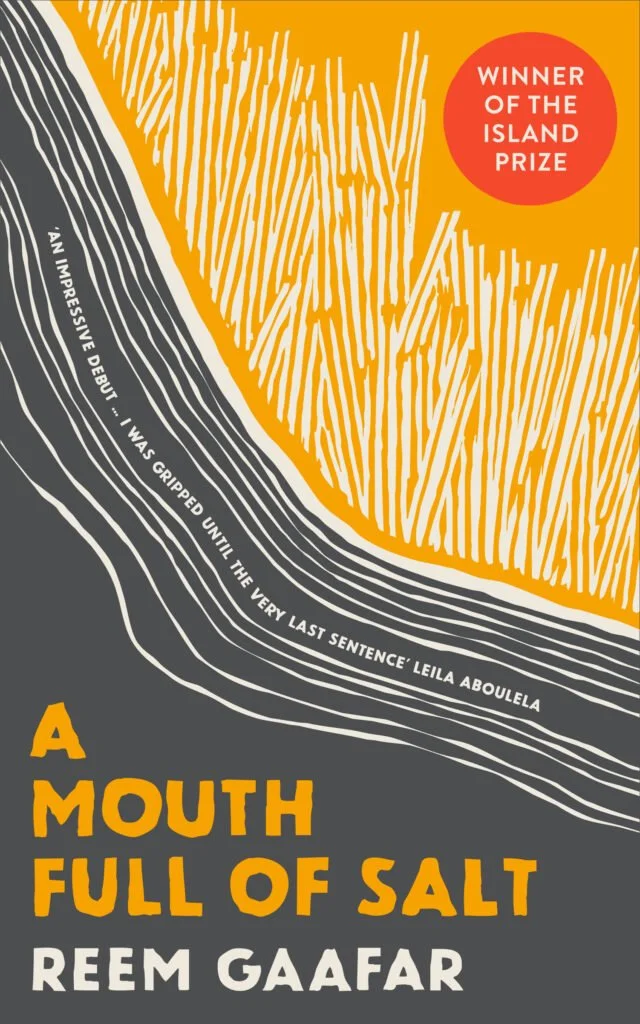
A Mouth Full of Salt by Reem Gaarfar (Invisible Publishing, 2025)
Reem Gaafar is a writer, physician, and filmmaker. Her writing has appeared in African Arguments, African Feminism, Teakisi, Andariya and 500 Words Magazine, among other outlets. Her short story “Light of the Desert” was published in I Know Two Sudans. Her short story “Finding Descartes” was published in Relations: An Anthology of African and Diaspora Voices. A Mouth Full of Salt is her debut novel and Winner of the 2023 Island Prize. Gaafar lives in Canada with her husband and three sons.
Michelle Hardy is a professional freelance developmental editor and book reviewer.
Michelle transitioned to a freelance developmental editing career after retiring as a high school English teacher. She completed a master’s degree in English at the University of Regina in 2012, and obtained an editing certificate from Simon Fraser University in 2021. A member of Editors Canada and the Editorial Freelancers Association, she lives in Victoria, British Columbia.
Michelle’s book reviews have been published in print and online in Atticus Review, Freefall Magazine, The Malahat Review, Prism Magazine, Event Magazine, On the Seawall, and Arc Poetry. Michelle also includes brief reviews of literature @mhardy_editor on Instagram.

Steven Mayoff reviews Oliver Bell and the Infinite Multiverse by Jake Swan
As a follow-up to Grantrepreneurs, his wickedly witty 2023 debut novel, Jake Swan raises the stakes and widens his scope with Oliver Bell and the Infinite Multiverse (Galleon Books, 2025). This detailed and often dense melding of science fiction and demonology is liberally sprinkled with Swan’s trademark caustic social commentary. Comparisons to Douglas Adams may be inevitable, but add a dash of Tolkien and a pinch of Pynchon to this cosmological smorgasbord of a novel and you’ve got yourself one engagingly volatile page-turner.
As a follow-up to Grantrepreneurs, his wickedly witty 2023 debut novel, Jake Swan raises the stakes and widens his scope with Oliver Bell and the Infinite Multiverse (Galleon Books, 2025). This detailed and often dense melding of science fiction and demonology is liberally sprinkled with Swan’s trademark caustic social commentary. Comparisons to Douglas Adams may be inevitable, but add a dash of Tolkien and a pinch of Pynchon to this cosmological smorgasbord of a novel and you’ve got yourself one engagingly volatile page-turner.
Our titular hero is a university mathematician in Nova Scotia who is working on his thesis, a computer program that could “mathematically predict exactly how to turn any set of instructions into accurate code in any computer language, past, present or future.” When brainstorming at the library, all hell breaks loose in the form of a riot that seems to be a protest by vegans to remove books written by meat eaters. Things quickly turn violent and Oliver manages to barely escape alive.

Oliver Bell and the Infinite Multiverse (Galleon Books, 2025) by Jake Swan.
Heading back to his apartment, Oliver soon finds that his block has been cordoned off by the same vegan protesters. He confronts someone who seems to be guarding the area, a shaggy man “doing a pretty good impression of a naked, extra-scrawny Clint Eastwood.” The guard explains that Oliver’s home is now inside the “Vagisil Autonomous Zone.” When Oliver asks about the name, the guard explains:
“They’re our corporate sponsor. You can’t pull off a major protest that includes the establishment of a self-governed and policed autonomous zone without a corporate sponsor. So, we let them put their name on our movement. They get good corporate cred for supporting a progressive cause and we get plywood and Kalashnikovs.”
“Vagisil bought you AK-47s?”
“If they didn’t we’d call them out for being fascist and anti-progressive, and they’d lose business. Failure to support progressive causes like ours is absolute marketing poison. Especially for their target demographic. And think of all the advertising they’re getting. By midnight tonight, hashtag Vagisil Autonomous Zone will be trending on Twit, I mean X. Then everyone will have Vagisil on the brain. Sales will skyrocket.”
The plot takes an intricate turn early on and the reader is sucked in like a star into a black hole.
Oliver is soon confronted by Teddy, a muscle-bound, baseball bat wielding demon hunter who bears a striking physical resemblance to Dwayne “The Rock” Johnson, and Emma, his attractive but equally formidable common-law soul mate. Believing that Oliver has been possessed by a demon, they drug him and drive him to Florida to see an elderly Jewish couple: Bert, a cardiologist who moonlights as Death, and his wife Carmella. Bert is able to ascertain that Oliver is not possessed by a demon, but rather is a host to a supernatural being, Mayhem, whose physical form is that of an adorable puppy. As it is explained in The Comprehensive Guide to Hosting a Celestial Entity:
While the term “Host,” in reference to human beings, suggests a parasitic relationship between spiritual being and physical being, this is something of a misnomer as the relationship is usually symbiotic.
Are you starting to get the picture? If not, don’t worry. The ever-unfolding twists and turns of Swan’s hyper-inventive imagination have only begun to hit their stride and trying to keep up is half the fun. Teddy and Emma have been hunting the demon Amon, who is believed to be after Oliver’s thesis since the code at the centre of it, which Oliver only envisioned being useful for computer gaming, in fact holds the key to global destruction. Oliver forms a bond with Teddy, Emma, Bert and Carmella that seems to have begun as a form of Stockholm Syndrome, but eventually develops into a genuine extended family.
Together, this ragtag quintet embark on a journey that takes them to various strata of the multiverse, which apparently is a real thing. Along the way they encounter numerous allies, such as a philandering pot-vaping novelist, and a few other-worldly and underworldly denizens, some of whom bring to mind H. R. Pufnstuf as much as they do H. P. Lovecraft. As much fun as Swan is having pulling these mind-blowing mutations out of his seemingly bottomless hat, he grounds Oliver’s transmigratory adventures with an unexpected reunion that is this novel’s emotional core and adds a layer of human gravitas to the rollicking rollercoaster of events.
Oliver Bell and the Infinite Multiverse is both a good-natured and sharp-tongued view of a world gone mad and a universe that doesn’t fare much better. In his author disclaimer, Jake Swan cautions the reader: “This is a satire, written by an idiot. Try not to take it too seriously.” It brings to mind a quote by Dostoevsky: “An ugly stupid man can be a fool, but a beautiful intelligent one must be an idiot.”

Author Jake Swan
Jake Swan is a writer, musician and physician. He lives in New Brunswick with his wife Chrissy, son Jack and Stella, their rescue dog from South America. His website is https://jakeswan.ca

Steven Mayoff
Steven Mayoff is a novelist, poet and lyricist. He lives on Prince Edward Island. His latest book is the revised edition of his poetry collection Swinging Between Water and Stone (Galleon Books, 2025). His website is http://www.stevenmayoff.ca

Luca de la Lune Reviews Your Devotee in Rags, a sonic poetry collaboration by Anne Waldman and Andrew Whiteman
Your Devotee in Rags truly is a voracious visage of passionate construction. Exotic soundstages tumble unfettered around thunderous drum breaks and wholly convincing vocal performances. The narrative is female - is woman. Churning laments championed by steaming percussion drive us through moments, memories, patriarchy. The narrator is hungry. The voice is visceral, snarling.
Review: Your Devotee in Rags, a sonic poetry collaboration by Anne Waldman and Andrew Whiteman
Review by Luca de la Lune
Your Devotee in Rags truly is a voracious visage of passionate construction. Exotic soundstages tumble unfettered around thunderous drum breaks and wholly convincing vocal performances. The narrative is female - is woman. Churning laments championed by steaming percussion drive us through moments, memories, patriarchy. The narrator is hungry. The voice is visceral, snarling.

Your Devotee in Rags takes place in a brutalist landscape, bloody and hard-fought—yet through the eyes of our narrator, there is hope and a cathartic solace. My favourite track on the record occurs halfway through: 'to never have enough, be enough, get enough' rolls repeatedly from a cursive maw, comforting you in how casually it makes you feel seen. Hypnotically coherent it lands a dagger and twists it with persistence. As an album it is symbiotic. The sawtooth synthesizers bite in tandem with our protagonists chomping barbs. A familiar, telephone-like distortion frequently warms vocals and instruments alike. Drones and Sirens haunt from both ends of the frequency spectrum. It is a complete experience. A mature sense of structure skillfully coddles the raw chaos. I predict the journey it takes each listener on would be totally unique. immeasurably useful and changing; thus, I would recommend this album to anyone.

Your Devotee in Rags from Sonic Recordings, 2024.
Learn more about Luca de la Lune:
IMDB: https://www.imdb.com/name/nm15139363/
Instagram: https://www.instagram.com/itsautumnbb/
Website: https://lucadelalune.wixsite.com/
More about Your Devotee in Rags:
Your Devotee in Rags is a sonic poetry collaboration between Anne Waldman and Andrew Whiteman; an act of desire and metamorphosis expanding the performative vision of being at the horizon of new experience, stripped down, exploring the turf, through poetry and spiritual yearning.
More about Anne Waldman:
Anne Waldman is a living legend. Poet, performer, professor, editor, cultural activist, grandmother, and co-founder with Allen Ginsberg of the Jack Kerouac School of Disembodied Poetics. Former director of the Poetry Project. Tireless author of over 40 books, her trademark energy coils ever outward, always seeking to reveal the four-fold vision that we have largely lost.
More about Andrew Whiteman:
Andrew Whiteman is a musician and mythopoetics scholar from Montreal, Canada. He writes and performs in Broken Social Scene, Apostle of Hustle, AroarA, and Poets’ Workout Sound System. He is a co-founder of Siren Recordings.
Siren Recordings is a digital, multimodal platform that operates as boutique, studio, and archive. We seek to connect scholars, artists, and lovers of sonic poetry in an online community. Following Ed Sanders, we believe that perfection comes in the poetic triad: “the spoken text/the text as beauteously presented on the page/the text as performed.” We incorporate elements of sound and music into recordings of poetry performances to emphasize the affective, social experience of poetic work.
We value experimentation in form, both contemporary and modern. We renew older poetic works by treating the archive as a participant in the work we are making; archival play ensures that our releases blend contemporary technology with influential poetry. These values seek to serve one, ultimate goal: to contribute to the siren call that warns of the diminishing time we spend in the archaic situation of gathering to hear someone speak.

Pock-Marked and Pun-Spinning: Steven Mayoff Reviews RuFF by Rod Carley
The major achievement of RuFF (Latitude 46 Publishing, 2024) is the artful way in which author Rod Carley weaves the slender threads of historical fact into a broader fictional tapestry to create a raucously pun-driven tale of Elizabethan politics, theatre, magic, and mayhem. The novel features a relatively familiar cast of characters from the theatrical scene in that era, including William Shakespeare, Thomas Middleton, Kit Marlowe, Richard Burbage, and Will Kempe. Women are given equal time in the form of Anne Hathaway, daughter Judith, and Magdalene Marbecke, known here as Maggie. Rounding out the motley crew are an assortment of allies, enemies, soldiers, peasants, peers, and political toadies – but most importantly, animals – specifically Shakespeare’s three-legged beagle, Biscuit; Judith’s cat, Gray-Malkin; and a crow named Cawdor.
The major achievement of RuFF (Latitude 46 Publishing, 2024) is the artful way in which author Rod Carley weaves the slender threads of historical fact into a broader fictional tapestry to create a raucously pun-driven tale of Elizabethan politics, theatre, magic, and mayhem. The novel features a relatively familiar cast of characters from the theatrical scene in that era, including William Shakespeare, Thomas Middleton, Kit Marlowe, Richard Burbage, and Will Kempe. Women are given equal time in the form of Anne Hathaway, daughter Judith, and Magdalene Marbecke, known here as Maggie. Rounding out the motley crew are an assortment of allies, enemies, soldiers, peasants, peers, and political toadies – but most importantly, animals – specifically Shakespeare’s three-legged beagle, Biscuit; Judith’s cat, Gray-Malkin; and a crow named Cawdor.

RuFF by Rod Carley (Latitude 46).
Carley spins a sprawling story set in Elizabethan England but evokes many modern-day echoes, such as the Plague with much of the public eschewing masks and other preventative measures that would keep them healthy. As well, there are the Puritan reformers, a minority who wield power by fusing religion and politics while reducing important issues, like women’s rights, into reigning culture wars. They are clearly recognizable as the Moral Majority from the last century or the growing Christian Nationalist movement of today.
The opening chapter acts as a prologue in which we see Marlowe as mentor to Shakespeare. When two child-catchers go after a young Tommy Middleton to “recruit” him into a theatre company, it is Kit and Will to the rescue with much help from an aggressive crow.
Jump ahead eighteen years and Will is a celebrated playwright, part of the establishment that is derided by a new breed of playwrights and pamphleteers known as punks, one of whom is Middleton, having forgotten his earlier history with the Bard of Avon. The punks want to usher in a new cultural order, such as having women playing themselves on stage rather than being portrayed by boys. This idealism, along with a strong sexual attraction, is what binds Middleton and theatre seamstress Maggie Marbecke, who has ambitions to be the first woman to act on stage.
After the death of the Queen and the ascension of King James of Scotland, Middleton and Maggie are both locked in the Tower at the mercy of head torturer, the Catholic-hating Trapdoor, who forces them to falsely ally themselves to Shakespeare in order to find evidence that would expose him as a secret Catholic so he can be arrested.
That’s about as much of the plot as I dare to get into. And while the plot and pacing are as intricate as they are absorbing, with Carley’s background as a theatre artist clearly bolstering his novelist’s chops, it is his obvious love of language that carries the reader literally from page to page. Here’s a passage, chosen at random, that will give you an idea of what I’m talking about:
Will opened the door. Burbage’s presence filled the room. He was a mortal god on earth with sharp wolfish features and mesmerizing blue eyes, big of both beard and appetite, his hair being his most prized possession. His barber stiffened, starched, powdered, perfumed, waxed, and dyed it a fashionable red which he wore shoulder-length and curled with hot irons. He produced a bottle of sack and plunked himself down on the bed. After tossing Biscuit a bone, the bigger-than-life actor found two dirty cups under a stack of papers, filled both to near overflowing, and handed one to Will. “Imported from Spain,” he said, raising his cup like a mighty stage king. “Here’s a toast to animal pleasures, to imagination, to rain on a roof and fine tobacco, to summer tours and full houses, to sack and good-hearted landlords, to music and warm bodies and rich conversation, to the actor’s life -- whatever it is and wherever it happens to be.” He took a long sip of the sweet, fortified wine. “May we be who our dogs think we are.”
A good example of Carley’s wit, although it’s not a toast I’d apply to cats. Nor to crows. And here is the way Carley introduces us to King James:
“These bog-biting biscuits are drier than a nun’s crack on Good Friday.”
He was not a kingly man.
The Protestant clergy of the Kirk bowed their heads in resigned embarrassment. To describe him as vulgar was a Scottish understatement. He had none of the beauty of his mother, nor the straight-backed grace of the English Queen. Yet, he was born to be a king. Jimmy was only eight-months old when his father was murdered. The suspected involvement of his mother in the murder forced her to abdicate to England; he never saw her again.
“You bastards!” Diaper-Rag Jimmy wailed at his political advisors. They were the first two words all Scottish babies learned. The mewling King was little more than a pawn in his advisors’ political machinations.
I could go on with more excerpts, but then I’d end up reproducing most of this thoroughly engaging novel and deprive you of the chance to discover it’s rat-infested, poetry-spouting, pock-marked, pun-spinning, beer-soaked, vomit-spewing, pie-gorging, witch-fearing, politics-bashing, Puritan-blaspheming, mud-caked and ghost-shimmering delights for yourself. From start to finish, you will be stepping into the days of yore only to keep finding yourself, for better or for worse, in the present moment.

Rod Carley. (Photo Credit: Virginia MacDonald.
About Rod Carley:
Rod is the award-winning author of three previous works of literary fiction: GRIN REAPING (long listed for the 2023 Leacock Medal for Humour, 2022 Bronze Winner for Humour from Foreword Review INDIES, a Finalist for the 2023 Next Generation Indie Book Award for Humor/Comedy, and long listed for the ReLit Group Awards for Best Short Fiction of 2023); KINMOUNT (long listed for the 2021 Leacock Medal for Humour and Winner of the 2021 Silver Medal for Best Regional Fiction from the Independent Publishers Book Awards); A Matter of Will (Finalist for the 2018 Northern Lit Award for Fiction).
His short stories and creative non-fiction have appeared in a variety of Canadian literary magazines including Broadview (winner of the 2022 Award of Excellence for Best Seasonal Article from the Associated Church Press), Cloud Lake Literary, Blank Spaces, Exile, HighGrader, and the anthology 150 Years Up North and More. He was a finalist for the 2021 Carter V. Cooper Short Fiction Prize.
Rod was the 2009 winner of TVO’s Big Ideas/Best Lecturer Competition for his lecture entitled “Adapting Shakespeare within a Modern Canadian Context. He is a proud alumnus of the Humber School for Writers and is represented by Carolyn Forde, Senior Literary Agent with The Transatlantic Agency. www.rodcarley.ca.

Steven Mayoff
About Steven Mayoff:
Steven Mayoff (he/him) was born and raised in Montreal. His fiction and poetry have appeared in literary journals across Canada, the U.S. and abroad. He is the author of the story collection Fatted Calf Blues, winner of the 2010 PEI Book Award for Fiction; the novel Our Lady of Steerage; and two books of poetry Leonard’s Flat and Swinging Between Water and Stone. His acclaimed novel, The Island Gospel According to Samson Grief, was released by Radiant Press in 2023. Steven lives in Foxley River, PEI.

A Quantum Entanglement of Genres: Steven Mayoff Reviews I Think We've Been Here Before by Suzy Krause
There is a school of thought that says we should live every day like it is our last. The impracticality of doing that should be obvious enough, although the spirit of that ideal carries a certain allure. Suzy Krause manages to capture something of both the impracticality and the allure, not to mention the sheer nightmarish absurdity of the world’s impending doom in her novel I Think We’ve Been Here Before (Radiant Press, 2024). Love, both romantic and familial, are put through the wringer in this story of human foibles juxtaposed against global doom. It is a kind of sci-fi tragi-rom-com, if you will.
There is a school of thought that says we should live every day like it is our last. The impracticality of doing that should be obvious enough, although the spirit of that ideal carries a certain allure. Suzy Krause manages to capture something of both the impracticality and the allure, not to mention the sheer nightmarish absurdity of the world’s impending doom in her novel I Think We’ve Been Here Before (Radiant Press, 2024). Love, both romantic and familial, are put through the wringer in this story of human foibles juxtaposed against global doom. It is a kind of sci-fi tragi-rom-com, if you will.
Nora is a young woman from rural Saskatchewan who has travelled to Berlin to get over her broken heart. Through a work-abroad program, she has arranged employment at the coffee shop Begonia. On her first day she meets Jacob and feels a strange déja-vu-like connection to him. She also has two roommates who rent a flat, Sonja, a flakey American, and Petra from Hamburg, whose domineering Teutonic personality flusters Nora.

I Think We’ve Been Here Before by Suzy Krause (Radiant Press, 2024). Read an excerpt from the novel here.
Back in Saskatchewan, Nora’s parents, Hilda and Marlen, are hosting a traditional Norwegian-Canadian Thanksgiving dinner for Hilda’s sister Irene, her husband Hank, their twelve-year old son Ole and Hilda’s and Irene’s father, Iver. It is in this holiday gathering where Hilda announces that Marlen has a malignant tumour signifying cancer.
The following day, NASA announces a rare double gamma ray burst outside of Earth’s solar system that will cause the world to end in roughly three months.
Reactions to this news vary in both of the novel’s locales. Shops and general services suffer slowdowns and closures. In Berlin, Nora and Sonja are scrambling to find flights back to their home countries. Petra, on the other hand, takes a much more ironic and detached (almost morbidly so) view of Earth’s imminent demise. She initiates outings for the three of them, such as getting a tattoo, going skydiving and an evening out at an exclusive night club. You know, millennial end-of-the-world stuff.
In Saskatchewan, Hilda’s anxiety increases because she cannot contact Nora, but strives to keep what time is left of hers and Marlen’s lives as normal as possible. She maintains her sanity by painting murals in all the rooms of their house. Hilda is influenced by an anonymous pamphlet that says the whole gamma ray thing is a hoax, which causes her and Hank to argue, which causes their son Ole to run away from home and live with his grandfather Iver, who believes that Ole is his dead son. In the meantime, Marlen has fulfilled his lifelong dream of writing a novel about the end of the world and gets it published.
It's probably best not to reveal any more but at some point, Jacob comes back into Nora’s life and explains the theory of quantum entanglement.
“Okay, so quantum entanglement is basically when a group of particles become linked in such a way that they can’t be described independently of each other, even when they’re separated by great distances. Scientists have found a way to do it, which is absolutely mind blowing, but it’s a thing that occurs naturally, too, without any help from people—which is maybe even more mind blowing? And once they’re linked, they’re linked forever, I think, and it doesn’t matter how far apart they are. Like, you could put one of the linked particles in a spaceship and send it to the moon, and whatever you did to the remaining particle on Earth would also happen to the one on the moon. They act like one particle, even though they’re far apart.”
As it happens, this theory also appears in Marlen’s novel and he explains it to Hilda.
In a way, I Think We’ve Been Here Before seems to be a kind of quantum entanglement of genres and styles, mixing the downhome qualities of Canadian prairie life with the European exoticism of urban Berlin. The writing style adopts an almost Hallmark romantic lightness, such as when Nora and Jacob take it upon themselves to embark on a guerilla operation of Christmas decorating of Berlin’s mostly abandoned buildings, while the gloomy deterioration of the world order is taking place. Krause’s meta-device of having Marlen write a novel about the end of the world becomes the pay off, when she quotes from it directly to end her own novel.
At its core, I Think We’ve Been Here Before is about a shared alienation, the culture of transformation and the illusion of permanence. It is a petri dish cultivating the birth pangs, growing pains and death rattles of our ongoing transience. As one character says:
“You think things like this are going to change you into someone else, but generally they make you more of who you already are. That’s true of lots of things. Tragedies. Weddings. Ends of civilization.”

Author Suzy Krause.
ABOUT SUZY KRAUSE:
Suzy Krause is the bestselling author of Sorry I Missed You and Valencia and Valentine. She grew up on a little farm in rural Saskatchewan and now lives in Regina, where she writes novels inspired by crappy jobs, creepy houses, personal metaphorical apocalypses, and favorite songs. Her work has been translated into Russian and Estonian.

Author Steven Mayoff
About Steven Mayoff:
Steven Mayoff (he/him) was born and raised in Montreal. His fiction and poetry have appeared in literary journals across Canada, the U.S. and abroad. He is the author of the story collection Fatted Calf Blues, winner of the 2010 PEI Book Award for Fiction; the novel Our Lady of Steerage; and two books of poetry Leonard’s Flat and Swinging Between Water and Stone. His acclaimed novel, The Island Gospel According to Samson Grief, was released by Radiant Press in 2023. Steven lives in Foxley River, PEI.

Violence and Identity: Steven Mayoff Reviews a Simple Carpenter by Dave Margoshes
After finishing A Simple Carpenter (Radiant Press, 2024) by Saskatchewan-based poet and novelist Dave Margoshes, the opening sentence from David Copperfield came to mind: “Whether I shall turn out to be the hero of my own life, or whether that station will be held by anybody else, these pages must show.”
This not-so-simple story of a ship’s carpenter, who has no memory of who he is or where he came from and goes by various names but finally settles on Yusef, chronicles his search for identity, his past and his place in the world in the modern-day Middle East.
After finishing A Simple Carpenter (Radiant Press, 2024) by Saskatchewan-based poet and novelist Dave Margoshes, the opening sentence from David Copperfield came to mind: “Whether I shall turn out to be the hero of my own life, or whether that station will be held by anybody else, these pages must show.”
This not-so-simple story of a ship’s carpenter, who has no memory of who he is or where he came from and goes by various names but finally settles on Yusef, chronicles his search for identity, his past, and his place in the world in the modern-day Middle East. I found the novel to be both timeless and timely. I often felt lulled into thinking the story was taking place at some unspecified point in the ancient past, possibly Biblical times, only to be woken up from this misperception by the occasional dropped hint that there are airplanes or through the description of modern clothing styles.
Even as these hints became more frequent and it was unquestionably apparent that we were in the latter part of the 20th century, I still sometimes found myself lapsing into the illusion that we were in a much earlier time in history. This false sense of timelessness gave me the impression of seeing the world through Yusef’s eyes, to experience his disoriented state of mind of having no memory.
Yusef goes through many adventures and takes on a number of roles, including sailor, carpenter, castaway, merchant, a translator for the U.N., a messenger for a mysterious Sheikh, and finally a clockmaker, a vocation which symbolically brings us back to the novel’s timeless/timely motif. But it is early on, when he is a castaway, stranded on what he dubs Shipwreck Island, that he experiences a disarming visitation by a strange beast that talks to him.
When I think of this beast that appears to Yusef throughout the book, even after he returns to civilization, I can’t help thinking of the Jungian shadow. My very limited understanding of this concept is that we must confront our dark side in order to bring balance to our lives. To wake ourselves up from the somnambulance of civilized life to understand those difficult and uncomfortable aspects of our personalities. It often felt that the beast was telling Yusef that he must give himself over to his fate and trust that it will all work out. This brings up the conundrum of Free Will. God gives us choices, but we are the ones to choose. Is the beast a manifestation of Free Will or Predestination? Or perhaps some kind of go-between or middleman? And secondly, does the beast appear to Yusef to tempt him or to warn him?

A Simple Carpenter by Dave Margoshes
A Simple Carpenter is an eminently readable novel, a veritable page-turner. I found that the declarative, spare prose brought to mind the similar style of Cormac McCarthy. Perhaps it is because A Simple Carpenter shares the universal themes of violence and identity in the human condition that can be found in many of McCarthy’s novels. Where Margoshes’ style – being a poet – differs from McCarthy’s, is the musical cadence of his sentences. One does not have to go farther than the very first paragraph for evidence of this:
‘The blood in my veins sang and boiled. The sheets of my bunk were awash with sweat and the other foul emanations from my body. I slept and slept, slipping in and out of consciousness. Through the haze of my own mind I heard voices babbling in a slew of languages, their words clear and distinct at the same time, their meanings incoherent. I heard the voices of men calling for their mother the way a child would, helpless and completely devoid of bravado. I heard curses aimed at various gods, at poor choices and bad luck. I heard the plaintive sound of men sobbing. Through that cacophony one voice eventually distinguished itself and became clear, the voice of the first mate, cutting like the serrated fisherman’s knife he wore on his belt: “Come on, Carpenter, hold on,” and while everything else was vague, in turmoil, suspect, I was certain of two things: I was Carpenter – Najjar – though whether that was my name or my occupation, I did not know – and I was holding on.’
Margoshes manages to sustain this level of turmoil throughout the novel. I don’t want to say too much more, lest I inadvertently provide any spoilers. But I will conclude by returning to the Dickens quote I cited at the start of this review. Yusef often comes across as a blank slate, a walking enigma who could be this or that, Arab or Jew, Israeli or Palestinian. But eventually, the mystery and myth of his existence take on a starkly human dimension. His journey and revelations will raise serious questions about the role each of us plays in the story of our lives and the interchangeable perspectives between who are the villains and who are the heroes.
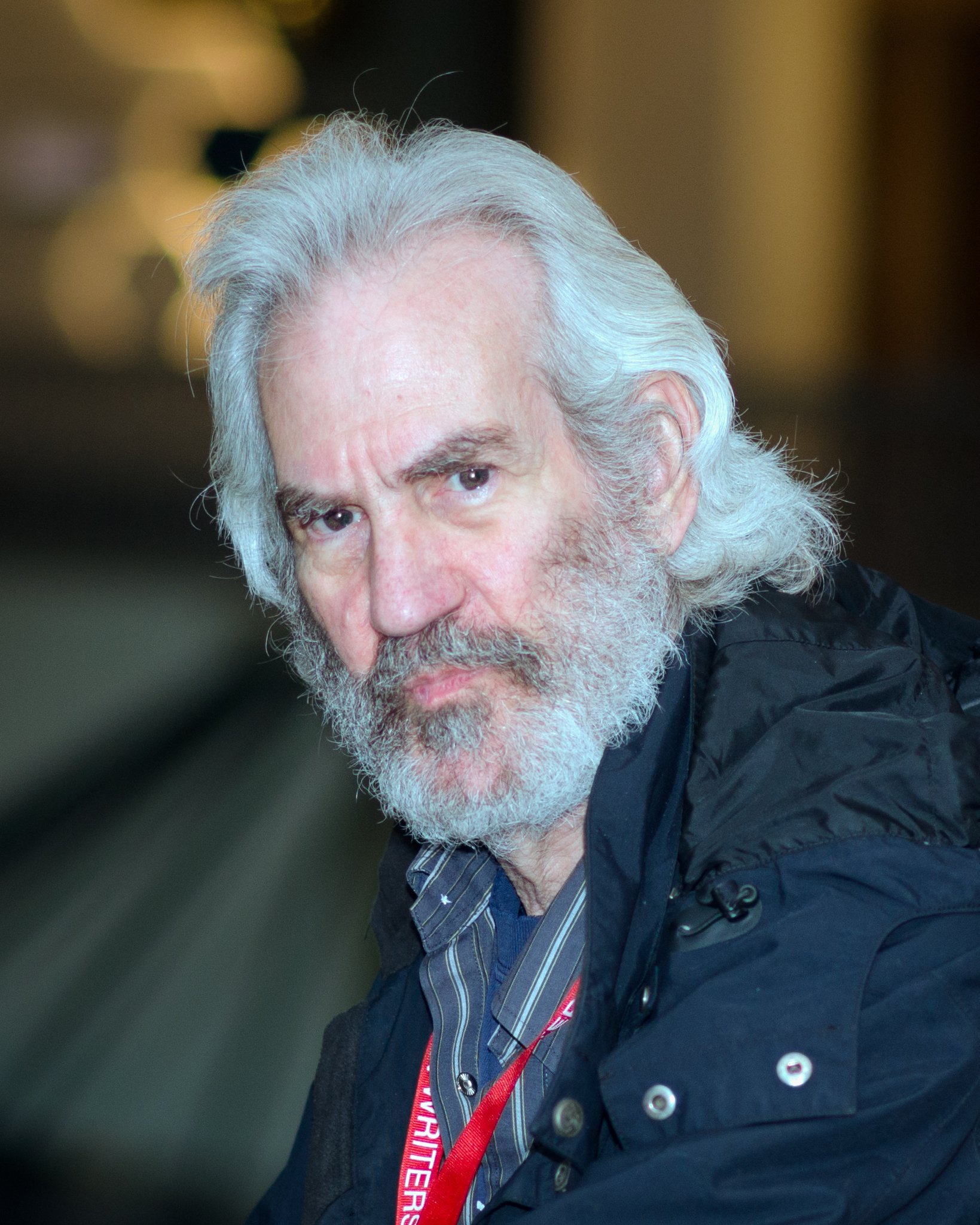
Author Dave Margoshes.
More about Dave Margoshes:
Dave Margoshes is a poet and fiction writer. Most of his adult life has been spent in western Canada, for 35 years, in Saskatchewan. He began his writing life as a journalist, working as a reporter and editor on a number of daily newspapers in the U.S. and Canada, and has taught journalism and creative writing. He has published twenty books of fiction, nonfiction, and poetry. His work has appeared widely in literary magazines and anthologies, in Canada and beyond, including six times in the Best Canadian Stories volumes; he’s been nominated for the Journey Prize several times and was a finalist in 2009. His novel Bix’s Trumpet and Other Stories won two prizes at the 2007 Saskatchewan Book Awards, including Book of the Year. His collection of linked short stories A Book of Great Worth, was named one of Amazon.ca’s Top Hundred Books of 2012. Other prizes include the City of Regina Writing Award, twice; the Stephen Leacock Prize for Poetry in 1996 and the John V. Hicks Award for fiction in 2001. In 2022 he was the recipient of the Lieutenant Governor’s Lifetime Achievement Award. Dave lives on an acreage near Saskatoon.

Author Steven Mayoff.
About Steven Mayoff:
Steven Mayoff (he/him) was born and raised in Montreal. His fiction and poetry have appeared in literary journals across Canada, the U.S. and abroad. He is the author of the story collection Fatted Calf Blues, winner of the 2010 PEI Book Award for Fiction; the novel Our Lady of Steerage; and two books of poetry Leonard’s Flat and Swinging Between Water and Stone. His acclaimed novel, The Island Gospel According to Samson Grief, was released by Radiant Press in 2023. Steven lives in Foxley River, PEI.

Alchemizing the Mundane: Steven Mayoff Reviews Yellow Barks Spider by Harman Burns
The main narrative thrust of Yellow Barks Spider (Radiant Press, 2024), the debut coming-of-age novella by Saskatchewan-born trans-woman, filmmaker, sound artist and writer Harman Burns, is a rural boy’s journey toward transitioning to a woman. But to describe the experience of reading it in terms of coining a genre, I’d have to call it a Prairie Gothic Phantasia.
The main narrative thrust of Yellow Barks Spider (Radiant Press, 2024), the debut coming-of-age novella by Saskatchewan-born trans-woman, filmmaker, sound artist and writer Harman Burns, is a rural boy’s journey toward transitioning to a woman. But to describe the experience of reading it in terms of coining a genre, I’d have to call it a Prairie Gothic Phantasia.
The opening definition in Encyclopedia.com states: ‘The Greek word phantasia is usually translated "imagination." However, in Greek thought the word always retains a connection with the verb phainomai, "I appear." It can be used to refer both to the psychological capacity to receive, interpret, and even produce appearances and to those appearances themselves.’
The protagonist is known simply as “kid” who is raised by “mom”, “stepdad”, “grandma” and “grandpa.” Other characters are equally nameless, such as kid’s friend, “neighbour.” Later on, when kid strikes out on his own, he moves in with “roommate.” The lack of proper names suggests an anonymity prevalent in kid’s surroundings that mostly take a backseat to his inner world. The turbulence of that inner world is made manifest by Burns in a number of textual styles. Foremost, is a stream-of-consciousness prose-poetry that eschews upper-case letters (although kid becomes Kid later on, perhaps alluding to his adult self). Descriptions often tend toward the violent, where “a pile of boards” are “brutalized by nails” or when kid kicks at a dandelion it becomes “white fireworks exploding its brains a thousand directions.”
Although he is warned not to go into a certain shed, kid does and this serves almost as an origin story for him where he encounters the cowspider.
“the spider was startled and in a shot it was crawling up the stick towards kid’s frozen hand. something inside him told kid he couldn’t let go. something said, be still.”
But when fear gets the best of him, his imagination takes over.
“first it would numb him with venom, try to calm him. convince him to relax.
then it would strip him, it would peel him apart and expose him, pinned open with no escape except into the mind, the trapdoor in the basement, through the attic crawlspace into the treehouse, the secret passageway drops down into the hideout in the earth, through the narrowing tunnel, squeezing smaller and smaller shedding years of skin, climbing fleshless and wet with exposed nerves, baby teeth dropping out, small and pink as candies, and
through the tunnel comes the spider.”
Later in its definition, Encyclopedia.com continues: ‘Aristotle gives phantasia a specific place in his psychology, between perception and thought. In De anima 3.3 he offers an account of phantasia that includes mental images, dreams, and hallucinations. For Aristotle phantasia is based on sense-perception and plays a crucial role in animal movement and desire…’
And farther along: ‘In Hellenistic philosophy the term phantasia is most commonly used to refer not to the capacity to receive or interpret appearances but to those appearances themselves. Both the Epicureans and the Stoics use the word to refer to the impressions we receive through our senses.’
Burns achieves this effect by shifting from prose-poetry to a kind of concrete poetry. The use of negative space or the running-together of words gives the reader a visceral entryway into the changes that kid undergoes seemingly at a molecular level.
(((hairless body wet with piss)))
(((sweat saliva crying)))
(((guts boiling over)))
(((vomit escaping the)))
((((spidersareinsidespidersareinsidespidersareinsidespiders))))
((((spidersareinsidespidersareinsidespidersareinsidespiders))))
((((spidersareinsidespidersareinsidespidersareinsidespiders))))
((((spidersareinsidespidersareinsidespidersareinsidespiders))))

Yellow Barks Spider by Harman Burns (Radiant Press, 2024)
Kid’s experiences away from home include sharing roommate’s bed on his first night in the apartment (never to be repeated and after which their relationship alters), working a dead-end job in a restaurant kitchen, and falling prey to substance abuse. In epic form, Kid returns as her female self, back home to the shed where it all began.
“Not even the quietest parts of her, the ones that moved only in the membranes of sleep, could breach the silence that enclosed her now. It showed itself like a magic trick, like a hall of mirrors, repeating forever in some distant haze. There in the black, in the absence, a hole that swallows and swallows. That won’t be drowned, that won’t be shut.
Nothing that has ever happened to you, nothing that you have done, will ever go away.
It lives here. It all lives here.”
Anyone who has read Yellow Barks Spider knows the excerpts I have provided merely scratch the surface of what Harmon Burns achieves, torturing and twisting language to forge a lightning-flash of immediacy and, along the way, alchemizing mundane, everyday experience into a ritualistic cleansing. Anyone who has not read it yet, will, I hope, be enticed to take a literary leap of faith and open themselves to an experience they won’t soon forget.

Harman Burns.
About Harman Burns:
Harman Burns is a Saskatchewan-born trans woman, filmmaker, sound artist and writer. Her practice is informed by folklore, nature, the occult and bodily transfiguration. Her writing has been published in Untethered Magazine and Metatron Press, and was shortlisted for The Malahat Review’s Far Horizons Award for Short Fiction. Burns currently resides on the unceded ancestral territories of the Musqueam, Squamish, and Tsleil-Waututh peoples (Vancouver).

Steven Mayoff.
About Steven Mayoff:
Steven Mayoff (he/him) was born and raised in Montreal. His fiction and poetry have appeared in literary journals across Canada, the U.S. and abroad. He is the author of the story collection Fatted Calf Blues, winner of the 2010 PEI Book Award for Fiction; the novel Our Lady of Steerage; and two books of poetry Leonard’s Flat and Swinging Between Water and Stone. His acclaimed novel, The Island Gospel According to Samson Grief, was released by Radiant Press in 2023. Steven lives in Foxley River, PEI.

Heart Close to Bone: Steven Mayoff reviews Widow Fantasies by Hollay Ghadery
Memoirist and poet, Hollay Ghadery has described her first book of fiction, Widow Fantasies (Gordon Hill Press, 2024) as “the result of my struggling to make sense of my fantasising about planning my husband’s funeral.” Not that she wants him dead, but rather because of her need for a more equitable partnership in her marriage, such are the circuitous paths of the psyche.
Widow Fantasies is a unique collection of micro-fictions where Ghadery condenses her narratives into semi-oblique snapshots
Memoirist and poet, Hollay Ghadery has described her first book of fiction, Widow Fantasies (Gordon Hill Press, 2024) as “the result of my struggling to make sense of my fantasising about planning my husband’s funeral.” Not that she wants him dead, but rather because of her need for a more equitable partnership in her marriage, such are the circuitous paths of the psyche.
Widow Fantasies is a unique collection of micro-fictions where Ghadery condenses her narratives into semi-oblique snapshots. I say “semi-oblique” because as a reader I often felt I was wandering one of those circuitous paths of the psyche and found it necessary to retrace my steps with a second reading of some stories to get a clearer picture of what was going on.
This is not meant as criticism. Rather the opposite, as I found Ghadery’s angular approach to story telling refreshing in how it kept me on my toes and demanded my full attention.
By my count, there are 33 stories covering about 90 pages. Ghadery manages to weave commonplace themes of aging, friendship, fidelity, parenthood, identity, sexuality and mortality by shining a light on the murkier corners of human experience and exploring the extraordinary in the mundane. These stories tend to lean into the dictum that it is only through the particular that we can discover what is universal. What’s especially impressive in stories as compressed as these is their complexity, which is achieved in part through the visceral nature of Ghadery’s descriptive language. A good example is the opening paragraph of Caviar, where a woman discovers her husband pleasuring himself in the shower.
“If I swallow hard, the synthetic punch of his body wash is still in the back of my throat. My skin still puckers into gooseflesh. The heat of the shower is behind the closed door, but I can feel how it ribboned out to meet me.”
When we discover that they have been trying to conceive and are going the expensive IVF route, the sense of betrayal becomes palpable in this following section.
“The wet smacking sound of his hand pumping against himself.
A sickening slosh in my stomach. We had salmon for dinner because he read somewhere that it was good for my ovaries.
His furrowed brown and slick fish-lipped focus in the shower: I didn’t have to see his face to picture it. My legs spread wide in stirrups, body bare under thin blue gown and the heavy demand for more of me: more tests, more transparency. My eggs growing gills and the small store of dark mouths I have left inside me.”

Widow Fantasies by Hollay Ghadery.
In Top Dog/Underdog two couples are in a van, returning home from a skiing holiday together. Marin is driving while her partner, Katie, is in the van’s middle row getting drunk on a wine cooler. In the front passenger seat is Amir, who is helping Marin navigate. In the van’s back row is Amir’s partner Dinah who sits with the sleeping pup Cyrus. Not much happens in this story, but when we find out that Dinah is a recovering alcoholic and that it was Marin and Katie who admitted her to the hospital with alcohol poisoning and that in the early stages of their courtship Amir stayed with her in the hospital, the bond between the four takes on a subtle poignancy beneath their post-holiday weariness.
We also discover that if not for Amir, Dinah’s son Isaac would have been taken away from her. The heart emojis that Amir and Dinah text each other only remind Dinah that being in recovery has taken its toll on her relationship with Amir.
“Love is need, and now that she’s sober, she doesn’t need him as much.”
The realization that love can become collateral damage in sobriety’s one-day-at-a-time seems to echo an earlier memory of Cyrus the pup killing a chipmunk during the holiday and laying the carcass at the skiers’ feet “like a waiter offering up a bottle of wine for a guest’s inspection.” This anecdote connects to the story’s ending when Dinah scratches under the dog’s chin and finds dried blood flaked onto her hand (presumably the chipmunk’s).
Such a stark open ending embodies the allure and the challenge of these stories. Their matter-of-fact style leaves enough space for mystery, allowing room for readers to crawl inside them, as uncomfortable as that is at times.
Anyone who has read Ghadery’s earlier books, the memoir Fuse (Guernica Editions’ Miroland Imprint, 2021) and the poetry collection Rebellion Box (Radiant Press, 2023), knows that beneath her sleeve, she wears her heart close to the bone. These lean and hungry tales in Widow Fantasies are further proof of a talent to keep our eyes on.

Author of Widow Fantasies, Hollay Ghadery.
More about Hollay Ghadery:
Hollay Ghadery is an Iranian-Canadian author living on Anishinaabe land in Ontario. Fuse, her memoir of mixed-race identity and mental health (Guernica Editions, 2021) won a Canadian Bookclub Award. Her poetry collection, Rebellion Box (Radiant Press), was released in 2023 and her short fiction collection, Widow Fantasies (Gordon Hill), is forthcoming in fall 2024. She is the Poet Laureate of Scugog Township. www.hollayghadery.com

Reviewer Steven Mayoff.
About Steven Mayoff:
Steven Mayoff (he/him) was born and raised in Montreal. His fiction and poetry have appeared in literary journals across Canada, the U.S. and abroad. He is the author of the story collection Fatted Calf Blues, winner of the 2010 PEI Book Award for Fiction; the novel Our Lady of Steerage; and two books of poetry Leonard’s Flat and Swinging Between Water and Stone. His acclaimed novel, The Island Gospel According to Samson Grief, was released by Radiant Press in 2023. Steven lives in Foxley River, PEI.

Mind's Microscope: Steven Mayoff reviews Realia by Michael Trussler
The reality of poetry is its ability to speak to a part of ourselves that is asleep much of the time. When that part awakens, what is real and what is metaphor can seem indistinguishable. A sense of unreality enters our belief systems, altering how we see the world.
The reality of poetry is its ability to speak to a part of ourselves that is asleep much of the time. When that part awakens, what is real and what is metaphor can seem indistinguishable. A sense of unreality enters our belief systems, altering how we see the world.
The poetic world of Realia by Michael Trussler (Radiant Press, 2024) takes nothing for granted. It opens with When Eyelids, an ekphrastic essay that compares two seemingly disparate works of art: the 1810 painting The Monk by the Sea by Caspar David Friedrich and Kevin Carter’s 1993 photograph of a starving child in Sudan being watched by a vulture. Trussler describes both monk and vulture as a Rückenfigur, “a figure seen from the back, an optical technique…recognized as a means for the viewer to move inside the painting.” Although the essay is not necessarily meant to be an introduction to this collection, it works well as such in two ways. The first is how its subject matter of visual art lays the groundwork for the visual techniques Trussler employs, including arrows and other pictorial images as punctuation or dividing points, some actual photographs that accompany certain poems, interesting use of white space, inventive line breaks and, at times, boxed-in footnotes that appear in the middle of a poem. The second way is his use of quotations throughout, mostly as epigraphs for each chapter, or the aforementioned footnotes. One can think of these as Rückenfigurs, ways to allow the reader to move inside the collection by giving context to the, sometimes cryptic, nature of his poems.

Realia by Michael Trussler, published by Radiant Press (2024).
One of the book’s epigraphs gives the definition of realia, adapted from Merriam-Webster, in part as “… also sometimes used philosophically to distinguish real things from theories about them – a meaning that dates to the early 19th century.” In his book Why Poetry, poet Matthew Zapruder points out that it is important to take the words in a poem at face value, rather than trying to read some hidden meaning or oblique symbolism in them. In this way, words are the realia of poetry.
Trussler’s relationship to language can feel both alienating and deeply personal, often at the same time, as in the relatively short This Poem is the Human Equivalent (ii), which continues from the title:
of some
worn tires, a
classic snowglobe, a fitbit fetish. No, it’s
really the feral
umbrella growling following me I am behind
myself I am lost I’m lost I am an edgeless obstacle
gone astray—
The impressive section titled Inside Oceans Is: A Lyric Essay for Katherine Mansfield, mixes verse, prose and epigraphs to create a paean to a literary heroine while also weaving in one of Trussler’s go-to themes: the questioning of perception.
It astonished you how a house made
of words is always
better than anything we
can be or forget or say: a house
made of words lifts, flings
us away from our times. And yet
without your rage, your quicksilver delights, and anarchy, your
vigilance, no words can happen, pool
beneath each other, each story
of yours saying
No
each story saying
No
once again to the long betrayal, each story
the encounter between faces, and still, even now, no one
knows for whom stories
are told.
As the book’s title, Realia, implies, Trussler covers a lot of ground as his mind’s microscope explores the minutiae of existence, until the only evidence he can trust is his own sense of doubt. But in the end, the only reality is language. As he writes in There’s Been a Murmur “Words are objects. They have multiple dimensions on the screen, in my mind and on a page in a book. Each with its own personality, a core that persists over time.”

Realia author Michael Trussler.
Michael Trussler lives in Regina. He writes poetry and creative non-fiction. Three-time winner of the Saskatchewan Book Award, Trussler’s work has appeared in Canadian and American journals and has been included in domestic and international anthologies. Also a photographer, Trussler has a keen interest in the visual arts and is neuro-divergent. He teaches English at the University of Regina.

Reviewer Steven Mayoff
About the reviewer, Steven Mayoff:
Steven Mayoff (he/him) was born and raised in Montreal. His fiction and poetry have appeared in literary journals across Canada, the U.S. and abroad. He is the author of the story collection Fatted Calf Blues, winner of the 2010 PEI Book Award for Fiction; the novel Our Lady of Steerage; and two books of poetry Leonard’s Flat and Swinging Between Water and Stone. His acclaimed novel, The Island Gospel According to Samson Grief, was released by Radiant Press in 2023. Steven lives in Foxley River, PEI.

RSR: Stella’s Carpet by Lucy EM Black
If you do not have an appreciation for Persian carpets you will by the time you finish Lucy EM Black’s novel Stella’s Carpet. After reading Black’s vibrant descriptions of their artistry and rich history, I found myself searching the Internet for images of the patterns she writes about. But this is not a novel about carpets. At the heart of the story is a dysfunctional family with many secrets.
Stella's Carpet by Lucy EM Black
Publisher: Now or Never Publishing 2021
ISBN: 1989689264
186 pages
$19.95
Reviewed by: crystal fletcher
If you do not have an appreciation for Persian carpets you will by the time you finish Lucy EM Black’s novel Stella’s Carpet. After reading Black’s vibrant descriptions of their artistry and rich history, I found myself searching the Internet for images of the patterns she writes about. But this is not a novel about carpets. At the heart of the story is a dysfunctional family with many secrets.

Stella’s Carpet by Lucy EM Black, available wherever books are sold.
As so many of us can relate to love, family, friendships, and relationships are messy, and Stella’s family is deeply entrenched in complicated. Her beloved grandparents—Stan and Maria Lipinski, are World War Two Holocaust survivors unable to escape the horrors and atrocities they were forced to endure during the Nazi and Russian occupations in Poland. Their daughter Pamela has grown up under the weight of their trauma, which has left her miserable and often unbearable to be around. Because she is in her mother’s direct line of resentment, the thread of the elder Lipinski’s trauma continues to weave through the family line infiltrating Stella’s psyche. Stella compensates by endlessly battling to appease a mother she will never be to and cautiously navigating her world by avoiding relationships with her colleagues and students.
And then there’s William Wheeler, Stella’s father, who has a distant relationship with his family, but a close one with his ex-wife Pam’s parents. So much so, that William and his new wife—the beautiful Fatima, who is a survivor of the Iranian Revolution—have named their son after Stella’s grandfather.
The true mastery of Black’s novel is that it explores family dynamics through the lens of love, loss, grief, reconciliation, and redemption. It is structured in short chapters with the voices of Black’s characters intertwined throughout. There is nothing random in this approach as it provides the reader with snapshots into their lives—their struggles, their secrets, and the impact of their decisions. At the end of book, much like the threads of a luxurious Persian carpet, Black has effortlessly woven a tale about the consequences of intergenerational trauma and the desire by all to be accepted and loved.
When I closed Stella’s Carpet for the last time, I was not finished with Stella’s story, because as good books do, they leave us reflecting upon what we have read. As Black skillfully demonstrates in her novel, war has a devastating impact on families long after the treaties have been signed. Today, as wars rage on in Ukraine, Yemen, Syria… the list goes on, I found myself wondering about all the wrath this is causing—and will be causing—on many families for generations to come.
About Lucy EM Black:
Author of The Marzipan Fruit Basket and Eleanor Courtown, Lucy E.M. Black’s award-winning short stories have been published in Britain, Ireland, USA, and Canada. A dynamic workshop presenter, experienced interviewer, and freelance writer, she lives with her partner in Port Perry, Ontario.
About crystal fletcher:
crystal fletcher is the host of all about canadian books and the author of Beauty Beneath the Banyan. She loves books, Reese’s Peanut Butter Cups, and exploring the world.

BOOK REVIEW: The Home Stretch: A Father, a Son, and All the Things They Never Talk About
Everyone has parents. Everyone’s parents die. Yet the stories where parents and death intersect are unique.
George K. Ilsley’s recent memoir tells one such story. As a young adult, George left his Nova Scotia home, heading west, eventually landing in Vancouver—as far away as he could get while remaining in North America. Then, as he turns 50, his father turns 90, and his father needs, but doesn’t especially want, Ilsley’s care.
The Home Stretch: A Father, a Son, and All the Things They Never Talk About, by George K. Ilsley. Arsenal Pulp Press, 2020. ISBN: 9781551527956. $19.95, 230 pages.
Review by Marion Agnew.
“There is only one way this story is going to turn out.”
Everyone has parents. Everyone’s parents die. Yet the stories where parents and death intersect are unique.
George K. Ilsley’s recent memoir tells one such story. As a young adult, George left his Nova Scotia home, heading west, eventually landing in Vancouver—as far away as he could get while remaining in North America. Then, as he turns 50, his father turns 90, and his father needs, but doesn’t especially want, Ilsley’s care.
Narrated in a gently self-deprecating voice, this book was surprisingly funny and a pleasure to read—not easy, mind, but a pleasure.

Available to purchase wherever books are sold. Grab it from Arsenal Pulp Press.
Part of my pleasure comes from recognition. I had similar experiences with my mother, whose death from dementia came twenty years ago, and with my father, who died seven years later. I, too, lived far away from them, and my siblings, for various reasons, weren’t able to take a more active role as our parents aged. So much of what Ilsley describes was familiar, especially the push-pull of leaving a life you’ve built to spend time with a parent, always feeling guilty for not being in the other place.
But this book has much to offer beyond any personal identification with its situation. It’s also a good example of how the untidy elements of nonfiction make the nonfiction interesting. Writers often try softening memories to make them more palatable or changing events to “fit” a traditional narrative arc. The biggest temptation is to manufacture something “inspirational” or “redeeming” in an account of a difficult time with a difficult person with whom you had a difficult relationship—to say, “It was all worthwhile, because ….”
Deftly, Ilsley avoids these temptations. Everyone else thinks his father is sweet, with a quirky tendency to save things and a charming, if odd, interest in growing peanuts. But Ilsley shows his father’s serious hoarding issues, his disinterest in the reality of others’ lives, his unhealthy obsessions with peanuts and long underwear. We see the dangers present in Ilsley’s father’s stubborn refusal to answer direct questions, his denial that he needs help with walking and eating, and his bitterness when his sons try to help. Nothing soft there.
And no tidy redemption story, either. The last time George sees his father, who’s in the hospital, Ilsley says, “There is, of course, a last scene with Dad in the hospital, tray-locked in his chair, him confused and me sad. Wondering if this is the last time, as I have wondered so many times, with increasing levels of certainty.” But Ilsley can’t know whether this actually is the last time—he’s experienced years of anticipatory grief, waves of anger and sadness, and even moments of acceptance.
All relationships in a family change as parents age, and I admire the honesty with which Ilsley shares his family’s difficulties and silences. He describes a moment with his older brother, who lives with their father: “It is hard to be fifty years old and treated like children by a parent whose welfare consumes our time, energy, and money.”
In fact, the book’s great strength is its insight and candour about the kaleidoscope of emotions involved in loving someone who doesn’t want to be cared for, but who needs it. Anger alone takes many forms: exasperation, impatience, truculence, stubbornness meeting stubbornness.
Fear, too, has many facets. You’re afraid for your parent’s safety and for your ability to survive their suffocating needs. You dread being happy when they die; you dread their death will kill you, too. You’re terrified that all your efforts won’t help make their lives bearable at the end, and that you’ll leave something undone that could have made a huge positive difference in their last years.
But then again, you know—we all do—that there’s only one way this story is going to turn out.
Anyone who’s ever had parents, and anyone who loves the creative chaos of real life, will find rewards in reading this book.
About Marion:
Marion Agnew’s essay collection, Reverberations: A Daughter’s Meditations on Alzheimer’s, came out in 2019. For more about her, see www.marionagnew.ca.

Marion Agnew.