

BLOG

A Quantum Entanglement of Genres: Steven Mayoff Reviews I Think We've Been Here Before by Suzy Krause
There is a school of thought that says we should live every day like it is our last. The impracticality of doing that should be obvious enough, although the spirit of that ideal carries a certain allure. Suzy Krause manages to capture something of both the impracticality and the allure, not to mention the sheer nightmarish absurdity of the world’s impending doom in her novel I Think We’ve Been Here Before (Radiant Press, 2024). Love, both romantic and familial, are put through the wringer in this story of human foibles juxtaposed against global doom. It is a kind of sci-fi tragi-rom-com, if you will.
There is a school of thought that says we should live every day like it is our last. The impracticality of doing that should be obvious enough, although the spirit of that ideal carries a certain allure. Suzy Krause manages to capture something of both the impracticality and the allure, not to mention the sheer nightmarish absurdity of the world’s impending doom in her novel I Think We’ve Been Here Before (Radiant Press, 2024). Love, both romantic and familial, are put through the wringer in this story of human foibles juxtaposed against global doom. It is a kind of sci-fi tragi-rom-com, if you will.
Nora is a young woman from rural Saskatchewan who has travelled to Berlin to get over her broken heart. Through a work-abroad program, she has arranged employment at the coffee shop Begonia. On her first day she meets Jacob and feels a strange déja-vu-like connection to him. She also has two roommates who rent a flat, Sonja, a flakey American, and Petra from Hamburg, whose domineering Teutonic personality flusters Nora.

I Think We’ve Been Here Before by Suzy Krause (Radiant Press, 2024). Read an excerpt from the novel here.
Back in Saskatchewan, Nora’s parents, Hilda and Marlen, are hosting a traditional Norwegian-Canadian Thanksgiving dinner for Hilda’s sister Irene, her husband Hank, their twelve-year old son Ole and Hilda’s and Irene’s father, Iver. It is in this holiday gathering where Hilda announces that Marlen has a malignant tumour signifying cancer.
The following day, NASA announces a rare double gamma ray burst outside of Earth’s solar system that will cause the world to end in roughly three months.
Reactions to this news vary in both of the novel’s locales. Shops and general services suffer slowdowns and closures. In Berlin, Nora and Sonja are scrambling to find flights back to their home countries. Petra, on the other hand, takes a much more ironic and detached (almost morbidly so) view of Earth’s imminent demise. She initiates outings for the three of them, such as getting a tattoo, going skydiving and an evening out at an exclusive night club. You know, millennial end-of-the-world stuff.
In Saskatchewan, Hilda’s anxiety increases because she cannot contact Nora, but strives to keep what time is left of hers and Marlen’s lives as normal as possible. She maintains her sanity by painting murals in all the rooms of their house. Hilda is influenced by an anonymous pamphlet that says the whole gamma ray thing is a hoax, which causes her and Hank to argue, which causes their son Ole to run away from home and live with his grandfather Iver, who believes that Ole is his dead son. In the meantime, Marlen has fulfilled his lifelong dream of writing a novel about the end of the world and gets it published.
It's probably best not to reveal any more but at some point, Jacob comes back into Nora’s life and explains the theory of quantum entanglement.
“Okay, so quantum entanglement is basically when a group of particles become linked in such a way that they can’t be described independently of each other, even when they’re separated by great distances. Scientists have found a way to do it, which is absolutely mind blowing, but it’s a thing that occurs naturally, too, without any help from people—which is maybe even more mind blowing? And once they’re linked, they’re linked forever, I think, and it doesn’t matter how far apart they are. Like, you could put one of the linked particles in a spaceship and send it to the moon, and whatever you did to the remaining particle on Earth would also happen to the one on the moon. They act like one particle, even though they’re far apart.”
As it happens, this theory also appears in Marlen’s novel and he explains it to Hilda.
In a way, I Think We’ve Been Here Before seems to be a kind of quantum entanglement of genres and styles, mixing the downhome qualities of Canadian prairie life with the European exoticism of urban Berlin. The writing style adopts an almost Hallmark romantic lightness, such as when Nora and Jacob take it upon themselves to embark on a guerilla operation of Christmas decorating of Berlin’s mostly abandoned buildings, while the gloomy deterioration of the world order is taking place. Krause’s meta-device of having Marlen write a novel about the end of the world becomes the pay off, when she quotes from it directly to end her own novel.
At its core, I Think We’ve Been Here Before is about a shared alienation, the culture of transformation and the illusion of permanence. It is a petri dish cultivating the birth pangs, growing pains and death rattles of our ongoing transience. As one character says:
“You think things like this are going to change you into someone else, but generally they make you more of who you already are. That’s true of lots of things. Tragedies. Weddings. Ends of civilization.”
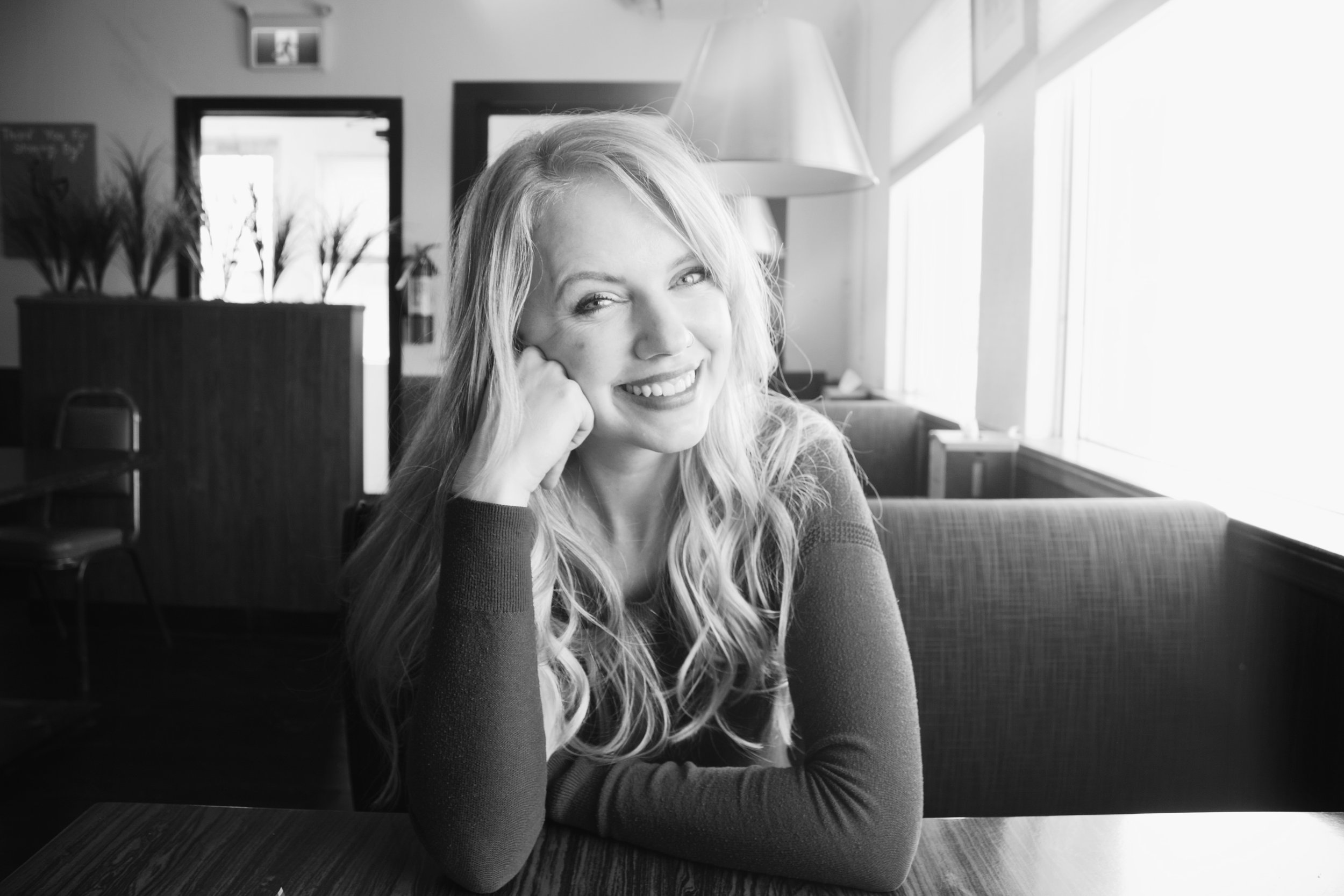
Author Suzy Krause.
ABOUT SUZY KRAUSE:
Suzy Krause is the bestselling author of Sorry I Missed You and Valencia and Valentine. She grew up on a little farm in rural Saskatchewan and now lives in Regina, where she writes novels inspired by crappy jobs, creepy houses, personal metaphorical apocalypses, and favorite songs. Her work has been translated into Russian and Estonian.

Author Steven Mayoff
About Steven Mayoff:
Steven Mayoff (he/him) was born and raised in Montreal. His fiction and poetry have appeared in literary journals across Canada, the U.S. and abroad. He is the author of the story collection Fatted Calf Blues, winner of the 2010 PEI Book Award for Fiction; the novel Our Lady of Steerage; and two books of poetry Leonard’s Flat and Swinging Between Water and Stone. His acclaimed novel, The Island Gospel According to Samson Grief, was released by Radiant Press in 2023. Steven lives in Foxley River, PEI.

Alchemizing the Mundane: Steven Mayoff Reviews Yellow Barks Spider by Harman Burns
The main narrative thrust of Yellow Barks Spider (Radiant Press, 2024), the debut coming-of-age novella by Saskatchewan-born trans-woman, filmmaker, sound artist and writer Harman Burns, is a rural boy’s journey toward transitioning to a woman. But to describe the experience of reading it in terms of coining a genre, I’d have to call it a Prairie Gothic Phantasia.
The main narrative thrust of Yellow Barks Spider (Radiant Press, 2024), the debut coming-of-age novella by Saskatchewan-born trans-woman, filmmaker, sound artist and writer Harman Burns, is a rural boy’s journey toward transitioning to a woman. But to describe the experience of reading it in terms of coining a genre, I’d have to call it a Prairie Gothic Phantasia.
The opening definition in Encyclopedia.com states: ‘The Greek word phantasia is usually translated "imagination." However, in Greek thought the word always retains a connection with the verb phainomai, "I appear." It can be used to refer both to the psychological capacity to receive, interpret, and even produce appearances and to those appearances themselves.’
The protagonist is known simply as “kid” who is raised by “mom”, “stepdad”, “grandma” and “grandpa.” Other characters are equally nameless, such as kid’s friend, “neighbour.” Later on, when kid strikes out on his own, he moves in with “roommate.” The lack of proper names suggests an anonymity prevalent in kid’s surroundings that mostly take a backseat to his inner world. The turbulence of that inner world is made manifest by Burns in a number of textual styles. Foremost, is a stream-of-consciousness prose-poetry that eschews upper-case letters (although kid becomes Kid later on, perhaps alluding to his adult self). Descriptions often tend toward the violent, where “a pile of boards” are “brutalized by nails” or when kid kicks at a dandelion it becomes “white fireworks exploding its brains a thousand directions.”
Although he is warned not to go into a certain shed, kid does and this serves almost as an origin story for him where he encounters the cowspider.
“the spider was startled and in a shot it was crawling up the stick towards kid’s frozen hand. something inside him told kid he couldn’t let go. something said, be still.”
But when fear gets the best of him, his imagination takes over.
“first it would numb him with venom, try to calm him. convince him to relax.
then it would strip him, it would peel him apart and expose him, pinned open with no escape except into the mind, the trapdoor in the basement, through the attic crawlspace into the treehouse, the secret passageway drops down into the hideout in the earth, through the narrowing tunnel, squeezing smaller and smaller shedding years of skin, climbing fleshless and wet with exposed nerves, baby teeth dropping out, small and pink as candies, and
through the tunnel comes the spider.”
Later in its definition, Encyclopedia.com continues: ‘Aristotle gives phantasia a specific place in his psychology, between perception and thought. In De anima 3.3 he offers an account of phantasia that includes mental images, dreams, and hallucinations. For Aristotle phantasia is based on sense-perception and plays a crucial role in animal movement and desire…’
And farther along: ‘In Hellenistic philosophy the term phantasia is most commonly used to refer not to the capacity to receive or interpret appearances but to those appearances themselves. Both the Epicureans and the Stoics use the word to refer to the impressions we receive through our senses.’
Burns achieves this effect by shifting from prose-poetry to a kind of concrete poetry. The use of negative space or the running-together of words gives the reader a visceral entryway into the changes that kid undergoes seemingly at a molecular level.
(((hairless body wet with piss)))
(((sweat saliva crying)))
(((guts boiling over)))
(((vomit escaping the)))
((((spidersareinsidespidersareinsidespidersareinsidespiders))))
((((spidersareinsidespidersareinsidespidersareinsidespiders))))
((((spidersareinsidespidersareinsidespidersareinsidespiders))))
((((spidersareinsidespidersareinsidespidersareinsidespiders))))

Yellow Barks Spider by Harman Burns (Radiant Press, 2024)
Kid’s experiences away from home include sharing roommate’s bed on his first night in the apartment (never to be repeated and after which their relationship alters), working a dead-end job in a restaurant kitchen, and falling prey to substance abuse. In epic form, Kid returns as her female self, back home to the shed where it all began.
“Not even the quietest parts of her, the ones that moved only in the membranes of sleep, could breach the silence that enclosed her now. It showed itself like a magic trick, like a hall of mirrors, repeating forever in some distant haze. There in the black, in the absence, a hole that swallows and swallows. That won’t be drowned, that won’t be shut.
Nothing that has ever happened to you, nothing that you have done, will ever go away.
It lives here. It all lives here.”
Anyone who has read Yellow Barks Spider knows the excerpts I have provided merely scratch the surface of what Harmon Burns achieves, torturing and twisting language to forge a lightning-flash of immediacy and, along the way, alchemizing mundane, everyday experience into a ritualistic cleansing. Anyone who has not read it yet, will, I hope, be enticed to take a literary leap of faith and open themselves to an experience they won’t soon forget.

Harman Burns.
About Harman Burns:
Harman Burns is a Saskatchewan-born trans woman, filmmaker, sound artist and writer. Her practice is informed by folklore, nature, the occult and bodily transfiguration. Her writing has been published in Untethered Magazine and Metatron Press, and was shortlisted for The Malahat Review’s Far Horizons Award for Short Fiction. Burns currently resides on the unceded ancestral territories of the Musqueam, Squamish, and Tsleil-Waututh peoples (Vancouver).

Steven Mayoff.
About Steven Mayoff:
Steven Mayoff (he/him) was born and raised in Montreal. His fiction and poetry have appeared in literary journals across Canada, the U.S. and abroad. He is the author of the story collection Fatted Calf Blues, winner of the 2010 PEI Book Award for Fiction; the novel Our Lady of Steerage; and two books of poetry Leonard’s Flat and Swinging Between Water and Stone. His acclaimed novel, The Island Gospel According to Samson Grief, was released by Radiant Press in 2023. Steven lives in Foxley River, PEI.

Review of Voice: Adam Pottle on Writing with Deafness
The first time I heard the term “voice” in relation to a book was in high school. The definition remained fuzzy, far harder to pinpoint than theme, setting, point of view, and characterization. A writer’s voice seemed somehow part of her style, but I didn’t really know what that meant, either.
Mostly, an author’s voice seemed extremely important: Voice helps distinguish one writer’s work from another and makes a writer unique.
Okay. But what is it?
University of Regina Press, 2019
ISBN: 9780889775930
$18.95, 162 pages
Reviewed by Marion Agnew.
The first time I heard the term “voice” in relation to a book was in high school. The definition remained fuzzy, far harder to pinpoint than theme, setting, point of view, and characterization. A writer’s voice seemed somehow part of her style, but I didn’t really know what that meant, either.
Mostly, an author’s voice seemed extremely important: Voice helps distinguish one writer’s work from another and makes a writer unique.
Okay. But what is it?
I got a better sense from trying creative writing myself. Early, I’d try to “sound like” other writers on purpose, partly for fun and partly to try on identities. (Hemingway, anyone?) I paid attention when other people lauded a writer’s “unique voice” (like Barbara Kingsolver or Miriam Toews). I developed opinions: I enjoy a voice that serves a work’s characters, instead of spotlighting the writer herself.
When Voice: Adam Pottle On Writing with Deafness came along. I knew I had to read it.

Voice is available from University of Regina Press.
And wow, this book. It combines creative nonfiction, memoir, and sage writing advice. Searingly honest, it’s full of rage and beauty and a palpable, energetic love of the written word. It’s transparent and full of longing to be “heard.” It commands and rewards a reader’s reflection.
Adam Pottle began losing his hearing in childhood and wore hearing aids relatively young. In Voice, he describes how those facts have affected, and continue to affect, his relationship to language and writing. Of course, it’s impossible to completely separate language from other elements of his life—his love of hockey and music, his ambivalence toward others in the Deaf and hard-of-hearing community whose experiences are different from his, and his family relationships.
He describes his path to learning language and developing his voice—both literal and literary, his speaking voice and his voice in writing.
Like a hearing person, he grew up speaking English. Learning ASL at an older age meant he’d always be somewhat “outside” the Deaf Culture’s core of fluent, native ASL speakers. But like a Deaf person, he found (and continues to find) the hearing world too impatient and thoughtless to adjust to his communication needs. Even institutions that “mean well” are reluctant to provide accommodations unless constantly reminded and pressured to do so.
He writes, of his work with a speech therapist in grade five,
“I didn’t want to speak like him. I wanted a dynamic voice, my own voice, a voice that could barrel through the air and make any room I spoke in seem like an arena, a voice that pinged people on the ear and forced them to listen, a voice that could thwack people’s funny bones and crack their hearts in two, a voice like Rodney Dangerfield’s or Marie Fredriksson’s or Krusty the Clown’s.”
In the second part of the book, he addresses writing and writers directly, considering topics such as stereotypes, ideas, text, and observation. He points out that the hearing world has an uneasy relationship with silence, but that silence can be a very effective storytelling tool. He describes the Store of Stereotypes, where many writers “shop” for typical characters, and he enumerates his strategies to avoid those stereotypes while he wrote a novella about the Holocaust.
His descriptions of how he uses language encapsulate how carefully he has reflected on language itself. Because he experiences English through captioning and through senses other than hearing, his relationship with English is “uneasy,” similar to those for whom English is a second language.
I write according to how words feel rather than how they sound. Words are tactile. I feel like I can hold them in my hands and throw them at people; I feel like I might scratch myself on their edges; they roll around in my mouth like barbed marbles. I shove and bend and crank words to form images and rhythms that I hope snag the reader’s attention.
He is certainly successful: This book captures and holds a reader’s attention.
In recent years, the term “voice” has also developed a broader meaning: in an #ownvoices book, a person writes about an experience they’ve personally lived through. Because Voice shares Pottle’s unique relationship to language and the hearing world, it’s is a valuable contribution to this definition of “voice” as well. It demonstrates the ongoing, grinding issues around accessibility, and the hoops through which people have to leap, again and again, to access a world that’s readily available to hearing people.
Writers should read Voice for its thorough contemplation of and love for language. Non-writers will find interest in its generous open window into Pottle’s life.
And anyone organizing an event, especially as the pandemic recedes and in-person gatherings become more possible, should add “all forms of accessibility” as a value to incorporate into their event from the earliest planning stages. Books like Voice show us what we’re missing out on.
Marion Agnew studied American Sign Language for several years. Her essay collection, Reverberations: A Daughter’s Meditations on Alzheimer’s, came out in 2019. For more about her, see www.marionagnew.ca.