

BLOG

Power Q & A with Barbara Tran
Barbara Tran’s entrancing poetry collection, Precedented Parrotting (Palimpsest Press, 2024), was a finalist for the Governor General Literary Award for Poetry. This beautiful book stands as an expansive debut that plumbs personal archives and traverses the natural world.
We are honoured to have Barbara join us for our Power Q & A series to speak with us about the visual impact of her work, which uses the whole stage of the page.
Barbara Tran’s entrancing poetry collection, Precedented Parrotting (Palimpsest Press, 2024), was a finalist for the Governor General Literary Award for Poetry. This beautiful book stands as an expansive debut that plumbs personal archives and traverses the natural world.
We are honoured to have Barbara join us for our Power Q & A series to speak with us about the visual impact of her work, which uses the whole stage of the page.
Welcome, Barbara!

Precedented Parrotting by Barbara Tran (Palimpsest Press, 2024)
Q: Your poems are striking in so many ways, and we’d like to focus on the visual form of your work in this collection, that seems to flit and burst, mimicking bird flight. We wonder if you could speak to us about the form of these poems. Was the form intentional? Or a natural expression of the themes addressed in your collection? Maybe a bit of both?
A: Thank you so much for this question. I absolutely love talking about form. It’s at the crux of most of my writing. If I can’t figure out the form, I usually cannot move forward with the piece.
I read poetry — and write most everything — out loud, meaning I have to speak the words as I’m writing them down or reading them. It rules out working in a coffeeshop.
But, the upside of writing out loud is it tells me when a poem’s form is “off.” If I walk away from my writing and come back when I don’t really recall the words and their rhythm, and I can’t tell how to read the thing based on how it allows itself to take up space on the page, I know the form is not working to its full potential. The form should tell me where and how long the pauses are. And where the emphases. Is there a moment of contemplation?
I come from a background where there was not much stability, so, for me, a solid left margin often feels like a lie. It’s not where I come from.
On page 33 of my book, the text falls to the lower right half of the page. At the top could have been blank white space. But when we look at a page of mostly white space and a little bit of text, our eyes automatically go directly to the text. They tend not to linger on the white space for very long before being tempted off, and what I wanted for this time/space before the text at the bottom of the page was for the reader to contemplate, to spend a moment considering what was missing. What photos would they put here? What text? Who? What was here has been silenced. Why?
Myself, I’m so exhausted, thinking about what is missing, that I can no longer bring myself to rise to the top of the page. I’m leaving the text here at the bottom.
On the facing page, 32, the text refers to the speaker’s beginning. (The speaker in the poem is both me and not me.) The ground shifts before the text even gets to the speaker’s birth. Then, her existence is shrouded in secrecy. There is no solid ground here. The lines shift around on the page to convey that.
They move though, with intention. There is an Easter egg hidden here for my enjoyment. I don’t expect any readers to get it, but it puts a smile on my face every time I see it. This is an origin story, and it’s shaped like the country of Vietnam.
More about Precedented Parrotting:
Opening with an exit, the poems in Precedented Parroting accept no assumptions. With the determination and curiosity of a problem-solving crow, this expansive debut plumbs personal archives and traverses the natural world, endeavouring to shake the tight cage of stereotypes, Asian and avian. Praised as “lively and intelligent” and “lyrically delicious,” Barbara Tran’s poetry offers us both the keen eye and grace of a hawk, “red-tailed gliding / on time.”

Poet Barbara Tran.
About Barbara Tran:
Born in New York City, Barbara Tran is an immigrant. And a settler. She writes in multiple genres. Her debut poetry book, Precedented Parroting, was a Finalist for the 2024 Governor General’s Literary Award. Barbara’s short fiction and poetry have appeared in Conjunctions, The Malahat Review, The New Yorker, and The Paris Review. Her poetry chapbook, In the Mynah Bird’s Own Words, was selected by Robert Wrigley, as the winner of Tupelo Press’s inaugural chapbook award. Barbara's writing has been longlisted for the CBC Nonfiction Prize and nominated for two National Magazine Awards for short fiction. Barbara authored the titular character’s narration of Madame Pirate: Becoming a Legend, a short, virtual reality film, nominated for Best VR Story at the 2022 Cannes Film Festival. She is currently at work in collaboration with Jacqueline Hoàng Nguyễn on the screenplay for Nguyễn's debut feature film.
A contributing co-editor of Watermark: Vietnamese American Poetry and Prose, 25th Anniversary Edition, Barbara has been awarded a Pushcart Prize, MacDowell Freund Fellowship, and Bread Loaf Scholarship, as well as writing residencies at the Banff Centre for Arts and Creativity, Hedgebrook, Lannan Foundation, and Millay Arts, amongst others. Barbara is a member of the AfroMundo collective and has contributed to collaborative hybrid projects by She Who Has No Master(s). She shares her home in Dish with One Spoon Territory with her partner, the economist Bob Gazzale, and their two adopted canines, Sprocket and River.

Power Q & A with Sheila Stewart
Sheila Stewart’s stunning poetry collection, If I Write About My Father, (Ekstasis Editions, 2024) dismantles the patriarchal religious ideologies of Sheila’s upbringing by a protestant minister, while sustaining the emotional intimacy experienced in familial relationships.
Sheila explores the daughter-father relationship, uncovering the complexities of growing up as the minister’s only daughter in a family shaped by church and manse in small-town southern Ontario. She braids narrative and lyric, the textures of liturgy and memory. While critiquing patriarchal weight and constraint, the work explores how a particular religious upbringing shapes thinking, the rhythms of language, and the fabric of consciousness.
Sheila Stewart’s stunning poetry collection, If I Write About My Father, (Ekstasis Editions, 2024) dismantles the patriarchal religious ideologies of Sheila’s upbringing by a protestant minister, while sustaining the emotional intimacy experienced in familial relationships.
Sheila explores the daughter-father relationship, uncovering the complexities of growing up as the minister’s only daughter in a family shaped by church and manse in small-town southern Ontario. She braids narrative and lyric, the textures of liturgy and memory. While critiquing patriarchal weight and constraint, the work explores how a particular religious upbringing shapes thinking, the rhythms of language, and the fabric of consciousness.
Sheila joins us for this Power Q & A to talk about why she decided to tackle the church and her relationship with her father with these powerful poems.
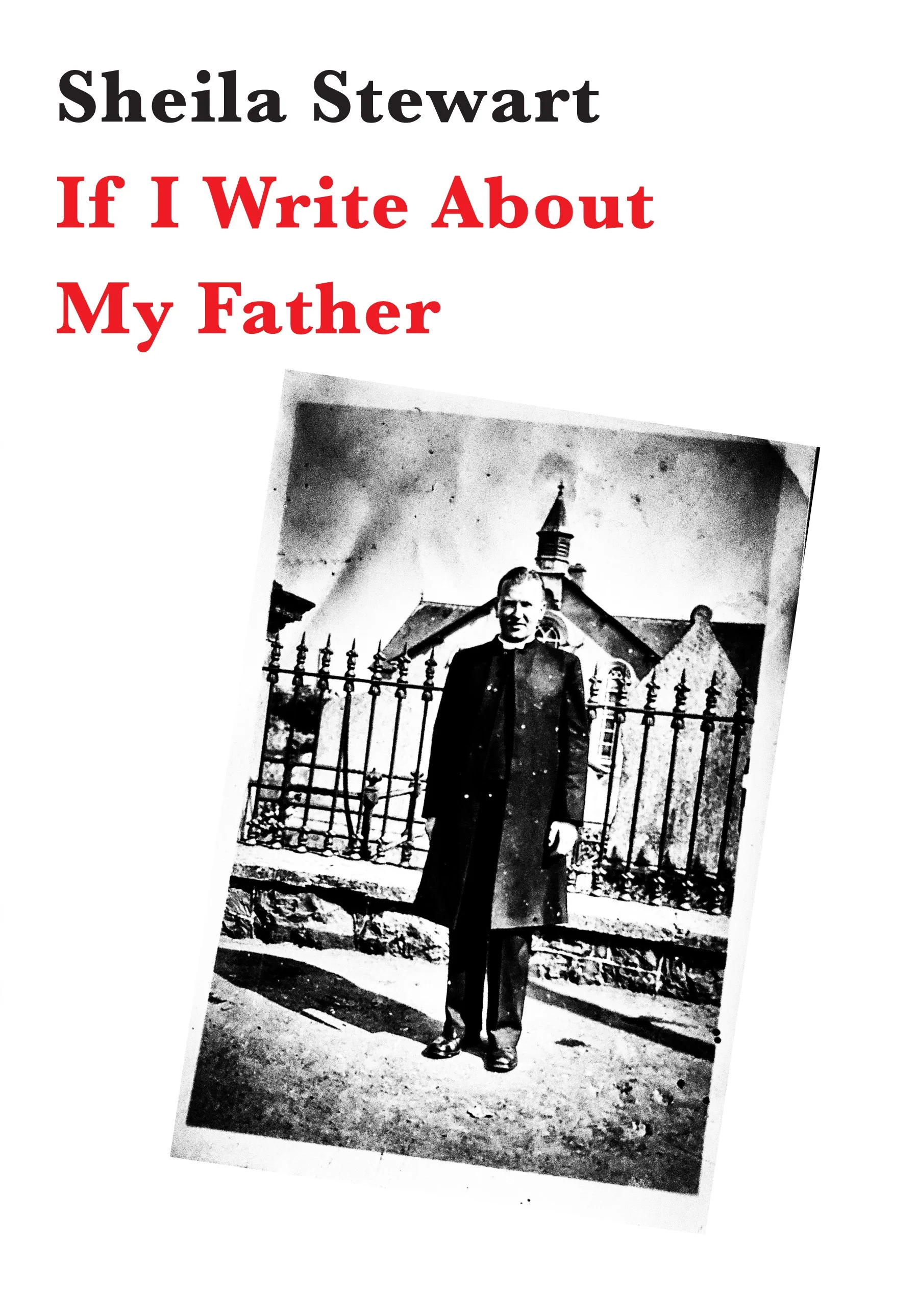
Q: Why did you focus this collection on your relationship with your father and the church?
A: It wasn’t so much a deliberate choice to write about my father and the church, as something I was compelled to do. I was writing a dissertation at the Ontario Institute for Studies of Education/University of Toronto (OISE/UT) and wrestling with my own authority as a writer. While I’ve always been drawn to ideas and learning, tackling a PhD at age 48, was intimidating. I was aware of the hierarchies and power structures of the University having worked at OISE/UT for years as a research coordinator on adult literacy issues.
Growing up in small town Southwestern Ontario as the minister’s only daughter, I was conscious of the power dynamics within our traditional Irish Canadian home and the congregations where my dad served. I’m very interested in the way religions provide stories and meaning for people to live their lives. I’m not Christian, but I was surrounded by the language and poetry of the Bible as a child. The book begins with a poem called “Altar”. I am exploring spirit and, in a sense, find it in the natural world, Lake Ontario, High Park. My earliest years were mainly indoors, in the manse and at church surrounded by parishioners, and then at school where I was known as the minister’s daughter. I needed to work through the restraint and strictures of my church upbringing to inhabit a more embodied sense of self.
My first collection, A Hat to Stop a Train (Wolsak and Wynn), is about my relationship with my mother and her life as a minister’s wife. I’m fascinated by how family members shape each other. If I Write About My Father (Ekstasis Editions) is kind of companion piece to my first book. While the book is about aspects of my relationship with my father, it is also about authority and power of different kinds: institutional and that found as a writer, often through a long wrestle with words.
More about If I Write About Father:
What effect do fathers and faith have on a child? In If I Write About My Father, Sheila Stewart explores the daughter-father relationship drawing on reflections about her father, a Northern Irish Presbyterian minister who immigrated to Canada and joined the United Church. Her poetry uncovers the complexities of growing up as the minister’s only daughter in a family shaped by church and manse in small-town southern Ontario. Stewart braids narrative and lyric, the textures of liturgy and memory. While critiquing patriarchal weight and constraint, the work explores how a particular religious upbringing shapes thinking, the rhythms of language, and the fabric of consciousness. In this quest, the poet draws from the sensory world by walking the woods and Lake Ontario shores.
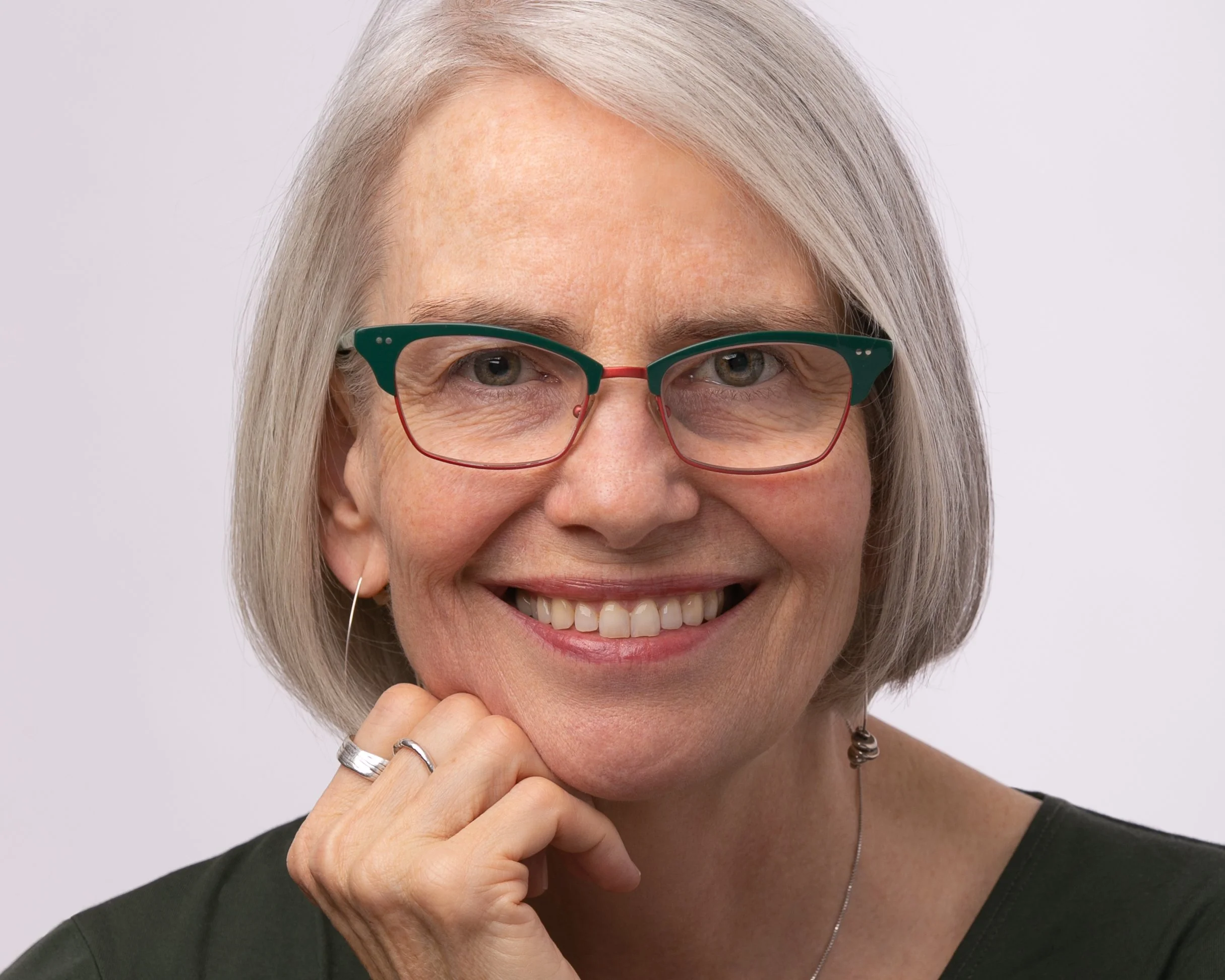
Sheila Stewart
More about Sheila Stewart:
Sheila Stewart’s publications include two poetry collections, A Hat to Stop a Train and The Shape of a Throat, and a co-edited anthology of poetry and essays entitled The Art of Poetic Inquiry. Awards include the gritLIT Contest, the Scarborough Arts Council Windows on Words, and the Pottersfield Portfolio Short Poem Contest. Her poetry has been widely published in Canadian and international journals. She recently left teaching at the University of Toronto to devote herself to writing.
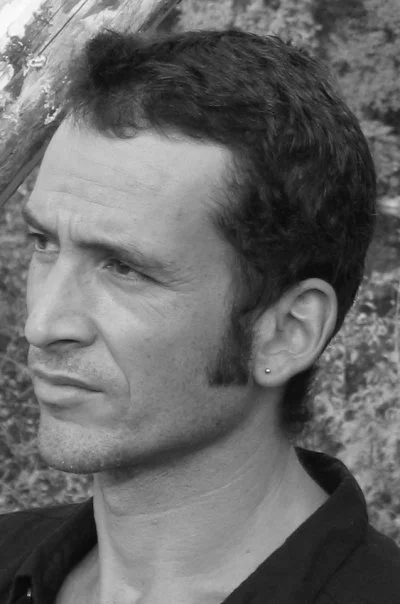
Q & A with Steven Heighton
A quick Q & A wherein Steven Heighton speaks to the difference in process between writing fiction and writing poetry.
Q: How is (or is) your writing process different for poetry than fiction?
A: I write the first drafts of poems by hand, and rarely at my desk--I might be at the kitchen table, or sitting outside, or on a train, or in a bar or cafe. The second draft does happen at the desk, where I key the rough draft into my laptop. Then I'll print out that version and work on the thing by hand again, anywhere but at my desk, happily hacking away with my red uni-ball pen, crossing stuff out, scribbling illegible marginalia. I go back and forth that way, between screen and page, until I can't take the poem any farther. As for fiction, I used to write it by hand as well, though usually now I write my first drafts on the laptop, at my desk. But after that point, my process is the same--I print out the story or novel and revise by hand in the margins, then go back to the screen, then the page, the screen, etc.

But these are just dull logistical details. To me, the more interesting difference between compositional modes is the ratio of pain and pleasure involved. For me, working on a poem is always, on some level, a pleasure, and I think one of the main reasons is that there's no risk and hence no anxiety involved. Why? Because a twenty-line poem is a small thing, physically, and I know that if it doesn't work I can just walk away from it. Also, the "career" stakes couldn't be lower. Few people read poetry, so my livelihood can't and doesn't ride on it. Fiction is different. People do read it, and publishers sometimes pay decently for it, and you actually can make a modest living from it, if you have sufficiently low material aspirations. So there's always a touch of anxiety there. It's not just play. Plus, it's simply hard to walk away from a botched piece of fiction without agonizing over all the time and effort you've spent. To give up on a thirty page story, after months of work--as I've had to do at least twice now--is painful. To walk away from a three hundred page novel you're struggling with after eighteen months or three years--that's just about unfaceable.
More about Steven...
Steven Heighton’s most recent books are the Trillium Award finalist The Dead Are More Visible (stories) and Workbook, a collection of memos and fragmentary essays. His 2005 novel, Afterlands, appeared in six countries; was a New York Times Book Review editors’ choice; was a best of year choice in ten publications in Canada, the USA, and the UK; and has been optioned for film. His short fiction and poetry have received four gold National Magazine Awards and have appeared in London Review of Books, Tin House, Best English Stories, Best Canadian Stories, Poetry, Zoetrope, Agni, Best American Poetry, London Magazine, Brick, TLR, New England Review and, mysteriously, Best American Mystery Stories. Heighton has been nominated for the Governor General’s Award and Britain’s W.H. Smith Award, and he is a fiction reviewer for the New York Times Book Review.
Photo credit: Angie Leamen Mohr.