

BLOG

Power Q & A with Wayne Ng
Crime Writers of Canada Award-winning author Wayne Ng’s highly-anticipated Toronto-based novel, Johnny Delivers, is being released this November 1st by Guernica Editions, and it has already been included in CBC's and the 49th Shelf's Most-Anticipated Fall Fiction lists.
Set in 1977, Johnny Delivers tells the absorbing story of 18-year-old Johnny Wong—the son of Chinese immigrants to Canada—who calls on the spirit of Bruce Lee to help him navigate the still relevant challenges of racism and how it permeates our interiority, our institutions, our relationships, and our livelihood.
Crime Writers of Canada Award-winning author Wayne Ng’s highly-anticipated Toronto-based novel, Johnny Delivers, is being released this November 1st by Guernica Editions, and it has already been included in CBC's and the 49th Shelf's Most-Anticipated Fall Fiction lists.
Set in 1977, Johnny Delivers tells the absorbing story of 18-year-old Johnny Wong—the son of Chinese immigrants to Canada—who calls on the spirit of Bruce Lee to help him navigate the still relevant challenges of racism and how it permeates our interiority, our institutions, our relationships, and our livelihood.
This book is exciting and heart-wrenching and readers are loving it! A favourite element of the story is undoubtedly Johnny’s conversations with Bruce Lee, so we wanted to ask Wayne, “Why Bruce?:
We are happy to welcome Wayne to our Power Q & A series today to answer.
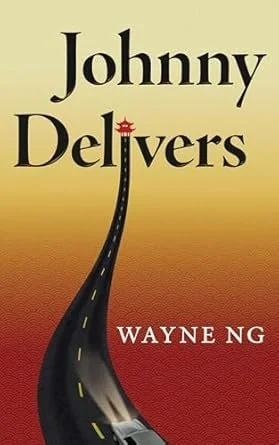
Q: Why did you choose Bruce Lee to serve as Johnny’s moral guide and confidant?
A: Most kids need a hero. In the standalone prequel, Letters From Johnny, 11-year-old Johnny worked through his problems by writing letters to hockey icon Dave Keon, just as I once did. Now, as an angst-filled teen on the cusp of manhood in Johnny Delivers, Johnny turns to Bruce Lee—a larger-than-life hero I also admired as an unstoppable fighter. What made Bruce especially significant was his defiance of the stereotypical portrayal of Asians in popular culture as humble, passive, and helpless.
With Johnny Delivers, I wanted to show that Bruce Lee was more than just a trailblazing martial arts film icon. He was also a philosopher, a writer, and family man. And, like any hero, he had his flaws—something Johnny struggles to accept. Since the novel is ultimately a coming-of-age and family story, Bruce is the glue that holds his relationship with his father. I wanted Johnny's evolving view of Bruce to reflect his journey—where their growth connects and separates them.
More about Johnny Delivers:
Eighteen-year-old Johnny Wong’s dead-end life consists of delivering Chinese food and holding his chaotic family together in Toronto. When his sweet but treacherous Auntie, the mahjong queen, calls in their family debt, he fears the family will lose the Red Pagoda restaurant and break apart.
Invoking the spirit of Bruce Lee and in cahoots with his stoner friend Barry, Johnny tries to save his family by taking up a life of crime delivering weed with a side of egg rolls. He chases his first love, but his hands are already full with his emotionally distant mother, his dream-crushing father, and his reckless, sardonic little sister.
As he fights to stay ahead of his Auntie, sordid family secrets unfold. With lives on the line, the only way out is an epic mahjong battle. While Johnny is on a mission to figure out who he is and what he wants, he must learn that help can come from within and that our heroes are closer than we think.
Dripping with 1970s nostalgia, Johnny Delivers is a gritty and humorous standalone sequel to the much-loved and award-winning Letters From Johnny.
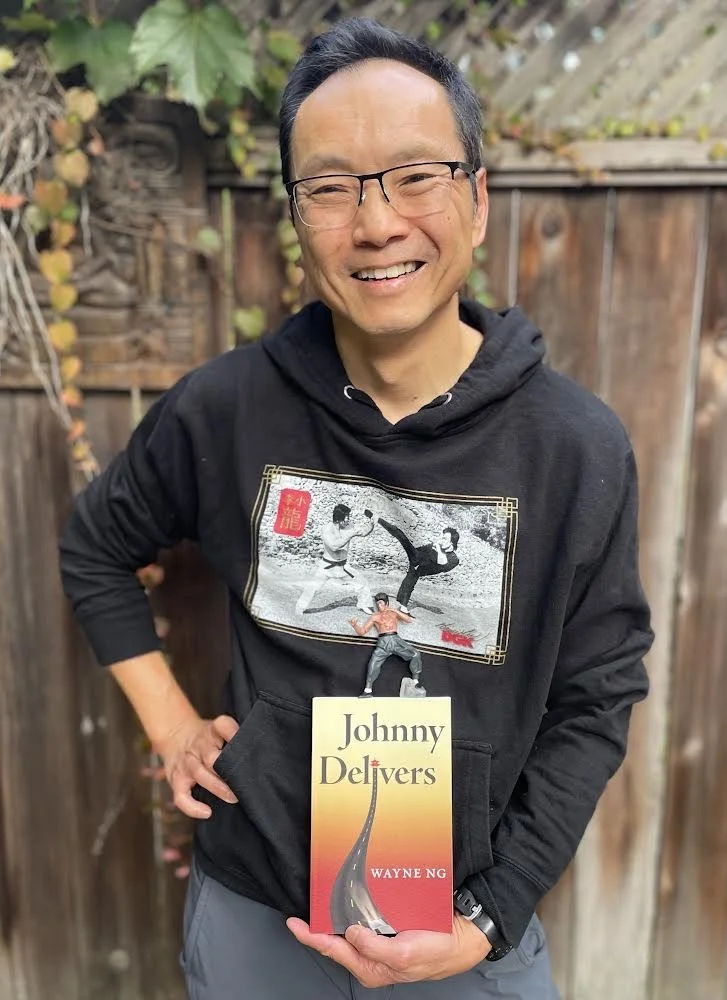
More about Wayne Ng:
Wayne Ng was born in downtown Toronto to Chinese immigrants who fed him a steady diet of bitter melon and kung fu movies. Ng is a social worker who lives to write, travel, eat, and play, preferably all at the same time. He is an award-winning author and traveler who continues to push his boundaries from the Arctic to the Antarctic. He lives in Ottawa with his wife and goldfish.
Ng is the author of The Family Code, shortlisted for the Guernica Prize; Letters From Johnny, winner of the Crime Writers of Canada Award for Best Crime Novella and a finalist for the Ottawa Book Award and Johnny Delivers.

Power Q & A with Michelle Berry
Michelle Berry is an acclaimed author of literary thrillers. Her newest novel, Satellite Image (Wolsak & Wynn, 2024) follows the story of Ginny and Matt, a young married couple from the city who decide to buy a house in a small town and move after Ginny is assaulted.
On the night before the move, however, Ginny and Matt, while looking at a satellite image of their new home, see what is undeniably a body in their backyard. Thus the stage is set for this eerie story.
Michelle Berry is an acclaimed author of literary thrillers. Her newest novel, Satellite Image (Wolsak & Wynn, 2024) follows the story of Ginny and Matt, a young married couple from the city who decide to buy a house in a small town and move after Ginny is assaulted.
On the night before the move, however, Ginny and Matt, while looking at a satellite image of their new home, see what is undeniably a body in their backyard. Thus the stage is set for this eerie story.
We noticed a different feel to Michelle’s novel compared to many other thrillers. While the story delivered on the chills and suspense, there was also a sophisticated rendering of character and events, where the reader was left to fill in what is not explicitly stated. There was also an upending of certain genre-based narrative conventions that offer a subtle commentary on real life and real people. We wondered: is this a signature of the literary thriller genre? What is a literary thriller, exactly? Or even just generally?
Welcome Michelle Berry to our series to help answer our questions.
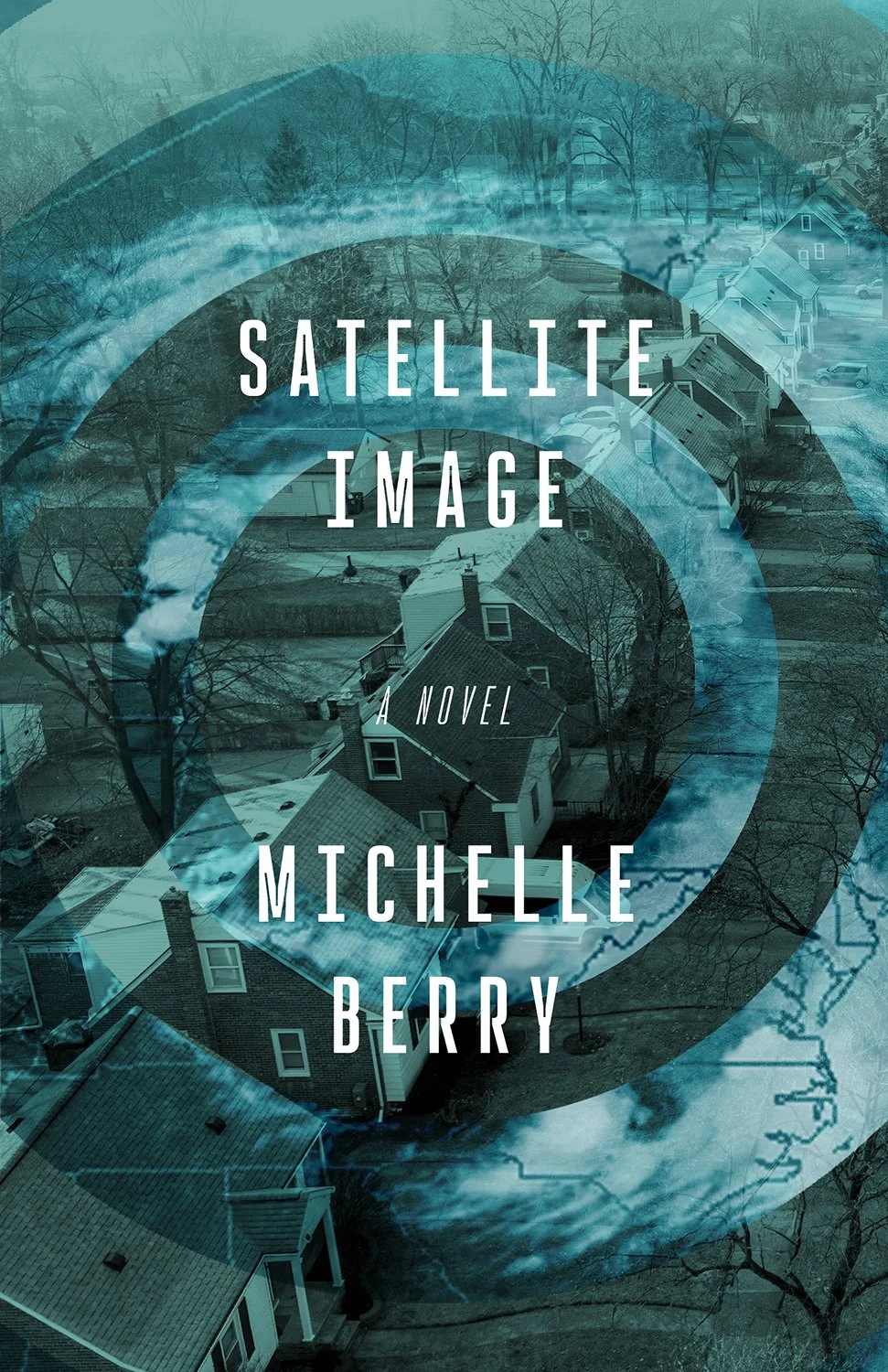
Bring home Satellite Image by Michelle Berry (Wolsak & Wynn, October 15, 2024).
Q: Would you use your book, Satellite Image, to highlight some differences between a literary thriller and a thriller?
A: I’m not sure if this is correct, but this is how I see the differences between a traditional thriller and a literary thriller. I imagine a tightrope. Let’s call it a Literary Thriller Tightrope. I’m walking along it. One foot falls off occasionally but I remain pretty steady to the end. Now I imagine another Tightrope. Let’s call this one a Thriller Tightrope. Again, I’m walking along and suddenly I really fall off. Both are tight ropes, but on one my foot just dips into the unknown, on the other I fall completely in.
I see a literary thriller, like Satellite Image, tipping back and forth between the frightening situation and the reality of the situation (in it I’m losing my balance, a foot falls off, but I don’t fall). This book focuses more on the psychological effects of the fear, on misperceptions and misunderstandings – what is real? What is not real? Ginny and Matt – are they really seeing/hearing/feeling something in their house or is their previous anxiety (seeing the satellite image of the body in their yard, Ginny’s attack in the city) playing havoc on their minds? On the other hand, a traditional thriller to me would look at things that are actually happening which are frightening and the reader would fall completely into those things. A threatening figure would be a threatening figure. But in Satellite Image the fear is more about perception—is the threatening figure real or is this just my imagination?
I also think that traditional thrillers generally give you more detail—things are explained and portrayed in ways that don’t demand you use too much of your own imagination and instead just fall into the writer’s thoughts. In a literary work the author may leave the reader with a lot to be figured out—do we know exactly what the characters are wearing or what they look like? Do we know what their house looks like? etc… I sometimes think thrillers are more entertaining in that they let you sink into what the author directs, whereas literary thrillers are maybe asking the reader to do a little more work in some way.
I’m probably completely wrong about the differences (and there are, of course, many books that are exceptions to the rule), but that’s kind of how I see Satellite Image. Ginny and Matt’s odd house, the things that make them nervous, their year of fear and what really happened is left up in the air – is anything real? Is anything easily explained? Or is it all psychological? Is it all a misunderstanding?
More about Satellite Image:
Reminiscent of the works of Barbara Gowdy and Joy Williams, Berry’s Satellite Image fully embraces the uncanny as it straddles the line between reality and unreality. When newly married couple, Ginny and Matt, move from the bustling, expensive rat race of the city to a sleepy, innocent, affordable small town two hours away, they assume life will be easier. Little do they know that they have bought a house with a baffling history. Life in this town is not all it’s meant to be. Odd neighbourhood dinner parties, and a creepy ravine just out their back door have Ginny and Matt quickly questioning their move.
Read an excerpt of Satellite Image here.
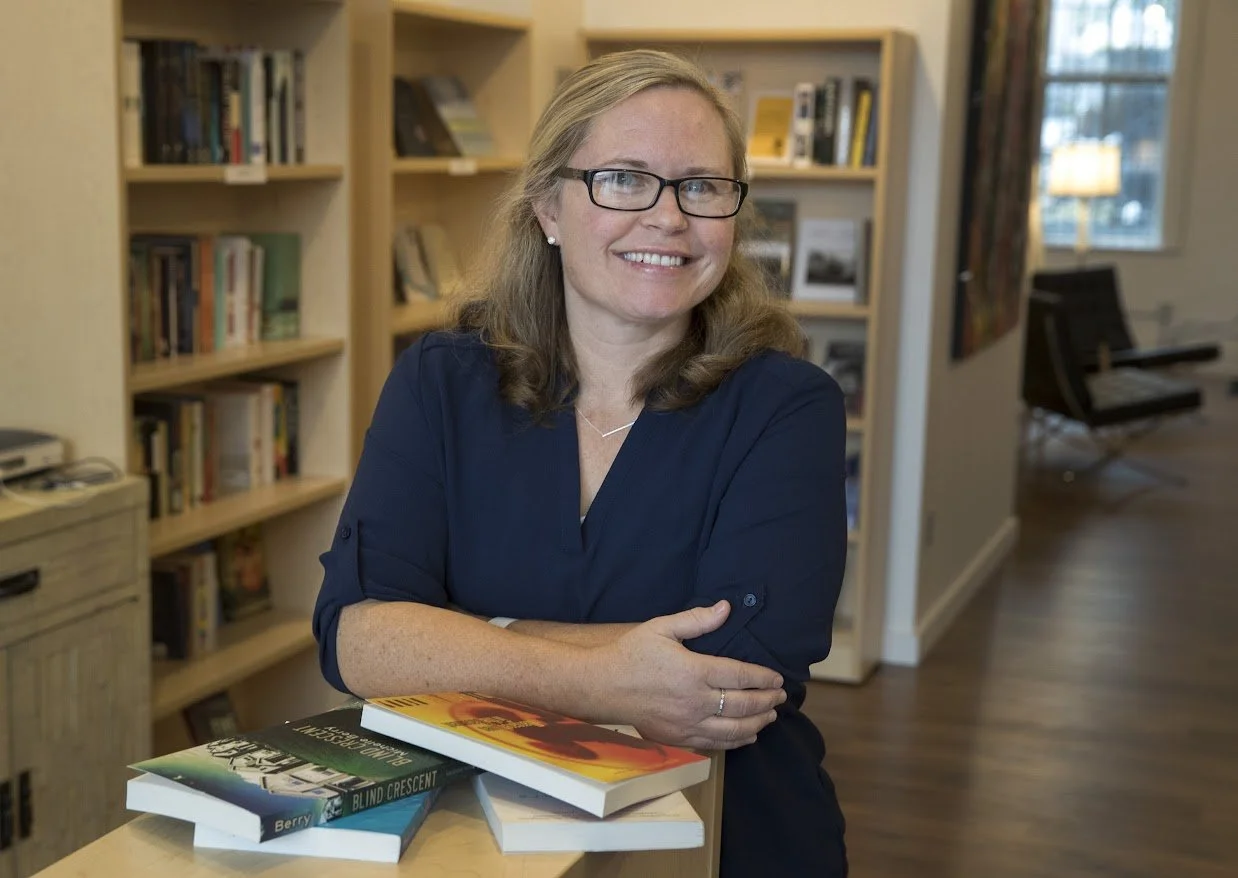
Michelle Berry. Photo credit: Fred Thornhill.
More about Michelle Berry:
Michelle Berry is the author of seven novels and three books of short stories. Her books have been shortlisted, long listed and have won multiple awards. Much of Berry’s writing has been optioned for film several times, with The Prisoner and the Chaplain currently in the works. Berry was a reviewer for the Globe and Mail for many years and currently teaches at the University of Toronto in the Continuing Education department. She has served on the board of PEN Canada, the Writer’s Union and on the Author’s committee of the Writer’s Trust. For five years, Berry owned and operated her own independent bookstore in Peterborough, Ontario, called Hunter Street Books.

Power Q & A with Ian Colford
Books have long lives, but if it’s possible to be late to the party celebrating an amazing book, we are definitely late to this one. Ian Colford’s 2023 Guernica Prize-winning novel, The Confessions of Joseph Blanchard, is a mesmerizing read that runs a dazzling gamut of human emotion: love, greed, grief, jealousy, rage. You name it: the characters in this novel—particularly our protagonist, Joseph—sing with range that would make Mariah Carey weak with envy.
Books have long lives, but if it’s possible to be late to the party celebrating an amazing book, we’re definitely late to this one. Ian Colford’s 2023 Guernica Prize-winning novel, The Confessions of Joseph Blanchard, is a mesmerizing read that runs a dazzling gamut of human emotion: love, greed, grief, jealousy, rage. You name it: the characters in this novel—particularly our protagonist, Joseph—sing with range that would make Mariah Carey weak with envy.
In Joseph—a man who falls in love with his 19-year-old cousin—we find a person to rally against and even (surprisingly and often against our better judgment) a person to rally for, despite his slippery moral footing. We are delighted to welcome Ian to our series today to ask him about creating the complex, haunting, and fascinating character of Joseph.

The Confessions of Joseph Blanchard by Ian Colford (Guernica Editions, 2023)
Q: One of the great feats of your book, to our mind, was the character of Joseph: a man who is repugnant in many ways but who we also couldn't help feel compassion toward—a surprising and disturbing realization. What is your advice to writers who want to create morally murky characters?
A: As I noted in a recent blog post about writing The Confessions of Joseph Blanchard, the character of Joseph came to me more or less fully formed. At the time I was writing the book, I wasn’t giving much thought to his status in the reader’s eyes, as someone they would like or dislike. My aim on days when I sat down to write was simply to keep the story moving forward. But as I got deeper into the story and saw what Joseph was doing, I grew more aware of the notion of sympathy. And after I finished it and started letting people read it, I had to wonder what they’d think of him.
Writing the book was a learning process and a lot of the time I was writing on instinct. But one thing I was sure of was that I didn’t want Joseph to be a nefarious schemer. I knew that if his intention from the get-go was to cause harm, the story would be boring, for me and for the reader. Instinct told me to dig deep into his history and find ways to give his character complexity and nuance. I wanted Joseph to be a puzzle for the reader to unravel. Because people behave in puzzling ways. They behave badly. Sometimes they even act against their own best interests. For the novel to work, the reader had to see Joseph as flawed and vulnerable. What makes our response to him so complicated is that we’re witnessing a fundamentally decent man struggling against base impulses. He knows he’s behaving badly. It eats at him, and yet he comes up with justifications that make it possible for him to carry on with behaviour that the reader will regard as unforgivable.
My advice for writers who want to create a morally murky character is to get to the root of why the character acts the way he does. If the reasons are simplistic (he’s doing it for revenge, or for kicks), then—probably but admittedly not always—the character you create will be one dimensional. If your character isn’t engaged in a struggle, not only will the reader quickly lose interest, but you, the writer, will tire of him. As a writer of fiction, your first responsibility is to write something the reader will find interesting, and a dependable compass to help you navigate your way through a novel manuscript is your own sense of what’s interesting. If you find your character boring, it’s likely the reader will too. But if you’ve endowed your character with the kind of depth that brings them convincingly to life and fires up your imagination every time you sit down to write, then there’s a reasonable chance your reader will be transfixed by what you’ve written.
More about The Confessions of Joseph Blanchard:
The Confessions of Joseph Blanchard is a contemporary tale of obsessive love, sexual transgression, and tragic loss. Bachelor and professional accountant Joseph Blanchard has led a socially active but emotionally cautious life until his late thirties. When he discovers that his beautiful cousin Sophie, a talented concert pianist, is in love with him, he finds he is powerless to resist her youthful charms, and against his better judgment embarks on a passionate affair. To avoid causing pain to her parents, the two lovers conspire to keep their relationship a secret. For a time, they are happy. But Sophie's career forces her to spend time in the company of other musicians, many of them young men. Consumed by jealousy, Joseph allows rage to take control, with tragic results. Grieving, he prepares to destroy all evidence of the affair. But when a family secret is exposed, it reveals the past in a new light. Eventually, his health in decline and with nothing but memories, he reveals his secret to a confidant.

Author Ian Colford.
More about Ian Colford:
Ian Colford was born, raised and educated in Halifax. His reviews and stories have appeared in many print and online publications. He is the author of two collections of short fiction and two novels and is the recipient of the Margaret and John Savage First Book Award for Evidence.

Power Q & A with Karen Green
Karen Green’s debut novel Yellow Birds (Re:Books Publishing) is being hailed as a beautiful and textured exploration of love, community, and learning to accept ourselves and each other.
In the Toronto Star, Nancy Wigston writes that Yellow Birds, “carries readers into the heart of a vanished musical era, and does it with style and panache.” If you’re looking for a singular and stunning coming-of-age novel to lose yourself in this season, be sure to put this on your reading list.
Karen Green’s debut novel Yellow Birds (Re:Books Publishing) is being hailed as a beautiful and textured exploration of love, community, and learning to accept ourselves and each other.
In the Toronto Star, Nancy Wigston writes that Yellow Birds, “carries readers into the heart of a vanished musical era, and does it with style and panache.” If you’re looking for a singular and stunning coming-of-age novel to lose yourself in this season, be sure to put this on your reading list.
After reading Green’s book, we had to know about why Green set the novel when she did: just before the digital revolution, in the mid-1990s. So we invited her to our Power Q & A series and asked!
Welcome, Karen!

Yellow Birds by Karen Green.
Q: Would you tell us why you decided to set the novel in the time period you did?
A: The reason for this was intentional and two-fold: first -- because Yellow Birds is based on a lot of my own experiences when I was a young Deadhead, and that was in the mid-90s. I think fan culture is having a moment these days as well, but I would never have set Yellow Birds in a contemporary timeframe, because second -- cell phones and the internet solve too many problems. I couldn’t let my protagonists Google Map their road trip route or text each other when there was conflict. That’s just way too easy.
More about Yellow Birds:
Set in a time just before the digital revolution, Kait is a young woman searching for identity and community. A group of outcasts called the Yellow Birds take her town to town on what they refer to as the Open Road Tour. One night, when Kait is feeling kinship with this group of Birds, a man sits beside her who alters her fragile plans for the foreseeable future. Filled with sex, drugs, music, and cults, readers won't be able to get enough of the groupie lifestyle entangled within a bohemian love story.

Author Karen Green.
About Karen Green:
Karen Green is a writer and editor in southwestern Ontario. Her essays, poetry, and fiction pieces have appeared in The Globe and Mail, CBC, Today’s Parent, Room Magazine, Harlequin, Chicken Soup for the Soul, Bustle, and The Rumpus. She is also the author of two young readers books and is the lyricist for several children’s pop songs.

Power Q & A with Anna Rosner
Having a middle-grade author on our blog is a first for us, and we are delighted to kick off what will hopefully be the first of many middle-grad lit features with Anna Rosner, the award-winning author of Eyes on the Ice (Groundwood Books, 2024).
This story follows ten-year-old Lukas and his brother Denys, who want nothing more than to play hockey, but it’s 1963, and they live in Czechoslovakia, where everyone is on the lookout for spies of the state.
This is a thrilling read, and one young readers have been enjoying.
Welcome to the Power Q & A series, Anna!
Having a middle-grade author on our blog is a first for us, and we are delighted to kick off what will hopefully be the first of many middle-grad lit features with Anna Rosner, the award-winning author of Eyes on the Ice (Groundwood Books, 2024).
This story follows ten-year-old Lukas and his brother Denys, who want nothing more than to play hockey, but it’s 1963, and they live in Czechoslovakia, where everyone is on the lookout for spies of the state.
This is a thrilling read, and one young readers have been enjoying.
Welcome to the Power Q & A series, Anna!

Eyes on the Ice by Anna Rosner.
Q: What is the importance of historical fiction in the high-speed world of young readers today?
A: In his 2015 article from Le Devoir, “Our era traps us in immediacy” (Notre époque nous enferme dans l’immédiateté), Marc Chabot explains that everything in our lives is instantaneous. He laments our detachment from history and literature, or “the permanent”. And this was in 2015, before the creation of TikTok! The immediacy problem has increased exponentially in the past decade. We view thousands of fleeting images, read copious online news bites, and stare blankly at Tweets and videos. We forget scandals and tragedies the moment they are replaced by new scandals and tragedies. It’s almost impossible to navigate this fast-paced world of “now”, and it’s that much harder for a young person.
Which leads me to reading. My years as a doctoral student were easily the calmest of my life, which runs contrary to the experiences of most students. During that time, I lived in books, the primary sources written 300-400 years ago. Reading those early works taught me so much: how women lived, how class systems functioned, how revolutions came to be. I engaged with my work slowly, leisurely, gathered information, and thought about one single sentence for a week or more.
When we encourage a child to read from a young age, their attention span increases. A good book enables them to leave this world of Instagram and the immediate, and take a long, deep breath. Turning a page can be therapeutic. Through the written word, children can visit and learn about places that would otherwise be unknown to them; places that are impossible to grasp in a fifteen second video. Studying history in school can be a challenge for young people, especially when they are obligated to memorize facts and statistics for exams. But when they read historical fiction, it’s less of a struggle. Historical fiction transports the child back in time, teaches them about where we came from and where we went afterwards. It helps them connect past and present. The narrative is history, written in a child’s voice, and it makes learning so much easier. Which is what I hope I accomplished in Eyes on the Ice. Those who read the book won’t be able to explain the effects of Stalin’s tyranny, but they’ll have a general understanding of what life was like behind the Iron Curtain. And it’s stories that we remember best.

Author Anna Rosner.
More about Anna Rosner:
ANNA ROSNER is a teacher and writer who holds a PhD in French literature. She is the award-winning author of two hockey biographies for young readers — Journeyman: The Story of NHL Right Winger Jamie Leach and My Left Skate: The Extraordinary Story of Eliezer Sherbatov. Anna is the director of Books with Wings, which provides new, quality picture books for Indigenous children living in isolated communities. She lives in Toronto, Ontario.

Power Q & A with Ruth Abernethy
Whether you know it or not, you have probably seen the art of Ruth Abernethy. Ruth is the sculptor who created the installation of Queen Elizabeth II at Queen's Park, the Glenn Gould sculpture in front of CBC studios, and the Liu Xiaobo piece in Ottawa. Her art, which has been installed coast to coast, has inspired many conversations among many Canadians. (She's also the only non-American to sculpt Abraham Lincoln!)
Whether you know it or not, you have probably seen the art of Ruth Abernethy. Ruth is the sculptor who created the installation of Queen Elizabeth II at Queen's Park, the Glenn Gould sculpture in front of CBC studios, and the Liu Xiaobo piece in Ottawa. Her art, which has been installed coast to coast, has inspired many conversations among many Canadians. (She's also the only non-American to sculpt Abraham Lincoln!)
“Ruth's work and this book give substance to any discussion on what it means to be Canadian. This book offers a glimpse of her unique perspective as an artist, moving from an Ontario farm through the collaborative craftsmanship of mainstream theatre to navigating the rarified worlds of royalty and celebrity.”
—Marilyn Norry
Ruth’s new book In Form: Life and Legacies in Bronze, is due out with FireFly Books on September 21, 2024. We’re honoured to have her join us for this Power Q & A to talk with us about her singular path to international acclaim.
Welcome, Ruth!

In Form: Life and Legacies in Bronze by Ruth Abernethy.
Q: You’ve said you don’t have “formal arts training.” We couldn’t help but wonder if you think your lack formal training is what makes you such a powerful public artist?
A: I propose that my 'lack of formal art training' is effectively offset by a 20-year apprenticeship with the finest stage designers in the world. Designing/building for theatre demands mental flexibility and a refined practice of resolving visual solutions that guide viewers’ imaginations and help 'tell the tale'. I developed a respect for audiences! As a parallel idea, I also admire what's 'real' about theatre. In curiously inverted escapism, the onstage and backstage creative processes are incredibly real, intense, and pragmatic.
The compulsion to create, to work hands-on, and explore materials, is initially satisfying to the maker. The fascinating results become red herrings for non-creators. AI may contrive music or visuals, but it's ME who gets IMMENSE reward from making things, and I suspect a 'bot' DOES NOT!
Artists are Cultural First Responders
Every milestone that humans 'highlight', from a child's birthday to a funeral or a political convention, are heightened by music and visuals with impact. Artists observe and participate in the world but, like a prism, we reassemble elements that exist for everyone. Society has a depth of 'standardization' that's difficult to offload. Focus on the 'products' of artists could lead to presumptions of equivalent skill sets, like other trades/professions. In separating creators from their 'product' they're revealed as problem solvers whose efforts are akin to the work of interesting people in any walk of life. Those who think deeply and carefully about what they do, are interesting people who are predictably effective at whatever tasks they undertake. What problems do we choose to solve?
The word playful is a true compliment! Thank you. Playfulness is a joyful expression of human contact.
Humour is often shared and it rests on common ground, welcomed because it poses no challenge
I learned/used many hand skills as a kid, and I learned to play music, so I had the discipline and persistence to tackle hand work (and hard work).
I was hired at the theatre because I was useful, and a very quick study! It was a place to flourish and I could travel, which was a key hunger at the time.
The variety of skills that theatre/film building demands, provides immense freedom to explore materials/methods and reinvent them as needed.
More about In Form: Life and Legacies in Bronze:
In Form includes the story of 20 sculptures in bronze. Located across Canada, they capture key figures from history, science, art, sports, the labor movement, medicine, royalty, human rights, World War II, business, and politics.
For Ruth Abernethy, the creative process starts with her off-center observations of human nature. She puts her thoughts "in form" as she plans and engineers public installations and studio works against the backdrop of family and the evolving zeitgeist. For this, her second book, Ruth takes you on a road trip across Canada to visit installations and initiate conversations about the role of sculpture in modern public life. In Form is filled with thought-provoking ideas for study and chat in academia, book clubs, seniors, arts, and business groups and for the sheer enjoyment of the stories behind the portraits of:
Lester B. Pearson, prime minister
Margaret Atwood, author
Bob White, labor leader
Isabel Coursier, ski jump champion
Liu Xiaobo, human rights activist
Sir William Stephenson, spymaster
Michael Holcombe Wilson, mental health advocate
HRH Queen Elizabeth II
Dr. Michael Smith, Nobel laureate
Daurene Lewis, the first Black mayor in Canada.

Public artist Ruth Abernethy.
About Ruth Abernethy:
Ruth Abernethy grew up near Lindsay, Ontario. At the age of 20, she was hired as Head of Props at the Royal Manitoba Theatre Centre, MB. At the Stratford Festival (ON), where Ruth began work in 1981, she refined her method of 3D mapping. The success of her first bronze prompted the invitation to sculpt renowned pianist Glenn Gould, which began a definitive career change. The National Portrait Gallery acquired Ruth’s portrait bust of Al Waxman (2003) and Her Majesty Queen Elizabeth II unveiled Ruth’s portrait of Oscar Peterson at the National Arts Centre (2010). She was the first Canadian artist to exhibit with Sculpture in Context, Dublin, Ireland (2007), and Sculpture-by-the-Sea, Sydney, Australia (2004).
For this, she was awarded a bursary from the Canadian Consulate in Sydney and was invited for a return to the Casuarina Sculpture Walk, Australia (2006). Ruth was the only Canadian artist short-listed for the Beijing Olympic Sculpture contest (2008). In addition to bronze and portraiture, Ruth’s studio works combine textiles, hand-made lace and stainless steel. Ruth began her own Canadiana Collection in 2005, seeking a broader narrative for social history. Pieces from this collection were selected for The Canadiana State Collection (Ottawa, ON), exhibited with Crossing Borders (Lockport, NY, 2005), and acquired by the Royal Ontario Museum (5 pieces, Toronto, ON, 2009).
Her bronzes have been commissioned for sites across Canada and she is the only Canadian artist to have sculpted Abe Lincoln for a public site in the United States. Ruth portrayed Queen Elizabeth II, 150% enlarged, for Queen's Park, Toronto (2023). Ruth authored Life and Bronze, A Sculptor’s Journal (2016). She was presented with an Honorary Doctor of Letters Degree from Wilfrid Laurier University (2018), and inducted into the Waterloo Region Museum Hall of Fame (2019). She sculpted Margaret Atwood, a patron of the Royal Canadian Geographic Society, and was made an Honourary Fellow of the Society, awarded the Louie Kamookak Metal (2023). Ruth continues to sculpt ideas that prompt dialogue, invite compassionate scrutiny of human experience and that hold a hint of humour!

Power Q & A with Gloria Blizzard
Gloria Blizzard’s collection of essays, Black Cake, Turtle Soup, and Other Dilemmas (Dundurn Press, 2024) has been on our radar for a while. Earlier this year, it even made our Mother’s Day Book Gift List.
Lorri Neilsen Glenn, author of The Old Man in Her Arms, has praised Gloria for how she “effortlessly weaves elements of her life — its challenges and its gifts — into contemporary conversations about identity, feminism, the diaspora, art, and belonging.”
Gloria Blizzard’s collection of essays, Black Cake, Turtle Soup, and Other Dilemmas (Dundurn Press, 2024) has been on our radar for a while. (You may even recongise it from earlier this year when it was on our Mother’s Day Book Gift List.)
Lorri Neilsen Glenn, author of The Old Man in Her Arms, has praised Gloria for how she “effortlessly weaves elements of her life — its challenges and its gifts — into contemporary conversations about identity, feminism, the diaspora, art, and belonging.”
Ms. Magazine called the book, “as captivating and lovingly written as any of her songs or poems. From identity and belonging to feminism and food, these personal essays present complexities, challenges and reflections that will appeal to a wide range of readers.”
Ayelet Tsabari, author of The Art of Leaving, hailed it has “mesmerizing, lyrical, and cadenced.”
We’re honoured to have Gloria join us today for this Power Q & A. Welcome, Gloria!

Bring home Black Cake, Turtle Soup, and Other Dilemmas (Dundurn Press, 2024)
Q: Tell us about the rich and incredibly evocative title of your book! Where it it come from? How does it play out in themes throughout the book?
A: Welcome to my book! Black Cake, Turtle Soup, and Other Dilemmas is a meeting place. Often important stuff happens at the crossroads of many things. The intersections of art, science, race, culture and spirituality are a valuable, rich liminal space, if we care to pay attention. The subtitle for my book is ‘Essays on music, memory and motion’, as the essays are infused with music, dance and travel.
The title points to and includes all of these ideas. Black cake is a treat familiar to those of us of Caribbean origins, and it made up of ingredients from around the world, none of which are indigenous to the Caribbean. In the essay ‘Black Cake Buddhism’, I look at the intersections of spirituality, where my Catholic Trinidadian mother teaches me, a daughter inexplicably exploring Buddhism in Canada, how to make this traditional cake. Two forms of music compete for the position of the soundscape for this event. Cake can be emotionally and historically loaded!
‘Turtle Soup’ is another layered tale indicative of the collection, and a theme of interconnections between the personal, historical and universal. In this essay, I learn as a child, how death and food are connected, and later as an adult, about a macabre sport played on Ontario roads.
My book also dives into personal and social quandaries that I call dilemmas. ‘The Mathematic of Rage’ looks at negotiating the world in a female, Black body. ‘Trifecta’ explores the connections between academic institutions and the Atlantic slave trade. Woven into it are the healing aspects of Afro-Cuban dance and the making of art in general. Early readers from many worlds, are letting me now how deeply they relate to these intersections. Cultural crossroads can be places of insight and growth, and for many, they are also home.
—Gloria Blizzard

Gloria Blizzard.
About Black Cake, Turtle Soup:
A diasporic collection of essays on music, memory, and motion.
In this powerful and deeply personal collection, Gloria Blizzard uses traditional narrative essays, hybrid structures, and the tools of poetry to negotiate the complexities of culture, geography, and language in an international diasporic quest.
These essays of wayfinding accompany anyone exploring issues of belonging — to a family, a neighbourhood, a group, or a country. Here, the small is profound, the intimate universal; the questions are all relevant and the answers of our times require simultaneous multiple perspectives.
About Gloria Blizzard:
Gloria Blizzard is an award-winning writer and poet, and a Black Canadian woman of multiple heritages. Her work explores spaces where music, dance, spirit, and culture collide. It has won the Malahat Review’s Open Season Creative Nonfiction Prize, and been nominated for both the Queen Mary Wasafiri Life Writing Prize and the Pushcart prize. Gloria holds a Master of Fine Arts in creative nonfiction from the University of King’s College and lives in Toronto. Her book of essays Black Cake, Turtle Soup, and Other Dilemmas is published by Dundurn Press.

Power Q & A with Rod Carley
RuFF is Rod Carley’s highly-anticipated fourth novel. This historical fiction, which is published by Northern Ontario’s Latitude 46 Press, transports us to Elizabethan England, where we witness Shakespeare struggling through a midlife crisis while trying to win a national play competition to secure the King’s business. Hilarious hijinks ensue, with whip-smart dialogue and a captivating tale that touches on salient social issues that persist today, including equality, justice, and censorship.
Humour and incisive wit combine to create a compulsively readable and thought-provoking novel from this Leacock Award long-listed author. We know RuFF will be a favourite book of the year for many and we are tickled to have Rod Carley here with us to talk about humour writing.
RuFF is Rod Carley’s highly-anticipated fourth novel. This historical fiction, which is published by Northern Ontario’s Latitude 46 Press, transports us to Elizabethan England, where we witness Shakespeare struggling through a midlife crisis while trying to win a national play competition to secure the King’s business. Hilarious hijinks ensue, with whip-smart dialogue and a captivating tale that touches on salient social issues that persist today, including equality, justice, and censorship.
Humour and incisive wit combine to create a compulsively readable and thought-provoking novel from this Leacock Award long-listed author. We know RuFF will be a favourite book of the year for many and we are tickled to have Rod Carley here with us to talk about humour writing.

Bring home RuFF by Rod Carley, published by Latitude 46.
Q: What advice do you have for aspiring humour writers?
A: Everyone has a different sense of humour. We all find different things funny for different reasons. This is why it’s important that before you sit down and try to write, you think about your own personal sense of humor and how you want to mine that to produce a piece of humor writing.
Accept that you have the potential to be funny. Writing humour might come more easily to some, but everyone has the potential to be funny. Find a voice—maybe it’s your main character—to channel your humor through. Trying to mimic other people’s styles in humour writing won’t work. If you try and write in a style that isn’t your own, or if you try and force yourself to be funny in a way that isn’t you, the effort behind your writing will show.
Humour is subjective. When you write a novel or collection of short stories that you hope will be funny, you can be guaranteed that not everybody will find it funny – you just hope some people will find it funny! Readers have the same reaction (to various degrees) to a romance novel, horror novel, or a mystery novel. But with a humour novel, some readers will find it the funniest thing they’ve ever read. Others won’t find it funny at all. It’s a challenge. Much like trying to catch a dragon. So, all you can do, is hope your sense of humour coincides with enough readers to make it worthwhile.
Use humour sparingly. Don’t overdo it; be specific. Your purpose is to grab the reader’s attention and help you make points in creative ways. Be sure your humour doesn’t distract from or demean the true purpose of your narrative.
Above all, make it fun for yourself. If it ain’t fun for you, it won’t be fun the reader.

Rod Carley.
More about RuFF:
Rod Carley is back with another theatrical odyssey packed with an unforgettable cast of Elizabethan eccentrics. It’s a madcap world more modern than tomorrow where gender is what a person makes of it (no matter the story beneath their petticoats or tights). Will Shakespeare is having a very bad year. Suffering from a mid-life crisis, a plague outbreak, and the death of the ancient Queen, Will’s mettle is put to the test when the new King puts his witch-burning hobby aside to announce a national play competition that will determine which theatre company will secure his favour and remain in business. As he struggles to write a Scottish supernatural thriller, Will faces one ruff and puffy obstacle after another including a young rival punk poet and his activist-wife fighting for equality and a woman’s right to tread the boards. Will and his band of misfits must ensure not only their own survival, but that of England as well. The stage is set for an outrageous and compelling tale of ghosts, ghostwriting, writer’s block, and the chopping block. Ruffly based on a true story.
More about Rod Carley:
Rod is the award-winning author of three previous works of literary fiction: GRIN REAPING (long listed for the 2023 Leacock Medal for Humour, 2022 Bronze Winner for Humour from Foreword Review INDIES, a Finalist for the 2023 Next Generation Indie Book Award for Humor/Comedy, and long listed for the ReLit Group Awards for Best Short Fiction of 2023); KINMOUNT (long listed for the 2021 Leacock Medal for Humour and Winner of the 2021 Silver Medal for Best Regional Fiction from the Independent Publishers Book Awards); A Matter of Will (Finalist for the 2018 Northern Lit Award for Fiction).
His short stories and creative non-fiction have appeared in a variety of Canadian literary magazines including Broadview (winner of the 2022 Award of Excellence for Best Seasonal Article from the Associated Church Press), Cloud Lake Literary, Blank Spaces, Exile, HighGrader, and the anthology 150 Years Up North and More. He was a finalist for the 2021 Carter V. Cooper Short Fiction Prize.
Rod was the 2009 winner of TVO’s Big Ideas/Best Lecturer Competition for his lecture entitled “Adapting Shakespeare within a Modern Canadian Context. He is a proud alumnus of the Humber School for Writers and is represented by Carolyn Forde, Senior Literary Agent with The Transatlantic Agency. www.rodcarley.ca.

Power Q & A with Jeff Dupuis
It’s Power Q & A time, and we are delighted to welcome author Jeffery Dupuis to our series to talk about his thrilling Creature X series (published by Dundurn Press). This trilogy follows Laura Reagan and her team as they travel the world in search of mysterious creatures unknown to science and find murder and intrigue. After reading the first book in the series, we wanted to know more about how Jeff created this cryptozoological adventure, which (let’s face it), must have involved a fair number of weird discoveries.
It’s Power Q & A time, and we are delighted to welcome author Jeff Dupuis to our series to talk about his thrilling Creature X series (published by Dundurn Press). This trilogy follows Laura Reagan and her team as they travel the world in search of mysterious creatures unknown to science and find murder and intrigue. After reading the first book in the series, we wanted to know more about how Jeff created this cryptozoological adventure, which (let’s face it), must have involved a fair number of weird discoveries.
Welcome, Jeff!

Roanake Ridge, the first book in the Creature X series.
Q: What is the strangest thing you uncovered while researching your Creature X series?
A: In the world of tall, ape-like creatures, giant eels, and bioluminescent pterosaurs that feed on the unburied dead, it’s a real challenge to say what is the “strangest” thing I uncovered while researching the Creature X series. A stand-out is an incident known in cryptozoological circles as “The Battle of Ape Canyon.”
In the summer of 1924, Fred Beck and four other gold prospectors had been working their claim just east of Mount St. Helens. This was decades before any large footprints were found and the name “Bigfoot” was coined. While collecting water from a nearby spring, Beck and one of the other prospectors came across a 7-foot-tall ape-like creature and shot at it. They returned to their cabin, telling the other prospectors their story. They decided to pack up and leave the next morning.
That night, a group of these creatures attacked the cabin, pelting it with large rocks, banging on the door and climbing on the roof. The prospectors fired their rifles through gaps in the walls, through the door and the roof to drive the creatures away. Once the sun came up, the men took only what they could carry and fled the site, leaving their equipment. Beck claims to have shot one of these creatures as they were fleeing, watching its body drop into a nearby canyon. That area has since been known as “Ape Canyon,” which you can find on Google Maps.
Beck later claimed that these creatures were entities from another dimension, which is not an uncommon school of thought in the Bigfooter community. Some people believe that the creature is “extradimensional,” able to move between our world and another. There’s a substantial amount of overlap between those who think Bigfoot can travel across dimensions and those who think it can read minds and communicate telepathically. There really are as many variations of Bigfoot encounters as there have been encounters. No two are alike, but some are definitely stranger than others.

More about Jeff:
J.J. Dupuis is the author of the Creature X Mystery series. When not in front of a computer, he can be found haunting the river valleys of Toronto, where he lives and works.

Power Q & A with Margaret Nowaczyk
Today’s Power Q & A features best-selling Polish-Canadian author and pediatric clinical geneticist Dr. Margaret Nowaczyk. Dr. Nowaczyk’s most recent book, Marrow Memory: Essays of Discovery invites readers to examine her DNA under a microscope, sharing her vast life experiences in a series of invariably absorbing and beautifully-crafted personal essays. From growing up in Communist Poland, to immigrating to Canada as a teen, to working as a pediatric clinical geneticist and professor at McMaster University, Nowaczyk bares her soul while encouraging readers to explore the ways in which our experiences and identities are entangled with our ancestral history.
Today’s Power Q & A features best-selling Polish-Canadian author and pediatric clinical geneticist Dr. Margaret Nowaczyk. Dr. Nowaczyk’s most recent book, Marrow Memory: Essays of Discovery invites readers to examine her DNA under a microscope, sharing her vast life experiences in a series of invariably absorbing and beautifully-crafted personal essays. From growing up in Communist Poland, to immigrating to Canada as a teen, to working as a pediatric clinical geneticist and professor at McMaster University, Nowaczyk bares her soul while encouraging readers to explore the ways in which our experiences and identities are entangled with our ancestral history.
We’re honoured to have Dr. Nowaczyk join us for this short and sweet interview series.
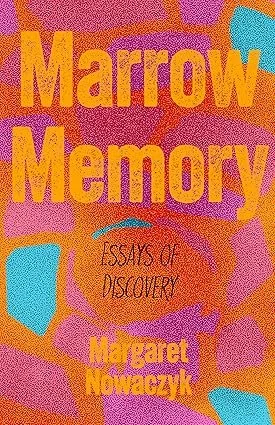
Bring home Marrow Memory: Essays of Discovery (Wolsak & Wynn, 2024).
Q: You’re an advocate of narrative medicine. Would you explain what that is and how—if at all—it shaped your writing of this collection of essays?
A: Narrative medicine trains physicians to be better listeners and diagnosticians. Narrative medicine is not a therapeutic modality; it is not narrative-based therapy with which it is sometimes confused. After training in narrative medicine, by paying close attention to the patient’s story, the text of the patient, so to speak, doctors are better able to determine the cause of illness and the optimal approach to therapy. In addition, narrative medicine has been shown to increase empathy and to prevent physician burnout.
How does that training happen? Narrative medicine recommends close reading of literary texts, writing about patient encounters in non-medical language, and reflective and creative writing. In the essay “Reading Dostoevsky in New York City” in “Marrow Memory”, my collection of essays, I describe the process of close reading; in my memoir “Chasing Zebras”, I wrote how attending a narrative medicine workshop opened my eyes to the power and potential of writing and sharing my stories. Both experiences were paradigm-shifting for me. I have always been an avid reader, but it is the attention paid during the process of close reading that trains one to notice nuances in patient’s behavior, the gaps in her story, the tell-tale signs of illness and distress. By paying attention to those subtle signs, a physician is better able to attend to the patient’s needs, both in terms of diagnosing her condition and of treating it. Writing about a patient encounter in non-medical language (done in what is called “parallel chart”), after the heat and stress of often too-brief a patient encounter, allows the physician to identify the many preconceptions and biases that medical language frequently hides. It is then that the writer has the luxury of time and reflection to do so. This practice fosters empathy. And creative writing, the final pillar of narrative medicine training? It allowed me to express my deepest fears, explore my darkest obsessions, and pay attention to my well-being in the safety of the ever so patient blank page.
Simply, without training in narrative medicine, I would not have become a writer. There would have been no stories, no essays, and no memoir.

MARGARET NOWACZYK (photo credit: Melanie Gordon)
More about Margaret Nowaczyk:
Margaret Nowaczyk was born in Poland in 1964 and emigrated to Canada with her family in 1981, having spent six months as a stateless person in Austria. She finished high school in Toronto in 1982. After receiving a B.Sc. in biochemistry in 1985, she graduated with honours from the University of Toronto Faculty of Medicine in 1990. For six years, she trained in pediatrics and genetics at the Hospital for Sick Children in Toronto, with elective training at Boston Children's Hospital in pediatric neurology and at Hôpital Enfants Malades in Paris, in inborn errors of metabolism. In 1997, she was offered a university faculty position as a clinical geneticist at McMaster Children’s Hospital. Since then, she has been caring for children with genetic disorders and providing prenatal diagnosis and genetic counselling for adults. She has authored 120 peer-reviewed papers in genetic journals, and rose to the rank of professor in 2014. She is a great advocate of the narrative approach to medical care. Her short stories and essays have appeared in Canadian, Polish and American literary magazines and anthologies. She lives in Hamilton, ON, with her husband and two sons.

Power Q & A with Tim Bowling
Tim Bowling is the author of twenty-four works of fiction, nonfiction, and poetry. He is the recipient of numerous honours, including two Edmonton Artists’ Trust Fund Awards, five Alberta Book Awards, a Queen Elizabeth II Platinum Jubilee Medal, two Writers’ Trust of Canada nominations, two Governor General’s Award nominations and a Guggenheim Fellowship in recognition of his entire body of work.
We are joined by this phenomenally accomplished and internationally-acclaimed CanLit icon for our Power Q & A series, to ask a quick question about his latest book, a collection of poems, In the Capital City of Autumn (published by Wolsak & Wynn, 2024).
Tim Bowling is the author of twenty-four works of fiction, nonfiction, and poetry. He is the recipient of numerous honours, including two Edmonton Artists’ Trust Fund Awards, five Alberta Book Awards, a Queen Elizabeth II Platinum Jubilee Medal, two Writers’ Trust of Canada nominations, two Governor General’s Award nominations and a Guggenheim Fellowship in recognition of his entire body of work.
We are joined by this phenomenally accomplished and internationally-acclaimed CanLit icon for our Power Q & A series, to ask a quick question about his latest book, a collection of poems, In the Capital City of Autumn (published by Wolsak & Wynn, 2024).
Tim is in top form in this collection. Threading through autumnal themes such as the loss of his mother and the demolition of his childhood home, his children growing and the inevitable passage of time, Bowling writes with rich lyricism and imagery. Sweet William and loosely woven woollen mitts for his mother, the moon as “an egg in the pocket of a running thief” for time, salmon for eternity. In the Capital City of Autumn, the characters of The Great Gatsby come to life, and three a.m. brings wisdom. These are masterful poems, lightened with a touch of whimsy, poems to sink into on a quiet evening.
Welcome, Tim!

Q: The title of your collection is an arresting throughline for this collection. Would you tell us how you came up with it?
A: I have always been more of a poet of autumn than of spring (are there poets of summer and winter? I guess there must be!). And as I've grown older, I've felt increasingly like an exile, not from place, but from place-in-time. That is, I don't miss the West Coast so much as I miss being young on the West Coast. And judging by all the oldsters on YouTube music reactor video channels, that sense of longing for the freshness of the past is a pretty powerful drug, even if the past was really only the present and therefore lacked the golden hue in which it is routinely cast. Anyway, I was born in a city that seems like a capital but isn't one (Vancouver), and I live in a city that is a capital but doesn't seem like one (Edmonton), so capital cities have always been a part of my imagination. Add to that my sense of living more in time than in place, and a melancholy awareness of entering the autumn of my years, and—voila—the title emerged. But if that sounds rather grim, I'm happy to report that the long title poem, like the collection overall, is a mix of buoyant imagery and musical phrases huddling together for warmth in the cooling shadows, rather like septuagenarian Led Zeppelin fans all over the world holding butane lighters up to their computer screens.

The incomparable Tim Bowling. Picture credit: Jacqueline Baker.

Power Q & A with Bob Henderson
Bob Henderson is an outdoor educator, writer, and resource editor for Pathways: The Ontario Journal of Outdoor Education. Additionally, he has been resource editor for Nastawgan: The Quarterly Journal of the Wilderness Canoe Association since 2008. Bob is also one of the editors and writers of Paddling Pathways. He joins us here for our Power Q & A.
Bob Henderson is an outdoor educator, writer, and resource editor for Pathways: The Ontario Journal of Outdoor Education. Additionally, he has been resource editor for Nastawgan: The Quarterly Journal of the Wilderness Canoe Association since 2008.
Bob is also one of the editorial forces behind Paddling Pathways: Reflections from a Changing Landscape, published by Your Nickle’s Worth Publishing in 2022.
Bob joins us for our Power Q & A series.

Paddling Pathways, available from Your Nickle’s Worth Press.
Q: What’s the takeaway you’d like readers to glean from this collection of personal essays?
A: The takeaway would be some questions: What would a reflective look at paddling in Canada look like in 2022, one that reflects changing landscape?
What might it mean for us to shift pathways and create narratives that no longer focus on competing, completing, and conquering as central motifs for how we understand the natural world or wilderness travel?
Consider what life might be like if there were less completion and more community, less asserting and more relating, less shouting and more listening, and maybe even less human and more more-than-humans.

Learn more about Bob at www.bobhenderson.ca.
Q & A with Steven Heighton
A quick Q & A wherein Steven Heighton speaks to the difference in process between writing fiction and writing poetry.
Q: How is (or is) your writing process different for poetry than fiction?
A: I write the first drafts of poems by hand, and rarely at my desk--I might be at the kitchen table, or sitting outside, or on a train, or in a bar or cafe. The second draft does happen at the desk, where I key the rough draft into my laptop. Then I'll print out that version and work on the thing by hand again, anywhere but at my desk, happily hacking away with my red uni-ball pen, crossing stuff out, scribbling illegible marginalia. I go back and forth that way, between screen and page, until I can't take the poem any farther. As for fiction, I used to write it by hand as well, though usually now I write my first drafts on the laptop, at my desk. But after that point, my process is the same--I print out the story or novel and revise by hand in the margins, then go back to the screen, then the page, the screen, etc.

But these are just dull logistical details. To me, the more interesting difference between compositional modes is the ratio of pain and pleasure involved. For me, working on a poem is always, on some level, a pleasure, and I think one of the main reasons is that there's no risk and hence no anxiety involved. Why? Because a twenty-line poem is a small thing, physically, and I know that if it doesn't work I can just walk away from it. Also, the "career" stakes couldn't be lower. Few people read poetry, so my livelihood can't and doesn't ride on it. Fiction is different. People do read it, and publishers sometimes pay decently for it, and you actually can make a modest living from it, if you have sufficiently low material aspirations. So there's always a touch of anxiety there. It's not just play. Plus, it's simply hard to walk away from a botched piece of fiction without agonizing over all the time and effort you've spent. To give up on a thirty page story, after months of work--as I've had to do at least twice now--is painful. To walk away from a three hundred page novel you're struggling with after eighteen months or three years--that's just about unfaceable.
More about Steven...
Steven Heighton’s most recent books are the Trillium Award finalist The Dead Are More Visible (stories) and Workbook, a collection of memos and fragmentary essays. His 2005 novel, Afterlands, appeared in six countries; was a New York Times Book Review editors’ choice; was a best of year choice in ten publications in Canada, the USA, and the UK; and has been optioned for film. His short fiction and poetry have received four gold National Magazine Awards and have appeared in London Review of Books, Tin House, Best English Stories, Best Canadian Stories, Poetry, Zoetrope, Agni, Best American Poetry, London Magazine, Brick, TLR, New England Review and, mysteriously, Best American Mystery Stories. Heighton has been nominated for the Governor General’s Award and Britain’s W.H. Smith Award, and he is a fiction reviewer for the New York Times Book Review.
Photo credit: Angie Leamen Mohr.