

BLOG
Creative Prostitution: What to Expect When You're Expecting to Write for a Living
For most people who write for a living, it’s not all sonnets and short stories; you’ve got to sell a bit of yourself. Or a lot of yourself, depending on the project. Is it worth it?
The summer my family moved out of Toronto and north to small town Ontario, my parents sent my brothers and me off to Port Coquitlam, British Columbia to stay with our aunt and uncle while they oversaw the building of our new house.
It was the summer we ate so many freezies that their plastic slit the corners of our mouths. It was the summer my younger brother refused to bathe for days and had to be physically dumped in the shower. It was the summer that I read Francine Pascal's Sweet Valley High Sagas in three days.
Like many writers, this is how my writing life began: through the voracious, unquenchable need to read. So Pascal is not Thomas Hardy, but as the 10 year old only girl in an all male array of brothers and cousins, she was to me.
She was to me.
It was not the first summer I spent reading. As a child, you're usually at the mercy of your parents to supervise - or at least take you to- outings with school friends. Combine this with the fact I spent most of my summers at my grandfather’s cottage on the lake, and my friends from school may as well have been on Mars.

Me reading at my Gramps' cottage.
Oh boo-freakin-hoo. Poor me. Yeah, yeah. I know. As much as I love Hardy, I am no Jude and these are not the tragedies he wrote of. But these minor isolations are where my writing life began.
In part.
The other part I share with many writers. Namely, I'm a big baby.
That’s a cute way of saying that I feel raw to the world. Even encounters and feelings I’ve experienced before feel new almost every time, often painfully so, and I can either hold it in, or let it out in a long, self-indulgent wail.
And boy do I wail.
As a fledging writer, I filled at least 5 notebooks a month. Mostly drivel, of course, but it helped me realize what I was capable of. It made me feel powerful, and as a preteen who entitled her autobiography, Memoirs of a Fat Kid on Track and Field Day, I can’t tell you how incredible it is get a taste of invincibility.
It’s addictive.
When I told my conservative Islamic father I was dropping the idea of law school to become a writer, he asked me why I couldn’t just be a lesbian. Or a prostitute.
This response was the first of many like reactions.
Telling people I’m a writer is not always met with what I consider due awe and admiration of my craft. When my 7 year old nephew asked me what I actually do for a living – understanding that I am home all day and that I also claim to be working –he didn’t believe me.
“People don’t really do that. Not as a real job.”
If I’d told him I was an astronaut, I would have been met with less disbelief.
But writing is often an act of disbelief - in yourself, in the world - and I knew I’d never be happy doing anything else.
The only other time I've felt this way is when I've come home from the ballet, mind full of music, gesture, grace, and danced around my nightly absolutions, face washed, arms poised, toes, tipped. Brain baffled and free. How lovely.
But not every night can be the ballet.
I’ve been writing professionally for over a decade, and if you’re writing professionally, full-time, chances are you’ve dabbled in or are dabbling in some form of creative prostitution.
For most people who write for a living, it’s not all sonnets and short stories; you’ve got to sell a bit of yourself. Or a lot of yourself, depending on the project.
Is it worth it?
Well, I get asked that a lot, and all I can say is it’s a personal call.
I know many writers who make their living in entirely unrelated fields (e.g. as software engineers) - or even semi-related fields (e.g. as professors or in communications) – who work best when they save their writing time for their writing. The act remains pure, chaste, and relatively free of corruption.
I know others writers who rent out their minds (and sometimes, especially in the beginning when you can't always afford to be as choosy, a wee bit of their dignity) on an almost daily basis and are OK with that. Obviously, I fall into this category.
I can’t speak for others, but I can speak for myself when I say that my dignity is one thing, and my morality is quite another. While I have definitely written about topics that I deem trivial or silly, I have never written about anything I find morally objectionable.
Which isn’t to say I go into every project wholeheartedly believing in what I am hired to write about. I do a hell of a lot of ghostwriting, and though I always know that I can nail the content, it doesn’t mean I'm initially passionate about the topic. You can only write so much about BBC period dramas, body dismorphia and Bea Arthur.
I do, however, have faith in my powers of compassion. I have total faith in my empathetic abilities. If I agree to a project, I have no doubt I can get out of myself enough to look at it from another angle. I can learn to see what others see.
I don’t think I could stomach hunting for sport, but writing for conservation-minded waterfowling experts has made me see what they love about it.
I know my acceptance of mortality is far too fragile for me to work in the funeral business, but writing content for a company in the industry has given me a whole new understanding and deep respect for people who not only trod death’s terrain magnanimously, but help others navigate it too.
Even though I love playing poker, it wasn’t until I began writing for a truly inspired professional player and coach that I understood poker will always be a straight out gamble unless you develop the mental, physical and spiritual acuity outside of the game to carry you during play.
Creative prostitution forces me to write from perspectives and in voices that are totally foreign. It forces me into other worlds, and sometimes, uncomfortable corners.
It has not only made me a better writer, you see, but a better person, so for me, it works. The juice is always worth the squeeze. And what a squeeze.
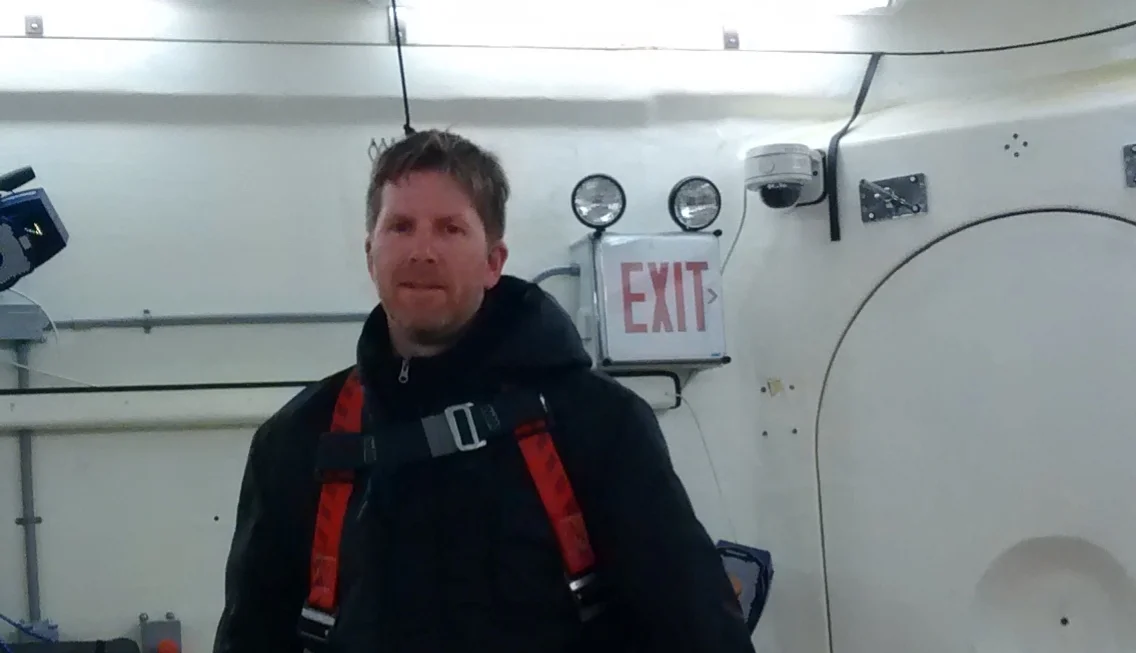
Q&A with Dave Cameron
Bawdy houses, jury duty and witchcraft. National Magazine Award winner Dave Cameron offers advice to writers about bad habits, and how (i.e. if) to break them.
Q: What is one bad habit you'd encourage aspiring writers to ditch early in their career?
A: The other day I received a letter from the Sheriff’s Office. My name had been selected at random to be considered for inclusion in the Jury Roll. My heart stirred! I might get to preside with strangers over the retelling of a calamity. Even if the crime was minor, some details were sure to be sordid. If this seems callous of me, then I am callous by trade. Writers sometimes fail to get outside themselves; for that matter, they sometimes fail to leave the house. And here was a letter fallen from the cold blue sky offering possible escape.

I completed the included questionnaire to confirm my eligibility. As it turns out, several Criminal Code offences do not exclude a person from jury duty: Pretending to practice witchcraft. Failing to keep watch while towing a person on water skis. Buying a ticket in an unlawful game of chance. Being found in a bawdy house.
The list was long and enlightening, and fortunately I remain eligible. I sealed my response in the return envelope and zipped down the street to the post office. On the way home, I paused near the stoop of the local bawdy house... before continuing on with a sigh of relief.
Bad habits are never defeated absolutely. They are moving shadows to remain aware of and ahead of. Perhaps the writer’s most persistent darkness is a lack of faith. Is the work any good? Will it find an audience?
My letter from the Sheriff’s Office was a kind of pep talk. In the fullness of time, everyone’s name gets selected at random.
More about Dave...
Dave Cameron won a gold National Magazine Award for his 2012 Walrus feature, "Fade to Light," about a man with dementia.

Q&A with Shoilee Khan
Journey Prize nominee Shoilee Khan offers up some inspired and inspiring advice to writers with day jobs.
Q: What's your advice to writers with day jobs?
A: 1. Accept that the reality of your writing time will not live up to the image you've created. I've tried to balance my teaching and my writing by setting aside specific days in the week as sole writing days - no teaching, no appointments, no errands, just writing. I envision waking up, making breakfast, taking a walk in the wilderness, making a hot cup of tea, and settling into a day of writing with soft slants of sun stretching across my desk. This has happened one or two times. It could happen again. It's lovely and fulfilling when it does happen. But, on all the days that it does not happen - the days where I wake up too late, the days I sit at my desk for three hours and realize that I've eaten two sandwiches and written one paragraph, the days that the urgency to check my student emails, or mark student papers intrudes again and again and again, the days I find the evening burning out my day, my writing quota unsatisfied -- on these days, it's imperative to remember that the vision need not be reality for the writing, some writing, any writing, to get done.

2. Stop comparing your productivity needs with the productivity practices of other writers. It's beneficial to know how other writers get their writing done, but understand that their practice may not be your practice. Some writers wake up two hours before work and write furiously until they have to leave for their jobs. Other writers write late into the night after their families have finally gone to sleep. Some steal parcels of time throughout the day. Some, like me, set aside specific days to write. You do not have to aspire to a single vision of productivity and feel that you are somehow failing if you cannot perform in the same way. If you are done by 7 pm, then so be it. Watch Netflix, eat an ice cream cone, and go to sleep. Wake up and write in the morning. If you are horrified by mornings, then write at a different time. Decide what will be tolerable for you, then make it work. If it doesn't work, then you try something else. In the midst of all that trying, some writing will happen, and eventually you'll find the regularity, or the right momentum for you.
3. Realize that what once worked beautifully, may one day no longer suit you. At the beginning of the term, I set aside specific days to write. I was diligent about keeping work at work, prepping most of my lectures while I was on campus, and waking up on my writing days with only one goal: create. Then, the marking started trickling in. It was fine, I stayed on course. Then, all the marking poured in. I knew it would happen. I've been teaching for five years so this was no surprise. It's the inevitable drowning beneath student papers that strikes mid-October and is relentless until the end of term. But, my writing schedule had worked so well that I wanted to force the rest of my life to abide by it. I only grew more frustrated as the marking leaked into my weekends (first transgression), then into my evenings (second transgression), then finally, into my writing days (third and most horrifying transgression). I could say that marking was the problem (and maybe it is), but instead, I needed to accept that my set-up was not meeting my needs and I should readjust. This could mean sacrificing my writing days now to have a week of only-writing later. It could mean writing less on my designated days and accepting the presence of "non-writing" tasks on those days. Really, it would have to be whatever would yield the greatest potential for me to get any amount of writing done.
4. Take time off. If having dedicated stretches of writing time is important to you and your work, and you are able (financially and otherwise), then plan to take time off as a working holiday. This could mean a few days, to a few weeks, to a leave of absence. Decide what you need and then see how you can go about making it happen. Some writers find a daily balance where the variety that a full, busy work day offers actually feeds their work. Others need long stretches of dedicated time to fully immerse and create. Some writers need both. If you can take some time off, try it - and do so, guilt-free.
5. Abandon the guilt. Do not wallow in guilt after you shirk your writing commitment. If you are not practicing your craft the way you think you should, you can change your expectations, or you can change your practice. You should not try to flourish on guilt - it will prevent you from ever rising up again because it is meant to keep you down. Swallow exactly one spoonful of guilt if you must, let it be a quick shot of fuel, but then you burn it out, abandon it, and you begin again as many times as it takes.
More about Shoilee...
Shoilee Khan currently teaches English in the School of Communication and Literary Studies at Sheridan College. She received her MA in English Literature from the University of Toronto and her MFA in Creative Writing from the University of Guelph. Her fiction has appeared in a diverse collection of magazines and journals, including Adbusters, Room Magazine, The New Quarterly, and Other Voices. Her short story, "The Kidney Connection" was nominated for the 2011 Journey Prize in Fiction and a chapter from her novel in progress won the 2010 Other Voices Fiction Contest. Most recently, she was a participant in the 2015 Banff Writing Studio at the Banff Centre for the Arts.

Q & A with Tanis Rideout
Tanis Rideout, author of award winning novel, Above All Things, talks to us about how research shapes her writing.
Q: Tell us about the importance of research in making a novel work. Really work.
A: I tend to write rather research intensive work – maybe because I enjoy that part of the writing process so much. I’ve been lucky. Research has afforded me the chance to travel to cities, to meet people, to spend time in places that I never would have otherwise. And there’s something about being in a place that your characters occupy or have occupied, I think, particularly if they are historical figures, but even if they’re people who exist in some version of the real world.
If you can walk down the streets that you characters walk down, look at the buildings, feel the air, it gives you new tools to draw them. You can understand how they move down the street, is it quick and easy, slow and painful? You realise what places sound like, what they smell like. All of which can be the things you don’t think of, if you’re conjuring a place entirely out of your head.
And it’s the small things, the weight of paper, the colour of ink, the size of envelopes – tiny things that have changed over time, or from place to place, that help to conjure a world in its entirety, I think. The right detail can do so much for a reader to build a world that they can believe in.

Of course, it means that as a writer I often know more than I could ever possibly incorporate, and knowing where to draw that line is hugely important, you don’t want to bog down narrative of character in too much research. And I hate reading stuff that feels like the writer is showing off how much research they have done. I want it to feel seamless. I want the world to feel wet with its own reality, is how I often think of it.
So yes, for me, the background work, the reading, the wandering, the staring, the chasing down strange bits of information, is hugely important. Without the characters, the ideas only exist in a vacuum.
More about Tanis...
Tanis Rideout is the author of a novel, Above All Things, which was long-listed for the Dublin IMAPC Award, a NYT Editor's Choice, and winner of ITAS Premio Montagna and a poetry collection, Arguments with the Lake.
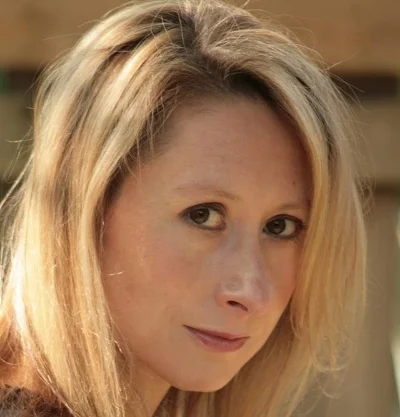
Q & A with Elisabeth de Mariaffi
In The Devil You Know, I placed a very fictional character among very real events: my fictional news reporter, Evie Jones, finds herself covering the arrest of Paul Bernardo in February, 1993. That was fraught enough writing as it was, but Evie also has a back story.
Q: What's your advice for fictionalizing real life, and still making it true to (what we can know) about the actual events?
A:
In The Devil You Know, I placed a very fictional character among very real events: my fictional news reporter, Evie Jones, finds herself covering the arrest of Paul Bernardo in February, 1993. That was fraught enough writing as it was, but Evie also has a back story – when she was eleven, her own best friend was abducted and murdered, and she’s also trying to solve this cold case on the sly, using the tools handed to her in her newsroom job. The lost girl, Lianne Gagnon, was a fictional mélange of the girls I remembered going missing from my own Toronto childhood, including high profile cases Sharin’ Keenan and Alison Parrott, among others.
All of this caused me no small degree of anxiety. I wanted the book to do the work of elegy for these girls, but I also wanted to talk about the very real fear that my generation grew up with – it’s hard to talk about the fear without talking about the crimes and the media attention they inspired.

One of the ways I coped with this was enlisting Evie as a witness, rather than actually casting her as a true-life character. As a reporter and researcher, Evie plays the role of the reader in the book: finding facts and interpreting them. Although I wouldn’t say so in every case, in this particular story, it was important to me not to co-opt any of the actual victim’s stories – so Evie remains a wholly made-up character.
I tried to be careful about which details I included in the book. This was as much to avoid overwhelming the reader as it was to avoid sensationalizing the violence. I did as much research as I could bear, and picked and chose what might make it into the book. Dropping a few recognizable details increases the real-feel of the novel, and makes, I think, the fictional bits seem more true, as well.
There are some really good examples of recent books that fictionalize a real-life person’s story: Sean Michaels’ Us Conductors comes to mind, a novel loosely based on the life of Leon Termen, the inventor of the theramin; also Steven Galloway’s The Confabulist, a novel that imagines Houdini’s life as a spy. Ultimately, as fiction writers, our job is to make sense of reality and try to explain it in narrative form, to try to create context and beauty at the same time. I don’t think we need conflate fiction with biography. What I mean is, it’s not supposed to be true, it’s just supposed to feel that way.
More about Elisabeth...
Elisabeth de Mariaffi is the Giller Prize-nominated author of one book of short stories, How To Get Along With Women (Invisible Publishing, 2012) and the new novel, The Devil You Know (HarperCollins, Canada; Simon & Schuster, USA 2015).
Her poetry and short fiction have been widely published in magazines across Canada. In 2013, her story “Kiss Me Like I’m the Last Man on Earth” was shortlisted for a National Magazine Award.
Elisabeth now makes her home in St. John’s, Newfoundland, where she lives with the poet George Murray, their combined four children and a border collie — making them CanLit’s answer to the Brady Brunch.
Upccoming events! Catch Elisabeth at Vancouver Writers Fest this October. More information here: https://www.writersfest.bc.ca/2015/authors/elisabeth-de-mariaffi
Twitter: @ElisabethdeM
Facebook: https://www.facebook.com/demariaffi
Web: www.elisabethdemariaffi.com
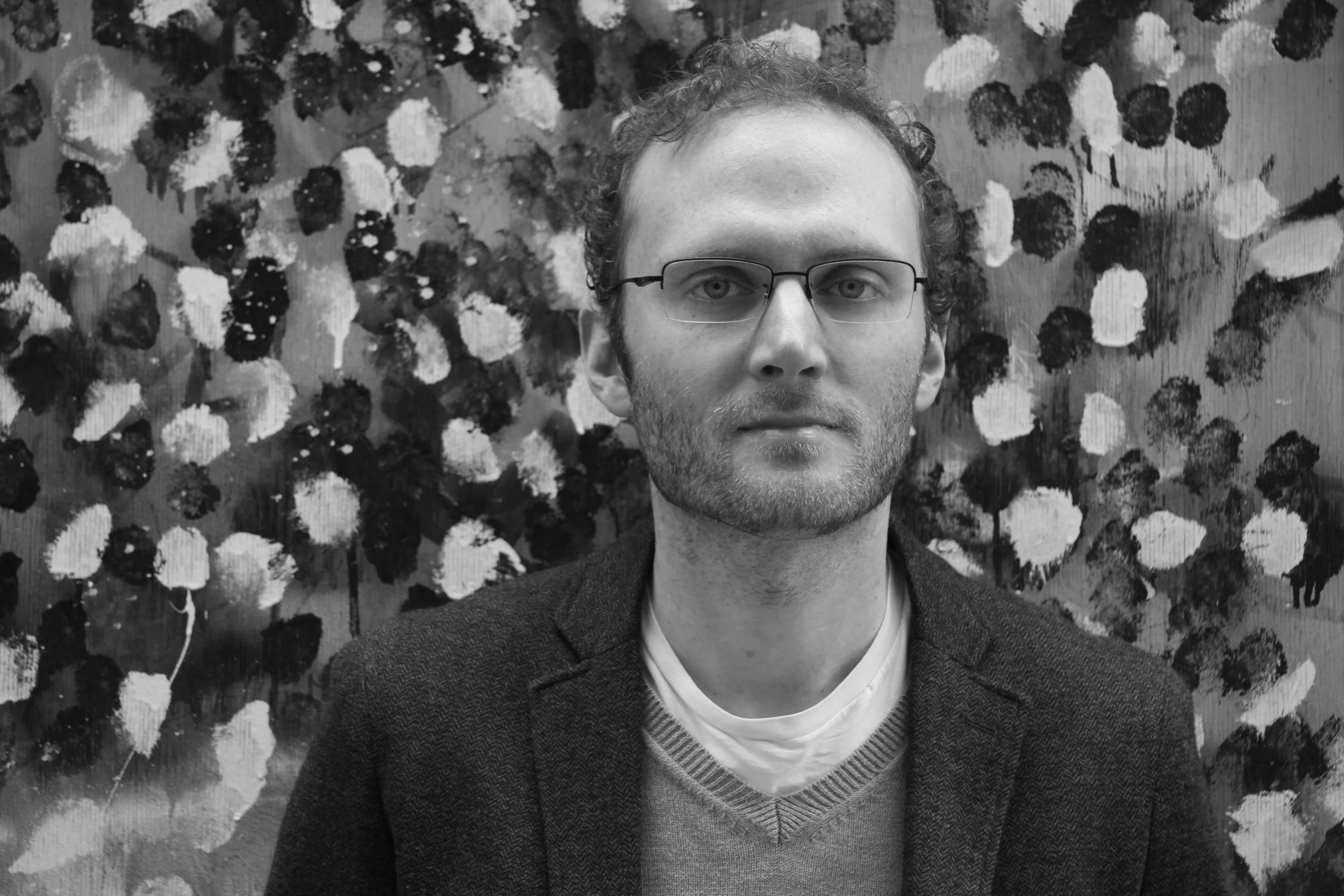
Q & A with Jeff Latosik
A power Q&A about writer's block with Jeff Latosik, author of Tiny, Frantic, Stronger, and Safely Home Pacific Western.
Q: What's your cure for writer's block?
A: Auden has this wonderful saying: “The great writer does not see through a brick wall; he just doesn’t build one.” Maybe writer’s block isn’t something we stumble into, that is, as a kind of sudden locked gate or wall in our process. Perhaps learning writing is just learning how not to build that wall.
So, how not to build the wall. It’s about how we think of things. If writer’s block is to be “cured,” for example, then perhaps we would prescribe the remedy as action. But perhaps writer’s block is just the mind turning and taking stock of its own machinery. It’s a tall order, but the idea here might be that all one needs to get out of writer’s block is to give up the idea that the work has to be a certain thing.
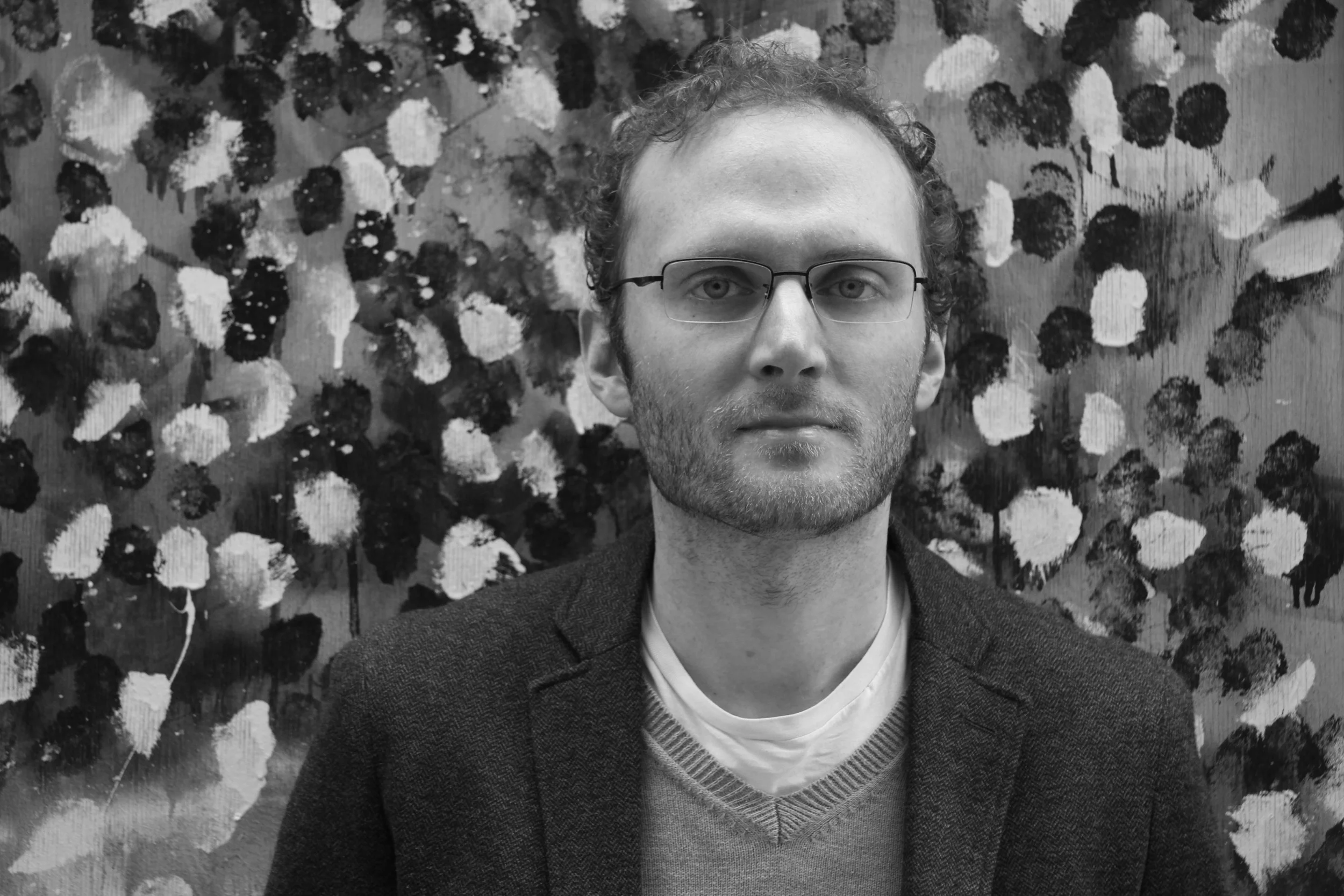
More about Jeff...
Jeff Latosik is the author of Tiny, Frantic, Stronger, and Safely Home Pacific Western.
Read some poems by Jeff in The Walrus.
Q & A with Steven Heighton
A quick Q & A wherein Steven Heighton speaks to the difference in process between writing fiction and writing poetry.
Q: How is (or is) your writing process different for poetry than fiction?
A: I write the first drafts of poems by hand, and rarely at my desk--I might be at the kitchen table, or sitting outside, or on a train, or in a bar or cafe. The second draft does happen at the desk, where I key the rough draft into my laptop. Then I'll print out that version and work on the thing by hand again, anywhere but at my desk, happily hacking away with my red uni-ball pen, crossing stuff out, scribbling illegible marginalia. I go back and forth that way, between screen and page, until I can't take the poem any farther. As for fiction, I used to write it by hand as well, though usually now I write my first drafts on the laptop, at my desk. But after that point, my process is the same--I print out the story or novel and revise by hand in the margins, then go back to the screen, then the page, the screen, etc.

But these are just dull logistical details. To me, the more interesting difference between compositional modes is the ratio of pain and pleasure involved. For me, working on a poem is always, on some level, a pleasure, and I think one of the main reasons is that there's no risk and hence no anxiety involved. Why? Because a twenty-line poem is a small thing, physically, and I know that if it doesn't work I can just walk away from it. Also, the "career" stakes couldn't be lower. Few people read poetry, so my livelihood can't and doesn't ride on it. Fiction is different. People do read it, and publishers sometimes pay decently for it, and you actually can make a modest living from it, if you have sufficiently low material aspirations. So there's always a touch of anxiety there. It's not just play. Plus, it's simply hard to walk away from a botched piece of fiction without agonizing over all the time and effort you've spent. To give up on a thirty page story, after months of work--as I've had to do at least twice now--is painful. To walk away from a three hundred page novel you're struggling with after eighteen months or three years--that's just about unfaceable.
More about Steven...
Steven Heighton’s most recent books are the Trillium Award finalist The Dead Are More Visible (stories) and Workbook, a collection of memos and fragmentary essays. His 2005 novel, Afterlands, appeared in six countries; was a New York Times Book Review editors’ choice; was a best of year choice in ten publications in Canada, the USA, and the UK; and has been optioned for film. His short fiction and poetry have received four gold National Magazine Awards and have appeared in London Review of Books, Tin House, Best English Stories, Best Canadian Stories, Poetry, Zoetrope, Agni, Best American Poetry, London Magazine, Brick, TLR, New England Review and, mysteriously, Best American Mystery Stories. Heighton has been nominated for the Governor General’s Award and Britain’s W.H. Smith Award, and he is a fiction reviewer for the New York Times Book Review.
Photo credit: Angie Leamen Mohr.
Q & A with Diane Schoemperlen
I've started a little series where I ask writers about the writing life. Author and artist Diane Schoemperlen starts us off with some insight into the importance of routine.
Q: How important is it to you to set a scheduled time to write?
A: I am a wreck without my routine! It has developed over thirty years of writing and without it, I don’t think I could function. I am a morning person and every day (including weekends) I get up early and do some reading with my coffee. Then I must get right to work. If I don’t, I find I am exceptionally good at frittering the whole day away. I am at the computer by 9:00 a.m. at the latest. How long I actually work depends on the project. It can be anywhere from four to six hours at a stretch. On an ideal day the work period is then followed by a nap. But this doesn’t happen very often. Usually it is followed by errands, chores, and tending to the business of writing (as opposed to the actual writing.) I often work seven days a week. I only work in the evening under duress as that is my time to relax and recharge so I can do it all again tomorrow.
More about Diane...
Diane Schoemperlen is the author of twelve books, including three novels, one non-fiction book, and several collections of short stories. In 1998 she won the Governor-General’s Award for Fiction for her collection of illustrated stories, FORMS OF DEVOTION. In 2008 she received the Marian Engel Award from The Writers’ Trust of Canada. In 2012 she was writer-in-residence at Queen’s University in Kingston, Ontario. She is currently on the faculty of the Humber School of Writing Correspondence Program. Her most recent publication is BY THE BOOK: STORIES AND PICTURES, published by Biblioasis (Windsor, Ontario) in September 2014. She is currently working on a memoir to be published by HarperCollins Canada in April 2016. She lives in Kingston, Ontario. You can find her on Facebook and she has a website coming soon at www.dianeschoemperlen.com.

My Favourite Resources for Writers
The best resources for writers don't always involve writing - but you will have to listen. And read. This article, specifically.
Listen, no one is going to plant your butt in the chair and write for you, but these resources for writers can definitely help get the juices flowing.
This list is by no means exhaustive. It does, however, reflect my personal favorites; they're where I go when I'm stuck, discouraged, or ready to hit the bottle hard at 2pm.
The Top 5 Resources for Writers
1) Merriam-Webster. I love words. I love what they reflect about the people using them, and I love learning about where they came from. This is why I love Merriam-Webster.com. Not only is it an amazing online dictionary and thesaurus, but it has fun and informative games, quizzes and facts about vocabulary and language. (I subscribe to their Word of the Day, which delivers a new word to your inbox every day.)
Sure, I'm the kind of gal who would (and, OK, has) read the dictionary for fun, but MW offers more than just words. On many occasions it's rekindled my love for language and reminded me why I do what I do.
2) Writer's Digest. "Write Better, Get Published" - this is the tagline for Writer's Digest, and while I don't buy the implied guarantee, I do like their writing prompts - especially for my creative writing. 99.9% of the time, their prompts never make it into my published work, but it does get my head out of my own ass and offer a fresh start.
They also have some pretty solid tips on how to make it as a freelancer. Just beware the hopeful novice writer: there are some pretty hard sells on this site - and outlandish claims. Example:
"Write a Breakout Novel in 2015"! Originally over $300, now only $49.98?! Well, cool my ink jets and colour me sold!
(If you want really good advice about getting published, read novelists Russell Smith's columns in the Globe and Mail. They give a hard, but compelling kick in the pants for any aspiring writer.)
3) Walking Therapy. It's good to get out of your head. It's better to get out of the house or office. I find walking to get the mail, or to the shops for something for dinner or going to get my son from school will open my mind (and burn a few calories - much needed as a stress eater who works in very close proximity to a fridge).

4) Writer's Trust of Canada. From news on grants, and lectures, to intel on writer's retreats and scholarships, this is a great place to stop by, get informed and get inspired.
5) Copy Blogger. Creative writers, put your scruples aside. We live in an age where content is King, and if you want to make it as a Writer (or even a 'writer'), at one point or another, you're probably going to have to sell yourself into a world of creative prostitution: you're doing something you technically love, but more often than not, it's loveless.
You're just going through the motions - and this is OK. There's a pay off. Writing content for other people has made me a better writer. It's made me more diligent, more focused. It's trained me to sit down and write, write, write and edit, edit, edit until the job's done. No excuses.
Sure, I take pride in my work (and God knows I learn a lot), but it certainly isn't something I'd write about without being hired to do so.
I've found the emails and articles by Copy Blogger invariably beneficial as a content writer, and a as a capital 'W' writer. It forces me out of my comfort zone, and accepting the work gets me to explore topics I would never have delved into on my own. Like here. And here and here and here.
Copy Blogger helps content writers find ways to engage their audiences across the board - and this is going to be an invaluable writing resource if you want to write for a living.
And there aren't many writers who get to make a living writing about what they want, all the time. All of us have to rent ourselves out now and then, which is not to be confused with selling out.
You don't have to write about anything that's against your moral code, but you do have to write. Writers don't just hang out in coffee shops and bars, waxing poetic, they actually have to produce...you know...words.
That's where these resources for writers come in. They'll help, Trust me.
Have your own favourite resources for writers? Tell me about them in the comments below.
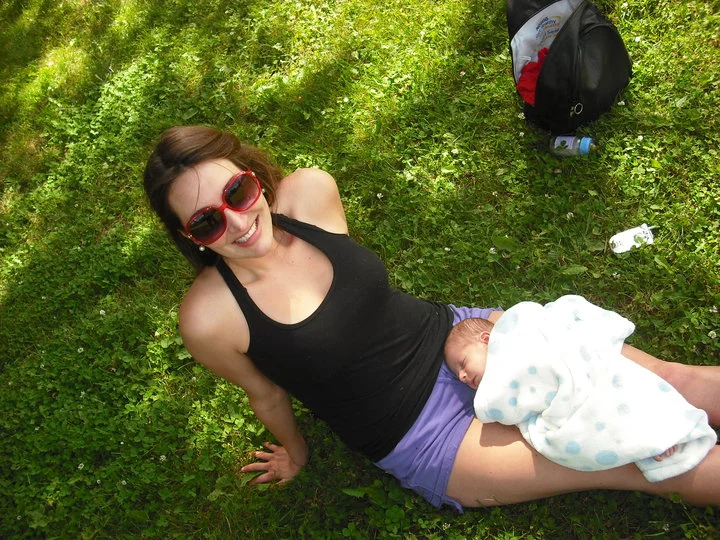
Mum’s the Word: Keeping Quiet on the Homefront to Avoid Professional Discrimination
It's not that I'm not proud of my kids, but motherhood and writing can be tricky business, I am afraid they may be considered a professional liability.
It’s around 8pm and I’m beat. Beyond beat. In fact, I’m so beat I’m forcibly having to drag my slippered and jammie-clad carcass around the house to turn off the lights and lock doors – and this is when Joel calls. Joel is one of my longest standing clients and a guy I’ve come to admire and genuinely like over the years.

He’s straight to the question.
“Why didn’t you tell me you had kids?”
I’m silent. It’s taking me a minute to unpack what he’s asking.
“You’ve met my wife, right?”he says. “My kids?”
This I can answer. “Yes.”
“So how come I never knew you even had kids? I mean, you just had a baby!”
This call is beginning to give me the same sickening feeling I used to get when my Dad called and I was out past curfew with my friends. Where is this coming from?
He answers my question before I can ask. “I found you on Facebook.”
Up to this point, Joel had been fairly disinterested in the Internet and vehemently anti-social media – so anti-social media that he hired me to manage his home-based fitness business’ social media presence. I’m still absorbing this revelation when he goes on.
“Three kids, no less. This means that during the time you’ve been working with me, there were three times you were pregnant for nine months. Three times you gave birth and must have needed or wanted a week or month off, and you never took it. You never even mentioned it to me.”
Joel and I have met in person periodically, but most of our communication is done via text, email or phone calls. So his not seeing me pregnant is completely plausible. His not seeing me pregnant is actually more than completely plausible; it’s been preferable.
Don’t get me wrong, I’ve never refused to meet a client while pregnant. I’ve even been known to bring a baby to a meeting if I couldn’t avoid it. But if I can avoid it, I will.
I’ll avoid it because I’ve wanted to avoid any negative assumptions about my ability to do my job. If I can’t do a meeting because I have to get my kids from school or I’m taking the baby to the doctor, I don’t say that: I say I have something else scheduled. It’s not a lie. The reason I can’t is also none of anyone’s business because it doesn’t affect my ability to do my business. Clients still have their deadlines met, earths shattered, and minds blown. My kids still have their lunches bagged, princess dresses mended and Stegosaurus fished out of the toilet. All in a day’s work.
I’ve been in my field for over a decade, and I’ve been pregnant and/or raising small children for five of those years. Some of my clients actually do know this; these are usually the clients who’ve outright asked if I have children, and I can’t actually say any of them have expressed concern, or anything but their casual interest in my family’s well-being. Still, I don’t make it a point of conversation. So why?
Because even though I’ve been fortunate enough not to experience it first-hand, I know discrimination exists. Women who are pregnant or have families – particularly young families – are often undermined oroverlooked professionally, no matter how talented or qualified they are. (Even though studies show that women with kids are more productive than…well, everyone.)
But Joel’s upset, and my shame-faced reaction to his agitation is making it clear to me that in this case, ‘the man’ is not the problem; I am. By worrying about what people think a woman is capable of doing professionally simply because she is also a mother, I am contributing to the prejudice I am trying to escape. My silence on the subject of my children is saying I have something to hide. Worst of all, because I did not feel strong enough in my professional identity to confidently push-back against discrimination, I was implying the prejudice is right.
And it’s not.
In many cases, my family status simply won’t come up. I have one client whose essays I’ve edited from her undergraduate degree until now, as she finishes up her doctoral dissertation. She doesn’t know I have kids, but that’s not the vibe we have. I’ve never met her in person, and while we cordially inquire as to one another’s health, we don’t get personal.
But Joel is different. I have met his wife. I have met his kids. He knows I love trail running, marshmallows and the Golden Girls. He knows the scar on my eyebrow is from when I opened a car door into my face after racing my brother for the front seat of the car. When I was 20 years old. He knows I won’t do chin ups anymore—no matter how much he goads me—because I feel I’m going to pee myself. But I didn’t tell him this bladder-related phenomenon has only happened since having children.
He’s right: I haven’t said a word about my children at all and there have been plenty of openings where this information would have been welcome.
I say, “I’m sorry, Joel.” And I mean it. I’ve been evasive when I should have been true to our vibe. No, his not knowing I had kids didn’t impact the quality of my work, but it did affect his assessment of our relationship – and good business is all about building and nurturing relationships. Up to that point, Joel thought we were on the same page.
“Really, Joel,” I say again. “I’m sorry. It’s just…”
“It’s OK,” Joel cuts in, and laughs. “I mean…you know…I would’ve sent you a gift basket or something.”
Update: Since writing this blog, Hollay has had another child.