

BLOG

Epic Momentum: A Review of Crito Di Volta by Marc Di Saverio
River Street’s Hollay Ghadery reviews Crito Di Volta by Marc Di Saverio—an epic poem that is as exasperating as it is enchanting.
Marc Di Saverio. Crito Di Volta. Guernica Editions. $25, 177 pp., ISBN: 978-1-77183-521-3
Reviewed by: Hollay Ghadery
By the time I was done reading the first page of Crito Di Volta--an epic poem that chronicles the adventures and misadventures of a young man released after a decade in a psychiatric facility--I’d experienced every emotion I would feel over the course of Marc Di Saverio's book.
Exasperation, admiration, and intense curiosity--I ran the gamut from the initial onslaught of simile to a few lines later when I marveled over Di Saverio’s masterful wielding of poetic device to draw a subtle but crucial line between himself, the writer and Di Volta, the protagonist. One is always in control. The other, not so much.
Both are compelling.
Di Volta is prone to manic, overblown sentiment. That opening selection of verse reads, "Flavia, my eyes are as red as sunrise this first time I swallow/my speed and hope.../Teetering on the street like a bull full of swords, the sunbeams/stabbed me". (1)
This sets the stage perfectly for a chief tragedy in Di Volta's life: his passion is also his downfall. Such is the irony with many epic heroes. Odysseus, Beowulf, Rama--their greatest strength is also their greatest weakness. For Odysseus, it was his confidence. For Beowulf, his brute force. For Rama, his duty. For Di Volta, his faith in his words--a faith that arguably borders on blinding solipsism.
What grounds the hyperbole of Di Volta’s character is Di Saverio. Using repetition, meter, rhyme, and metaphor, Di Saverio creates breathing space around the vacuum of Di Volta, showing a subtle mastery of narrative and language that brings order and sense to the tale. He reveals, with piercing clarity, some of the murkier sentiments of the sesquipedalian orator.
"Would you rather be the speed of a sunbeam or it's brightness?" (12)
A simple line that cuts to the quick of a block of Di Volta's rambling verse: life is full of impossible choices. It’s a question that speaks to the heart of one’s beliefs in the midst of more cerebral musings.
To be clear: I don't mind the rambling. It is not a flaw of the writer; rather, a crucial, informing part of Di Volta's orphic character. Di Saverio gives us refulgent places to relax and reflect. The narrative pace can be intense, to be sure, but there are always places to catch our breath. Sometimes, it's just a line, and sometimes, there are entire cantos where the pace slows.
This section, “New Years”, is a stunning example of this downshift.
Like the street-stones
during a parade, some minds are disturbed
continually, no one knowing or caring;
I wonder if Charon will ask these transients for coins
or speak to them the first soft words they'll hear since they were
Kids. (20)
This subdued side of Di Volta is where Di Saverio's depth and insight are most clarion. Di Volta is not just a frenetic former-psych-ward patient: a person's mental illness does not define them. In fact, it seems that Di Saverio’s poem would argue that the line between genius and insanity isn’t so much thin as non-existent. We not only contain multitudes but are multitudes, concomitantly.
Unlike classic epics that feature Manichean heroes, Di Saverio's Di Volta is complex and gritty, making him more real and his story more relatable than epics of the past.
I began by saying that by the end of the first page of this poem, I experienced every emotion I would feel while reading the whole of the book. What I didn’t say is that those emotions are the driving forces behind the epic form. You’re not always supposed to like the protagonist. The hero is supposed to infuriate you, endear you and mystify you over and over again and sometimes all at once. This turmoil creates momentum, and in the end, momentum creates an epic worthy of the tradition.

Should You Really Only Write What You Know?
The old writing adage, “write what you know”—how accurate is it? Where does the line between a writer’s real-life experience and their imagination begin and end? River Street’s Margaret Huntley discusses this puzzling quandary in her latest blog.
The one piece of advice that all of my writing professors have drilled into my mind is to write about something you are an expert on. Now, this doesn’t mean you can’t explore new topics and genres. It does mean, however, that your writing will be better if you have extensive knowledge about your topic.
The first step in understanding this piece of advice is to think about how obvious it is when a writer is not an expert in the subject matter they write about. Maybe you’ve watched a show and thought to yourself “well that’s not realistic”. Or maybe you’ve read a book where a character goes through something traumatizing, and you think to yourself “that doesn’t seem like a normal way to cope”. I’m sure you’ve noticed something like this in another author’s writing.
And there’s no shame in authors taking creative liberties and exploring new possibilities. That’s the fun of creative writing in the first place. But it’s very obvious to your audience when you don’t have a lot of knowledge about what you’re writing about. So, if you are wanting to venture into unfamiliar territory in your writing, take some responsibility to be as accurate as possible.
The first and, in my opinion, the easiest method to be a more knowledgeable author is to draw on your personal experience. Think about it as a piece of music. There are some songs out there that are good and that’s that. But then there are some songs that deeply move you because you can just tell that the songwriter inserted a piece of their heart into the music. This is what you’re aiming for in your writing when you incorporate personal experiences.
Now, this doesn’t mean that you only write creative nonfiction (unless that’s your thing). Rather, it means that there are elements of your personal life that you can incorporate into any story and by including those very real experiences your writing. For example, I recently wrote a short story where my protagonist was a sexual assault survivor. While I have never survived sexual assault, I do have anxiety, so I know what it’s like to feel terrified when trying to go about my everyday life. I gave my protagonist very real anxiety symptoms to make her character have realistic emotional health.
The second method to expert writing is to do research. If you want to write about something that has nothing to do with your life, that’s completely fine, just do some research first. This can be in the form of field research where you might volunteer at an organization you want to write about. You could also find and interview someone who does have personal experience in your subject matter. Or you can simply do some research online.
I cannot stress enough how important it is to make an honest and extensive effort to become an expert in the topics of your writing. Trust me, your readers will thank you for it.

How Do Writers Find Ideas?
How do writers get ideas? River Street’s Margaret Huntley talks shop on the writing processes, sharing her muse-inducing tips to get the creative juices flowing.
By: Margaret Huntley
Personally speaking, coming up with ideas is probably one of the most difficult parts of writing. When I have an initial idea, I have no problem running with it, but coming up with the idea is incredibly hard.
Writing has been around so long that so many of the good ideas have already been used, so it’s difficult to maintain originality. It can be pretty discouraging.
Whether you are in the beginning stages of a project or if you are unsure of how to finish your project, here are some helpful tips to inspire new creativity:
Ask other people! Now I know I just said coming up with original ideas is very important but hear me out. If people willingly give you input, you can take their ideas and rework them to make those ideas your own. There should never be any shame in asking for help. There is not a single writing piece that has not been aided by at least one other person. While asking other writers for ideas is helpful because of their experience in the field, asking non-writers can be just as beneficial because their input comes from the perspective of a reader.
Take a break! This is another tip that sounds counter-intuitive at first, however constantly thinking of ideas is straining on your brain. Like every body part, your brain needs to take a break after working so hard for so long. This break can be however long as time allows. If you have a strict deadline maybe you can only afford to give yourself thirty minutes to decompress and take your mind off of your project. But maybe this is a personal project and you can leave it alone for a month or two before coming back and approaching it with a fresh mind. I promise that taking a break for any amount of time will be beneficial.
Try one of your bad ideas! It’s natural when brainstorming ideas that we end up thinking of one that seems kind of poor. But if you really can’t think of anything else, there’s no harm in trying one of the bad ideas. Maybe you’ll start writing and realize this idea can work after all. Or maybe you’ll realize that you were right in the first place and it doesn’t work. Even if the latter is true, after exploring the bad idea you’ll understand the specifics of what makes the idea bad and you can start thinking of ways to improve it.
Go outside! The outdoors is great for a lot of things, physically and mentally. It’s even great for finding inspiration. Not only will the sunshine help boost your mood and aid you in having a more positive approach, but exploring a new environment often helps you explore new ideas. Even if you live in an urban area getting outside your home and walking down the street can lead to all kinds of inspiration.
I hope these tips help you continue to create and to do what you love. Don’t ever let a little writer’s block keep you from chasing after your goals.

Editing 101: Tips on Editing Your Own Work
Unless you are an insanely talented writer, chances are you will need to do a lot of editing during your writing career. Personally, editing is my favourite part of writing. I just love perfecting drafts, whether they are my own or someone else’s.
By: Margaret Huntley
Unless you are an insanely talented writer, chances are you will need to do a lot of editing during your writing career. Personally, editing is my favourite part of writing. I just love perfecting drafts, whether they are my own or someone else’s.
In my writing classes, we have workshops where everyone brings in their drafts and we are then arranged into groups where we spend up to three hours reading and critiquing each other’s work. It’s so important to have other people look over your work because not only will they catch what you might not, but their advice can further enhance your writing. For example, I often struggle with imagery, but when other people edit my work, they suggest how I can improve upon it.
If you take away one thing from this article it should be to never give a draft that you have not edited yourself yet, to other people. You will always get better advice on the writing that you have personally edited first. I never bring my very first draft to workshops, because I know the value of unique perspectives on my work. I don’t want those distinctive perspectives to get lost in the sea of problems that I am capable of fixing myself.
Deciding what advice to listen to and what advice to disregard is another important aspect of editing. Sometimes stories don’t function because there is a flaw in the way they are written, but sometimes stories don’t function in the minds of certain readers because they are inattentive or lack the life experience that would help them relate to the story. A good indication of whether the writing or the reader is the problem is to ask yourself: is this something that everyone is pointing out or is it just one person?
That being said, even if just one person tells you something, it doesn’t mean that their advice is invaluable. You just need to think carefully about why they might be saying that and feel free to ask other readers if they can see the problem too, now that it has been brought to their attention. Even if the critique ends up being one that you disregard, respecting the person who made the critique and analyzing your piece accordingly is still crucial. After all, you need multiple opinions to understand how your piece works for different audiences. And just because someone offers one poor critique, doesn’t mean that all of their critiques are invalid.
Other people are vital in the editing process, and you are too. You are the author and ultimately you need to be proud of what you have written. A final piece of advice that I will leave you with is to leave as much space as time allows between when you finish your final draft and when you start editing. The more separated you are from the time that you wrote your rough draft, the more objective you will be as you edit it.
If you are not as fond of editing as I am, remember that each and every edit brings you closer to your final piece.
Have editing questions? Contact us!

Time on Your Hands and No Motivation to Write? Read This!
Right now, many of us are finding ourselves with a lot more free time than usual. Now you might be like my mother who has no issues with staying at home and getting work done. But if you are like me, and have difficulty motivating yourself to be productive when on your own, then this article is for you.
By: Margaret Huntley
Right now, many of us are finding ourselves with a lot more free time than usual. Now you might be like my mother who has no issues with staying at home and getting work done. But if you are like me, and have difficulty motivating yourself to be productive when on your own, then this article is for you.
As much as I absolutely love the idea of having all this spare time to write, I find I’m not actually using it. Before I go to bed each night, I tell myself that tomorrow I will finally start that short story that has been swimming around my head for months. Then, tomorrow comes and goes without me writing anything down and the cycle continues.
It makes sense that I have trapped myself in this cycle because I’ve never been one to get stuff done without a push of some sorts. One of my favourite parts about studying creative writing is that my classes give me deadlines which essentially force me to write. I’ve only ever written a couple of stories that weren’t for a class or for a competition with a deadline. This is a pretty big problem, especially in the early stages of my career when I should be writing as much as I can to develop a sufficient stockpile of drafts to send out to journals or competitions.
When I started thinking about how to motivate myself to write in social isolation, the answer was actually more obvious than I thought: deadlines. Just because there are no external deadlines on me right now, doesn’t mean that I can’t set any for myself. If I write a deadline down on a calendar or a piece of paper, I am much more motivated to go and do it.
To-do lists have also been my best friend lately. I try to break up my workload into as many small tasks as possible (brainstorm ideas, plot outline, etc.) so that as I cross more things off my list, I feel very accomplished. Another thing that helps is to reward myself after I get my work done. Most often, this means eating some chocolate but sometimes it means I don’t read my book, or play my video game, or watch a movie, until I am done working.
Now I’m pretty good at forcing myself to hold off on certain things, and I realize that not everyone is like that. Try putting your reward food, book, phone, or laptop in another room so you are less tempted to go use it right away. Or maybe you will work better if you set a timer for yourself, twenty minutes of work for ten minutes of your reward-task. There’s no harm in trying out different strategies and finding which one works best for you.
I hope you have found these tips as useful as I have. Now if you’ll excuse me, I have to start my short story draft now so that I can have some chocolate.


How to Rediscover the Joy of Reading When You're Burnt-Out
I think it’s safe to say that all writers began as avid readers. Just as all painters look at other pieces before painting their own piece, all writers read the works of others before crafting their own work. You’d be hard-pressed to find a writer who has never enjoyed reading. From a young age I always loved to read. However, recently I have found myself not desiring to read as much as I used to. Fortunately, in my university program I am forced to read anyways, but without this imperative I know wouldn’t be reading nearly as much as I should be.
By: Margaret Huntley
I think it’s safe to say that all writers began as avid readers. Just as all painters look at other pieces before painting their own piece, all writers read the works of others before crafting their own work. You’d be hard-pressed to find a writer who has never enjoyed reading.

River Street’s talented junior copywriter, Margaret Huntley.
From a young age I always loved to read. However, recently I have found myself not desiring to read as much as I used to. Fortunately, in my university program I am forced to read anyways, but without this imperative I know wouldn’t be reading nearly as much as I should be. In the back of my mind I know it is important to read so that I can improve my craft, but I just find myself very unmotivated. I think that this is at least partially due to the fact that reading just feels like work now.
When I was in high school, I worked as a cashier and after a long day at work, it made sense for me to come home and read on my downtime because reading was nothing like what I had spent my entire day doing. But now that I am a full-time student, after a long day of reading over drafts, novels, and essays the last thing I want to do is read more. Especially if my motivation for reading is so that I can be better at my career. I’d much rather do something unrelated like scroll through social media or talk on the phone with friends, neither of which are inherently bad, but they shouldn’t replace reading altogether.
Now, I don’t think that there is anything wrong with not wanting to have your job bleed into your personal hobbies (there’s a good reason that I didn’t scan things when I got home from work in high school). However, it’s different when your favourite hobby has become your career. After all, I chose to write as a career because I love reading and writing and wanted to keep doing that.
I’ve spent enough time talking about a problem, so I think it’s about time I start discussing a solution. When I was a kid, I read books not to analyze or dissect the plot points, but just for the pure entertainment, but I still learned without even realizing it. I learned things like what aspects of a storyline are most compelling, what character details are realistic, what genres I’m comfortable with, and so much more. As a kid I learned this without even thinking about it because I didn’t put any pressure on it to be “for work.” I just read for fun and learning was a natural by-product.
This is precisely the resolution to the issue I have described. If I think of all reading as work, then it will always feel like work and I won’t want to do it anymore. But when I choose to read on my own time, for the sole purpose of entertaining myself, then I will have fun while unconsciously learning, just like I used to. So, if you find yourself facing the same problem that I have been recently, then I advise you to stop thinking so much and just read!

Learning to Put Yourself Out There
If you say that putting yourself out there doesn’t scare you at all, I’m sorry, but you’re lying. Whether you’re asking someone on a date, applying for a job, or submitting drafts to a journal, the possibility of rejection is always imminent and always terrifying. Keep reading to see what River Street’s Margaret Huntley has to say about putting yourself out there as a writer.
By: Margaret Huntley.
If you say that putting yourself out there doesn’t scare you at all, I’m sorry, but you’re lying. Whether you’re asking someone on a date, applying for a job, or submitting drafts to a journal, the possibility of rejection is always imminent and always terrifying.
Unfortunately, putting yourself out there is a necessity for emerging writers. If you want to be published, you have to send your work to journals. This means you have to send your very intimate drafts out to complete strangers. These are the drafts you have slaved over for months, maybe even years. The drafts you have hated and then loved and then hated and then loved again. The drafts that if you find one more thing wrong with, you swear you’ll delete the whole thing altogether.

The very thought of sending these drafts to someone who doesn’t know the work you’ve put into them is horrifying. This fear is amplified by the fact that this person’s job is to judge their value impartially. Yet, it’s a requirement of the career you’ve chosen. You’re not Emily Dickenson; you can’t just hoard your drafts until they’re discovered after your death. The modern writing world is competitive and always advancing so there is no time to waste waiting around. You have to submit to journals, contests, and publications as soon as possible.
Well, if you weren’t scared before, you’re probably scared now. Sorry, I don’t mean to scare you. But as a struggling young writer, still in university, trying to get ahead, I’m scared too. So, I wanted to share what helps motivate me to put myself out there despite my fears.
My advice is simple: do it. Life is all about doing things that scare you. Think about where you’d be if you never took off your training wheels, never jumped into the deep end, or never spoke to that person who is now your best friend. Submitting your work is just the same. You have to do it, and once you do, you’ll be glad that you did.
While you’re submitting it, do it with the knowledge that you’ll likely get rejected more than a few times before it works out. It would be amazing if you could submit whatever and get published on your first try, but that is just not realistic. After all, you still wobbled on your bicycle before you could ride effortlessly. It might sound counter-intuitive but once you get over the initial hurdle of your first rejection, it gets easier. Once you’ve already put yourself out there, you may as well do it again. Eventually, with persistence and adaptability, you’ll get published and you’ll feel great about it because you know how hard you worked to accomplish it.
You’ll find that the best part of putting yourself out there isn’t actually the act of getting published, but it’s the satisfaction of not letting fear rule your life.

No Writer is an Island: The Competitive Nature of Writing
I am an insanely competitive person. I blame it on my older brother. He’s two years my senior, which was just young enough to play games with me but still old enough to be better than me at them all. This, of course, annoyed me to no end. To this day, I am constantly grappling with a desire to be the best at whatever I do and when I am not, I hate it.
By: Margaret Huntley
I don’t know about you, but I am an insanely competitive person. I blame it on my older brother. He’s two years my senior, which was just young enough to play games with me but still old enough to be better than me at them all. This, of course, annoyed me to no end. To this day, I am constantly grappling with a desire to be the best at whatever I do and when I am not, I hate it.
Now, this would probably benefit me if I chose to pursue a career as an athlete. Instead, I chose to be a writer, whose merit is decided not on objective rules and regulations but the subjective, ever-changing opinions of the public. And I won’t lie, this stresses me out. A lot.
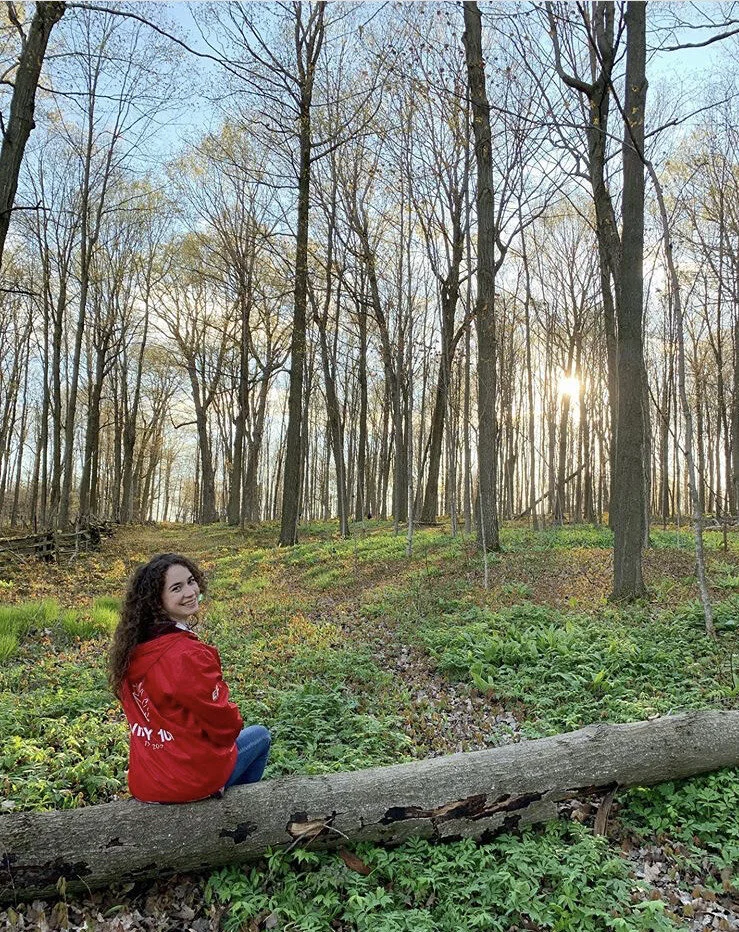
River Street Writer Margaret Huntley.
When I received a second-place award for one of my pieces in high school, I felt like I wasn’t a good enough writer to make it. I thought that because my piece was second place, I was a second-place writer and that wasn’t good enough. More recently, when I was published in a magazine, I found myself critiquing the whole magazine to determine if I had the best article in there.
But this is not healthy!
I used to think that writers worked alone. I thought that it was just up to me and me alone to succeed, so if I didn’t do things right, I was a failure. But this is not how the writing industry works. Sure, JK Rowling wrote her own series, but she needed a publisher before she got off the streets. Even Shakespeare needed talented actors to bring his plays to life.
I am grateful to be studying creative writing at university in such a team-oriented environment. It has taught me that all writers need inspiration, third party opinions, and colleagues to bring their works to completion. Even then, they rely on the public to consume and support their material.
Once I understood this, my competitiveness started to diminish. I know the writing accomplishments in my future will not be my own. If I continue to pit myself against others, I will hurt my career more than I will help it. The more I help other writers with their craft, the more they will help me. Not only will they be more likely to return the favour, but by analyzing their craft, I can improve upon my own.
The reality is that we are all in this together. We are all working hard to get our names out there and we all have unique writing that appeals to different sections of the public. By working together, we are able to put more quality writing out into circulation, and that is a win for everyone.
So, if you’re competitive like me, next time someone gets published in your place, learn from the experience and use it to become a team player. But the next time you lose Mario Kart to your brother, feel free to throw the remote.
Learn more about Margaret and other River Street writers here.
Do What You Love and You'll Work Harder Than You've Ever Worked in Your Life
One piece of advice I’m sure everyone has heard at some point in their life is: “do what you love, and you won’t work another day in your life.” Phrases like this are part of the reason I decided to do my undergrad degree in creative writing. I have always loved to write. Over time, my notebook full of juvenile two-pagers developed into a laptop full of drafts, essays, and articles. While I am happy that I have the opportunity to pursue what I love as a career, I think statements like this are misleading. Doing what you love actually takes more work than you might think, especially when it comes to writing.

By: Margaret Huntley
One piece of advice I’m sure everyone has heard at some point in their life is: “do what you love, and you won’t work another day in your life.” Phrases like this are part of the reason I decided to do my undergrad degree in creative writing. I have always loved to write. Over time, my notebook full of juvenile two-pagers developed into a laptop full of drafts, essays, and articles. While I am happy that I have the opportunity to pursue what I love as a career, I think statements like this are misleading. Doing what you love actually takes more work than you might think, especially when it comes to writing.
I have thoroughly enjoyed my first couple of years studying and exploring different types of writing. However, the more I have learned about how to write properly, the higher the standards I set for myself are and the harder I have to work to meet them. I look back at award-winning pieces that I wrote in high school and I hate them. For one of my most recent projects I actually took one of those pieces and completely reworked it until I was happy with the product because I hated the old draft so much. Even the things I write now take intense editing to perfect. But I’m sure that by the time I graduate I will hate these pieces too. When I reflect on this common phrase, I start to wonder how I could love writing so much but hate what I write, even after all the hard work I put in.
The answer to my question was discovered through an unlikely means: astronomy. In my program, no one can graduate without a science credit, so I took first-year astronomy. However, because I in no way love astronomy, I gave minimal effort. While I still did considerably well, I didn’t put in half the effort that I did for my writing projects. But the difference was that I wanted to work harder on my writing projects because I loved writing in a way that I didn’t love astronomy. So, what I loved required more work than what I didn’t.
Now, I understand that the phrase is not supposed to mean that you never work on stuff you love, but that it just doesn’t feel like work. Though this isn’t accurate either. Anyone who has had to overcome writer’s block or subject a personal piece to intense criticism will agree that writing, no matter how much you love it, takes a lot of work. But, trust me, it’s worth it.

Greater Love: A Review of Lauren Carter’s Following Sea
Lauren Carter’s Following Sea is one of those rare books of poetry can make a person lose sleep. In this case, that person was my husband. As I lie awake in bed reading Carter’s new book, I kept nudging my husband awake.
“You gotta hear this!” I’d say, quoting from one poem or another.
Lauren Carter’s Following Sea (Turnstone, 2019) is one of those rare books of poetry can make a person lose sleep. In this case, that person was my husband. As I lie in bed reading Carter’s new book, I kept nudging my husband awake.
“You gotta hear this!” I’d say, quoting from one poem or another. He vowed to sleep in another room the next night. That promise never came to pass. Carter’s Following Sea is also one of those rare books of poetry that you can devour in a single sitting.

While most poetry is best digested slowly, after small, even tentative nibbles, Carter’s sharp and vulnerable writing makes it difficult to put her book down. This paradox is what makes her work so compelling: it’s stark, starved, but also palpably fleshy and vital.
From the poem, Barren:
where did my future go, why
is my body a bone
dry field that only dust
will know.
Then, from Louth (1851):
first babies
were born close, the crowded,
wet litter of a cat.
You can see what I mean. There’s the dryness—a hopelessness, but there’s also the vigour of life renewing itself. Interestingly, however, the poems that have the most raw vitality are the ones that deal with her family’s history—a past Carter was not a part of. Consider again the excerpt from Barren: her present seems more dead than the lives of her dead relatives, which are teeming with life; “the crowded wet litter of a cat.” This strange reversal beautifully underscores immense feelings of loss and purposelessness, ironically adding more power and vivacity to the poems about the present through the very emptiness that defines them.
Despite dealing with heavy, engulfing topics like infertility, identity and complex, multi-generational family histories, Following Sea offers space; it takes its time. There’s importance attached to her poems, but not urgency. Each word, every line break lingers even as it draws you on, breaking your heart while also offering comfort in the shared experience of our great tragedies, and greater loves.
Bring home your copy of Following Sea. Keep it by your bedside, on your coffee table, or in your bag. The point is this: keep it close. Carter’s poems are meant to endure, and help us endure.

Moving Forward, Standing Still: The Hubris of Public and Personal History in The Afrikaner by Arianna Dagnino
The Afrikanner by Arianna Dagnino is about as surprising as any contemporary post-colonial novel I could imagine. Though it's been many moons since I studied postcolonial literature during my undergraduate degree, I had an idea in my head about what this novel could be about: either a scathing condemnation of colonial power and abuses, or a narrative of apology for those abuses. The Akrikanner is neither.
Moving Forward, Standing Still: The Hubris of Public and Personal History in The Afrikaner by Arianna Dagnino
Publisher: Guernica Editions
Review: Hollay Ghadery
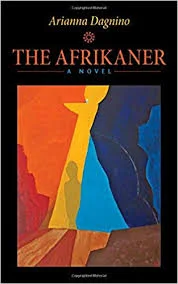
The Afrikaner by Arianna Dagnino is about as surprising as any contemporary post-colonial novel I could imagine. Though it's been many moons since I studied postcolonial literature during my undergraduate degree, I had an idea in my head about what this novel could be about: either a scathing condemnation of colonial power and abuses, or a narrative of apology for those abuses. The Akrikaner is neither. It's a tough trick to pull off. Acknowledgement, after all, is needed.
And it's given, but not by the book's omnipresent narrator, who loosely but adeptly juggles perspectives through dialogue, but never moralises on them. Rather, it's the characters who offer up their explanations, cry their abuses, make their apologies, and wrestle their demons. True to reality, every little hurt is not bandaged, and many of the injustices simply live on.
The novel is set in modern day South Africa and follows Zoe du Plessis, a palaeontologist of Dutch-colonial origins whose boyfriend and colleague, Dario, is gunned down in the streets of Johannesburg as the result of political tensions. In fact, this serenely violent scene opens the novel, and is the only part of the book that is not guided by Zoe's gaze. Instead, it's told in the first person, by Dario himself. A strange narrative choice, perhaps, but as the novel progresses and I learnt more and more about Zoe—someone prone to equal measures of emotional constipation and misdirected dramatics—this clarion exposure to the voice of Dario helps to situate the reader; makes it easier to see just how much weight we should put in the muddled thoughts of Zoe. Her ability to manage this subtle balance is a testament to Dagnino’s agility as a writer.
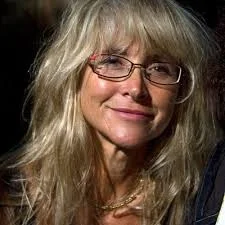
There's an impulse, I think, to try to clean up Zoe: everything from her opinion to her emotional and physical self seems to languish, and fade about the edges. Even though she can hardly sit still, leaving the university where she works to continue Dario's expedition in the relatively unpopulated and barren regions of the Kalahari Desert, she manages to maintain the stature of someone who is standing perfectly still; doing nothing. Getting nowhere. This suffocating immobility is echoed by Zoe's rereading of her Aunts’ diaries, which detail a family curse; a curse that says the first daughter of every daughter in the du Plessis family will never know lasting love, the person they love being doomed to die. It's a prophecy that Zoe, like her aunts before her, dismissed until the death of their lovers gave the curse credence. Zoe's mental and emotional inertia is frustrating to read. I admit that I found her almost as difficult to take as Hoda in Adele Wiseman’s Crackpot. Like the sluggish, brash Hoda, Zoe’s stagnancy is a fascinating reflection of the seeming impossibility of finding closure amidst the disparate beliefs and attitudes in post-colonial West Africa. It’s hard to forgive. It’s hard to forget. It can feel impossible to move forward.
But as Zoe learns when she discovers her brother is in love with a black man who will be taking over part of their family wine business; and as she learns when develops slow-burn, reluctant romantic feelings for a well-known writer who was imprisoned for his anti-apartheid beliefs, the world doesn’t stop for tragedy, no matter how great. Likewise, the human spirit can endure, if given room to breathe, heal and grow. Dagnino’s strange and beautiful writing provides the reader a safe space to negotiate their own way through the fraught, painful and fractured totality of the post-colonial experience toward a new understanding of literal and metaphorical spaces and places.

Power Q & A with Elizabeth Greene
Elizabeth Greene is the editor of The Dowager Empress, Poems by Adele Wiseman, and the writer of several books of poems, as well as the novel, A Season Among Psychics. In this Power Q & A, she tells us about the accessibility and beauty of Wiseman’s poetry. Keep reading!
Elizabeth Greene is the editor of The Dowager Empress, Poems by Adele Wiseman, and the writer of several books of poems, as well as the novel, A Season Among Psychics. In this Power Q & A, she tells us about the accessibility and beauty of Wiseman’s poetry.
Q: For peopple who have never read Wiseman’s poetry, why should they pick it up?
A: Adele Wiseman's poems are tough, curious, original, authentic—and accessible. Like her novels and non-fiction, they are vision-clearing. Readers of Adele Wiseman's other work will find their understanding of her writing deepened by acquaintance with her more personal poetic voice. Readers new to Adele Wiseman will discover her in her most personal and. possibly, most approachable writing. Almost NO ONE has read much of her poetry before now. Only a handful of poems were published during her lifetime. So they should be a discovery for almost all readers!
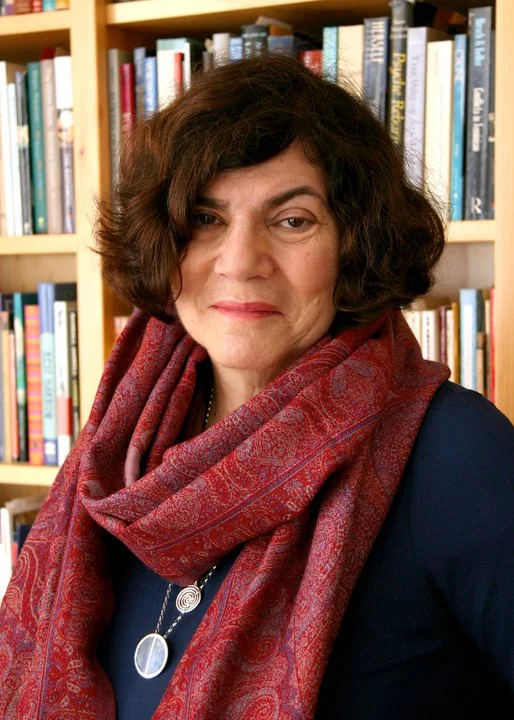
About Elizabeth Greene:
Elizabeth Greene has published three books of poetry, The Iron Shoes, Moving, and Understories. Her poems have appeared in numerous anthologies, most recently I Found It at The Movies and Shy: An Anthology, and various literary magazines. She has also published short fiction and creative non-fiction. She edited and contributed to We Who Can Fly: Poems, Essays and Memories in Honour of Adele Wiseman which won the Betty and Morris Aaron Award for Best Scholarship on a Canadian Subject.
She taught English for many years at Queen's University, originating courses in Selected Women Writers from Julian of Norwich to Bronwen Wallace and Contemporary Canadian Women Writers. She was a founder of Women's Studies at Queen's and was instrumental in establishing the courses in Creative Writing there.
She lives in Kingston, Ontario.

How to Become a Freelance Writer: Tips from the Trenches
Interested in learning how to become a freelance writer? River Street’s Hollay Ghadery gives you her top tips for making it in this paper-cut-throat industry.
I'll admit it, when I first dreamed of being a writer, I envisioned romantic bursts of inspiration, fancy parties, and, of course, major windfall for all my creative efforts. I was eight years-old at the time, so granted, my vision was idealised through the sugared-glaze of childhood. Even over a decade later, when I started writing professionally and could call myself a capital 'W' writer, I was not prepared for what it would entail to really make it in this profession over the long-haul.
And it is a long-haul. I've been a freelance writer for 15 years now, and this profession is not for the faint of heart. That's the bad news. The good news is that it is for the full of heart, so if words are your life and you have at least a smidgen of workable innate talent, then you stand a good chance of making it as a freelance writer. Of course, passion alone isn’t enough.
Keep reading. Here are my top tips how to become a freelance writer.
1. Don't Quit Your Day Job
Most of us don't have the luxury of living off savings (if we have any) while we wait for our freelance gig to pick up—and it will probably take some time to pick up. Even if you worked as a company writer for years, going freelance means you have to establish a reputation of your own: you can't rely on the reputation of a brand to back you up. So, while you're establishing yourself as a freelancer, it's always a good idea to have a reliable source of income as well. Even if it's just part-time, these funds will help support you through the dry-spells that are an inevitable part of freelancing at any stage in the game.
Quick word, though: if you already work as a writer for a company or organisation and plan to go freelance, be sure that your freelance work isn't gained through poaching any of your current employers clients. This is not only bad form, but likely, against company contract. You want clients? Go out and find your own.
2. Build a Social Presence
On the day I am writing this, our Instagram account is only a week old. Yep. It's a baby. (But, to our credit, we’ve been on Facebook a mite longer.) What took us so long to get on board the undeniable, seemingly unstoppable social media trend? Well, you know the old adage: the cobbler's children go barefoot. Our services include doing social copy and social media management for our clients, and we just never seemed to get around to doing it ourselves. Brutal, right? It is. With over three billion people using social media worldwide, social platforms are essential to building your brand as freelancer. A consistent social presence will help you gain an audience, increase awareness of your services, engage with current and prospective clients, build your authority and, the icing on the cake—it's free. All you need to do is invest a little time in creating engaging, like-worthy posts.

3. Don't Be Too Precious
I wrote a whole article being overly precious and it boils down to this simple fact: part of learning how to become a freelance writer involves learning how to cultivate your interests outside your established interests. You may live for travel writing, but National Geographic likely won't hire you off-the-hop. By all means, do as much travel writing as you can, but also, be willing to take on other projects in other fields. As a fledgling freelancer, you can't be too precious about what you will and will not write. As long as it isn't morally offensive or illegal, you should at least consider it. Besides, you never know what fascinating fields you can stumble into with an open-mind.
4. Don't Write for Free
Many, many online and print publications will tell you that "exposure" is your payment. Unless you work in the sex trade, exposure, unfortunately, does not pay the bills. What exactly you will be able to charge will depend on variable factors like your experience and the scope of the project in question, but if you want to become a successful freelance writer, you need to charge something. We sometimes do pro-bono work when the cause moves us, but this is the exception: certainly not the rule. Charge for your efforts.
Also, be sure to manage your money properly. Until you build a steady client-base—which can take years— your revenue will usually vary significantly from month-to-month. Feast and famine is part of #ThatFreelanceLife, so, when you get a cushy payment, after you pay your essentials, be sure to tuck some of it away for when times are tight.
How much should you charge as a freelance writer? Standard junior freelance rates can start as low as $20 per ~500 word article ($0.04 per word) while senior rates can go upwards of $150 for the same length ($0.30 per word). Rates also depend on what you're writing. For instance, $20 per 500 word article is decent for a piece you can knock-out in under an hour and requires little research, but if it takes more than that, you either have to increase your rate, or become more efficient. And speaking of which...

5. Get in the Grind
When you're writing for a living, the time-suck of writer's block is a luxury you cannot afford. Writing is a grind, and you simply need to write and write and revise and write and edit until the project is done. Don't sit there waiting for divine inspiration: just nail your butt to the chair, and start writing. Sure, the first paragraph or three may turn out to be a warm-up to get you to the real meat of the piece, but the time it took you to write those paragraphs (which will ultimately be scrapped) is far less than the time you would have spent staring at your blinking cursor doing nothing. Learning how to become a freelance writer largely involves the simple, unwavering commitment to just writing.
6. Keep Learning
Read. Voraciously. Anything you can get your hands on. Whether you're a creative writer or technical writer, reading is a wonderful way to keep refining your craft. Also, take courses to keep your qualifications tip-top. Enrol in an editing certification course, like the one at Simon Fraser. Read up on best practices for keyword optimisation. Take a Google business writing course. Some of these resources are free; others...not so much. But there is some truth to the saying, "It takes money to make money." Of course, you don't want to bankrupt yourself, so just do what you can, as you are able. Any advantage you give yourself is an advantage over your competition. Maintaining this edge is why our rag tag team of writers is constantly updating our certifications, learning, and honing our skills.
Read up on our top recommended resources for writers here.

7. Be Professional!
You’d think this would be self-explanatory, but sadly, it’s not. Just because you can work in your jammies doesn’t mean you can toss basic professionalism to the wind. Answer emails in a timely fashion. Manage your time so you can deliver on deadline. Correspond in complete sentences. If you have questions, ask. Be accountable. Don’t give excuses—no one’s interested. Do. Your. Job. Yes, life happens and sometimes the scat hits the fan, but if you’ve managed your time properly, there is usually no reason your clients have to know about your life’s mishaps. And, if you’ve cultivated a professional and dependable reputation, in the rare instances that you do need to adjust a deadline or step away from a project entirely, your clients will understand. They’ll still contact you when they need something done in the future. They’ll still recommend you to others.
Listen, freelance writing affords many freedoms, but freedom from accountability isn’t one of them. Unlike many other jobs, there is no one to stand in for you if you don’t show up. When you’re a freelance writer, your word really is your bond. Make it count.
Have questions or tips of your own? Share in the comments! Interested in our services? Contact us now.

Work Outfit Ideas…for the Home Office
Resident freelancer Lauren Carter gives other work-from-homers valuable tips on how to dress for the occasion. Work outfit ideas for real freelancers, for real life.
Yesterday I wrote an article in which I had to weave the phrase ‘work outfit ideas’ as many times as possible without it sounding awkward. Such is the life of a writer with diversified income streams (there’s a reason why popular culture thinks we all have a bottle of whiskey in our desk drawers and it ain’t because the muse is so demanding).
For said article, I had to write about seven work outfit ideas that would bring some excitement to dressing for the office. As I channeled my inner fashionista (cue insecure adolescent who wore her brand new sweater on the first day of school only to nearly die in the early September heat), I got to thinking about my own work outfit ideas.… Thus, here are a few fashion tips for those of us who travel straight from the bed to the desk.
1. Don’t let anyone ever tell you that pyjamas don’t constitute legitimate work outfit ideas. Hell, if regular people can wear leggings to work, why can’t we don stretched-out leopard print fleece bottoms with a grease-stained T-shirt? You too can rock the bedtime look even if it’s Tuesday morning and you have a high-stakes phone interview with a web developer from Australia who insists on referring to writing as ‘content’.
2. Bra-schmaa. We are, after all, independent, working women (cue the 1970s). As I write this, in fact, my bra is sitting on my desk, having been removed in a fit of discomfort while composing the section on sophisticated work outfit ideas.
3. All you really need is one pair of socks, the woolier the better. All this daily changing of socks is totally unnecessary. If I can wear my Smartwools everyday on a five-day hiking trip, there’s no reason they can’t keep my feet snug for a whole week of work, making five work outfit ideas out of one accessory. Win.
4. Never mind the little black dress that will transition from the office to the martini bar with the right accessories. Instead, invest in a few black hoodies. I own three. They’ll accompany all the work outfit ideas you have, keep you warm, and allow you to answer the door (should it become necessary) looking relatively normally day-dressed.
5. Get-down-to-business clothes are the work outfit ideas you need when you have a deadline and want to feel fully awake and like you’re in charge of your life. Lately the main one I wear is a pair of worn-soft jeans with an oversized taupe sweater from Value Village that has a giant white heart on the front. When I slip on that pair of old slippers with the heels collapsed that are normally kicked off under my desk, I’m ready to walk the runway (meaning the hallway to the kitchen to get another cup of coffee).
6. Don’t forget to occasionally apply deodorant and brush your teeth. These go-to grooming habits will help you truly rock your work outfit ideas.
By: Lauren Carter

Being Human: A Lesson in Limitations
I won’t ever write the perfect book. Neither will you. You know that, right?
My mother is a visual artist. In the last few weeks, she’s returned to her studio after a couple of difficult years involving a move to a new community and two deaths in our immediate family and, subsequently, not a lot of painting. It’s been a hard go.
What prodded her back most recently was a portrait of my late brother that she wanted to finish for an upcoming exhibition. After that, she got a commission to do a painting for a local arts organization. She faced the blank canvas, started to work, and immediately hated what was appearing. Right then, she nearly threw in the towel, she told me on the phone.
What kept her at her easel, she said, was a bit of self-coaching.
I’m just beginning, she told herself. I don’t know what it will be yet.
That was wisdom I needed to hear too. Immersed in a tricky fourth revision of my novel, I’d reached the point where my path forward was foggy and I was starting to hate what I was doing. Probably I was also starting to realize that, as always happens, this novel would never be what I’d dreamed it could be. I was hitting up against my human limitations.
Making art is tricky, isn’t it? On the one hand, we’re hungry to create the ultimate poem, painting, play and strive to replicate what we envision. Deep down, though, we know this is impossible - or we should know. I like how Dr. Eric Maisel, a psychotherapist, creativity coach and writer, puts it: “Better to think of a work of art as miraculous and not transcendent, splendid and not perfect. If you ask your work to be what it cannot be, you will have transformed it into impossible work.”
And thus, you’ll do what we do when faced with the impossible: you’ll stop trying. My mom’s words - I don’t know what it will be yet - opened the door to whatever she might create and enabled her to step forward. This nod towards the vulnerability of creating, the unknowingness of it, freed her from that overwhelming sense of potential failure. It also respected her artistic aspirations which are holy in and of themselves. It made her work possible.
This is important. It’s important at every stage - from the very beginning, with the paint brush newly wet, and deep in the trenches, while working on a fifth or sixth draft - because that sense that you simply won’t be able to replicate your original, perfect vision can stop you in your tracks, freeze you, give you that malady which we call writer’s block.
I won’t ever write the perfect book. Neither will you. You know that, right?
Like a child, my creation will end up being what it will be. I’ll aspire to my visions of perfection, and do the best I can, for as long as feels right, and then I’ll move on to the next effort at “the impossible” which writer Hermann Hesse defined as “a striving for totality, an attempt to enclose chaos in a nutshell.”
My mom, in that little bit of artist-appropriate self-talk, acknowledged this, and accepted this, thus eliminating a whole bunch of anxiety and giving herself the freedom to begin.
And by listening to my mother (because I know she’s usually right), I was reminded of my aspirations. I felt free to daydream some more, and to move freely forward myself: rewriting scenes, tweaking, entering the trance of working, paying attention to my human-artist instincts that arose, crawling a bit closer to my vision.
Creative Assignment: Take a piece of paper. In magic marker, write “I will never write the perfect [book, play, poem, story, whatever it is]. Nevertheless, I will aspire.” Hang this on the wall in your workspace.
Lauren Carter continues to live and breathe her writing work in The Pas, Manitoba, while also coaching writers. Check out her online course Nine Simple Steps to a Solid Writing Practice in which she shares more of her mother’s artistic wisdom.

There’s No Such Thing As Writer’s Block
River Street's Lauren Carter dives into the myth of Writer's Block, dishing out some harsh realities and tips to ditch the excuses. Read on to find out how to actualize instead of avoid.
For days now I’ve been trying to get to the gym.
It’s been dreary out, the sky a dim purple-grey, and I can’t seem to shoehorn myself out the door.
What’s that called again? Jogger's Block?
Or, how about my reluctance to tackle my frat-boy style kitchen? House-cleaner’s Block?
You know I’m being facetious but also: Truth.
We’d never think of excusing procrastination by wringing our hands and claiming there’s a big ol' brick wall in our way. And, worst of all: that we've got no idea why it's there or when it will leave.
Don't get me wrong. I’m not saying that the experience of Writer’s Block isn’t real. It’s totally real. It’s just as real as my seeming inability to turn off Netflix and get off the couch in order to grab my runners and go to the gym.
But by calling it a block, we're allowing it to live, we’re giving it status. And that's not going to get anybody anywhere.
What we need instead is to take a good, hard look at what's really going on and try to find some solutions in order to answer that need to write. So here are a few reasons why the stride towards your writing space might have stalled - and some ideas for getting going again.
1. Abject Terror
This may be exaggerating (depending on where you’re at with your work) but I’m sure you know fear. There’s fear of failure, fear of success, fear of exposure (can I really say that about my parents), fear of the mistakes you’ll inevitably make, fear of the chaos of the first draft. At every stage of the writing process, it seems, there’s some sort of boogey man waiting to scare you out of your writing room.
You could spend hours, days, months, and yes, even years, negotiating with this fear, trying to identify it, analyze it, really get to know it. Or, you could accept it, and get to work.
But what if it’s not so easy? What if the blank page gives you heart palpitations and sweaty palms? What if it really is terror? Then you need to figure out a way to get out on stage rather than giving up on the stage all together. Try deep breathing exercises, mantras, building up your exposure to the fear-trigger (ie. setting a time and writing for just five minutes a day, then ten, then fifteen, etc.), or joining a group where the reason for getting together is to write.
The fear might never go away but do you really want it to win over your desire to write?
2. Confusion
Midway through the first draft of your novel, a character arrives and takes over. She’s captivating and you know you want her to become a major player but how do you do that? Do you go back and start over? Do you write to the end? These are the kinds of circumstances that can stop you cold and make you say ‘Writer’s Block’ when really what you’re experiencing is, simply, confusion.
There are a couple ways around this. The first way is to keep working, making decisions on the fly, and coach yourself through by reminding yourself that you can always change it later.
The second is to take a break. Let your mind work it out. Stare out a window. Spend a few days skipping your writing time and opting instead to read good books and let other writers’ works inspire you and give you advice. Take notes. Think about it. And as soon as you have an inkling of a direction, grab onto that reign, and go. Don’t wait for the path to chart itself all the way to Atlantis. Just seize the faint flicker and let it lead you a bit further.
Whatever you do, don’t call it Writer’s Block and wait mindlessly to get past it as if it were a case of the flu. Down that road lies abandoned novels and years of wasted writing time.
3. Fear of Commitment
A lot of creative people are idea machines. They have no problem coming up with a dozen story outlines, a few screenplay ideas, hundreds of first drafts of short stories and poems. Some even bounce between disciplines: spending one week working on a photography show, the next painting doggedly, the next scribbling out the first draft of a novel, only to abandon all of their projects when another great idea comes along.
They know they need to finish something but when they sit down to work on their novel on the day that knitting beckons, nothing comes and so comes the diagnosis: Writer’s Block.
What does it take to commit? It takes a willingness to invest past the highs of creation, when the story might be flying out effortlessly and writing is fun. It takes grit and a resolve to engage in the whole process: the chaotic bits, the fearful bits, the bits when you’d rather be out, attending another workshop.
Not being able to do this isn’t a block, it’s a decision. To change it: make the decision. Agree to show up. Don’t be scared away by the effort. Engage with it, knowing that a year or so down the line you’ll have something pretty big to show for all that hard work.
Lauren Carter is a writer of fiction and poetry with two books out (and four more in varying stages). Her online course Nine Simple Steps to a Solid Writing Practice has been called “visually beautiful and wise.” She also offers creativity coaching services and manuscript consultation. Visit her at www.laurencarter.ca

Translation: Art or Science?
Is translation an art or a science? Do translators feel pain when they see results generated by the Google translate function, or are they really just dictionary-thumbing automatons? Can anyone really find a suitable synonym for 'muggle'? These questions - and more - explored by our resident linguistic interloper, Lauren Lewthwaite.
When people hear the word translation, either they get confused and think you said “transition”, or they think it refers to verbal interpreting. So then, what exactly is translation?
Translation refers to taking a source text and rewriting it in another language using the same context and tone of voice. As easy as that sounds (just plunk it into Google Translate, right?), it’s surprisingly complex and translators actually need college and university training to become legitimate, accredited professionals. Plus, there’s a reason why even Google Translate often sounds wonky; translation isn’t an exact science, but more of a subtle art.
As translators, we can’t just translate word for word.
It’s impossible and would result in nonsensical gibberish. Every language comes chock-full of idioms and sayings that are unique to the culture and history of the speakers. “It’s a piece of cake”. “When pigs fly”. “There’s no use crying over spilt milk”. We have to account for context, because people often write vague sentences that could have multiple meanings. If you’ve ever seen those hilariously terrible translation mistakes, then it was probably a literal translation that woefully disregarded the sentence’s context.
So what, you might ask? Understanding what a text is trying to say is just as important as getting the right terminology down. Sure, it’s good to know when to use “truck” and when to use “lorry”, but it’s also pretty important to understand that “my fridge isn’t running” can’t be translated literally or you’d have some pretty confused refrigerator repairmen.
Once you (hopefully) understand what your source text is trying to say, now you’ve got to convey it in a way that reads naturally—as if it were originally written in that language (no easy feat!). Poorly done translations often end up being robotic and awkward, with none of the tone of voice and perspective of the original text—especially if the author added any sort of flair like sarcasm, slang, or double entendres that are dang near impossible to translate.
This is where the art factor comes in. You need a certain level of creativity to think of ways to get around the fact that “the Monday blues” doesn’t have an exact equivalent in any other language. You also need a strong command of the target language to be able to write in a readable and engaging way in order to do justice by the source text author—and not butcher their masterpiece.
Translators, against popular belief, aren’t just robotic humanoids looking up word after word in the dictionary to produce a completed text. While we do love our Merriam-Webster’s (maybe a little too much), translators also need to be strong writers in their maternal language. And what is writing, if not a form of art?
When you think of everything in the world that gets translated, it starts to click. Sure, there are mind-numbing translations of HR policies and car owner manuals, but books, poetry and screenplays get translated too. Hey, the Harry Potter series alone was translated into 68 different languages. That’s a hell of a lot of creative ways to say “Muggle”.

Power Q & A with Soraya Peerbaye
I've been on all sides of the granting process - an applicant, a juror, and a grants officer. My advice is, show the writing that most vividly illustrates the challenge of your project. This doesn't necessarily mean writing that is done. What I look for as a reader is something that's really crackling, that's alive with questions, experiments, potential - even if it's rough.
Q: What advice do you have for writers applying for grants?
A: I've been on all sides of the granting process - an applicant, a juror, and a grants officer. My advice is, show the writing that most vividly illustrates the challenge of your project. This doesn't necessarily mean writing that is done. What I look for as a reader is something that's really crackling, that's alive with questions, experiments, potential - even if it's rough.

Photo credit: Ayelet Tsabari
I think the part of the application of which writers are most suspicious is the project description. There's a general anxiety-slash-annoyance that this is a requirement that has nothing to do with art; that, especially in forms like poetry, it forces a thematic or even a political convention onto the work. The project is simply what is calling you at this moment in time - whether it's a story you need to tell, a curiosity about language, a new direction, or a deepening commitment to the process you've developed... It helps to remember that you're addressing other artists - don't we covet the opportunity to speak about our craft, in interviews, roundtables etc.?
If you're unsuccessful - apply again. Trust me on this - keep writing and re-writing, and apply again. Or if you're convinced it's right, re-submit the same material - you may find that you'll be successful with another jury. It doesn't mean that the system is capricious - every jury has its own chemistry, its own sensibility; and at the end of the day, the funding is limited. Jurors (and grants officers) are often heart-broken about what they can't support.
All that said, the system isn't perfect. So - if you see something that isn't working, advocate. Arts councils in Canada have made progress towards greater diversity on our juries, but we still need deeper conversations about what we value in literature and literary criticism. We need to develop curiosity and fluency in a wider spectrum of genres, and for making art in a period of decolonization. Hold each other up.
About Soraya...
Soraya Peerbaye’s most recent collection of poetry, Tell: Poems for a Girlhood, won the Trillium Book Award for Poetry in English and was a finalist for the Griffin Poetry prize. Her first book, Poems for the Advisory Committee on Antarctic Names, was nominated for the Gerald Lampert Award; her poems have also appeared in Red Silk: An Anthology of South Asian Women Poets, and the chapbook anthology Translating Horses. She holds an MFA in Creative Writing from the University of Guelph.

Power Q & A with Dorothea Helms
Writers whine about the left-brain practices, but realize we’re no different from any other businesspeople out there. I’m sure plumbers don’t love doing the paperwork that comes along with all of the above, but they do what they have to do. The advantage they have is that people don’t offer them the chance to sign their pipes rather than pay them.
Q: What is an important piece of advice you'd give to someone who wants to write professionally?
A: Find out how to run a business. Yes, it’s left-brain stuff, but if you want to make a part- or full-time living from writing, you need to either consider and crunch the numbers, or pay someone to do it.
In 1993, I started writing professionally, and during my first year, I made about MINUS $7.00 an hour. I had no idea how to evaluate the jobs that were offered as to whether they were worth doing, and I was ignorant of the daily business practices that would turn my money-losing hobby into a profitable business.

In 1994, I qualified for a 42-week entrepreneurship course through an organization called Women and Rural Economic Development, and I completed the program. I learned how to price (including when to say no), market, invoice, keep a basic set of books, etc. – you know, the stuff we writers would love to ignore. My income shot up right away. Over the years, I zoomed ahead of the average writer in Canada, who still brings in a pitiful $25,000 annually, to regularly earning six-digit revenues.
Writers whine about the left-brain practices, but realize we’re no different from any other businesspeople out there. I’m sure plumbers don’t love doing the paperwork that comes along with all of the above, but they do what they have to do. The advantage they have is that people don’t offer them the chance to sign their pipes rather than pay them.
Advance your writing craft, for sure, but when it comes to making money from your passion, find out how to make money, period.
More about Dorothea…
Dorothea Helms owns two freelance writing businesses: Write Stuff Writing Services (WSWS.ca) and The Writing Fairy (TheWritingFairy.com). A six-digit freelancer, she teaches workshops and courses on how to run a writing business, along with other topics. Dorothea is internationally published; has won numerous awards for nonfiction, fiction and poetry; and is a sought-after writing instructor and keynote speaker. Her work has appeared in LICHEN Arts & Letters Preview literary journal, The Globe and Mail, Chatelaine, Homemakers, Canadian Architecture and Design Magazine, and she has been featured twice on CBC Radio. She’s also often referred to as “a hoot.”

Don't Give Yourself Away, Make 'Em Pay
Dear Mr. X, I hope you can understand if I decline your offer. You see, I feel it is sort of like asking Meryl Streep to audition for a Sharknado sequel. I'm not saying she wouldn't agree to do the movie - I wouldn't dare to speak for Meryl - but asking an actor of her experience and caliber to audition for a film her repertoire shows she is clearly capable of handling is just poor form.
For any writer who has ever felt almost mortally wounded when asked to offer up services for nothing - or close to nothing - you may see some of your sentiments echoed in my reply to a company that approached me about writing content for their website.
If I am behaving like a diva, I blame the industry. I thank goodness for my top-notch clients; they know that a job well done isn't done for free. This isn't to say I've never done anything for free. On the contrary, I have done readings and work for causes I am passionate about without expecting a thing in return, but for the most part, that's not business. That's not writing for companies or organizations. That's writing I do for myself.
Without further adieu, my reply...
Hey Mr. X,
I hope you can understand if I decline your offer. You see, I feel it is sort of like asking Meryl Streep to audition for a Sharknado sequel. I'm not saying she wouldn't agree to do the movie - I wouldn't dare to speak for Meryl - but asking an actor of her considerable merits to audition for a film her repertoire shows she is clearly capable of handling is just poor form.
I have been in this insanely volatile and fickle industry - and surviving in it - for 11 years. In this time I've worked with global brands and multi-million dollar companies while also completing a graduate degree in Creative Writing and being published in genres ranging from non-fiction to fiction to poetry. I assume this is why you have contacted me: you've seen what I can do.
I've made a living out of writing, both as an artist and as a professional. I know you may not know this, but that's saying a lot considering a great many writers are forced to have part-time or day jobs.
I get disheartened just thinking about that. So many talented writers are being forced to secure other types of work because people don't see the value in our time - in what we do and how hard it is despite the fact we make it look easy. It's understandable that a hefty sum of aspiring wordsmiths who want to write for a living fizzle out after a year or two - tops.
It sucks, and we're often pitted against far less adept writers who are quite happy to work for exposure or meager compensation.
Good for them, I guess, but I'm not one of these sorts.
I suspect your requests were not unreasonable to some and that you will have no issue finding willing contributors, but when a professional of my experience is made to feel like I have to wriggle my way out of relative obscurity, I'm - quite frankly - offended, which probably makes me a bigger diva than Meryl any day. Perhaps I'm more like Mariah Carey.
I'm OK with that. There's only one Meryl, there's only one Mariah and there's only one me, and we all deal with our business in our own way. You either take me or leave me. No middle ground.
I wish you luck in your search for writers.
Best,
Hollay