
BLOG
How to Develop a Writing Routine
Seeing as we’re pretty late into the fall season now, chances are you’re pretty well-adjusted to a routine. It’s likely one slightly different than you’re used to, but it’s a routine, nonetheless. Much like how school, jobs, and chores sink into monotony, your process of writing does too. There are lots of different ways to write a text and writers usually find themselves sticking to a specific method.

By: Margaret Huntley
Seeing as we’re pretty late into the fall season now, chances are you’re pretty well-adjusted to a routine. It’s likely one slightly different than you’re used to, but it’s a routine, nonetheless.
Much like how school, jobs, and chores sink into monotony, your process of writing does too. There are lots of different ways to write a text and writers usually find themselves sticking to a specific method.
I thought I’d list some of the different writing approaches to help you identify your own writing routine because knowing your process an essential aspect of developing your skills.
How to Develop a Writing Routine
The Planner. Some writers think of their entire plot before actually writing it down in story format. It might be in the form of a storyboard, a sequential list, a messy word cloud, or maybe even just in their head, but there is always a plan. It’s easier for them to write when they know where the piece is headed.
The Free-Thinker. This type of writer is essentially the opposite of the planner. Instead of a detailed outline, they sit down at their computer with a vague idea of what they want to write about and just start typing. As they write, the ideas flow.
The Plan-Deviator. Like the Planner, this writer always has a specific idea of how the piece will be before actually writing it. As they write, however, they find themselves coming up with different ideas than they had before, and they explore those instead. By the end of the work, the piece is nothing like how it was planned, but it still works.
The Epiphany. For this writer, ideas come while writing, similar to the free-thinker. Instead of the ideas coming one by one though, they come all at once in the middle of the process. So, the writer is forced to pause and create a plan before continuing.
The Inspired. This kind of writer relies on others for their ideas. They are not a plagiarizer by any means. They just find their inspiration through conversations, pictures, videos, or any other outside source and they use that stimulant to find their story. When they have a particular fascination they thrive, but in periods of the mundane, they struggle.
Which type of writing routine do you usually follow? Maybe you’re a dead ringer for one of these types, maybe you fluctuate between two or more, or maybe there’s a type of writer that I’ve missed. I’d love to hear your thoughts, so please comment down below!
Learning to Appreciate Poetry
What I’m about to say is going to sound strange coming from a creative writer, but it’s the truth: I’ve never really liked poetry. I’ve always preferred a straightforward narrative to an abstract piece. In elementary and high school, the meter and rhyme of poetry confused me, and I could never grasp the themes as quickly as I could in a novel or short story. In university, I wrote a few poems when I had to, but I always dreaded them.

By: Margaret Huntley
What I’m about to say is going to sound strange coming from a creative writer, but it’s the truth: I’ve never really liked poetry.
I’ve always preferred a straightforward narrative to an abstract piece. In elementary and high school, the meter and rhyme of poetry confused me, and I could never grasp the themes as quickly as I could in a novel or short story. In university, I wrote a few poems when I had to, but I always dreaded them.
While I still prefer the narrative genre over poetry, the more I’ve learned about and explored the form of poetry, the more I appreciate it. I think what made poetry click for me is understanding that poetry is primarily about conveying emotion.
In a narrative, the protagonist will experience a wide variety of emotions that serve as a part of the plot, but there is a whole lot more to it. In poetry on the other hand, the entire piece is dedicated to either describing or evoking a specific emotion in the reader. Because the whole piece is devoted to it, the emotion is felt more strongly.
Since learning this I have enjoyed reading poetry more. Instead of hyper-focusing on all the techniques, I’m now able to get lost in the feeling of it. Now this is not to say that the techniques should be ignored, they are in fact deliberate methods used by the poet to evoke emotions that require tremendous skill to create. They deserve to be appreciated. All I’m trying to say is that if you are someone who gets frustrated trying to analyze a poem, it will be beneficial to take a step back and just try to feel the emotion. You won’t feel it in every poem because that’s a matter of personal taste. But I’m sure it won’t take long for you to find a poem that does move you.
Viewing poetry as a conveying of emotion will also help you write your own. I recommend free verse for a start, especially if you find meter and rhyme confusing. Think of an emotion and begin putting that feeling to paper. It can be as simple as happiness or sadness. You could also explore more nuanced ones like nostalgia or overthinking. Or maybe you want to describe the feeling of love you have for someone who you know doesn’t deserve it, or the dread of climate change felt when forced to push it to the back of your mind. The more specific you get, the less cliché your piece will be.
Once I had my poetry epiphany, I actually started choosing to write poetry over stories in some scenarios. Removing the overcomplication freed me to write whatever I felt compelled by.
Whether you are a reluctant poet like I used to be, or you’re a poetry expert who appreciates hearing different perspectives, I hope that you’ve enjoyed learning about my poetic journey.
Conversations on Creativity: Where Stories Come From
The following questions have been on my mind lately: Where do stories come from? Do authors just pull them out of thin air? Is there some kind of divine intervention that brings a good story to mind? What’s the difference between a good and a bad story?

These are all fairly complex, philosophical questions that don’t have cut and dry answers. I can’t tell you how stories come into being or why some days are easier to think of them than the next. What I can tell you is that stories are not confined to the literary world. You don’t need to read books or meditate until they magically pop into your head. In fact, you encounter them so often that you probably don’t even realize it.
When someone asks how your day was at work and you tell them about the strange customer you had, that’s a story. When you’re at a party and you recount how poorly your first experience with alcohol went, that’s a story. When you’re describing your favourite hobby to someone else, that’s a story.
Each and every conversation you have is an exchange of stories as they are an essential aspect of human interaction and bonding. That’s why people are compelled by them in the first place.
Just because people interact using stories all the time doesn’t mean that everyone is good at them. I’m sure you can think of at least one person in your life who you can’t bear to listen to as they tell a story, and one person who you love to hear from. If you can pinpoint what makes these people good or bad storytellers, you can improve your own ability.
I’ll give you some examples from my own life, so you understand what I mean. One of my friends from high school gives way too many details when he tells a story. He could be telling a story about his grandpa and it will start with what he had for breakfast that day. From this friend, I learned the importance of editing out unnecessary details in my texts.
On the flip side, one of my housemates is a great storyteller. Likely due to her background in theatre, she is always animated when talking and pauses for dramatic effect. From her, I learned how to dramatize seemingly mundane events to make them more entertaining for an audience.
These are just two examples of what I have learned about writing by simply talking to people. As much as you learn from reading books, you can also learn by speaking your friends.
Next time you’re having a conversation with someone, try evaluating the effectiveness of their storytelling and use that to build upon your own writing skills.
4 Common Creative Writing Mistakes (And How to Avoid Them)
Writing is a skillset. And like all skillsets, writing takes time to perfect. You’re going to make mistakes, especially at first. But when you understand those missteps and adapt your craft accordingly, you will become a stronger writer. I thought it would be helpful to highlight common writing mistakes to save you some time in the learning process. Here they are:
By: Margaret Huntley
Writing is a skillset. And like all skillsets, writing takes time to perfect. You’re going to make mistakes, especially at first. But when you understand those missteps and adapt your craft accordingly, you will become a stronger writer.
I thought it would be helpful to highlight common writing mistakes to save you some time in the learning process. Here they are:
Not giving yourself enough time. If you’re anything like me, having a deadline for a competition, assignment or publication is almost necessary to motivate you to sit down and write. However, the tendency with deadlines is to procrastinate until the last minute. Writing takes an enormous amount of time since you have to give lots of thought to each and every aspect of the piece. It can take years before a work is completed. I’m not saying that you can’t utilize deadlines, but I am saying to allow yourself more time than you think necessary, and to not assume the piece is complete after submitting it.
Being scared to ask for help. Writing is a very personal artistic pursuit, making it challenging to allow others to judge your work. It’s a lot easier to hang on to your pieces so no one can ever tear them down. But I implore you to ask other people to look over your texts as it will improve them exponentially. No matter how scary it is, you have to put yourself out there. I assure you that you are your biggest critic, and your editors won’t think ill of you just because your writing needs some work.
Not exploring all of your ideas. Sometimes you’ll think of an idea and say to yourself: “that’s terrible.” And sometimes you’ll be right, but sometimes you’ll be wrong. The only way to know for sure is to explore the idea further. Leaving it in your head and not even attempting to flush it out (whether through a brainstorm or rough draft) won’t help your craft in the slightest. It’s through the process of writing that a story is formed and if you dismiss the idea right away, you’ll miss out on a lot of potential. Even if it does turn out that the idea was terrible, you can still learn from that experience.
Writing the same story over and over. This mistake is similar to the previous one in that it prevents you from exploring different options. You may have written a specific story that you’re proud of, and that’s truly great. However, when people find something, they’re good at, it’s easy to establish a comfort zone from which they never venture out of. If you find yourself doing this with your writing by sticking to the same genre or types of characters, please make an effort to try something new. It’s the only way to keep growing.
While I hope that this was educational and useful to you, the best way to learn is to keep on practicing. So stop reading and get to work!
The Idiot Box or...Not? The Benefits of TV for Writers
Phrases like “stop watching that TV, it’ll turn your brain to mush” are extremely common, especially amongst parents. And parents do have a point, you need to exercise your brain with complicated tasks that help you improve your overall intelligence. But the more interested in writing I got, the more engaging I found TV to be.

By: Margaret Huntley
Phrases like “stop watching that TV, it’ll turn your brain to mush” are extremely common, especially amongst parents. And parents do have a point, you need to exercise your brain with complicated tasks that help you improve your overall intelligence. But the more interested in writing I got, the more engaging I found TV to be.
While some people watch TV to unwind and turn off their brains, writers like myself watch TV to learn. This doesn’t mean we only watch educational documentaries (although those are cool too). We watch whatever we want: sitcoms (my personal favourite), medical dramas, cartoons, game shows, reality TV, etc.
In the same way that reading helps you become a better writer by allowing you to learn from other writers and expand your own creativity, so does watching TV. There’s much to be learned from the way that any show is written that will help you in your writing, whether you aspire to be a TV writer or not.
The simplest way to explain what my brain does while watching a TV show is that it asks: what works and what doesn’t work? Sometimes what works is the way the characters feed off each other, sometimes it’s the complicated plot, sometimes it’s the commentary on social issues. And sometimes what doesn’t work is clunky dialogue, a simplistic plot, or jokes that don’t quite hit. Paying attention to these details shows me how I want my writing to come across and how I should go about ensuring that happens.
TV’s insights are not limited to the explicit writing details, however, as it is a complete art form in all of its facets. From the writing, to the set design, to the acting, TV opens of up an entire world of artistic exploration.
Though TV is often regarded as less engaging than reading because everything is visually presented to you, not requiring the use of your imagination, the visual presentation can still play a crucial role in bettering your writing. For someone like me who struggles with imagery, TV opens up a plethora of ideas. I really like writing historical fiction, but I struggle to picture what other time periods actually look like. Watching accurate, historical TV helps me to solidify specific images in my mind and better describe them to my readers.
Actors in TV shows can also teach you a lot about writing. If you like the way that a specific actor plays a character, examine what about how they play their role makes them so convincing. Knowing details like this helps you develop stronger characters in your own writing.
Like all art forms, TV has plenty to teach and I have only scratched the surface of how watching TV can benefit writing specifically. So next time you sit down to watch a show, take notes on how the show functions for you. You’ll be surprised at what you learn, and your brain will be anything but mush.
3 Tips to Help You Be A Better Editor
Editing is the lifeblood of writing as it is the means of improvement. So, if you want to be a good writer, you have to be a good editor too. Not only do writers need to be skilled at editing their own work, but they need to edit other writing pieces with the same ability.
By: Margaret Huntley
Editing is the lifeblood of writing as it is the means of improvement. So, if you want to be a good writer, you have to be a good editor too. Not only do writers need to be skilled at editing their own work, but they need to edit other writing pieces with the same ability. Maybe you are motivated by a compassionate desire to see others succeed, by a selfish desire that knows the others you help will likely return the favour, or by a mixture of both.
Whichever the motivation, there are some key elements to remember. Without further ado, let’s jump into it:
1. Gently
While editing, you are critiquing someone’s passion and possibly their livelihood. Though all writers are encouraged to separate themselves from their work, there is no guarantee that the author whose work you are editing is going to do that. Critiquing someone’s text too harshly could hurt that collaborative relationship. So, unless you know the writer personally and how they handle criticism, make sure that your critiques are worded in the kindest way possible. For example, if there are plot holes in the piece, don’t say “section x made no sense.” Instead try, “section x was inconsistent with section y because of ...”
2. Suggestions
Probably the worst thing you can do as an editor is to point out all of the mistakes without offering any resolutions. Anyone can pick apart any piece of writing, even a published book. But if you can’t offer any ideas for improvement, you are not helping at all. Often times an author will know already their piece’s flaws but are unable to fix them on their own. Even if the author doesn’t use your specific suggestions, those suggestions often spark further creativity.
3. Separation
Just like how as an author you should separate yourself from your work, as an editor you should remove yourself from the piece. What I mean by this is to avoid bringing personal opinions into the editing process. Of course, you are going to find that certain manuscripts speak to you more than others. That is just is human nature. However, you can’t assume that a text is bad since it doesn’t speak to you. For all you know it will speak to another person, or after some more refining it will speak to you, or maybe even if you read it tomorrow in a better mood it will speak to you.
Likewise, you can’t rely on your personal opinion about the author, whether they are a friend or someone you don’t get along with. Due to the inconsistency of personal feelings, remaining completely objective is the best way to edit. This way you can see a work for what it is and its potential, rather than how it makes one person (you) feel in its current state.
By following this advice, you will not only help the author whose work you are editing, but you will strengthen your own writing and intrapersonal skills.
Why Read? Why Write? Why Bother At All?
In these blogs, I’ve talked a lot about how to become a better writer, and even touched on why writers are important, but today I want to talk about the direct effect writing has on readers and writers alike. This article won’t touch on everything that writing does, as a lot of it is unique to personal experiences and to each piece. However, there are a few broad consequences that are applicable to most texts.
By: Margaret Huntley
In these blogs, I’ve talked a lot about how to become a better writer, and even touched on why writers are important, but today I want to talk about the direct effect writing has on readers and writers alike.
This article won’t touch on everything that writing does, as a lot of it is unique to personal experiences and to each piece. However, there are a few broad consequences that are applicable to most texts.
1.Promotes Two-Way Empathy
Unless you are reading your individual biography/autobiography, chances are what you’re reading is written from a different perspective than your own. Sometimes you are reading the perspective of a fictional person, sometimes it’s a real person, and sometimes it’s something non-human like an animal or a robot. Regardless of what you are reading, the fact of the matter is that you are completely immersed in someone else’s story. And there is no better way to understand someone else’s experience than that.
Likewise, as a writer, you are forced to seek out and understand another person’s story in order to communicate it to your readers. This is a big responsibility that cannot be taken lightly. You have to educate yourself with humility and respect so that when you write, you are writing the most accurate piece possible. Even a fictional or abstract story links to some element of truth, and this truth is what makes space for empathy.
2. Provokes Thought
Everyone that has gone to school has had to read and write, because these activities are essential for living in our society. But they are more than mere expositional skills. Writing challenges ideologies, history, morals, etc. forcing both those creating the story and those reading it to consider things from another perspective.
One example of the millions of texts that does this is Obasan by Joy Kogawa. This novel was written in the 1970s about the Internment of Japanese Canadians during World War II. The novel expertly describes the trauma endured by Japanese Canadians, causing readers to consider the implications of this very recent racial injustice.
3. Insights Change
This third effect of writing is a result of the first two. Since readers and writers spend so much time walking in another’s shoes and thinking about what new knowledge each pair of shoes provides, they are in a better position to promote change.
Take Kogawa’s Obasan for example again. At the time the novel came out, the Canadian government had not issued a formal acknowledgement or apology for the internment of Japanese Canadians. After the novel was published, a formal apology was issued. Ed Broadbent (then leader of NDP) quoted Obasan in his speech on Sept. 22 1988. Today, the Internment of Japanese Canadians is a part of most Canadian history curriculums. Of course, not all of these changes can be contributed to the book alone, however, Obasan certainly played a large role in enacting them.
It’s because of the profound impact that writing has on our society, that I fell in love with this career. I’d love to know what specific effects writing has had on your life, so please feel free to comment below!
Stuck in a Writing Rut? Here's What to Do!
As a writer, I find it’s incredibly easy to get stuck in a rut wherein I write what I know and nothing else. While it’s good to have a specialized skill, it’s also good to branch out. After all, the best way to expand your creativity is to keep trying new things.
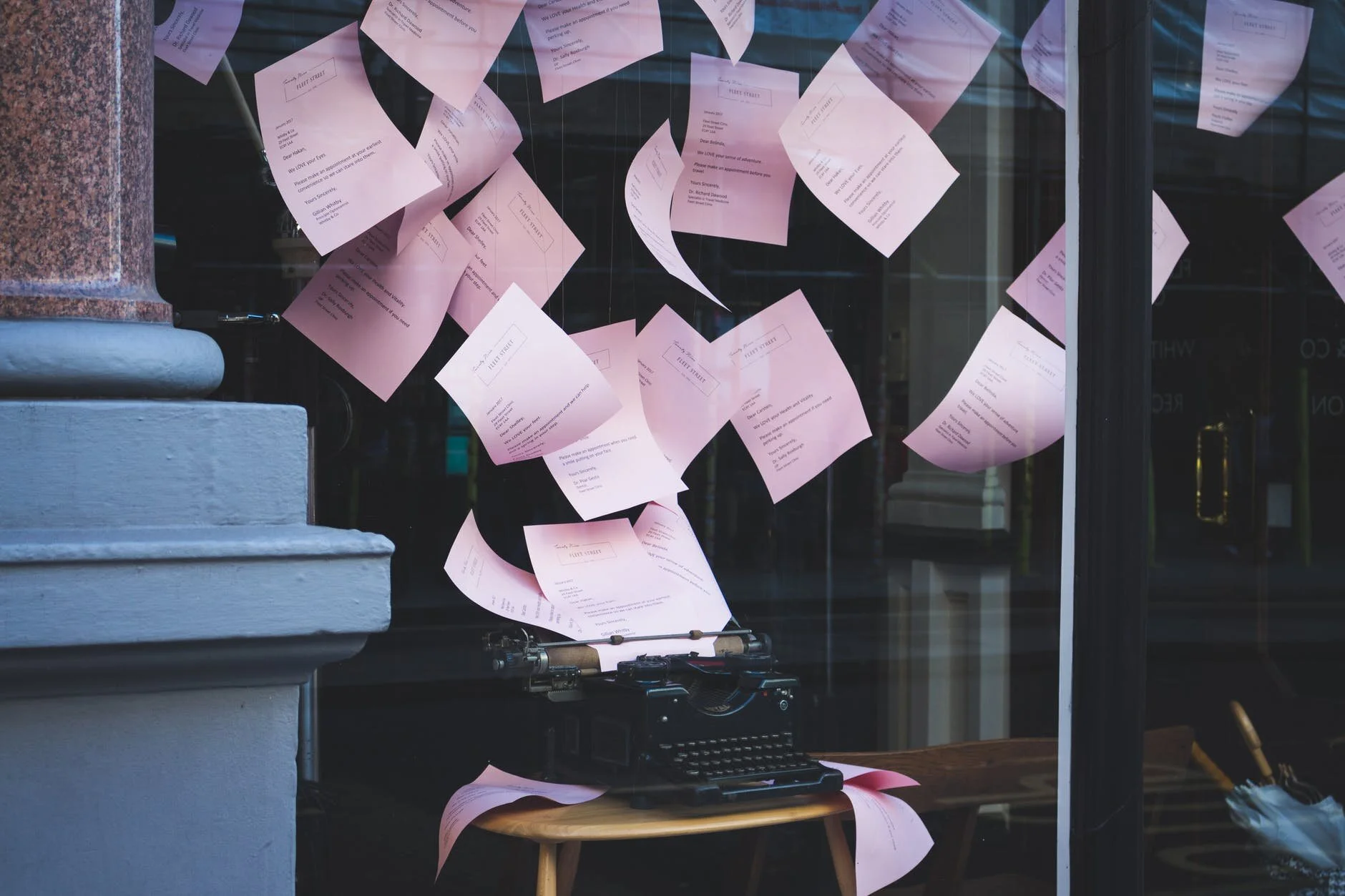
Studying creative writing in an academic environment has helped me in so many ways, however, it has limited me too. After all, I can’t write a novel or a screenplay in a semester and expect my professor to grade it (along with all of my classmates’) within a few weeks. That’s not fair to me or to my professor, and it certainly wouldn’t be a reflection of my ability as a writer.
As a result of my academic experience, I’ve found that I’ve grown very comfortable writing short stories, as they are the formats most often assigned. Each time I write one I receive valuable feedback which helps me write my next one better. As much as I do love writing them, I know that I cannot strictly write short stories for the rest of my career.
Recently I’ve joined a creative writing group that meets weekly over video chat to share pieces of varying themes. I was pleasantly surprised by the prompts provided each week. They were topics and formats I would never have considered trying on my own, but I enjoyed exploring them thoroughly.
Some examples are: a myth/legend, an imitation, a ten-word story, and a rant.
For some of my pieces, I was quite surprised at how proud I was of them, but others I know will never see the light of day again. Regardless of how they turned out, I still benefited from making them. As I’m sure you’ve heard before, the mind is a muscle that needs to be exercised. This is an absolute truth. The more I explore new avenues of writing, the stronger my creative mind becomes, and my writing follows suit. Solidifying my capabilities like this helps prepare me for the bigger projects I plan to take on in the future.
Another benefit to expanding my creative endeavors is that I became more aware of my personal strengths and weaknesses. Since realism is my preferred genre, I was nervous to try writing a myth.
After writing and sharing, I found I was more imaginative than I thought I was capable of. But I simultaneously learned that I struggle with using too much exposition in an effort to make a theoretical world more logical.
I would never have known either of those aspects of my craft had I not joined that writing group. So, I encourage you to join one of your own. And if that’s not an accessible option for you, then look up some different prompts on the internet and try them by yourself. You’ll be surprised how quickly you’ve dug yourself out of that rut.
Too Much of a Good Thing: Balancing Self-Criticism in Creative Writing
Between the personalized pieces and the competitive publishing industry, the world of writing is emotionally draining by nature. It is so easy to get dispirited. While the ability to self-criticize helps you improve your craft, too much of it will harm your career as well as your mental health. That’s why it’s important to persevere despite all of your insecurities.
In today’s society, comparing yourself to other people is extremely common. I do it in almost every aspect of my life: in my appearance, in my personality, and especially in my writing.
Between the personalized pieces and the competitive publishing industry, the world of writing is emotionally draining by nature. It is so easy to get dispirited. While the ability to self-criticize helps you improve your craft, too much of it will harm your career as well as your mental health. That’s why it’s important to persevere despite all of your insecurities.
There are three main areas of writing that I get discouraged about often. Here is how I push through them.
1. My plot makes no sense.
With this self-criticism there are two things that are usually happening. Either my plot doesn’t actually make sense, or I’ve been writing for so long that I’m not seeing my piece objectively. Whichever the case may be, the solution here is to take a break and let someone else look at it.
If the piece actually doesn’t make sense, my peer will tell me why and after a break to refresh my thinking, I can fix the plot. If it did make sense, then my peer has let me know, and I can continue writing in a clearer headspace.
2. My writing technique isn’t good enough.
There are some people out there who are indisputably gifted with words and everything they write is like music. Unfortunately, I am not one of these writers. Now, this doesn’t mean that I am hopeless, it just means I have to work a little harder.
This insecurity is very fixable in the 21st century as there are so many ways to improve my writing techniques. It’s very easy to edit my work multiple times, use programs to correct my grammar, and send pieces to my peers. My writing doesn’t have to be perfect right away, it will get there with a bit of elbow grease.
3. The story I have to tell doesn’t matter.
I’ll be honest, I’ve had a really hard time writing this section as this is an area that I am actively wrestling with. There are a lot of important stories out there worthy of being told. I have to remind myself constantly that the importance of other people’s stories doesn’t make mine less important and that I never know just who will find my story impactful.
That being said, there are times where I feel convicted because there is a really important issue at hand, and I doubt my ability to address it. But writing is an amazing tool of empathy. So, if I feel convicted to explore another person’s story in order to address an important issue, I can absolutely do so provided that it’s done from an educated, respectful, and humble headspace.
Remember that you are never alone when it comes to writing. Behind every story that you think is better than your own, there is an author who felt the same way at some point in their process. Keep your chin up, you can do it.
Have a question about writing or the writing life you’d like addressed in an upcoming blog? Drop us a line in the comments below!
A Writer's Purpose
Often times when I tell people that I am studying creative writing they reply with the ever awkward: “oh…” sometimes followed by a polite: “good for you!” I don’t think the reason that many people react this way to my degree is because they think that writers are stupid, I think that they just don’t understand what a writer’s purpose is. It may not be as well-known as an engineering or a nursing degree, but a writing degree (and all arts degrees for that matter) has a purpose, nonetheless.
By: Margaret Huntley.
Often times when I tell people that I am studying creative writing they reply with the ever awkward: “oh…” sometimes followed by a polite: “good for you!” I don’t think the reason that many people react this way to my degree is because they think that writers are stupid, I think that they just don’t understand what a writer’s purpose is. It may not be as well-known as an engineering or a nursing degree, but a writing degree (and all arts degrees for that matter) has a purpose, nonetheless.
Writers have the duty to describe.
I’m not talking about imagery or exposition in your piece. What I am talking about is describing society. There is a reason that museums are filled with art; art tells us what the world feels like and looks like to ordinary people. The purpose of art is to emphasize what society looks like, whether it be past, present, or future and writing is no exception.
Maybe you like history and want to write about the past so that readers can understand how things used to be and how that has influenced society today. Take for example Lawrence Hill’s the Book of Negroes, which is a historical fiction written about slavery and racism in the United States, Canada, and England in the late 1700s to early 1800s. Though the novel is fiction, it is accurately written to reflect society in that time period. By reading this novel, one is able to better understand the racialized institutions on which North America is built.
Maybe you like to write contemporary pieces that reflect what society is like today. Thomas King’s short story Borders is a great example of this. The story is a contemporary piece about an Indigenous woman who does not identify as Canadian or American, but Blackfoot. This is telling of the current struggle for Indigenous people to choose their own national identities instead of conforming to the colonial identities forced upon them.
Maybe you like writing speculative fiction, fantasy, science fiction etc. All of these genres can still give insight into the state of modern and/or past society. In N. K. Jemisin’s novel Fifth Series there are characters called “oregenes” who experience oppression based on the rest of the population’s ill-informed biases towards them. This is an accurate metaphor about how minorities are often treated poorly by people who are not properly educated.
No matter what genre or medium you choose, as a writer you have the power to describe society. You can praise the good things and more importantly, you can creatively call out its flaws. You have the power to teach your readers new ideas and inspire active change. I encourage you to call out injustices in your writing.
So no, my fellow creatives and I are not just studying the arts for fun, we are actively searching for the most effective way to describe society in order to promote positive change. And that is a career worth being proud of.
Epic Momentum: A Review of Crito Di Volta by Marc Di Saverio
River Street’s Hollay Ghadery reviews Crito Di Volta by Marc Di Saverio—an epic poem that is as exasperating as it is enchanting.
Marc Di Saverio. Crito Di Volta. Guernica Editions. $25, 177 pp., ISBN: 978-1-77183-521-3
Reviewed by: Hollay Ghadery
By the time I was done reading the first page of Crito Di Volta--an epic poem that chronicles the adventures and misadventures of a young man released after a decade in a psychiatric facility--I’d experienced every emotion I would feel over the course of Marc Di Saverio's book.
Exasperation, admiration, and intense curiosity--I ran the gamut from the initial onslaught of simile to a few lines later when I marveled over Di Saverio’s masterful wielding of poetic device to draw a subtle but crucial line between himself, the writer and Di Volta, the protagonist. One is always in control. The other, not so much.
Both are compelling.
Di Volta is prone to manic, overblown sentiment. That opening selection of verse reads, "Flavia, my eyes are as red as sunrise this first time I swallow/my speed and hope.../Teetering on the street like a bull full of swords, the sunbeams/stabbed me". (1)
This sets the stage perfectly for a chief tragedy in Di Volta's life: his passion is also his downfall. Such is the irony with many epic heroes. Odysseus, Beowulf, Rama--their greatest strength is also their greatest weakness. For Odysseus, it was his confidence. For Beowulf, his brute force. For Rama, his duty. For Di Volta, his faith in his words--a faith that arguably borders on blinding solipsism.
What grounds the hyperbole of Di Volta’s character is Di Saverio. Using repetition, meter, rhyme, and metaphor, Di Saverio creates breathing space around the vacuum of Di Volta, showing a subtle mastery of narrative and language that brings order and sense to the tale. He reveals, with piercing clarity, some of the murkier sentiments of the sesquipedalian orator.
"Would you rather be the speed of a sunbeam or it's brightness?" (12)
A simple line that cuts to the quick of a block of Di Volta's rambling verse: life is full of impossible choices. It’s a question that speaks to the heart of one’s beliefs in the midst of more cerebral musings.
To be clear: I don't mind the rambling. It is not a flaw of the writer; rather, a crucial, informing part of Di Volta's orphic character. Di Saverio gives us refulgent places to relax and reflect. The narrative pace can be intense, to be sure, but there are always places to catch our breath. Sometimes, it's just a line, and sometimes, there are entire cantos where the pace slows.
This section, “New Years”, is a stunning example of this downshift.
Like the street-stones
during a parade, some minds are disturbed
continually, no one knowing or caring;
I wonder if Charon will ask these transients for coins
or speak to them the first soft words they'll hear since they were
Kids. (20)
This subdued side of Di Volta is where Di Saverio's depth and insight are most clarion. Di Volta is not just a frenetic former-psych-ward patient: a person's mental illness does not define them. In fact, it seems that Di Saverio’s poem would argue that the line between genius and insanity isn’t so much thin as non-existent. We not only contain multitudes but are multitudes, concomitantly.
Unlike classic epics that feature Manichean heroes, Di Saverio's Di Volta is complex and gritty, making him more real and his story more relatable than epics of the past.
I began by saying that by the end of the first page of this poem, I experienced every emotion I would feel while reading the whole of the book. What I didn’t say is that those emotions are the driving forces behind the epic form. You’re not always supposed to like the protagonist. The hero is supposed to infuriate you, endear you and mystify you over and over again and sometimes all at once. This turmoil creates momentum, and in the end, momentum creates an epic worthy of the tradition.
Should You Really Only Write What You Know?
The old writing adage, “write what you know”—how accurate is it? Where does the line between a writer’s real-life experience and their imagination begin and end? River Street’s Margaret Huntley discusses this puzzling quandary in her latest blog.

The one piece of advice that all of my writing professors have drilled into my mind is to write about something you are an expert on. Now, this doesn’t mean you can’t explore new topics and genres. It does mean, however, that your writing will be better if you have extensive knowledge about your topic.
The first step in understanding this piece of advice is to think about how obvious it is when a writer is not an expert in the subject matter they write about. Maybe you’ve watched a show and thought to yourself “well that’s not realistic”. Or maybe you’ve read a book where a character goes through something traumatizing, and you think to yourself “that doesn’t seem like a normal way to cope”. I’m sure you’ve noticed something like this in another author’s writing.
And there’s no shame in authors taking creative liberties and exploring new possibilities. That’s the fun of creative writing in the first place. But it’s very obvious to your audience when you don’t have a lot of knowledge about what you’re writing about. So, if you are wanting to venture into unfamiliar territory in your writing, take some responsibility to be as accurate as possible.
The first and, in my opinion, the easiest method to be a more knowledgeable author is to draw on your personal experience. Think about it as a piece of music. There are some songs out there that are good and that’s that. But then there are some songs that deeply move you because you can just tell that the songwriter inserted a piece of their heart into the music. This is what you’re aiming for in your writing when you incorporate personal experiences.
Now, this doesn’t mean that you only write creative nonfiction (unless that’s your thing). Rather, it means that there are elements of your personal life that you can incorporate into any story and by including those very real experiences your writing. For example, I recently wrote a short story where my protagonist was a sexual assault survivor. While I have never survived sexual assault, I do have anxiety, so I know what it’s like to feel terrified when trying to go about my everyday life. I gave my protagonist very real anxiety symptoms to make her character have realistic emotional health.
The second method to expert writing is to do research. If you want to write about something that has nothing to do with your life, that’s completely fine, just do some research first. This can be in the form of field research where you might volunteer at an organization you want to write about. You could also find and interview someone who does have personal experience in your subject matter. Or you can simply do some research online.
I cannot stress enough how important it is to make an honest and extensive effort to become an expert in the topics of your writing. Trust me, your readers will thank you for it.
How Do Writers Find Ideas?
How do writers get ideas? River Street’s Margaret Huntley talks shop on the writing processes, sharing her muse-inducing tips to get the creative juices flowing.
By: Margaret Huntley
Personally speaking, coming up with ideas is probably one of the most difficult parts of writing. When I have an initial idea, I have no problem running with it, but coming up with the idea is incredibly hard.
Writing has been around so long that so many of the good ideas have already been used, so it’s difficult to maintain originality. It can be pretty discouraging.
Whether you are in the beginning stages of a project or if you are unsure of how to finish your project, here are some helpful tips to inspire new creativity:
Ask other people! Now I know I just said coming up with original ideas is very important but hear me out. If people willingly give you input, you can take their ideas and rework them to make those ideas your own. There should never be any shame in asking for help. There is not a single writing piece that has not been aided by at least one other person. While asking other writers for ideas is helpful because of their experience in the field, asking non-writers can be just as beneficial because their input comes from the perspective of a reader.
Take a break! This is another tip that sounds counter-intuitive at first, however constantly thinking of ideas is straining on your brain. Like every body part, your brain needs to take a break after working so hard for so long. This break can be however long as time allows. If you have a strict deadline maybe you can only afford to give yourself thirty minutes to decompress and take your mind off of your project. But maybe this is a personal project and you can leave it alone for a month or two before coming back and approaching it with a fresh mind. I promise that taking a break for any amount of time will be beneficial.
Try one of your bad ideas! It’s natural when brainstorming ideas that we end up thinking of one that seems kind of poor. But if you really can’t think of anything else, there’s no harm in trying one of the bad ideas. Maybe you’ll start writing and realize this idea can work after all. Or maybe you’ll realize that you were right in the first place and it doesn’t work. Even if the latter is true, after exploring the bad idea you’ll understand the specifics of what makes the idea bad and you can start thinking of ways to improve it.
Go outside! The outdoors is great for a lot of things, physically and mentally. It’s even great for finding inspiration. Not only will the sunshine help boost your mood and aid you in having a more positive approach, but exploring a new environment often helps you explore new ideas. Even if you live in an urban area getting outside your home and walking down the street can lead to all kinds of inspiration.
I hope these tips help you continue to create and to do what you love. Don’t ever let a little writer’s block keep you from chasing after your goals.
Editing 101: Tips on Editing Your Own Work
Unless you are an insanely talented writer, chances are you will need to do a lot of editing during your writing career. Personally, editing is my favourite part of writing. I just love perfecting drafts, whether they are my own or someone else’s.
By: Margaret Huntley
Unless you are an insanely talented writer, chances are you will need to do a lot of editing during your writing career. Personally, editing is my favourite part of writing. I just love perfecting drafts, whether they are my own or someone else’s.
In my writing classes, we have workshops where everyone brings in their drafts and we are then arranged into groups where we spend up to three hours reading and critiquing each other’s work. It’s so important to have other people look over your work because not only will they catch what you might not, but their advice can further enhance your writing. For example, I often struggle with imagery, but when other people edit my work, they suggest how I can improve upon it.
If you take away one thing from this article it should be to never give a draft that you have not edited yourself yet, to other people. You will always get better advice on the writing that you have personally edited first. I never bring my very first draft to workshops, because I know the value of unique perspectives on my work. I don’t want those distinctive perspectives to get lost in the sea of problems that I am capable of fixing myself.
Deciding what advice to listen to and what advice to disregard is another important aspect of editing. Sometimes stories don’t function because there is a flaw in the way they are written, but sometimes stories don’t function in the minds of certain readers because they are inattentive or lack the life experience that would help them relate to the story. A good indication of whether the writing or the reader is the problem is to ask yourself: is this something that everyone is pointing out or is it just one person?
That being said, even if just one person tells you something, it doesn’t mean that their advice is invaluable. You just need to think carefully about why they might be saying that and feel free to ask other readers if they can see the problem too, now that it has been brought to their attention. Even if the critique ends up being one that you disregard, respecting the person who made the critique and analyzing your piece accordingly is still crucial. After all, you need multiple opinions to understand how your piece works for different audiences. And just because someone offers one poor critique, doesn’t mean that all of their critiques are invalid.
Other people are vital in the editing process, and you are too. You are the author and ultimately you need to be proud of what you have written. A final piece of advice that I will leave you with is to leave as much space as time allows between when you finish your final draft and when you start editing. The more separated you are from the time that you wrote your rough draft, the more objective you will be as you edit it.
If you are not as fond of editing as I am, remember that each and every edit brings you closer to your final piece.
Have editing questions? Contact us!
Time on Your Hands and No Motivation to Write? Read This!
Right now, many of us are finding ourselves with a lot more free time than usual. Now you might be like my mother who has no issues with staying at home and getting work done. But if you are like me, and have difficulty motivating yourself to be productive when on your own, then this article is for you.
By: Margaret Huntley
Right now, many of us are finding ourselves with a lot more free time than usual. Now you might be like my mother who has no issues with staying at home and getting work done. But if you are like me, and have difficulty motivating yourself to be productive when on your own, then this article is for you.
As much as I absolutely love the idea of having all this spare time to write, I find I’m not actually using it. Before I go to bed each night, I tell myself that tomorrow I will finally start that short story that has been swimming around my head for months. Then, tomorrow comes and goes without me writing anything down and the cycle continues.
It makes sense that I have trapped myself in this cycle because I’ve never been one to get stuff done without a push of some sorts. One of my favourite parts about studying creative writing is that my classes give me deadlines which essentially force me to write. I’ve only ever written a couple of stories that weren’t for a class or for a competition with a deadline. This is a pretty big problem, especially in the early stages of my career when I should be writing as much as I can to develop a sufficient stockpile of drafts to send out to journals or competitions.
When I started thinking about how to motivate myself to write in social isolation, the answer was actually more obvious than I thought: deadlines. Just because there are no external deadlines on me right now, doesn’t mean that I can’t set any for myself. If I write a deadline down on a calendar or a piece of paper, I am much more motivated to go and do it.
To-do lists have also been my best friend lately. I try to break up my workload into as many small tasks as possible (brainstorm ideas, plot outline, etc.) so that as I cross more things off my list, I feel very accomplished. Another thing that helps is to reward myself after I get my work done. Most often, this means eating some chocolate but sometimes it means I don’t read my book, or play my video game, or watch a movie, until I am done working.
Now I’m pretty good at forcing myself to hold off on certain things, and I realize that not everyone is like that. Try putting your reward food, book, phone, or laptop in another room so you are less tempted to go use it right away. Or maybe you will work better if you set a timer for yourself, twenty minutes of work for ten minutes of your reward-task. There’s no harm in trying out different strategies and finding which one works best for you.
I hope you have found these tips as useful as I have. Now if you’ll excuse me, I have to start my short story draft now so that I can have some chocolate.
How to Rediscover the Joy of Reading When You're Burnt-Out
I think it’s safe to say that all writers began as avid readers. Just as all painters look at other pieces before painting their own piece, all writers read the works of others before crafting their own work. You’d be hard-pressed to find a writer who has never enjoyed reading. From a young age I always loved to read. However, recently I have found myself not desiring to read as much as I used to. Fortunately, in my university program I am forced to read anyways, but without this imperative I know wouldn’t be reading nearly as much as I should be.

By: Margaret Huntley
I think it’s safe to say that all writers began as avid readers. Just as all painters look at other pieces before painting their own piece, all writers read the works of others before crafting their own work. You’d be hard-pressed to find a writer who has never enjoyed reading.
River Street’s talented junior copywriter, Margaret Huntley.
From a young age I always loved to read. However, recently I have found myself not desiring to read as much as I used to. Fortunately, in my university program I am forced to read anyways, but without this imperative I know wouldn’t be reading nearly as much as I should be. In the back of my mind I know it is important to read so that I can improve my craft, but I just find myself very unmotivated. I think that this is at least partially due to the fact that reading just feels like work now.
When I was in high school, I worked as a cashier and after a long day at work, it made sense for me to come home and read on my downtime because reading was nothing like what I had spent my entire day doing. But now that I am a full-time student, after a long day of reading over drafts, novels, and essays the last thing I want to do is read more. Especially if my motivation for reading is so that I can be better at my career. I’d much rather do something unrelated like scroll through social media or talk on the phone with friends, neither of which are inherently bad, but they shouldn’t replace reading altogether.
Now, I don’t think that there is anything wrong with not wanting to have your job bleed into your personal hobbies (there’s a good reason that I didn’t scan things when I got home from work in high school). However, it’s different when your favourite hobby has become your career. After all, I chose to write as a career because I love reading and writing and wanted to keep doing that.
I’ve spent enough time talking about a problem, so I think it’s about time I start discussing a solution. When I was a kid, I read books not to analyze or dissect the plot points, but just for the pure entertainment, but I still learned without even realizing it. I learned things like what aspects of a storyline are most compelling, what character details are realistic, what genres I’m comfortable with, and so much more. As a kid I learned this without even thinking about it because I didn’t put any pressure on it to be “for work.” I just read for fun and learning was a natural by-product.
This is precisely the resolution to the issue I have described. If I think of all reading as work, then it will always feel like work and I won’t want to do it anymore. But when I choose to read on my own time, for the sole purpose of entertaining myself, then I will have fun while unconsciously learning, just like I used to. So, if you find yourself facing the same problem that I have been recently, then I advise you to stop thinking so much and just read!
Learning to Put Yourself Out There
If you say that putting yourself out there doesn’t scare you at all, I’m sorry, but you’re lying. Whether you’re asking someone on a date, applying for a job, or submitting drafts to a journal, the possibility of rejection is always imminent and always terrifying. Keep reading to see what River Street’s Margaret Huntley has to say about putting yourself out there as a writer.
By: Margaret Huntley.
If you say that putting yourself out there doesn’t scare you at all, I’m sorry, but you’re lying. Whether you’re asking someone on a date, applying for a job, or submitting drafts to a journal, the possibility of rejection is always imminent and always terrifying.
Unfortunately, putting yourself out there is a necessity for emerging writers. If you want to be published, you have to send your work to journals. This means you have to send your very intimate drafts out to complete strangers. These are the drafts you have slaved over for months, maybe even years. The drafts you have hated and then loved and then hated and then loved again. The drafts that if you find one more thing wrong with, you swear you’ll delete the whole thing altogether.
The very thought of sending these drafts to someone who doesn’t know the work you’ve put into them is horrifying. This fear is amplified by the fact that this person’s job is to judge their value impartially. Yet, it’s a requirement of the career you’ve chosen. You’re not Emily Dickenson; you can’t just hoard your drafts until they’re discovered after your death. The modern writing world is competitive and always advancing so there is no time to waste waiting around. You have to submit to journals, contests, and publications as soon as possible.
Well, if you weren’t scared before, you’re probably scared now. Sorry, I don’t mean to scare you. But as a struggling young writer, still in university, trying to get ahead, I’m scared too. So, I wanted to share what helps motivate me to put myself out there despite my fears.
My advice is simple: do it. Life is all about doing things that scare you. Think about where you’d be if you never took off your training wheels, never jumped into the deep end, or never spoke to that person who is now your best friend. Submitting your work is just the same. You have to do it, and once you do, you’ll be glad that you did.
While you’re submitting it, do it with the knowledge that you’ll likely get rejected more than a few times before it works out. It would be amazing if you could submit whatever and get published on your first try, but that is just not realistic. After all, you still wobbled on your bicycle before you could ride effortlessly. It might sound counter-intuitive but once you get over the initial hurdle of your first rejection, it gets easier. Once you’ve already put yourself out there, you may as well do it again. Eventually, with persistence and adaptability, you’ll get published and you’ll feel great about it because you know how hard you worked to accomplish it.
You’ll find that the best part of putting yourself out there isn’t actually the act of getting published, but it’s the satisfaction of not letting fear rule your life.
No Writer is an Island: The Competitive Nature of Writing
I am an insanely competitive person. I blame it on my older brother. He’s two years my senior, which was just young enough to play games with me but still old enough to be better than me at them all. This, of course, annoyed me to no end. To this day, I am constantly grappling with a desire to be the best at whatever I do and when I am not, I hate it.
By: Margaret Huntley
I don’t know about you, but I am an insanely competitive person. I blame it on my older brother. He’s two years my senior, which was just young enough to play games with me but still old enough to be better than me at them all. This, of course, annoyed me to no end. To this day, I am constantly grappling with a desire to be the best at whatever I do and when I am not, I hate it.
Now, this would probably benefit me if I chose to pursue a career as an athlete. Instead, I chose to be a writer, whose merit is decided not on objective rules and regulations but the subjective, ever-changing opinions of the public. And I won’t lie, this stresses me out. A lot.
River Street Writer Margaret Huntley.
When I received a second-place award for one of my pieces in high school, I felt like I wasn’t a good enough writer to make it. I thought that because my piece was second place, I was a second-place writer and that wasn’t good enough. More recently, when I was published in a magazine, I found myself critiquing the whole magazine to determine if I had the best article in there.
But this is not healthy!
I used to think that writers worked alone. I thought that it was just up to me and me alone to succeed, so if I didn’t do things right, I was a failure. But this is not how the writing industry works. Sure, JK Rowling wrote her own series, but she needed a publisher before she got off the streets. Even Shakespeare needed talented actors to bring his plays to life.
I am grateful to be studying creative writing at university in such a team-oriented environment. It has taught me that all writers need inspiration, third party opinions, and colleagues to bring their works to completion. Even then, they rely on the public to consume and support their material.
Once I understood this, my competitiveness started to diminish. I know the writing accomplishments in my future will not be my own. If I continue to pit myself against others, I will hurt my career more than I will help it. The more I help other writers with their craft, the more they will help me. Not only will they be more likely to return the favour, but by analyzing their craft, I can improve upon my own.
The reality is that we are all in this together. We are all working hard to get our names out there and we all have unique writing that appeals to different sections of the public. By working together, we are able to put more quality writing out into circulation, and that is a win for everyone.
So, if you’re competitive like me, next time someone gets published in your place, learn from the experience and use it to become a team player. But the next time you lose Mario Kart to your brother, feel free to throw the remote.
Learn more about Margaret and other River Street writers here.
Do What You Love and You'll Work Harder Than You've Ever Worked in Your Life
One piece of advice I’m sure everyone has heard at some point in their life is: “do what you love, and you won’t work another day in your life.” Phrases like this are part of the reason I decided to do my undergrad degree in creative writing. I have always loved to write. Over time, my notebook full of juvenile two-pagers developed into a laptop full of drafts, essays, and articles. While I am happy that I have the opportunity to pursue what I love as a career, I think statements like this are misleading. Doing what you love actually takes more work than you might think, especially when it comes to writing.
By: Margaret Huntley
One piece of advice I’m sure everyone has heard at some point in their life is: “do what you love, and you won’t work another day in your life.” Phrases like this are part of the reason I decided to do my undergrad degree in creative writing. I have always loved to write. Over time, my notebook full of juvenile two-pagers developed into a laptop full of drafts, essays, and articles. While I am happy that I have the opportunity to pursue what I love as a career, I think statements like this are misleading. Doing what you love actually takes more work than you might think, especially when it comes to writing.
I have thoroughly enjoyed my first couple of years studying and exploring different types of writing. However, the more I have learned about how to write properly, the higher the standards I set for myself are and the harder I have to work to meet them. I look back at award-winning pieces that I wrote in high school and I hate them. For one of my most recent projects I actually took one of those pieces and completely reworked it until I was happy with the product because I hated the old draft so much. Even the things I write now take intense editing to perfect. But I’m sure that by the time I graduate I will hate these pieces too. When I reflect on this common phrase, I start to wonder how I could love writing so much but hate what I write, even after all the hard work I put in.
The answer to my question was discovered through an unlikely means: astronomy. In my program, no one can graduate without a science credit, so I took first-year astronomy. However, because I in no way love astronomy, I gave minimal effort. While I still did considerably well, I didn’t put in half the effort that I did for my writing projects. But the difference was that I wanted to work harder on my writing projects because I loved writing in a way that I didn’t love astronomy. So, what I loved required more work than what I didn’t.
Now, I understand that the phrase is not supposed to mean that you never work on stuff you love, but that it just doesn’t feel like work. Though this isn’t accurate either. Anyone who has had to overcome writer’s block or subject a personal piece to intense criticism will agree that writing, no matter how much you love it, takes a lot of work. But, trust me, it’s worth it.
Greater Love: A Review of Lauren Carter’s Following Sea
Lauren Carter’s Following Sea is one of those rare books of poetry can make a person lose sleep. In this case, that person was my husband. As I lie awake in bed reading Carter’s new book, I kept nudging my husband awake.
“You gotta hear this!” I’d say, quoting from one poem or another.
Lauren Carter’s Following Sea (Turnstone, 2019) is one of those rare books of poetry can make a person lose sleep. In this case, that person was my husband. As I lie in bed reading Carter’s new book, I kept nudging my husband awake.
“You gotta hear this!” I’d say, quoting from one poem or another. He vowed to sleep in another room the next night. That promise never came to pass. Carter’s Following Sea is also one of those rare books of poetry that you can devour in a single sitting.
While most poetry is best digested slowly, after small, even tentative nibbles, Carter’s sharp and vulnerable writing makes it difficult to put her book down. This paradox is what makes her work so compelling: it’s stark, starved, but also palpably fleshy and vital.
From the poem, Barren:
where did my future go, why
is my body a bone
dry field that only dust
will know.
Then, from Louth (1851):
first babies
were born close, the crowded,
wet litter of a cat.
You can see what I mean. There’s the dryness—a hopelessness, but there’s also the vigour of life renewing itself. Interestingly, however, the poems that have the most raw vitality are the ones that deal with her family’s history—a past Carter was not a part of. Consider again the excerpt from Barren: her present seems more dead than the lives of her dead relatives, which are teeming with life; “the crowded wet litter of a cat.” This strange reversal beautifully underscores immense feelings of loss and purposelessness, ironically adding more power and vivacity to the poems about the present through the very emptiness that defines them.
Despite dealing with heavy, engulfing topics like infertility, identity and complex, multi-generational family histories, Following Sea offers space; it takes its time. There’s importance attached to her poems, but not urgency. Each word, every line break lingers even as it draws you on, breaking your heart while also offering comfort in the shared experience of our great tragedies, and greater loves.
Bring home your copy of Following Sea. Keep it by your bedside, on your coffee table, or in your bag. The point is this: keep it close. Carter’s poems are meant to endure, and help us endure.