
Excerpt from Becalming by Aga Maksimowska
Waves slap the sides of the boat, sails snap energetically, Mama captains. “Look at you,” I say into the wind, my glasses sprayed with seawater, “so cool, hand on the rudder, in charge.”
She grins. “Tiller,” she says. “The rudder’s in the water. This is the tiller.”
I knew Mama sailed in her Before Times, before she married Tata (he was the athlete), before she had me and Kasia, before they divorced, before she left for Canada. But I had no idea she was this good. That she could move through water so effortlessly. Not any water, but the sea. This isn’t Toronto harbour; this is the Baltic, pocked with ferries, cargo and naval ships, NATO cruisers, Russian submarines. Even in 2007, these are infested waters, not with sharks and algae, but with spies and allies, albeit oftentimes it’s difficult to know who’s who. And here’s Mama, in her fifties, not on the TTC but on a sailboat, gaze fixed on the horizon, speeding toward land. The land in question is a narrow sliver between the Baltic and the Vistula Lagoon, Russia a few kilometres to the east, Gdańsk to the west, Stockholm due north.
“I could do this forever,” Mama says dreamily.
I’m about to say, ‘Why don’t you?’ but I know better than to say stupid fantastical things. We can enjoy each other’s company on this magical summer’s day without expounding impossibilities.
Mama is light and agile as she yanks ropes and swings the sail over to the other side, confident and calm as she commands me to adjust my position. I am in awe of her. It’s like watching an entirely different human, someone I hardly know. It’s unimaginable to me that this person would have chosen to sit in a classroom, teach English, work in a dreary high school, then a slightly less dreary university, only to look after Canadian children and guinea pigs in diaspora. She’s my mother, the only parent I’ve ever actually known, and yet, at this moment, I feel like I don’t know her at all. I am so mesmerized by her every move that it takes me a second to realize that suddenly everything falls utterly still. No wind, no waves. It’s like we’ve entered a kind of mystical, weatherless, atmosphereless patch of sea.
“Now what?” I say.
“Oars or motor,” Mama says, “or we sit and enjoy the calm.”
“I enjoy motoring, thanks,” I say.
Mama smirks. “I know you do. Always on the move. God forbid you relax. Plus motors are not allowed in a regatta. We wait for the wind.”
“We’re not in a regatta, Mom. Look,” I exclaim, and point ashore. “Fried fish and cold beer await our speedy return.”
It’s a strange feeling, to sit there, with no real danger of sinking and yet making no progress whatsoever. Somewhat like my current life. A sudden panic settles on me like a burn. Without the wind, the sun is searing. It stings instantly. Now what, I repeat in my head, while Mama looks at me expectantly. She expects conversation, while I expect alcohol, adventure, progress. I have slept next to a white noise machine for the entirety of my adult life. Silence is scarier than stretch marks, being with my own thoughts terrifying. Lest I really think about my life—my fears, desires, goals—I’d go under.
“It’s terrible about Peter’s dad,” Mama says. “Such a nice man.”
I grimace. Of course it’s terrible. But he’s old. More terrible when you’re young. What else is there to say? “Nice man,” I repeat. “Is he?”
Mama shrugs, fiddles with a rope. “Who’s to say. Seems nice.”
I think about the things that make someone, the way we seem, the way we want to be, the way we are. How much control we have over how we were made, how we turned out. I’d die if someone called me ‘nice.’
I try biting off a hangnail, but yank too hard and it starts to bleed. I should have had my nails done before this trip. I suck my thumb, willing the little wound closed.
In the fishing village, behind a beach littered with rowboats, nets, and buoys, stand a few trailers, the smell of baking waffles and frying fish mingling with the salty air. We sit on plastic chairs and eat French fries from small trays that look like paper boats. We pierce the fries with tiny plastic tridents, the salt we’ve shaken onto them somehow saltier, zingier than Canadian salt. Everything here tastes better. The cold pilsner is making me tipsy, making everything all right with the world again. Mama’s brothers laugh, one of them smokes a cigarette, the other drinks a large soda.
“It’s a good thing we didn’t send the coast guard for you,” one of them says.
“Or Putin’s submarine,” the other adds.
Mama laughs.
Her sister stirs another sugar cube into a coffee she seems intent never on drinking while performing a supersaturation experiment on the solution. Like me, she’s rapt by what’s unfolding here, an undoing of time, a performance of familial relationships that should have been possible twenty-five years ago, but somehow was not. I wish Babcia were here to see this. The last time I saw all four of Babcia’s children together in one place was at Babcia’s funeral. That was my one and only visit here since leaving in 1988.
Mama says, “We ghosted ashore like professional sailors, right Gosia?”
I nod, even though I have no idea what ghosting ashore means.
“A sailor finds wind where there seems to be none.”
Something out of nothing is the Polish way, for good or for bad. Resourcefulness, some would call it, others sorcery, someone else: secrecy.
One of the uncles looks at me and says, “So why aren’t you married with children?”
The other says, “Thirty is time for round two, not round one.” He laughs. “Second marriage, new crop of kids.”
The first stares, waits for my answer, his eyes glazed with pilsner. I look to Mama, expecting her to answer on my behalf, when I hear her sister’s voice. “Leave her alone. Always with the children. Children. You make them and leave them, and who’s stuck taking care of them? Not you two.”
The walk from the fishing village to the cabin where we’re staying is an hour-long meandering trek via beach, dunes, and eventually forest. It would take longer along the road, which, drunk uncle warns, would leave us vulnerable to being hit by a car. So we follow a flashlight beam along a footpath. Every so often someone trips over an exposed tree root, slaps at a mosquito. Drunk uncle says, “These are mosquito and conflict breeding grounds, enemies closer than anyone would like.”
His brother chimes in, “The Russians are right there.” He points into the darkness. His arm swings wildly into all directions, ‘right there’ meaning ‘everywhere.’ “One day, they’ll walk right in and take it all back. Ukraine first, then Lithuania, Latvia, Estonia, then us.”
“Okay, okay, you two,” their sister says. “The Russians, the Russians. The Russians don’t want you.”
“The best predictor of future behaviour is past behaviour,” sober uncle says. “Mark my words.”
“That’s why you two shouldn’t drink.”
“That’s why we joined NATO.”
When we get to a clearing, the moon illuminates what the flashlight could not: toadstools and moss underfoot, pine cones, lichens on tree trunks, branches, and twigs, a wooden cabin with a porch and window shutters with intricate cutouts. It’s like something out of Grimm’s fairytales, except the roiling sound is the Baltic Sea, not the witch’s cauldron.
Excerpt from Becalming by Aga Maksimowska, published by Dundurn Press, 2026. Reprinted with permission. Copyright Aga Maksimowska.
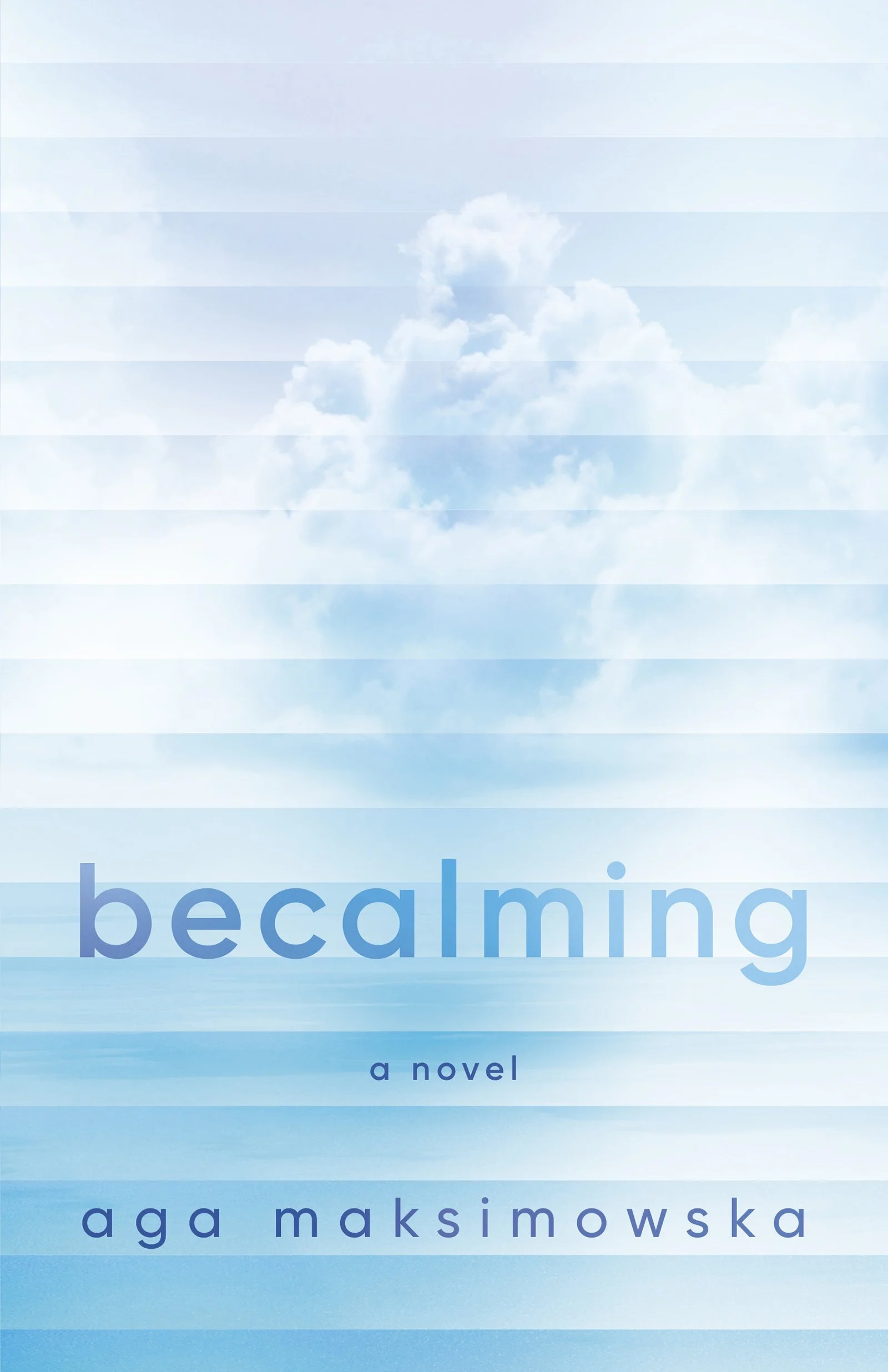
Gosia feels stalled in her life, but a family trip opens her eyes to the life she has … and the life she wants.
Gosia, a high school chemistry teacher, travels to her native Poland to visit her estranged father. Back in Canada, meanwhile, her father-in-law — who has been more of a dad to her than her own — is dying of cancer. Away from her routine, Gosia questions everything in her life, including her long-term boyfriend, Peter. She feels stuck in the terrifying time of early adulthood, in her first grown-up job while managing student debt, monogamy, and existential dread. Is this really it, she wonders?
Gosia’s time in Poland gives her the chance to examine her life, and she finds herself pulled homeward to Canada, where she faces the fact that Peter’s father — like her own — is far from perfect. Can she love despite betrayal? Can she find hope in her fiery, complex love for Peter? Is there something more to this life that she didn’t even realize she had?
Becalming tells the story of two people realizing that happily ever after is not something to be but something to continue to explore, through adversity and outrage, tragedy and inspiration, and love.
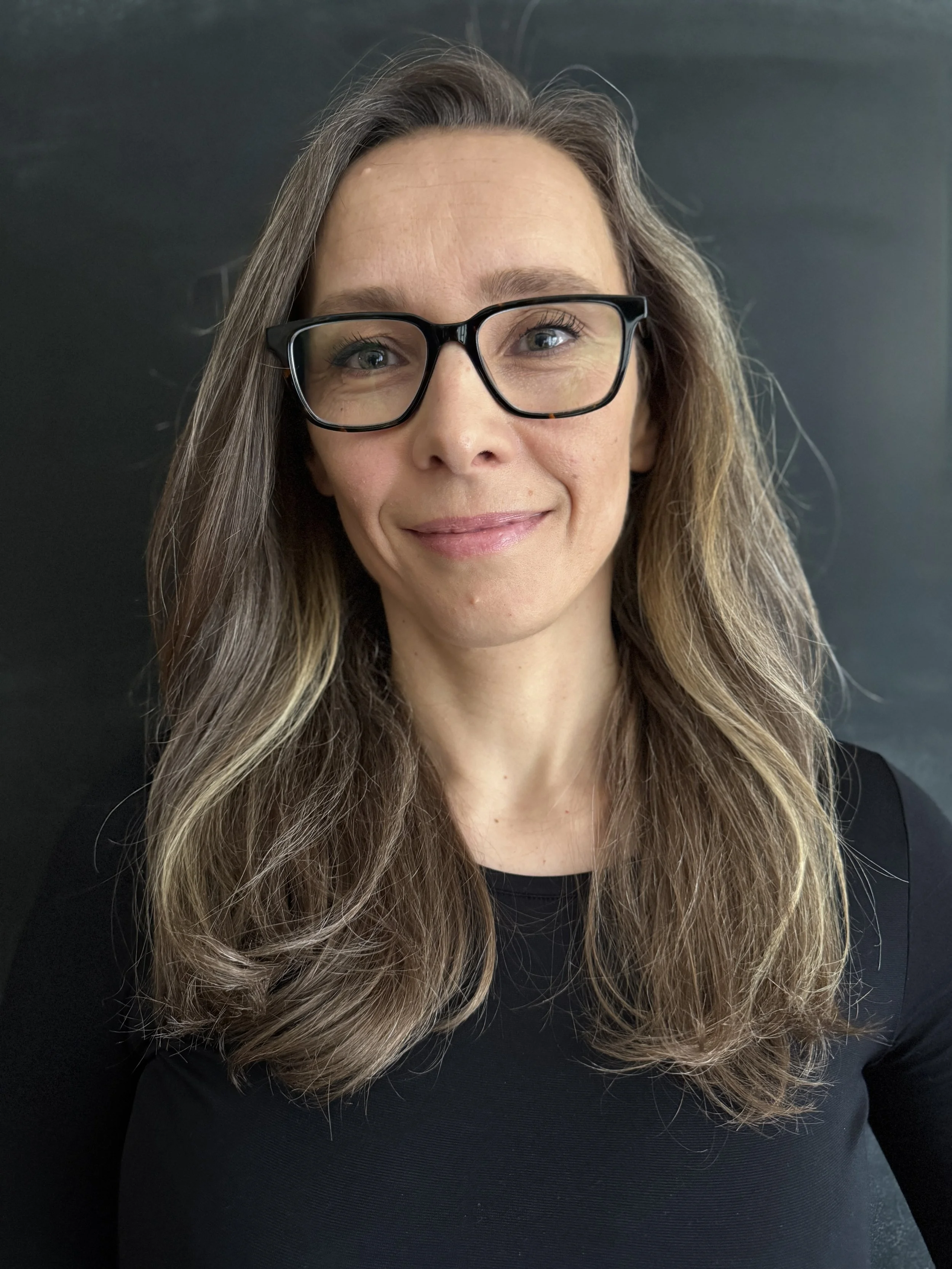
Aga Maksimowska is a writer whose debut novel Giant, about premature sexual development and the fall of Communism in Poland, was shortlisted for the Toronto Book Award. Her writing has appeared in Polish[ed]: Poland Rooted in Canadian Fiction, Brick, the Globe and Mail, and others. Becalming is her second novel. She lives in Toronto.