
Six Books to Challenge Your Perception of Wealth
By Michael Schmidt
Whether it’s subconscious or intentional, people are often thinking about money. It’s kind of a hard topic to avoid. Questions like how much we need to get by, how much others have, how to save up for that amazing vacation we’ve always wanted to go on, and so forth…these are questions we continually ask ourselves as we navigate life. And in the interconnected world of today, where corporations continue to grow, the cost of basic things continues to rise, and it’s dangerously easy to see what others have on social media and the Internet, the topic of money is sure to cause a lot of unwanted headaches. Arguably more than ever.
It can be a balm to realize you’re not alone: we’re all figuring things out together. One of the best remedies for feeling alone or troubled is a stack of great books. If you are curious about the topic of money in the 2020s, or interested in reading books that make us reconsider what wealth means, look no further than this list of recent and terrific books by Canadian and Indigenous authors that explore wealth in their own unique ways. They are sure to encourage you to think differently about money and wealth.
Shadow Price by Farah Ghafoor, published April 1, 2025 with House of Anansi Press
Shortlisted, 2025 Governor General's Literary Award for Poetry
Longlisted, 2025 Toronto Book Awards — A CBC Best Book of 2025
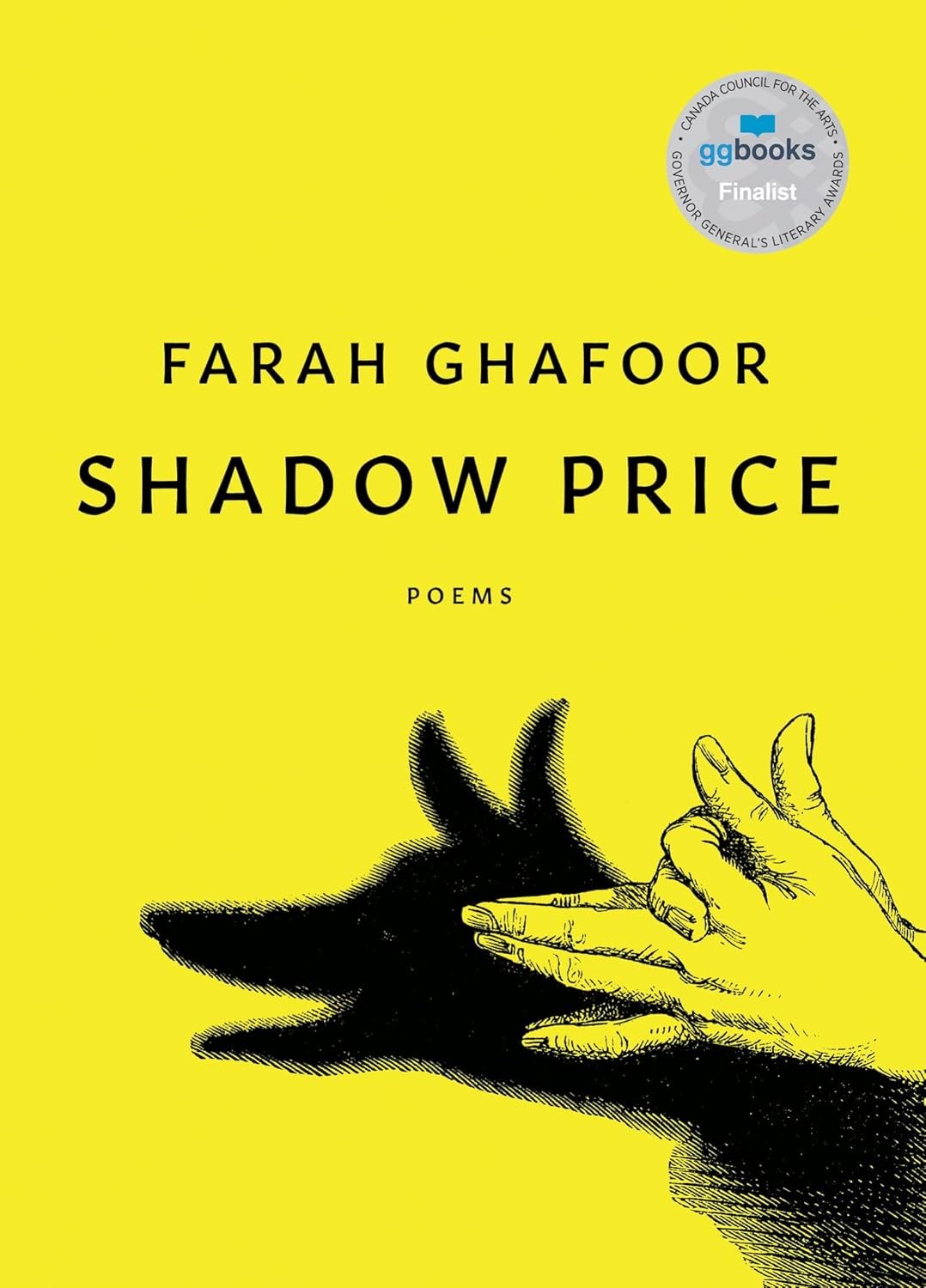
Borrowing its title from a finance term—“the estimated price of a good or service for which no market price exists”—Shadow Price is a stunning debut that examines the idea of value in a world that burns under our capitalist lens.
What gives life value? How do we serve existing societal structures that determine its cost? Employing both surreal and documentary imagery, Farah Ghafoor's arresting collection articulates how narrative is used to revise the past and manipulate the future, ultimately forming our present-day climate crisis. Interrogating personal complicity, generational implications, and the shock of our collective disregard for a world that sustains every living thing, Shadow Price captures the complexities of living and writing as a young poet born in the year that “climate change denial” first appeared in print. Mourning the loss of Earth’s biodiversity, from insects to mammoths to trees, these introspective poems invite us to consider the risks and rewards of loving what may vanish in our lifetime.
Beneficiary by JoAnn McCaig, published May 15, 2026 with University of Calgary Press
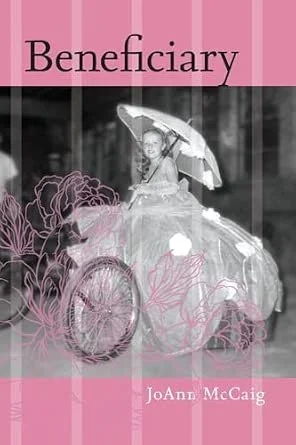
A novel about what it means to face the world as a woman on her own terms from the award-winning author of The Textbook of the Rose and An Honest Woman.
Seren was doomed to a country club cage and a leash of pearls until out of the blue on a Tuesday night in 1969, she found herself suddenly saying “no.” More than fifty years later, she looks back on her life and each choice that followed, beautiful, tragic and completely her own.
Leaving her family for the freedom of the 1970s, Seren began a quest to discover how to live in this world as her true self—a quest that would take her from the heady countercultural milieu of communal houses on Vancouver Island through marriage and motherhood, divorce, and an unexpected inheritance that changed everything. Suddenly wealthy, Seren must wrestle with money, with class, and what it means to have more than most.
What does it mean to live truly, through tragedy and heartbreak? How do we create ourselves in a world that keeps changing? What does it mean to have money when so many people don’t? A richly written, fiercely feminist novel imbued with real bravery, Beneficiary weaves the past and the present in a rich tapestry of life.
Count on Me by Ann Cavlovic, published October 1, 2025 with Guernica Editions
Count on Me exposes how a family can fracture when aging parents grow frail and debts from the past resurface.
Tia is raising a baby when her older brother Tristan gradually takes over their ailing parents’ bank account, house, and medical decisions. Through a web of complex family dynamics, Tia uncovers the disaster left by Tristan’s meddling in their parents’ lives. As Tia tries to set things straight, she confronts how money and love were entangled in her family, and whether her own mothering now goes to opposite extremes. Told in an intelligent and hopeful voice, this is a story about sibling rivalry, elder abuse, how life can become transactional, and how we come to feel entitled to someone else’s money.
The Fake by Zoe Whittall, published March 19, 2024 with Ballantine Books
AN AUTOSTRADDLE BEST BOOK OF THE YEAR
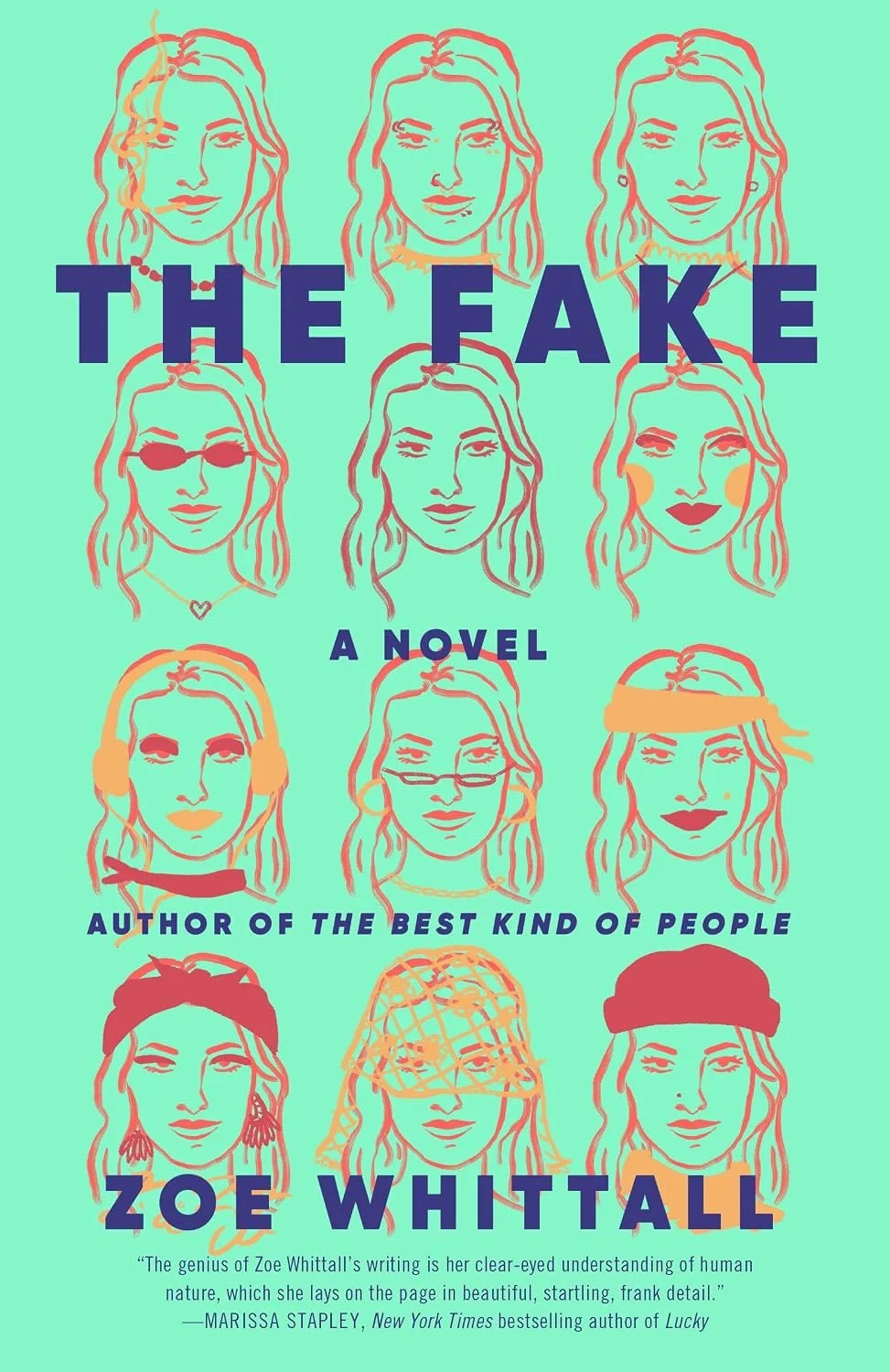
After the death of her wife, Shelby is suffering from prolonged grief. She’s increasingly isolated, irritated by her family’s stoicism and her friends’ reliance on the toxic positivity of self-help culture. Then, in a grief support group, she meets Cammie, who gives her permission to express her most hopeless, hideous feelings. Cammie is charismatic and unlike anyone Shelby has ever met. She’s also recovering from cancer and going through several other calamities. Shelby puts all her energy into helping Cammie thrive—until her intuition tells her that something isn’t right.
Gibson is fresh from divorce, almost forty, and deeply depressed. Then he falls in love with Cammie. Not only is he having the best sex of his life with a woman so attractive he’s stunned she even glanced his way, but he feels truly known for the first time in his life. But Gibson’s friends are wary of Cammie, and eventually he, too, has to admit that all the drama in Cammie’s life can feel a bit over the top.
When Gibson and Shelby meet, they realize Cammie’s stories don’t always add up. In fact, they’re far from the truth. But what kind of a person would lie about having cancer? And what does it say about Shelby and Gibson that they fell for it? From the author of The Best Kind of People and The Spectacular comes a sharp, emotional novel about lies, liars, and the people who love them.
In Crisis, On Crisis: Essays in Troubled Times by James Cairns, published June 10, 2025 with Wolsak & Wynn
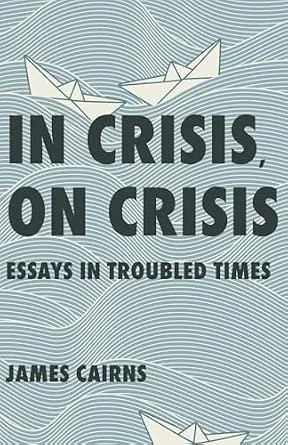
In 2022, the Collins Dictionary announced that its word of the year was “permacrisis,” which it defined as “an extended period of instability and insecurity, especially one resulting from a series of catastrophic events.”
Have we reached a breaking point, arrived at the moment of truth? If so, what now? If not, why do so many people say we’re living through a period of unprecedented crises? Drawing on social research, pop culture and literature, as well as on his experience as an activist, father and teacher, James Cairns explores the ecological crisis, Trump’s return to power amid the so-called crisis of democracy, his own struggle with addiction and other moments of truth facing us today. In a series of insightful essays that move deftly between personal, theoretical and historical approaches he considers not only what makes something a crisis, but also how to navigate the effect of these destabilizing times on ourselves, on our families and on the world.
Decolonizing Wealth, Second Edition, Indigenous Wisdom to Heal Divides and Restore Balance by Edgar Villanueva, Foreword by Bishop William J. Barber, II, published August 17, 2021 with Berrett-Koehler Publishers
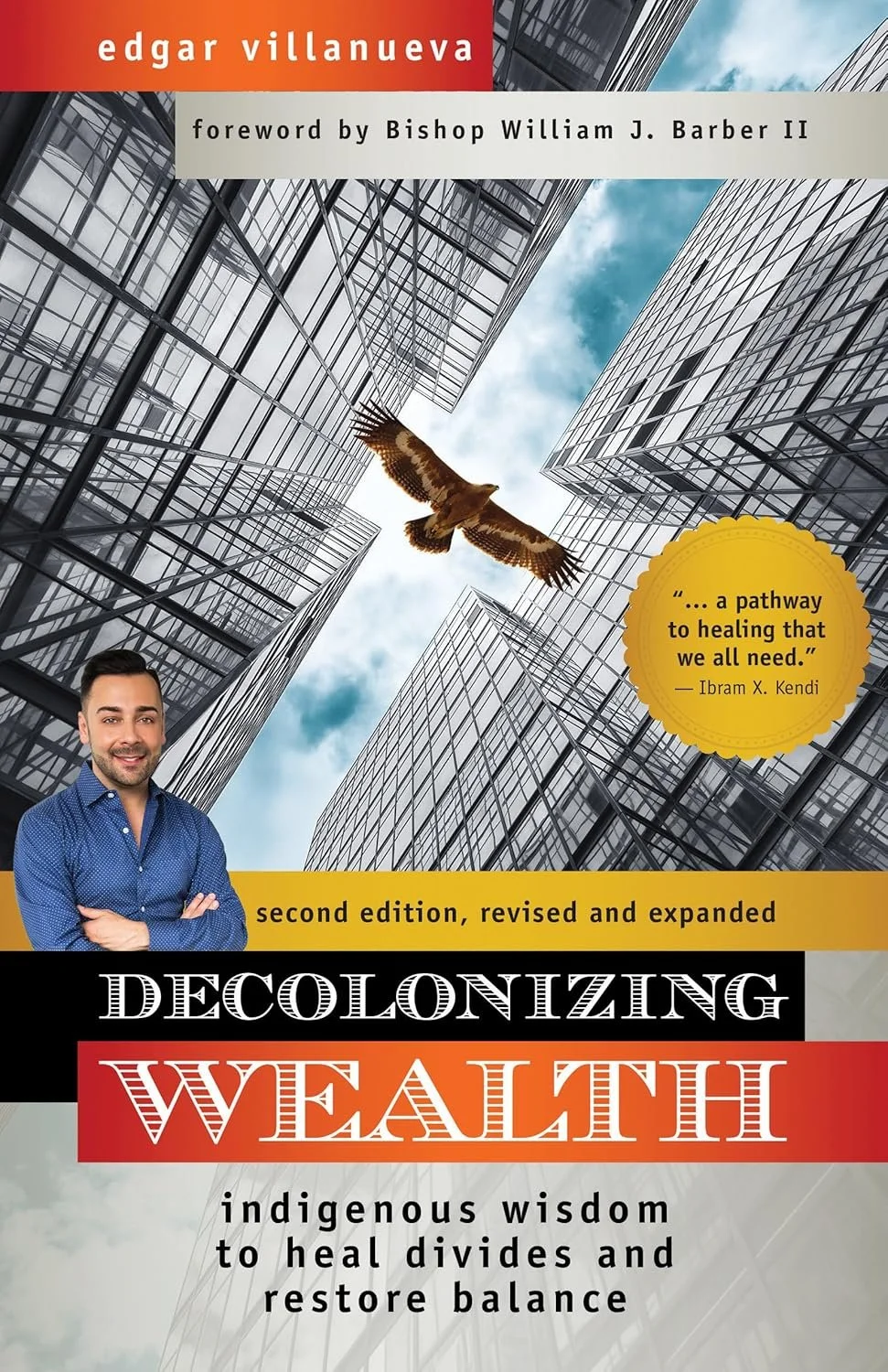
Decolonizing Wealth is a provocative analysis of the dysfunctional colonial dynamics at play in philanthropy and finance. Award-winning philanthropy executive Edgar Villanueva draws from the traditions from the Native way to prescribe the medicine for restoring balance and healing our divides.
Though it seems counterintuitive, the philanthropic industry has evolved to mirror colonial structures and reproduces hierarchy, ultimately doing more harm than good. After 14 years in philanthropy, Edgar Villanueva has seen past the field’s glamorous, altruistic façade, and into its shadows: the old boy networks, the savior complexes, and the internalized oppression among the "house slaves," and those select few people of color who gain access. All these funders reflect and perpetuate the same underlying dynamics that divide Us from Them and the haves from have-nots. In equal measure, he denounces the reproduction of systems of oppression while also advocating for an orientation towards justice to open the floodgates for a rising tide that lifts all boats. In the third and final section, Villanueva offers radical provocations to funders and outlines his Seven Steps for Healing.
With great compassion—because the Native way is to bring the oppressor into the circle of healing—Villanueva is able to both diagnose the fatal flaws in philanthropy and provide thoughtful solutions to these systemic imbalances. Decolonizing Wealth is a timely and critical book that preaches for mutually assured liberation in which we are all inter-connected.

Michael Schmidt is an emerging writer from the quiet woods and fields of rural Southern Ontario, with a keen interest in telling stories that explore the fantastical. He completed a BA for English and Creative Writing at Western University in 2022, and then went on to study publishing at Centennial College in 2024. He's had poetry featured in Blank Spaces Magazine. You can find him on Instagram and X (formerly Twitter) as @theepictom_