
Power Q & A with Pamela Mordecai
Q: What is your ideal audience — who do you write for?
A: I write for anyone who can read, anyone who has ever opened the cover of a book. I don’t say anyone who enjoys reading, because one big reason that I write is to seduce people who would not, as a habit, consider books as a source of entertainment, who would not say that they “like to read.” That’s why I write funny stories — or, at any rate, try to — though I’m almost always treating a subject that is serious in one way or another. This is a Jamaican way of being. We “take serious ting make joke.” That’s how we cope with hard things, like, say, devastating hurricanes. (Check online for a song called “Wild Gilbert” about Hurricane Gilbert that hit the island in 1988.) Everybody likes to laugh, so if I can tell a story that makes a new reader laugh till their sides hurt, then chances are they will read more of my work, or of someone else’s work, in search of stories that make them laugh, and with luck they will recognize that if books can make them laugh, they can entertain in other ways. Like my pervious collection, Pink Icing, my new book of short stories, Two Days in Mayaro, has a bunch of funny stories. I can’t imagine what my life would have been without stories, poems, songs, DIY advice, all good things I found within the covers of a book. Books have helped me to survive in hard times. I want everyone to know how much a book can offer — beginning with making you laugh!
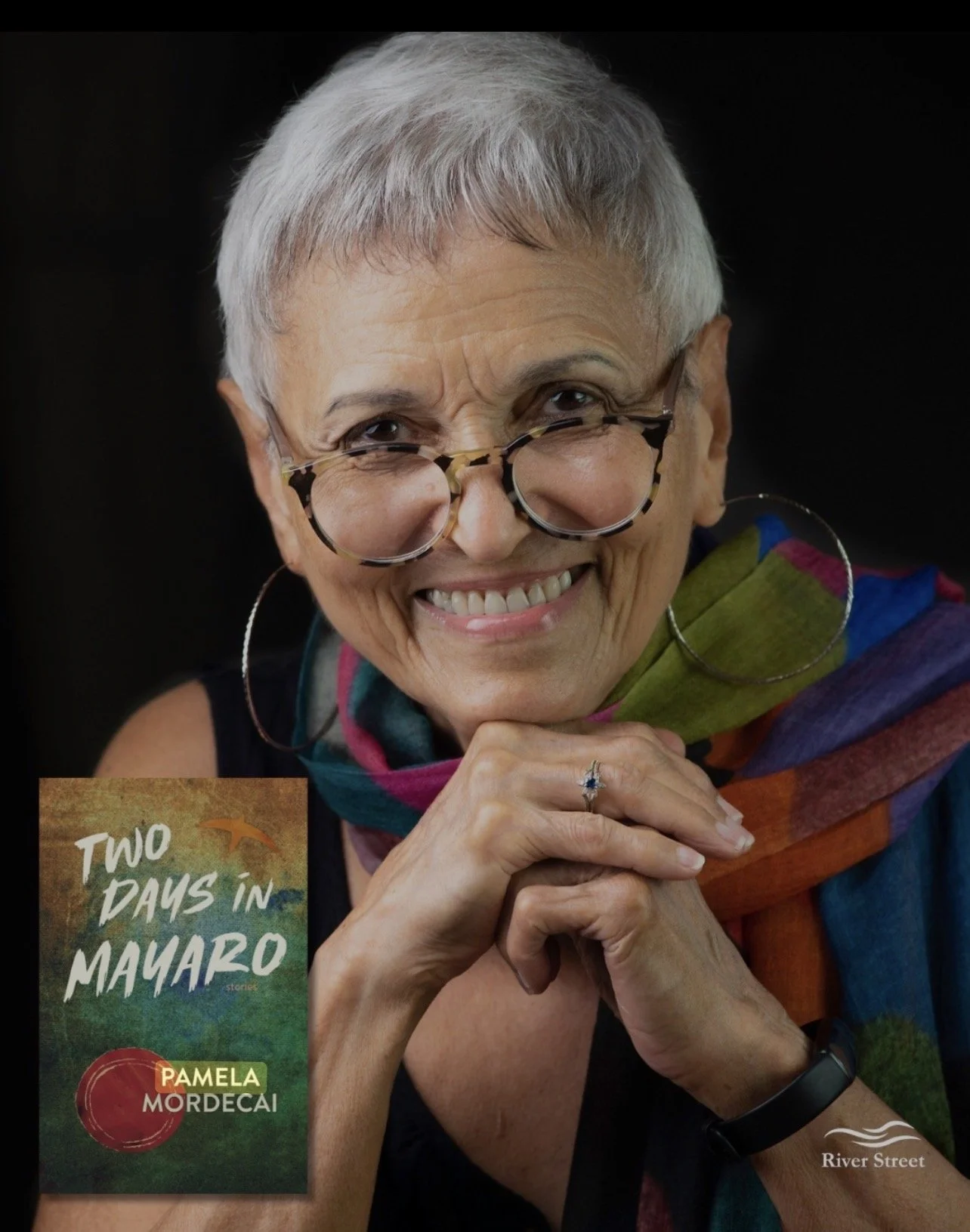
Pamela Mordecai
About Two Days in Mayaro by Pamela Mordecai (Goose Lane Editions):
Only two months in Toronto, a young man gets in trouble at school for being restless and disruptive. A stone-throwing duppy smashes an elderly couple’s car window as they drive past a graveyard. An 80-year-old woman goes to great lengths to get the sugar needed to bake a cake for a soon-to-be-arriving visitor.
Two Days in Mayaro brings together a new collection of stories that showcases the astonishing range and depth of Pamela Mordecai’s writing. Set largely in the Jamaican diaspora, Mordecai’s stories are alive with sound and often driven by dazzling yet subtle reimaginings of lore, ancestry, and history.
Mordecai’s characters cope with the universal experiences of birth and death, joy and betrayal, reckoning with both their present and past. In this multidimensional universe, Mordecai mixes Jamaican Patwa with standard English and profanity with reverence, making her characters all the more real by introducing uncanny detail at just the right moment or by turning confusion on its head to make us laugh.
Pamela Mordecai has published poetry, fiction, plays, anthologies and textbooks for children and adults. The Guardian’s Tony Mitton said her "Caribbean Counting Poem" was one of the "Top Ten [children’s] Poems to Remember and Recite," alongside poetry by Robert Louis Stevenson E. V. Rieu, Charles Causley and Walter de la Mere. This child's sensibility infuses her writing with what Jim Bartley of the Globe andMail called "an unexpected yet highly fluid mix of picaresque humour and unsparing human observation." The jury for the Atwood Gibson Writers' Trust Fiction Prize for which she was shortlisted in 2015, described her novel, Red Jacket, as "a bawdy meditation on storytelling and the art of writing.” Born in Kingston, Jamaica, she often writes in Jamaican Patwa or Patwa-inflected English. Pamela lives in Toronto.