

BLOG
Power Q & A with Brit Griffin
It is maybe odd to only write about where I live — all four of my novels are set in and around Cobalt, and most of my musings & reflections are also generated from this landscape. Odd maybe, but I feel a sense of the imperative to pay attention to the land I inhabit. Scrappy and used up as it is, and still showing the scars of short-lived but hyper-industrial activity, it is a place worth seeing, as in discovering the minutiae, the magic, the vulnerabilities, and the joy, in and of and around this place that I inhabit. It seems to me now obvious, though I wish I had seen it sooner in my life, that any hope we have of being better, of finding a way of being in the world that is non-destructive, lies in seeking atonement from the land we inhabit, its creatures and beings, wherever that happens to find us.
Q: In The Haunting of Modesto O’Brien, the setting seems very important to the story, seems very grounded in a particular place. Why set it in the real-life town of Cobalt?
A: It is maybe odd to only write about where I live — all four of my novels are set in and around Cobalt, and most of my musings & reflections are also generated from this landscape. Odd maybe, but I feel a sense of the imperative to pay attention to the land I inhabit. Scrappy and used up as it is, and still showing the scars of short-lived but hyper-industrial activity, it is a place worth seeing, as in discovering the minutiae, the magic, the vulnerabilities, and the joy, in and of and around this place that I inhabit. It seems to me now obvious, though I wish I had seen it sooner in my life, that any hope we have of being better, of finding a way of being in the world that is non-destructive, lies in seeking atonement from the land we inhabit, its creatures and beings, wherever that happens to find us.
Because it seems to me that the land teaches us things that we have forgotten. But what happens when we are dislocated, removed, moved, from the place that was the homeland of our people — when a person is severed from their connection to their homeland? If this tracery of wisdom and old knowledge comes from a relationship with the land, from understanding and being guided by these age-old traditions and stories and lore, how does one get their moral bearings without them? That is what I was trying to think about in The Haunting of Modesto O’Brien.
For most of us in this country, we are not in our homelands. Where I live is the traditional territory of Timiskaming First Nation, an Algonquin community who have been here for thousands of years. This is their homeland. Their stories and their wisdoms travel through the treetops, glide through the deep waters, live in the rocks. They are not mine. I can learn from, and be respectful, yes, but they are not mine to browse and select from, to pick and choose from. So even as I live here, even as I nurture my ability to know and respect this place, there is a foreignness to it all, an outofplaceness that I try to understand through in my writing. Forge a hybrid? Start from scratch? Not sure, but I keep thinking and writing, because to me it is one of the most important, what? Quests? Maybe, sounds old, fairy tale borne. Maybe that is the word. A quest for atonement across the real/imagined/blurred landscape that I travel every day.
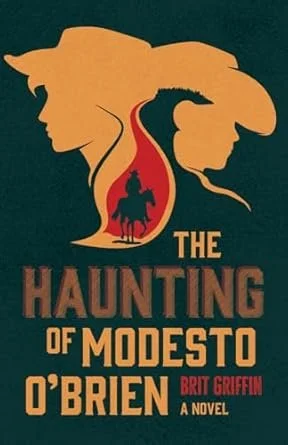
The Haunting of Modesto O’Brien by Brit Griffin, published by Latitude 46 Publishing.
About The Haunting of Modesto O’Brien:
A gothic tale from deep within the boreal forest…
Violence and greed have intruded into a wild and remote land. It’s 1907, and silver fever has drawn thousands of men into a fledgling mining camp in the heart of the wilderness. Modesto O’Brien, fortune-teller and detective, is there too - but he isn’t looking for riches. He’s seeking revenge.
O’Brien soon finds himself entangled with the mysterious Nail sisters, Lucy and Lily. On the run from their past and headed for trouble, Lily turns to O’Brien when Lucy goes missing. But what should have been a straightforward case of kidnapping pulls O’Brien into a world of ancient myths, magic, and male violence.
As he searches for Lucy, O’Brien fears that dark forces are emerging from the ravaged landscape. Mesmerized by a nightmarish creature stalking the wilderness, and haunted by his past, O’Brien struggles to maintain his grip on reality as he faces hard choices about loyalty, sacrifice, and revenge.
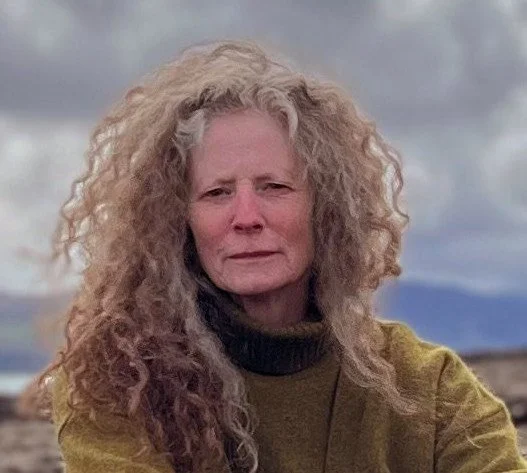
Author Brit Griffin.
About Brit Griffin:
Brit Griffin is the author of the climate-fiction Wintermen trilogy (Latitude 46) and has written essays, musings, and articles for various publications. Griffin spent many years as a researcher for the Timiskaming First Nation, an Algonquin community in northern Quebec. She lives in Cobalt, northern Ontario, where she is the mother of three grown daughters. These days, she divides her time between writing and caring for her unruly yard.

Power Q & A with Melanie Schnell
Several years ago the idea of what exists beneath the ground, beneath our feet, began to worry itself away in my brain. It all began with learning about the scores of indigenous children who died at the Residential Schools. Then I read more stories of mass graves being unearthed, such as hundreds of infant remains at a former home for unwed mothers in Ireland, and a mass grave recently discovered in Syria from Assad’s crackdown on protestors.
Q: What gave you the idea to include a tree as a central character in your novel, The Chorus Beneath Our Feet?
Several years ago the idea of what exists beneath the ground, beneath our feet, began to worry itself away in my brain. It all began with learning about the scores of Indigenous children who died at the Residential Schools. Then I read more stories of mass graves being unearthed, such as hundreds of infant remains at a former home for unwed mothers in Ireland, and a mass grave recently discovered in Syria from Assad’s crackdown on protestors.
Then I started reading books about trees and their root systems, and the massive and complex worlds of fungi, and how without subterranean fungi, we wouldn’t exist. Nothing would. I thought about all the skeletons—human and animal and insect—trillions of them, that lay deep in the ground, along with the fungi and soil and clay, and insects and moss and the massive root systems of plants and trees. And how all of this connects us to our past, and the horrors that lay beneath us as we walk above it on our bipedal bodies, trying to survive in a fleeting, precarious world.
The more I learned about trees, and how they communicate, the more the central tree in the novel—which had been there from the beginning, from the first image I had of the story—clarified. What if what was beneath us could speak? Who or what could be that vessel, who or what could act as their voice?
I knew this particular story wouldn’t be complete unless the tree was able to speak to its own stories of the past, in an attempt to complete a cycle of sorts between the present of the novel and a difficult chapter of our human history.
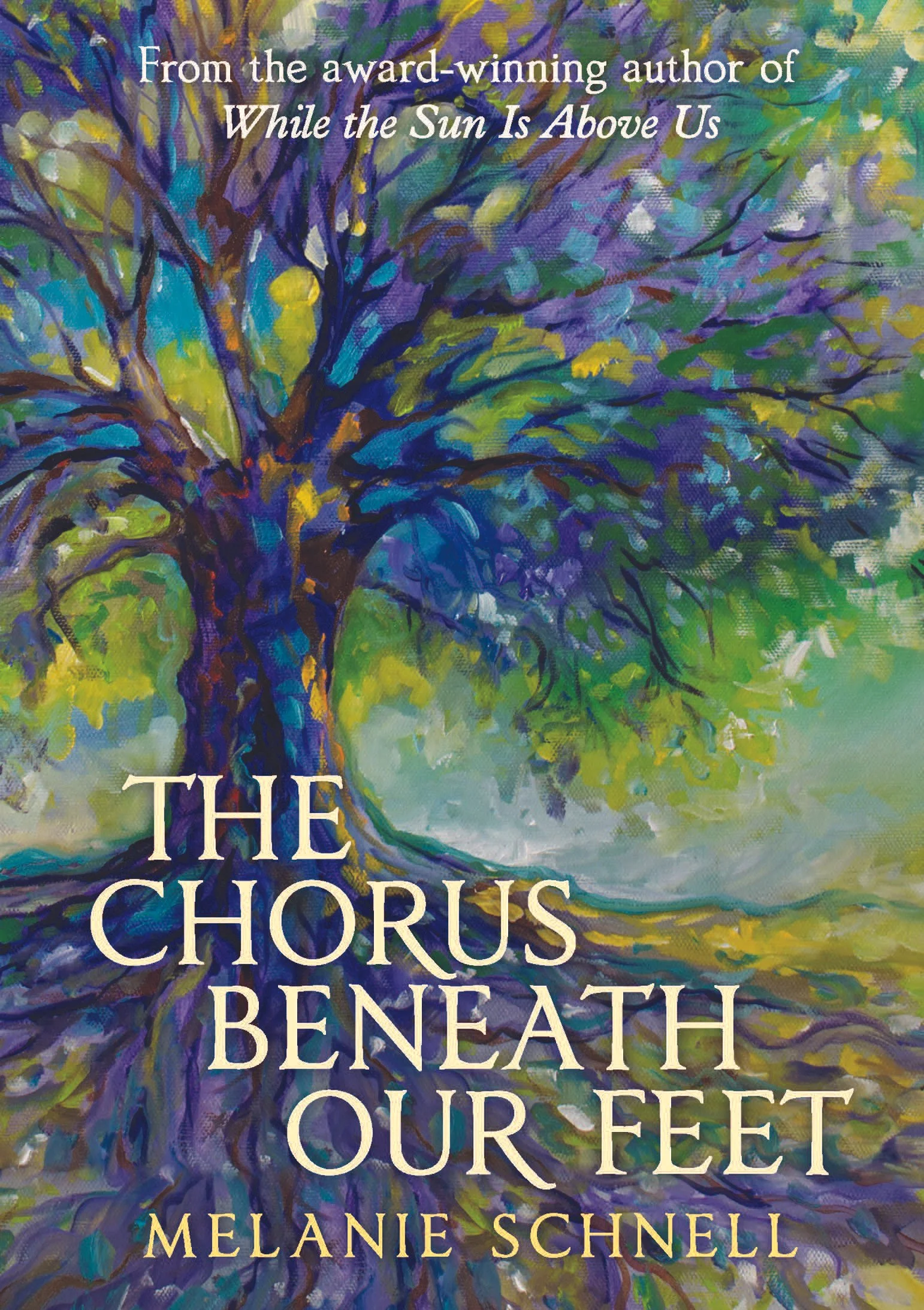
The Chorus Beneath Our Feet by Melanie Schnell, published by Radiant Press.
More about The Chorus Beneath Our Feet:
A grief-stricken soldier accompanies his best friend's body home after eight years away, only to find his mute sister, Mary, missing and wanted for questioning by the police in the murder of an infant in the city's central park. As Mary's life hangs in the balance, Jes must follow the obscure clues she has left behind, the only means to find her and absolve her of wrongdoing. In his labyrinthine search, the mystery of the park's infamous Harron tree and its connection to his sister, and their community, is slowly revealed.

Author Melanie Schnell
About Melanie Schnell:
Melanie Schnell’s novel, While the Sun is Above Us, was shortlisted for The Fiction Award and Book of the Year award and won the Saskatchewan First Book Award and The City of Regina Award in 2013. The novel has been listed as part of the ELA A30 curriculum in both Public and Catholic schools across Saskatchewan. Melanie has published long and short fiction, creative nonfiction, and poetry. Her fiction placed second in the City of Regina Awards in 2010 and 2017. She is currently Assistant Professor of Creative Writing, Rhetoric and Composition at the University of Regina. She lives in Regina, Saskatchewan.

Power Q & A with Aamir Hussain
The core inspiration of the story does come from my lived experience of coming from a family of Muslim women who are incredibly accomplished in many different fields and my attempt to reconcile this with the image of my faith in the West of being incredibly misogynistic and oppressive towards women. An image that has been a part of Western culture for hundreds of years but came into prominence as a part of the incessant drumbeats successfully justifying wars against Muslim Majority countries for the past few decades.
Q: In your novel, Under the Full and Crescent Moon (Dundurn Press, September 23, 2025) you have a very high concept of a Muslim Matriarchy. How important is that to the story?
A: The core inspiration of the story does come from my lived experience of coming from a family of Muslim women who are incredibly accomplished in many different fields and my attempt to reconcile this with the image of my faith in the West of being incredibly misogynistic and oppressive towards women. An image that has been a part of Western culture for hundreds of years but came into prominence as a part of the incessant drumbeats successfully justifying wars against Muslim Majority countries for the past few decades.
Much of the reading and research into Islam and the mechanics of Islamic Law (Sharia) I did was to delve into what it is about Islam that can allow both of these very different realities to exist simultaneously, especially since I did grow up in Saudi Arabia in the 1980's and early 90's which did hew very close to Western misogynistic stereotypes of Islamic society. I've always been very comfortable with the idea that there exist very different interpretations of Islam and as my conviction grew that the faith itself is able to accommodate even something as unintuitive as a matriarchy, the seeds of the story were firmly planted
But having done the research and having used it to create the setting and the core conflicts that drive the story, it is the characters that I have grown to view as the most important. Their triumphs, their failures, their strengths and flaws are what I have been most honoured to have attempted to capture. More than even the accuracy of the theology and history that I built the world on, I am worried about how believable the women are that I strived to portray in the pages of the novel. I want the growth of Khadija, the main character, from a fearful introvert to a fierce defender of her society to be relatable. I want her mentors, her rivals, her friends all to feel real.
I have been blessed to have had early readers, first among my circle of family and friends and, later, in a wider community of accomplished and talented editors and authors, and every bit of praise from the women among them has been an unimaginable source of relief.

Under the Full and Crescent Moon by Aamir Hussain (Dundurn Press, 2025)
About Under the Full and Crescent Moon:
In a battle of words and beliefs, a young woman must defend her city against zealotry during the Islamic Golden Age.
After his long-time scribe retires, Khadija’s father, the city’s leading jurist, offers his introverted daughter the opportunity to take on the role of his assistant. In accepting, Khadija is thrust into her community, the medieval hilltop city of Medina’tul-Agham, where she, as a motherless young woman, has spent little time. Led by Imam Fatima and guided by the Circle of Mothers, it is a matriarchy — the only one in the empire. Though forced to set aside her quiet life among the books and parchments of her family home, Khadija thrives, finding her power and place in the world with the support of her new friends and strong female mentors.
Yet Khadija’s idyllic new life is shattered when fanatical forces weaponize Sharia law to threaten the very fabric of the society. Using only the power of her parchment and quill, Khadija must win the support of the people and write fatwas to fight against injustice, or the peace and prosperity of her city will be nothing more than a footnote in the annals of history.

Aamir Hussain
About Aamir Hussain:
Aamir Hussain was born into a family of strong women in Pakistan, grew up in Saudi Arabia, and moved to Canada when he was fifteen years old. He works in the tech sector in Toronto. Under the Full and Crescent Moon is his debut novel. He lives in Milton, Ontario.

Power Q & A with Karen Smythe
y novel began as a book about the hidden lives of wealthy retired people living in a fictional small town in Ontario that had transitioned from agricultural to a winery- and tourist-based economy. When one character with a past in wartime Germany emerged, threads opened up that I turned into storylines about the responsibility to remember and be accountable for atrocities in World War 2.
Q: Why did you decide to write a story about the Holocaust in Norway in your novel, A Town with No Noise (Palimpsest Press, 2025)?
A: My novel began as a book about the hidden lives of wealthy retired people living in a fictional small town in Ontario that had transitioned from agricultural to a winery- and tourist-based economy. When one character with a past in wartime Germany emerged, threads opened up that I turned into storylines about the responsibility to remember and be accountable for atrocities in World War 2.
My narrator is a young woman, Sam, whose ancestry is Norwegian, and after her working visit to the small town ends (she is there to write an article on tourism in the area), her focus shifts to another small town, this one in Occupied Norway. Sam learns about her extended family’s experience there under Nazi occupation—of which she knew nothing until now—and decides to write about it and post what she finds on her blog. Not many people know about what happened in Norway during and after World War 2: that there was a Jewish population there that was all but decimated; that children of German soldiers and Norwegian mothers were treated horribly; and that there was a level of complicity with which the country is still coming to terms. Sam’s character evolves as her knowledge of this history and her family’s role in it grows.
There are two Parts to the book, linked by the first-person narrator Sam; the related themes about privilege, power, history, and remembering and writing about the past also tie the two Parts together. In Part 1, I also introduced both a third-person narrator—who provides vignettes about the residents of the small town that Sam visits—as well as an omniscient narrative voice that speaks via footnotes. These techniques not only provide the reader with windows on the town and on the people that Sam doesn’t have access to, but also emphasize her unreliability as a narrator and the fact that individual perspectives (and what we think we know is true) are limited. In Part 2, Sam herself—an aspiring researcher and historian—uses footnotes in her writings to expand upon the historical research she is conducting about her family and about the Holocaust and the Norwegian Jewish population.
One of the key themes of the novel is that there is no single truth about the historical past, that it takes listening to many voices to piece together a version of truth that is, unavoidably, a mere representation of the past. So using footnotes and also interviews and other narrative forms within the novel allowed me to enact the theme, formally. This is the power of fiction, I believe—to provide multiple perspectives and stories that merge the personal and social threads with the historical, thereby using the imagination to garner empathy and a broader understanding of the human experience.

A Town with No Noise by Karen Smythe (Palimpsest Press, 2025)
About A Town with No Noise:
Samara and J., a struggling young couple, are off to J.’s birthplace, Upton Bay, a small town turned upscale theatre and winery destination. Sam has been hired by an editor friend to write a promotional piece about the place while she and J. stay with his grandfather Otto, a prominent businessman in his day.
But their visit does not go as planned. Sam’s explorations of Upton’s tourist attractions lead her to ugly truths behind the quaint little town’s façade—discoveries that are counterpointed with vignettes of the town’s wealthy, elderly ruling class, painting a different picture than the one Sam’s friend expects her to provide. Tensions between Sam and J. worsen as J.’s true nature emerges and Sam begins to question both his values and his family’s past—especially after Otto tells them stories about his time as a German soldier during WW2.
Back in the city, Sam’s opinions and judgments about what is right and wrong are tested when a shocking truth surfaces about her grandmother’s flight from Norway after the war, profoundly changing Sam’s understanding of who she is and who she wants to become.
In A Town with No Noise, fact and fiction combine to ask difficult questions about the communities we build, questions that are as relevant today as ever: Who stays? Who is chased away? And who decides?

ABOUT KAREN SMYTHE:
Karen Smythe is the author of the novel This Side of Sad (Goose Lane Editions, 2017), the story collection Stubborn Bones (Polestar/Raincoast, 2001), and the ground-breaking critical study Figuring Grief: Gallant, Munro, and the Poetics of Elegy (McGill-Queen’s U.P., 1992). In the 90s, she was the guest fiction editor for The Wascana Review and fiction editor for the Pottersfield Portfolio, and she also guest edited the Michael Ondaatje issue of Essays on Canadian Writing. Several of Karen’s short stories have appeared in Canadian literary journals including The Fiddlehead, Grain, and The Antigonish Review. A Town with No Noise is her second novel. She currently lives in Guelph, Ontario

Power Q & A with Bruce Hunter
Frontenac House Press has published a gorgeous reissue of Bruce Hunter’s award-winning novel of love, disability, and wildness, In the Bear’s House(May 23, 2025.)
Set in 1960s Calgary and Alberta ‘s backcountry, this reissue of In the Bear’s House tells the story of a creative young mother, Clare Dunlop, raising her deaf son against the insurmountable odds of poverty, mental illness and hardship. In the Bear’s House is ultimately about listening to the wild and the wilderness, and what we lose when it’s gone.
We are honoured to have Bruce join us to answer a question about the rebirth of his much-loved story.
Frontenac House Press has published a gorgeous reissue of Bruce Hunter’s award-winning novel of love, disability, and wildness, In the Bear’s House (May 23, 2025.)
Set in 1960s Calgary and Alberta ‘s backcountry, this reissue of In the Bear’s House tells the story of a creative young mother, Clare Dunlop, raising her deaf son against the insurmountable odds of poverty, mental illness and hardship. In the Bear’s House is ultimately about listening to the wild and the wilderness, and what we lose when it’s gone.
We are honoured to have Bruce join us to answer a question about the rebirth of his much-loved story.
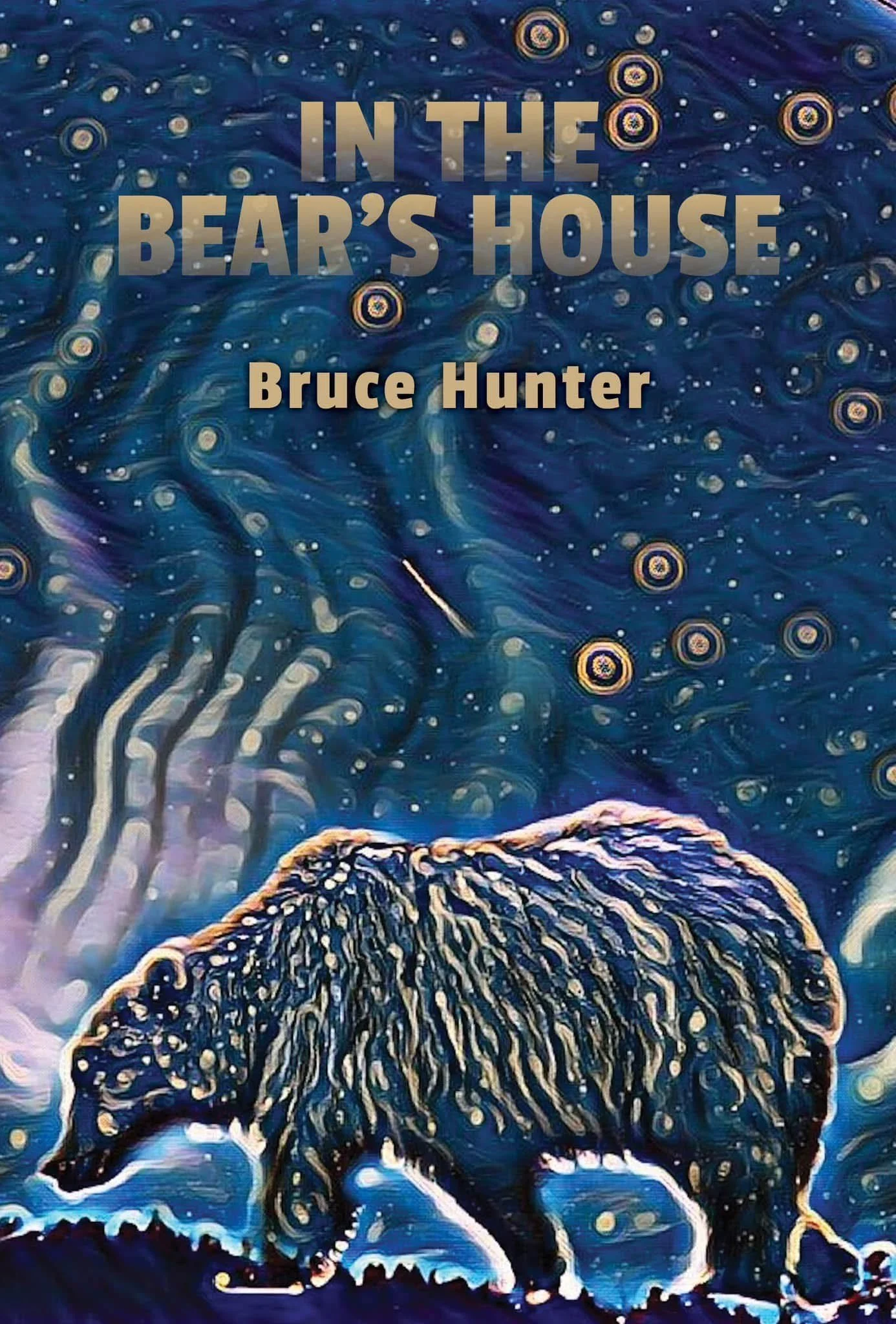
In the Bear’s House by Bruce Hunter
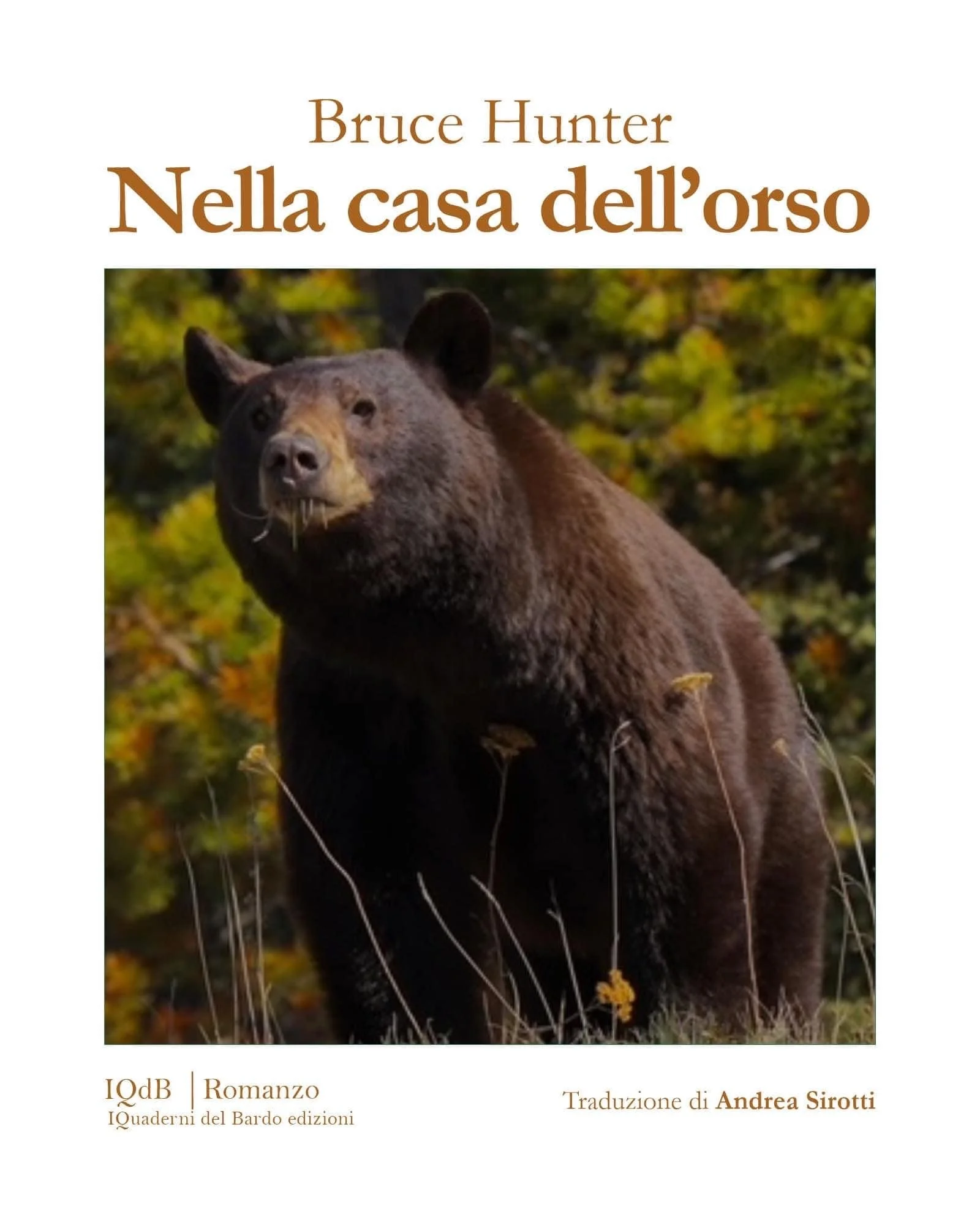
Nella casa dell’orso by Bruce Hunter, translated by Andrea Sirotti, published by iQdB eidizioni.
Q: What has it been like to reissue In the Bear’s House and have it translated?
A: As a mature writer on the eve of his 73rd birthday on May 21, I’m gobsmacked to have in my hands an Italian translation by iQdB eidizioni, and a sparkling new edition by Calgary’s Frontenac House. What a validation of my life’s work. Which I hope is an inspiration to all writers, young and old. To borrow a baseball metaphor, it’s all about staying in the game, whether you strike out or not, and keep getting up to bat.
Both publishers lavished such love on their books, inside and out. Both books radiate that level of professionalism and care.
I first published In the Bear’s House in 2009. It sold well and won an award at the Banff Mountain Film and Book Festival where it was deemed a mountain classic. But the publisher disappeared as did my edited galleys. I gave up all hope of ever seeing it in print again. Then my neighbor, the gifted poet and editor, Elana Wolff read It. It speaks to our times, she said. You must get it out there.
A cousin in IT scanned the hard copy and created a new submissible file. I showed it to the brilliant editor Micheline Maylor-Kovitz at Frontenac House in Calgary who took it to her bosses. There, Micheline, Terry Davies, and Neil Pretunia helped me take In the Bear’s House to a whole new level.
In the meantime, my Italian publisher brought out a translation as Nella casa dell’orso (literally, ln the House of the Bear). In April, I did a four-city tour to Lecce, Copertino, Florence, and Trieste, where the audiences’ enthusiastic response showed the story of a creative young mother and her deafened son in 1960s Alberta transcends time, language, and culture.
I look forward to the Calgary launch on May 23. What a birthday gift. From the bottom of my mended heart, gratitude to every one of you who got me here.
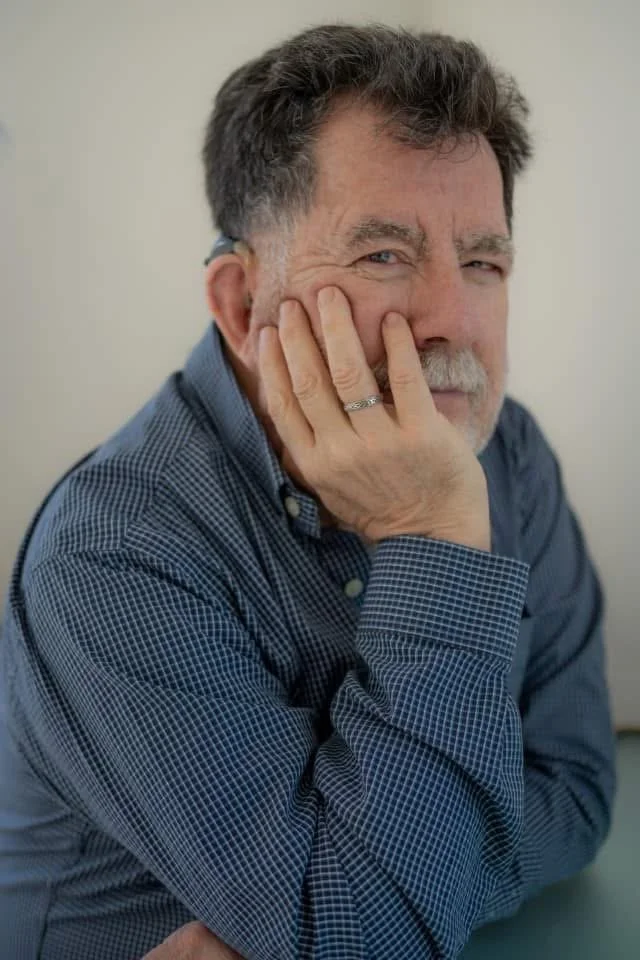
Bruce Hunter
About Bruce Hunter:
Bruce Hunter is a writer, editor, speaker, and mentor. In 2024, his novel, Nella casa dell’orso, was published in Italy by iQdB edizioni. In 2023, his poetry collection, Galestro, was published in Italy, following the release there in 2022 of A Life in Poetry, Poesie scelteda Two O’clock Creek, also by iQdB edizioni. 1n 2021, his memoir essay, “This is the Place I Come to in My Dreams” was shortlisted for the Alberta Magazine Publishers’ Awards. In 2024, his long poem “Dark Water” from Galestro won Gold for poetry for the Alberta Magazine Publishers’ Awards. And he is a proud new grandfather of Alice, Julian and Lucas.
Born in Calgary, Alberta, Bruce was deafened as an infant and afflicted with low vision much of his adult life. He grew up in the working-class neighbourhood of Ogden in the shadow of Esso’s Imperial Oil Refinery and now decommissioned Canadian Pacific Railway’s Ogden Shops. Calgary is located on Treaty Seven lands, in the traditional territories of the Blackfoot Confederacy (Siksika, Kainai, Piikani), the Tsuut’ina, the îethka Nakoda Nations (Chiniki, Bearspaw, Goodstoney), the Otipemisiwak Métis Government (Districts 5 and 6).
In his early teens Bruce discovered writing, for there he could hear everything – and be heard. After high school, he worked for ten years as a labourer, equipment operator, Zamboni driver, and completed his technical education and apprenticeship as a gardener and arborist. In his late twenties, his published poetry won him a scholarship to the Banff School of Fine Arts to study with novelist W.O. Mitchell and poet Irving Layton. From there he went onto York University to study film and literature and taught in the creative writing department before landing a position at Seneca College.
His poetry, fiction, reviews, interviews, and creative nonfiction have appeared in over 90 blogs, journals and anthologies internationally in Italy, Canada, China, India, Romania, the U.K. and the U.S.
Bruce has authored seven poetry books, as well as the best-selling CBC Radio-produced 1996 short story collection, Country Music Country (the third edition, the Reboot appeared in 2018).
In 2009, In the Bear’s House, won the Canadian Rockies Prize at the Banff Mountain Book and Film Festival. In 2010, his book Two O’clock Creek – poems new and selected, won the Acorn-Plantos Peoples’ Poetry Award for Canada.
Bruce was the 2017 Author in Residence for Calgary Public Library. His past residencies include the Banff Centre, Deaf and Hear Alberta, Richmond Hill Public Library, University of Toronto, Mount Royal University, and many others across Canada.
Bruce is an associate member of the Association of Italian Canadian Writers, a full member of the Canadian Authors Association, a life member of the Canadian Hard of Hearing Association (C.H.H.A.), and the Canadian National Institute for the Blind (C.N.I.B.), as well as long-time member of the League of Canadian Poets, the Writers’ Union of Canada, and the Writers’ Guild of Alberta. For more than three decades, Bruce has championed accessibility for those with vision and hearing loss.

Power Q & A with Caitlin Galway
The longer form definitely comes naturally to me, though it’s not something I set out to do, so much as a reflection of how I think. I’ve learned to see my own intuitive approaches more clearly, and how to amplify or deconstruct them, challenge or upend them. Something particular that I’ve realized is that as I write, everything is somewhat of a spiderweb; ideas emerge connected to several other ideas, which connect to one layer, then another, and so on. It’s part of what feeds me electricity as a writer: this instantaneous, sparking interaction between narrative, symbolism, philosophy, psychological and emotional interiority, history, and commentary, and I find that it means the story will probably need more breathing room.

Q: Your short fiction collection, A Song for Wildcats (Dundurn Press, 2025), is remarkable in many regards: it has lilting, poetic language, haunting and gorgeous imagery, and—what we want to ask you about today—an unusual structure. Your book is made up of five longer stories, as opposed to many shorter ones. Would you tell us about writing longer form short fiction?
A: The longer form definitely comes naturally to me, though it’s not something I set out to do, so much as a reflection of how I think. I’ve learned to see my own intuitive approaches more clearly, and how to amplify or deconstruct them, challenge or upend them. Something particular that I’ve realized is that as I write, everything is somewhat of a spiderweb; ideas emerge connected to several other ideas, which connect to one layer, then another, and so on. It’s part of what feeds me electricity as a writer: this instantaneous, sparking interaction between narrative, symbolism, philosophy, psychological and emotional interiority, history, and commentary, and I find that it means the story will probably need more breathing room.
“The Lyrebird’s Bell”, for example, on a narrative level is a story about two young girls and the absorbing, even disturbing bond they form in response to isolation and familial abuse. There’s a prominent layer exploring the complexities of human relationships, and another navigating grief, trauma, and the impulse to retain some shred of love. However, it’s also a story about essentialism, and how metaphysical reflection might manifest in the mind of a child desperate to make sense of the inexplicable. It’s also about imagination, both as joy and necessity, and why it’s so often steeped in myth.
Those layers need to engage with one another thoughtfully and meaningfully, and as a result, I usually feel a certain elasticity to a story. It keeps lengthening because it demands more space to explore itself, and for me, it’s a matter of being receptive and listening.
More about A Song for Wildcats:
Infatuation and violence grow between two girls in the enchanting wilderness of postwar Australia as they spin disturbing fantasies to escape their families. Two young men in the midst of the 1968 French student revolts navigate — and at times resist — the philosophical and emotional nature of love. An orphaned boy and his estranged aunt are thrown together on a quiet peninsula at the height of the Troubles in Ireland, where their deeply rooted fear attracts the attention of shape-shifting phantoms of war.
The five long-form stories in A Song for Wildcats are uncanny portraits of grief and resilience and are imbued with unique beauty, insight, and resonance from one of the country's most exciting authors.

About Caitlin Galway:
Caitlin Galway is the author of the novel Bonavere Howl and the forthcoming short story collection A Song for Wildcats. Her work has appeared in Best Canadian Stories 2025, EVENT, Gloria Vanderbilt's Carter V. Cooper Anthology, House of Anansi's The Broken Social Scene Story Project (selected by Feist), The Ex-Puritan as the 2020 Morton Prize winner (selected by Pasha Malla), Riddle Fence as the 2011 Short Fiction Contest winner, and on CBC Books as the Stranger than Fiction Prize winner (selected by Heather O'Neill).

Power Q & A with Saad Omar Khan
Saad Omar Khan’s gorgeous novel, Drinking the Ocean (Wolsak & Wynn, May 6, 2024) is a tender and absorbing story of love, family, and the complexities facing Muslims in the West. It has been named one of the 49th Shelf’s most anticipated fiction books of the year and is also one of the most anticipated books within our community.
Moving between Lahore, London, and Toronto, Drinking the Ocean is a story of connections lost and found and of the many kinds of love that shape a life, whether familial, romantic or spiritual.
Saad Omar Khan’s gorgeous novel, Drinking the Ocean (Wolsak & Wynn, May 6, 2025) is a tender and absorbing story of love, family, and the complexities facing Muslims in the West. It has been named one of the 49th Shelf’s most anticipated fiction books of the year and is also one of the most anticipated books within our community.
Moving between Lahore, London, and Toronto, Drinking the Ocean is a story of connections lost and found and of the many kinds of love that shape a life, whether familial, romantic or spiritual.
We are delighted to welcome Saad to our Power Q & A to answer a quick question about his book.
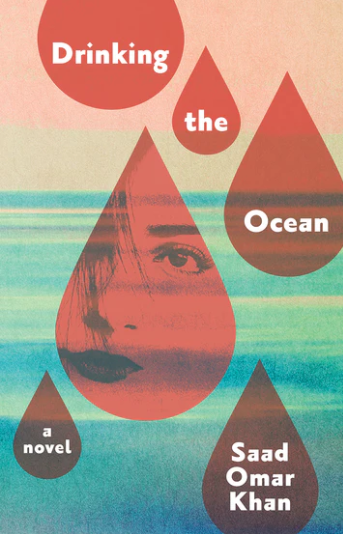
Drinking the Ocean by Saad Omar Khan
Q: Would you describe for readers how your book challenges Western perceptions of Muslim life?
A: One of the biggest challenges when representing the lives of Muslims living in the West is being forced to see Muslims only through the lens of geopolitics or the pathologies that non-Muslims assume is typical of Muslim communities.
Drinking the Ocean was, in a way, my rejoinder to this framework. In the course of writing this novel, it was often suggested to me that adding in a storyline on terrorism would make the book more marketable. This was well-intentioned advice, given in the context of a post 9/11 world where what is extreme and bloodthirsty had more appeal than a relatively quieter story where the inner lives of Muslim characters takes the centre stage.
Drinking the Ocean was never intended to be a specifically “political” book. It is an unfortunate reality, however, that Muslim identities have become inherently politicized. For years, we were a community seen as problematic, a source of chaos, a potential “fifth column” in the War on Terror, the antithesis of everything the secular, liberal, democratic, progressive West sees itself as.
Even in our current climate, where non-Muslims recognize the presence of Muslims in society more, and where Islamophobia as a form of bigotry is increasingly acknowledged, it still comes across to me that there is little room for representing the interaction of Muslims with their religious background in ways that are not simplistic, or where the Muslim character, in some fit of self-liberation, divorces themselves from the oppressiveness of Islam in favour of the warm, permissive embrace of a Western, non-religious value system.
I was, frankly, completely uninterested in this narrative template. Western literature has a long, rich tradition of characters from the Judeo-Christian tradition having to reconcile their sacred, spiritual identity and the realities of their profane, emotional existence. Their are many examples of this, but one that resonated strongly with me while I was writing Drinking the Ocean was Graham Greene’s The End of the Affair. In it, an atheist character has a passionate extramarital affair with a Catholic woman, who abandons the affair as part of a promise to God that she would leave her lover if it would spare his life during a V-2 rocket attack during the Second World War. At no point did Greene, a Catholic himself, condescend to the religious worldview of any of the characters. At the same time, Greene never hesitated to show his characters, believers or otherwise, as what they were: flawed, complex, nuanced, and all too human in the messiest sense of what being human means.
I use this example to illustrate one objective I had in writing this book. As I stated above, this book wasn’t intented to be specifically political, yet it has a political tone just underneath the surface that comes out subtly, and perhaps unintentionally, on my part. Writing about my characters and their emotional challenges--grief, mental illness, familial strife, and difficulties finding spiritual and worldly love--is a political act. It is my fight against the conventional framing of Muslims solely in terms of geopolitics or conflict. The challenge I hope to pose to the reader is to experience this inner world as the characters would. The only explosions to be witnessed are those that exist solely within the human heart. The ruptures my characters face are no less dramatic for it, and certainly no less compelling, as they speak to all of our desires, our need for connection, and our hope in experiencing life at its most transcendent.
More about Drinking the Ocean:
The day after his thirty-third birthday, Murad spots a familiar face at a crowded intersection in downtown Toronto. Shocked, he stands silently as Sofi, a woman he’d fallen in love with almost a decade ago, walks by holding the hand of a small child. Murad turns and descends the subway steps to return home to his wife as the past washes over him and he is taken back to the first time they met.
As Murad’s and Sofi’s lives touch and separate, we see them encounter challenges with relationships, family and God, and struggle with the complexities facing Muslims in the West. With compassion and elegance, Saad Omar Khan delicately illuminates the arcs of these two haunted lives, moved by fate and by love, as they absorb the impact of their personal spiritual journeys.

Saad Omar Khan
ABOUT THE SAAD OMAR KHAN:
Saad Omar Khan was born in the United Arab Emirates to Pakistani parents and lived in the Philippines, Hong Kong and South Korea before immigrating to Canada. He is a graduate of the University of Toronto and the London School of Economics and has completed a certificate in Creative Writing from the School of Continuing Studies (University of Toronto) where he was a finalist for the Random House Creative Writing Award (2010 and 2011) and for the Marina Nemat Award (2012). In 2019, he was longlisted for the Guernica Prize for Literary Fiction. His short fiction has appeared in Best Canadian Stories 2025 and other publications.

Some thoughts on accuracy and research in historical fiction: A special feature by Tim Welsh
I recently read Robert Penner’s The Dark King Swallows the World, a novel set in Cornwall during World War II. I liked it a lot, and was surprised to learn that a few (of the otherwise uniformly positive) reviews had called it out for a lack of historical accuracy.
My initial response was: who cares? Complaining about historical accuracy in a work of fiction seems, to me, like bragging about being the best at doing homework. Missing the point, a little obnoxious.
I recently read Robert Penner’s The Dark King Swallows the World, a novel set in Cornwall during World War II. I liked it a lot, and was surprised to learn that a few (of the otherwise uniformly positive) reviews had called it out for a lack of historical accuracy.
My initial response was: who cares? Complaining about historical accuracy in a work of fiction seems, to me, like bragging about being the best at doing homework. Missing the point, a little obnoxious.

The Dark King Swallows the World by Robert Penner, published by Radiant Press.
Perhaps I’m being overly defensive here. My debut novel, Ley Lines, (Guernica Editions, 2025) takes place during the Klondike Gold Rush. It’s also full of errors and inaccuracies. And while I haven’t received a ton of feedback on book’s historical fidelity, or lack thereof, I’m sure that a significant portion of historical fiction readers would bristle at the liberties I’ve taken with time and place. (However, there’s only one way to find out: go buy it, please.)
Penner’s book is literary fantasy; Ley Lines I would describe as ‘psychedelic Canadiana,’ though magic realism works, too. Neither is historical fiction in the strictest sense of the word. So what do we, as writers of weird, playful fiction, who work in a historical milieu, owe to the historical record?
I can’t speak for Penner, but for me, the choice of the Klondike as a setting was deeply personal, and not the result of any scholarship on my part. I was inspired by Robert Service’s famous poems, “The Shooting of Dan McGrew” and “The Cremation of Sam McGee” — in particular, the illustrated 80s versions featuring Ted Harrison’s artwork.
Service was a bit of an interloper in the Klondike — he was a banker and a journalist, and he arrived in the Yukon years after the initial rush. Most of his poetry was based on twice-told tales and old prospectors’ lore. So already, we’re at a few degrees of removal from historical accuracy; Harrison, in the 1970s and 1980s, illustrating poems that were themselves based on second- or third-hand accounts of the 1890s gold rush. And me, in 2025, taking that as inspiration. Each step adding another layer of embellishment and idiosyncracy.
Of course you can’t build an entire novel off a few paintings. The weird, fantastic world I wanted to create — like Harrison’s paintings — had to have some basis in reality.

Ley Lines by Tim Welsh, published by Guernica Editons
When I did start doing actual research, I was very adamant that I look to sources offline. This, I felt, was an important strategic decision: as vast as the internet is, it seems to regurgitate the same anecdotes constantly. I would be embarrassed if someone called me out for, say, having a character use the wrong type of drill. But I’d be mortified if someone thought I drew inspiration from a viral post on Reddit.
So, Pierre Burton, to start. Burton’s Klondike: The Last Great Gold Rush, 1896-1899 is the definitive nonfiction account of the era. I knew I would have to make peace with it. I got about 1/3 of the way through, then read selectively when I felt like I needed to know more about a specific town, or topic, etc.
There were things I found myself weirdly hung up on: when did the rivers thaw in the spring of 1901? Could the Pinkertons have made it to the Klondike? Who really shot Soapy Smith?
There were also many things I chose to leave in, despite their anachronism or incongruity with the historical record. (I will leave it to the sleuths in A Writer of History’s readership to ferret these out — which, again, you can do ‘til your heart’s content, once you’ve bought the book.)
But all of these decisions — what to include, what to ignore — were secondary to the larger project of the book. Did it follow its own internal logic? Was the plot consistent with the themes I was interested in? Did the jokes land?
Ultimately, to praise a book for its level of research seems to me to be a bit of a backhanded compliment. Research, and the degree to which we use it or ignore it, is an artistic choice, alongside all the other things that make fiction great: style, plot, character, etc. No amount of research can make up for a book that lacks the other characteristics of great fiction.
That said, I get why people expect some degree of accuracy in historical fiction. One of the joys of a good book is that it takes us to new places — whether it’s Cornwall in WWII, the Yukon at the tail end of the Gold Rush, or somewhere not in the history books at all.
But those places will always exist in tension with reality. Whether or not a book successfully reconciles that tension shouldn’t be the only criteria by which we judge it.
—Tim Welsh
More about Ley Lines:
Set in the waning days of the Klondike Gold Rush, Ley Lines begins in the mythical boom town of Sawdust City, Yukon Territory. Luckless prospector Steve Ladle has accepted an unusual job offer: accompany a local con artist to the unconquered top of a nearby mountain. What he finds there briefly upends the town’s fading fortunes, attracting a crowd of gawkers and acolytes, while inadvertently setting in motion a series of events that brings about the town’s ruin.
In the aftermath, a ragtag group of characters is sent reeling across the Klondike, struggling to come to grips with a world that has been suddenly and unpredictably upturned. As they attempt to carve out a place for themselves, our protagonists reckon with the various personal, historical and supernatural forces that have brought them to this moment.
A wildly inventive, psychedelic odyssey, Ley Lines flips the frontier narrative on its ear, and heralds the arrival of an exciting new voice in Canadian fiction.

Tim Welsh
About Tim Welsh:
Tim Welsh was born in Ithaca, New York in 1980. He was raised in Ottawa, Ontario and attended Queen’s University and Carleton University, graduating with an MA in English Literature. Since then, he’s lived in New York City and Oaxaca, Mexico, played bass in a punk band, and managed a failing art gallery. Tim Welsh lives in Toronto with his wife and two children. Ley Lines is his first novel.