

BLOG

Power Q & A with Aamir Hussain
The core inspiration of the story does come from my lived experience of coming from a family of Muslim women who are incredibly accomplished in many different fields and my attempt to reconcile this with the image of my faith in the West of being incredibly misogynistic and oppressive towards women. An image that has been a part of Western culture for hundreds of years but came into prominence as a part of the incessant drumbeats successfully justifying wars against Muslim Majority countries for the past few decades.
Q: In your novel, Under the Full and Crescent Moon (Dundurn Press, September 23, 2025) you have a very high concept of a Muslim Matriarchy. How important is that to the story?
A: The core inspiration of the story does come from my lived experience of coming from a family of Muslim women who are incredibly accomplished in many different fields and my attempt to reconcile this with the image of my faith in the West of being incredibly misogynistic and oppressive towards women. An image that has been a part of Western culture for hundreds of years but came into prominence as a part of the incessant drumbeats successfully justifying wars against Muslim Majority countries for the past few decades.
Much of the reading and research into Islam and the mechanics of Islamic Law (Sharia) I did was to delve into what it is about Islam that can allow both of these very different realities to exist simultaneously, especially since I did grow up in Saudi Arabia in the 1980's and early 90's which did hew very close to Western misogynistic stereotypes of Islamic society. I've always been very comfortable with the idea that there exist very different interpretations of Islam and as my conviction grew that the faith itself is able to accommodate even something as unintuitive as a matriarchy, the seeds of the story were firmly planted
But having done the research and having used it to create the setting and the core conflicts that drive the story, it is the characters that I have grown to view as the most important. Their triumphs, their failures, their strengths and flaws are what I have been most honoured to have attempted to capture. More than even the accuracy of the theology and history that I built the world on, I am worried about how believable the women are that I strived to portray in the pages of the novel. I want the growth of Khadija, the main character, from a fearful introvert to a fierce defender of her society to be relatable. I want her mentors, her rivals, her friends all to feel real.
I have been blessed to have had early readers, first among my circle of family and friends and, later, in a wider community of accomplished and talented editors and authors, and every bit of praise from the women among them has been an unimaginable source of relief.

Under the Full and Crescent Moon by Aamir Hussain (Dundurn Press, 2025)
About Under the Full and Crescent Moon:
In a battle of words and beliefs, a young woman must defend her city against zealotry during the Islamic Golden Age.
After his long-time scribe retires, Khadija’s father, the city’s leading jurist, offers his introverted daughter the opportunity to take on the role of his assistant. In accepting, Khadija is thrust into her community, the medieval hilltop city of Medina’tul-Agham, where she, as a motherless young woman, has spent little time. Led by Imam Fatima and guided by the Circle of Mothers, it is a matriarchy — the only one in the empire. Though forced to set aside her quiet life among the books and parchments of her family home, Khadija thrives, finding her power and place in the world with the support of her new friends and strong female mentors.
Yet Khadija’s idyllic new life is shattered when fanatical forces weaponize Sharia law to threaten the very fabric of the society. Using only the power of her parchment and quill, Khadija must win the support of the people and write fatwas to fight against injustice, or the peace and prosperity of her city will be nothing more than a footnote in the annals of history.
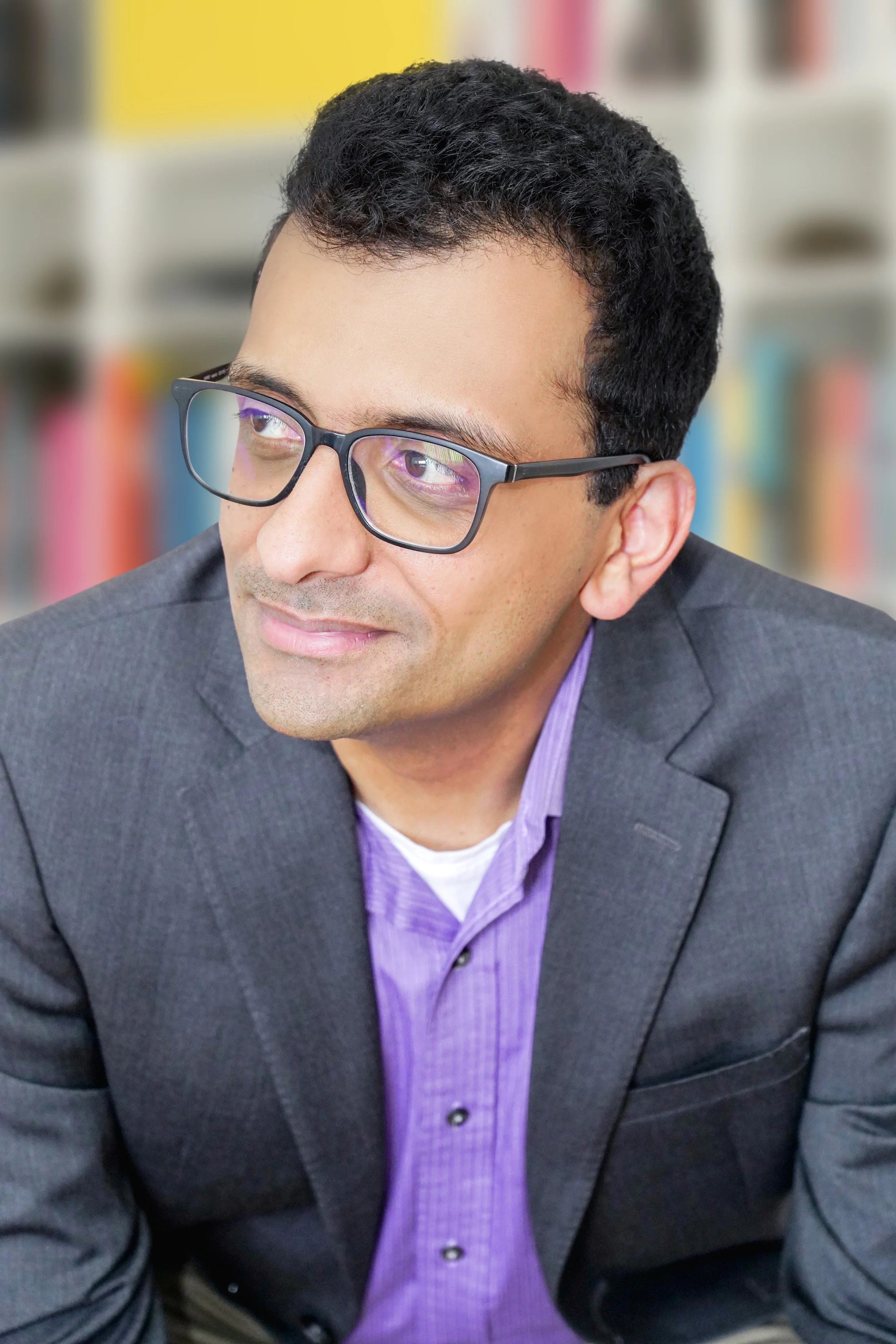
Aamir Hussain
About Aamir Hussain:
Aamir Hussain was born into a family of strong women in Pakistan, grew up in Saudi Arabia, and moved to Canada when he was fifteen years old. He works in the tech sector in Toronto. Under the Full and Crescent Moon is his debut novel. He lives in Milton, Ontario.

Power Q & A with Saad Omar Khan
Saad Omar Khan’s gorgeous novel, Drinking the Ocean (Wolsak & Wynn, May 6, 2024) is a tender and absorbing story of love, family, and the complexities facing Muslims in the West. It has been named one of the 49th Shelf’s most anticipated fiction books of the year and is also one of the most anticipated books within our community.
Moving between Lahore, London, and Toronto, Drinking the Ocean is a story of connections lost and found and of the many kinds of love that shape a life, whether familial, romantic or spiritual.
Saad Omar Khan’s gorgeous novel, Drinking the Ocean (Wolsak & Wynn, May 6, 2025) is a tender and absorbing story of love, family, and the complexities facing Muslims in the West. It has been named one of the 49th Shelf’s most anticipated fiction books of the year and is also one of the most anticipated books within our community.
Moving between Lahore, London, and Toronto, Drinking the Ocean is a story of connections lost and found and of the many kinds of love that shape a life, whether familial, romantic or spiritual.
We are delighted to welcome Saad to our Power Q & A to answer a quick question about his book.
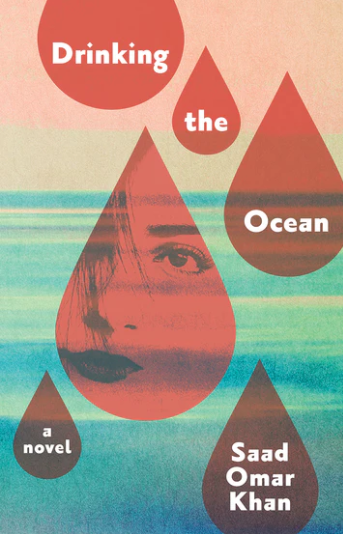
Drinking the Ocean by Saad Omar Khan
Q: Would you describe for readers how your book challenges Western perceptions of Muslim life?
A: One of the biggest challenges when representing the lives of Muslims living in the West is being forced to see Muslims only through the lens of geopolitics or the pathologies that non-Muslims assume is typical of Muslim communities.
Drinking the Ocean was, in a way, my rejoinder to this framework. In the course of writing this novel, it was often suggested to me that adding in a storyline on terrorism would make the book more marketable. This was well-intentioned advice, given in the context of a post 9/11 world where what is extreme and bloodthirsty had more appeal than a relatively quieter story where the inner lives of Muslim characters takes the centre stage.
Drinking the Ocean was never intended to be a specifically “political” book. It is an unfortunate reality, however, that Muslim identities have become inherently politicized. For years, we were a community seen as problematic, a source of chaos, a potential “fifth column” in the War on Terror, the antithesis of everything the secular, liberal, democratic, progressive West sees itself as.
Even in our current climate, where non-Muslims recognize the presence of Muslims in society more, and where Islamophobia as a form of bigotry is increasingly acknowledged, it still comes across to me that there is little room for representing the interaction of Muslims with their religious background in ways that are not simplistic, or where the Muslim character, in some fit of self-liberation, divorces themselves from the oppressiveness of Islam in favour of the warm, permissive embrace of a Western, non-religious value system.
I was, frankly, completely uninterested in this narrative template. Western literature has a long, rich tradition of characters from the Judeo-Christian tradition having to reconcile their sacred, spiritual identity and the realities of their profane, emotional existence. Their are many examples of this, but one that resonated strongly with me while I was writing Drinking the Ocean was Graham Greene’s The End of the Affair. In it, an atheist character has a passionate extramarital affair with a Catholic woman, who abandons the affair as part of a promise to God that she would leave her lover if it would spare his life during a V-2 rocket attack during the Second World War. At no point did Greene, a Catholic himself, condescend to the religious worldview of any of the characters. At the same time, Greene never hesitated to show his characters, believers or otherwise, as what they were: flawed, complex, nuanced, and all too human in the messiest sense of what being human means.
I use this example to illustrate one objective I had in writing this book. As I stated above, this book wasn’t intented to be specifically political, yet it has a political tone just underneath the surface that comes out subtly, and perhaps unintentionally, on my part. Writing about my characters and their emotional challenges--grief, mental illness, familial strife, and difficulties finding spiritual and worldly love--is a political act. It is my fight against the conventional framing of Muslims solely in terms of geopolitics or conflict. The challenge I hope to pose to the reader is to experience this inner world as the characters would. The only explosions to be witnessed are those that exist solely within the human heart. The ruptures my characters face are no less dramatic for it, and certainly no less compelling, as they speak to all of our desires, our need for connection, and our hope in experiencing life at its most transcendent.
More about Drinking the Ocean:
The day after his thirty-third birthday, Murad spots a familiar face at a crowded intersection in downtown Toronto. Shocked, he stands silently as Sofi, a woman he’d fallen in love with almost a decade ago, walks by holding the hand of a small child. Murad turns and descends the subway steps to return home to his wife as the past washes over him and he is taken back to the first time they met.
As Murad’s and Sofi’s lives touch and separate, we see them encounter challenges with relationships, family and God, and struggle with the complexities facing Muslims in the West. With compassion and elegance, Saad Omar Khan delicately illuminates the arcs of these two haunted lives, moved by fate and by love, as they absorb the impact of their personal spiritual journeys.

Saad Omar Khan
ABOUT THE SAAD OMAR KHAN:
Saad Omar Khan was born in the United Arab Emirates to Pakistani parents and lived in the Philippines, Hong Kong and South Korea before immigrating to Canada. He is a graduate of the University of Toronto and the London School of Economics and has completed a certificate in Creative Writing from the School of Continuing Studies (University of Toronto) where he was a finalist for the Random House Creative Writing Award (2010 and 2011) and for the Marina Nemat Award (2012). In 2019, he was longlisted for the Guernica Prize for Literary Fiction. His short fiction has appeared in Best Canadian Stories 2025 and other publications.

Violence and Identity: Steven Mayoff Reviews a Simple Carpenter by Dave Margoshes
After finishing A Simple Carpenter (Radiant Press, 2024) by Saskatchewan-based poet and novelist Dave Margoshes, the opening sentence from David Copperfield came to mind: “Whether I shall turn out to be the hero of my own life, or whether that station will be held by anybody else, these pages must show.”
This not-so-simple story of a ship’s carpenter, who has no memory of who he is or where he came from and goes by various names but finally settles on Yusef, chronicles his search for identity, his past and his place in the world in the modern-day Middle East.
After finishing A Simple Carpenter (Radiant Press, 2024) by Saskatchewan-based poet and novelist Dave Margoshes, the opening sentence from David Copperfield came to mind: “Whether I shall turn out to be the hero of my own life, or whether that station will be held by anybody else, these pages must show.”
This not-so-simple story of a ship’s carpenter, who has no memory of who he is or where he came from and goes by various names but finally settles on Yusef, chronicles his search for identity, his past, and his place in the world in the modern-day Middle East. I found the novel to be both timeless and timely. I often felt lulled into thinking the story was taking place at some unspecified point in the ancient past, possibly Biblical times, only to be woken up from this misperception by the occasional dropped hint that there are airplanes or through the description of modern clothing styles.
Even as these hints became more frequent and it was unquestionably apparent that we were in the latter part of the 20th century, I still sometimes found myself lapsing into the illusion that we were in a much earlier time in history. This false sense of timelessness gave me the impression of seeing the world through Yusef’s eyes, to experience his disoriented state of mind of having no memory.
Yusef goes through many adventures and takes on a number of roles, including sailor, carpenter, castaway, merchant, a translator for the U.N., a messenger for a mysterious Sheikh, and finally a clockmaker, a vocation which symbolically brings us back to the novel’s timeless/timely motif. But it is early on, when he is a castaway, stranded on what he dubs Shipwreck Island, that he experiences a disarming visitation by a strange beast that talks to him.
When I think of this beast that appears to Yusef throughout the book, even after he returns to civilization, I can’t help thinking of the Jungian shadow. My very limited understanding of this concept is that we must confront our dark side in order to bring balance to our lives. To wake ourselves up from the somnambulance of civilized life to understand those difficult and uncomfortable aspects of our personalities. It often felt that the beast was telling Yusef that he must give himself over to his fate and trust that it will all work out. This brings up the conundrum of Free Will. God gives us choices, but we are the ones to choose. Is the beast a manifestation of Free Will or Predestination? Or perhaps some kind of go-between or middleman? And secondly, does the beast appear to Yusef to tempt him or to warn him?

A Simple Carpenter by Dave Margoshes
A Simple Carpenter is an eminently readable novel, a veritable page-turner. I found that the declarative, spare prose brought to mind the similar style of Cormac McCarthy. Perhaps it is because A Simple Carpenter shares the universal themes of violence and identity in the human condition that can be found in many of McCarthy’s novels. Where Margoshes’ style – being a poet – differs from McCarthy’s, is the musical cadence of his sentences. One does not have to go farther than the very first paragraph for evidence of this:
‘The blood in my veins sang and boiled. The sheets of my bunk were awash with sweat and the other foul emanations from my body. I slept and slept, slipping in and out of consciousness. Through the haze of my own mind I heard voices babbling in a slew of languages, their words clear and distinct at the same time, their meanings incoherent. I heard the voices of men calling for their mother the way a child would, helpless and completely devoid of bravado. I heard curses aimed at various gods, at poor choices and bad luck. I heard the plaintive sound of men sobbing. Through that cacophony one voice eventually distinguished itself and became clear, the voice of the first mate, cutting like the serrated fisherman’s knife he wore on his belt: “Come on, Carpenter, hold on,” and while everything else was vague, in turmoil, suspect, I was certain of two things: I was Carpenter – Najjar – though whether that was my name or my occupation, I did not know – and I was holding on.’
Margoshes manages to sustain this level of turmoil throughout the novel. I don’t want to say too much more, lest I inadvertently provide any spoilers. But I will conclude by returning to the Dickens quote I cited at the start of this review. Yusef often comes across as a blank slate, a walking enigma who could be this or that, Arab or Jew, Israeli or Palestinian. But eventually, the mystery and myth of his existence take on a starkly human dimension. His journey and revelations will raise serious questions about the role each of us plays in the story of our lives and the interchangeable perspectives between who are the villains and who are the heroes.
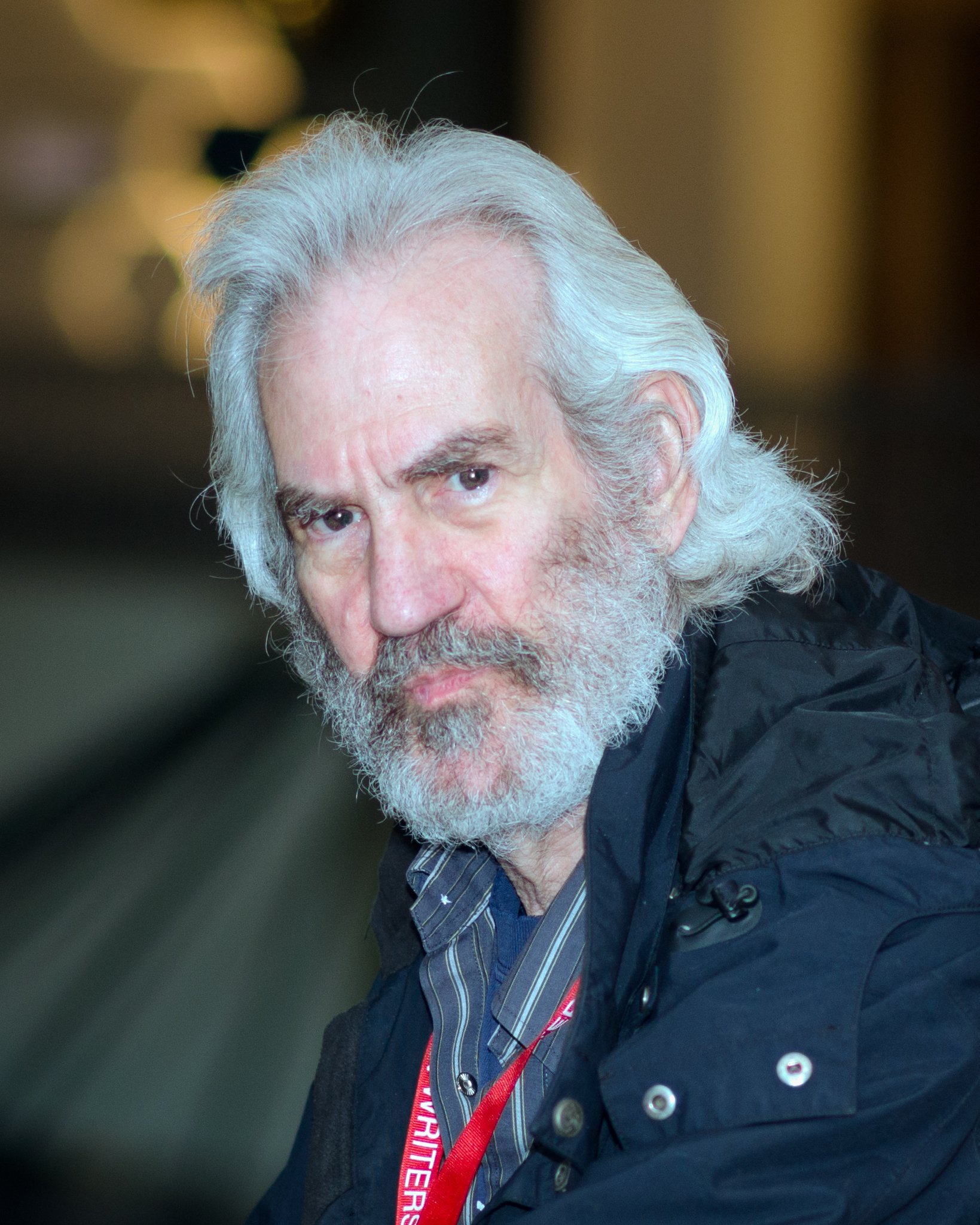
Author Dave Margoshes.
More about Dave Margoshes:
Dave Margoshes is a poet and fiction writer. Most of his adult life has been spent in western Canada, for 35 years, in Saskatchewan. He began his writing life as a journalist, working as a reporter and editor on a number of daily newspapers in the U.S. and Canada, and has taught journalism and creative writing. He has published twenty books of fiction, nonfiction, and poetry. His work has appeared widely in literary magazines and anthologies, in Canada and beyond, including six times in the Best Canadian Stories volumes; he’s been nominated for the Journey Prize several times and was a finalist in 2009. His novel Bix’s Trumpet and Other Stories won two prizes at the 2007 Saskatchewan Book Awards, including Book of the Year. His collection of linked short stories A Book of Great Worth, was named one of Amazon.ca’s Top Hundred Books of 2012. Other prizes include the City of Regina Writing Award, twice; the Stephen Leacock Prize for Poetry in 1996 and the John V. Hicks Award for fiction in 2001. In 2022 he was the recipient of the Lieutenant Governor’s Lifetime Achievement Award. Dave lives on an acreage near Saskatoon.
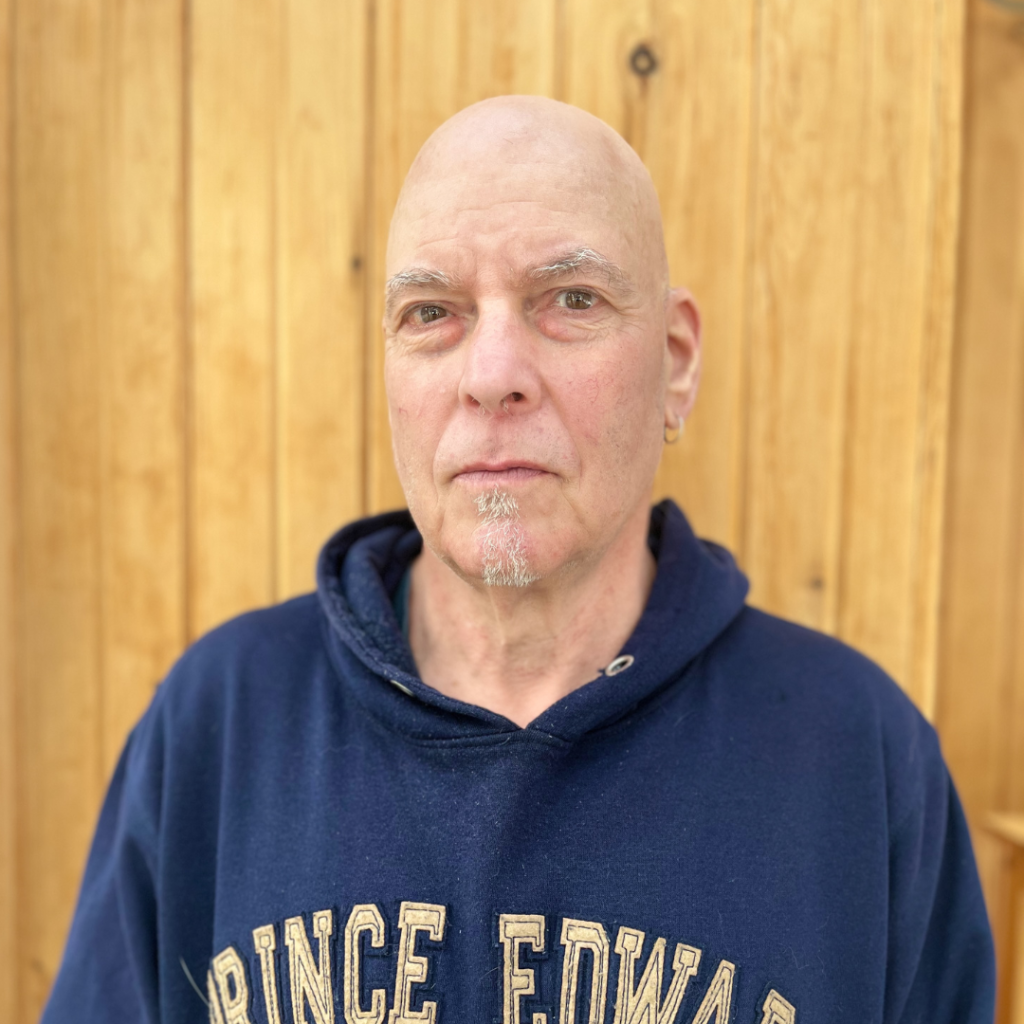
Author Steven Mayoff.
About Steven Mayoff:
Steven Mayoff (he/him) was born and raised in Montreal. His fiction and poetry have appeared in literary journals across Canada, the U.S. and abroad. He is the author of the story collection Fatted Calf Blues, winner of the 2010 PEI Book Award for Fiction; the novel Our Lady of Steerage; and two books of poetry Leonard’s Flat and Swinging Between Water and Stone. His acclaimed novel, The Island Gospel According to Samson Grief, was released by Radiant Press in 2023. Steven lives in Foxley River, PEI.