

BLOG

Power Q & A with Connor Lafortune & Lindsay Mayhew
What surprised me the most about editing an anthology was the length of the process itself. When I was first approached to co-edit with Lindsay [Mayhew], I was surprised by the timeline. I could not imagine it taking over two years from initial conversations to publications.
Q: What was something that surprised you about co-editing the anthology, A Thousand Tiny Awakenings (Latitude 46, 2025)?
Connor Lafortune: What surprised me the most about editing an anthology was the length of the process itself. When I was first approached to co-edit with Lindsay [Mayhew], I was surprised by the timeline. I could not imagine it taking over two years from initial conversations to publications. However, I quickly realized that many of the pieces needed a lot of time in between. I learned to take my time and be patient throughout the process.
Something else that surprised me was the cohesion between all of the submissions. There was an incredible throughline among the poems and short stories. As an editor, I was surprised we could tell a larger story among its smaller pieces.
Miigwetch!
Lindsay Mayhew: This collection brought about many discoveries. I was especially surprised by the weight of responsibility I felt as an editor. The contributors trusted us not only with their art, but also their personal stories. We rarely discuss the importance of ethical practice as editors, but it’s a conversation I look forward to starting often!
It was an honour and delight to work on these pieces with the contributors. This experience has inspired me to continue editing, and I am excited for the never-ending learning involved.
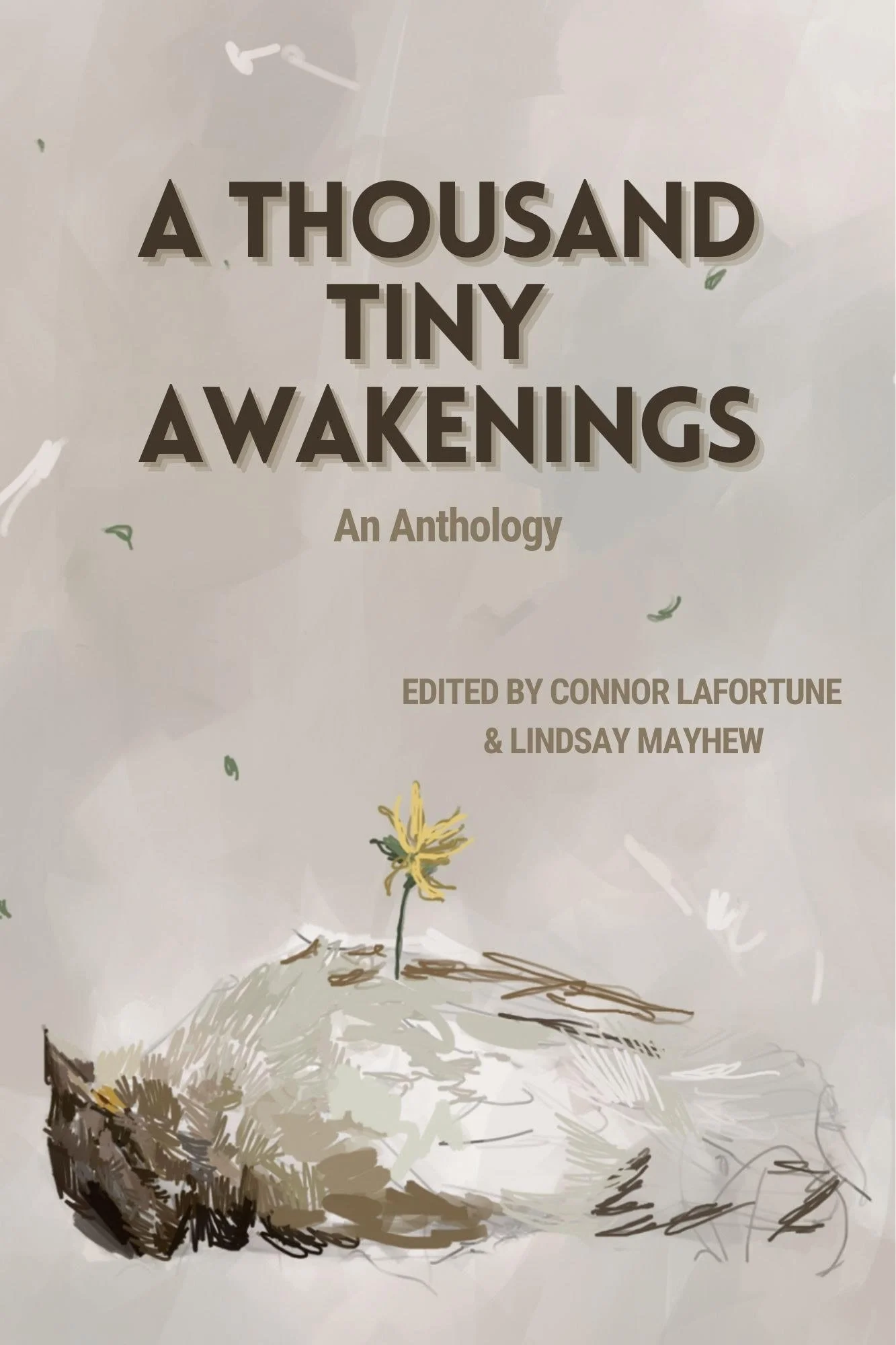
A Thousand Tiny Awakenings (Latitude 46), editied by Connor Lafortune and Lindsay Mayhew.
About A Thousand Tiny Awakenings (Latitude 46):
A Thousand Tiny Awakenings is a collection of genuine and heartfelt expressions from young and marginalized creators who challenge the oppressive structures that shape our world. These narratives, poems, and artworks echo across Turtle Island, transcending borders to offer a stirring testament to resilience and hope. Discover 15 young writers, and 23 unique and powerful pieces that embody the spirit of resistance and resurgence; uplifting the upcoming generation in their pursuit to dismantle boundaries that define their bodies, lives, and futures. Through art and storytelling, these voices call for action and inspire revolution, reminding us that our words have the power to transform the world.
A Thousand Tiny Awakenings features contributions by:
Carson Bohdi Michelle Delorme Brennan Gregoire
Waed Hasan Tyler Hein Jesse June-Jack
Kay Kassirer Nicole Robitaille Blaine Thornton
Lisa Shen Lindsay Mayhew Sydney Read
Connor Lafortune Ra'anaa Yaminah Ekundayo
Chimdi Kingsley-Emereuwa
About Connor Lafortune & LINDSAY MAYHEW:
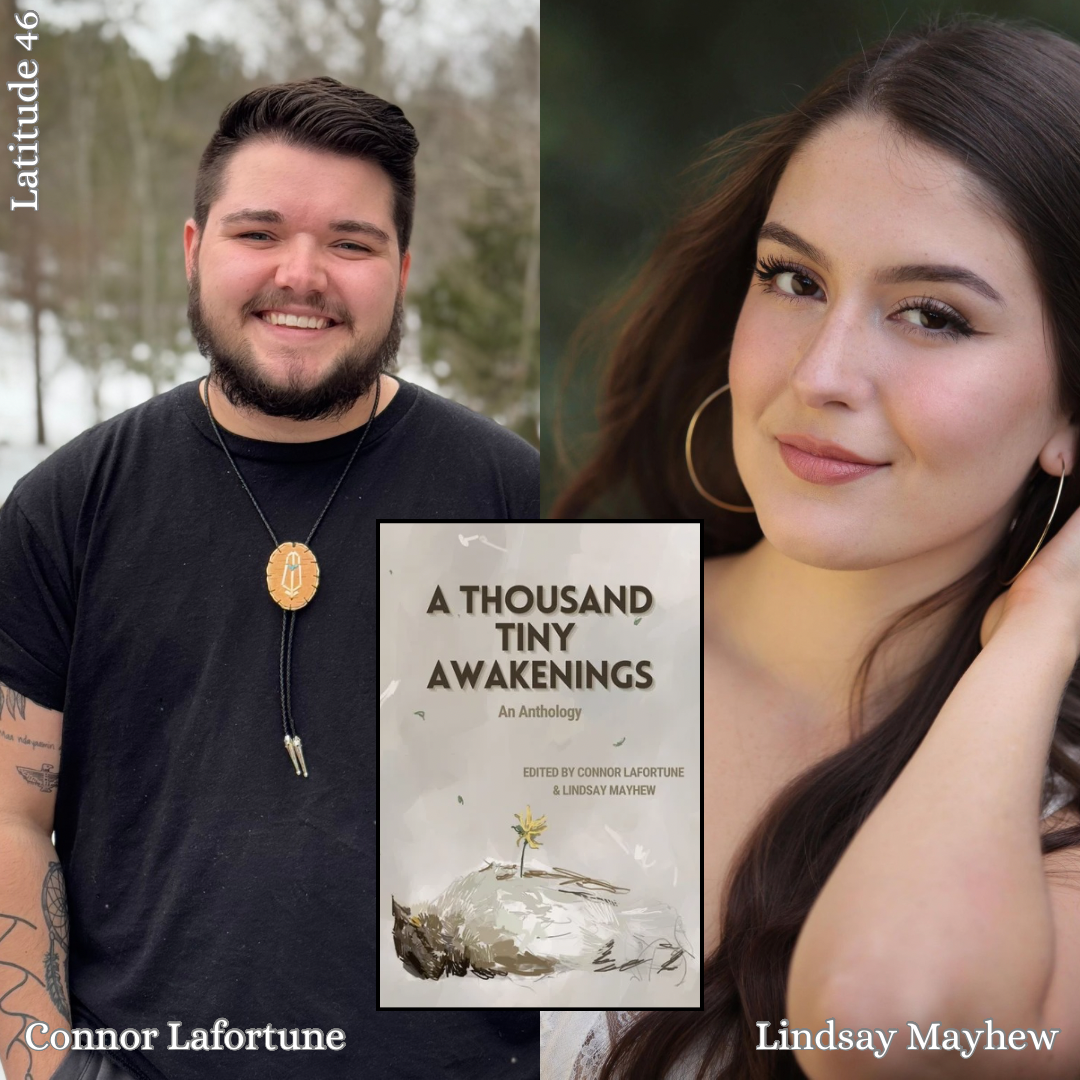
Connor Lafortune is from Dokis First Nation on Robinson Huron Treaty territory of 1850 in Northeastern Ontario. He works primarily in Life Promotion, harm-reduction, mental health, and Indigenous education. He completed his Bachelor’s Degree at Nipissing University with a Double Honors Major in Indigenous Studies and Gender Equality and Social Justice. He is currently in the Masters in Indigenous Relations at Laurentian University. Connor is Anishinaabek, Queer, and Francophone; he uses his understanding of the world to shape his creations as a writer, spoken word poet, and musician. Connor often combines the written word with traditional Indigenous beadwork and sewing to recreate the stories of colonization, showcase resilience, and imagine a new future. He recently released a single in collaboration with Juno Award winner G.R. Gritt titled “Qui crie au loup? ft. Connor Lafortune.” Above all else, Connor is an activist, a shkaabewis (helper), and a compassionate human being.
Lindsay Mayhew (she/her) is a spoken word artist, poet, and writer from Sudbury, Ontario. She recently graduated with a Master’s in English Literature from the University of Guelph. Lindsay is the multi-year champion of Wordstock Sudbury’s poetry slam, and she has featured in events across Ontario, including JAYU Canada, Hamilton’s 10th Fashion Week, and Nuit Blanche. She represented Canada in the 2024 Womxn of the World poetry slam. Lindsay’s written work is featured in multiple editions of Sulphur. Her spoken word and written work seeks to combine art and theory to voice feminist futures.

Power Q & A with Allister Thompson
Like a lot of people, when I moved here, I was amazed at the sheer scope of a sparsely populated landscape, as well as its natural beauty, and it really captivated me. It still does. I wanted to share that feeling. Second, given that fact, I felt that while there is a great body of literature about northern Ontario, there can always be room for more!
Q: Why was it important to you to set your YA novel, Birch & Jay (Latitude 46 Publishing) in northern Ontario?
A: There were a few reasons for the setting being important. First, I live here. I know intimately the beauty of the northern wilderness and what it has to offer the imagination and the soul. Like a lot of people, when I moved here, I was amazed at the sheer scope of a sparsely populated landscape, as well as its natural beauty, and it really captivated me. It still does. I wanted to share that feeling. Second, given that fact, I felt that while there is a great body of literature about northern Ontario, there can always be room for more! And in this particular genre (speculative fiction/post-apocalyptic), I felt I could do something unique in this setting that no one has done before. Lastly, it was important to my process because my knowledge of this area, all the way down to Toronto, really enabled me to accurately describe and bring to life the settings in vivid ways.
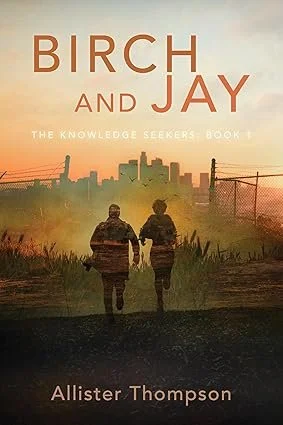
Birch & Jay by Allister Thompson, published by Latitude 46, spring 2025.
More about Birch & Jay:
Decades after the world was levelled by the effects of human-made climate change, the scattered remnants of humanity have begun to pull themselves together. Birch and Jay are a young couple living in a small, idyllic community away from the ruins of one of Canada’s great cities.
As a newly graduated Knowledge Seeker, Jay must leave Birch and their community to collect remnants of old wisdom from the dead world. Along the way, he comes across a mysterious elderly woman who offers to travel with him. He will receive more than a travel companion — she offers revelations about their town’s founding as well as knowledge of how to survive in a lawless world.
Birch, seeking adventure, pursues Jay but finds more danger than she ever imagined. Will they find each other in the chaos and brutality of the city and get safely back home to tell the tale?
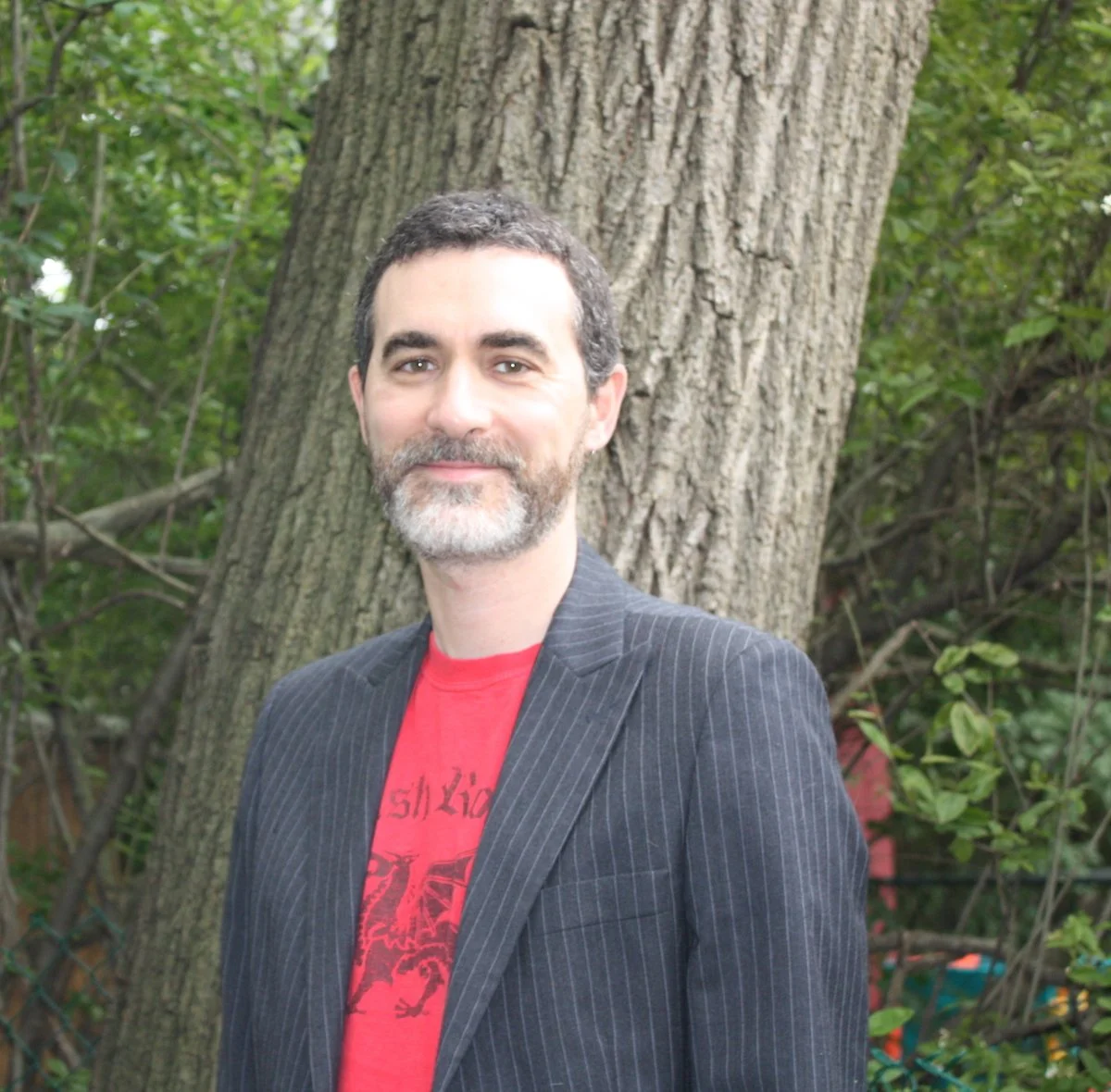
Author Allister Thompson
About Allister Thompson:
Allister Thompson was born in the UK and spent his childhood in Mississauga, Ontario, where he got his first part-time job in a small bookstore at the mall at age sixteen. He has spent the rest of his life working in the publishing and bookselling industries. He worked for small and mid-sized publishers in Toronto for fifteen years before striking out on his own as a freelance editor. This freedom eventually led him to North Bay, Ontario, where he has lived and worked with dozens of authors for the past ten years.

Power Q & A with Sharon Berg
May is National Short Story Month and we’re kicking it off with a brief and salient interview with award-winning multi-genre writer Sharon Berg, author of many books, including the short fiction collection, Naming the Shadows (Porcupine’s Quill 2019). Never one to shy away from tough conversations, we ask Sharon about writing difficult subjects as a necessary part of the responsibility we bear for one another.
May is National Short Story Month and we’re kicking it off with a brief and salient interview with award-winning multi-genre writer Sharon Berg, author of many books, including the short fiction collection, Naming the Shadows (Porcupine’s Quill 2019). Never one to shy away from tough conversations, we ask Sharon about writing difficult subjects as a necessary part of the responsibility we bear for one another.
Thank you to Sharon for joining us, and for your thoughtful response to our question. Keep reading.

Naming the Shadows by Sharon Berg (Porcupine’s Quill 2019).
Q: We are interested in your advice for writers who want to deal with difficult topics like violence against children, and how to do this with honesty while still being sensitive to readers. We are not readers who feel like we should be spared violence to save our own fragile sense of safety. We never think we should turn from the humanity of others.
A: Yes, I’m dealing with violence against children and young women in my stories and poetry all the time! If people hadn't turned away from the horrible things being done to me as a child or young woman, and if several agencies hadn’t failed me or my children, our lives would have turned out a whole lot differently. A big part of that is the laws protecting children need to be stronger, and the agencies claiming to safeguard them have to be more honest about what they will or cannot [read that as do not] do for them. Andrea Munro’s case against the husband of her mother points this out as she was failed by so many people and agencies in dealing with her trauma. Everyone is quick to point to Alice Munro’s failings but they don’t address the basic fact that neither her father or the several agencies involved truly addressed her pain.
There can be no denial that our laws need to change. When my daughter was sexually abused as a four-year-old by a neighbour in 1979, I was told by a policeman who said he 100% believed her, no child could testify against an adult. He suggested I try to catch him in the act next time. Absurd. I moved within two weeks. But I can tell you nothing is different in 2025 and that is beyond ridiculous. We have a duty as individuals living in a democracy such as Canada... to protect children and each other... or our house is built on a pile of lies.
I can’t be convinced people don’t have a responsibility to each other when we live in community. That’s the definition of community in my eyes. Refusing to review our legal response and neighbourly alert systems to the various trauma suffered by children says we deny our reality. I believe, as a writer, I have a duty. Fiction and poetry can and has addressed the unwilling observor and pulled them into action. Stories can speak to the heart, convincing us through artful writing, to address the trauma suffered by others. What I’m addressing in my stories is mainly the daily skirmishes being fought in our country and others around the world, the hidden casualties of an on-going war with paternalism and criminal mindset. That sort of war is just as important as any other. It gives criminals an arena to practice in. We need to stand on guard for all of those daily victims.
I truly believe I’m broadening people’s awareness through my writing or I wouldn’t bother. As Margaret Atwood has said, nothing I write about hasn’t happened, and I’d lay dollars to donuts the same is true for Alice Munro and Margaret Laurence. For my own female characters, I’d say nothing I write about hasn’t happened to me or a dearly loved one. Who can argue with the truth? I can’t speak for other authors, but I just add some literary devices and stir.
More about Naming the Shadows (Porcupine’s Quill 2019):
Sharon Berg’s quietly insightful collection focuses on relationships between generations, acknowledging the prevalence of the shadows that are everywhere—but also celebrating the light.
The stories in Naming the Shadows are touched with humour and outrage, mystery and shadow. Curious preteens receive an unexpected education at a mall-side carnival show. A lonely dairy farmer develops a special bond with his neighbours’ children, then suffers unexpected consequences. An ageing author manages to get one up on her adversarial interviewer, while another woman’s unsettling way of remembering past lovers confirms her emotional freedom.
In these stories of loss and learning, conflict and memory run through generations, innocence gives way to experience, and all must learn to redefine themselves and the way they see the world.

Author Sharon Berg. Photo credit: Cathi Carr.
More About Sharon Berg:
Sharon Berg’s work appears in Canada, USA, Mexico, England, Wales, Amsterdam, Germany, India, Singapore, and Australia. Her poetry includes To a Young Horse (Borealis 1979), The Body Labyrinth (Coach House 1984), three poetry chapbooks (2006, 2016, 2017), plus Stars in the Junkyard (Cyberwit 2020) was a 2022 International Book Award Finalist. Her short story collection is Naming the Shadows (Porcupine’s Quill 2019). The Name Unspoken: Wandering Spirit Survival School (BPR Press 2019) won a 2020 IPPY Award for Regional Nonfiction. She’s Resident Interviewer for The tEmz Review (London, ON, Canada) and operates Oceanview Writers Retreat out of Charlottetown, Newfoundland, Canada.

Some thoughts on accuracy and research in historical fiction: A special feature by Tim Welsh
I recently read Robert Penner’s The Dark King Swallows the World, a novel set in Cornwall during World War II. I liked it a lot, and was surprised to learn that a few (of the otherwise uniformly positive) reviews had called it out for a lack of historical accuracy.
My initial response was: who cares? Complaining about historical accuracy in a work of fiction seems, to me, like bragging about being the best at doing homework. Missing the point, a little obnoxious.
I recently read Robert Penner’s The Dark King Swallows the World, a novel set in Cornwall during World War II. I liked it a lot, and was surprised to learn that a few (of the otherwise uniformly positive) reviews had called it out for a lack of historical accuracy.
My initial response was: who cares? Complaining about historical accuracy in a work of fiction seems, to me, like bragging about being the best at doing homework. Missing the point, a little obnoxious.

The Dark King Swallows the World by Robert Penner, published by Radiant Press.
Perhaps I’m being overly defensive here. My debut novel, Ley Lines, (Guernica Editions, 2025) takes place during the Klondike Gold Rush. It’s also full of errors and inaccuracies. And while I haven’t received a ton of feedback on book’s historical fidelity, or lack thereof, I’m sure that a significant portion of historical fiction readers would bristle at the liberties I’ve taken with time and place. (However, there’s only one way to find out: go buy it, please.)
Penner’s book is literary fantasy; Ley Lines I would describe as ‘psychedelic Canadiana,’ though magic realism works, too. Neither is historical fiction in the strictest sense of the word. So what do we, as writers of weird, playful fiction, who work in a historical milieu, owe to the historical record?
I can’t speak for Penner, but for me, the choice of the Klondike as a setting was deeply personal, and not the result of any scholarship on my part. I was inspired by Robert Service’s famous poems, “The Shooting of Dan McGrew” and “The Cremation of Sam McGee” — in particular, the illustrated 80s versions featuring Ted Harrison’s artwork.
Service was a bit of an interloper in the Klondike — he was a banker and a journalist, and he arrived in the Yukon years after the initial rush. Most of his poetry was based on twice-told tales and old prospectors’ lore. So already, we’re at a few degrees of removal from historical accuracy; Harrison, in the 1970s and 1980s, illustrating poems that were themselves based on second- or third-hand accounts of the 1890s gold rush. And me, in 2025, taking that as inspiration. Each step adding another layer of embellishment and idiosyncracy.
Of course you can’t build an entire novel off a few paintings. The weird, fantastic world I wanted to create — like Harrison’s paintings — had to have some basis in reality.

Ley Lines by Tim Welsh, published by Guernica Editons
When I did start doing actual research, I was very adamant that I look to sources offline. This, I felt, was an important strategic decision: as vast as the internet is, it seems to regurgitate the same anecdotes constantly. I would be embarrassed if someone called me out for, say, having a character use the wrong type of drill. But I’d be mortified if someone thought I drew inspiration from a viral post on Reddit.
So, Pierre Burton, to start. Burton’s Klondike: The Last Great Gold Rush, 1896-1899 is the definitive nonfiction account of the era. I knew I would have to make peace with it. I got about 1/3 of the way through, then read selectively when I felt like I needed to know more about a specific town, or topic, etc.
There were things I found myself weirdly hung up on: when did the rivers thaw in the spring of 1901? Could the Pinkertons have made it to the Klondike? Who really shot Soapy Smith?
There were also many things I chose to leave in, despite their anachronism or incongruity with the historical record. (I will leave it to the sleuths in A Writer of History’s readership to ferret these out — which, again, you can do ‘til your heart’s content, once you’ve bought the book.)
But all of these decisions — what to include, what to ignore — were secondary to the larger project of the book. Did it follow its own internal logic? Was the plot consistent with the themes I was interested in? Did the jokes land?
Ultimately, to praise a book for its level of research seems to me to be a bit of a backhanded compliment. Research, and the degree to which we use it or ignore it, is an artistic choice, alongside all the other things that make fiction great: style, plot, character, etc. No amount of research can make up for a book that lacks the other characteristics of great fiction.
That said, I get why people expect some degree of accuracy in historical fiction. One of the joys of a good book is that it takes us to new places — whether it’s Cornwall in WWII, the Yukon at the tail end of the Gold Rush, or somewhere not in the history books at all.
But those places will always exist in tension with reality. Whether or not a book successfully reconciles that tension shouldn’t be the only criteria by which we judge it.
—Tim Welsh
More about Ley Lines:
Set in the waning days of the Klondike Gold Rush, Ley Lines begins in the mythical boom town of Sawdust City, Yukon Territory. Luckless prospector Steve Ladle has accepted an unusual job offer: accompany a local con artist to the unconquered top of a nearby mountain. What he finds there briefly upends the town’s fading fortunes, attracting a crowd of gawkers and acolytes, while inadvertently setting in motion a series of events that brings about the town’s ruin.
In the aftermath, a ragtag group of characters is sent reeling across the Klondike, struggling to come to grips with a world that has been suddenly and unpredictably upturned. As they attempt to carve out a place for themselves, our protagonists reckon with the various personal, historical and supernatural forces that have brought them to this moment.
A wildly inventive, psychedelic odyssey, Ley Lines flips the frontier narrative on its ear, and heralds the arrival of an exciting new voice in Canadian fiction.

Tim Welsh
About Tim Welsh:
Tim Welsh was born in Ithaca, New York in 1980. He was raised in Ottawa, Ontario and attended Queen’s University and Carleton University, graduating with an MA in English Literature. Since then, he’s lived in New York City and Oaxaca, Mexico, played bass in a punk band, and managed a failing art gallery. Tim Welsh lives in Toronto with his wife and two children. Ley Lines is his first novel.

Power Q & A with Jean Marc Ah-sen
Kilworthy Tanner by Jean Marc Ah-sen (Vehicule Press, 2024) tells the story of Jonno—a ner’er-do-well and perpetually up-and-coming writer who becomes enthralled with the established, acclaimed, controversial, and already married but not monogamous author Kilworthy Tanner. What follows is a titillating metafiction that mirrors a literary world replete with “grasping, unprincipled” egos.
There’s much to love about this book, including Jonno’s narration, which teases and bites and soothes and is tender and playful. We are tickled to have Jean join us for this Power Q & A to talk about how he created his protagonist’s distinct voice.
Kilworthy Tanner by Jean Marc Ah-sen (Vehicule Press, 2024) tells the story of Jonno—a ner’er-do-well and perpetually up-and-coming writer who becomes enthralled with the established, acclaimed, controversial, and already married but not monogamous author Kilworthy Tanner. What follows is a titillating metafiction that mirrors a literary world replete with “grasping, unprincipled” egos.
There’s much to love about this book, including Jonno’s narration, which teases and bites and soothes and is tender and playful. We are tickled to have Jean join us for this Power Q & A to talk about how he created his protagonist’s distinct voice.

Kilworthy Tanner by Jean Marc Ah-sen.
Q: We have to know: what was the inspiration for Jonno’s language? It’s simultaneously highfaultin and grubby and, should anyone feel compelled to speak his words aloud, it’s also just plain delightful to wrap your tongue around.
A: I started to have the impression that my style was becoming too defined for my liking, and that it was starting to ossify. Something written with a more conversational patter, while still being intensely voice-driven, felt like a good way to break out of this pigeonhole.
Jonno's narrative voice was modelled after autobiographies and novels pulling back the curtain on cryptic scene-affiliations - what Dee Dee Ramones's Lobotomy did for the early days of punk, or what Jean-Patrick Manchette's Nada did for post-1968 revolutionary fervour, were inspirations on writing group dynamics. I'm not sure if I was successful on these fronts, but I think that it is better to fail spectacularly than to toe an unremarkable line, stylistically speaking.
More about Kilworthy Tanner:
A madcap, witty account of an aspiring author’s relationship with an infamous and provocative mentor.
Fresh-faced Jonno is looking to make a splash in the literary scene when he encounters celebrated novelist Kilworthy Tanner at a party. Having sold first editions of her works to Toronto’s book dealers, he’s immediately star-struck and more than a little surprised when she takes an interest in him. Could this be the break he’s after? It’s not long before the controlling and aloof Kilworthy is casually letting young Jonno move in with her, and they begin co-authoring sensational and unruly fictions together. But who’ll get the credit for these collaborations, and why does he constantly feel like he must fend off rival authors? Fuelled by outrageousness and hell-bent on literary self-annihilation, Kilworthy Tanner is Jonno’s tell-all ‘pseudobiography’ of their entanglement, and he doesn’t withhold any details of the sexual degeneracy, prodigious drug use, and vendettas of the era.
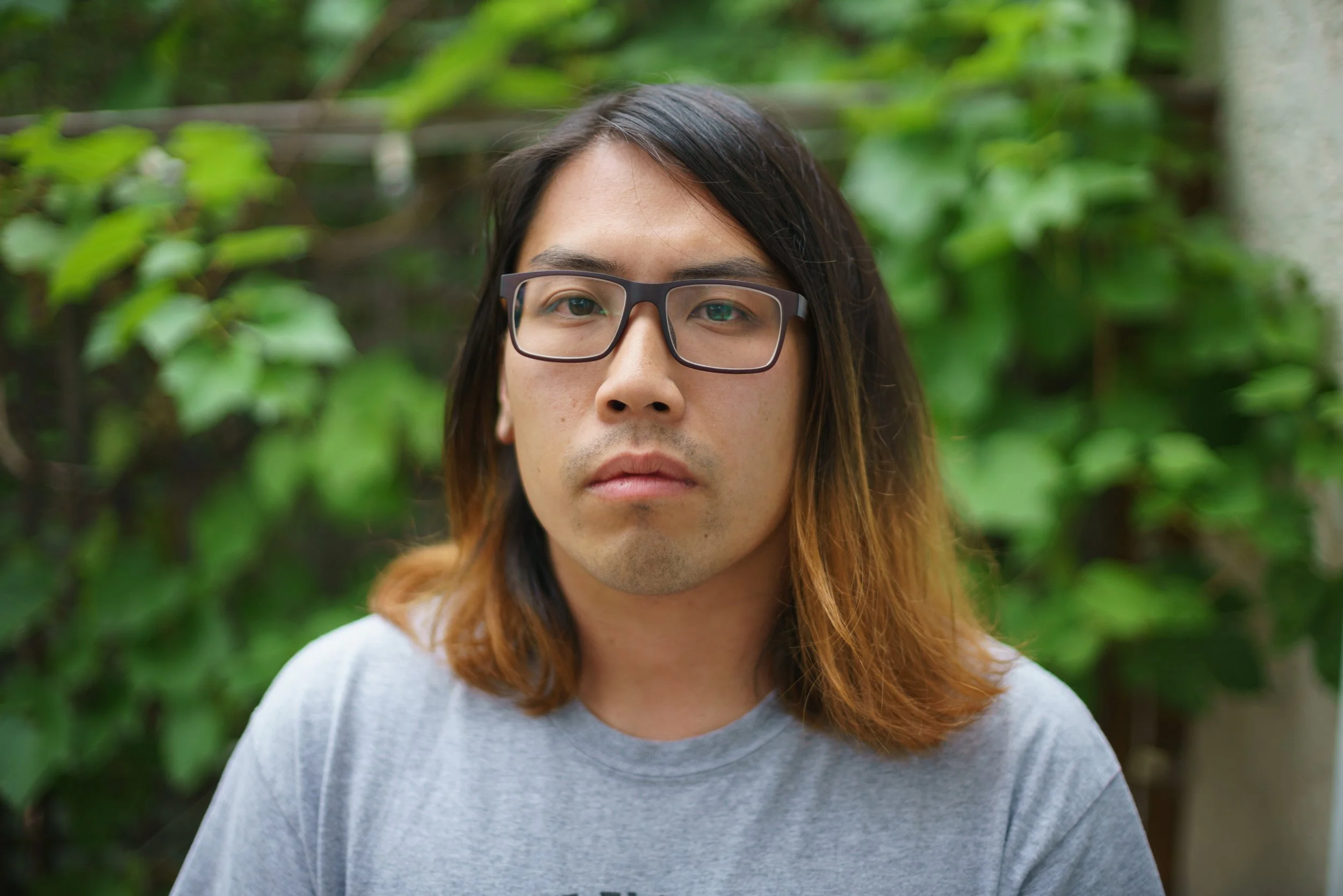
Jean Marc Ah-sen. (Photo credit Justin Legace.)
More about Jean Marc Ah-sen:
Jean Marc Ah-Sen is the author of Grand Menteur, In the Beggarly Style of Imitation, and Kilworthy Tanner. His work has appeared in Literary Hub, The Walrus, The Globe and Mail, and elsewhere. The National Post has hailed his writing as an “inventive escape from the conventional.”

Power Q & A with Caroline Topperman
Caroline Topperman’s memoir is not only highly anticipated but powerfully titled. Your Roots Cast a Shadow: One Family's Search Across History for Belonging (HCI, December 17, 2024), arises from Caroline’s 2013 move from Vancouver to her family’s homeland, Poland, and encourages readers to examine the ways in which family histories shape our understanding of ourselves and society.
Caroline Topperman’s memoir is not only highly anticipated but powerfully titled. Your Roots Cast a Shadow: One Family's Search Across History for Belonging (HCI, December 17, 2024), arises from Caroline’s 2013 move from Vancouver to her family’s homeland, Poland, and encourages readers to examine the ways in which family histories shape our understanding of ourselves and society.
We’re honoured to have Caroline join us today to speak to why she decided to share her family history with readers from around the world. Welcome, Caroline!

Your Roots Cast a Shadow: One Family's Search Across History for Belonging by Caroline Topperman (published by HCI).
Q: Sharing family stories can be fraught with tension and uncertainty. What made you decide to write this book—and share these stories—now?
A: In 2015 (when I started writing this book) Poland was very different than it is now, and frankly much of what I saw scared me. It was an eye-opening experience to participate in a Pride parade and have rows of police officers decked out in tactical gear on either side of our float. I was shocked each time I saw neo-Nazis and fascists and ultra-Nationalists marching through the streets. I participated in counter-marches; I signed petitions and it became more and more obvious that history is easily forgotten. I decided that I couldn’t stay silent.
More about Your Roots Cast a Shadow: One Family's Search Across History for Belonging:
Your Roots Cast a Shadow: One Family's Search Across History for Belonging is a gripping and powerful narrative of cultural translation, identity, and belonging. The thrill of a new place fades quickly for Caroline Topperman when she moves from Vancouver to Poland in 2013. As she delves into her family’s history, tracing their migration through pre-WWII Poland, Afghanistan, Soviet Russia and beyond, she discovers the layers of their complex experiences mirror some of what she felt as she adapted to life in a new country. How does one balance honouring both one’s origins and new surroundings?

Author Caroline Topperman.
More about Caroline Topperman:
Caroline Topperman is a European-Canadian writer, entrepreneur, and world traveller. Born in Sweden, raised in Canada with a recent stint of living in Poland, she holds a BFA in screenwriting. She is a co-founder of Mountain Ash Press and KW Writers Alliance, and currently runs Migrations Review, and Write, They Said. Her book, Tell Me What You See, serves as a toolkit for her writing workshops. She has written articles for Huffington Post Canada, Jane Friedman’s blog, was the Beauty Editor for British MODE Magazine, and served as managing editor for NonBinary Review. Her hybrid memoir, Your Roots Cast a Shadow, explores explosive intergenerational histories that link war zones and foreign shores with questions of identity and belonging. Her next book, The Road to Tang-e Gharu, integrates Afghan folktales and family memories with the story of one of the greatest roads ever built.

Power Q & A with Wayne Ng
Crime Writers of Canada Award-winning author Wayne Ng’s highly-anticipated Toronto-based novel, Johnny Delivers, is being released this November 1st by Guernica Editions, and it has already been included in CBC's and the 49th Shelf's Most-Anticipated Fall Fiction lists.
Set in 1977, Johnny Delivers tells the absorbing story of 18-year-old Johnny Wong—the son of Chinese immigrants to Canada—who calls on the spirit of Bruce Lee to help him navigate the still relevant challenges of racism and how it permeates our interiority, our institutions, our relationships, and our livelihood.
Crime Writers of Canada Award-winning author Wayne Ng’s highly-anticipated Toronto-based novel, Johnny Delivers, is being released this November 1st by Guernica Editions, and it has already been included in CBC's and the 49th Shelf's Most-Anticipated Fall Fiction lists.
Set in 1977, Johnny Delivers tells the absorbing story of 18-year-old Johnny Wong—the son of Chinese immigrants to Canada—who calls on the spirit of Bruce Lee to help him navigate the still relevant challenges of racism and how it permeates our interiority, our institutions, our relationships, and our livelihood.
This book is exciting and heart-wrenching and readers are loving it! A favourite element of the story is undoubtedly Johnny’s conversations with Bruce Lee, so we wanted to ask Wayne, “Why Bruce?:
We are happy to welcome Wayne to our Power Q & A series today to answer.
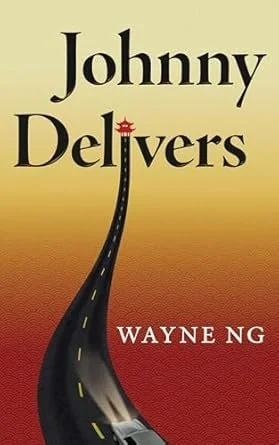
Q: Why did you choose Bruce Lee to serve as Johnny’s moral guide and confidant?
A: Most kids need a hero. In the standalone prequel, Letters From Johnny, 11-year-old Johnny worked through his problems by writing letters to hockey icon Dave Keon, just as I once did. Now, as an angst-filled teen on the cusp of manhood in Johnny Delivers, Johnny turns to Bruce Lee—a larger-than-life hero I also admired as an unstoppable fighter. What made Bruce especially significant was his defiance of the stereotypical portrayal of Asians in popular culture as humble, passive, and helpless.
With Johnny Delivers, I wanted to show that Bruce Lee was more than just a trailblazing martial arts film icon. He was also a philosopher, a writer, and family man. And, like any hero, he had his flaws—something Johnny struggles to accept. Since the novel is ultimately a coming-of-age and family story, Bruce is the glue that holds his relationship with his father. I wanted Johnny's evolving view of Bruce to reflect his journey—where their growth connects and separates them.
More about Johnny Delivers:
Eighteen-year-old Johnny Wong’s dead-end life consists of delivering Chinese food and holding his chaotic family together in Toronto. When his sweet but treacherous Auntie, the mahjong queen, calls in their family debt, he fears the family will lose the Red Pagoda restaurant and break apart.
Invoking the spirit of Bruce Lee and in cahoots with his stoner friend Barry, Johnny tries to save his family by taking up a life of crime delivering weed with a side of egg rolls. He chases his first love, but his hands are already full with his emotionally distant mother, his dream-crushing father, and his reckless, sardonic little sister.
As he fights to stay ahead of his Auntie, sordid family secrets unfold. With lives on the line, the only way out is an epic mahjong battle. While Johnny is on a mission to figure out who he is and what he wants, he must learn that help can come from within and that our heroes are closer than we think.
Dripping with 1970s nostalgia, Johnny Delivers is a gritty and humorous standalone sequel to the much-loved and award-winning Letters From Johnny.
More about Wayne Ng:
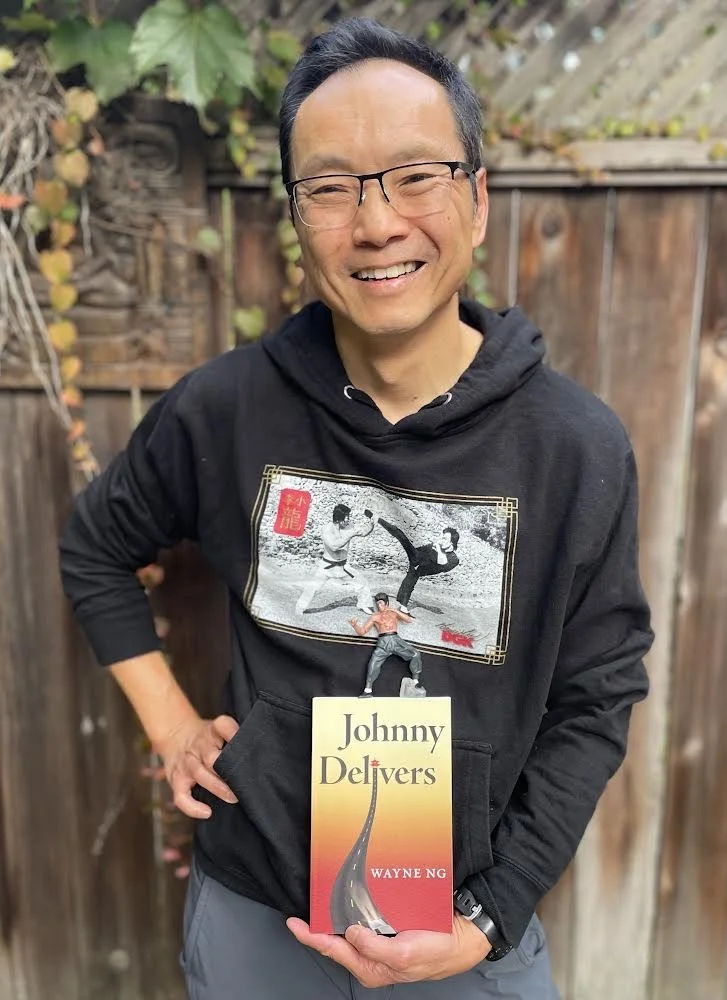
Wayne Ng was born in downtown Toronto to Chinese immigrants who fed him a steady diet of bitter melon and kung fu movies. Ng is a social worker who lives to write, travel, eat, and play, preferably all at the same time. He is an award-winning author and traveler who continues to push his boundaries from the Arctic to the Antarctic. He lives in Ottawa with his wife and goldfish.
Ng is the author of The Family Code, shortlisted for the Guernica Prize; Letters From Johnny, winner of the Crime Writers of Canada Award for Best Crime Novella and a finalist for the Ottawa Book Award and Johnny Delivers.