

BLOG

Power Q & A with Sharon Berg
May is National Short Story Month and we’re kicking it off with a brief and salient interview with award-winning multi-genre writer Sharon Berg, author of many books, including the short fiction collection, Naming the Shadows (Porcupine’s Quill 2019). Never one to shy away from tough conversations, we ask Sharon about writing difficult subjects as a necessary part of the responsibility we bear for one another.
May is National Short Story Month and we’re kicking it off with a brief and salient interview with award-winning multi-genre writer Sharon Berg, author of many books, including the short fiction collection, Naming the Shadows (Porcupine’s Quill 2019). Never one to shy away from tough conversations, we ask Sharon about writing difficult subjects as a necessary part of the responsibility we bear for one another.
Thank you to Sharon for joining us, and for your thoughtful response to our question. Keep reading.

Naming the Shadows by Sharon Berg (Porcupine’s Quill 2019).
Q: We are interested in your advice for writers who want to deal with difficult topics like violence against children, and how to do this with honesty while still being sensitive to readers. We are not readers who feel like we should be spared violence to save our own fragile sense of safety. We never think we should turn from the humanity of others.
A: Yes, I’m dealing with violence against children and young women in my stories and poetry all the time! If people hadn't turned away from the horrible things being done to me as a child or young woman, and if several agencies hadn’t failed me or my children, our lives would have turned out a whole lot differently. A big part of that is the laws protecting children need to be stronger, and the agencies claiming to safeguard them have to be more honest about what they will or cannot [read that as do not] do for them. Andrea Munro’s case against the husband of her mother points this out as she was failed by so many people and agencies in dealing with her trauma. Everyone is quick to point to Alice Munro’s failings but they don’t address the basic fact that neither her father or the several agencies involved truly addressed her pain.
There can be no denial that our laws need to change. When my daughter was sexually abused as a four-year-old by a neighbour in 1979, I was told by a policeman who said he 100% believed her, no child could testify against an adult. He suggested I try to catch him in the act next time. Absurd. I moved within two weeks. But I can tell you nothing is different in 2025 and that is beyond ridiculous. We have a duty as individuals living in a democracy such as Canada... to protect children and each other... or our house is built on a pile of lies.
I can’t be convinced people don’t have a responsibility to each other when we live in community. That’s the definition of community in my eyes. Refusing to review our legal response and neighbourly alert systems to the various trauma suffered by children says we deny our reality. I believe, as a writer, I have a duty. Fiction and poetry can and has addressed the unwilling observor and pulled them into action. Stories can speak to the heart, convincing us through artful writing, to address the trauma suffered by others. What I’m addressing in my stories is mainly the daily skirmishes being fought in our country and others around the world, the hidden casualties of an on-going war with paternalism and criminal mindset. That sort of war is just as important as any other. It gives criminals an arena to practice in. We need to stand on guard for all of those daily victims.
I truly believe I’m broadening people’s awareness through my writing or I wouldn’t bother. As Margaret Atwood has said, nothing I write about hasn’t happened, and I’d lay dollars to donuts the same is true for Alice Munro and Margaret Laurence. For my own female characters, I’d say nothing I write about hasn’t happened to me or a dearly loved one. Who can argue with the truth? I can’t speak for other authors, but I just add some literary devices and stir.
More about Naming the Shadows (Porcupine’s Quill 2019):
Sharon Berg’s quietly insightful collection focuses on relationships between generations, acknowledging the prevalence of the shadows that are everywhere—but also celebrating the light.
The stories in Naming the Shadows are touched with humour and outrage, mystery and shadow. Curious preteens receive an unexpected education at a mall-side carnival show. A lonely dairy farmer develops a special bond with his neighbours’ children, then suffers unexpected consequences. An ageing author manages to get one up on her adversarial interviewer, while another woman’s unsettling way of remembering past lovers confirms her emotional freedom.
In these stories of loss and learning, conflict and memory run through generations, innocence gives way to experience, and all must learn to redefine themselves and the way they see the world.

Author Sharon Berg. Photo credit: Cathi Carr.
More About Sharon Berg:
Sharon Berg’s work appears in Canada, USA, Mexico, England, Wales, Amsterdam, Germany, India, Singapore, and Australia. Her poetry includes To a Young Horse (Borealis 1979), The Body Labyrinth (Coach House 1984), three poetry chapbooks (2006, 2016, 2017), plus Stars in the Junkyard (Cyberwit 2020) was a 2022 International Book Award Finalist. Her short story collection is Naming the Shadows (Porcupine’s Quill 2019). The Name Unspoken: Wandering Spirit Survival School (BPR Press 2019) won a 2020 IPPY Award for Regional Nonfiction. She’s Resident Interviewer for The tEmz Review (London, ON, Canada) and operates Oceanview Writers Retreat out of Charlottetown, Newfoundland, Canada.

Some thoughts on accuracy and research in historical fiction: A special feature by Tim Welsh
I recently read Robert Penner’s The Dark King Swallows the World, a novel set in Cornwall during World War II. I liked it a lot, and was surprised to learn that a few (of the otherwise uniformly positive) reviews had called it out for a lack of historical accuracy.
My initial response was: who cares? Complaining about historical accuracy in a work of fiction seems, to me, like bragging about being the best at doing homework. Missing the point, a little obnoxious.
I recently read Robert Penner’s The Dark King Swallows the World, a novel set in Cornwall during World War II. I liked it a lot, and was surprised to learn that a few (of the otherwise uniformly positive) reviews had called it out for a lack of historical accuracy.
My initial response was: who cares? Complaining about historical accuracy in a work of fiction seems, to me, like bragging about being the best at doing homework. Missing the point, a little obnoxious.

The Dark King Swallows the World by Robert Penner, published by Radiant Press.
Perhaps I’m being overly defensive here. My debut novel, Ley Lines, (Guernica Editions, 2025) takes place during the Klondike Gold Rush. It’s also full of errors and inaccuracies. And while I haven’t received a ton of feedback on book’s historical fidelity, or lack thereof, I’m sure that a significant portion of historical fiction readers would bristle at the liberties I’ve taken with time and place. (However, there’s only one way to find out: go buy it, please.)
Penner’s book is literary fantasy; Ley Lines I would describe as ‘psychedelic Canadiana,’ though magic realism works, too. Neither is historical fiction in the strictest sense of the word. So what do we, as writers of weird, playful fiction, who work in a historical milieu, owe to the historical record?
I can’t speak for Penner, but for me, the choice of the Klondike as a setting was deeply personal, and not the result of any scholarship on my part. I was inspired by Robert Service’s famous poems, “The Shooting of Dan McGrew” and “The Cremation of Sam McGee” — in particular, the illustrated 80s versions featuring Ted Harrison’s artwork.
Service was a bit of an interloper in the Klondike — he was a banker and a journalist, and he arrived in the Yukon years after the initial rush. Most of his poetry was based on twice-told tales and old prospectors’ lore. So already, we’re at a few degrees of removal from historical accuracy; Harrison, in the 1970s and 1980s, illustrating poems that were themselves based on second- or third-hand accounts of the 1890s gold rush. And me, in 2025, taking that as inspiration. Each step adding another layer of embellishment and idiosyncracy.
Of course you can’t build an entire novel off a few paintings. The weird, fantastic world I wanted to create — like Harrison’s paintings — had to have some basis in reality.

Ley Lines by Tim Welsh, published by Guernica Editons
When I did start doing actual research, I was very adamant that I look to sources offline. This, I felt, was an important strategic decision: as vast as the internet is, it seems to regurgitate the same anecdotes constantly. I would be embarrassed if someone called me out for, say, having a character use the wrong type of drill. But I’d be mortified if someone thought I drew inspiration from a viral post on Reddit.
So, Pierre Burton, to start. Burton’s Klondike: The Last Great Gold Rush, 1896-1899 is the definitive nonfiction account of the era. I knew I would have to make peace with it. I got about 1/3 of the way through, then read selectively when I felt like I needed to know more about a specific town, or topic, etc.
There were things I found myself weirdly hung up on: when did the rivers thaw in the spring of 1901? Could the Pinkertons have made it to the Klondike? Who really shot Soapy Smith?
There were also many things I chose to leave in, despite their anachronism or incongruity with the historical record. (I will leave it to the sleuths in A Writer of History’s readership to ferret these out — which, again, you can do ‘til your heart’s content, once you’ve bought the book.)
But all of these decisions — what to include, what to ignore — were secondary to the larger project of the book. Did it follow its own internal logic? Was the plot consistent with the themes I was interested in? Did the jokes land?
Ultimately, to praise a book for its level of research seems to me to be a bit of a backhanded compliment. Research, and the degree to which we use it or ignore it, is an artistic choice, alongside all the other things that make fiction great: style, plot, character, etc. No amount of research can make up for a book that lacks the other characteristics of great fiction.
That said, I get why people expect some degree of accuracy in historical fiction. One of the joys of a good book is that it takes us to new places — whether it’s Cornwall in WWII, the Yukon at the tail end of the Gold Rush, or somewhere not in the history books at all.
But those places will always exist in tension with reality. Whether or not a book successfully reconciles that tension shouldn’t be the only criteria by which we judge it.
—Tim Welsh
More about Ley Lines:
Set in the waning days of the Klondike Gold Rush, Ley Lines begins in the mythical boom town of Sawdust City, Yukon Territory. Luckless prospector Steve Ladle has accepted an unusual job offer: accompany a local con artist to the unconquered top of a nearby mountain. What he finds there briefly upends the town’s fading fortunes, attracting a crowd of gawkers and acolytes, while inadvertently setting in motion a series of events that brings about the town’s ruin.
In the aftermath, a ragtag group of characters is sent reeling across the Klondike, struggling to come to grips with a world that has been suddenly and unpredictably upturned. As they attempt to carve out a place for themselves, our protagonists reckon with the various personal, historical and supernatural forces that have brought them to this moment.
A wildly inventive, psychedelic odyssey, Ley Lines flips the frontier narrative on its ear, and heralds the arrival of an exciting new voice in Canadian fiction.

Tim Welsh
About Tim Welsh:
Tim Welsh was born in Ithaca, New York in 1980. He was raised in Ottawa, Ontario and attended Queen’s University and Carleton University, graduating with an MA in English Literature. Since then, he’s lived in New York City and Oaxaca, Mexico, played bass in a punk band, and managed a failing art gallery. Tim Welsh lives in Toronto with his wife and two children. Ley Lines is his first novel.

Power Q & A with Laine Halpern Zisman
Laine Halpern Zisman’s latest book Conceivable: A Guide to Making 2SLGBTQ+ Family (Fernwood, 2024) is the first book of its kind in Canada.
Laine Halpern Zisman is an adjunct professor at the School of Public Health and Social Policy at the University of Victoria. She is founder and project lead on Family Building Canada (familybuildingcanada.com) and a Certified Fertility Support Practitioner with Birth Mark in Toronto. Her research traverses the intersections of 2SLGBTQ+ equity, culture, and reproductive care.
Laine Halpern Zisman’s latest book Conceivable: A Guide to Making 2SLGBTQ+ Family (Fernwood, 2024) is the first book of its kind in Canada.
Laine Halpern Zisman is an adjunct professor at the School of Public Health and Social Policy at the University of Victoria. She is founder and project lead on Family Building Canada (familybuildingcanada.com) and a Certified Fertility Support Practitioner with Birth Mark in Toronto. Her research traverses the intersections of 2SLGBTQ+ equity, culture, and reproductive care.
We are honored to have Laine here with us today to talk about about her work.

Concievable by Laine Halpern Zisman (Fernwood, 2024)
Q: What is one thing you think people would be surprised to learn about the state of reproductive care in Canada?
A: Fertility care in Canada might not always be what you expect, which is why I always say to 'expect the unexpected.' There’s no national standardization of cost, wait times, and access, and that can lead to major gaps. Access, funding, and finding a clinic that fits your needs can vary drastically depending on your province or territory (and even your city). For example, some provinces have many clinics in city centres, while others have one clinic or none at all. Some provinces offer coverage for treatments like IVF, while others provide nothing at all, leaving patients to pay out of pocket (anywhere from $10,000-$100,000). On top of that, there’s no consistent system to help you navigate options, policies, or timelines. This lack of standardization is why advocacy is so critical—people need to know their rights, push for transparency, and demand equitable, accessible care no matter where they live.
About Conceivable:
Conceivable: A Guide to Making 2SLGBTQ+ Family moves beyond the birds and the bees to consider the politics, challenges, choices and opportunities for agency and joy involved in 2SLGBTQ+ fertility, conception and family building in Canada. With contributions from healthcare workers, mental health professionals and support people in the field of reproductive health and 2SLGBTQ+ sexual care, this book is an honest and thorough look at growing your family.
Conceivable is for birthing parents, non-gestational parents, families seeking a surrogate or donor, and those who do not yet know what they need. With illustrations, worksheets and activities to help you think about the intimate questions of communication, relationship building and community, this guide will prepare you with the knowledge you need to navigate advocacy, rights and regulations.

Laine Halpern Zisman
More about Laine Halpern Zisman:
In addition to Conceivable, Laine has published two collected volumes, Women and Popular Culture in Canada (2020) and the second edition of Queerly Canadian, co-edited with Professor Scott Rayter (2023), as well as multiple scholarly articles in academic journals and collected volumes.
Halpern Zisman received a SSHRC Partner Engage Grant (2023) and SSHRC Connection Grant (2022) to support activities related to HIV In My Day at the University of Victoria, as well as a Community One Foundation Grant (2023) to launch a new online platform for 2SLGBTQ+ Family Building (familybuildingcanada.com). She is the recipient of a CIHR Health Hub fellowship (2022); CATR O'Neill Book Prize (2022); a Graduate Mellon Fellowship (2017); and Course Instructor Teaching Excellence Award.

Power Q & A with Jean Marc Ah-sen
Kilworthy Tanner by Jean Marc Ah-sen (Vehicule Press, 2024) tells the story of Jonno—a ner’er-do-well and perpetually up-and-coming writer who becomes enthralled with the established, acclaimed, controversial, and already married but not monogamous author Kilworthy Tanner. What follows is a titillating metafiction that mirrors a literary world replete with “grasping, unprincipled” egos.
There’s much to love about this book, including Jonno’s narration, which teases and bites and soothes and is tender and playful. We are tickled to have Jean join us for this Power Q & A to talk about how he created his protagonist’s distinct voice.
Kilworthy Tanner by Jean Marc Ah-sen (Vehicule Press, 2024) tells the story of Jonno—a ner’er-do-well and perpetually up-and-coming writer who becomes enthralled with the established, acclaimed, controversial, and already married but not monogamous author Kilworthy Tanner. What follows is a titillating metafiction that mirrors a literary world replete with “grasping, unprincipled” egos.
There’s much to love about this book, including Jonno’s narration, which teases and bites and soothes and is tender and playful. We are tickled to have Jean join us for this Power Q & A to talk about how he created his protagonist’s distinct voice.

Kilworthy Tanner by Jean Marc Ah-sen.
Q: We have to know: what was the inspiration for Jonno’s language? It’s simultaneously highfaultin and grubby and, should anyone feel compelled to speak his words aloud, it’s also just plain delightful to wrap your tongue around.
A: I started to have the impression that my style was becoming too defined for my liking, and that it was starting to ossify. Something written with a more conversational patter, while still being intensely voice-driven, felt like a good way to break out of this pigeonhole.
Jonno's narrative voice was modelled after autobiographies and novels pulling back the curtain on cryptic scene-affiliations - what Dee Dee Ramones's Lobotomy did for the early days of punk, or what Jean-Patrick Manchette's Nada did for post-1968 revolutionary fervour, were inspirations on writing group dynamics. I'm not sure if I was successful on these fronts, but I think that it is better to fail spectacularly than to toe an unremarkable line, stylistically speaking.
More about Kilworthy Tanner:
A madcap, witty account of an aspiring author’s relationship with an infamous and provocative mentor.
Fresh-faced Jonno is looking to make a splash in the literary scene when he encounters celebrated novelist Kilworthy Tanner at a party. Having sold first editions of her works to Toronto’s book dealers, he’s immediately star-struck and more than a little surprised when she takes an interest in him. Could this be the break he’s after? It’s not long before the controlling and aloof Kilworthy is casually letting young Jonno move in with her, and they begin co-authoring sensational and unruly fictions together. But who’ll get the credit for these collaborations, and why does he constantly feel like he must fend off rival authors? Fuelled by outrageousness and hell-bent on literary self-annihilation, Kilworthy Tanner is Jonno’s tell-all ‘pseudobiography’ of their entanglement, and he doesn’t withhold any details of the sexual degeneracy, prodigious drug use, and vendettas of the era.
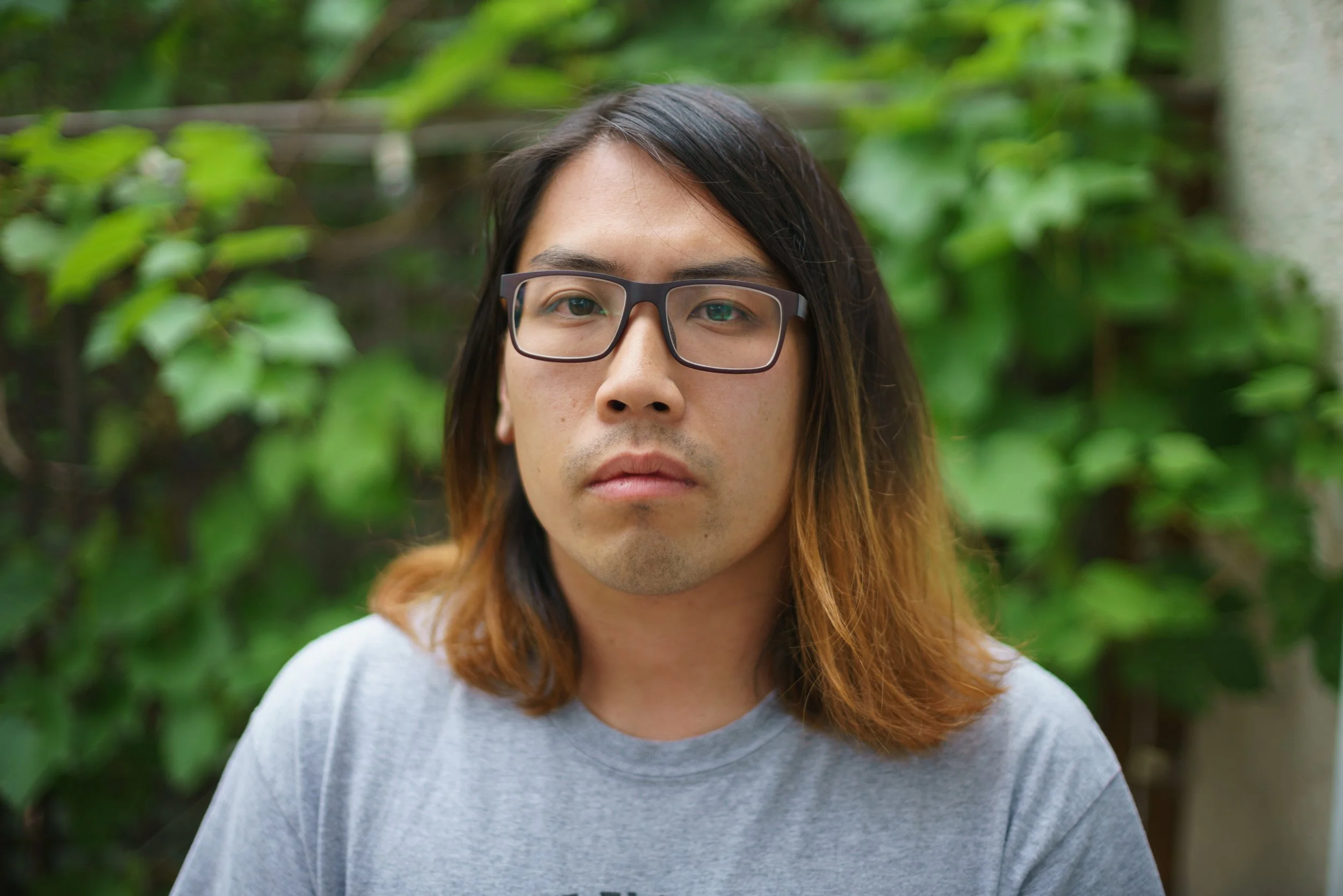
Jean Marc Ah-sen. (Photo credit Justin Legace.)
More about Jean Marc Ah-sen:
Jean Marc Ah-Sen is the author of Grand Menteur, In the Beggarly Style of Imitation, and Kilworthy Tanner. His work has appeared in Literary Hub, The Walrus, The Globe and Mail, and elsewhere. The National Post has hailed his writing as an “inventive escape from the conventional.”

Power Q & A with Paola Ferrante
It’s easy to lose yourself in the dark and dreamy world of Paola Ferrante’s Her Body Among Animals (Book*hug Press). This collection of short fiction absorbs and unsettles. It explores the pressure of the patriarchy with playful and twisted stories that have dazzled readers since the book’s release in 2023. Paola’s book has been a finalist for the 2024 Governor General’s Literary Award for Fiction, a runner-up for the 2023 Danuta Gleed Literary Award, the Silver Winner of the 2023 Foreword INDIES Book of the Year Award for Short Stories, and a finalist for the 2023 Shirley Jackson Awards.
We are delighted to have Paola here with us today to talk about how her stories pitch darkness into light.
It’s easy to lose yourself in the dark and dreamy world of Paola Ferrante’s Her Body Among Animals (Book*hug Press). This collection of short fiction absorbs and unsettles. It explores the pressure of the patriarchy with playful and twisted stories that have dazzled readers since the book’s release in 2023. Paola’s book has been a finalist for the 2024 Governor General’s Literary Award for Fiction, a runner-up for the 2023 Danuta Gleed Literary Award, the Silver Winner of the 2023 Foreword INDIES Book of the Year Award for Short Stories, and a finalist for the 2023 Shirley Jackson Awards.
We are delighted to have Paola here with us today to talk about how her stories pitch darkness into light. Welcome, Paola!

Paola Ferrante’s Her Body Among Animals, published by Book*hug Press.
Q: You've fashioned darkness in your stories into a force of light and release for some of your characters. Was this something you consciously did, or an unconscious reaction to the stories you are telling?
A: I’m a horror fan, which is probably no a secret to anyone who’s read Her Body Among Animals, considering how many times I talk about Michael Myers or the Enfield poltergeist. And one of my favourite horror movies, The Babadook, is favourite precisely because it has a completely non-traditional ending for a horror film. Hopefully I’m not spoiling this for anyone, but there’s something so satisfying in seeing the monster chained up in the basement, and the victims, the mother and her son, now completely unafraid of him and able to go about their lives. That to me was always the type of ending I wished to achieve in my own fiction. So aiming for the light, while diving deep into the dark, was my aspiration from the beginning.
Because I knew, going into it, that the stories in Her Body Among Animals were going to deal with some pretty dark subject matter. These are stories about postpartum anxiety, climate grief, domestic abuse, untreated and stigmatized depression, and general misogyny. The reason I told these stories using the conventions of dark fantasy, science fiction and horror, letting sentient sex robots and ghosts and urban legends about lizard men do a lot of the heavy lifting for me, was because I wanted my reader to actually “enjoy” the experience of engaging with difficult material. And there’s a difference between writing horror and being bleak, one I learned from reading Timothy Findley’s memoirs (who, as an aside, is probably my favourite Canadian writer of that generation). I will always remember reading Findley’s memoir when I was a baby writer in a university creative writing program. During one section, he spoke about burning an entire manuscript because he felt, when it was done, that it had nothing redeeming for the reader. So I was very conscious that, in a book about women’s resilience, about looking at the mistakes of the past, and about trauma, there had to be a light at the end of tunnel. There had to be something for the reader to grab onto.
I believe, as a writer of this kind of fiction, it’s my responsibility to offer an idea how things could be different, whether it’s a young woman deciding not to put her self on hold to go to Mars with her boyfriend, a teen boy acknowledging his culpability in bullying another boy, thereby contributing to the kind of toxic masculinity in his friend group that enabled his brother to commit a sexual assault, a woman breaking out of the expectations of childbearing in her marriage by electing to stay a spider, or a sex robot enacting some fiery revenge. I always think the reader needs to see a way out. Because I think one of the greatest things fiction gives us is the ability to play with ideas, to imagine alternate futures of better possibilities.
More about Her Body Among Animals:
In this genre-bending debut collection merging horror, fairy tales, pop culture, and sci-fi, women challenge the boundaries placed on their bodies while living in a world “among animals,” where violence is intertwined with bizarre ecological disruptions.
A sentient sex robot goes against her programming; a grad student living with depression is weighed down by an ever-present albatross; an unhappy wife turns into a spider; a boy with a dark secret is haunted by dolls; a couple bound for a colony on Mars take a road trip through Texas; a girl fights to save her sister from growing a mermaid tail like their absent mother.
Magical yet human, haunted and haunting, these stories act as a surreal documentation of the mistakes in systems of the past that remain very much in the present. Ferrante investigates toxic masculinity and the devastation it enacts upon women and our planet, delving into the universal undercurrent of ecological anxiety in the face of such toxicity, and the personal experience of being a new mother concerned about the future her child will face.
Through these confrontations of the complexity of living in a woman’s body, Her Body Among Animals moves us from hopelessness to a future of resilience and possibility.

Paola Ferrante is a writer living with depression. Her debut fiction collection, Her Body Among
Animals (Book*hug Press, 2023), was nominated for the Governor General’s Award for Fiction and the Shirley Jackson Award, was a runner-up for the Danuta Gleed Award, a Silver Medal Winner in Foreword INDIES Book of the Year Awards, and was published in the UK by Influx Press in August 2024. Her fiction has been longlisted for the Journey Prize, and her debut poetry collection, What To Wear When Surviving a Lion Attack (Mansfield Press, 2019), was shortlisted for the Gerald Lampert Memorial Award. She was born, and still resides in, Toronto, with her partner Mat and their son.

Power Q & A with Sheila Stewart
Sheila Stewart’s stunning poetry collection, If I Write About My Father, (Ekstasis Editions, 2024) dismantles the patriarchal religious ideologies of Sheila’s upbringing by a protestant minister, while sustaining the emotional intimacy experienced in familial relationships.
Sheila explores the daughter-father relationship, uncovering the complexities of growing up as the minister’s only daughter in a family shaped by church and manse in small-town southern Ontario. She braids narrative and lyric, the textures of liturgy and memory. While critiquing patriarchal weight and constraint, the work explores how a particular religious upbringing shapes thinking, the rhythms of language, and the fabric of consciousness.
Sheila Stewart’s stunning poetry collection, If I Write About My Father, (Ekstasis Editions, 2024) dismantles the patriarchal religious ideologies of Sheila’s upbringing by a protestant minister, while sustaining the emotional intimacy experienced in familial relationships.
Sheila explores the daughter-father relationship, uncovering the complexities of growing up as the minister’s only daughter in a family shaped by church and manse in small-town southern Ontario. She braids narrative and lyric, the textures of liturgy and memory. While critiquing patriarchal weight and constraint, the work explores how a particular religious upbringing shapes thinking, the rhythms of language, and the fabric of consciousness.
Sheila joins us for this Power Q & A to talk about why she decided to tackle the church and her relationship with her father with these powerful poems.
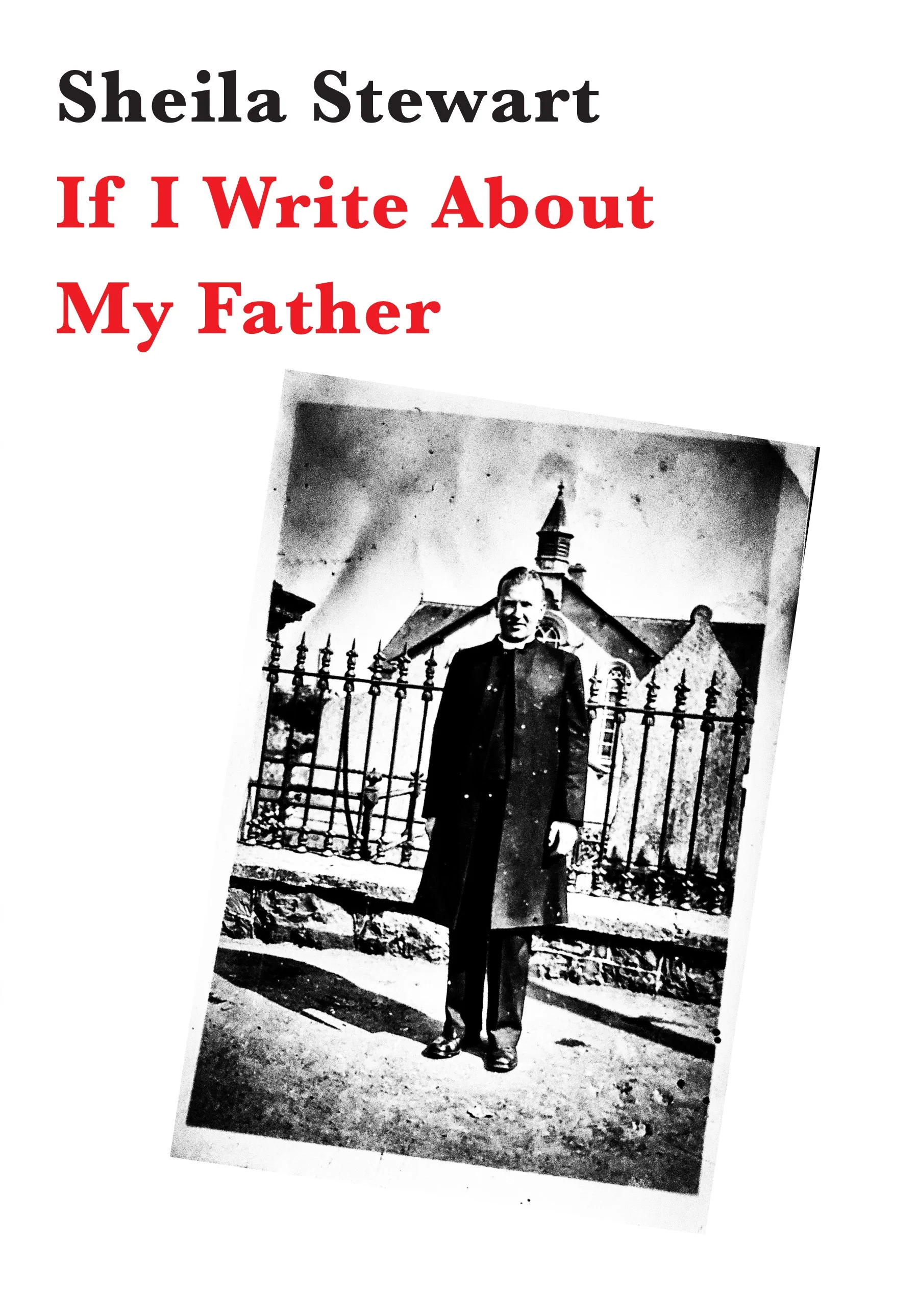
Q: Why did you focus this collection on your relationship with your father and the church?
A: It wasn’t so much a deliberate choice to write about my father and the church, as something I was compelled to do. I was writing a dissertation at the Ontario Institute for Studies of Education/University of Toronto (OISE/UT) and wrestling with my own authority as a writer. While I’ve always been drawn to ideas and learning, tackling a PhD at age 48, was intimidating. I was aware of the hierarchies and power structures of the University having worked at OISE/UT for years as a research coordinator on adult literacy issues.
Growing up in small town Southwestern Ontario as the minister’s only daughter, I was conscious of the power dynamics within our traditional Irish Canadian home and the congregations where my dad served. I’m very interested in the way religions provide stories and meaning for people to live their lives. I’m not Christian, but I was surrounded by the language and poetry of the Bible as a child. The book begins with a poem called “Altar”. I am exploring spirit and, in a sense, find it in the natural world, Lake Ontario, High Park. My earliest years were mainly indoors, in the manse and at church surrounded by parishioners, and then at school where I was known as the minister’s daughter. I needed to work through the restraint and strictures of my church upbringing to inhabit a more embodied sense of self.
My first collection, A Hat to Stop a Train (Wolsak and Wynn), is about my relationship with my mother and her life as a minister’s wife. I’m fascinated by how family members shape each other. If I Write About My Father (Ekstasis Editions) is kind of companion piece to my first book. While the book is about aspects of my relationship with my father, it is also about authority and power of different kinds: institutional and that found as a writer, often through a long wrestle with words.
More about If I Write About Father:
What effect do fathers and faith have on a child? In If I Write About My Father, Sheila Stewart explores the daughter-father relationship drawing on reflections about her father, a Northern Irish Presbyterian minister who immigrated to Canada and joined the United Church. Her poetry uncovers the complexities of growing up as the minister’s only daughter in a family shaped by church and manse in small-town southern Ontario. Stewart braids narrative and lyric, the textures of liturgy and memory. While critiquing patriarchal weight and constraint, the work explores how a particular religious upbringing shapes thinking, the rhythms of language, and the fabric of consciousness. In this quest, the poet draws from the sensory world by walking the woods and Lake Ontario shores.
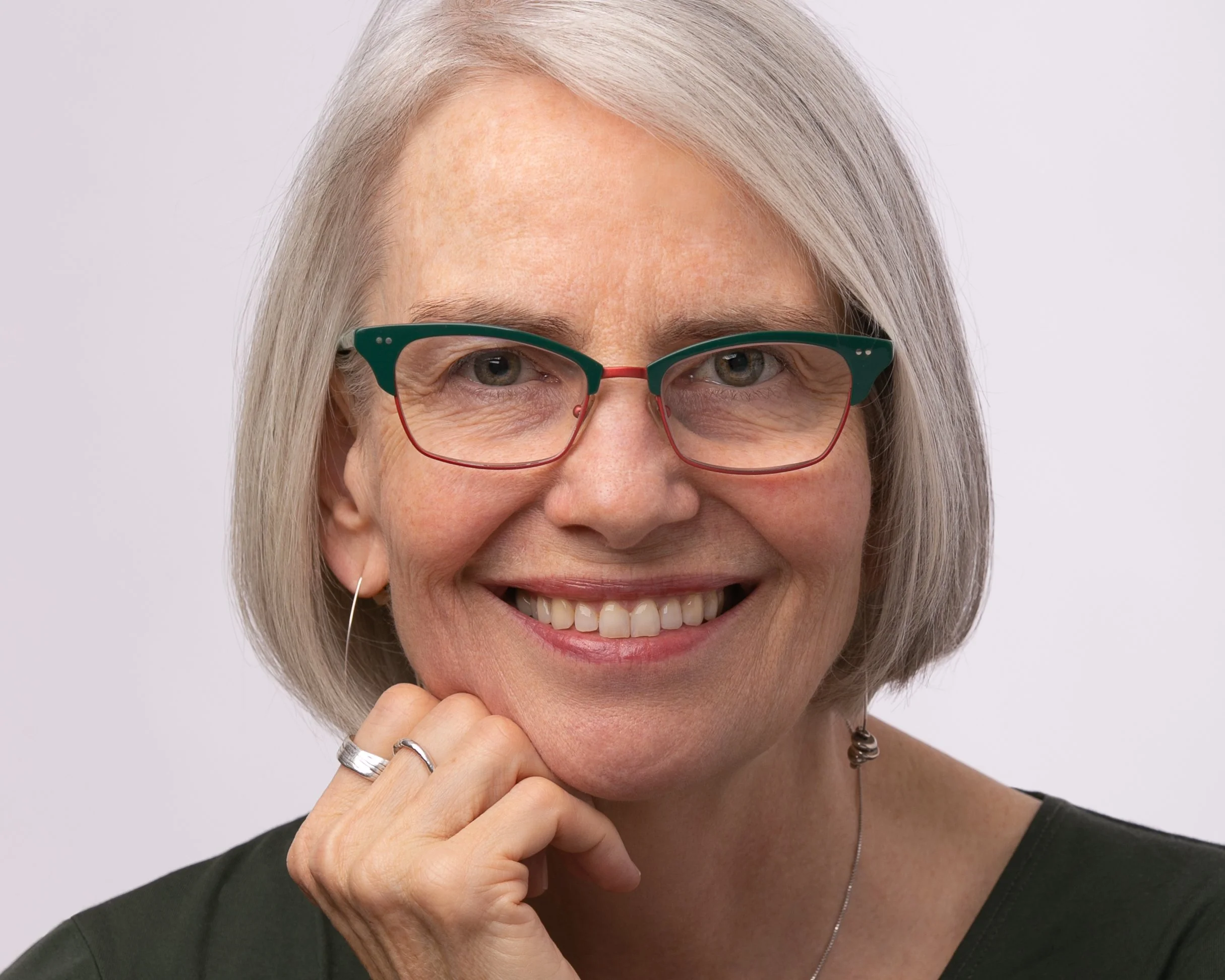
Sheila Stewart
More about Sheila Stewart:
Sheila Stewart’s publications include two poetry collections, A Hat to Stop a Train and The Shape of a Throat, and a co-edited anthology of poetry and essays entitled The Art of Poetic Inquiry. Awards include the gritLIT Contest, the Scarborough Arts Council Windows on Words, and the Pottersfield Portfolio Short Poem Contest. Her poetry has been widely published in Canadian and international journals. She recently left teaching at the University of Toronto to devote herself to writing.

Power Q & A with Michelle Berry
Michelle Berry is an acclaimed author of literary thrillers. Her newest novel, Satellite Image (Wolsak & Wynn, 2024) follows the story of Ginny and Matt, a young married couple from the city who decide to buy a house in a small town and move after Ginny is assaulted.
On the night before the move, however, Ginny and Matt, while looking at a satellite image of their new home, see what is undeniably a body in their backyard. Thus the stage is set for this eerie story.
Michelle Berry is an acclaimed author of literary thrillers. Her newest novel, Satellite Image (Wolsak & Wynn, 2024) follows the story of Ginny and Matt, a young married couple from the city who decide to buy a house in a small town and move after Ginny is assaulted.
On the night before the move, however, Ginny and Matt, while looking at a satellite image of their new home, see what is undeniably a body in their backyard. Thus the stage is set for this eerie story.
We noticed a different feel to Michelle’s novel compared to many other thrillers. While the story delivered on the chills and suspense, there was also a sophisticated rendering of character and events, where the reader was left to fill in what is not explicitly stated. There was also an upending of certain genre-based narrative conventions that offer a subtle commentary on real life and real people. We wondered: is this a signature of the literary thriller genre? What is a literary thriller, exactly? Or even just generally?
Welcome Michelle Berry to our series to help answer our questions.
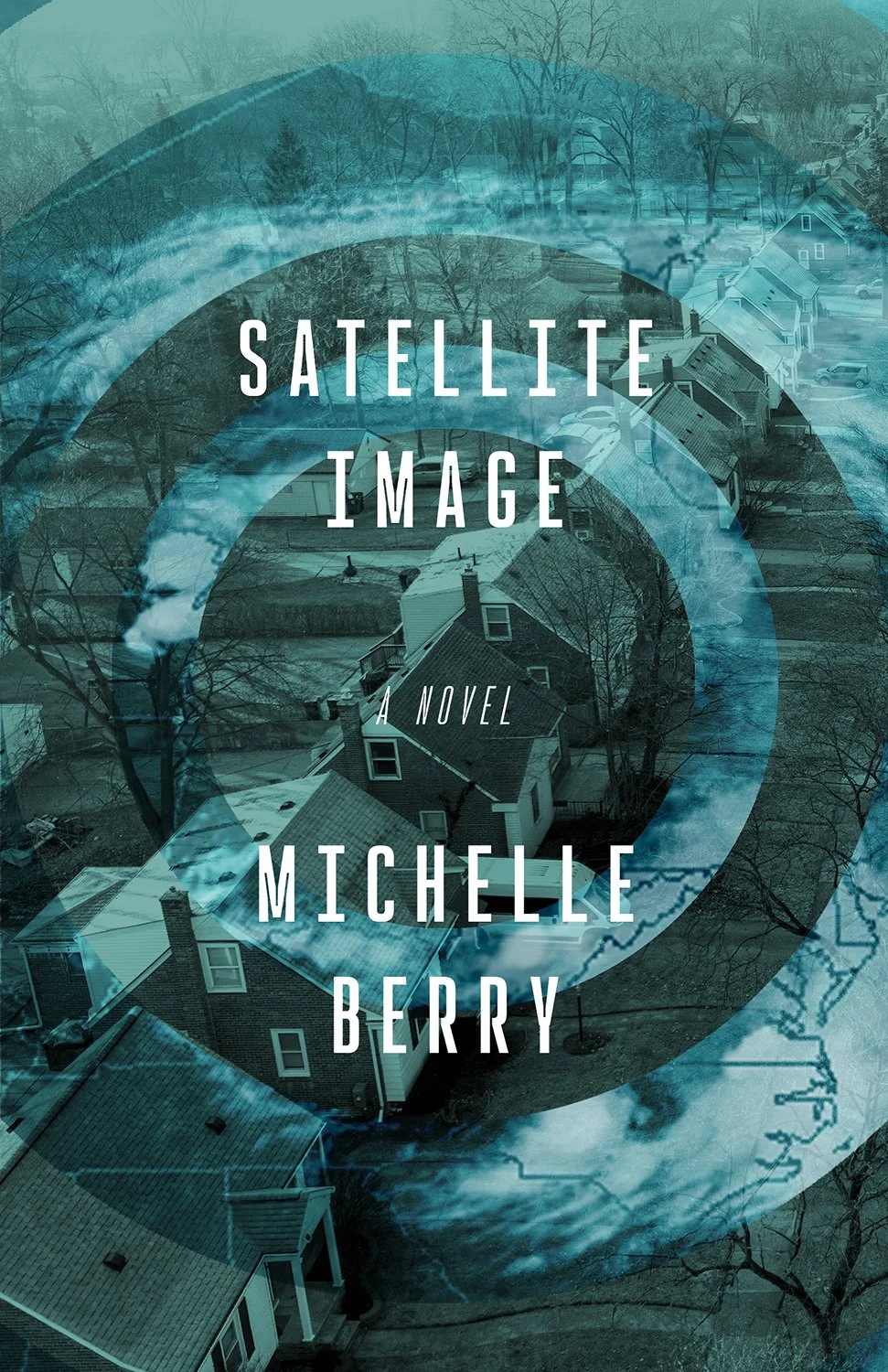
Bring home Satellite Image by Michelle Berry (Wolsak & Wynn, October 15, 2024).
Q: Would you use your book, Satellite Image, to highlight some differences between a literary thriller and a thriller?
A: I’m not sure if this is correct, but this is how I see the differences between a traditional thriller and a literary thriller. I imagine a tightrope. Let’s call it a Literary Thriller Tightrope. I’m walking along it. One foot falls off occasionally but I remain pretty steady to the end. Now I imagine another Tightrope. Let’s call this one a Thriller Tightrope. Again, I’m walking along and suddenly I really fall off. Both are tight ropes, but on one my foot just dips into the unknown, on the other I fall completely in.
I see a literary thriller, like Satellite Image, tipping back and forth between the frightening situation and the reality of the situation (in it I’m losing my balance, a foot falls off, but I don’t fall). This book focuses more on the psychological effects of the fear, on misperceptions and misunderstandings – what is real? What is not real? Ginny and Matt – are they really seeing/hearing/feeling something in their house or is their previous anxiety (seeing the satellite image of the body in their yard, Ginny’s attack in the city) playing havoc on their minds? On the other hand, a traditional thriller to me would look at things that are actually happening which are frightening and the reader would fall completely into those things. A threatening figure would be a threatening figure. But in Satellite Image the fear is more about perception—is the threatening figure real or is this just my imagination?
I also think that traditional thrillers generally give you more detail—things are explained and portrayed in ways that don’t demand you use too much of your own imagination and instead just fall into the writer’s thoughts. In a literary work the author may leave the reader with a lot to be figured out—do we know exactly what the characters are wearing or what they look like? Do we know what their house looks like? etc… I sometimes think thrillers are more entertaining in that they let you sink into what the author directs, whereas literary thrillers are maybe asking the reader to do a little more work in some way.
I’m probably completely wrong about the differences (and there are, of course, many books that are exceptions to the rule), but that’s kind of how I see Satellite Image. Ginny and Matt’s odd house, the things that make them nervous, their year of fear and what really happened is left up in the air – is anything real? Is anything easily explained? Or is it all psychological? Is it all a misunderstanding?
More about Satellite Image:
Reminiscent of the works of Barbara Gowdy and Joy Williams, Berry’s Satellite Image fully embraces the uncanny as it straddles the line between reality and unreality. When newly married couple, Ginny and Matt, move from the bustling, expensive rat race of the city to a sleepy, innocent, affordable small town two hours away, they assume life will be easier. Little do they know that they have bought a house with a baffling history. Life in this town is not all it’s meant to be. Odd neighbourhood dinner parties, and a creepy ravine just out their back door have Ginny and Matt quickly questioning their move.
Read an excerpt of Satellite Image here.
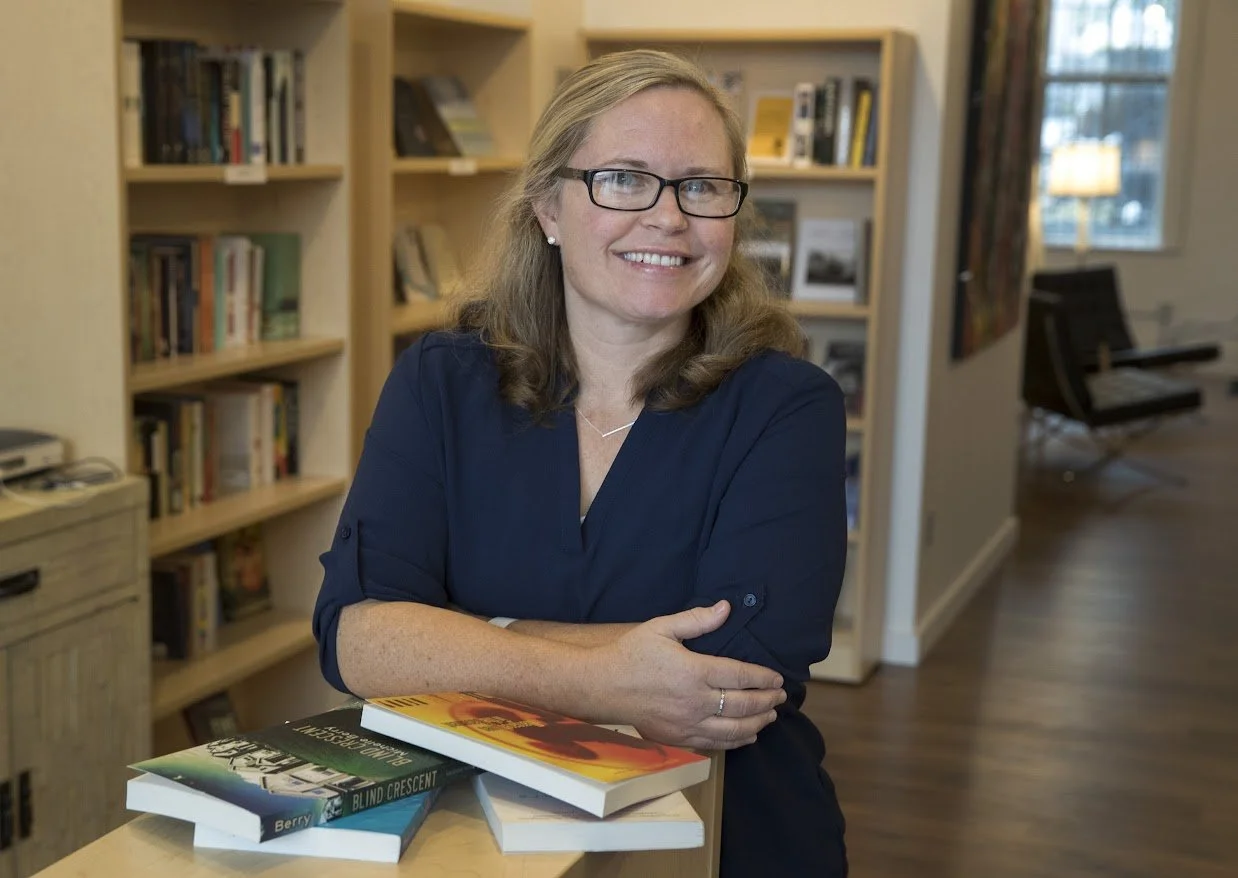
Michelle Berry. Photo credit: Fred Thornhill.
More about Michelle Berry:
Michelle Berry is the author of seven novels and three books of short stories. Her books have been shortlisted, long listed and have won multiple awards. Much of Berry’s writing has been optioned for film several times, with The Prisoner and the Chaplain currently in the works. Berry was a reviewer for the Globe and Mail for many years and currently teaches at the University of Toronto in the Continuing Education department. She has served on the board of PEN Canada, the Writer’s Union and on the Author’s committee of the Writer’s Trust. For five years, Berry owned and operated her own independent bookstore in Peterborough, Ontario, called Hunter Street Books.

Power Q & A with Ian Colford
Books have long lives, but if it’s possible to be late to the party celebrating an amazing book, we are definitely late to this one. Ian Colford’s 2023 Guernica Prize-winning novel, The Confessions of Joseph Blanchard, is a mesmerizing read that runs a dazzling gamut of human emotion: love, greed, grief, jealousy, rage. You name it: the characters in this novel—particularly our protagonist, Joseph—sing with range that would make Mariah Carey weak with envy.
Books have long lives, but if it’s possible to be late to the party celebrating an amazing book, we’re definitely late to this one. Ian Colford’s 2023 Guernica Prize-winning novel, The Confessions of Joseph Blanchard, is a mesmerizing read that runs a dazzling gamut of human emotion: love, greed, grief, jealousy, rage. You name it: the characters in this novel—particularly our protagonist, Joseph—sing with range that would make Mariah Carey weak with envy.
In Joseph—a man who falls in love with his 19-year-old cousin—we find a person to rally against and even (surprisingly and often against our better judgment) a person to rally for, despite his slippery moral footing. We are delighted to welcome Ian to our series today to ask him about creating the complex, haunting, and fascinating character of Joseph.

The Confessions of Joseph Blanchard by Ian Colford (Guernica Editions, 2023)
Q: One of the great feats of your book, to our mind, was the character of Joseph: a man who is repugnant in many ways but who we also couldn't help feel compassion toward—a surprising and disturbing realization. What is your advice to writers who want to create morally murky characters?
A: As I noted in a recent blog post about writing The Confessions of Joseph Blanchard, the character of Joseph came to me more or less fully formed. At the time I was writing the book, I wasn’t giving much thought to his status in the reader’s eyes, as someone they would like or dislike. My aim on days when I sat down to write was simply to keep the story moving forward. But as I got deeper into the story and saw what Joseph was doing, I grew more aware of the notion of sympathy. And after I finished it and started letting people read it, I had to wonder what they’d think of him.
Writing the book was a learning process and a lot of the time I was writing on instinct. But one thing I was sure of was that I didn’t want Joseph to be a nefarious schemer. I knew that if his intention from the get-go was to cause harm, the story would be boring, for me and for the reader. Instinct told me to dig deep into his history and find ways to give his character complexity and nuance. I wanted Joseph to be a puzzle for the reader to unravel. Because people behave in puzzling ways. They behave badly. Sometimes they even act against their own best interests. For the novel to work, the reader had to see Joseph as flawed and vulnerable. What makes our response to him so complicated is that we’re witnessing a fundamentally decent man struggling against base impulses. He knows he’s behaving badly. It eats at him, and yet he comes up with justifications that make it possible for him to carry on with behaviour that the reader will regard as unforgivable.
My advice for writers who want to create a morally murky character is to get to the root of why the character acts the way he does. If the reasons are simplistic (he’s doing it for revenge, or for kicks), then—probably but admittedly not always—the character you create will be one dimensional. If your character isn’t engaged in a struggle, not only will the reader quickly lose interest, but you, the writer, will tire of him. As a writer of fiction, your first responsibility is to write something the reader will find interesting, and a dependable compass to help you navigate your way through a novel manuscript is your own sense of what’s interesting. If you find your character boring, it’s likely the reader will too. But if you’ve endowed your character with the kind of depth that brings them convincingly to life and fires up your imagination every time you sit down to write, then there’s a reasonable chance your reader will be transfixed by what you’ve written.
More about The Confessions of Joseph Blanchard:
The Confessions of Joseph Blanchard is a contemporary tale of obsessive love, sexual transgression, and tragic loss. Bachelor and professional accountant Joseph Blanchard has led a socially active but emotionally cautious life until his late thirties. When he discovers that his beautiful cousin Sophie, a talented concert pianist, is in love with him, he finds he is powerless to resist her youthful charms, and against his better judgment embarks on a passionate affair. To avoid causing pain to her parents, the two lovers conspire to keep their relationship a secret. For a time, they are happy. But Sophie's career forces her to spend time in the company of other musicians, many of them young men. Consumed by jealousy, Joseph allows rage to take control, with tragic results. Grieving, he prepares to destroy all evidence of the affair. But when a family secret is exposed, it reveals the past in a new light. Eventually, his health in decline and with nothing but memories, he reveals his secret to a confidant.

Author Ian Colford.
More about Ian Colford:
Ian Colford was born, raised and educated in Halifax. His reviews and stories have appeared in many print and online publications. He is the author of two collections of short fiction and two novels and is the recipient of the Margaret and John Savage First Book Award for Evidence.

Power Q & A with Karen Green
Karen Green’s debut novel Yellow Birds (Re:Books Publishing) is being hailed as a beautiful and textured exploration of love, community, and learning to accept ourselves and each other.
In the Toronto Star, Nancy Wigston writes that Yellow Birds, “carries readers into the heart of a vanished musical era, and does it with style and panache.” If you’re looking for a singular and stunning coming-of-age novel to lose yourself in this season, be sure to put this on your reading list.
Karen Green’s debut novel Yellow Birds (Re:Books Publishing) is being hailed as a beautiful and textured exploration of love, community, and learning to accept ourselves and each other.
In the Toronto Star, Nancy Wigston writes that Yellow Birds, “carries readers into the heart of a vanished musical era, and does it with style and panache.” If you’re looking for a singular and stunning coming-of-age novel to lose yourself in this season, be sure to put this on your reading list.
After reading Green’s book, we had to know about why Green set the novel when she did: just before the digital revolution, in the mid-1990s. So we invited her to our Power Q & A series and asked!
Welcome, Karen!

Yellow Birds by Karen Green.
Q: Would you tell us why you decided to set the novel in the time period you did?
A: The reason for this was intentional and two-fold: first -- because Yellow Birds is based on a lot of my own experiences when I was a young Deadhead, and that was in the mid-90s. I think fan culture is having a moment these days as well, but I would never have set Yellow Birds in a contemporary timeframe, because second -- cell phones and the internet solve too many problems. I couldn’t let my protagonists Google Map their road trip route or text each other when there was conflict. That’s just way too easy.
More about Yellow Birds:
Set in a time just before the digital revolution, Kait is a young woman searching for identity and community. A group of outcasts called the Yellow Birds take her town to town on what they refer to as the Open Road Tour. One night, when Kait is feeling kinship with this group of Birds, a man sits beside her who alters her fragile plans for the foreseeable future. Filled with sex, drugs, music, and cults, readers won't be able to get enough of the groupie lifestyle entangled within a bohemian love story.

Author Karen Green.
About Karen Green:
Karen Green is a writer and editor in southwestern Ontario. Her essays, poetry, and fiction pieces have appeared in The Globe and Mail, CBC, Today’s Parent, Room Magazine, Harlequin, Chicken Soup for the Soul, Bustle, and The Rumpus. She is also the author of two young readers books and is the lyricist for several children’s pop songs.

Power Q & A with Rod Carley
RuFF is Rod Carley’s highly-anticipated fourth novel. This historical fiction, which is published by Northern Ontario’s Latitude 46 Press, transports us to Elizabethan England, where we witness Shakespeare struggling through a midlife crisis while trying to win a national play competition to secure the King’s business. Hilarious hijinks ensue, with whip-smart dialogue and a captivating tale that touches on salient social issues that persist today, including equality, justice, and censorship.
Humour and incisive wit combine to create a compulsively readable and thought-provoking novel from this Leacock Award long-listed author. We know RuFF will be a favourite book of the year for many and we are tickled to have Rod Carley here with us to talk about humour writing.
RuFF is Rod Carley’s highly-anticipated fourth novel. This historical fiction, which is published by Northern Ontario’s Latitude 46 Press, transports us to Elizabethan England, where we witness Shakespeare struggling through a midlife crisis while trying to win a national play competition to secure the King’s business. Hilarious hijinks ensue, with whip-smart dialogue and a captivating tale that touches on salient social issues that persist today, including equality, justice, and censorship.
Humour and incisive wit combine to create a compulsively readable and thought-provoking novel from this Leacock Award long-listed author. We know RuFF will be a favourite book of the year for many and we are tickled to have Rod Carley here with us to talk about humour writing.

Bring home RuFF by Rod Carley, published by Latitude 46.
Q: What advice do you have for aspiring humour writers?
A: Everyone has a different sense of humour. We all find different things funny for different reasons. This is why it’s important that before you sit down and try to write, you think about your own personal sense of humor and how you want to mine that to produce a piece of humor writing.
Accept that you have the potential to be funny. Writing humour might come more easily to some, but everyone has the potential to be funny. Find a voice—maybe it’s your main character—to channel your humor through. Trying to mimic other people’s styles in humour writing won’t work. If you try and write in a style that isn’t your own, or if you try and force yourself to be funny in a way that isn’t you, the effort behind your writing will show.
Humour is subjective. When you write a novel or collection of short stories that you hope will be funny, you can be guaranteed that not everybody will find it funny – you just hope some people will find it funny! Readers have the same reaction (to various degrees) to a romance novel, horror novel, or a mystery novel. But with a humour novel, some readers will find it the funniest thing they’ve ever read. Others won’t find it funny at all. It’s a challenge. Much like trying to catch a dragon. So, all you can do, is hope your sense of humour coincides with enough readers to make it worthwhile.
Use humour sparingly. Don’t overdo it; be specific. Your purpose is to grab the reader’s attention and help you make points in creative ways. Be sure your humour doesn’t distract from or demean the true purpose of your narrative.
Above all, make it fun for yourself. If it ain’t fun for you, it won’t be fun the reader.

Rod Carley.
More about RuFF:
Rod Carley is back with another theatrical odyssey packed with an unforgettable cast of Elizabethan eccentrics. It’s a madcap world more modern than tomorrow where gender is what a person makes of it (no matter the story beneath their petticoats or tights). Will Shakespeare is having a very bad year. Suffering from a mid-life crisis, a plague outbreak, and the death of the ancient Queen, Will’s mettle is put to the test when the new King puts his witch-burning hobby aside to announce a national play competition that will determine which theatre company will secure his favour and remain in business. As he struggles to write a Scottish supernatural thriller, Will faces one ruff and puffy obstacle after another including a young rival punk poet and his activist-wife fighting for equality and a woman’s right to tread the boards. Will and his band of misfits must ensure not only their own survival, but that of England as well. The stage is set for an outrageous and compelling tale of ghosts, ghostwriting, writer’s block, and the chopping block. Ruffly based on a true story.
More about Rod Carley:
Rod is the award-winning author of three previous works of literary fiction: GRIN REAPING (long listed for the 2023 Leacock Medal for Humour, 2022 Bronze Winner for Humour from Foreword Review INDIES, a Finalist for the 2023 Next Generation Indie Book Award for Humor/Comedy, and long listed for the ReLit Group Awards for Best Short Fiction of 2023); KINMOUNT (long listed for the 2021 Leacock Medal for Humour and Winner of the 2021 Silver Medal for Best Regional Fiction from the Independent Publishers Book Awards); A Matter of Will (Finalist for the 2018 Northern Lit Award for Fiction).
His short stories and creative non-fiction have appeared in a variety of Canadian literary magazines including Broadview (winner of the 2022 Award of Excellence for Best Seasonal Article from the Associated Church Press), Cloud Lake Literary, Blank Spaces, Exile, HighGrader, and the anthology 150 Years Up North and More. He was a finalist for the 2021 Carter V. Cooper Short Fiction Prize.
Rod was the 2009 winner of TVO’s Big Ideas/Best Lecturer Competition for his lecture entitled “Adapting Shakespeare within a Modern Canadian Context. He is a proud alumnus of the Humber School for Writers and is represented by Carolyn Forde, Senior Literary Agent with The Transatlantic Agency. www.rodcarley.ca.

How to Become a Freelance Writer: Tips from the Trenches
Interested in learning how to become a freelance writer? River Street’s Hollay Ghadery gives you her top tips for making it in this paper-cut-throat industry.
I'll admit it, when I first dreamed of being a writer, I envisioned romantic bursts of inspiration, fancy parties, and, of course, major windfall for all my creative efforts. I was eight years-old at the time, so granted, my vision was idealised through the sugared-glaze of childhood. Even over a decade later, when I started writing professionally and could call myself a capital 'W' writer, I was not prepared for what it would entail to really make it in this profession over the long-haul.
And it is a long-haul. I've been a freelance writer for 15 years now, and this profession is not for the faint of heart. That's the bad news. The good news is that it is for the full of heart, so if words are your life and you have at least a smidgen of workable innate talent, then you stand a good chance of making it as a freelance writer. Of course, passion alone isn’t enough.
Keep reading. Here are my top tips how to become a freelance writer.
1. Don't Quit Your Day Job
Most of us don't have the luxury of living off savings (if we have any) while we wait for our freelance gig to pick up—and it will probably take some time to pick up. Even if you worked as a company writer for years, going freelance means you have to establish a reputation of your own: you can't rely on the reputation of a brand to back you up. So, while you're establishing yourself as a freelancer, it's always a good idea to have a reliable source of income as well. Even if it's just part-time, these funds will help support you through the dry-spells that are an inevitable part of freelancing at any stage in the game.
Quick word, though: if you already work as a writer for a company or organisation and plan to go freelance, be sure that your freelance work isn't gained through poaching any of your current employers clients. This is not only bad form, but likely, against company contract. You want clients? Go out and find your own.
2. Build a Social Presence
On the day I am writing this, our Instagram account is only a week old. Yep. It's a baby. (But, to our credit, we’ve been on Facebook a mite longer.) What took us so long to get on board the undeniable, seemingly unstoppable social media trend? Well, you know the old adage: the cobbler's children go barefoot. Our services include doing social copy and social media management for our clients, and we just never seemed to get around to doing it ourselves. Brutal, right? It is. With over three billion people using social media worldwide, social platforms are essential to building your brand as freelancer. A consistent social presence will help you gain an audience, increase awareness of your services, engage with current and prospective clients, build your authority and, the icing on the cake—it's free. All you need to do is invest a little time in creating engaging, like-worthy posts.

3. Don't Be Too Precious
I wrote a whole article being overly precious and it boils down to this simple fact: part of learning how to become a freelance writer involves learning how to cultivate your interests outside your established interests. You may live for travel writing, but National Geographic likely won't hire you off-the-hop. By all means, do as much travel writing as you can, but also, be willing to take on other projects in other fields. As a fledgling freelancer, you can't be too precious about what you will and will not write. As long as it isn't morally offensive or illegal, you should at least consider it. Besides, you never know what fascinating fields you can stumble into with an open-mind.
4. Don't Write for Free
Many, many online and print publications will tell you that "exposure" is your payment. Unless you work in the sex trade, exposure, unfortunately, does not pay the bills. What exactly you will be able to charge will depend on variable factors like your experience and the scope of the project in question, but if you want to become a successful freelance writer, you need to charge something. We sometimes do pro-bono work when the cause moves us, but this is the exception: certainly not the rule. Charge for your efforts.
Also, be sure to manage your money properly. Until you build a steady client-base—which can take years— your revenue will usually vary significantly from month-to-month. Feast and famine is part of #ThatFreelanceLife, so, when you get a cushy payment, after you pay your essentials, be sure to tuck some of it away for when times are tight.
How much should you charge as a freelance writer? Standard junior freelance rates can start as low as $20 per ~500 word article ($0.04 per word) while senior rates can go upwards of $150 for the same length ($0.30 per word). Rates also depend on what you're writing. For instance, $20 per 500 word article is decent for a piece you can knock-out in under an hour and requires little research, but if it takes more than that, you either have to increase your rate, or become more efficient. And speaking of which...

5. Get in the Grind
When you're writing for a living, the time-suck of writer's block is a luxury you cannot afford. Writing is a grind, and you simply need to write and write and revise and write and edit until the project is done. Don't sit there waiting for divine inspiration: just nail your butt to the chair, and start writing. Sure, the first paragraph or three may turn out to be a warm-up to get you to the real meat of the piece, but the time it took you to write those paragraphs (which will ultimately be scrapped) is far less than the time you would have spent staring at your blinking cursor doing nothing. Learning how to become a freelance writer largely involves the simple, unwavering commitment to just writing.
6. Keep Learning
Read. Voraciously. Anything you can get your hands on. Whether you're a creative writer or technical writer, reading is a wonderful way to keep refining your craft. Also, take courses to keep your qualifications tip-top. Enrol in an editing certification course, like the one at Simon Fraser. Read up on best practices for keyword optimisation. Take a Google business writing course. Some of these resources are free; others...not so much. But there is some truth to the saying, "It takes money to make money." Of course, you don't want to bankrupt yourself, so just do what you can, as you are able. Any advantage you give yourself is an advantage over your competition. Maintaining this edge is why our rag tag team of writers is constantly updating our certifications, learning, and honing our skills.
Read up on our top recommended resources for writers here.

7. Be Professional!
You’d think this would be self-explanatory, but sadly, it’s not. Just because you can work in your jammies doesn’t mean you can toss basic professionalism to the wind. Answer emails in a timely fashion. Manage your time so you can deliver on deadline. Correspond in complete sentences. If you have questions, ask. Be accountable. Don’t give excuses—no one’s interested. Do. Your. Job. Yes, life happens and sometimes the scat hits the fan, but if you’ve managed your time properly, there is usually no reason your clients have to know about your life’s mishaps. And, if you’ve cultivated a professional and dependable reputation, in the rare instances that you do need to adjust a deadline or step away from a project entirely, your clients will understand. They’ll still contact you when they need something done in the future. They’ll still recommend you to others.
Listen, freelance writing affords many freedoms, but freedom from accountability isn’t one of them. Unlike many other jobs, there is no one to stand in for you if you don’t show up. When you’re a freelance writer, your word really is your bond. Make it count.
Have questions or tips of your own? Share in the comments! Interested in our services? Contact us now.