

BLOG

Living to Write: Life Experience and Writing
All writing is about life. Whether it’s a novel that follows the life of its protagonist or a poem that describes a particular moment in time, when you write, you communicate a life experience. Therefore, a wide range of life experience is very valuable for writers.
By: Margaret Huntley
All writing is about life. Whether it’s a novel that follows the life of its protagonist or a poem that describes a particular moment in time, when you write, you communicate a life experience. Therefore, a wide range of life experiences are very valuable for writers.
I’m not writing this blog just to state the obvious: you cannot write if you’re dead (though that’s true too). Rather, I’m writing this blog to encourage you to live a life that is full of deep, meaningful experiences that you will then be able to incorporate into your writing. I know it can be tempting to stay inside on your laptop typing out stories for your whole life, especially if you’re someone who struggles with mental health or are introverted by nature.
I’m also not trying to get you to deny who you are by forcing yourself into situations where you don’t feel safe or comfortable. You don’t have to scale a mountain. You don’t have to go backpacking across Europe. You don’t have to swim with the sharks. Unless, of course, you want to do those things. Simply live in a way that is meaningful to you, and that will look different for everyone.

River Street’s Margaret Huntley
That can mean that you have deep conversations with close friends and family members. It could mean that you go out and meet new people (when it’s safe to do so). It could mean that you take a step back from work and take a nice, relaxing bath. Basically, this blog is just drawing on the old cliché, “life is what you make it” to encourage you to live an enriching life that will, in turn, enrich your writing.
Although I don’t want to pressure anyone to do things untrue to themselves, I do hope that you take risks. The more risks that you take, the more that you experience, and the more you will understand. And the more that you understand, the better writer you are because you will have a catalogue of life experience to draw from. Even if you take a risk on a relationship or business venture that doesn’t work out, you will still be better for trying. Failing is the best way to understand what it is truly like to fail. And understanding failure is the best way to write about failure. Struggle and art are two very closely related entities. Just think about all of the amazing break-up songs out there.
While I don’t wish failure on you, I do want you to know that it’s not something to be afraid of. It can actually be a very enriching experience in terms of your career. On the other side of that coin, when you take a risk that works out, you will experience a surprising elation that can also deepen your life and benefit your writing. In short, every experience you have in this life can help your writing. So get out there and live your life!

Analyse This: Analytical Skills for Writers
As a writer, I need to know how to analyze texts. I have to be able to analyze my own works so that I can improve them, and I also need to know how to analyze other author’s works so I can understand and learn from them.
B: Margaret Huntley
As a writer, I need to know how to analyze texts. I have to be able to analyze my own works so that I can improve them, and I also need to know how to analyze other author’s works so I can understand and learn from them.
Analyzing written pieces is a pretty important skill for everyone, not just writers, which is why you learn it in English class in public school. I remember being one of the few people in my class who enjoyed exploring all of the context and nuance behind each text to extract meaningful themes and theses. Now that I am in university, all I ever do is analyze. I analyze everything from renaissance poems, to 18th-century novels, to modern philosophical articles. I even analyze literary critic’s analyses of other texts.

River Street writer, Margaret Huntley.
It’s easy to get sick of analyzing things, especially when you have to do it all the time, whether that be for school or for your work as a writer (or both). But when you really stop and think about why it’s important to analyze the written word, you’ll find yourself exercising your analytical skills more freely. Here are some of the reasons why it’s’ so crucial to analyze texts:
Provides Knowledge and Insight: Critical analysis goes beyond just reading what is on the page. It asks hard-hitting questions about why the author might have written what they did, what the text says about the world at large and the relevance of such themes. The more you know about a text, the better experience you have when reading it because you appreciate it more. And through comprehending all elements of a text, you understand the world better, which brings me to my next point.
Affects Your Worldview: Good literary analysis requires one to deeply assess their own beliefs. You may or may not agree with what the text is saying. And you may or may not change your beliefs after an extensive analysis of the work. Regardless of just how the text affects your worldview, the reality is that you had to consider your beliefs in relation to others.
Encourages Artistic Expression: Engaging with the art of the written word is fun! You get to appreciate the art for what it is and what effect it has. Through your analysis of the art, you may become inspired to create your own. And your work may inspire another person to create and so on.
Intellectual Exercise: If nothing else, critical analysis of texts is an intellectual exercise that benefits your overall mind intelligence. Our brains were made to be used and examining anything written is a great way to exercise them. But as it’s an exercise, it can also be tiring. So make sure to take breaks when necessary.
Those are just some of the reasons I think that analyzing literature is so great. I’d love to hear your thoughts, so feel free to comment below.

BOOK REVIEW: The Home Stretch: A Father, a Son, and All the Things They Never Talk About
Everyone has parents. Everyone’s parents die. Yet the stories where parents and death intersect are unique.
George K. Ilsley’s recent memoir tells one such story. As a young adult, George left his Nova Scotia home, heading west, eventually landing in Vancouver—as far away as he could get while remaining in North America. Then, as he turns 50, his father turns 90, and his father needs, but doesn’t especially want, Ilsley’s care.
The Home Stretch: A Father, a Son, and All the Things They Never Talk About, by George K. Ilsley. Arsenal Pulp Press, 2020. ISBN: 9781551527956. $19.95, 230 pages.
Review by Marion Agnew.
“There is only one way this story is going to turn out.”
Everyone has parents. Everyone’s parents die. Yet the stories where parents and death intersect are unique.
George K. Ilsley’s recent memoir tells one such story. As a young adult, George left his Nova Scotia home, heading west, eventually landing in Vancouver—as far away as he could get while remaining in North America. Then, as he turns 50, his father turns 90, and his father needs, but doesn’t especially want, Ilsley’s care.
Narrated in a gently self-deprecating voice, this book was surprisingly funny and a pleasure to read—not easy, mind, but a pleasure.

Available to purchase wherever books are sold. Grab it from Arsenal Pulp Press.
Part of my pleasure comes from recognition. I had similar experiences with my mother, whose death from dementia came twenty years ago, and with my father, who died seven years later. I, too, lived far away from them, and my siblings, for various reasons, weren’t able to take a more active role as our parents aged. So much of what Ilsley describes was familiar, especially the push-pull of leaving a life you’ve built to spend time with a parent, always feeling guilty for not being in the other place.
But this book has much to offer beyond any personal identification with its situation. It’s also a good example of how the untidy elements of nonfiction make the nonfiction interesting. Writers often try softening memories to make them more palatable or changing events to “fit” a traditional narrative arc. The biggest temptation is to manufacture something “inspirational” or “redeeming” in an account of a difficult time with a difficult person with whom you had a difficult relationship—to say, “It was all worthwhile, because ….”
Deftly, Ilsley avoids these temptations. Everyone else thinks his father is sweet, with a quirky tendency to save things and a charming, if odd, interest in growing peanuts. But Ilsley shows his father’s serious hoarding issues, his disinterest in the reality of others’ lives, his unhealthy obsessions with peanuts and long underwear. We see the dangers present in Ilsley’s father’s stubborn refusal to answer direct questions, his denial that he needs help with walking and eating, and his bitterness when his sons try to help. Nothing soft there.
And no tidy redemption story, either. The last time George sees his father, who’s in the hospital, Ilsley says, “There is, of course, a last scene with Dad in the hospital, tray-locked in his chair, him confused and me sad. Wondering if this is the last time, as I have wondered so many times, with increasing levels of certainty.” But Ilsley can’t know whether this actually is the last time—he’s experienced years of anticipatory grief, waves of anger and sadness, and even moments of acceptance.
All relationships in a family change as parents age, and I admire the honesty with which Ilsley shares his family’s difficulties and silences. He describes a moment with his older brother, who lives with their father: “It is hard to be fifty years old and treated like children by a parent whose welfare consumes our time, energy, and money.”
In fact, the book’s great strength is its insight and candour about the kaleidoscope of emotions involved in loving someone who doesn’t want to be cared for, but who needs it. Anger alone takes many forms: exasperation, impatience, truculence, stubbornness meeting stubbornness.
Fear, too, has many facets. You’re afraid for your parent’s safety and for your ability to survive their suffocating needs. You dread being happy when they die; you dread their death will kill you, too. You’re terrified that all your efforts won’t help make their lives bearable at the end, and that you’ll leave something undone that could have made a huge positive difference in their last years.
But then again, you know—we all do—that there’s only one way this story is going to turn out.
Anyone who’s ever had parents, and anyone who loves the creative chaos of real life, will find rewards in reading this book.
About Marion:
Marion Agnew’s essay collection, Reverberations: A Daughter’s Meditations on Alzheimer’s, came out in 2019. For more about her, see www.marionagnew.ca.

Marion Agnew.

Embracing the Random: Various Writing Tips
I usually pride myself on the organization of my writing. My mind typically flies all over the place, and writing is where I sort out those thoughts into coherency. But for this blog, I wanted to share a sort of messy array of various writing tips. They all pertain to writing and they are all (in my opinion) very useful, though other than that they share no unifying quality to make an articulate blog post.
By: Margaret Huntley
I usually pride myself on the organization of my writing. My mind typically flies all over the place, and writing is where I sort out those thoughts into coherency. But for this blog I wanted to share a sort of messy array of various writing tips. They all pertain to writing and they are all (in my opinion) very useful, though other than that they share no unifying quality to make an articulate blog post.
So please join me in embracing the random:
Read a Diverse Set of Authors: While the publishing industry is making progress in the way of celebrating texts from a diverse set of authors, there is still a long way to go. Making a point to read texts by authors of colour, authors who are members of the LGBTQ+ community, or authors of other minority groups that you may or may not be a part of, is so beneficial. Not only does it help them succeed in a society that stacks the odds against them, but it broadens your understanding of people who are different from you. And understanding people is a great foundation for writing.
Read Your Work Aloud: This is a pretty popular editing tip, and for a good reason. Reading aloud helps you catch errors in your writing that are easily glossed over while reading in your head. I want to expand on this tip by encouraging you to read your text out loud after the editing is done as well. I started reading my finished stories out loud to my boyfriend as he is a very slow reader on his own. While doing this, I realized that reading my completed stories out loud helped me solidify them as an actual story, and not just something I threw together on my keyboard.
Write What You Feel: I’m actively exercising this tip while writing this blog. I don’t feel like organizing one cohesive thought, so I’m writing this miscellaneous list. But this tip goes beyond my personal blog posts. Writing what you feel can mean writing a story that conveys a particular emotion, or it can mean writing something that you just think would be fun to write. Your writing will be better when you are excited about it than if you try to force something that you’re not feeling.
Ask for Help: Asking for help is not something I really like to do. Taking that first step is pretty difficult, whether it’s asking about a job, asking for someone to edit your work, or asking to run your ideas by someone. Despite the fact that each instance of asking for help makes me nervous and reluctant, I’m always grateful that I did in the end. I’m confident that the same will be true for you.
I hope you were able to get something out of my various writing tips, unified only by their mutual disunity.

Personal Growth Through (and Because of) Writing
Personal growth is a pretty difficult thing to avoid. As the world shifts and changes about me, I find myself shifting and changing too. In this blog, I wanted to reflect on some of the things I’ve learned through my writing over the past few years.
By: Margaret Huntley
Personal growth is a pretty difficult thing to avoid. As the world shifts and changes about me, I find myself shifting and changing too. In this blog, I wanted to reflect on some of the things I’ve learned through my writing over the past few years.
Here are some technical aspects of my writing that have developed:
Imagery: I’m not the best at visualizing things. When I read, I do picture things in my head, but the picture is never a vivid one. I struggle with imagery in my own writing because it’s never been a primary focus of mine. Though I still struggle, I have noticed that through the years of practise and learning from example, my imagery skills have improved.
Giving my Writing Space: When I first started writing, I’d obsess over all the little details for days on end. I’m not sure when it was that I realized if I simply gave my brain a break from my writing for a longer period of time, I could return to it with fresh ideas. And my writing has become all the better for it.
Less is More: Though I’m quite passionate about expanding my vocabulary, I now have an understanding that I don’t need to use a multitude of complicated words to be a skilled writer. Instead of agonizing over what words to choose, I now have the confidence to use more concise, simple language.
I’ve learned more than just technical things about writing over the years. I’ve also developed my personal character:
Importance of Writing: As much as I’ve always loved writing, I used to feel as though there were more meaningful things for me to do with my life. University has taught me just how powerful writing can be. It can develop empathy, shape worldviews, inspire change, and so much more. I’m much more self-assured in being a writer now than I used to be.
Emotional Intelligence: Writing requires the author to explore complex emotions in order to convey them properly. By doing this regularly, I have a greater understanding of emotions and can put that knowledge to use in my personal life. I’m able to examine why I feel how I feel and have compassion for the feelings of others.
Open-Mindedness: The more texts that I read, the more perspectives I’m exploring. I’ve come to understand the experiences, opinions, and mindsets of so many different types of people. Keeping an open mind is the only way to be able to fully immerse oneself in a character. By doing this in my reading and writing, I’m able to translate this skill to the real people I encounter in everyday life.
Those are just a few things about writing and about myself that I’ve learned over the years. Being a writer is such a rewarding career in so many ways. I’m excited to learn more.

NEW: River Street Reviews!
ACCEPTING BOOK REVIEW SUBMISSIONS! Learn more about River Street’s new book review series. New reviews published bi-monthly—and we PAY for them! Get the deets in this blog post.
River Street’s New Book Review Series
By: Hollay Ghadery
I write a lot of reviews. As many as I can, which admittedly, isn’t as many as I’d like. Reviews, to my mind, serve as a valuable part of my writing practice. By forcing me to engage critically with text, reviewing makes me think more about the writing craft: the choices we as writers make; the ones we don’t. Sharing books I admire with others is just a perk of the reviewing process.
And “admire” is an operative word here. I read a lot of books that don’t resonate with me. I don’t review them. I think about why I didn’t particularly like them—which is also a valuable part of refining my own voice as a writer—but then I take a deep breath, put on Scrubs, and fold laundry. The act of putting your writing out in the world is an act of hope and trust, both of which I feel are in short supply these days. I don’t want to add to the miasma.
So, with an aim to encourage other writers to share books that have provoked them to think critically, River Street Writing has started the River Street Reviews (RSR) series—a monthly book review feature. And River Street is paying contributors for their reviews. For now, every accepted 300-400 word review will receive a $20 honorarium. (In the process of applying for funding to increase both the honorarium and the frequency with which we publish reviews. Will keep you posted.)
In with the Old & the New
Another thing, unlike many book review platforms, RSR will accept some reviews of books that are older (up to a maximum 50% of the annual reviews). Helping bolster the sales of new books and the visibility about new writers is wonderful, and I hope the reviews shared here will do that, but the primary objective of RSR, as stated, is to encourage writers to develop their craft through critical thinking. Older books can do this as well as newer ones.
So, without further rambling, let’s get onto the nitty-gritty.
Book Reviews—What RSR is Looking For:
While I’m soliciting positive reviews, I am not suggesting that your review should be devoid of any constructive criticism. A positive review is a review that shows you’ve thought deeply about the text—and that can involve respectful criticism.
RSR prioritizes Canadian literature (translations included), but will, on occasion, consider international lit.
RSR cannot consider reviews of self-published books.
Book reviews to be 300-400 words. (Feel free to go over this word count, just not under.) Single-spaced. Please include your full name, the title of the book you are reviewing, the publisher, the book’s ISBN number, page count, and price in Canadian dollars.
Your review doesn’t have to be academic in nature. All that matters is that you show you’re responding to the work. (CAROUSEL Magazine is doing amazing things with experimental reviews if that’s something you’d like to try—and they will pay you for them too. Check it out.)
Accepting reviews of all forms of literature, from poetry to fiction, non-fiction, children’s literature, and graphic novels. If you’re not sure if your review is a good fit, drop a line.
RSR will publish reviews up to once a month for now.
Please DO NOT send completed reviews. Instead, send your short review pitch to riverstreetwriting@gmail.com or use our contact us form. The book you wish to review and the genre should be in the subject line. Include a brief bio in the body of the email.
If you’re a publisher with a book you would like someone to review, please contact us. We can try to set you up with a reviewer.
If your review pitch is accepted—and once it is submitted, and approved—you will be required to submit an invoice to River Street Writing for $40. As soon as we see an invoice, you will receive payment. No waiting. Neat, right?
That’s it!
Happy reading!

Let's Talk Writing and Anxiety
Right before I wrote my first university exam, I felt extremely shaky and weak. I stood next to some classmates discussing some of the study terms when I realized how unbearably hot the basement was. I tore off my coat, but it wasn’t enough. I kept sweating and my throat kept restricting. Feeling like I was about to throw up, have diarrhea, faint, or all three, I went to the bathroom. I crouched in the bathroom stall, not knowing whether to put my head over the toilet and hold back my hair, pull down my pants and sit, or shut the lid so I didn’t drown when I fainted. Tears welled up in my eyes as I thought, I’m going to die.
By: Margaret Huntley
Right before I wrote my first university exam, I felt extremely shaky and weak. I stood next to some classmates discussing some of the study terms when I realized how unbearably hot the basement was. I tore off my coat, but it wasn’t enough. I kept sweating and my throat kept restricting. Feeling like I was about to throw up, have diarrhea, faint, or all three, I went to the bathroom. I crouched in the bathroom stall, not knowing whether to put my head over the toilet and hold back my hair, pull down my pants and sit, or shut the lid so I didn’t drown when I fainted. Tears welled up in my eyes as I thought, I’m going to die.

I wasn’t dying. I was having a panic attack; my first of many. During the spring of that year, I was diagnosed with (and began treating) panic disorder, which is a form of anxiety wherein panic attacks fuel anxiety instead of the reverse. Some days I’m totally okay, some days I have a panic attack much like the one I just described. Most days I feel on edge, sensing a panic attack lurking in the shadows, waiting to pounce the second I do something wrong.
In the spirit of Bell Let’s Talk Day, I thought I’d write about how my mental illness affects my career as a writer. While I am not defined solely by my mental illness, there’s no denying that it is a big part of my life and it has significantly affected my career.
When it comes to the actual technical aspect of writing stories, poems, articles etc. my anxiety is quite the critic. I constantly question whether I’m good enough and deny myself a number of opportunities because I feel that I’ll never be a good writer. Needless to say, this makes it hard to find the motivation to write. But there is one aspect of my writing that panic disorder has actually helped. If there is one emotion that I know better than anyone, it’s fear. And I’m able to convey this emotion in my writing with precision.
My panic disorder is largely tied to social anxiety, so new people and big crowds make me nervous. Working in the field of writing is a good fit for me because a lot of it can be done in comfortable solitude. But networking is also important to get my name out there, which I find quite hard to do. And as much as it is my dream to have thousands of people reading my writing, that goal can be soul-crushingly terrifying at times.
I’ve tried very hard in this blog to communicate my mental illness accurately and neutrally. It doesn’t make me this amazing writer and it doesn’t make it impossible either. It’s simply something that I deal with on the day to day. If this blog makes another writer struggling with mental health feel comforted, awesome. If it helps a neurotypical person understand mental illness a little more, great. If it does neither, that’s cool too, because I’m proud of myself for being in a place where I can talk openly about my Panic Disorder.

A Year in Review: Long-Term COVID-Burnout and Writing
In the beginning of social distancing and working remotely, I thought it would get easier as time progressed. But unfortunately, this was not the case. The longer I spent working from the same desk or couch day in and day out, the less motivated I became.
By: Margaret Huntley
In the beginning of social distancing and working remotely, I thought it would get easier as time progressed. But unfortunately, this was not the case. The longer I spent working from the same desk or couch day in and day out, the less motivated I became.
A lot of this can be attributed to burn out, as I am a student approaching the end of a long and particularly stressful semester. Though I think that a lot of it also has to do with the fact that I didn’t expect to be working from home for this long. So, in the beginning, it was easy to motivate myself to get to work, no matter how close I was to my bed, because I figured that I’d be back to campus (or an office) in no time. As a result, the motivation techniques I used only worked for the short term, and now I’m left with very little motivation for the long-term.
But I realized recently that as a writer, working remotely won’t be a short-term thing, there’s a very good chance I’ll be working from home for most of my career. I found myself in a sink or swim scenario, and I had to swim. Here’s how you can start swimming too:
Create a Schedule: If you’re working from home for a long period of time you need to know what to do and when to do it. This means you should have your deadlines written out somewhere so you can keep track of them all. That way, you can make daily plans of what you need to get done each day. Depending on how hectic my week is, sometimes I’ll plan out the entire week, or sometimes just a day or two in advance.
Stick to the Schedule: I know too many people who are perfectly content with putting off their work until later. But this only piles up the work down the road. It’s much easier to motivate yourself to do small bits each day than it is to do the whole project the night before.
Be Flexible with Yourself: While organization really is crucial, being kind to yourself is equally important. It’s hard to work from home, especially when you’re not used to it. It’s okay if you fall behind. Recognize that you’re doing the best you can, because the more you beat yourself up, the worse off you’ll be.
Stay Connected: One of the reasons actual workplaces are so effective is because you’re surrounded by people doing the same thing as you. If you have a spouse or roommates to work with, take advantage of that. If not, stay in touch with a co-worker or fellow student through texts or phone calls. Shared experiences are essential for personal motivation.
Like most things, you have to learn as you go along what works for you. Let me know how you motivate yourself in the comments!

Know Your Worth: The Secret to Perseverance in Writing
Knowing your worth is important in all aspects of life. When you understand how valuable you are, your life improves so much. In the world of writing, it is particularly important to maintain confidence because no matter how talented you are, you’re going to get rejected. A lot.
By: Margaret Huntley.
Knowing your worth is important in all aspects of life. When you understand how valuable you are, your life improves so much. In the world of writing, it is particularly important to maintain confidence because no matter how talented you are, you’re going to get rejected. A lot.
I’ll be the first to admit that this is a major problem for me. I struggle with self-confidence in most aspects of my life, and I really feel it in this particular career path. Sometimes I wonder if I’m cut out to be a writer due to all the rejection I know I’ll face going forward.
Every time I submit to a contest or publication, I try not to get my hopes up because I understand how competitive these things are, yet I always find myself imagining how great it would be if I’m chosen. Then when I’m not picked, I feel especially terrible.
Despite all that, I’m still here. I’m still working away at this career and I wanted to share how I do it so that other writers can find encouragement.
I Know My Fanbase: Even small-time writers like myself have a fanbase. Whenever I doubt my writing abilities, I turn to the people who love me and my writing. My biggest, most consistent fans are my mother and my uncle. They are a constant source of support and read everything I write. It helps to know that they will always have my back.
I Read the Publications/Contest Winners: When a publisher rejects me, it obviously sucks. But I always make a point to check out the issue that they published without my work. Oftentimes I realize that my writing didn’t fit the theme they ended up choosing. When I lose a competition, it also sucks. After reading the contest winners, however, I notice that the winner’s pieces were beautiful, and if I couldn’t win, I’m glad it was them.
I Remember Who I’ve Impacted: In high school, my short story about an elderly man in a retirement home won a very small writing competition (I was the only one who entered in my age group). After I read the piece at a ceremony, someone at the event told me how much she loved my story, since she was a nurse and appreciated the accuracy of my characters. In university, I was published in Iconoclast Collective Magazine. Over the Christmas break I received an email from an editor who said their grandmother was moved by my piece about the Holocaust and wanted to publish it in her Synagogue’s Shamas. Whenever I feel like I’ll never be a good enough writer, I remember that my writing made these two women feel understood and heard. That’s the stuff I live for.
This is what keeps me motivated to continue pursuing writing as a career. While these tips don’t necessarily make things easy for me, they certainly help. I hope they can assist you too.

So, How Do You Qualify Good Writing?
Good writing is extremely hard to define as there’s a level of subjectivity to it. It’s easy to know what good math is, because you either get the right answer or you get a wrong one. But writing is different. I could read a book and think it’s the best thing I’ve ever read, and you could read the exact same book and think it’s the worst thing you’ve ever read. So, was the book good or bad?
By: Margaret Huntley
Good writing is extremely hard to define as there’s a level of subjectivity to it. It’s easy to know what good math is, because you either get the right answer or you get a wrong one. But writing is different. I could read a book and think it’s the best thing I’ve ever read, and you could read the exact same book and think it’s the worst thing you’ve ever read. So, was the book good or bad?
It’s hard to define what good writing is, but it’s fun to try. That’s why people study English at school, host book clubs, or publish book reviews. There are opinions on pretty much everything that’s ever been written. There are some pieces of writing that have more unanimous opinions, but there’s no single text that has good reviews across the board. Take for instance Shakespeare, he’s worshipped by English fanatics, though if you ask the average high schooler, they’ll say he sucks. On the other hand, there’s widely enjoyed writing that literary critics rip apart, like Hallmark movies.
If you can’t trust public opinion, what can you trust? Well, all the years people have spent studying English haven’t been a total waste, there are some general principles of good writing that aren’t up for debate:
Theme: The piece must say something important, and it needs to be communicated in a way that resonates with the reader.
Originality: Is the theme being conveyed in a new, creative manner, or is it just rehashing countless other texts?
Wording: The words have to be strung together in a way that makes sense. They should also utilize literary devices that bring a semblance of poetry to the piece, to demonstrates cleverness, and the beauty of language (Not every sentence needs to do this, but there should be a good number of them that do).
Plot Structure: Events have to happen for a reason, and they need to occur in an order that’s coherent. There should be a beginning, middle, and end. You can experiment with the format, but these need to be present.
When a text doesn’t have any of these, it’s safe to consider it bad writing. When it does, it should be considered good writing. You don’t have to like a piece of writing in order to consider it good. There are lots of books that I’ve read that I did not enjoy one bit, but I recognized that they were well written. I’ve also read and enjoyed many books that I would not consider to be good writing.
Subjectivity is natural in a field vastly dependent on public opinion. But there are some concrete aspects that makes writing good. So don’t get too discouraged if someone doesn’t like your piece. And don’t get too cocky if someone does. Always examine your piece with objectivity.

How to Develop a Writing Routine
Seeing as we’re pretty late into the fall season now, chances are you’re pretty well-adjusted to a routine. It’s likely one slightly different than you’re used to, but it’s a routine, nonetheless. Much like how school, jobs, and chores sink into monotony, your process of writing does too. There are lots of different ways to write a text and writers usually find themselves sticking to a specific method.
By: Margaret Huntley
Seeing as we’re pretty late into the fall season now, chances are you’re pretty well-adjusted to a routine. It’s likely one slightly different than you’re used to, but it’s a routine, nonetheless.
Much like how school, jobs, and chores sink into monotony, your process of writing does too. There are lots of different ways to write a text and writers usually find themselves sticking to a specific method.
I thought I’d list some of the different writing approaches to help you identify your own writing routine because knowing your process an essential aspect of developing your skills.
How to Develop a Writing Routine
The Planner. Some writers think of their entire plot before actually writing it down in story format. It might be in the form of a storyboard, a sequential list, a messy word cloud, or maybe even just in their head, but there is always a plan. It’s easier for them to write when they know where the piece is headed.
The Free-Thinker. This type of writer is essentially the opposite of the planner. Instead of a detailed outline, they sit down at their computer with a vague idea of what they want to write about and just start typing. As they write, the ideas flow.
The Plan-Deviator. Like the Planner, this writer always has a specific idea of how the piece will be before actually writing it. As they write, however, they find themselves coming up with different ideas than they had before, and they explore those instead. By the end of the work, the piece is nothing like how it was planned, but it still works.
The Epiphany. For this writer, ideas come while writing, similar to the free-thinker. Instead of the ideas coming one by one though, they come all at once in the middle of the process. So, the writer is forced to pause and create a plan before continuing.
The Inspired. This kind of writer relies on others for their ideas. They are not a plagiarizer by any means. They just find their inspiration through conversations, pictures, videos, or any other outside source and they use that stimulant to find their story. When they have a particular fascination they thrive, but in periods of the mundane, they struggle.
Which type of writing routine do you usually follow? Maybe you’re a dead ringer for one of these types, maybe you fluctuate between two or more, or maybe there’s a type of writer that I’ve missed. I’d love to hear your thoughts, so please comment down below!

Learning to Appreciate Poetry
What I’m about to say is going to sound strange coming from a creative writer, but it’s the truth: I’ve never really liked poetry. I’ve always preferred a straightforward narrative to an abstract piece. In elementary and high school, the meter and rhyme of poetry confused me, and I could never grasp the themes as quickly as I could in a novel or short story. In university, I wrote a few poems when I had to, but I always dreaded them.
By: Margaret Huntley
What I’m about to say is going to sound strange coming from a creative writer, but it’s the truth: I’ve never really liked poetry.
I’ve always preferred a straightforward narrative to an abstract piece. In elementary and high school, the meter and rhyme of poetry confused me, and I could never grasp the themes as quickly as I could in a novel or short story. In university, I wrote a few poems when I had to, but I always dreaded them.
While I still prefer the narrative genre over poetry, the more I’ve learned about and explored the form of poetry, the more I appreciate it. I think what made poetry click for me is understanding that poetry is primarily about conveying emotion.
In a narrative, the protagonist will experience a wide variety of emotions that serve as a part of the plot, but there is a whole lot more to it. In poetry on the other hand, the entire piece is dedicated to either describing or evoking a specific emotion in the reader. Because the whole piece is devoted to it, the emotion is felt more strongly.
Since learning this I have enjoyed reading poetry more. Instead of hyper-focusing on all the techniques, I’m now able to get lost in the feeling of it. Now this is not to say that the techniques should be ignored, they are in fact deliberate methods used by the poet to evoke emotions that require tremendous skill to create. They deserve to be appreciated. All I’m trying to say is that if you are someone who gets frustrated trying to analyze a poem, it will be beneficial to take a step back and just try to feel the emotion. You won’t feel it in every poem because that’s a matter of personal taste. But I’m sure it won’t take long for you to find a poem that does move you.
Viewing poetry as a conveying of emotion will also help you write your own. I recommend free verse for a start, especially if you find meter and rhyme confusing. Think of an emotion and begin putting that feeling to paper. It can be as simple as happiness or sadness. You could also explore more nuanced ones like nostalgia or overthinking. Or maybe you want to describe the feeling of love you have for someone who you know doesn’t deserve it, or the dread of climate change felt when forced to push it to the back of your mind. The more specific you get, the less cliché your piece will be.
Once I had my poetry epiphany, I actually started choosing to write poetry over stories in some scenarios. Removing the overcomplication freed me to write whatever I felt compelled by.
Whether you are a reluctant poet like I used to be, or you’re a poetry expert who appreciates hearing different perspectives, I hope that you’ve enjoyed learning about my poetic journey.

Conversations on Creativity: Where Stories Come From
The following questions have been on my mind lately: Where do stories come from? Do authors just pull them out of thin air? Is there some kind of divine intervention that brings a good story to mind? What’s the difference between a good and a bad story?
The following questions have been on my mind lately: Where do stories come from? Do authors just pull them out of thin air? Is there some kind of divine intervention that brings a good story to mind? What’s the difference between a good and a bad story?
These are all fairly complex, philosophical questions that don’t have cut and dry answers. I can’t tell you how stories come into being or why some days are easier to think of them than the next. What I can tell you is that stories are not confined to the literary world. You don’t need to read books or meditate until they magically pop into your head. In fact, you encounter them so often that you probably don’t even realize it.
When someone asks how your day was at work and you tell them about the strange customer you had, that’s a story. When you’re at a party and you recount how poorly your first experience with alcohol went, that’s a story. When you’re describing your favourite hobby to someone else, that’s a story.
Each and every conversation you have is an exchange of stories as they are an essential aspect of human interaction and bonding. That’s why people are compelled by them in the first place.
Just because people interact using stories all the time doesn’t mean that everyone is good at them. I’m sure you can think of at least one person in your life who you can’t bear to listen to as they tell a story, and one person who you love to hear from. If you can pinpoint what makes these people good or bad storytellers, you can improve your own ability.
I’ll give you some examples from my own life, so you understand what I mean. One of my friends from high school gives way too many details when he tells a story. He could be telling a story about his grandpa and it will start with what he had for breakfast that day. From this friend, I learned the importance of editing out unnecessary details in my texts.
On the flip side, one of my housemates is a great storyteller. Likely due to her background in theatre, she is always animated when talking and pauses for dramatic effect. From her, I learned how to dramatize seemingly mundane events to make them more entertaining for an audience.
These are just two examples of what I have learned about writing by simply talking to people. As much as you learn from reading books, you can also learn by speaking your friends.
Next time you’re having a conversation with someone, try evaluating the effectiveness of their storytelling and use that to build upon your own writing skills.

4 Common Creative Writing Mistakes (And How to Avoid Them)
Writing is a skillset. And like all skillsets, writing takes time to perfect. You’re going to make mistakes, especially at first. But when you understand those missteps and adapt your craft accordingly, you will become a stronger writer. I thought it would be helpful to highlight common writing mistakes to save you some time in the learning process. Here they are:
By: Margaret Huntley
Writing is a skillset. And like all skillsets, writing takes time to perfect. You’re going to make mistakes, especially at first. But when you understand those missteps and adapt your craft accordingly, you will become a stronger writer.
I thought it would be helpful to highlight common writing mistakes to save you some time in the learning process. Here they are:
Not giving yourself enough time. If you’re anything like me, having a deadline for a competition, assignment or publication is almost necessary to motivate you to sit down and write. However, the tendency with deadlines is to procrastinate until the last minute. Writing takes an enormous amount of time since you have to give lots of thought to each and every aspect of the piece. It can take years before a work is completed. I’m not saying that you can’t utilize deadlines, but I am saying to allow yourself more time than you think necessary, and to not assume the piece is complete after submitting it.
Being scared to ask for help. Writing is a very personal artistic pursuit, making it challenging to allow others to judge your work. It’s a lot easier to hang on to your pieces so no one can ever tear them down. But I implore you to ask other people to look over your texts as it will improve them exponentially. No matter how scary it is, you have to put yourself out there. I assure you that you are your biggest critic, and your editors won’t think ill of you just because your writing needs some work.
Not exploring all of your ideas. Sometimes you’ll think of an idea and say to yourself: “that’s terrible.” And sometimes you’ll be right, but sometimes you’ll be wrong. The only way to know for sure is to explore the idea further. Leaving it in your head and not even attempting to flush it out (whether through a brainstorm or rough draft) won’t help your craft in the slightest. It’s through the process of writing that a story is formed and if you dismiss the idea right away, you’ll miss out on a lot of potential. Even if it does turn out that the idea was terrible, you can still learn from that experience.
Writing the same story over and over. This mistake is similar to the previous one in that it prevents you from exploring different options. You may have written a specific story that you’re proud of, and that’s truly great. However, when people find something, they’re good at, it’s easy to establish a comfort zone from which they never venture out of. If you find yourself doing this with your writing by sticking to the same genre or types of characters, please make an effort to try something new. It’s the only way to keep growing.
While I hope that this was educational and useful to you, the best way to learn is to keep on practicing. So stop reading and get to work!

The Idiot Box or...Not? The Benefits of TV for Writers
Phrases like “stop watching that TV, it’ll turn your brain to mush” are extremely common, especially amongst parents. And parents do have a point, you need to exercise your brain with complicated tasks that help you improve your overall intelligence. But the more interested in writing I got, the more engaging I found TV to be.
By: Margaret Huntley
Phrases like “stop watching that TV, it’ll turn your brain to mush” are extremely common, especially amongst parents. And parents do have a point, you need to exercise your brain with complicated tasks that help you improve your overall intelligence. But the more interested in writing I got, the more engaging I found TV to be.
While some people watch TV to unwind and turn off their brains, writers like myself watch TV to learn. This doesn’t mean we only watch educational documentaries (although those are cool too). We watch whatever we want: sitcoms (my personal favourite), medical dramas, cartoons, game shows, reality TV, etc.
In the same way that reading helps you become a better writer by allowing you to learn from other writers and expand your own creativity, so does watching TV. There’s much to be learned from the way that any show is written that will help you in your writing, whether you aspire to be a TV writer or not.
The simplest way to explain what my brain does while watching a TV show is that it asks: what works and what doesn’t work? Sometimes what works is the way the characters feed off each other, sometimes it’s the complicated plot, sometimes it’s the commentary on social issues. And sometimes what doesn’t work is clunky dialogue, a simplistic plot, or jokes that don’t quite hit. Paying attention to these details shows me how I want my writing to come across and how I should go about ensuring that happens.
TV’s insights are not limited to the explicit writing details, however, as it is a complete art form in all of its facets. From the writing, to the set design, to the acting, TV opens of up an entire world of artistic exploration.
Though TV is often regarded as less engaging than reading because everything is visually presented to you, not requiring the use of your imagination, the visual presentation can still play a crucial role in bettering your writing. For someone like me who struggles with imagery, TV opens up a plethora of ideas. I really like writing historical fiction, but I struggle to picture what other time periods actually look like. Watching accurate, historical TV helps me to solidify specific images in my mind and better describe them to my readers.
Actors in TV shows can also teach you a lot about writing. If you like the way that a specific actor plays a character, examine what about how they play their role makes them so convincing. Knowing details like this helps you develop stronger characters in your own writing.
Like all art forms, TV has plenty to teach and I have only scratched the surface of how watching TV can benefit writing specifically. So next time you sit down to watch a show, take notes on how the show functions for you. You’ll be surprised at what you learn, and your brain will be anything but mush.

3 Tips to Help You Be A Better Editor
Editing is the lifeblood of writing as it is the means of improvement. So, if you want to be a good writer, you have to be a good editor too. Not only do writers need to be skilled at editing their own work, but they need to edit other writing pieces with the same ability.
By: Margaret Huntley
Editing is the lifeblood of writing as it is the means of improvement. So, if you want to be a good writer, you have to be a good editor too. Not only do writers need to be skilled at editing their own work, but they need to edit other writing pieces with the same ability. Maybe you are motivated by a compassionate desire to see others succeed, by a selfish desire that knows the others you help will likely return the favour, or by a mixture of both.
Whichever the motivation, there are some key elements to remember. Without further ado, let’s jump into it:
1. Gently
While editing, you are critiquing someone’s passion and possibly their livelihood. Though all writers are encouraged to separate themselves from their work, there is no guarantee that the author whose work you are editing is going to do that. Critiquing someone’s text too harshly could hurt that collaborative relationship. So, unless you know the writer personally and how they handle criticism, make sure that your critiques are worded in the kindest way possible. For example, if there are plot holes in the piece, don’t say “section x made no sense.” Instead try, “section x was inconsistent with section y because of ...”
2. Suggestions
Probably the worst thing you can do as an editor is to point out all of the mistakes without offering any resolutions. Anyone can pick apart any piece of writing, even a published book. But if you can’t offer any ideas for improvement, you are not helping at all. Often times an author will know already their piece’s flaws but are unable to fix them on their own. Even if the author doesn’t use your specific suggestions, those suggestions often spark further creativity.
3. Separation
Just like how as an author you should separate yourself from your work, as an editor you should remove yourself from the piece. What I mean by this is to avoid bringing personal opinions into the editing process. Of course, you are going to find that certain manuscripts speak to you more than others. That is just is human nature. However, you can’t assume that a text is bad since it doesn’t speak to you. For all you know it will speak to another person, or after some more refining it will speak to you, or maybe even if you read it tomorrow in a better mood it will speak to you.
Likewise, you can’t rely on your personal opinion about the author, whether they are a friend or someone you don’t get along with. Due to the inconsistency of personal feelings, remaining completely objective is the best way to edit. This way you can see a work for what it is and its potential, rather than how it makes one person (you) feel in its current state.
By following this advice, you will not only help the author whose work you are editing, but you will strengthen your own writing and intrapersonal skills.

Why Read? Why Write? Why Bother At All?
In these blogs, I’ve talked a lot about how to become a better writer, and even touched on why writers are important, but today I want to talk about the direct effect writing has on readers and writers alike. This article won’t touch on everything that writing does, as a lot of it is unique to personal experiences and to each piece. However, there are a few broad consequences that are applicable to most texts.
By: Margaret Huntley
In these blogs, I’ve talked a lot about how to become a better writer, and even touched on why writers are important, but today I want to talk about the direct effect writing has on readers and writers alike.
This article won’t touch on everything that writing does, as a lot of it is unique to personal experiences and to each piece. However, there are a few broad consequences that are applicable to most texts.
1.Promotes Two-Way Empathy
Unless you are reading your individual biography/autobiography, chances are what you’re reading is written from a different perspective than your own. Sometimes you are reading the perspective of a fictional person, sometimes it’s a real person, and sometimes it’s something non-human like an animal or a robot. Regardless of what you are reading, the fact of the matter is that you are completely immersed in someone else’s story. And there is no better way to understand someone else’s experience than that.
Likewise, as a writer, you are forced to seek out and understand another person’s story in order to communicate it to your readers. This is a big responsibility that cannot be taken lightly. You have to educate yourself with humility and respect so that when you write, you are writing the most accurate piece possible. Even a fictional or abstract story links to some element of truth, and this truth is what makes space for empathy.
2. Provokes Thought
Everyone that has gone to school has had to read and write, because these activities are essential for living in our society. But they are more than mere expositional skills. Writing challenges ideologies, history, morals, etc. forcing both those creating the story and those reading it to consider things from another perspective.
One example of the millions of texts that does this is Obasan by Joy Kogawa. This novel was written in the 1970s about the Internment of Japanese Canadians during World War II. The novel expertly describes the trauma endured by Japanese Canadians, causing readers to consider the implications of this very recent racial injustice.
3. Insights Change
This third effect of writing is a result of the first two. Since readers and writers spend so much time walking in another’s shoes and thinking about what new knowledge each pair of shoes provides, they are in a better position to promote change.
Take Kogawa’s Obasan for example again. At the time the novel came out, the Canadian government had not issued a formal acknowledgement or apology for the internment of Japanese Canadians. After the novel was published, a formal apology was issued. Ed Broadbent (then leader of NDP) quoted Obasan in his speech on Sept. 22 1988. Today, the Internment of Japanese Canadians is a part of most Canadian history curriculums. Of course, not all of these changes can be contributed to the book alone, however, Obasan certainly played a large role in enacting them.
It’s because of the profound impact that writing has on our society, that I fell in love with this career. I’d love to know what specific effects writing has had on your life, so please feel free to comment below!

Stuck in a Writing Rut? Here's What to Do!
As a writer, I find it’s incredibly easy to get stuck in a rut wherein I write what I know and nothing else. While it’s good to have a specialized skill, it’s also good to branch out. After all, the best way to expand your creativity is to keep trying new things.
As a writer, I find it’s incredibly easy to get stuck in a rut wherein I write what I know and nothing else. While it’s good to have a specialized skill, it’s also good to branch out. After all, the best way to expand your creativity is to keep trying new things.
Studying creative writing in an academic environment has helped me in so many ways, however, it has limited me too. After all, I can’t write a novel or a screenplay in a semester and expect my professor to grade it (along with all of my classmates’) within a few weeks. That’s not fair to me or to my professor, and it certainly wouldn’t be a reflection of my ability as a writer.
As a result of my academic experience, I’ve found that I’ve grown very comfortable writing short stories, as they are the formats most often assigned. Each time I write one I receive valuable feedback which helps me write my next one better. As much as I do love writing them, I know that I cannot strictly write short stories for the rest of my career.
Recently I’ve joined a creative writing group that meets weekly over video chat to share pieces of varying themes. I was pleasantly surprised by the prompts provided each week. They were topics and formats I would never have considered trying on my own, but I enjoyed exploring them thoroughly.
Some examples are: a myth/legend, an imitation, a ten-word story, and a rant.
For some of my pieces, I was quite surprised at how proud I was of them, but others I know will never see the light of day again. Regardless of how they turned out, I still benefited from making them. As I’m sure you’ve heard before, the mind is a muscle that needs to be exercised. This is an absolute truth. The more I explore new avenues of writing, the stronger my creative mind becomes, and my writing follows suit. Solidifying my capabilities like this helps prepare me for the bigger projects I plan to take on in the future.
Another benefit to expanding my creative endeavors is that I became more aware of my personal strengths and weaknesses. Since realism is my preferred genre, I was nervous to try writing a myth.
After writing and sharing, I found I was more imaginative than I thought I was capable of. But I simultaneously learned that I struggle with using too much exposition in an effort to make a theoretical world more logical.
I would never have known either of those aspects of my craft had I not joined that writing group. So, I encourage you to join one of your own. And if that’s not an accessible option for you, then look up some different prompts on the internet and try them by yourself. You’ll be surprised how quickly you’ve dug yourself out of that rut.
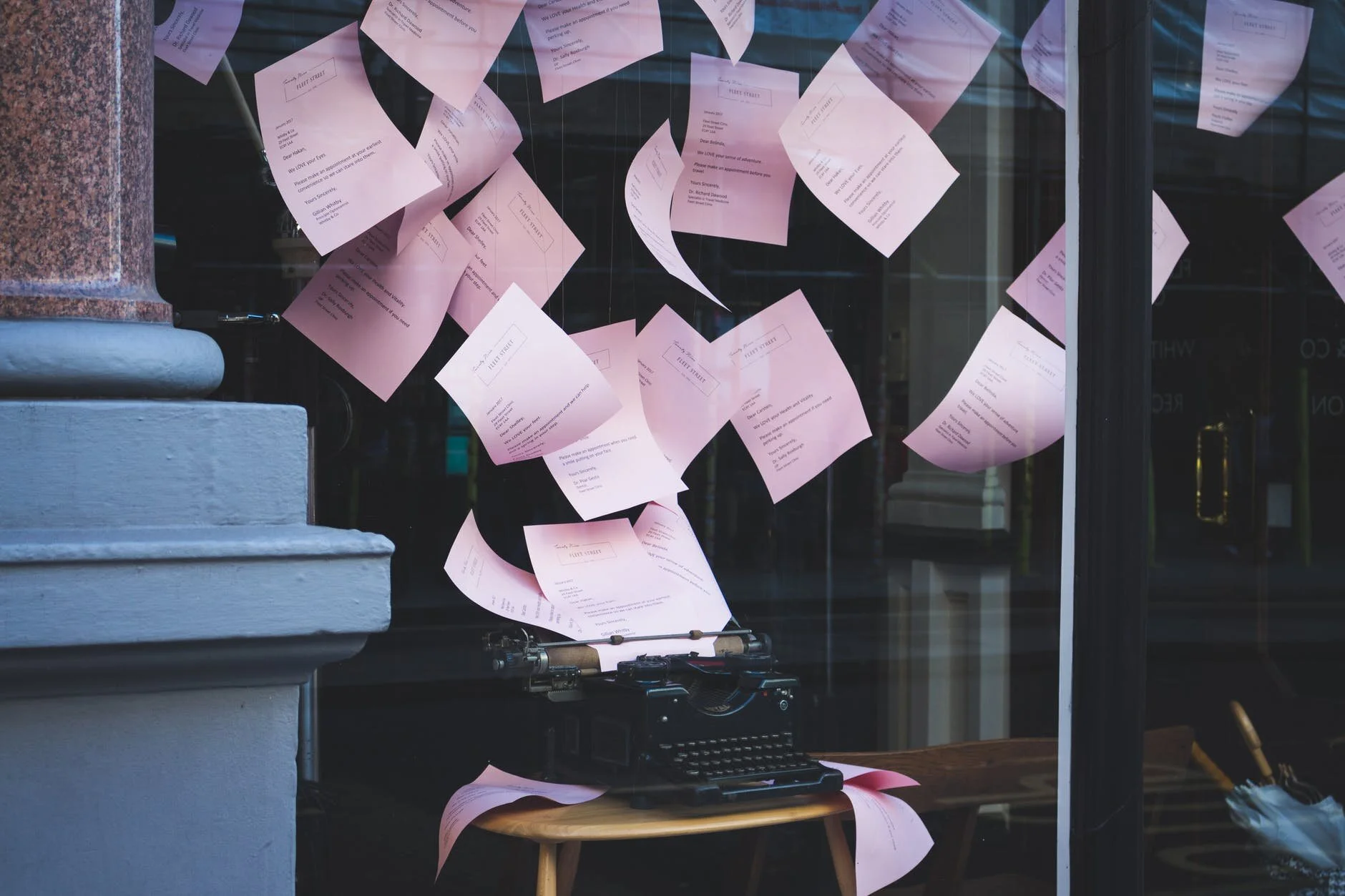
Too Much of a Good Thing: Balancing Self-Criticism in Creative Writing
Between the personalized pieces and the competitive publishing industry, the world of writing is emotionally draining by nature. It is so easy to get dispirited. While the ability to self-criticize helps you improve your craft, too much of it will harm your career as well as your mental health. That’s why it’s important to persevere despite all of your insecurities.
In today’s society, comparing yourself to other people is extremely common. I do it in almost every aspect of my life: in my appearance, in my personality, and especially in my writing.
Between the personalized pieces and the competitive publishing industry, the world of writing is emotionally draining by nature. It is so easy to get dispirited. While the ability to self-criticize helps you improve your craft, too much of it will harm your career as well as your mental health. That’s why it’s important to persevere despite all of your insecurities.
There are three main areas of writing that I get discouraged about often. Here is how I push through them.
1. My plot makes no sense.
With this self-criticism there are two things that are usually happening. Either my plot doesn’t actually make sense, or I’ve been writing for so long that I’m not seeing my piece objectively. Whichever the case may be, the solution here is to take a break and let someone else look at it.
If the piece actually doesn’t make sense, my peer will tell me why and after a break to refresh my thinking, I can fix the plot. If it did make sense, then my peer has let me know, and I can continue writing in a clearer headspace.
2. My writing technique isn’t good enough.
There are some people out there who are indisputably gifted with words and everything they write is like music. Unfortunately, I am not one of these writers. Now, this doesn’t mean that I am hopeless, it just means I have to work a little harder.
This insecurity is very fixable in the 21st century as there are so many ways to improve my writing techniques. It’s very easy to edit my work multiple times, use programs to correct my grammar, and send pieces to my peers. My writing doesn’t have to be perfect right away, it will get there with a bit of elbow grease.
3. The story I have to tell doesn’t matter.
I’ll be honest, I’ve had a really hard time writing this section as this is an area that I am actively wrestling with. There are a lot of important stories out there worthy of being told. I have to remind myself constantly that the importance of other people’s stories doesn’t make mine less important and that I never know just who will find my story impactful.
That being said, there are times where I feel convicted because there is a really important issue at hand, and I doubt my ability to address it. But writing is an amazing tool of empathy. So, if I feel convicted to explore another person’s story in order to address an important issue, I can absolutely do so provided that it’s done from an educated, respectful, and humble headspace.
Remember that you are never alone when it comes to writing. Behind every story that you think is better than your own, there is an author who felt the same way at some point in their process. Keep your chin up, you can do it.
Have a question about writing or the writing life you’d like addressed in an upcoming blog? Drop us a line in the comments below!

A Writer's Purpose
Often times when I tell people that I am studying creative writing they reply with the ever awkward: “oh…” sometimes followed by a polite: “good for you!” I don’t think the reason that many people react this way to my degree is because they think that writers are stupid, I think that they just don’t understand what a writer’s purpose is. It may not be as well-known as an engineering or a nursing degree, but a writing degree (and all arts degrees for that matter) has a purpose, nonetheless.
By: Margaret Huntley.
Often times when I tell people that I am studying creative writing they reply with the ever awkward: “oh…” sometimes followed by a polite: “good for you!” I don’t think the reason that many people react this way to my degree is because they think that writers are stupid, I think that they just don’t understand what a writer’s purpose is. It may not be as well-known as an engineering or a nursing degree, but a writing degree (and all arts degrees for that matter) has a purpose, nonetheless.
Writers have the duty to describe.
I’m not talking about imagery or exposition in your piece. What I am talking about is describing society. There is a reason that museums are filled with art; art tells us what the world feels like and looks like to ordinary people. The purpose of art is to emphasize what society looks like, whether it be past, present, or future and writing is no exception.
Maybe you like history and want to write about the past so that readers can understand how things used to be and how that has influenced society today. Take for example Lawrence Hill’s the Book of Negroes, which is a historical fiction written about slavery and racism in the United States, Canada, and England in the late 1700s to early 1800s. Though the novel is fiction, it is accurately written to reflect society in that time period. By reading this novel, one is able to better understand the racialized institutions on which North America is built.
Maybe you like to write contemporary pieces that reflect what society is like today. Thomas King’s short story Borders is a great example of this. The story is a contemporary piece about an Indigenous woman who does not identify as Canadian or American, but Blackfoot. This is telling of the current struggle for Indigenous people to choose their own national identities instead of conforming to the colonial identities forced upon them.
Maybe you like writing speculative fiction, fantasy, science fiction etc. All of these genres can still give insight into the state of modern and/or past society. In N. K. Jemisin’s novel Fifth Series there are characters called “oregenes” who experience oppression based on the rest of the population’s ill-informed biases towards them. This is an accurate metaphor about how minorities are often treated poorly by people who are not properly educated.
No matter what genre or medium you choose, as a writer you have the power to describe society. You can praise the good things and more importantly, you can creatively call out its flaws. You have the power to teach your readers new ideas and inspire active change. I encourage you to call out injustices in your writing.
So no, my fellow creatives and I are not just studying the arts for fun, we are actively searching for the most effective way to describe society in order to promote positive change. And that is a career worth being proud of.