
BLOG

Hollay Ghadery Hollay Ghadery

Power Q & A with Myna Wallin

Mental illness is one of those subjects that always seems ripe for interrogation, especially when it comes to investigating our collective societal response to it. Myna Wallin’s new poetry collection, The Suicide Tourist (Ekstasis Editions, 2024), explores mental illness with verve, grace, and wisdom. It’s a collection that dives into the darkness and creates light; not by virtue of exposing any levity in living with mental illness, but by examining mental illness and neurodivergence frankly and with compassion, thereby alleviating, just a little, the burden of loneliness so many of us who live with it experience.

We’re honoured to have Myna on our Q & A series to talk about her beautiful and moving collection.

Mental illness is one of those subjects that always seems ripe for interrogation, especially when it comes to investigating our collective societal response to it. Myna Wallin’s new poetry collection, The Suicide Tourist (Ekstasis Editions, 2024), explores mental illness with verve, grace, and wisdom. It’s a collection that dives into the darkness and creates light; not by virtue of exposing any levity in living with mental illness, but by examining mental illness and neurodivergence frankly and with compassion, thereby alleviating, just a little, the burden of loneliness so many of us who live with it experience.

We’re honoured to have Myna on our Q & A series to talk about her beautiful and moving collection.

Welcome, Myna!

Bring home The Suicide Tourist by Myna Wallin.

Q. What does it feel like to “come out” as bipolar after so many years of keeping it quiet?

A. It’s a strange feeling to finally “come out.” As a Boomer, we didn’t talk about things like mental illness; the stigma was worse then and I felt ashamed about having bipolar disorder. My family and a handful of close friends knew, but that was all. Now there’s a flood of confessional books, documentaries, and plenty of famous actors, writers, and musicians who have shared their stories. Gen Z, for example, speak openly about mental illness.

There’s a common misconception around those with bipolar disorder: It’s the romanticizing of mental illness in films and books that is so misleading, as though it’s a fascinating and rarefied life we lead. It’s nothing like that at all. It’s “take your meds, get your sleep, stay balanced, and don’t succumb to the allure of mania.” Sounds easy but when the chemicals in your brain misfire, chaos and disorientation take over.

The term “bipolar disorder” was coined in the third edition of the Diagnostic and Statistical Manual of Mental Disorders (DSM), published in 1980. It was the first time it was identified that way. The term “manic-depressive” became highly stigmatized before that; “manic” was too close to “maniac.” Changing the label was meant to change attitudes. But I would argue that before very long the term “bipolar” became stigmatized as well. 

I don’t know what I thought would happen if I admitted I was bipolar to the world-at-large. But the fear was there, nagging at me. I remember once being at a small party and someone said, “Oh, he’s bipolar, what can you expect,” and I don’t recall who they were talking about, but the connotation was entirely negative. I cleared my throat, said, “I’m bipolar,” and I watched them do a furious backpedal. 

I think, finally, there’s a relief in exposing my authentic self, even if it involves some unsavory past experiences. It comes at a point in my life where I have done extensive psychotherapy. I’ve also come to terms with the fact that mine is a disorder that can’t be conquered, only managed. So, the journey continues. And perhaps the poems I’ve written may help someone else—that’s the hope.

Myna Wallin.

More about Myna Wallin:

Myna Wallin got her MA in English from the University of Toronto and is the author of A Thousand Profane Pieces and Confessions of a Reluctant Cougar (Tightrope Books, 2006 and 2010 respectively), as well as Anatomy of An Injury (Inanna Publications, 2018). She has a beautiful senior cat named Star, and at last count twenty-seven thriving houseplants.

More about The Suicide Tourist:

The Suicide Tourist (Ekstasis Editions, 2024) confronts themes of depression, anxiety, and bipolar disorder with unflinching boldness and compassion. In this mental health confessional, poems about depression, mania, suicidal ideation, and the challenge of living with these disabilities are tackled with naked honesty and deep humour. In The Suicide Tourist, Wallin supersedes the stigma surrounding mental illness and excavates the themes of anxiety, fear, instability, mortality, and ultimately, liberation.


Read More
Hollay Ghadery Hollay Ghadery

Power Q & A with Suzan Palumbo

A queer Count of Monte Cristo in space? Count us in!

We were fascinated by the premise of Countess (ECW Press) by Trinidadian-Canadian dark fiction speculative fiction author and editor Suzan Palumbo from the moment we heard of it, and our enthusiasm only compounded exponentially after reading this subversive and compelling novella. We’re delighted Suzan agreed to join us on our Power Q & A series. We had many burning questions about her thrilling adventure but wanted to ask specifically about bringing her culture into space.

A queer Count of Monte Cristo in space? Count us in!

We were fascinated by the premise of Countess (ECW Press) by Trinidadian-Canadian dark fiction speculative fiction author and editor Suzan Palumbo from the moment we heard of it, and our enthusiasm only compounded exponentially after reading this subversive and compelling novella. We’re delighted Suzan agreed to join us on our Power Q & A series. We had many burning questions about her thrilling adventure but wanted to ask specifically about bringing her culture into space.

Welcome Suzan!

Bring home Countess by Suzan Palumbo.

Q: Why was it important for you to specifically write a Caribbean space opera and what about Caribbean and/or Trinidadian culture did you want to see thriving in space?

A: I’ve always enjoyed speculative fiction and I wanted to see people like me, Trinidadians and people from the other Caribbean islands, in space. For most of my life, the books I read and movies I watched did not have anyone like me represented in the future. I think it’s vital for people to be able to see themselves depicted beyond the present. It is a hopeful exercise. It signals that you are worth protecting. It says your culture, art and history have value, and that the world wants to make sure it doesn’t lose them for everyone's benefit.

Also, the history of the Caribbean and its peoples provide a natural parallel to stories of space colonization and exploration.  We have lived through colonial projects like many other regions throughout the world. I think our perspective on it is unique as descendants of enslaved and indentured people brought to these islands to serve extractive colonial interests. My book does contain adventure and romance but, at its heart, it is about the main character, Virika Sameroo, decolonizing her mind. This type of story and its ramifications are crucial to consider now that many have their eyes on outer space as a place to exploit and colonize. 

Finally, it was just so fun to include the cultural traditions my family brought to Canada with them and situate them in space. Come on, Trinidadian food across the galaxy? Curry, roti and pepper sauce? Calypso and carnival? Friendship and community? Why not entertain the possibility of these joyous aspects of my heritage surviving into the future? Despite Countess being a dark novella, there are moments of celebration. These moments are distinctly flavoured by my culture. Who says the future has to be cold and sterile? What if it’s filled with people who love fiercely? Who are resilient and creative? And, who are hopeful against all odds?

That’s the kind of future I want. It’s a Caribbean space opera kind of future. 

The resplendent Suzan Palumbo.

More about Suzan Palumbo:

Suzan Palumbo is a Trinidadian-Canadian dark speculative fiction writer and editor. Her short stories have been nominated for the Nebula, Aurora, and World Fantasy Awards. Her debut dark fantasy/horror short story collection, Skin Thief: Stories, is out now from Neon Hemlock and her debut novella is forthcoming from ECW Press.

 More about Countess:

A queer, Caribbean, anti-colonial sci-fi novella in which a betrayed captain seeks revenge on the interplanetary empire that subjugated her people for generations.

Virika Sameroo lives in colonized space under the Æerbot Empire, much like her ancestors before her in the British West Indies. After years of working hard to rise through the ranks of the empire’s merchant marine, she’s finally become first lieutenant on an interstellar cargo vessel.

When her captain dies under suspicious circumstances, Virika is arrested for murder and charged with treason despite her lifelong loyalty to the empire. Her conviction and subsequent imprisonment set her on a path of revenge, determined to take down the evil empire that wronged her, all while the fate of her people hangs in the balance.

Read More
Q&A Series Hollay Ghadery Q&A Series Hollay Ghadery

Power Q & A with Jeff Dupuis

It’s Power Q & A time, and we are delighted to welcome author Jeffery Dupuis to our series to talk about his thrilling Creature X series (published by Dundurn Press). This trilogy follows Laura Reagan and her team as they travel the world in search of mysterious creatures unknown to science and find murder and intrigue. After reading the first book in the series, we wanted to know more about how Jeff created this cryptozoological adventure, which (let’s face it), must have involved a fair number of weird discoveries.

It’s Power Q & A time, and we are delighted to welcome author Jeff Dupuis to our series to talk about his thrilling Creature X series (published by Dundurn Press). This trilogy follows Laura Reagan and her team as they travel the world in search of mysterious creatures unknown to science and find murder and intrigue. After reading the first book in the series, we wanted to know more about how Jeff created this cryptozoological adventure, which (let’s face it), must have involved a fair number of weird discoveries.

Welcome, Jeff!

Roanake Ridge, the first book in the Creature X series.

Q: What is the strangest thing you uncovered while researching your Creature X series? 

A: In the world of tall, ape-like creatures, giant eels, and bioluminescent pterosaurs that feed on the unburied dead, it’s a real challenge to say what is the “strangest” thing I uncovered while researching the Creature X series. A stand-out is an incident known in cryptozoological circles as “The Battle of Ape Canyon.” 

In the summer of 1924, Fred Beck and four other gold prospectors had been working their claim just east of Mount St. Helens. This was decades before any large footprints were found and the name “Bigfoot” was coined. While collecting water from a nearby spring, Beck and one of the other prospectors came across a 7-foot-tall ape-like creature and shot at it. They returned to their cabin, telling the other prospectors their story. They decided to pack up and leave the next morning. 

That night, a group of these creatures attacked the cabin, pelting it with large rocks, banging on the door and climbing on the roof. The prospectors fired their rifles through gaps in the walls, through the door and the roof to drive the creatures away. Once the sun came up, the men took only what they could carry and fled the site, leaving their equipment. Beck claims to have shot one of these creatures as they were fleeing, watching its body drop into a nearby canyon. That area has since been known as “Ape Canyon,” which you can find on Google Maps. 

Beck later claimed that these creatures were entities from another dimension, which is not an uncommon school of thought in the Bigfooter community. Some people believe that the creature is “extradimensional,” able to move between our world and another. There’s a substantial amount of overlap between those who think Bigfoot can travel across dimensions and those who think it can read minds and communicate telepathically. There really are as many variations of Bigfoot encounters as there have been encounters. No two are alike, but some are definitely stranger than others. 

More about Jeff:

J.J. Dupuis is the author of the Creature X Mystery series. When not in front of a computer, he can be found haunting the river valleys of Toronto, where he lives and works.

Read More
Q&A Series Hollay Ghadery Q&A Series Hollay Ghadery

Power Q & A with Margaret Nowaczyk

Today’s Power Q & A features best-selling Polish-Canadian author and pediatric clinical geneticist Dr. Margaret Nowaczyk. Dr. Nowaczyk’s most recent book, Marrow Memory: Essays of Discovery invites readers to examine her DNA under a microscope, sharing her vast life experiences in a series of invariably absorbing and beautifully-crafted personal essays. From growing up in Communist Poland, to immigrating to Canada as a teen, to working as a pediatric clinical geneticist and professor at McMaster University, Nowaczyk bares her soul while encouraging readers to explore the ways in which our experiences and identities are entangled with our ancestral history.

Today’s Power Q & A features best-selling Polish-Canadian author and pediatric clinical geneticist Dr. Margaret Nowaczyk. Dr. Nowaczyk’s most recent book, Marrow Memory: Essays of Discovery invites readers to examine her DNA under a microscope, sharing her vast life experiences in a series of invariably absorbing and beautifully-crafted personal essays. From growing up in Communist Poland, to immigrating to Canada as a teen, to working as a pediatric clinical geneticist and professor at McMaster University, Nowaczyk bares her soul while encouraging readers to explore the ways in which our experiences and identities are entangled with our ancestral history.

We’re honoured to have Dr. Nowaczyk join us for this short and sweet interview series.

Bring home Marrow Memory: Essays of Discovery (Wolsak & Wynn, 2024).

Q: You’re an advocate of narrative medicine. Would you explain what that is and how—if at all—it shaped your writing of this collection of essays?

A: Narrative medicine trains physicians to be better listeners and diagnosticians. Narrative medicine is not a therapeutic modality; it is not narrative-based therapy with which it is sometimes confused. After training in narrative medicine, by paying close attention to the patient’s story, the text of the patient, so to speak, doctors are better able to determine the cause of illness and the optimal approach to therapy. In addition, narrative medicine has been shown to increase empathy and to prevent physician burnout. 

How does that training happen? Narrative medicine recommends close reading of literary texts, writing about patient encounters in non-medical language, and reflective and creative writing. In the essay “Reading Dostoevsky in New York City” in “Marrow Memory”, my collection of essays, I describe the process of close reading; in my memoir “Chasing Zebras”, I wrote how attending a narrative medicine workshop opened my eyes to the power and potential of writing and sharing my stories. Both experiences were paradigm-shifting for me. I have always been an avid reader, but it is the attention paid during the process of close reading that trains one to notice nuances in patient’s behavior, the gaps in her story, the tell-tale signs of illness and distress. By paying attention to those subtle signs, a physician is better able to attend to the patient’s needs, both in terms of diagnosing her condition and of treating it. Writing about a patient encounter in non-medical language (done in what is called “parallel chart”), after the heat and stress of often too-brief a patient encounter, allows the physician to identify the many preconceptions and biases that medical language frequently hides. It is then that the writer has the luxury of time and reflection to do so. This practice fosters empathy. And creative writing, the final pillar of narrative medicine training? It allowed me to express my deepest fears, explore my darkest obsessions, and pay attention to my well-being in the safety of the ever so patient blank page.  

Simply, without training in narrative medicine, I would not have become a writer. There would have been no stories, no essays, and no memoir.

MARGARET NOWACZYK (photo credit: Melanie Gordon)

More about Margaret Nowaczyk:

Margaret Nowaczyk was born in Poland in 1964 and emigrated to Canada with her family in 1981, having spent six months as a stateless person in Austria. She finished high school in Toronto in 1982. After receiving a B.Sc. in biochemistry in 1985, she graduated with honours from the University of Toronto Faculty of Medicine in 1990. For six years, she trained in pediatrics and genetics at the Hospital for Sick Children in Toronto, with elective training at Boston Children's Hospital in pediatric neurology and at Hôpital Enfants Malades in Paris, in inborn errors of metabolism. In 1997, she was offered a university faculty position as a clinical geneticist at McMaster Children’s Hospital. Since then, she has been caring for children with genetic disorders and providing prenatal diagnosis and genetic counselling for adults. She has authored 120 peer-reviewed papers in genetic journals, and rose to the rank of professor in 2014. She is a great advocate of the narrative approach to medical care. Her short stories and essays have appeared in Canadian, Polish and American literary magazines and anthologies. She lives in Hamilton, ON, with her husband and two sons.

Read More
Hollay Ghadery Hollay Ghadery

Who is Blaise Cendrars? A special guest post by translator and author David J. MacKinnon

Like his contemporary Picasso, who also appeared to be locked in mortal combat with the tsunami of modernity, Blaise Cendrars’ kaleidoscopic lives can be viewed through the lens of successive periods, each of which mark Cendrars’ merging of art and life so radically, that the more he revealed, the more he appeared unfathomable, enigmatic and extraordinary. 

“Only a soul full of despair can ever attain serenity and, to be in despair, you must have loved a good deal and still love the world.”

—Blaise Cendrars

Like his contemporary Picasso, who also appeared to be locked in mortal combat with the tsunami of modernity, Blaise Cendrars’ kaleidoscopic lives can be viewed through the lens of successive periods, each of which mark Cendrars’ merging of art and life so radically, that the more he revealed, the more he appeared unfathomable, enigmatic and extraordinary. 

Cendrars was born Frédéric Sauser to a sickly Anabaptist mother and a failed inventor of a father. By age 15, he is already a runaway, his choice of destination random and his vehicle of choice the train, taking him through Germany, onwards to St Petersburg, Russia, where he works as a jeweller, discovers the Imperial Library, witnesses the Tzars’ Guards shoot into a crowd of demonstrating citizens on Russia’s Bloody Sunday in 1905, and first picks up a pen to compose poetry. He later travels along the Transsiberian route by rail, selling coffins and knives and jewels, finds his way to New York and conjures up his epic poem, “Easter in New York”, that hits the turgid world of French poetry like a hurricane, starting his own review, Les Hommes Nouveaux. In 1911, he publishes “Prose of the Transsiberian”, his epic, Homerian saga of his adventures in Russia on 2 metre pages, illustrated by Sonia Delaunay. When placed end-to-end, the 150 pages are the same height as the Eiffel Tower. The poet vagabond has burst onto the Paris literary scene, like his contemporaries Chagall, Léger, Modigliani, and his old carnie pal, Charlie Chaplin. He develops a technique in his Kodak series of poems, where each poem is a “snapshot”. 

Blaise Cendrars.

The poet turns warrior at the outbreak of World War I, and then the inevitable cataclysm, as he is wounded by German machine gunfire, and loses his right arm. 

Cendrars elects his strategy of choice – fugue - finding refuge with the tziganes, and peace of mind in the tranquil village of Tremblay-sur-Mauldre, where he is now buried. 

In 1918, Cendrars buries his past with “I have killed”, describing his killing of a German soldier, and moves on, as writer and man, ready to mine the vein of the horrors he has endured, and the men he has crossed. 

He emerges as Cendrars the novelist, charting adventures and political scandals with the international best-sellers Gold, Rum, Hollywood and Dan Yack. These are tales of adventure, greed and corruption. Moravagine, the tale of a serial killer, is another seismic event, not only  a prophecy, but a diatribe against the corruption of culture by psychiatry. Cendrars is moulding a new style, literary reportage, in a hard-boiled version evocative of James Ellroy, writing on Hollywood, Basque people smugglers, the Marseilles mob as an insder who frequented these milieux.  

While the Paris literary scene degenerates into movements and sub-movements; Cendrars moves on, takes his literary and physical distance, crosses the ocean to Brazil, becomes one of the prime movers in samba becoming Brazil’s national music.  

Blaise Cendrars, 1907.

In the late 1930s, Cendrars crosses another Rubicon, and writes a series of True Tales, commissioned by Paris-soir, where the real life adventurer becomes the first-person narrator of the adventures he is describing. Cendrars the adventurer and Cendrars raconteur are now one and the same. 

In 1939, while preparing to sail around the world, war breaks out and Cendrars becomes a war correspondent. When France falls, he resorts once again to fugue. There is no truth, only action. He disappears to Aix-en-Province behind a wall of self-imposed silence. For three years. Reborn again after the war, retaking his position at his Remington N° 1 Portable at age 56, he produces some of his best work. At its nexus, a story of his life and times as self-portrait, in a spectacular triptych: Bourlinguer (Vagabond), Le Lotissement du Ciel (The celestial subdivision) and the Severed Hand. The prose is torrential, rhythmic, musical, and the energy is driven by atavistic blood and violence. 

Adventurer, poet, interpreter of modernity, precursor of Marshall Mcluhan, soul mate of Robert Graves and Erich Maria Remarque, Blaise Cendrars fearlessly sought out the ultimate sense of life beyond appearances, and one forged through action. He frequently expressed an enormous compassion for the suffering of the ordinary man. 

Cendrars.

Blaise Cendrars died on January 21, 1961. Yet another fugue. And, behind him, as with the great Chinese ascetics, his personal thoughts are unknown to us, only his aphorisms and his koan-like observations, dropped like a thousand petals in late Spring. A man whose imagination and lust for the world could not be quenched, an ascetic whose message is contained in the following words: 

“Only a soul full of despair can ever attain serenity and, to be in despair, you must have loved a good deal and still love the world.”

—by David J. MacKinnon

About David J. MacKinnon:

From the day when he discovered Moravagine, the great Cendrarsian saga of madness, escape, revolution and the perils of psychiatry, David J. MacKinnon has ceaselessly tracked the paths of the man reborn out of his own ashes, from the Batignolles cemetery nearby Pigalle, to China, to Kerliou Brittany to Tremblay-sur-Mauldre and the alleyways of Aix-en-Provence. He translated a series of Cendrars’ radio interviews in Blaise Cendrars Speaks, and once attempted to send the vagabond-poet’s ashes inside an eel to the Sargasso Sea from a Loire estuary. MacKinnon now spends his waking hours decoding Cendrarsian hieroglyphics and messages within his 15-volume collected works and plotting potential uses of sargassum in the world that is yet to come.

David’s newest translation of Cendrars’ work, A Dangerous Life – Sewermen, Bank Robbers & the Revelations of the Prince of Fire: True Tales from the Life and Times of Blaise Cendrars, The World’s Greatest Vagabond, is forthcoming with Guernica Editions on November 1, 2024.

This essay series features seven Cendrars works, The Sewerman of London: a tale of a secret passage leading to the Bank of England, gleaned from a fellow legionnaire while trapped in the trenches of the Great War; River of Blood (J’ai saigné), the first-hand narrative of the killing fields of Champagne, and the day in 1916 he lost his writing hand to a German machine-gunner; Fébronio—Cendrars’ chilling and compelling interview with Brazil’s most infamous serial voodoo killer; The Diamond Circle: the tale of the discovery of a diamond with a curse; Hip-flask of blood (Bidon de sang): translation by Cendrars of an unpublished spaghetti-western novel by the bank robber lawyer Al Jennings; Le Saint Inconnu (The Anonymous Saint); Anecdotique: On Saint-Exupéry.

Translator David J. MacKinnon has brought Cendrars’ to brilliant life for English-speaking audiences, immersing readers in Cendrars’ attention to the forgotten of the world—of those who are not necessarily impoverished, but off the beaten track.

Read More
Hollay Ghadery Hollay Ghadery

Two Years In: What I’ve Learned as a Reviewer on Bookstagram

When I set out to start a book-focused account on Instagram two-and-a-half years ago, I hadn’t even heard the term Bookstagram. But when I retired from my busy professional life and rediscovered my love of reading, the idea of a book-focused social media venture took hold and wouldn’t let me go. I wanted to share my passion for all things books with others, so I made my first ever Instagram account, and I haven’t looked back.

Two Years In: What I’ve Learned as a Reviewer on Bookstagram


By: TrishTalksBooks

When I set out to start a book-focused account on Instagram two-and-a-half years ago, I hadn’t even heard the term Bookstagram. But when I retired from my busy professional life and rediscovered my love of reading, the idea of a book-focused social media venture took hold and wouldn’t let me go. I wanted to share my passion for all things books with others, so I made my first ever Instagram account, and I haven’t looked back.

I’ve since found a wonderful community of like-minded readers on Bookstagram, the book-focused corner of Instagram where avid readers, writers and reviewers meet to discuss all things literary and exchange bookish content.

If you’re considering a Bookstagram account, a good starting point is to identify your goals. Each of us is different. Maybe you’d like to read a couple of books per month, photograph them, and write a brief caption so that you can remember them. Perhaps you only read classics, or cosy mysteries, and want to design your page that way. That’s the magic: you can make your Bookstagram page your very own.

 As a Bookstagram neophyte, I knew that I wanted to read and review each book that I read. I had no idea what I was doing, but I dove right in! It’s been fun but there was a steep learning curve. If, like me, you’d decided to try your hand at reviewing books on Bookstagram, I’ve discovered some tricks and tips along the way.  

TrishTalksBooks!

Starting and Growing Your Account

My first challenge in starting a Bookstagram account was to create an online identity that would define and encapsulate my vision. I soon realised this was more difficult than it sounds. It forces you to think hard about how you can showcase your literary life by choosing a handle and image that is easily identifiable, and using a tagline that captures your vision.  

For example, I tossed around several ideas for a good Instagram handle, testing them out on friends and family members. I learned how to design a basic graphic on Canva for my icon, using my moniker, and selecting colours and fonts. It was worth taking time for this because I use it across several platforms like Goodreads, The Storygraph and X. I came up with a tagline, typed a few words about myself and activated my Instagram account. Done! 

With zero followers. Hm. 

After I got all of my family and close friends to follow me, I had about 10 followers. Double digits! 

It turns out that there are lots of ways to grow your followers on IG. I discovered the world of follow trains (where a group of Instgrammers mutually follow each other) and engagement groups (where a group of you commit to liking and commenting on each others’ posts). I flirted with both of these strategies, and you can too, but ultimately I decided against them. They can increase your followers, but generally lead to a decrease in meaningful interaction on your page. 

I have found that the best way to grow my followers is through genuine interaction with other Bookstagram accounts. I try to put out great content regularly. I post a review several times a week, with daily stories about my bookish adventures. As a reviewer, I make sure to post about all of the books that I receive in the mail, and highlight them again on their publication day if I have received them in advance. I follow other Bookstagram accounts whose taste in reading overlaps somewhat with mine and I try to scroll through them daily, liking and commenting on their content.

It’s like anything in life: you get back what you give, and this has led to amazing and genuine interactions on Bookstagram. My account may have grown more slowly than many, but I value every follower, and every account that I follow. 

As to the number of followers? It does matter, to an extent. It will depend on your goals.

One of my goals is to share my love of books and my reviews with others. To do this, having a dedicated group of followers, and following accounts in turn, is vital. It's genuinely amazing when people read and comment on what you write or pick up a book you’ve suggested. Interacting with authors has been a huge bonus.

I also like to access books before publication so that I can read and share my thoughts in a timely way on my page. You may think you need to have thousands of followers for this type of access. Not so! By the time I had about 500 followers, I was able to join publishers’ influencer programs and request books from publishers that I wanted to read and review, with decent success. 

Find Your Book Reviewing Niche

I’m an eclectic reader. I’ll read almost anything, but I’m happy to report that Bookstagram has broadened even my reading horizons. I’ve always been partial to horror and literary fiction, but the world of book reviewing has spurred me to take up genres that I’d left neglected for years, like poetry and graphic novels.

Many Bookstagrammers dedicate their pages to reviewing horror, or romance or even centre their reviews around literary prize winners. Go with what brings you joy! I read and review anything that takes my fancy, from pulp fiction to literary prize-winners, but I’ve discovered that it helps to identify a couple of overarching goals to shape your review page. 

These are some areas that are always front of mind for me: 

Canadian literature

It’s always satisfying for me to highlight Canadian publishers and authors and the amazing books that they produce. I’ve learned so much about my own country, and championing both new releases and Canadian backlist books has become a constant on my Bookstagram page.   

Small Presses

An independent publisher (small press) is a traditional publisher, but one that publishes independently of a large corporate entity, so they’re apt to pursue works that don’t fit with a conventional publishing house. 

Self-Published Writers

Some authors forgo a publisher and self-publish. Discovering a hidden hem by a writer who’s flown under the radar is bookish magic. 

Genres outside my usual comfort zone

I hadn’t read poetry for years, but I’m loving it for Bookstagram. I find it takes a different skill-set to review poetry. Reviewing outside of my comfort zone is refreshing and keeps me growing as a reviewer. Your focus may be different, but consider what challenges you.

Beware of the Overwhelm (Or, there are SO MANY BOOKS!)

When I started my BG account in January 2022, one of my goals was to get one free book. That’s it. I thought that would be the be all and end all of my book hobby. I would have arrived. 

Within the first year, without trying, I had about a dozen books sent from authors and publishers who’d reached out to me and offered books for review. I signed up for a couple of mainstream publishers’ “influencer” programs, then got on lists to request books from some wonderful book publicity firms that send out books for review. Not to mention Netgalley, which is a platform for industry professionals and influencers to request Advanced Reading Copies (ARCs) of books. 

Now, I am drowning in books. I love it, but it can be a lot. I commit to reading and reviewing every gifted book that I receive.

Of course, I also read the library books that I’ve put on hold, books from my neighbourhood’s Little Free Libraries, and any books that I’ve bought, so there is a balance to be struck between these books and gifted ones. 

It can get entirely overwhelming. I’d recommend learning to be selective when it comes to gifted books. It’s nice to receive free books, but don’t forget that you need to read them all too! After reading myself out of a literary hole created by overenthusiasm, I’m now much better at saying no. 

The Art of the Negative Review

There’s nothing more satisfying than posting a glowing review of a book you loved. As a reviewer, though, I sometimes read books that I don’t love and am faced with writing a negative review. 

Sometimes I catch myself thinking, Who am I to criticise any author’s work? Especially in a public forum. My answer? We’re the readers! Like any piece of art, an author publishes their best work and then it is open to discussion. The beauty of a book is that it will resonate with different readers in wholly different ways, and that’s what makes sharing our literary views with each other valuable and interesting. 

There are different ways to approach the negative book review on Bookstagram. One option is to post only the books you enjoy and forgo the negative review: it’s your page to curate the way that you like. However, if you’re like me and want to post on each book with honest takes, it pays to be thoughtful about criticism. 

An honest review is important, even if it is negative. Having a range of reviews gives your followers a more accurate picture of your literary taste, and builds trust. In turn, I appreciate a thoughtful negative review from the reviewers I follow and trust, to guide my own reading

I’m still learning the art of the negative review, but here are some things I consider carefully:

Compare apples to apples

It seems basic, but I’ve found it valuable to rate a book as compared to its peers. A rom-com isn’t the same as a literary fiction prize winner, and it needn't be. It also shouldn’t be held to the same metrics. I’ll give a rave review to a rom-com that punches above its weight in its genre, and pan a prize-winner if it’s not up to that standard. 

What did the book do well?

Maybe it's just me, but I do like to find the good in each book. Even if I didn’t like it overall, most every book has some redeeming qualities. I believe most authors have given us their all, so I want to find the best bits and highlight them. I see it as fair play, even if I give a negative review on balance. 

Even if the book wasn’t to my taste, did the book accomplish its goals? 

If a book doesn’t move me and I’m inclined to review it negatively, I ask myself if the book was true to its goals. Sometimes I just don’t connect with a book’s theme or characters but I realise that I’m not the target audience, or perhaps I was not in the mood for that book at that time. To me, it's perfectly fine to say that the book didn’t resonate with me, then speculate why this might have been so. 

And if all else fails…

Usually, if a book is just terrible–genuinely poor writing, incoherent plot, ideas, or values that I object to–I decide not to finish the book and don’t review it. If I do persist, I’ll call it as I see it and write the negative review, but I’ve decided that I need to keep it civil and respectful. This can be hard to do on social media at times, but I’ve given a couple of slightly snarky reviews, and will try not to do it again.

Beyond the Bookstagram Review

Of course, there’s more to the life of a Bookstagrammer than reviewing. I had no idea that I’d have so many opportunities to try new things and meet new bookish friends. I’ve learned that I benefit from not only posting reviews, but also engaging socially on Bookstagram. 

I've joined–and even hosted!–buddy reads and readalongs. Buddy reading is an opportunity for two to four people to read a book together and discuss in a DM group as they go. A readalong is similar, with a larger group of participants chatting as they read a book. I was shy at first, but there’s no need to be. This is a fun way to get to know other readers. And then you can all review the book together. 

I also enjoy a good Bookstagram challenge. Reading challenges are true motivators, and there’s a challenge for everyone. Reading a short story a day for a year? Reading poetry all month? Reading literature in translation? There are challenges for that! 

And for something truly beyond Bookstagram, I decided to start my own book blog. Sometimes a book simply begs for a longer, more in-depth review and the reality of a Bookstagram caption is its 2200 character limit. That hard limit has given me excellent editing skills, but I started my blog so that I could write longer pieces. My blog significantly enhances my Bookstagram reviews and vice versa; they’re highly inter-related and I’d suggest looking into this as you become a more experienced reviewer. 

It’s been a great two years with Bookstagram and there’s no looking back! I’ve made friends and discovered new authors. I’ve revisited genres that I’d put aside for years, like poetry and graphic novels. I’m also reading more intentionally because I know I’m going to be writing about the book, which has deepened my appreciation for the text. Reviewing books is an art anyone can develop, and Bookstagram provides a great platform to try it out. Happy reading and reviewing! 


Trish Bowering
 lives in Vancouver, where she is immersed in reading, writing and vegetable gardening. She has an undergraduate degree in Psychology from the University of Victoria, and obtained her M.D. from the University of British Columbia. Now retired from her medical practice, she focuses on her love of all things literary. She blogs at TrishTalksBooks.com and reviews on  Instagram @trishtalksbooks

Read More
Hollay Ghadery Hollay Ghadery

Power Q & A with Emily De Angelis

Coming in at the perfect time for your summer reading list, The Stones of Burren Bay by Emily De Angelis, published by Latitude 46, is a moving, heartfelt, and fast-paced YA novel set on Manitoulin Island that combines magical realism, Irish Celtic spiritualism, and the core themes of YA fiction to which readers are drawn: the need to belong, self-discovery, and overcoming obstacles.

Coming in at the perfect time for your summer reading list, The Stones of Burren Bay by Emily De Angelis, published by Latitude 46, is a moving, heartfelt, and fast-paced YA novel set on Manitoulin Island that combines magical realism, Irish Celtic spiritualism, and the core themes of YA fiction to which readers are drawn: the need to belong, self-discovery, and overcoming obstacles.

The story begins with a tragic accident that kills Norie’s father and leaves her mother injured and emotionally fragile, after which Norie vows never to draw again. With the help of a mother/daughter duo in Burren Bay and the spiritual world that’s more easily accessed in such a hallowed place, Norie and her mother rebuild their relationship and Norie learns to deal with her grief and guilt through the power of art.

The fictional place of Burren Bay feels like one of the most powerful characters in this beautiful book, so in this Power Q & A, we had to ask Emily about how and why she chose to set her story here.

Welcome, Emily!

Bring home The Stones of Burren Bay by Emily De Angelis.

Q: Place itself is a character in your novel—a character that changes and develops like any compelling character. Would you tell us about how Burren Bay came to you, and why it was the place this story needed to be told?

A: The Stones of Burren Bay is set on beautiful Manitoulin Island, the world’s largest freshwater island situated on the Canadian side of Lake Huron, west of Georgian Bay along the North Channel. Manitoulin Island, often referred to as Spirit Island, has been home to the Anishinaabe people for centuries, long before white settlers arrived. When you’re there, it’s clear that it’s a place steeped in spirit and sacredness. This divine atmosphere makes you take a deep breath and relax into the otherworldliness of the hills, forests and lakes. The deep, restorative mood was definitely the impetus for my story being told from this place. This is especially true in a world full of social and political dysfunction, global conflict and fear. There is much healing for the protagonist, 15-year-old Norie, to experience. Furthermore, as a magical realism novel, the very nature of the setting lent itself to the thread of Irish Celtic spiritualism woven through the novel. Norie’s spirit guide Oonagh, the ghost of a young immigrant girl from Ireland, moves effortlessly between the contemporary and the past because the veil between the past and present is thin in this hallowed place.

I have been visiting the Island, as it is known to locals, since I was a child and have had the opportunity to explore its many nooks and crannies. Originally The Stones of Burren Bay was set in a real location, but over time I realized that a real place in such a small community had its pitfalls. I needed characters to be in locations that were impossible to get to easily and in a timely manner, especially since my protagonist is a young teenager. Real places have real people too, and I feared that readers would try to find themselves or others in the story, even when assured that none of the characters were actual living people. Finally, any flexibility with known history is out of the question when the setting is a real place. A forest fire that took place in 1910 in a real location cannot magically take place in 1892. This is especially true when considering Indigenous history at the beginning of settler occupation on the Island. I wanted to tell a story that reflected rather than retold the historic account. I wanted to be respectful, appropriate and accurate while having the flexibility to tell a fictionalized tale. So the fictional Burren Bay and its bordering First Nation, Rocky Plain, emerged. 

As a continuation of the Niagara Escarpment, parts of the Island share similar and somewhat rare exposed limestone surfaces called alvar pavements, characterized by grooves, grikes, and glints cut into the limestone rock by glacial movement and erosion. The Burren, an ecologically sensitive area in County Clare, Ireland, also has these limestone karst formations. Through early drafts and research, I knew rock and stones would figure into the story and the similarities between Manitoulin Island and The Burren solidified my plans. The stone in both places holds memory—geological memory, historical memory, and the memory of the characters. The stone allows for an attachment or a sense of belonging to place and time. The fact that early explorers and surveyors liked to name new places with names from their home countries gave me a link between the past and the present, with Burren Bay on Manitoulin Island as the contemporary fictional setting and The Burren in Ireland as the historic setting. 

Like any well-developed character, the landscape in The Stones of Burren Bay seems to change and develop while holding on to its fundamental identity. The use of two timelines and settings gives the impression that the landscape itself has responded to the changes in both the historic record and the human world. Norie and Oonagh are both products of their time and place, but time and place are not static. Burren Bay and the Rocky Plain First Nation feel real and alive because they exist in the spiritual landscape that is Manitoulin Island.

Author Emily De Angelis.

More about Emily De Angelis:

Emily De Angelis comes from a long line of visual artists, musicians and storytellers.

She wrote her first novel when she was 11-years-old on an old manual typewriter with a well-worn ribbon and keys that had to be hammered to get letters and words onto the page.

This first novel was called The Mystery of the Golden Ankh and was not unlike the many Nancy Drew novels she read.

Prior to a long career as a teacher in Sudbury, Ontario, where she was born and raised, Emily was a Children/YA Librarian with both the City of York and the City of Toronto.

She has spent many years developing her writing through independent study, workshops, conferences and courses.

An active member of the literary community, Emily has had western-style poems as well as short stories published in various anthologies. She has also won or placed in the top three of four short story contests.

Emily wrote and performed original tales as storyteller Madame Garbanzo in daycares, schools and library.

She served as the President of the Sudbury Writers’ Guild 1998–2000, and recently served as Treasurer as well as Facilitator of the Guild’s Children/Young Adult Inner Circle.

Emily has recently completed a magical realism YA manuscript entitled The Stones of Burren Bay, which has been accepted for publication by Latitude 46 Publishing. The story follows the protagonist Nori on her journey through grief and healing. This novel will be coming out some time in 2024.

Her current YA project, entitled For the Sake of Mercy, is also a magical realism story exploring forgiveness in the face of unspeakable tragedy.

Emily De Angelis is wintering in Woodstock, Ontario, while spending summers on her property on Manitoulin Island.


Read More
Hollay Ghadery Hollay Ghadery

Power Q & A with Ariel Gordon

The original “fun-gal” of CanLit is back for a Power Q & A. We welcome the exubriant Ariel Gordon to the blog to talk about how she selected the home for her newest book, Fungal: Foraging in the Urban Forest (June 4, 2024).

Both personal and entertaining, Fungal: Foraging in the Urban Forest is the highly anticipated second book of a trilogy and shows Gordon at her best: interweaving the personal with the easily overlooked local and natural and local world around her, and passing on her contagious delight for the world at—and under—our feet.

The original “fun-gal” of CanLit is back for a Power Q & A. We welcome the exubriant Ariel Gordon to the blog to talk about how she selected the home for her newest book, Fungal: Foraging in the Urban Forest (June 4, 2024).

Both personal and entertaining, Fungal: Foraging in the Urban Forest is the highly anticipated second book of a trilogy and shows Gordon at her best: interweaving the personal with the easily overlooked local and natural and local world around her, and passing on her contagious delight for the world at—and under—our feet.

In a diverse range of essays, Gordon showcases her background in biology, taking us deep into the fungal world, exploring mushrooms both edible and not, found and foraged, and the myriad ways in which mushrooms and trees make up our ecosystem and are in fact a reflection of the way we build our own personal communities and connections. 

This collection of essays will resonate with anyone who’s ever thought, “can I eat that?” when seeing a mushroom, but also those with larger questions about our place in the natural world. 

Q: Tell us about working with Wolsak & Wynn. What made you want to publish with them?

A: After publishing two books of poetry, Wolsak & Wynn’s nature-y non-fiction is what made me want to start writing non-fiction. I loved Jenna Butler’s A Profession of Hope and Daniel Coleman’s Yardwork, how they considered land-use, history, colonialism, and the more-than-human. And suddenly I was writing things that combined all my experience and training: my science and journalism degrees, which taught me curiosity; my experience writing poetry, which was all about compression, about writing beautifully; and the decades I’d spent taking macro photographs of mushrooms and peering at trees. 

Part of my interest in being published by W&W in particular was that I knew publisher Noelle Allen edited their non-fiction. I trust Noelle implicitly, which is saying a lot as someone who has worked in publishing a long time AND who is sort of professionally ambivalent, given late-stage capitalism, given climate change. Noelle’s also an excellent publisher and a leader among independent publishers. I would follow her anywhere (with a battered suitcase full of manuscripts neeeeeeeeding a home…).

Author Ariel Gordon.

More about Ariel Gordon:

Ariel Gordon (she/her) is a Winnipeg/Treaty 1 territory-based writer, editor, and enthusiast. She is the ringleader of Writes of Spring, a National Poetry Month project with the Winnipeg International Writers Festival that appears in the Winnipeg Free Press. Gordon’s essay “Red River Mudlark” was 2nd place winner of the 2022 Kloppenberg Hybrid Grain Contest in Grain Magazine and other work appeared recently in FreeFall, Columba Poetry, Canthius, and Canadian Notes & Queries. Gordon's fourth collection of poetry, Siteseeing: Writing nature & climate across the prairies, was written in collaboration with Saskatchewan poet Brenda Schmidt and appeared in fall 2023. 

Read More
Hollay Ghadery Hollay Ghadery

Power Q & A with Joanne Jackson

We’re delighted to host Crime Writers of Canada Award-winning author Joanne Jackson on our blog. Her thrilling new novel, Sunset Lake Resort (Stonehouse Publishing, June 1, 2024), is a captivating narrative full of thrilling twists, exciting reveals, and gorgeously drawn characters. It is inspired in part by Joanne's own life. leaving the city to go to the lake, and her observations about the importance of community, and the cost of technological progress to our peace of mind.

This book is a perfect pick for an exciting and poignant summer read, and on this Power Q & A, we’re asking Joanne about one of our favourite parts of the book: namely, the championing of an older woman as a protagonist.

We’re delighted to host Crime Writers of Canada Award-winning author Joanne Jackson on our blog. Her thrilling new novel, Sunset Lake Resort (Stonehouse Publishing, June 1, 2024), is a captivating narrative full of thrilling twists, exciting reveals, and gorgeously drawn characters. It is inspired in part by Joanne's own life. leaving the city to go to the lake, and her observations about the importance of community, and the cost of technological progress to our peace of mind.

This book is a perfect pick for an exciting and poignant summer read, and on this Power Q & A, we’re asking Joanne about one of our favourite parts of the book: namely, the championing of an older woman as a protagonist.

Welcome, Joanne!

Bring home Sunset Lake Resort by Joanne Jackson.

Q: It’s refreshing to read a book with a protagonist who is an older woman coming into her own; it shows what we feel is an undersold reality. Namely, that we are never truly done growing up. It’s a perspective that pushes back against the ageism hurled at women in particular. Would you tell us about how Ruby came to you as a character, and what you felt was important to convey through her development?

A: Being an older woman myself, who has experienced both sexism and ageism, and who was born into a generation where many women still stayed at home to raise their children, (and were financially able to stay home) I suppose Ruby is part of me. I decided to create her; a woman who, out of no fault of her own, was afraid to make her own way in the world. When independence is thrust upon her, she sees it as the difficult path but one she now has no choice but to navigate, discovering that it’s never too late to live your life.

Joanne Jackson!

More about Joanne Jackson:

Joanne Jackson is an award-winning author of three novels. Her most recent, A Snake in the Raspberry Patch, was the winner of Best Crime Novel set in Canada for 2023, and short-listed for Saskatchewan Book Awards 2023. Her first novel, The Wheaton, was released in 2019. Joanne lives in Saskatoon with her husband, Tom, and an old border collie named Mick. If you keep your eyes peeled you will see Joanne and her dog walking come rain, shine, snow, or whatever weather Saskatchewan throws at them.

Read More
Hollay Ghadery Hollay Ghadery

Excerpt: Dancing in the River by George Lee

May is Asian Heritage Month and we are honoured to be sharing an excerpt from the award-winning novel, Dancing in the River (Guernica Editions) by Vancouver lawyer and author George Lee.

Dancing in the River, won the Guernica Prize, and draws on Lee’s own life experiences growing up in China. It tells the coming-of-age story of a young boy during Mao’s Cultural Revolution—a boy named Little Bright living in a small, riverside town who is heavily indoctrinated by the anti-Western sentiment of the time and place. The perspectives afforded in this stunning novel—the insights into culture, politics, and personal experience—are crucial to a national and global understanding of Chinese history.

May is Asian Heritage Month and we are honoured to be sharing an excerpt from the award-winning novel, Dancing in the River (Guernica Editions) by Vancouver lawyer and author George Lee.

Dancing in the River, won the Guernica Prize, and draws on Lee’s own life experiences growing up in China. It tells the coming-of-age story of a young boy during Mao’s Cultural Revolution—a boy named Little Bright living in a small, riverside town who is heavily indoctrinated by the anti-Western sentiment of the time and place. The perspectives afforded in this stunning novel—the insights into culture, politics, and personal experience—are crucial to a national and global understanding of Chinese history.

George Lee was born and raised in China. He earned an M.A. in English literature from University of Calgary, and a Juris Doctor degree from University of Victoria. Dancing in the River, won the 2021 Guernica Prize for Literary Fiction. He practices law in Vancouver, Canada.

Dancing in the River by George Lee (Guernica Editions).

Prologue


“What’s the best early training for a writer?” a young writer once asked Ernest Hemingway.

“An unhappy childhood,” Hemingway famously replied.

I grew up in a mountain village on the Yangtze River in China. For a long time, I had been pondering whether to pen the story of my early life as a coming-of-age tale like David Copperfield.

Before long, though, I discovered that I’m no Charles Dickens. As I recall, my writing journey began on my third birthday when I was given a fountain pen, which I’ve kept to this day. After a pair of tiny hands gingerly uncapped the pen, I tried, for the first time in my life, to draw an “I” (我), which, however, looked like a “search” (找). Seeing my error, my father added the last stroke on the top of the latter character to make “me” complete. To my young eyes, the two Chinese words looked identical. (Chinese characters are very complicated, as are Chinese minds.)

Late at night, in our home in Canada, I would imagine that I— now very old—was reading my own novel to my grandchildren lying beside me on the comfy couch, mentally rehearsing this dialogue:


“Is this a true story, Grandpa?” A pair of young, curious eyes fixed on mine.

“Surely it is,” I replied, looking down at him from above my reading glasses.

“Is the Yangtze a long river?”

“Yes, it’s very, very long. That’s why it’s also called the Long River.”

“Are you the boy in the novel, Grandpa?”

I paused for a moment, unsure how to reply. “Sort of. But he’s like every other boy in China in those days.”


From time to time I felt called to write about my early life through the lens of my blended cultural sensibilities. At one point I even attempted to write the book in my mother tongue; however, my tongue refused to agree with my thoughts. I was stunned when words failed to flow out, as if clogged in the underwater channel.

For some reason my audacious goal was stalled for many years. I invented alibis, as many of us do when facing confession of a task too challenging. However, every day I devoted time to mental con- struction of the plot. By this time, I had learned that a plot is dif- ferent from a story. For me, a plot is synchronicity, karma, fate.

Looking back, I realized my life stories had unfolded themselves, not from the outside, but from the inside. No coincidences in life. For me, this is a multi-dimensional book.

In it, I am both the author and reader, the experiencer and the experienced, the thinker and watcher, the dreamer and the dream, the father and the son. Most importantly, between the two ends of the spectrum, I am a silent witness as well. To that end, the characters in this book walked into my life both literally and symbolically. Some of them represent the unfathomable depth of reality. My grand- mother is such a character; so are some of my childhood friends.

This book carries an allegorical burden: to unearth the truth about the mystery of life and of myself. My journey began at the river, travelling from body to mind, then to soul, from learning to becoming, from the visible to the invisible.

Over the years, in the deep corners of my mind I kept hearing the waves of the river crashing against every cell of my inner being until, one day, I could no longer ignore them when my mind was thrown into a swirl of great tides as the memories flooded back.

To my surprise, I discovered that my memory is like a multi- layered onion. As I peeled it layer after layer, tears welled up at the hurts deeply buried in the corners. But soon after I embarked on this journey, the healing process had also begun.

Most of the events in this book occurred in my early life. My memory knows what I have remembered, and it agrees with me.

As green as I was about the world, I stood, still and alone, on the edge of the river, observing myself with a young, distanced eye, listening to the solemn whisper of the waves, attempting to catch a glimpse of light hidden behind the clotted clouds. The sentences rattled in my brain and banged on the door of my heart. Finally, the pages opened in the wind and carried this tale far and wide.

As I was writing this book, I felt as though a mighty hand was guiding my thoughts and my pen. The mind is like a river flowing through human consciousness into a deep ocean. Upon entering the depth of my soul, I found a stream as it trickled down toward a long river. And when I waded into the river, currents of dreams and emotions flooded wordlessly through my consciousness.

I use English words to bridge the gap.

Read More
Q&A Series Hollay Ghadery Q&A Series Hollay Ghadery

Power Q & A with Tim Bowling

Tim Bowling is the author of twenty-four works of fiction, nonfiction, and poetry. He is the recipient of numerous honours, including two Edmonton Artists’ Trust Fund Awards, five Alberta Book Awards, a Queen Elizabeth II Platinum Jubilee Medal, two Writers’ Trust of Canada nominations, two Governor General’s Award nominations and a Guggenheim Fellowship in recognition of his entire body of work.

We are joined by this phenomenally accomplished and internationally-acclaimed CanLit icon for our Power Q & A series, to ask a quick question about his latest book, a collection of poems, In the Capital City of Autumn (published by Wolsak & Wynn, 2024).

Tim Bowling is the author of twenty-four works of fiction, nonfiction, and poetry. He is the recipient of numerous honours, including two Edmonton Artists’ Trust Fund Awards, five Alberta Book Awards, a Queen Elizabeth II Platinum Jubilee Medal, two Writers’ Trust of Canada nominations, two Governor General’s Award nominations and a Guggenheim Fellowship in recognition of his entire body of work.

We are joined by this phenomenally accomplished and internationally-acclaimed CanLit icon for our Power Q & A series, to ask a quick question about his latest book, a collection of poems, In the Capital City of Autumn (published by Wolsak & Wynn, 2024).

Tim is in top form in this collection. Threading through autumnal themes such as the loss of his mother and the demolition of his childhood home, his children growing and the inevitable passage of time, Bowling writes with rich lyricism and imagery. Sweet William and loosely woven woollen mitts for his mother, the moon as “an egg in the pocket of a running thief” for time, salmon for eternity. In the Capital City of Autumn, the characters of The Great Gatsby come to life, and three a.m. brings wisdom. These are masterful poems, lightened with a touch of whimsy, poems to sink into on a quiet evening.

Welcome, Tim!

Q: The title of your collection is an arresting throughline for this collection. Would you tell us how you came up with it?

A: I have always been more of a poet of autumn than of spring (are there poets of summer and winter? I guess there must be!). And as I've grown older, I've felt increasingly like an exile, not from place, but from place-in-time. That is, I don't miss the West Coast so much as I miss being young on the West Coast. And judging by all the oldsters on YouTube music reactor video channels, that sense of longing for the freshness of the past is a pretty powerful drug, even if the past was really only the present and therefore lacked the golden hue in which it is routinely cast. Anyway, I was born in a city that seems like a capital but isn't one (Vancouver), and I live in a city that is a capital but doesn't seem like one (Edmonton), so capital cities have always been a part of my imagination. Add to that my sense of living more in time than in place, and a melancholy awareness of entering the autumn of my years, and—voila—the title emerged. But if that sounds rather grim, I'm happy to report that the long title poem, like the collection overall, is a mix of buoyant imagery and musical phrases huddling together for warmth in the cooling shadows, rather like septuagenarian Led Zeppelin fans all over the world holding butane lighters up to their computer screens.

The incomparable Tim Bowling. Picture credit: Jacqueline Baker.

Read More
Excerpts Hollay Ghadery Excerpts Hollay Ghadery

Jewish Heritage Month Feature: Excerpt from Rubble Children by Aaron Kreuter

May is Jewish Heritage Month, and we are delighted to host an excerpt from Rubble Children (University of Alberta Press, July 2024)—new short fiction from Govenor General Award Finalist Aaron Kreuter.

Rubble Children is an absorbingly timely and necessarily explorative read, tackling Jewish belonging, settler colonialism, Zionism and anti-Zionism, love requited and unrequited, and cannabis culture, all drenched in suburban wonder and dread. Engaging, funny, dark, surprising, this collection is a scream of Jewish rage, a smoky exhalation of Jewish joy, a vivid dream of better worlds.

May is Jewish Heritage Month, and we are delighted to host an excerpt from Rubble Children (University of Alberta Press, July 2024)—new short fiction from Govenor General Award Finalist Aaron Kreuter.

Rubble Children is an absorbingly timely and necessarily explorative read, tackling Jewish belonging, settler colonialism, Zionism and anti-Zionism, love requited and unrequited, and cannabis culture, all drenched in suburban wonder and dread. Engaging, funny, dark, surprising, this collection is a scream of Jewish rage, a smoky exhalation of Jewish joy, a vivid dream of better worlds.

"What if the worldview you were raised in turns out to be monstrous? In the stories that form Rubble Children, Aaron Kreuter examines a Jewish community in flux, caught between its historical fealty to Israel and a growing awakening and resistance to it. Rubble Children is a book of great range: at once political, communitarian, empathetic, funny, revolutionary, touching, and hopeful. This is a work that is essential for our moment."

Saeed Teebi, author of Her First Palestinian

The passage we are sharing below is from "Mourning Rituals," the first story in the collection, which takes place during the shiva for Joshua and Tamara's father.

Bring home Rubble Children by Aaron Kreuter.

From “MOURNING Rituals”, Rubble Children

That evening, the adults praying in the living room, facing east, worn blue prayer books brought from Kol B’Seder in their hands, bending and calling out, Joshua and Tamara sat with their cousins in the family room in half-tense silence. Simon in his Israeli Defense Forces uniform, Clarissa, her hair in a high bun, sweatpants tucked into woollies snug in Uggs, bent over her phone, thumbs dancing. Shelly, cuddling with Andre, her new boyfriend; he looked lost, out-of-place, the Hebrew rising and falling from the front of the house registering on his face as alien, off-putting cacophony.

Joshua was staring at the rug, the day’s bottomless allotment of grief having finally tipped his meager watercraft. Simon was looking around the house with detached, distant arrogance. His head was smooth, his skin tanned deep brown, his cheek shaven by naked blade. He’d made aliyah two years ago. Tamara was staring at him, her face souring with each passing minute.

She bent over to Joshua.

“It looks like Simon’s itching to pick a fight,” she said into his ear.

“Hmm...”

“He’s holding his babka like a semi-automatic.”

“He probably just misses his gun.”

“He’d rather be with his unit, riding a tank through the desert at dawn, trashing the house of a Palestinian family because the father looked at him funny.”

“Tamara, not now.”

“...I might just oblige him.”

Simon must have known they were talking about him.

“Sorry for your loss,” he said to them from across the room, the first thing he’d said to them since arriving. Tamara smiled sarcastically.

“How’s Panem?” she shot at him. “Get out to the districts much?”

Simon looked startled. “Pardon?” he said. He was affecting a slight Hebrew accent.

“Tamara!” Shelly shouted. Tamara looked at everyone in turn, the flourishes of prayer fluttering through the house. She was in her element.

“What?” she said, feigning innocence. “What? He chose to go over there and play-act as a colonialist, comes here to this house of mourning dressed in his uniform, and we’re supposed to sit here smiling like idiots?”

Now it was Joshua’s turn to put a hand on Tamara’s shoulder, to push pause on the coming confrontation. She shrugged it off but didn’t continue. It was too late, though: the flood gates were open.

Simon smiled. “What, you don’t approve of my joining the army or something? Shit, my dad’s right about you: you’re too far gone to the left to even see reality. I know your dad just died, and, like I said, I’m sorry about that, but do I really have to tell you that if we weren’t keeping the Arab hordes at bay your little North American hippie-dippie pacifist hacker existence would become ancient news?” Simon turned to Joshua now, who was trying not to look at anyone, trying to not get involved. “I hope you haven’t followed your sister to the dark side, Joshua. Especially you.”

He had no choice but to look at Simon. “What’s that supposed to mean?”

“You know what it means. Israel is the only country in the whole Middle East where you wouldn’t be stoned to death for your, for your…lifestyle.”

Joshua laughed, to himself, like he had had a private revelation. Tamara, though, Tamara’s mouth was agape. She was gathering her wits for a full-frontal assault, but Clarissa beat her to it, pivoting from her phone for the first time since she arrived.

“You know, Simon. I wasn’t going to say anything because I was raised better, but you’ve really become an asshole. And, I’m sorry, I’ve got to say it: why is joining the Israeli army, like, given a pass? You know how our parents would react if one of us joined the Canadian army? The Canadian army is for people from Saskatchewan! And the American army, oh, you’re a misguided, bloodthirsty imperialist! But the Israeli army! Ooooh, the Israeli army! Why, then, you’re fighting for the Jewish nation! You’re a hero! You’re rewriting the history of a blighted people! How does it not, like, ring terribly false? Hero! What total horseshit!”

Everybody was silent, stunned, in the wake of Clarissa’s outburst. Later, Joshua would tell Tamara how surprised he was that Clarissa had thoughts or feelings like that. “The last serious conversation we had was five years ago, when we debated which Backstreet Boy we’d rather went down on us.”

Somebody hiccupped and all eyes turned to Shelly. She was crying. Andre was stiff beside her, stuck between wanting to comfort his girlfriend and wanting to get out of this house of strange Jewish customs and head-on battles. Feeling the attention, Shelly looked up. “How could you say those things, Clarissa? And during my Aba’s shiva! Don’t act like you don’t remember how proud he was of Simon when he made aliyah! He is a hero, out there all alone protecting the homeland!” She jumped up and ran to her room, her feet stomping on the stairs echoing through the house.

Tamara and Joshua looked at each other. Andre looked like he had just found out that his father had died. Simon swept a triumphant scowl across the room, stood, smoothed his uniform, and went up the stairs after Shelly, not making a sound as he ascended. Clarissa shrugged, went back to her phone. The steady chatter that rose from the other room and permeated the house meant one thing: the prayers were finished. Soon the house would empty out, and, tomorrow, it would start all over again, the pattern repeating for four more days and then—just like that—ceasing, leaving the mourners alone with their grief, with nothing but time to do what it will.

More about Aaron Kreuter:
Aaron Kreuter's most recent poetry collection, Shifting Baseline Syndrome, was a finalist for the 2022 Governor General's Award, and was shortlisted for the 2022 Raymond Souster Award and the 2023 Vine Awards for Jewish Literature. His other books include the poetry collection Arguments for Lawn Chairs, the short story collection You and Me, Belonging, and, from spring 2023, the academic monograph Leaving Other People Alone: Diaspora, Zionism and Palestine in Contemporary Jewish Fiction. Aaron's first novel, Lake Burntshore, is forthcoming from ECW Press. He lives in Toronto, and is an assistant professor at Trent University.

Read More
Hollay Ghadery Hollay Ghadery

2024 Mother’s Day Book Recs

By its very nature, reading embodies two things so many mothers could use more of: downtime and connection. That’s why we’ve created a list of some of our favourite forthcoming and recently released books by Canadian authors. From wildly absorbing novels to tender, poignant poetry, to nonfiction that evokes reflection and joyous, kindred solidarity, these are reads that circle and explore ideas of mothering and motherhood for people who know you never stop growing up: there are always new things to learn, and perspectives to share.

By its very nature, reading embodies two things so many mothers could use more of: downtime and connection. That’s why we’ve created a list of some of our favourite forthcoming and recently released books by Canadian authors. From wildly absorbing novels to tender, poignant poetry, to nonfiction that evokes reflection and joyous, kindred solidarity, these are reads that circle and explore ideas of mothering and motherhood for people who know you never stop growing up: there are always new things to learn, and perspectives to share.

14 Mother’s Day Book Recs

Coming into Being: Mothers on Finding and Realizing Feminism, edited by Andrea O’Reilly, published by Demeter Press, 2023.

Coming into Being: Mothers on Finding and Realizing Feminism explores how becoming and being a mother can be shaped by—and interconnected with—how mothers realize feminism and/or become feminists. For many women and mothers, the pieces included in this anthology—which range from personal essays to academic work, to creative nonfiction, poetry, art, and interviews—marks a seismic and long-awaited recognition of how mothering is not at odds with feminism, but one of the most powerful extensions of it. The recognition and solidarity we found in this book were not only affirming but perspective-shattering, especially during this time in history, where the ideas of mothering and motherhood have been co-opted as an extension of oppressive values. With brilliance and heart, Dr. O'Reilly (and her book) afford all mothers (“‘mother’ [referring] to any individual who engages in motherwork; it is not limited to cis-gender women'') a synergetic vantage point from which to find solidarity and strength.

Fungal: Foraging in the Urban Forest by Ariel Gordon, forthcoming with Wolsak & Wynn, June 4, 2024.

Both personal and entertaining, Fungal: Foraging in the Urban Forest is the highly anticipated second book of a trilogy and shows Gordon at her best: interweaving the personal with the easily-overlooked local and natural and local world around her, and passing on her contagious delight for the world at—and under—our feet.

Mothering and motherhood are recurring themes in Gordon’s work. The essay, "Mushrooming" in particular is about Gordon'’s decision to add pets to their household after choosing to have only one child. It's about living with a depressed cat and then a depressed teenager, about suddenly being a household with three cats, about adapting to change. Gordon’s essays are fascinating and offers a refreshingly realistic perspective on motherhood and mothering: one that’s far from perfect, but founded in love. 

Sunset Lake Resort by Joanne Jackson, forthcoming with Stonehouse Publishing June 1, 2024.

Sunset Lake Resort is the captivating new novel from Crime Writers of Canada winner, Joanne Jackson. Full of thrilling twists, exciting reveals, and gorgeously drawn characters, Sunset Lake Resort tells the story of Ruby whose father passes away but fails to leave her the millions some expected—particularly Steve, her husband of 35 years, who moves out on learning the news. Alone, but in control of her own affairs for the first time in her life, Ruby is torn between panic and relief. When she investigates the remote beach cabin her father had left her instead of his estate, she discovers a dilapidated beach resort in a remote location, seemingly untouched since its former owner, Cecelia Johansen, died under mysterious circumstances. Despite the condition of the property and rumours it is haunted, Ruby decides to move to Sunset Lake Resort, determined to find out why her father bought it, and why he left it to her.

What we particularly love about this story is how it champions the lives of women who are passed middle age, positioning them as the fascinating, vital people they are.

Black Cake, Turtle Soup, and Other Dilemmas by Gloria Blizzard, forthcoming with Dundurn Press, June 4, 2024.

In this powerful and deeply personal collection, award-winning poet, writer, and song-writer, Gloria Blizzard uses traditional narrative essays, hybrid structures, and the tools of poetry to negotiate the complexities of culture, geography, and language in an international diasporic quest.

The word mother appears in the book 133 times. This speaks to the importance of motherhood’s glorious imperfections. As we cross generations and eras, we attempt and sometimes succeed to engender the growth of another being—a child, an elder, a stranger, a culture—while striving to stand upright. Black Cake, Turtle Soup is a moving and beautiful testament to wayfinding and the complexities and marvels of mothering.

You Break It You Buy It by Lynn Tait, published by Guernica Editions, 2023.

With humour and aplomb, Lynn speaks up with insight and tenderness from a distinctly feminist perspective about our personal and collective failings in her debut poetry collection, You Break It You Buy It. Whether they address narcissistic mothers, racism, climate change, or her son's accidental death from a fentanyl overdose, Tait’s poems resound as she defies a generational standard of silence. Since its release last fall, readers from all over the country have been responding to Lynn's singular voice with passionate enthusiasm, showing that generational divides are not as strong as we think and that our capacity to come together to call out injustice can unite us.

The effect is absorbing and resounds with a sonic call to empathy. Now more than ever, we need this message.

The Widow’s Guide to Dead Bastards by Jessica Waite, forthcoming with Simon & Schuster, July 30, 2024.

When her husband dies, Jessica Waite finds out he wasn’t exactly who she thought he was. Affairs, addictions, debt, and other betrayals emerge as Waite tries to find her bearings in her new life as a widow and single parent, and reconcile the love she feels for her husband with the pain he continues to inflict in the wake of his sudden passing.

What we love about this book is how lyrical and thrilling it is—thrilling in the sense Waite lays bare how she feels with a heady mix of unflinching rage and tenderness. She writes the book and tells this story—her story, which she has every right to tell—in bold, beautiful technicolour. The Widow’s Guide to Dead Bastards is a gripping and stunning example of a woman who is not silenced by taboo or the outdated and ultimately, harmful, notion that mothers have to sacrifice their voices and selfhood. This book is a testament to a powerful legacy of love and truth, as messy and complicated as it is.

Garden Inventories: Reflections on Land, Place and Belonging by Mariam Pirbhai, published by Wolsak & Wynn, 2023.

Not all mothers mother people. Mothering can take many forms. In Garden Inventories: Reflections on Land, Place and Belonging, Mariam Pirbhai turns a nurturing eye to the land, looking carefully at the pocket of earth she has called home in Southern Ontario for the past seventeen years. She asks how long it takes to be rooted to a place? And what does that truly mean? Seeing the landscape around her with the layered experience of a childhood spent wandering the world, Pirbhai shares her efforts to create a garden and understand her new home while encouraging others to do reconsider the land on which they live, and how they treat it. The result is a delightful collection of essays that invites readers to decolonize their mindset and see the beautiful complexity of the land around us all in a new way.

Joe Pete by Ian McCulloch, published by Latitude 46, 2023.

Joe Pete tells the story of a young girl, Alison, nicknamed “Joe Pete” because as a child, when her parents were employed at a lumber camp, she used to play in a field of Joe Pye weeds. Much to her mother’s dismay, the nickname spread through the camp and the stuck.

This is a novel of gorgeously sticky stories that lull even as they awaken. When Joe Pete’s father falls through the ice and is never recovered, she lives for and in stories, plumbing their depths for meaning. Weaving them around herself for strength and comfort. There are the stories of her relatives who fought and were maimed in “The Great War.” Of parents who fled to the bush to spare their children the horror of residential schools. Of perseverance and loss and language and voice and purpose; of family and love.

Skater Girl: An Archaelogy of Self by Robin Pacific, published by Guernica Editions, 2024.

Skater Girl, which is artist and activist Robin Pacific’s debut book at 77 years old, traces themes of art, feminism, aging, loss and regret, bringing to brilliant light the ecstatic joy and fragility of our lives. With wisdom, cheek, and defiance, Robin’s essays explore her experiences through spiritual seeking, political activism, mental breakdowns, and breakthroughs. It's a rally against ageism and shows an older woman living authetically and against myopic stereotypes, and thriving in all her multitudes. We love Robin’s equally frank and lyrical writing, and her electric and contagious shit-disturbing attitude.

The New Masculinity : A Roadmap for a 21st-Century Definition of Manhood by AskMen Senior Editor, Alex Manley, is an absorbing and sophisticated exploration of how masculinity got to where it is today, and a prescription of where it could go to stay relevant, and most importantly, healthy. Manley deftly picks their way through a minefield of issues, from toxic masculinity to violence to enjoying anal sex and penetration to men’s mental health, effectively making one question what it really means to be masculine. There are so many crucial insights in this timely book, which in this era, we deem essential reading not just for mothers of boys, or for men, but for everyone. The New Masculinity is singular and stunning for the way it sees men and supports them; how it acknowledges their fear and frustration. It’s a book that provides a way out. A way forward.

If You Lie Down In a Field, She Will Find You There by Colleen Brown, published by Radiant Press, 2023.

If you lie down in a field, she will find you there by Colleen Brown is a stunning and shattering memoir of Brown's mother's life, which had been brutally distorted by the spectacle of her murder by a serial killer. It’s a book that, through Colleen’s struggle to piece together her mother’s life, calls out the dehumanizing effects of our society’s true crime obsession, as well as the difficulties of making sense of someone's humanity through the lens of the criminal justice system. Most of all, this book is a beautiful tribute to love and Colleen’s mother, through the stories of her children.

Becoming a Matriarch by Helen Knott, published by Penguin Random House, 2023.

Becoming a Matriarch by Helen Knott details Helen’s story as she transitions into be a matriarch in her family, after the passing of her grandmother and mother. The book is replete with tenderness and wisdom, and moments of sonic lyricism. “Papa’s blue eyes matched the colour of the mountain waters he’d never see again. They were the kind of blue that made you believe in God and other wholesome things.” This is a gorgeous and powerful story of someone coming into themselves—into womanhood with all the frustrations and fears that comes with being a woman, and an Indigenous woman, specifically.

Medium by Johanna Skibsrub published by Book*hug Press, 2024.

Medium by Johanna Skibsrud is a sweeping and powerful exploration of the lives of women who have shaped history in their roles as mediums—and mediums has a broad meaning. Mediums for life, knowledge, science, spirituality: a medium can be a conduit to a great many things but also, the medium is a thing itself—not merely a means to an end. We love the way the book is structured: with a brief introduction to the woman—just a paragraph—and then the poem follows. Skibsrud’s writing is throaty, beautiful and sonic.

Smoke by Nicola Winstanley, published by Wolsak & Wynn, 2024.

Smoke is children’s author Nicola Winstanley’s first adult work, an unforgettable collection of short stories that is both searing and thought-provoking. Smoke features a cast of characters across Canada and New Zealand, showing us glimpses into their lives of loss and heartbreak. In these eleven linked stories, Winstanley takes a hard look at intergenerational trauma and their impact on characters from multiple points of view. Guilt, self-reflection, compassion, forgiveness, and familyare central themes in this collection of stories that help us understand the degree of responsibility we hold toward the events that happen to us in life. 

Read More
Hollay Ghadery Hollay Ghadery

Power Q & A with Mark Foss

The jury of the Guernica Prize called Borrowed Memories, Mark Foss’s third novel, “an evocative and nuanced story.” Borrowed Memories (8th House Publishing, 2024) juxtaposes a Canadian couple in their winter years against the rage and hope of the Arab Spring. In this tale of shifting identities, Ivan Pyefinch—a divorced translator—cares for his aging parents in the Thousand Islands while trying to find room in his heart for Mia Hakim, an immigrant filmmaker exploring her lost childhood in Tunisia. When Mia turns up unexpectedly at the Pyefinch home on the eve of Remembrance Day, a family health crisis puts all their stories on a collision course.

This poignant novel is about memories in all their forms—the ones slipping through our grasp, the ones we hold onto for others, the ones we never had but are trying to find, the ones we are trying to create.

The jury of the Guernica Prize called Borrowed Memories, Mark Foss’s third novel, “an evocative and nuanced story.” Borrowed Memories (8th House Publishing, 2024) juxtaposes a Canadian couple in their winter years against the rage and hope of the Arab Spring. In this tale of shifting identities, Ivan Pyefinch—a divorced translator—cares for his aging parents in the Thousand Islands while trying to find room in his heart for Mia Hakim, an immigrant filmmaker exploring her lost childhood in Tunisia. When Mia turns up unexpectedly at the Pyefinch home on the eve of Remembrance Day, a family health crisis puts all their stories on a collision course.

This poignant novel is about memories in all their forms—the ones slipping through our grasp, the ones we hold onto for others, the ones we never had but are trying to find, the ones we are trying to create.

Welcome, Mark!

Borrowed Memories by Mark Foss.

Q: Much of your novel Borrowed Memories revolves around the narrator caring for his mother who has Alzheimer’s and his father who has lost his driver’s licence and eventually has a small stroke.  How many of these memories, if any, did you “borrow” from your own life, and how many did you invent?

A: I would say the main plot lines, including the details you mention, closely mirror my own life, but only up to a point. Ivan’s parents are very much based on my own. But while they talk and act like them, not everything happened in my life the way it does in the novel. That said, I use details from my life like my mother’s interest in decoupage. In my childhood, she would make these gorgeous jewel boxes with images of butterflies and flowers. Towards the end of her life, she would spend hours painstakingly cutting out images but could never get to the next stage of pasting, sanding and varnishing.

One of Mark’s mother’s creations.

As another example, I borrowed from my mother’s travel diary to explore how memory loss might have affected her. I elaborate on some of these elements in a series of essays I’ve been writing. My flash piece “For People Who Like to Draw”, for example, looks at my mother’s mental decline through the lens of arts and crafts.

More About Mark Foss:

Mark Foss, born and raised in Ottawa, has lived in Montreal since 2012. He holds two undergraduate degrees from Carleton University: Bachelor of Journalism (Highest Honours) in 1985 and Bachelor of Arts in Film Studies (With Distinction) in 1986. 

Apart from his books, his short stories and creative non-fiction have appeared in more than two dozen Canadian and American journals and anthologies. In Canada, these include The New Quarterly, Prism International, sub-Terrain, untethered, Existere, and This Will Only Take a Minute: 100 Canadian Flashes. His creative non-fiction, which has been nominated for The Pushcart Prize, was supported by an artist residency at The Marble House Project in Vermont in 2023. Meanwhile, his arts journalism has appeared in The Globe and Mail, Ottawa Magazine and other publications. Apart from his own writing, he is the co-editor of The Book of Judith (New Village Press, 2022), an homage to the life of American poet, writer, and teaching artist Judith Tannenbaum and her impact on incarcerated and marginalized students.

Outside print media, Foss hosted and produced When the Lights Go Down, a one-hour program on CKCU-FM featuring interviews, reviews and documentaries related to the film industry. His radio drama Higher Ground, which inspired his first novel, was broadcast on CBC New Voices. In the 2010s, he researched and hosted 12 podcasts for Progzilla Radio on progressive rock, a musical genre he playfully skewered in his novel Molly O.

Read More
Hollay Ghadery Hollay Ghadery

Power Q & A with Dave Margoshes

Dave Margoshes’ new novel, A Simple Carpenter (Radiant Press, 2024) , is one of our most anticipated fiction releases of the year, and today, we are honoured to have this Saskatoon-area poet and fiction writer on our blog to speak to his remarkable book.

Set in the early and mid-‘80s in the Middle East, A Simple Carpenter plays out against a backdrop of strife in Lebanon and ethnic/religious tensions between Jews and Arabs in Israel and Palestine. This historical backdrop serves as an empathetic and thoughtful commentary on our modern political climate. 
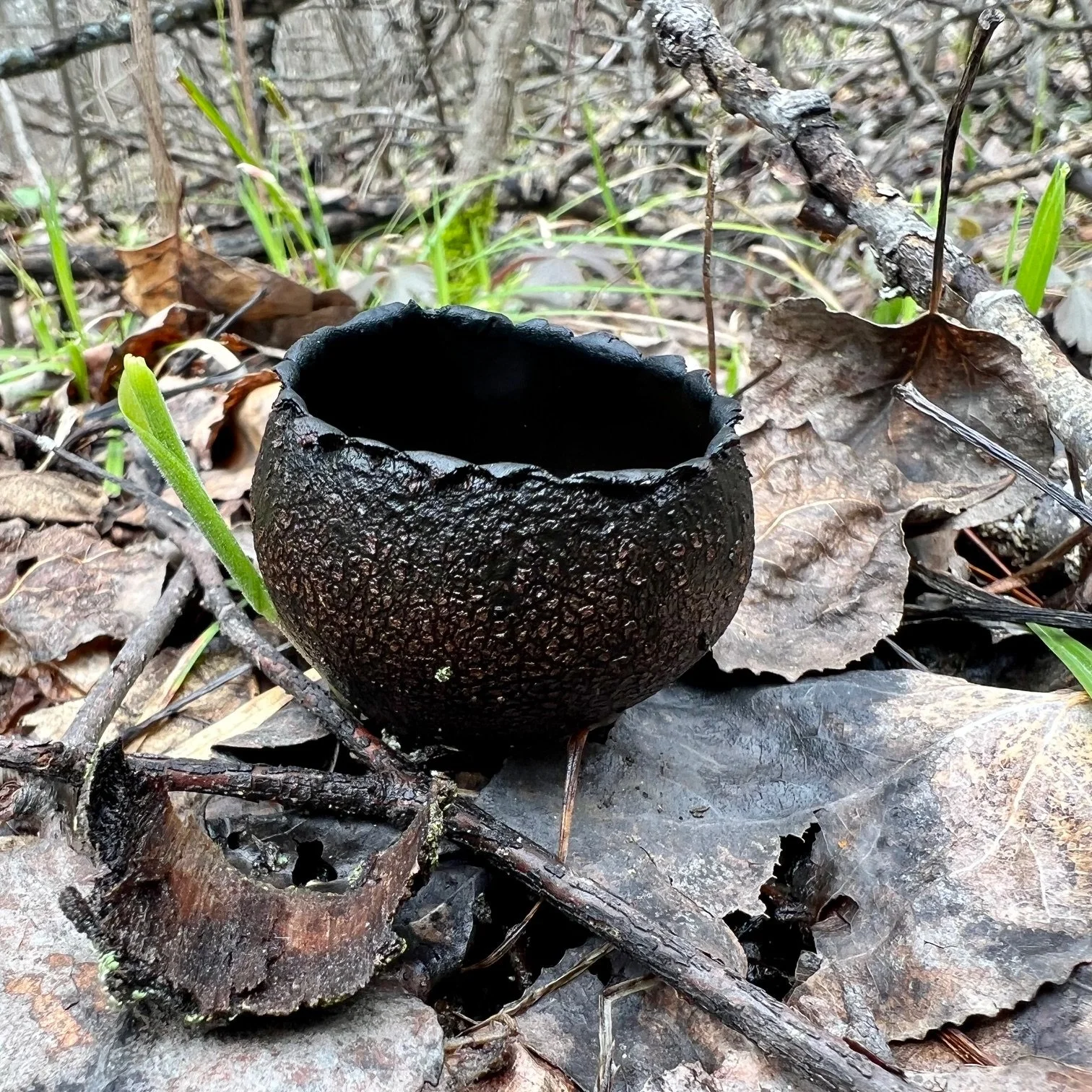
Dave Margoshes’ new novel, A Simple Carpenter (Radiant Press, 2024) , is one of our most anticipated fiction releases of the year, and today, we are honoured to have this Saskatoon-area poet and fiction writer on our blog to speak to his remarkable book.

Set in the early and mid-‘80s in the Middle East, A Simple Carpenter plays out against a backdrop of strife in Lebanon and ethnic/religious tensions between Jews and Arabs in Israel and Palestine. This historical backdrop serves as an empathetic and thoughtful commentary on our modern political climate. 

Part biblical fable, part magic realism, and part thriller, the story follows the epic journey of a ship’s carpenter stranded on a small Mediterranean island and visited by a frightening mysterious creature. He’s lost his memory but has acquired the ability to speak, write and understand all languages. After his rescue, he spends time in a Lebanese coastal village recuperating with a group of nuns who, observing him perform what appear to be small miracles, take him to be the second coming of Jesus Christ. Later in Beirut he’s hired as a translator for the UN peacekeeping force, and is recruited as a messenger for a group named Black September. On a quest to find his true identity he travels on foot across the hills to the Sea of Galilee, encountering a series of strange and magical communities evoking biblical times along the way.

We are captivated by this staggering story, and welcome Dave to our Power Q & A series with a burning question. Keep reading!

Bring home A Simple Carpenter by Dave Margoshes!

Q: From the first line of the first chapter of your book, there is an overwhelming immersion in the senses, particularly sound and smell. It’s a breathtaking opening. Can you tell us about creating this scene—why it was important to start in this place?

A: For the benefit of those who haven’t yet read the novel, let me first explain, it begins with a sailor onboard a ship adrift in the Mediterranean, regaining consciousness after being in a coma for several days. He’s lost his memory so has no idea who he is, where he is, or what’s happened to him. Here’s the first 2 sentences:

“The blood in my veins sang and boiled. The sheets of my bunk were awash with sweat and other foul emanations of my body. I slept and slept, slipping in and out of consciousness. Through the haze of my own mind, I heard voices babbling in a stew of languages, their words clear and indistinct at the same time, their meaning incoherent.”

So yes, as you noted in your question, “sound and smell.” The narrator is a blank slate, hungry for information, and he can only rely on his senses.

Actually, in my first draft, the novel began with a scene that opens what is now Chapter 4, after a shipwreck leaves the narrator alone on a desert island. It begins this way:

“Later, during what I now think of as my sojourn of sand, I had ample time to ponder the implications of my lack of memory. … I thought of all [that had happened to him] as I lay in the sand of the small island I had washed up on, but I thought also of sand…. I lay, often for hours, in a bed of sand with a view of the sea, each portion of the back of my body, from skull to shoulder to buttock to calf to heel of foot, developing a deep intercourse with those crystals, my fingers threading through the sand at my sides, my lips engaging deeply in conversation with the grains of sand upon them, my eyelids and the hairs of my nostrils tugging and pushing against their incessant current.”

Here too, the narrator is dependent on his senses – the feel of the sand he’s lying on, the sound of waves on the beach, the heat of the sun.

In both cases, senses are extremely important. And both scenes set the tone for the novel’s main storyline, the narrator’s search for identity.

I switched those two scenes so the novel unfolds primarily in “real time,” relying less on flashback and memory.

Dave Margoshes

More about Dave Margoshes:

Dave Margoshes began his writing life as a journalist, working as a reporter and editor on a number of daily newspapers in the U.S. and Canada, and has taught journalism and creative writing.  He has published twenty books of fiction, nonfiction and poetry. His work has appeared widely in literary magazines and anthologies, in Canada and beyond, including six times in the Best Canadian Stories volumes; he’s been nominated for the Journey Prize several times and was a finalist in 2009. His Bix’s Trumpet and Other Stories won two prizes at the 2007 Saskatchewan Book Awards, including Book of the Year. He also won the Poetry Prize in 2010 for Dimensions of an Orchard. His collection of linked short stories, A Book of Great Worth, was named one of Amazon. CA’s Top Hundred Books of 2012. Other prizes include the City of Regina Writing Award, twice; the Stephen Leacock Prize for Poetry in 1996 and the John V. Hicks Award for fiction in 2001. 

Read More
Hollay Ghadery Hollay Ghadery

Excerpt from Fungal: Foraging in the Urban Forest

We’re tickled to be sharing an excerpt from the lastest book from the original “fun-gal”, mushroom hunter and author extraordinaire, Ariel Gordon.

Both personal and entertaining, Fungal: Foraging in the Urban Forest is the highly anticipated second book of a trilogy and shows Gordon at her best: interweaving the personal with the easily-overlooked natural world around her, and passing on her contagious delight for the world at—and under—our feet.

We’re tickled to be sharing an excerpt from the lastest book from the original “fun-gal”, mushroom hunter and author extraordinaire, Ariel Gordon.

Both personal and entertaining, Fungal: Foraging in the Urban Forest is the highly anticipated second book of a trilogy and shows Gordon at her best: interweaving the personal with the easily-overlooked natural world around her, and passing on her contagious delight for the world at—and under—our feet.

In a diverse range of essays, Gordon takes us deep into the fungal world, exploring mushrooms both edible and not, found and foraged, and the myriad ways in which mushrooms and trees make up our ecosystem and are in fact a reflection of the way we build our personal communities and connections. 

Fungal: Foraging in the Urban Forest by Ariel Gordon, published by Wolsak & Wynn. Preorder here.

Excerpt from “Morel Hunter”

in Fungal: Foraging in the Urban Forest

by Ariel Gordon

It was May 2022 when I dragged my partner Mike out of the house to go looking for morels. I guess you could call him my “morel support.” (Ahem.)

I have always wanted to find mushroom kindred spirits and the Winnipeg Mycological Society // Société mycologique de Winnipeg group on Facebook had them in every shape and size, from newbies dumping a hatful of random mushrooms to experts sharing a trunk full of morels. The group currently has 4,800 members and is led by Alexandre Brassard, the Dean of Arts and Science at the Université de Saint-Boniface and a political scientist by training.

The threshold for membership is gloriously low: “Intrigued by mushrooms? This is a forum to learn more about them and to talk about the fungi of Manitoba and the Canadian Prairies. This Facebook page is the ideal place to discuss Prairie species and sites, to share foraging and cultivation tips, to support the correct identification of local mushrooms, and to share news about mycological events in Winnipeg.” 

Serious mushrooming is often about research. What trees are the mushrooms you’re after in association with? What kind of soil/moisture level do they prefer? Do they flush the year after forest fires? Where were the most recent forest fires? What Crown land (or property owned by a friend) meet all of these criteria. I have done the bulk of my mushrooming in a few spots. I’ve become a specialist of mushrooms in aspen/oak parkland, but, more specifically, in Assiniboine Forest, a never-developed urban forest in the south end of Winnipeg. I’m not good at mushrooms in coniferous forests or even mixed deciduous forests.

Ariel in her element!

I’d only ever found a handful of morels, in in this one spot on the Harte Trail in Assiniboine Forest and then another handful in the Belair Forest. But the group had lots of people finding morels or talking about finding morels, with tips on where/when to find them. 

People are secretive about their ‘spots’, the locations on crown land that produce the mushrooms they’re looking for in profusion, year over year. But enough people had let slip that poplar forests in SE Manitoba, and specifically in Sandilands Provincial Forest, were good sites.

So Mike and I got up early on a Saturday and drove out. Given that Sandilands is a big place, I did some searching and discovered that the Sandilands Ski Club had two parking lots, one of which was described as being hillier. So we headed towards that one, using the GPS tag from their website.

We parked and set out on one of their cleared ski trails, which had long since melted. And of course the trees were wrong: conifers and birches. We kept walking, scanning the horizon for white/grey trunks. One whole section was completely swamped with water, where we had to walk from shoal to shoal or just try to avoid the bigger pools.

Of course, that’s also where all the non-morel mushrooms where. Mike spotted devil’s urn (Urnula craterium), a black mushroom that’s the shape of a cauldron. I’d never seen it before, but people had been posting it to the WMS, alongside a similar looking species, witches’ cauldron (Sarcosoma globosum), which is brown instead of black. I spotted three types of jelly fungi, including blobs of yellow witches’ butter, a brown variety, and a black variety that completely covered sections of trunk on young trees. There were also mushrooms on stumps and downed trees.

Another pleasure, while walking through higher sandy areas, were all the prairie crocuses. One of my spring requirements is finding and photographing prairie crocuses while they’re blooming. Before two years ago, I hadn’t seen them very often, even though they’re the provincial flower. I think it’s because the areas I regularly walk in aren’t prime territory for them: like morels, they like sand. Previously, I’d go find them in Little Mountain Park, a city park that is mostly an off-leash dog park. I’d wait until a friend who took her dog there regularly posted about them. But we’d had good luck finding at least one prairie crocus the last two years and one was all I needed.

This year, I had heard that they were blooming, but I hadn’t had the chance to head to LMP yet. There were some blooming in the native prairie garden in the Wolseley Community Garden’s Vimy Ridge Garden, and I was there anyways, helping to shovel mulch into the beds, so I took a photo of them. But they were a placeholder for me until I could find something more wild. “Someone came and dug one of the crocuses out,” one of the garden organizers said, surveying the bed. She shrugged: that kind of activity was part of what happened in community gardens. And at least whoever it was hadn’t taken every plant. But prairie crocuses were everywhere in Sandilands, even by the side of the road. They became common, so I eventually only stopped for large clusters of them. 

We trudged through the swamped area, skipped through the crocus area, and eventually found an area that was mostly poplars. We walked through that for twenty minutes before we found our first mushroom.

We found one, and then a handful, and then a bagful, moving slowly, trying to look sideways. We would often call out to each other: “There’s one by your foot. And another and oh, look, another.” I got out my mushroom knife, given to me at Xmas, and was using them to cut the stems, though they were delicate and often snapped between our fingers. I also used my knife to collect a handful of fiddleheads, the early coiled leaves of ostrich ferns, which were also coming up in that area.

I knew that these were early spring morels, sometimes also called false morels: Verpa bohemica. But verpas are in the Morchella family with the more standard M. americana, and so should be called true morels. I’d seen verpas on the WMS group. Unlike morels, which were empty inside, verpas had a cotton-candy like fuzz inside of their stems and caps. Also, they were much taller than morels, and the texture of the cap was different.

We also found two small black morels. All in all, we felt very successful, walking back to the car.

*

There is some debate in the broader community as to whether verpas are edible, but I decided to try them.

I found a recipe online for verpas in a shallot vermouth sauce, but was mostly reading for the cooking instructions: “To begin the preparation fill a bowl with lightly salted cold water. Add the verpa bohemica mushrooms and give a shake. After 15 minutes pour out the water and refill the bowl with more cold water. Do this 3 times. After the 3rd time, lay your morels out on some paper towel and pat dry.” I’d read elsewhere that they should be parboiled or even just boiled twice. But I elected to use this method: given how delicate they were, I was worried that they’d fall apart if they were boiled. Even the soaking process disconnected most of the caps from the stems. I spent two hours soaking and draining my mushrooms, which had already started to soften in the mesh bag I’d collected them in.

I made a soup with the caps and some of the stems, with store-bought pho-flavoured broth, with onions and garlic and cilantro. When it was done, Mike and I each had a spoonful, as is recommended with all new foods but specifically wild mushrooms, and also wild mushrooms that are sort of…questionable.

The next day, neither of us had any aches and pains that were out of the ordinary for middle-aged people. We should have been fine to have big bowls of soup, which had looked and smelled delicious. Part of the reason we didn’t was that we had several meals out of the house in the days following and that our fridge was full of other options, but part of it was fear. The soup was in the bottom of the fridge, waiting. And food waste was one of my least favourite things. Was I going to let my fear win? Or was I going to wait until it went bad and throw it out? Finally, two days later, I reheated a bowl, adding some shredded pork that had been cooked carnitas style. And it was delicious. Mushroomy but not overly so. It was meaty and not just because I’d added the pork. My soups are not always great: I’m much better at making meatballs and stirfries for some reason. But this was probably the best soup I’d ever made. 

I made a point of telling Mike how good it was. But he said he wasn’t sure if it was worth it, given the potential side effects. I experienced no side effects. So the next day, I had another bowl. I felt sustained by the soup, by the idea that I’d collected the mushrooms and carefully prepared them, but also because I’d overcome my fear. There’s one bowlful left. Mike still hasn’t had any, but he’s not as passionate about mushrooms as I am. And I have to respect his wariness.

But if the pandemic has taught me anything, it’s that we’re always assuming risk.


More About Ariel:

Ariel Gordon (she/her) is a Winnipeg/Treaty 1 territory-based writer, editor, and enthusiast. She is the ringleader of Writes of Spring, a National Poetry Month project with the Winnipeg International Writers Festival that appears in the Winnipeg Free Press. Gordon’s essay “Red River Mudlark” was 2nd place winner of the 2022 Kloppenberg Hybrid Grain Contest in Grain Magazine and other work appeared recently in FreeFall, Columba Poetry, Canthius, and Canadian Notes & Queries. Gordon's fourth collection of poetry, Siteseeing: Writing nature & climate across the prairies, was written in collaboration with Saskatchewan poet Brenda Schmidt and appeared in fall 2023. 

--

Read More
Hollay Ghadery Hollay Ghadery

Power Q & A with George Lee

Author and attorney George Lee’s novel, Dancing in the River, won the Guernica Prize, and draws on Lee’s own life experiences growing up in China. It tells the coming-of-age story of a young boy during Mao’s Cultural Revolution—a boy named Little Bright living in a small, riverside town who is heavily indoctrinated by the anti-Western sentiment of the time and place. The perspectives afforded in this stunning novel—the insights into culture, politics, and personal experience—are crucial to a national and global understanding of Chinese history.

Author and attorney George Lee’s novel, Dancing in the River, won the Guernica Prize, and draws on Lee’s own life experiences growing up in China. It tells the coming-of-age story of a young boy during Mao’s Cultural Revolution—a boy named Little Bright living in a small, riverside town who is heavily indoctrinated by the anti-Western sentiment of the time and place. The perspectives afforded in this stunning novel—the insights into culture, politics, and personal experience—are crucial to a national and global understanding of Chinese history.

But just because a book is informed by an author’s experience doesn’t make it autobiographical. However, it could make it autofictional. After reading this book and being swept up in the stunning narrative, we had to ask: how much of this incredible story was founded in George’s life?

Welcome George!

Bring home Dancing in the River by George Lee.

Q: Your novel Dancing in the River reads like a memoir and you’ve said it’s inspired by your life. We’re curious if you’d go as far as saying it could be classified as autofiction—a genre that blend details of your life with fictional plot points and characters.

A: I would call it an autobiographical novel or fictional memoir.

Little Bright's story is deeply informed by my personal experiences.  There's always a delicate dance between fact and fiction. I used my emotional truth as the compass.

When I started it, I intended to write an autobiography. Still, eventually, I decided to break free from the strict confines of facts, so I was able to explore more universal themes by crafting fictional characters that breathe the air of authenticity.

 More about George Lee:

George was born and raised in China. He earned an M.A. in English literature from University of Calgary, and a Juris Doctor degree from University of Victoria. Dancing in the River, won the 2021 Guernica Prize for Literary Fiction. He practices law in Vancouver, Canada.

Read More
Hollay Ghadery Hollay Ghadery

Power Q & A with Elena Bentley

Erasure poetry—it’s one of the best ways to get almost anyone to try creating a poem. All you’ve gotta do is black out some words and leave others. Simple right? Well yes. Simple, but not easy. Erasure poetry, also known as blackout poetry, isn’t burdened by many rules but it’s no small feat to turn a text saying one thing into a poem saying something different.

Elena Bentley (MA English, University of Toronto) is a multi-genre writer and proud Métis aunty. Her ecent poetry chapbook, taliped (845 Press), was a finalist in the 2022 Vallum Chapbook Award. And the poetry is all erasure.

We welcome her to our Power Q & A series today to talk with us about choosing erasure poetry for this project.

Erasure poetry—it’s one of the best ways to get almost anyone to try creating a poem. All you’ve gotta do is black out some words and leave others. Simple right? Well yes. Simple, but not easy. Erasure poetry, also known as blackout poetry, isn’t burdened by many rules but it’s no small feat to turn a text saying one thing into a poem saying something different.

Elena Bentley (MA English, University of Toronto) is a multi-genre writer and proud Métis aunty. Her recent poetry chapbook, taliped (845 Press), was a finalist in the 2022 Vallum Chapbook Award. And the poetry is all erasure.

We welcome her to our Power Q & A series today to talk with us about choosing erasure poetry for this project.

Grab taliped by Elena Bentley.

Q: What was it about this particular project that inspired you to use erasure poetry? 

A: I read Randolph Bourne’s essay, “The Handicapped—by One of Them,” which was originally published anonymously in 1911 in The Atlantic Monthly, years ago when I was an undergrad researching for my Honours Thesis.

In his essay, Bourne muses on life with a disability as it relates to work, school, friendship, and relationships. After I read it, I was, to be honest, very shocked. This essay was published over one hundred years earlier, yet I felt that I could’ve written it. How could this man have captured, so accurately, my experience of disabled life when more than a century separated us? My shock turned to sadness. I felt, and still feel, saddened to know things have changed very little for those with disabilities.

Having rather masochistically thrown myself into grad school, I didn’t have time for anything extra, so I pinned Bourne’s essay as a piece of writing to return to in the future. Fast forward and cue the pandemic. Anxiety doesn’t often leave room for creative thoughts, at least in my case, so I figured I’d revisit my three-ring, five-inch-thick, papers-falling-out-because-it’s-so-full-of-honours-thesis-research-notes, binder for inspiration. And there was Bourne’s essay. I thought, I have to do something with this. 

I’d been wanting to try my hand at erasure poetry, and his essay seemed like the perfect source text. After I’d finished taliped and sent it out for consideration, an editor told me that taliped didn’t stray far enough away from the source text. My intention wasn’t to write in opposition to Bourne—I wanted to stay close. To be in conversation with him. To locate my individual experience of disability within his individual experience, and to show that while our diseases may be different, the country and time period may be different, we also have a collective, shared experience. Erasure allowed me to do what I set out to do.

That’s not to say we, meaning Bourne and I, feel and think the same. No, we certainly don’t. Where my long poem and Bourne’s essay differ the most is in our internalized beliefs about ableism and disability. Bourne can “see the way to happiness,” and believes any future misfortunes aren’t a direct result of his disability. Sorry, Bourne, I don’t buy it. I’m much more glass-half-empty in taliped. Though I hope to one day see my way to happiness, too.

Elena Bentley (MA English, University of Toronto) is a multi-genre writer and proud Métis aunty. Her poetry chapbook, taliped, was a finalist in the 2022 Vallum Chapbook Award and was recently published by 845 Press. Her poems can be found in literary journals like Arc Poetry, Room, The Malahat Review, PRISM international, and Grain. She received an Honourable Mention in Grain’s 2022 Short Grain Contest (poetry category), and in 2021 she was a finalist for CV2’s 2-Day Poem Contest. In addition, she is the author of the children’s picture book The Pickle in Grandma’s Fridge, and she was shortlisted for CANSCAIP’s 2023 Writing for Children Competition (Young Adult category). She is the Interim Editor for Grain Magazine. elenabentley.com | @_elenabentley_ 

Read More
Hollay Ghadery Hollay Ghadery

Power Q & A with Ellen Chang-Richardson

Poems are playful, precocious, and powerful things, and these are just some of the reasons we are so giddy to celebrate National Poetry Month by hosting the incomparable Ellen Chang-Richardson on our blog, as part of our Power Q & A series.

Ellen’s poems use the power of blank space to make bold, breathtaking statements and allow room for exploration. In their just-released debut poetry collection, Blood Belies (Wolsak & Wynn, 2024), Ellen writes of race, of injury, and of belonging in stunning poems that fade in and out of the page. They bring their father’s, and their own, stories to light, writing against the background of the institutional racism of Canada, the Chinese Exclusion Act, the head tax and more. From Taiwan in the early 1990s to Oakville in the late 1990s, Toronto in the 2010s, Cambodia in the mid-1970s and Ottawa in the 2020s, Blood Belies takes the reader through time, asking them what it means to look the way we do? To carry scars? To persevere? To hope?

Poems are playful, precocious, and powerful things, and these are just some of the reasons we are so giddy to celebrate National Poetry Month by hosting the incomparable Ellen Chang-Richardson on our blog, as part of our Power Q & A series.

Ellen’s poems use the power of blank space to make bold, breathtaking statements and allow room for exploration. In their just-released debut poetry collection, Blood Belies (Wolsak & Wynn, 2024), Ellen writes of race, of injury, and of belonging in stunning poems that fade in and out of the page. They bring their father’s, and their own, stories to light, writing against the background of the institutional racism of Canada, the Chinese Exclusion Act, the head tax and more. From Taiwan in the early 1990s to Oakville in the late 1990s, Toronto in the 2010s, Cambodia in the mid-1970s and Ottawa in the 2020s, Blood Belies takes the reader through time, asking them what it means to look the way we do? To carry scars? To persevere? To hope?

Welcome, Ellen!

Bring home Blood Belies by Ellen Chang-Richardson.

Q: What advice do you have for poets who want to play with visual space on the page?

A: Be intentional — ask yourself: what do you want the words, spacing, enjambment, marks (i.e., commas, dashes, etc.) and blank page to say? What are the reasons behind your visual choices? 

In “only sunken areas hold weight,” for instance, the poem’s placement on the page speaks to the physical weight of covering up disability and living with anxiety disorder, as much as it does the process of intaglio printmaking and the use of fire and crystals in healing rituals. The poem starts low on the page and finishes with words that flutter down like sparks off a flame.

Visual space is about intentionality but it’s also about gut instinct. Pull inspiration from all aspects of your life and remember to play.

Ellen Chang-Richardson (Photo credit: Curtis Perry.)

More about Ellen Chang-Richardson:

Ellen Chang-Richardson is an award-winning poet of Taiwanese and Chinese Cambodian descent whose multi-genre writing has appeared in Augur, The Fiddlehead, Grain, Plenitude, Watch Your Head: Writers and Artists Respond to the Climate Crisis, The Spirits Have Nothing to Do with Us: New Chinese Canadian Fiction and others. The co-founder of Riverbed Reading Series, they are a member of Room’s editorial collective, long con magazine’s editorial board and the creative poetry collective VII. They are represented by Tasneem Motala at the Rights Factory and currently live on the traditional unceded territory of the Algonquin Nation (Ottawa, Canada).

Read More
Hollay Ghadery Hollay Ghadery

Power Q & A with Pat Connors

Today we welcome to our blog Patrick Connors, a poet living in Toronto and contributing to its rich poetic landscape. Patrick’s latest collection. The Long Defeat, is coming out with Mosiac Press.

In this new book, Connors explores the depths of human experience, influenced by personal challenges and global crises. Reflecting on his own experience of pandemic-induced unemployment, Connors captures universal themes of dissatisfaction and the desire for renewal.

Intrigued by the title, we asked Patrick to speak about what he hopes people will take away from this timely collection.

Today we welcome to our blog Patrick Connors, a poet living in Toronto and contributing to its rich poetic landscape. Patrick’s latest collection. The Long Defeat, is coming out with Mosaic Press.

In this new book, Connors explores the depths of human experience, influenced by personal challenges and global crises. Reflecting on his own experience of pandemic-induced unemployment, Connors captures universal themes of dissatisfaction and the desire for renewal.

Intrigued by the title, we asked Patrick to speak about what he hopes people will take away from this timely collection.

Bring home The Long Defeat by Patrick Connors.

Q: What is the main message you want to get across to your readers?

A: We are in times of great strife. We have been through a pandemic, war throughout the world, and unrest within our own borders. It seems very dark, and hopeless. But this could be the beginning of a great victory. Holding onto this belief gets me through the hardest days.

The wonderful Pat Connors!

More about Patrick Connors:

Patrick Connors’ first chapbook, Scarborough Songs, was released by Lyricalmyrical Press in 2013, and charted on the Toronto Poetry Map. He contributed 18 poems to Bottom of the Wine Jar, published in 2017 by SandCrab Press, and launched in Gibara, Cuba.

He has had work printed in Belgium, India, and the United Kingdom, in addition to the United States and Canada.

 Past publication credits include: Blue Collar Review; The Toronto Quarterly 4; Spadina Literary Review; Tamaracks; and Tending the Fire, released in spring 2020 by the League of Canadian Poets.

Recent publication credits include: Rabble; Poetry and Covid; Devour; Lummox 9 Anthology; Canadian Stories; Harbinger Asylum; Silver Birch Press; and Poetry Pause.

He has performed at the Austin International Poetry Festival; featured in numerous reading series such as The Art Bar, Wild Writers, and Plasticine Poetry; hosted events under the 100,000 Poets for Change banner, as well as the United May Day Committee; and was on the organizing committee for The Great Canadian PoeTrain Tour.

His first full collection, The Other Life, is available from Mosaic Press.

His next full collection is forthcoming.

Read More