
Excerpt from Shoebox by Sean Paul Bedell
On one warm summer day, the heat was stifling in University Station. As always, I waited, poised, coiled like a spring. When the tones chimed, I would be ready to strike.
I was relieved when we got paged out for a call.
I hit the bay door switch, Fletch started the truck and I jumped in. He hit the lights and siren and we took off. The siren’s wails echoed off the apartment blocks and office towers. Our rig’s lights reflected in the windows of the shops at street level.
I hadn’t been a medic for long, especially compared to Fletch. On every call two questions jumped to my mind: What will I find? How will I fix it?
I’d learn that, as a medic, I would arrive in someone’s life, interact with them and their family, their loved ones. I’d be thrust into their lives on their worst day. If things work out, I become their hero. I had no flowing cape, no mask covering my eyes; the only logo I wore was the crest on my shoulder with the serpent twirling around the pole. With the stethoscope that dan gled from my neck and my bare hands, I’d invoke miracles.
Many times, I would show up in their life, and based on experience or gut, or both, I knew I couldn’t work any miracles that day. There was no magic that would save them. For them, or at least their bereaved family members, it would be a recurring night of darkness, forever. This scene, with my ugly mug front and centre in their nightmare, emerges as a repeating curse they’re forced to live with. Bad calls, where I can’t charm a snake out of the basket and score a save, happen on average at least once a shift. At a minimum of four shifts a week, in the year that I’ve been a medic, I’ve become a rank ghost to over a hundred families.
When I started as a medic, I was afraid to use the word “died.” But that’s what they teach us in paramedic school. We need to be clear with people when we’re talking about death. I can’t use euphemisms like ‘gone to a better place’ or ‘leaving this world’ or ‘moving on.’ Sometimes people don’t grasp the finality of what I’m trying to say to them. My instructor at paramedic school, Roland MacLeod, was a brain with a wicked sense of humour. He said, “They think, oh, okay what better place? Toronto?”
—Excerpt from Shoebox by Sean Paul Beddell, NoN Publishing, 2025. Copyright 2025, Sean Paul Beddell. Reprinted with permission.
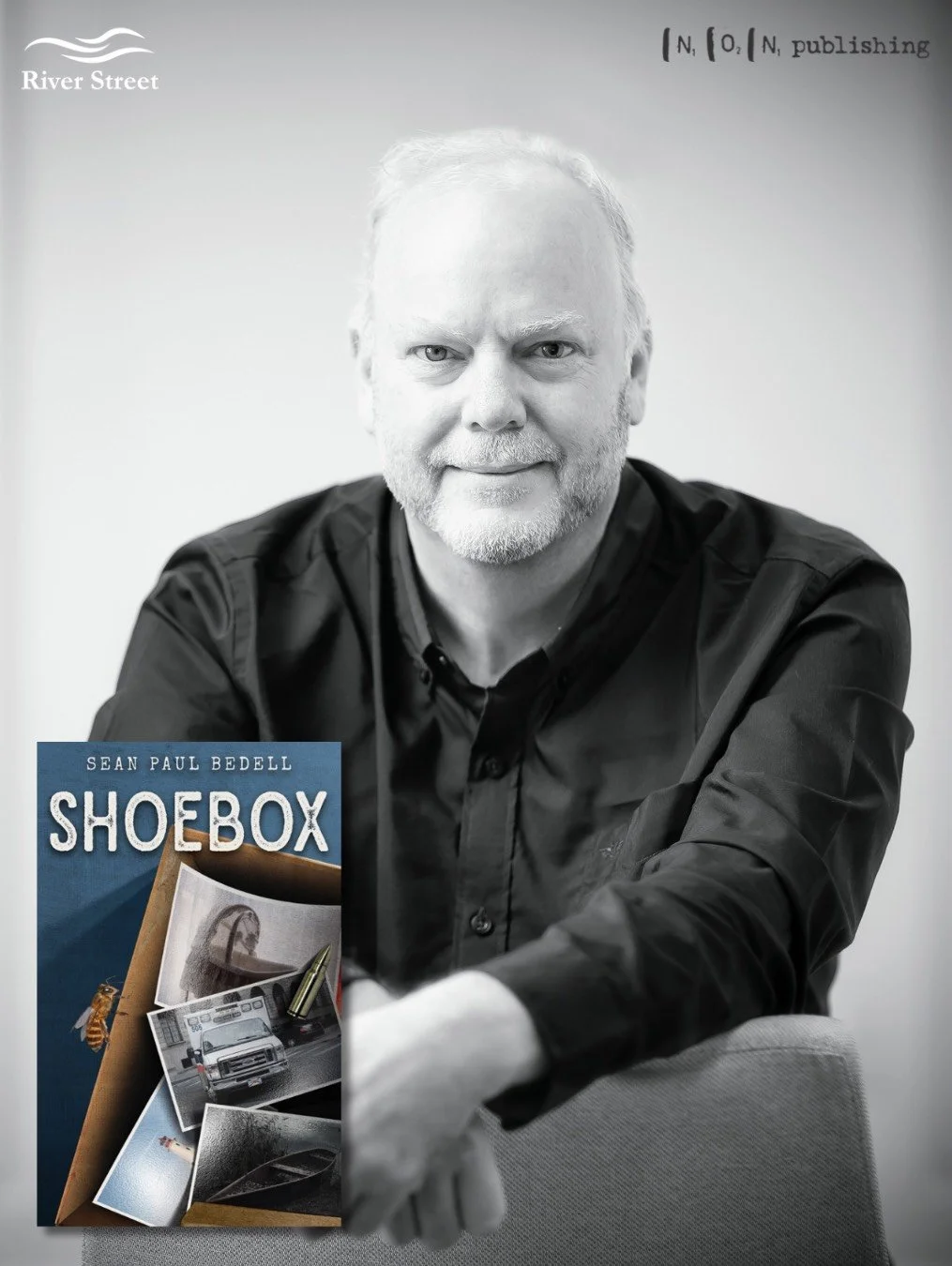
More about Shoebox:
In this gritty and emotional exploration of the human condition, Steve Lewis, a dedicated paramedic, faces the devastating aftermath of a fatal accident that casts a dark shadow over his once-passionate commitment to saving lives. Plagued by guilt and grief, he finds his career, family, and very existence hanging in the balance as he navigates the complexities of trauma both personal and professional. As Steve grapples with the high stakes of his job amidst the scrutiny of a community that admires yet questions him, each life he saves rekindles his passion for his work, reminding him of the profound connections he can forge through compassion and care. A compelling and visceral journey of personal redemption and triumph over adversity, Shoebox explores the human spirit's capacity for healing.
About Sean Paul Beddell:
Author of the novel Somewhere There’s Music, Sean Paul Bedell has been writing and publishing for more than 30 years. A longtime paramedic and captain with the fire service, he lives with his wife Lisa in Dartmouth, Nova Scotia.