
BLOG

Hollay Ghadery Hollay Ghadery

Power Q & A with Melia McClure

Canadian author and actor Melia McClure joins us for this Power Q & A to talk about her exceptional new novel, All the World’s a Wonder, and her masterful use of voice to create unforgettable, vibrant characters. You’re not going to want to miss this!
Canadian author and actor Melia McClure joins us for this Power Q & A to talk about her exceptional new novel, All the World’s a Wonder (Radiant Press, 2023), and her masterful use of voice to create unforgettable, vibrant characters. You’re not going to want to miss this!

Melia McClure, author of the absorbing novel, All the World’s a Wonder, published by Radiant Press, 2023.


Q: Your book positively sings with the chorus of your characters—each so distinct and beautifully authentic. Would you say that being an actor has helped develop your ear for voice? 

A: My experiences as an actor are integral to my process as a writer. I approach writing as a performer, attempting to be a conduit of the voices of my characters. I need to be able to both hear the voices and perform them; if I can see my characters on stage or in a film, then the narrative is abuzz with energy and unfolding in interesting and surprising ways. Self-possessed character voices always supersede any preconceived ideas I might have about where a story is going. I attempted to dramatize this creative process in my novel All the World’s a Wonder, in which the Playwright is forced—sometimes in a violent fashion—to allow her characters to direct her work. I once had an acting coach who said, “Get out of your own way,” and I apply that advice to the craft of writing; in other words, I step aside and let the characters talk in whatever way they want to talk. 

The same acting coach also said, “Judgment doesn’t allow you to play anything.” That wisdom speaks to the compassion required of an actor, and of a writer as well. To play a character or write a character, it is imperative that the artist allow the voice they are channeling to exist in all its flawed glory. Some of my characters tend to traverse dark, traumatizing territory, falling down moral tunnels that push the possibilities of redemption. 

My love of capturing authentic, uncensored voices has led to mixing screenplay and playscript with prose to not only elevate the novel to a voice-driven live performance, but also to highlight the dramatic, role-playing aspects of our everyday existence. Still, even without those stylistic experiments, it is the characters speaking to me from beyond the curtain that direct the day. Sometimes what they say is witty, sometimes crude, other times funny, occasionally poetic or devastating. If I were on stage playing this character, I ask myself, what would I say? What would I do? How would I feel? The characters have the answers. As a writer, it is my privilege to get out of the way and let them be.   

All the World’s a Wonder is available wherever books are sold. Also, at Radiant Press!

More about All The World’s a Wonder:       

A playwright possessed by her muses, an actress desperate to succeed, and a doctor haunted by a lost love. Three people cross time and space to meet through the playwright’s bizarre creative process: to create, the playwright must become her characters; to tell her tragic story, the actress must speak from the grave; to heal his harrowing past, the doctor must surrender to his patient – the playwright.

More about Melia McClure:

Melia McClure is the author of the novel The Delphi Room and continues to delve into the eccentric as a writer, editor, and actor. As an actor, she has traversed a range of realms, from a turn as Juliet in an abridged collage of Shakespeare’s classic to the sci-fi universe of Stargate Atlantis. Melia studied writing at The Writer’s Studio at Simon Fraser University, and her fiction was shortlisted for a CBC Literary Award. Born in Vancouver, she has since traveled the world in search of the ever-shapeshifting muse. www.meliamcclure.com.

For review copies of All the World’s a Wonder or press-related queries, please contact us.

Read More
Hollay Ghadery Hollay Ghadery

Power Q & A with Jason Heroux

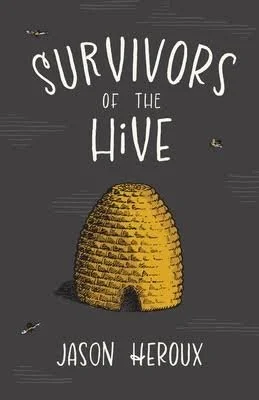
We’re tickled to be joined by the incomparable Jason Heroux for this Power Q&A to talk a little about the impulse to get surreal and his latest book, a collection of short stories, Survivors of the Hive (Radiant Press, 2023).

We’re tickled to be joined by the incomparable Jason Heroux for this Power Q&A to talk a little about the impulse to get surreal and his latest book, a collection of short stories, Survivors of the Hive (Radiant Press, 2023).

Q: Surrealism. It’s a part of so much of your work—not just your notably and wonderfully surreal short story collection, Survivors of the Hive (Radiant Press, 2023). Is surrealism a conscious choice for you? And if so, why? Or is it more of an intrinsic gravitational pull—a way you make sense of things perhaps unconsciously? Or a bit of both or something else entirely? 

A: When I sit down to write a poem or piece of fiction, I don’t purposely start from a surreal perspective. I begin with an image, or a scene, or a bit of dialogue, and see where it leads. I find things eventually take a surreal turn, simply because surrealism gives me the most freedom to go where I please. The text becomes an exciting open road, destination unknown. At the same, I feel “reality” is more surreal than we give it credit for. Very little “makes sense.” Or at least that’s been my experience so far. For example, one divided by one somehow still equals one. And all rainwater on earth is now no longer safe to drink. We’re not living in a dream, but it can feel that way. Why not write about how strange and unreal the whole thing feels?

Suvivors of the Hive (stories) by Jason Heroux. Available anywhere books are sold, including from Radiant Press.

More about Survivors of the Hive:

Loss. Grief. Centipedes. Silence. The word “no.” The word “yes.” A high school poetry contest that may or may not be linked to the end of the world. The characters in this collection are under attack. A grief-baffled son hopes to save an innocent insect from a toxic genocide, a daughter struggles to accept loss while visiting a community overwhelmed by denial, a sorrow-stricken father recalls his bizarre final conversation with his only child; the individuals in these stories discover how difficult it can be to let go of what’s gone in order to live with what’s left.

Get your copy today. For press inquiries, contact us.

More about Jason:

 Jason Heroux is the author of four books of poetry: Memoirs of an Alias (2004); Emergency Hallelujah (2008); Natural Capital (2012) and Hard Work Cheering Up Sad Machines (2016). He is also the author of three novels: Good Evening, Central Laundromat (2010), We Wish You a Happy Killday (2014), and Amusement Park of Constant Sorrow (2018). Jason holds a BA degree from Queen’s University, and was a finalist for the 2018 ReLit Novel Award. He was the Poet Laureate for the City of Kingston from 2019 to 2022. He lives with his wife Soheir, and their three cats, Akira, Pablo, and Neruda in Kingston, Ontario. 

Read More
Hollay Ghadery Hollay Ghadery

Power Q & A with Jerrod Edson

We invited Jerrod Edson, Canadian author of six books, for a quick chat with us about his wild and wonderful latest work of speculative fiction, The Boulevard (Galleon, 2023). We’re delighted he joined us!

We invited Jerrod Edson, Canadian author of six books, for a quick chat with us about his wild and wonderful latest work of speculative fiction, The Boulevard (Galleon, 2023). We’re delighted he joined us!

Jerrod Edson.

Q: Your new book, The Boulevard, has a curious (and endearing) dedication. It reads:

My father, Paul Edson, read an early version of this story before he passed away, and when I asked what he thought, he grinned and said, in typical fashion, “It’s different.”

This book is for him.

We've got to agree with your dad. Your book rests on a pretty wild premise: Ernest Hemingway, Vincent van Gogh, Satan, and a train ride through Hell. God planning an unannounced visit. Panic and darkness and hilarity ensue. You make it work, but we've got to ask: how did you come up with this idea?

A: The idea for this story had been brewing since 2000-2001.

While in university, I worked at Chapters, and during the Indigo takeover, new CEO Heather Reisman was coming to visit our store. My manager was in a panic getting the store up to speed for Heather’s visit.

During that time, I was perusing a Far Side calendar and came across a cartoon with Satan in Hell, arguing with a repairman.

I had one of those lightbulb moments: What if God planned a visit to Hell and Satan was in a panic to get Hell up to speed? I knew it was a good idea for a novel, but I also knew I wasn’t ready to write it. I made notes and worked out ideas for years, making Van Gogh the focus, before finally sitting down to a first draft around 2014.

More about Jerrod:

Jerrod Edson was born in Saint John, NB, in 1974. He is the author of six novels. Notable books include The Goon, shortlisted for the Relit Award and named the best New Brunswick novel of 2010 (Telegraph Journal), The Moon is Real, winner of the 2013 David Adams Richards Prize, and The Dirty Milkman, listed as a top book of 2005 (Ottawa Xpress). His most recent novel, The Boulevard, is his first work of speculative fiction and focuses on the life of Vincent van Gogh. He lives in Mississauga, ON, with his wife Leigh and daughters Hadley and Harper.

For press inquiries or review copies of The Boulevard, contact us.

Read More
Hollay Ghadery Hollay Ghadery

RSW's Marg Huntley on Book Publicity and Marketing

One of my professor’s frequently says that the publishing industry exists at a rather contentious intersection between art and commerce. But I want to tweak his metaphor a little. I say that the publishing industry is less of an intersection and more of a grown person with one foot on either end of a child’s seesaw. With one foot on art, and the other on commerce the person wobbles around vicariously in the middle. 

Our very own Margaret Huntley has been busy completing her Masters in Writing, Editing, and Publishing in Australia, and we asked her to share with us (and you!) how what she’s been learning has shaped her thinking about book marketing and publicity.

We absolutely love her answer. Keep reading!

Hi everyone! I’m Margaret, and I’ve been with the River Street team for over four years. I’m currently residing in Brisbane, Australia and am halfway to completing my Masters in Writing, Editing, and Publishing. 

I’ve found the best way to describe by Masters degree is with the phrase “publishing is the business of books.” Because you can write incredible literature, and even have it published, but if no one buys it at the store then no one is paying their bills. My Masters is similar to a degree in marketing and publicity in that I am learning how to sell a product by engaging public interest. But publishing is a distinct form of publicity that requires additional care. 

Meet Margaret!

One of my professor’s frequently says that the publishing industry exists at a rather contentious intersection between art and commerce. But I want to tweak his metaphor a little. I say that the publishing industry is less of an intersection and more of a grown person with one foot on either end of a child’s seesaw. With one foot on art, and the other on commerce the person wobbles around vicariously in the middle. 

As someone who loves art for the sake of art, but doesn’t love the starving artist lifestyle, this is a balancing act I’ve struggled with my whole life. And I know I’m not alone. The reality is that writers are artists first, but that doesn’t magically exempt them from living under capitalism. The publishing industry pulls commerce into literature in order to empower artists to keep on creating. The industry certainly is far from perfect and has its fair share of barriers that are in the process of being torn down. But in all its faults and wobbles, there is an ongoing struggle to balance art with commerce. 

This is one struggle that I am excited to be in the middle of. I’m learning so many valuable things at the University of Queensland that I’m excited to implement at River Street as we take on more publishing clients. 

Read More
Hollay Ghadery Hollay Ghadery

“our present tense / was not too late”: Review of Time is a Mother by Ocean Vuong

Time is a Mother, Ocean Vuong’s latest poetry collection, is a timely piece of writing in more ways than one. The work grapples with the immediacy of our ever-fleeting lives, reflecting on his mother’s death, while stubbornly refusing to submit entirely to grief. Vuong’s earlier poetry collections as well as his debut novel: On Earth We’re Briefly Gorgeous, earned acclaim for their intimate depictions of raw emotion. Vuong’s newest work is no exception.

“our present tense / was not too late”: Review of Time is a Mother by Ocean Vuong

Publisher: Penguin Press, 2022.

Review by: Margaret Huntley

Time is a Mother, Ocean Vuong’s latest poetry collection, is a timely piece of writing in more ways than one. The work grapples with the immediacy of our ever-fleeting lives, reflecting on his mother’s death, while stubbornly refusing to submit entirely to grief. Vuong’s earlier poetry collections as well as his debut novel: On Earth We’re Briefly Gorgeous, earned acclaim for their intimate depictions of raw emotion. Vuong’s newest work is no exception. Time is a Mother is rich with enjambments, metaphors, and allusions that persistently draw its readers into the chaotic cacophony of human experience that is the present moment.  

Too often we encounter writing on the subject of loss to be stagnant, giving the tragedy complete autonomy over our emotions. But Vuong resists this cliché by sprinkling light and hope in amongst the grief. For instance, in the poem “Amazon History of a Former Nail Salon Worker,” Vuong’s mother’s lost battle with cancer is told with a stark detachment in tone, painting the loss as devastatingly jarring. Instead of the book staying in that space of sadness, however, subsequent poems such as “Reasons for Staying” spark optimism by focalizing the little things that make each day beautiful. 

But make no mistake, Vuong does not sugarcoat the very real experience of grief. A melancholy ache is still present even in the moments of hope. That ache is not ignored but is embraced much in the same way that a woven carpet combines different threads to make a masterpiece. The dark strands combine with light ones, and in order to truly admire the carpet’s beauty, one has to stand back and take it all in at once. 

When experiencing losses in my own life, many friends and family told me that the grief would come in waves, and they were right. One minute I’ll feel just fine, and the next I’ll be swept up in isolated sorrow. Time is a Mother works in much the same way. Vuong expertly navigates the fluctuation of human emotion in his writing. Some poems are unapologetically hopeful, others are angry, others are pessimistic, and more all at once. Each piece bleeds into the next, pulling its readers along, sometimes eagerly, and sometimes reluctantly. 

Another parallel to our lives is that this poetry collection is not long. In only 100 short pages, Vuong weaves together an artful story of loss and hope, pain and joy, desperation and confidence. Before I even had a chance to realize what was happening, it was over. 

And is that not how our life goes? Everything happens and it happens so quickly. Then, it’s over and we wonder where all the time went. Though this reality is not a sad thing. For the inevitability of our death is what makes our lives worth living in the first place. And luckily for us, “our present tense / was not too late.” 


Read More
Q&A Series Hollay Ghadery Q&A Series Hollay Ghadery

Power Q & A with Bob Henderson

Bob Henderson is an outdoor educator, writer, and resource editor for Pathways: The Ontario Journal of Outdoor Education. Additionally, he has been resource editor for Nastawgan: The Quarterly Journal of the Wilderness Canoe Association since 2008. Bob is also one of the editors and writers of Paddling Pathways. He joins us here for our Power Q & A.

Bob Henderson is an outdoor educator, writer, and resource editor for Pathways: The Ontario Journal of Outdoor Education. Additionally, he has been resource editor for Nastawgan: The Quarterly Journal of the Wilderness Canoe Association since 2008.

Bob is also one of the editorial forces behind Paddling Pathways: Reflections from a Changing Landscape, published by Your Nickle’s Worth Publishing in 2022.

Bob joins us for our Power Q & A series.

Paddling Pathways, available from Your Nickle’s Worth Press.

Q: What’s the takeaway you’d like readers to glean from this collection of personal essays?

A: The takeaway would be some questions: What would a reflective look at paddling in Canada look like in 2022, one that reflects changing landscape?

What might it mean for us to shift pathways and create narratives that no longer focus on competing, completing, and conquering as central motifs for how we understand the natural world or wilderness travel?

Consider what life might be like if there were less completion and more community, less asserting and more relating, less shouting and more listening, and maybe even less human and more more-than-humans.

Learn more about Bob at www.bobhenderson.ca.


Read More
River Street Reviews Hollay Ghadery River Street Reviews Hollay Ghadery

RSR: Stella’s Carpet by Lucy EM Black

If you do not have an appreciation for Persian carpets you will by the time you finish Lucy EM Black’s novel Stella’s Carpet. After reading Black’s vibrant descriptions of their artistry and rich history, I found myself searching the Internet for images of the patterns she writes about. But this is not a novel about carpets. At the heart of the story is a dysfunctional family with many secrets.

Stella's Carpet by Lucy EM Black
Publisher: Now or Never Publishing 2021
ISBN: 1989689264
186 pages
$19.95

Reviewed by: crystal fletcher

If you do not have an appreciation for Persian carpets you will by the time you finish Lucy EM Black’s novel Stella’s Carpet. After reading Black’s vibrant descriptions of their artistry and rich history, I found myself searching the Internet for images of the patterns she writes about. But this is not a novel about carpets. At the heart of the story is a dysfunctional family with many secrets. 

Stella’s Carpet by Lucy EM Black, available wherever books are sold.

As so many of us can relate to love, family, friendships, and relationships are messy, and Stella’s family is deeply entrenched in complicated. Her beloved grandparents—Stan and Maria Lipinski, are World War Two Holocaust survivors unable to escape the horrors and atrocities they were forced to endure during the Nazi and Russian occupations in Poland. Their daughter Pamela has grown up under the weight of their trauma, which has left her miserable and often unbearable to be around. Because she is in her mother’s direct line of resentment, the thread of the elder Lipinski’s trauma continues to weave through the family line infiltrating Stella’s psyche. Stella compensates by endlessly battling to appease a mother she will never be to and cautiously navigating her world by avoiding relationships with her colleagues and students. 

And then there’s William Wheeler, Stella’s father, who has a distant relationship with his family, but a close one with his ex-wife Pam’s parents. So much so, that William and his new wife—the beautiful Fatima, who is a survivor of the Iranian Revolution—have named their son after Stella’s grandfather. 

The true mastery of Black’s novel is that it explores family dynamics through the lens of love, loss, grief, reconciliation, and redemption. It is structured in short chapters with the voices of Black’s characters intertwined throughout. There is nothing random in this approach as it provides the reader with snapshots into their lives—their struggles, their secrets, and the impact of their decisions. At the end of book, much like the threads of a luxurious Persian carpet, Black has effortlessly woven a tale about the consequences of intergenerational trauma and the desire by all to be accepted and loved.

When I closed Stella’s Carpet for the last time, I was not finished with Stella’s story, because as good books do, they leave us reflecting upon what we have read. As Black skillfully demonstrates in her novel, war has a devastating impact on families long after the treaties have been signed. Today, as wars rage on in Ukraine, Yemen, Syria… the list goes on, I found myself wondering about all the wrath this is causing—and will be causing—on many families for generations to come.


About Lucy EM Black:

Author of The Marzipan Fruit Basket and Eleanor Courtown, Lucy E.M. Black’s award-winning short stories have been published in Britain, Ireland, USA, and Canada. A dynamic workshop presenter, experienced interviewer, and freelance writer, she lives with her partner in Port Perry, Ontario.

 About crystal fletcher:
crystal fletcher is the host of all about canadian books and the author of Beauty Beneath the Banyan. She loves books, Reese’s Peanut Butter Cups, and exploring the world.


Read More
Hollay Ghadery Hollay Ghadery

REVIEW: Body & Soul: Stories for Skeptics and Seekers, Edited by Susan Scott

When I was the managing editor of a national infertility blog, the Executive Director gave me free rein to highlight voices as I saw fit. I created the schedule, coordinated the topics, and nurtured the writers using editorial experience, empathy, and compassion.

She left me with one stipulation, however. “We don’t publish anything that discusses politics or religion.”

I was crushed. Not simply for the writers but for myself.

Body & Soul: Stories for Skeptics and Seekers, Edited by Susan Scott, Foreword by Alison Pick.

Publisher: Caitlin Press, 2019.

ISBN: 978-1-987915-9-38

$24.95, 240 pages

Reviewed by Lori Sebastianutti

When I was the managing editor of a national infertility blog, the Executive Director gave me free rein to highlight voices as I saw fit. I created the schedule, coordinated the topics, and nurtured the writers using editorial experience, empathy, and compassion.

She left me with one stipulation, however. “We don’t publish anything that discusses politics or religion.”

I was crushed. Not simply for the writers but for myself. 

As an Italian-Canadian, raised in a Catholic home, my faith and religious practices have infiltrated all aspects of my life, including a decade-long infertility struggle. Were there not important stories in there to share with the world? 

The E.D. was not alone in her directive. As a writer, I’ve listened to podcasts where editors explicitly tell listeners that they’re not interested in publishing work that focuses on religion or faith. Understandable in a secular society. Except that for women, silence distorts, and leaves us facing one more void. 

Was there anywhere I could turn for hope that my stories were worth telling?

Enter Body & Soul: Stories for Skeptics and Seekers, edited by Susan Scott. This groundbreaking collection rectifies this invisibility with powerful writing that complicates simplistic notions of spirituality, religion, faith, ceremony, and practice. The anthology features 28 vivid personal essays by queer, non-binary, racialized, Indigenous, immigrant, and settler women, trying to reconcile lived experience with centuries of iron-clad tradition.

Several voices speak to the many familiar crises gripping organized faiths: patriarchy, homophobia, misogyny, and a history married to settler colonialism. 

Whether in the collection opener, “Unfinished Journey,” by Jagtar Kaur Atwal, or “Mother and Child,” by Dora Dueck, Christianity’s failure to embrace queerness is on full display. The forbidden fruit of female sexuality blossoms in “My Uterus is a Tree,” by Victoria poet Meharoona Ghani, and in “A Real Woman,” by Toronto novelist Heidi Reimer. Zarqa Nawaz’s “Writing from the Inside” and Sigal Samuel’s “The Kabbalist in the Kitchen” take on patriarchy with wit and warmth. And the hard, necessary work of decolonizing faith courses through “In a Canoe, Chasing my Métis Grandmother” by Carleigh Baker and “Star Women” by Jónína Kirton.

Where I feel Body & Soul ultimately shines is in the stories of women who freely choose a spirituality that suits their lives. In “Bad Jew, Good Jew,” Ayelet Tsabari proclaims herself an atheist at age 10, after the early death of her father: “it is in writing that I grasp for the unknowable and the sacred, and search for meaning, for something bigger than myself.” Similarly, Betsy Warland’s “Twenty Pages and a Razor Blade” claims that the sacred is contained within the narratives of our lives, and that we often turn away from them out of fear. “When we finally surrender to them our surrender is a sacred act,” writes Warland, and “what’s left out, or obscured, is often what’s needed.” 

After I finished Body and Soul, I sat down and wrote an essay that centred on a crisis of faith I had been reckoning with for years. The courage of these 28 women inspired mine, and gave me permission to set myself free.

Susan Scott’s bold call for luminous, wildly diverse stories that move both “skeptics and seekers” is what’s needed right now. Stories of the inner lives of women are the stories of our collective past, our urgent present, and a future filled with hope.

About Lori Sebastianutti:

Lori is a writer and teacher from Stoney Creek, Ontario. Her essays have appeared in The New Quarterly, The Hamilton Review of Books, and The Humber Literary Review. You can read more of her work at https://lorisebastianutti.com.

Read More
Hollay Ghadery Hollay Ghadery

Review of Voice: Adam Pottle on Writing with Deafness

The first time I heard the term “voice” in relation to a book was in high school. The definition remained fuzzy, far harder to pinpoint than theme, setting, point of view, and characterization. A writer’s voice seemed somehow part of her style, but I didn’t really know what that meant, either.

Mostly, an author’s voice seemed extremely important: Voice helps distinguish one writer’s work from another and makes a writer unique.

Okay. But what is it?

Voice, by Adam Pottle

University of Regina Press, 2019

ISBN: 9780889775930

$18.95, 162 pages

Reviewed by Marion Agnew.

The first time I heard the term “voice” in relation to a book was in high school. The definition remained fuzzy, far harder to pinpoint than theme, setting, point of view, and characterization. A writer’s voice seemed somehow part of her style, but I didn’t really know what that meant, either.

Mostly, an author’s voice seemed extremely important: Voice helps distinguish one writer’s work from another and makes a writer unique. 

Okay. But what is it?

I got a better sense from trying creative writing myself. Early, I’d try to “sound like” other writers on purpose, partly for fun and partly to try on identities. (Hemingway, anyone?) I paid attention when other people lauded a writer’s “unique voice” (like Barbara Kingsolver or Miriam Toews). I developed opinions: I enjoy a voice that serves a work’s characters, instead of spotlighting the writer herself.

When Voice: Adam Pottle On Writing with Deafness came along. I knew I had to read it.

Voice is available from University of Regina Press.

Voice is available from University of Regina Press.

 And wow, this book. It combines creative nonfiction, memoir, and sage writing advice. Searingly honest, it’s full of rage and beauty and a palpable, energetic love of the written word. It’s transparent and full of longing to be “heard.” It commands and rewards a reader’s reflection.

 Adam Pottle began losing his hearing in childhood and wore hearing aids relatively young. In Voice, he describes how those facts have affected, and continue to affect, his relationship to language and writing. Of course, it’s impossible to completely separate language from other elements of his life—his love of hockey and music, his ambivalence toward others in the Deaf and hard-of-hearing community whose experiences are different from his, and his family relationships.

He describes his path to learning language and developing his voice—both literal and literary, his speaking voice and his voice in writing.

Like a hearing person, he grew up speaking English. Learning ASL at an older age meant he’d always be somewhat “outside” the Deaf Culture’s core of fluent, native ASL speakers. But like a Deaf person, he found (and continues to find) the hearing world too impatient and thoughtless to adjust to his communication needs. Even institutions that “mean well” are reluctant to provide accommodations unless constantly reminded and pressured to do so.

He writes, of his work with a speech therapist in grade five,

“I didn’t want to speak like him. I wanted a dynamic voice, my own voice, a voice that could barrel through the air and make any room I spoke in seem like an arena, a voice that pinged people on the ear and forced them to listen, a voice that could thwack people’s funny bones and crack their hearts in two, a voice like Rodney Dangerfield’s or Marie Fredriksson’s or Krusty the Clown’s.”

In the second part of the book, he addresses writing and writers directly, considering topics such as stereotypes, ideas, text, and observation. He points out that the hearing world has an uneasy relationship with silence, but that silence can be a very effective storytelling tool. He describes the Store of Stereotypes, where many writers “shop” for typical characters, and he enumerates his strategies to avoid those stereotypes while he wrote a novella about the Holocaust.

His descriptions of how he uses language encapsulate how carefully he has reflected on language itself. Because he experiences English through captioning and through senses other than hearing, his relationship with English is “uneasy,” similar to those for whom English is a second language.

I write according to how words feel rather than how they sound. Words are tactile. I feel like I can hold them in my hands and throw them at people; I feel like I might scratch myself on their edges; they roll around in my mouth like barbed marbles. I shove and bend and crank words to form images and rhythms that I hope snag the reader’s attention.

He is certainly successful: This book captures and holds a reader’s attention.

 In recent years, the term “voice” has also developed a broader meaning: in an #ownvoices book, a person writes about an experience they’ve personally lived through. Because Voice shares Pottle’s unique relationship to language and the hearing world, it’s is a valuable contribution to this definition of “voice” as well. It demonstrates the ongoing, grinding issues around accessibility, and the hoops through which people have to leap, again and again, to access a world that’s readily available to hearing people.

 Writers should read Voice for its thorough contemplation of and love for language. Non-writers will find interest in its generous open window into Pottle’s life.

 And anyone organizing an event, especially as the pandemic recedes and in-person gatherings become more possible, should add “all forms of accessibility” as a value to incorporate into their event from the earliest planning stages. Books like Voice show us what we’re missing out on.


Marion Agnew studied American Sign Language for several years. Her essay collection, Reverberations: A Daughter’s Meditations on Alzheimer’s, came out in 2019. For more about her, see www.marionagnew.ca.


Read More
Hollay Ghadery Hollay Ghadery

Margaret's 2021 Summer Reading List

If you’re like me, your favourite summer activities include: reading on the beach, reading by the poolside, reading in your sunny backyard, reading in the park, and reading on the couch during rainy days. With all that reading, it’s easy to run out of material. I’ve compiled a list of my favourite reads that I think everyone should check out this summer. Without further ado, here they are:

By: Margaret Huntley

If you’re like me, your favourite summer activities include: reading on the beach, reading by the poolside, reading in your sunny backyard, reading in the park, and reading on the couch during rainy days. With all that reading, it’s easy to run out of material. 

I’ve compiled a list of my favourite reads that I think everyone should check out this summer. Without further ado, here they are:

The Neapolitan Novels by Elena Ferrante

Translated from Italian, this four-part novel series follows the lives of two friends who grow up together in a poor neighbourhood in Naples, Italy. By following their lives, you learn so much about politics, feminism, history, and friendship. It’s a beautifully written series that I recommend to everyone I meet. 

The Marrow Thieves by Cherie Dimaline

This exciting and spiritual dystopian novel is written by a Canadian Metis author. The well-written, action-packed story of survival reflects a long history of resistance from Indigenous peoples to systemic racism and genocide in Canada. 

Diamond Grill by Fred Wah

This bio-text was by far my favourite read on my syllabus this year. The text is constructed by short, one-page stories from Wah’s life. With poetry and nuance behind every expertly phrased sentence, the text unfolds a narrative that grapples with mixed-race identity in rural Canada. 

Tornado Weather by Deborah E. Kennedy


I haven’t read this book since I bought it over five years ago, yet I still remember it fondly. The novel tells the story of a young girl’s disappearance, but it does so by jumping between multiple people’s perspectives, giving each character equal importance. Reading this novel was immersive and captivating. 


The Interesting Narrative of the Life of Olaudah Equiano by Olaudah Equiano

This self-published memoir from the late 1700s is just as relevant and powerful today as it was when it was originally published. Equiano describes the details of his life as well as his internal struggle to find himself amongst racial oppression. 

N or M by Agatha Christie

Christie’s WWII spy novel was my most recent read after buying it at a thrift store this summer. The book features an intricately plotted mystery that makes for a fun story. There are also surprisingly modern ideas of womanhood and marriage present. That said, many of the ideas around nationalism and race should be read with a more critical eye. 

Fuse by Hollay Ghadery

It may sound like I am kissing up to my boss with this one, as this is her recently published memoir. But I assure you that I would recommend this memoir even if I didn’t know her at all. The eloquent writing draws you in to experience moments of beauty and joy interwoven with moments of pain and suffering right alongside Ghadery. When you finish the memoir, you are left with expanded empathy for people with mental illness and bi-racial individuals. 

You’ll notice that this list is all over the place in terms of genre, which is intentional. I wanted there to be something for everyone on here. 

Happy summer reading! 

Read More
Hollay Ghadery Hollay Ghadery

Living to Write: Life Experience and Writing

All writing is about life. Whether it’s a novel that follows the life of its protagonist or a poem that describes a particular moment in time, when you write, you communicate a life experience. Therefore, a wide range of life experience is very valuable for writers.

By: Margaret Huntley

All writing is about life. Whether it’s a novel that follows the life of its protagonist or a poem that describes a particular moment in time, when you write, you communicate a life experience. Therefore, a wide range of life experiences are very valuable for writers. 

I’m not writing this blog just to state the obvious: you cannot write if you’re dead (though that’s true too). Rather, I’m writing this blog to encourage you to live a life that is full of deep, meaningful experiences that you will then be able to incorporate into your writing. I know it can be tempting to stay inside on your laptop typing out stories for your whole life, especially if you’re someone who struggles with mental health or are introverted by nature. 

I’m also not trying to get you to deny who you are by forcing yourself into situations where you don’t feel safe or comfortable. You don’t have to scale a mountain. You don’t have to go backpacking across Europe. You don’t have to swim with the sharks. Unless, of course, you want to do those things. Simply live in a way that is meaningful to you, and that will look different for everyone.  

River Street’s Margaret Huntley

River Street’s Margaret Huntley

That can mean that you have deep conversations with close friends and family members. It could mean that you go out and meet new people (when it’s safe to do so). It could mean that you take a step back from work and take a nice, relaxing bath. Basically, this blog is just drawing on the old cliché, “life is what you make it” to encourage you to live an enriching life that will, in turn, enrich your writing. 

Although I don’t want to pressure anyone to do things untrue to themselves, I do hope that you take risks. The more risks that you take, the more that you experience, and the more you will understand. And the more that you understand, the better writer you are because you will have a catalogue of life experience to draw from. Even if you take a risk on a relationship or business venture that doesn’t work out, you will still be better for trying. Failing is the best way to understand what it is truly like to fail. And understanding failure is the best way to write about failure. Struggle and art are two very closely related entities. Just think about all of the amazing break-up songs out there. 

While I don’t wish failure on you, I do want you to know that it’s not something to be afraid of. It can actually be a very enriching experience in terms of your career. On the other side of that coin, when you take a risk that works out, you will experience a surprising elation that can also deepen your life and benefit your writing. In short, every experience you have in this life can help your writing. So get out there and live your life! 

Read More
Hollay Ghadery Hollay Ghadery

Analyse This: Analytical Skills for Writers

As a writer, I need to know how to analyze texts. I have to be able to analyze my own works so that I can improve them, and I also need to know how to analyze other author’s works so I can understand and learn from them.

B: Margaret Huntley


As a writer, I need to know how to analyze texts. I have to be able to analyze my own works so that I can improve them, and I also need to know how to analyze other author’s works so I can understand and learn from them. 

Analyzing written pieces is a pretty important skill for everyone, not just writers, which is why you learn it in English class in public school. I remember being one of the few people in my class who enjoyed exploring all of the context and nuance behind each text to extract meaningful themes and theses. Now that I am in university, all I ever do is analyze. I analyze everything from renaissance poems, to 18th-century novels, to modern philosophical articles. I even analyze literary critic’s analyses of other texts. 

River Street writer, Margaret Huntley.

River Street writer, Margaret Huntley.

It’s easy to get sick of analyzing things, especially when you have to do it all the time, whether that be for school or for your work as a writer (or both). But when you really stop and think about why it’s important to analyze the written word, you’ll find yourself exercising your analytical skills more freely. Here are some of the reasons why it’s’ so crucial to analyze texts:

  1. Provides Knowledge and Insight: Critical analysis goes beyond just reading what is on the page. It asks hard-hitting questions about why the author might have written what they did, what the text says about the world at large and the relevance of such themes. The more you know about a text, the better experience you have when reading it because you appreciate it more. And through comprehending all elements of a text, you understand the world better, which brings me to my next point. 

  2. Affects Your Worldview: Good literary analysis requires one to deeply assess their own beliefs. You may or may not agree with what the text is saying. And you may or may not change your beliefs after an extensive analysis of the work. Regardless of just how the text affects your worldview, the reality is that you had to consider your beliefs in relation to others. 

  3. Encourages Artistic Expression: Engaging with the art of the written word is fun! You get to appreciate the art for what it is and what effect it has. Through your analysis of the art, you may become inspired to create your own. And your work may inspire another person to create and so on. 

  4. Intellectual Exercise: If nothing else, critical analysis of texts is an intellectual exercise that benefits your overall mind intelligence. Our brains were made to be used and examining anything written is a great way to exercise them. But as it’s an exercise, it can also be tiring. So make sure to take breaks when necessary. 


Those are just some of the reasons I think that analyzing literature is so great. I’d love to hear your thoughts, so feel free to comment below. 


Read More
River Street Reviews Hollay Ghadery River Street Reviews Hollay Ghadery

BOOK REVIEW: The Home Stretch: A Father, a Son, and All the Things They Never Talk About

Everyone has parents. Everyone’s parents die. Yet the stories where parents and death intersect are unique.

George K. Ilsley’s recent memoir tells one such story. As a young adult, George left his Nova Scotia home, heading west, eventually landing in Vancouver—as far away as he could get while remaining in North America. Then, as he turns 50, his father turns 90, and his father needs, but doesn’t especially want, Ilsley’s care.


The Home Stretch: A Father, a Son, and All the Things They Never Talk About, by George K. Ilsley. Arsenal Pulp Press, 2020. ISBN: 9781551527956. $19.95, 230 pages.

Review by Marion Agnew.

“There is only one way this story is going to turn out.”

Everyone has parents. Everyone’s parents die. Yet the stories where parents and death intersect are unique. 

George K. Ilsley’s recent memoir tells one such story. As a young adult, George left his Nova Scotia home, heading west, eventually landing in Vancouver—as far away as he could get while remaining in North America. Then, as he turns 50, his father turns 90, and his father needs, but doesn’t especially want, Ilsley’s care. 

Narrated in a gently self-deprecating voice, this book was surprisingly funny and a pleasure to read—not easy, mind, but a pleasure. 

Available to purchase wherever books are sold. Grab it from Arsenal Pulp Press.

Available to purchase wherever books are sold. Grab it from Arsenal Pulp Press.

Part of my pleasure comes from recognition. I had similar experiences with my mother, whose death from dementia came twenty years ago, and with my father, who died seven years later. I, too, lived far away from them, and my siblings, for various reasons, weren’t able to take a more active role as our parents aged. So much of what Ilsley describes was familiar, especially the push-pull of leaving a life you’ve built to spend time with a parent, always feeling guilty for not being in the other place. 

But this book has much to offer beyond any personal identification with its situation. It’s also a good example of how the untidy elements of nonfiction make the nonfiction interesting. Writers often try softening memories to make them more palatable or changing events to “fit” a traditional narrative arc. The biggest temptation is to manufacture something “inspirational” or “redeeming” in an account of a difficult time with a difficult person with whom you had a difficult relationship—to say, “It was all worthwhile, because ….” 

Deftly, Ilsley avoids these temptations. Everyone else thinks his father is sweet, with a quirky tendency to save things and a charming, if odd, interest in growing peanuts. But Ilsley shows his father’s serious hoarding issues, his disinterest in the reality of others’ lives, his unhealthy obsessions with peanuts and long underwear. We see the dangers present in Ilsley’s father’s stubborn refusal to answer direct questions, his denial that he needs help with walking and eating, and his bitterness when his sons try to help. Nothing soft there.

And no tidy redemption story, either. The last time George sees his father, who’s in the hospital, Ilsley says, “There is, of course, a last scene with Dad in the hospital, tray-locked in his chair, him confused and me sad. Wondering if this is the last time, as I have wondered so many times, with increasing levels of certainty.” But Ilsley can’t know whether this actually is the last time—he’s experienced years of anticipatory grief, waves of anger and sadness, and even moments of acceptance. 

All relationships in a family change as parents age, and I admire the honesty with which Ilsley shares his family’s difficulties and silences. He describes a moment with his older brother, who lives with their father: “It is hard to be fifty years old and treated like children by a parent whose welfare consumes our time, energy, and money.” 

In fact, the book’s great strength is its insight and candour about the kaleidoscope of emotions involved in loving someone who doesn’t want to be cared for, but who needs it. Anger alone takes many forms: exasperation, impatience, truculence, stubbornness meeting stubbornness. 

Fear, too, has many facets. You’re afraid for your parent’s safety and for your ability to survive their suffocating needs. You dread being happy when they die; you dread their death will kill you, too. You’re terrified that all your efforts won’t help make their lives bearable at the end, and that you’ll leave something undone that could have made a huge positive difference in their last years. 

But then again, you know—we all do—that there’s only one way this story is going to turn out. 

Anyone who’s ever had parents, and anyone who loves the creative chaos of real life, will find rewards in reading this book. 

About Marion:
Marion Agnew’s essay collection, Reverberations: A Daughter’s Meditations on Alzheimer’s, came out in 2019. For more about her, see www.marionagnew.ca.

Marion Agnew.

Marion Agnew.

Read More
Hollay Ghadery Hollay Ghadery

Embracing the Random: Various Writing Tips

I usually pride myself on the organization of my writing. My mind typically flies all over the place, and writing is where I sort out those thoughts into coherency. But for this blog, I wanted to share a sort of messy array of various writing tips. They all pertain to writing and they are all (in my opinion) very useful, though other than that they share no unifying quality to make an articulate blog post.

By: Margaret Huntley

I usually pride myself on the organization of my writing. My mind typically flies all over the place, and writing is where I sort out those thoughts into coherency. But for this blog I wanted to share a sort of messy array of various writing tips. They all pertain to writing and they are all (in my opinion) very useful, though other than that they share no unifying quality to make an articulate blog post.

So please join me in embracing the random:

  • Read a Diverse Set of Authors: While the publishing industry is making progress in the way of celebrating texts from a diverse set of authors, there is still a long way to go. Making a point to read texts by authors of colour, authors who are members of the LGBTQ+ community, or authors of other minority groups that you may or may not be a part of, is so beneficial. Not only does it help them succeed in a society that stacks the odds against them, but it broadens your understanding of people who are different from you. And understanding people is a great foundation for writing.

  • Read Your Work Aloud: This is a pretty popular editing tip, and for a good reason. Reading aloud helps you catch errors in your writing that are easily glossed over while reading in your head. I want to expand on this tip by encouraging you to read your text out loud after the editing is done as well. I started reading my finished stories out loud to my boyfriend as he is a very slow reader on his own. While doing this, I realized that reading my completed stories out loud helped me solidify them as an actual story, and not just something I threw together on my keyboard.

  • Write What You Feel: I’m actively exercising this tip while writing this blog. I don’t feel like organizing one cohesive thought, so I’m writing this miscellaneous list. But this tip goes beyond my personal blog posts. Writing what you feel can mean writing a story that conveys a particular emotion, or it can mean writing something that you just think would be fun to write. Your writing will be better when you are excited about it than if you try to force something that you’re not feeling.

  • Ask for Help: Asking for help is not something I really like to do. Taking that first step is pretty difficult, whether it’s asking about a job, asking for someone to edit your work, or asking to run your ideas by someone. Despite the fact that each instance of asking for help makes me nervous and reluctant, I’m always grateful that I did in the end. I’m confident that the same will be true for you.

I hope you were able to get something out of my various writing tips, unified only by their mutual disunity. 


Read More
Hollay Ghadery Hollay Ghadery

Personal Growth Through (and Because of) Writing

Personal growth is a pretty difficult thing to avoid. As the world shifts and changes about me, I find myself shifting and changing too. In this blog, I wanted to reflect on some of the things I’ve learned through my writing over the past few years.

By: Margaret Huntley

Personal growth is a pretty difficult thing to avoid. As the world shifts and changes about me, I find myself shifting and changing too. In this blog, I wanted to reflect on some of the things I’ve learned through my writing over the past few years.

Here are some technical aspects of my writing that have developed:

  1. Imagery: I’m not the best at visualizing things. When I read, I do picture things in my head, but the picture is never a vivid one. I struggle with imagery in my own writing because it’s never been a primary focus of mine. Though I still struggle, I have noticed that through the years of practise and learning from example, my imagery skills have improved.  

  2. Giving my Writing Space: When I first started writing, I’d obsess over all the little details for days on end. I’m not sure when it was that I realized if I simply gave my brain a break from my writing for a longer period of time, I could return to it with fresh ideas. And my writing has become all the better for it.  

  3. Less is More: Though I’m quite passionate about expanding my vocabulary, I now have an understanding that I don’t need to use a multitude of complicated words to be a skilled writer. Instead of agonizing over what words to choose, I now have the confidence to use more concise, simple language.  

I’ve learned more than just technical things about writing over the years. I’ve also developed my personal character:

  1. Importance of Writing: As much as I’ve always loved writing, I used to feel as though there were more meaningful things for me to do with my life. University has taught me just how powerful writing can be. It can develop empathy, shape worldviews, inspire change, and so much more. I’m much more self-assured in being a writer now than I used to be. 

  2. Emotional Intelligence: Writing requires the author to explore complex emotions in order to convey them properly. By doing this regularly, I have a greater understanding of emotions and can put that knowledge to use in my personal life. I’m able to examine why I feel how I feel and have compassion for the feelings of others. 

  3. Open-Mindedness: The more texts that I read, the more perspectives I’m exploring. I’ve come to understand the experiences, opinions, and mindsets of so many different types of people. Keeping an open mind is the only way to be able to fully immerse oneself in a character. By doing this in my reading and writing, I’m able to translate this skill to the real people I encounter in everyday life.

Those are just a few things about writing and about myself that I’ve learned over the years. Being a writer is such a rewarding career in so many ways. I’m excited to learn more. 


Read More
Hollay Ghadery Hollay Ghadery

NEW: River Street Reviews!

ACCEPTING BOOK REVIEW SUBMISSIONS! Learn more about River Street’s new book review series. New reviews published bi-monthly—and we PAY for them! Get the deets in this blog post.

River Street’s New Book Review Series

By: Hollay Ghadery

I write a lot of reviews. As many as I can, which admittedly, isn’t as many as I’d like. Reviews, to my mind, serve as a valuable part of my writing practice. By forcing me to engage critically with text, reviewing makes me think more about the writing craft: the choices we as writers make; the ones we don’t. Sharing books I admire with others is just a perk of the reviewing process.

And “admire” is an operative word here. I read a lot of books that don’t resonate with me. I don’t review them. I think about why I didn’t particularly like them—which is also a valuable part of refining my own voice as a writer—but then I take a deep breath, put on Scrubs, and fold laundry. The act of putting your writing out in the world is an act of hope and trust, both of which I feel are in short supply these days. I don’t want to add to the miasma.

So, with an aim to encourage other writers to share books that have provoked them to think critically, River Street Writing has started the River Street Reviews (RSR) series—a monthly book review feature. And River Street is paying contributors for their reviews. For now, every accepted 300-400 word review will receive a $20 honorarium. (In the process of applying for funding to increase both the honorarium and the frequency with which we publish reviews. Will keep you posted.)

In with the Old & the New

Another thing, unlike many book review platforms, RSR will accept some reviews of books that are older (up to a maximum 50% of the annual reviews). Helping bolster the sales of new books and the visibility about new writers is wonderful, and I hope the reviews shared here will do that, but the primary objective of RSR, as stated, is to encourage writers to develop their craft through critical thinking. Older books can do this as well as newer ones.

So, without further rambling, let’s get onto the nitty-gritty.

Book Reviews—What RSR is Looking For:

  • While I’m soliciting positive reviews, I am not suggesting that your review should be devoid of any constructive criticism. A positive review is a review that shows you’ve thought deeply about the text—and that can involve respectful criticism.

  • RSR prioritizes Canadian literature (translations included), but will, on occasion, consider international lit.

  • RSR cannot consider reviews of self-published books.

  • Book reviews to be 300-400 words. (Feel free to go over this word count, just not under.) Single-spaced. Please include your full name, the title of the book you are reviewing, the publisher, the book’s ISBN number, page count, and price in Canadian dollars.

  • Your review doesn’t have to be academic in nature. All that matters is that you show you’re responding to the work. (CAROUSEL Magazine is doing amazing things with experimental reviews if that’s something you’d like to try—and they will pay you for them too. Check it out.)

  • Accepting reviews of all forms of literature, from poetry to fiction, non-fiction, children’s literature, and graphic novels. If you’re not sure if your review is a good fit, drop a line.

  • RSR will publish reviews up to once a month for now.

  • Please DO NOT send completed reviews. Instead, send your short review pitch to riverstreetwriting@gmail.com or use our contact us form. The book you wish to review and the genre should be in the subject line. Include a brief bio in the body of the email.

  • If you’re a publisher with a book you would like someone to review, please contact us. We can try to set you up with a reviewer.

  • If your review pitch is accepted—and once it is submitted, and approved—you will be required to submit an invoice to River Street Writing for $40. As soon as we see an invoice, you will receive payment. No waiting. Neat, right?

That’s it!

Happy reading!

Read More
Hollay Ghadery Hollay Ghadery

Let's Talk Writing and Anxiety


Right before I wrote my first university exam, I felt extremely shaky and weak. I stood next to some classmates discussing some of the study terms when I realized how unbearably hot the basement was. I tore off my coat, but it wasn’t enough. I kept sweating and my throat kept restricting. Feeling like I was about to throw up, have diarrhea, faint, or all three, I went to the bathroom. I crouched in the bathroom stall, not knowing whether to put my head over the toilet and hold back my hair, pull down my pants and sit, or shut the lid so I didn’t drown when I fainted. Tears welled up in my eyes as I thought, I’m going to die.

By: Margaret Huntley

Right before I wrote my first university exam, I felt extremely shaky and weak. I stood next to some classmates discussing some of the study terms when I realized how unbearably hot the basement was. I tore off my coat, but it wasn’t enough. I kept sweating and my throat kept restricting. Feeling like I was about to throw up, have diarrhea, faint, or all three, I went to the bathroom. I crouched in the bathroom stall, not knowing whether to put my head over the toilet and hold back my hair, pull down my pants and sit, or shut the lid so I didn’t drown when I fainted. Tears welled up in my eyes as I thought, I’m going to die.

IMG_9694.jpg

I wasn’t dying. I was having a panic attack; my first of many. During the spring of that year, I was diagnosed with (and began treating) panic disorder, which is a form of anxiety wherein panic attacks fuel anxiety instead of the reverse. Some days I’m totally okay, some days I have a panic attack much like the one I just described. Most days I feel on edge, sensing a panic attack lurking in the shadows, waiting to pounce the second I do something wrong.

In the spirit of Bell Let’s Talk Day, I thought I’d write about how my mental illness affects my career as a writer. While I am not defined solely by my mental illness, there’s no denying that it is a big part of my life and it has significantly affected my career.

When it comes to the actual technical aspect of writing stories, poems, articles etc. my anxiety is quite the critic. I constantly question whether I’m good enough and deny myself a number of opportunities because I feel that I’ll never be a good writer. Needless to say, this makes it hard to find the motivation to write. But there is one aspect of my writing that panic disorder has actually helped. If there is one emotion that I know better than anyone, it’s fear. And I’m able to convey this emotion in my writing with precision.

My panic disorder is largely tied to social anxiety, so new people and big crowds make me nervous. Working in the field of writing is a good fit for me because a lot of it can be done in comfortable solitude. But networking is also important to get my name out there, which I find quite hard to do. And as much as it is my dream to have thousands of people reading my writing, that goal can be soul-crushingly terrifying at times.

I’ve tried very hard in this blog to communicate my mental illness accurately and neutrally. It doesn’t make me this amazing writer and it doesn’t make it impossible either. It’s simply something that I deal with on the day to day. If this blog makes another writer struggling with mental health feel comforted, awesome. If it helps a neurotypical person understand mental illness a little more, great. If it does neither, that’s cool too, because I’m proud of myself for being in a place where I can talk openly about my Panic Disorder.


Read More
Hollay Ghadery Hollay Ghadery

A Year in Review: Long-Term COVID-Burnout and Writing

In the beginning of social distancing and working remotely, I thought it would get easier as time progressed. But unfortunately, this was not the case. The longer I spent working from the same desk or couch day in and day out, the less motivated I became.

By: Margaret Huntley

In the beginning of social distancing and working remotely, I thought it would get easier as time progressed. But unfortunately, this was not the case. The longer I spent working from the same desk or couch day in and day out, the less motivated I became. 

A lot of this can be attributed to burn out, as I am a student approaching the end of a long and particularly stressful semester. Though I think that a lot of it also has to do with the fact that I didn’t expect to be working from home for this long. So, in the beginning, it was easy to motivate myself to get to work, no matter how close I was to my bed, because I figured that I’d be back to campus (or an office) in no time. As a result, the motivation techniques I used only worked for the short term, and now I’m left with very little motivation for the long-term. 

But I realized recently that as a writer, working remotely won’t be a short-term thing, there’s a very good chance I’ll be working from home for most of my career. I found myself in a sink or swim scenario, and I had to swim. Here’s how you can start swimming too: 

  1. Create a Schedule: If you’re working from home for a long period of time you need to know what to do and when to do it. This means you should have your deadlines written out somewhere so you can keep track of them all. That way, you can make daily plans of what you need to get done each day. Depending on how hectic my week is, sometimes I’ll plan out the entire week, or sometimes just a day or two in advance. 

  2. Stick to the Schedule: I know too many people who are perfectly content with putting off their work until later. But this only piles up the work down the road. It’s much easier to motivate yourself to do small bits each day than it is to do the whole project the night before. 

  3. Be Flexible with Yourself: While organization really is crucial, being kind to yourself is equally important. It’s hard to work from home, especially when you’re not used to it. It’s okay if you fall behind. Recognize that you’re doing the best you can, because the more you beat yourself up, the worse off you’ll be. 

  4. Stay Connected: One of the reasons actual workplaces are so effective is because you’re surrounded by people doing the same thing as you. If you have a spouse or roommates to work with, take advantage of that. If not, stay in touch with a co-worker or fellow student through texts or phone calls. Shared experiences are essential for personal motivation. 


Like most things, you have to learn as you go along what works for you. Let me know how you motivate yourself in the comments!


Read More
Hollay Ghadery Hollay Ghadery

Know Your Worth: The Secret to Perseverance in Writing

Knowing your worth is important in all aspects of life. When you understand how valuable you are, your life improves so much. In the world of writing, it is particularly important to maintain confidence because no matter how talented you are, you’re going to get rejected. A lot.

By: Margaret Huntley.

Knowing your worth is important in all aspects of life. When you understand how valuable you are, your life improves so much. In the world of writing, it is particularly important to maintain confidence because no matter how talented you are, you’re going to get rejected. A lot. 

I’ll be the first to admit that this is a major problem for me. I struggle with self-confidence in most aspects of my life, and I really feel it in this particular career path. Sometimes I wonder if I’m cut out to be a writer due to all the rejection I know I’ll face going forward. 

Every time I submit to a contest or publication, I try not to get my hopes up because I understand how competitive these things are, yet I always find myself imagining how great it would be if I’m chosen. Then when I’m not picked, I feel especially terrible. 

Despite all that, I’m still here. I’m still working away at this career and I wanted to share how I do it so that other writers can find encouragement. 

  1. I Know My Fanbase: Even small-time writers like myself have a fanbase. Whenever I doubt my writing abilities, I turn to the people who love me and my writing. My biggest, most consistent fans are my mother and my uncle. They are a constant source of support and read everything I write. It helps to know that they will always have my back.

  2. I Read the Publications/Contest Winners: When a publisher rejects me, it obviously sucks. But I always make a point to check out the issue that they published without my work. Oftentimes I realize that my writing didn’t fit the theme they ended up choosing. When I lose a competition, it also sucks. After reading the contest winners, however, I notice that the winner’s pieces were beautiful, and if I couldn’t win, I’m glad it was them. 

  3. I Remember Who I’ve Impacted: In high school, my short story about an elderly man in a retirement home won a very small writing competition (I was the only one who entered in my age group). After I read the piece at a ceremony, someone at the event told me how much she loved my story, since she was a nurse and appreciated the accuracy of my characters. In university, I was published in Iconoclast Collective Magazine. Over the Christmas break I received an email from an editor who said their grandmother was moved by my piece about the Holocaust and wanted to publish it in her Synagogue’s Shamas. Whenever I feel like I’ll never be a good enough writer, I remember that my writing made these two women feel understood and heard. That’s the stuff I live for. 

This is what keeps me motivated to continue pursuing writing as a career. While these tips don’t necessarily make things easy for me, they certainly help. I hope they can assist you too.  


Read More
Hollay Ghadery Hollay Ghadery

So, How Do You Qualify Good Writing?

Good writing is extremely hard to define as there’s a level of subjectivity to it. It’s easy to know what good math is, because you either get the right answer or you get a wrong one. But writing is different. I could read a book and think it’s the best thing I’ve ever read, and you could read the exact same book and think it’s the worst thing you’ve ever read. So, was the book good or bad?

By: Margaret Huntley

Good writing is extremely hard to define as there’s a level of subjectivity to it. It’s easy to know what good math is, because you either get the right answer or you get a wrong one. But writing is different. I could read a book and think it’s the best thing I’ve ever read, and you could read the exact same book and think it’s the worst thing you’ve ever read. So, was the book good or bad? 

It’s hard to define what good writing is, but it’s fun to try. That’s why people study English at school, host book clubs, or publish book reviews. There are opinions on pretty much everything that’s ever been written. There are some pieces of writing that have more unanimous opinions, but there’s no single text that has good reviews across the board. Take for instance Shakespeare, he’s worshipped by English fanatics, though if you ask the average high schooler, they’ll say he sucks. On the other hand, there’s widely enjoyed writing that literary critics rip apart, like Hallmark movies. 

If you can’t trust public opinion, what can you trust? Well, all the years people have spent studying English haven’t been a total waste, there are some general principles of good writing that aren’t up for debate: 

  • Theme: The piece must say something important, and it needs to be communicated in a way that resonates with the reader. 

  • Originality: Is the theme being conveyed in a new, creative manner, or is it just rehashing countless other texts? 

  • Wording: The words have to be strung together in a way that makes sense. They should also utilize literary devices that bring a semblance of poetry to the piece, to demonstrates cleverness, and the beauty of language (Not every sentence needs to do this, but there should be a good number of them that do). 

  • Plot Structure: Events have to happen for a reason, and they need to occur in an order that’s coherent. There should be a beginning, middle, and end. You can experiment with the format, but these need to be present. 

When a text doesn’t have any of these, it’s safe to consider it bad writing. When it does, it should be considered good writing. You don’t have to like a piece of writing in order to consider it good. There are lots of books that I’ve read that I did not enjoy one bit, but I recognized that they were well written. I’ve also read and enjoyed many books that I would not consider to be good writing. 

Subjectivity is natural in a field vastly dependent on public opinion. But there are some concrete aspects that makes writing good. So don’t get too discouraged if someone doesn’t like your piece. And don’t get too cocky if someone does. Always examine your piece with objectivity. 


Read More