

BLOG

Power Q & A with Saeed Teebi
Saeed Teebi’s collection of short stories, Her First Palestinian, was published by House of Anansi Press in 2022, and we were lucky enough to read an advance copy of it. We’d say that now more than ever it is important to amplify the underrepresented and silenced voices of Palestinian people, but the truth is it’s always been important.
We’re honoured Saeed Teebi joined us for this Power Q & A.
Saeed Teebi’s collection of short stories, Her First Palestinian, was published by House of Anansi Press in 2022, and we were lucky enough to read an advance copy of it. We’d say that now more than ever it is important to amplify the underrepresented and silenced voices of Palestinian people, but the truth is it’s always been important.
We’re honoured Saeed Teebi joined us for this Power Q & A.
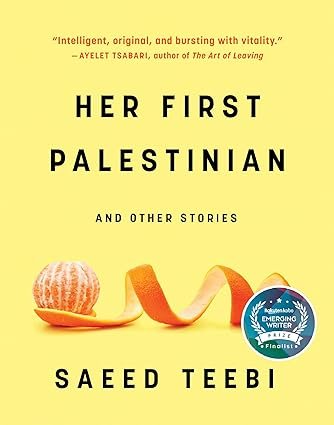
Her First Palestinian by Saeed Teebi is available wherever books are sold.
Q: We found your book to be this gripping and exquisite collection of stories that dismantle the notion of the Palestinian people as a monolith while also being one that unifies, resounding as a reminder that we are closer to each other than the powers that seek to control us—two narrative forces that may seem to work to opposite ends but are actually so authentic to the human experience across time, culture, and religion: we all want, basically, the same things, but fear corrupts. It distorts. Were these opposing forces something you were conscious of as you were writing? Or were they something that manifested unconsciously, merely by the act of so closely exploring your characters and their stories?
A: In writing Her First Palestinian, I was consciously aware of — and acting to effect — one of those narrative forces you refer to, while comfortable that the other one would emerge on its own. The prevailing conception of Palestinians as a monolith is pervasive, and it’s not an accident. Flattening a people into negative uni-dimensional characteristics like ‘violent,’ ‘uncooperative,’ or ‘anti-Semitic’ is a good way of marginalizing them. And marginalizing Palestinians, and by extension their interests and aspirations, has become a nearly foundational concept of Western societies and their vested geopolitical interests (as they perceive them). If someone is marginal, you can toss them aside, them and their slogans.
So making sure my stories had a range of Palestinian characters (merely reflecting reality) was important, not to mention more interesting. With every story, I asked myself: “What different kind of person can I write about now?” Some of my characters are religious, some are licentious, some are apprehensive, some are reckless, some are traumatized, some are naive. But all are impinged on by the pressures of their identities and the locus of their existence. And you’re right that among the strongest of those pressures is fear. Fear of institutional power, fear of corrupt governments, fear of personal ostracization, or even just the fear of not being loved. The fear is well-earned given how often, in real life, it materializes into actual hurt.
Of course, although fear might be particularly acute for many Palestinians, it is hardly unique to them. I was never worried that my readers would recognize this same fear in their own lives, whether they are Palestinians or not. It’s among our most human feelings, especially in a time when we feel less and less in control of our lives and our outcomes. Ultimately, the main faith that I have in literature is that it illustrates the connections between us that we can’t help but have.

Saeed Teebi.
About Saeed Teebi:
Saeed Teebi is a writer and lawyer based in Toronto. His debut collection of short stories, Her First Palestinian, was a finalist for the Atwood Gibson Writers' Trust Prize, the Rakuten Kobo Emerging Writer Award, the Danuta Gleed Literary Award, and the Forest of Reading Evergreen Award. The title story “Her First Palestinian” was shortlisted for the 2021 CBC Short Story Prize. Saeed was born to Palestinian parents in Kuwait and, after some stops in the U.S., has lived in Canada since 1993. He is working on his first novel.
Power Q & A with Kathryn Mockler
We love flash fiction, so we were stoked when poet and flash fiction pro, Kathyrn Mockler, said she’d be game to join us for a Power Q & A. Let’s dive in, and learn a little more about writing, and why to write, this short and sweet form of fiction.
We love flash fiction, so we were stoked when poet and flash fiction pro, Kathyrn Mockler, said she’d be game to join us for a Power Q & A. Let’s dive in, and learn a little more about writing, and why to write, this short and sweet form of fiction.
Q: There’s short fiction, then there’s short, short fiction. Your newest book, Anecdotes (Book*Hug Press, 2023) features the latter—flash fiction. Why did you feel this form was a good fit for the themes addressed in your book, if this was a conscious consideration at all?

Anecdotes is now available to order anywhere books are sold, including at Book*Hug Press.
A: Flash fiction is a genre I enjoy reading, and many authors I admire write in this form—Claudia Rankine, Lydia Davis, Osama Alomar, Gary Barwin, Kathy Fish, Diane Williams.
I also have a poetry background so that might account for my interest in the very short story. Most of my poetry is essentially flash or micro-fiction.
In many ways the difference between prose and poetry is arbitrary for me and has more to do with publication categorization than any concern I have when writing. I use poetic techniques in my prose and narrative in my poetry. Very short autofictional prose and very short absurd prose are probably the most accurate descriptions of my work, which I admit isn’t the sexiest way to phrase it.
In terms of length, I don’t consciously set out to write in a very short form. It just happens. In Anecdotes there’s everything from one-lines to mid-sized stories in the collection.
When a story feels like it’s said all it’s going to say, I wrap it up. I don’t try to force a longer narrative out of something that wants to be short.
Many of the pieces from the third section, This Isn’t a Conversation, are from an ongoing project that is also a video project which consists of thoughts, fragments, conversations, journal writing, overheard snippets. When I hear a line or think of a line that fits that project, I include it. So I know those piece are going to be short by the nature of how they are composed. However I rearrange these pieces in all sorts of ways so they may be longer or shorter depending on what I am doing with them.
But for the other stories, I just let each story be as long as it wants or needs to be. When a story tells me it’s done, I listen.
More about Anecdotes:
With dreamlike stories and dark humour, Anecdotes is a hybrid collection in four parts examining the pressing realities of sexual violence, abuse, and environmental collapse.
Absurdist flash fictions in “The Boy is Dead” depict characters such as a park that hates hippies, squirrels, and unhappy parents; a woman lamenting a stolen laptop the day the world ends; and birds slamming into glass buildings.
“We’re Not Here to Talk About Aliens” gathers autofictions that follow a young protagonist from childhood to early 20s, through the murky undercurrent of potential violence amidst sexual awakening, from first periods to flashers, sticker books to maxi pad art, acid trips to blackouts, and creepy professors to close calls.
“This Isn’t a Conversation” shares one-liners from overheard conversations, found texts, diary entries, and random thoughts: many are responses to the absurdity and pain of the current political and environmental climate.
In “My Dream House,” the past and the future are personified as various incarnations in relationships to one another (lovers, a parent and child, siblings, friends), all engaged in ongoing conflict.
These varied, immersive works bristle with truth in the face of unprecedented change. They are playful forms for serious times.

Kathyrn Mockler.
More about Kathryn:
Kathryn Mockler is the author of five books of poetry. She co-edited the print anthology Watch Your Head: Writers and Artists Respond to the Climate Crisis (2020) and is the publisher of the Watch Your Head website. She runs Send My Love to Anyone, a literary newsletter, and is an Assistant Professor at the University of Victoria where she teaches screenwriting and fiction.

Power Q & A with Valentino Assenza
This is a super exciting Power Q & A for us! Not only are we interviewing an extraordinary Canadian poet and spoken word artist, but we’re interviewing a tireless advocate of other Canadian artists: Valentino Assenza host and producer of HOWL on CIUT 89.5 FM. Every Tuesday night at 10 p.m. EST, Valentino welcomes emerging and established authors, poets, playwrights, and songwriters to the airwaves. We’ve heard many of our favourite artists on this show, and have learned about so many more who have become favourites, so we wanted to take this opportunity to spotlight the person behind this miraculous and indisputably vital celebration of art and artists.
This is a super exciting Power Q & A for us! Not only are we interviewing an extraordinary Canadian poet and spoken word artist, but we’re interviewing a tireless advocate of other Canadian artists: Valentino Assenza host and producer of HOWL on CIUT 89.5 FM. Every Tuesday night at 10 p.m. EST, Valentino welcomes emerging and established authors, poets, playwrights, and songwriters to the airwaves. We’ve heard many of our favourite artists on this show, and have learned about so many more who have become favourites, so we wanted to take this opportunity to spotlight the person behind this miraculous and indisputably vital celebration of art and artists.
Funding to the arts is (as always) precarious, but people like Valentino continue to provide a platform for artists. To support Valentino and Canadian artists, tune into HOWL at CIUT.com or access CIUT 89.5 FM through the TuneIn Radio app. You can also donate to the show here. Let’s keep the CanLit love alive!

Q: What is the origin story of HOWL? How did it come about and what are some of the biggest challenges and triumphs you’ve experienced hosting this show?
A: Howl was founded by Toronto poets Nik Beat and Stephen Humphrey in 1995. For them, it was a way to give exposure to local poets from across the city. In the early 2000s Stephen Humphrey left the show and for a very long stretch of time the show was co-hosted by Nancy Bullis and Nik Beat.
So unfortunately in September of 2014, Nik Beat passed away, and at the urging of people in the Toronto poetry community having hosted poetry events for years, I was encouraged to apply. I had mixed feelings about the commitment. I wondered how I was going to get guests on the show regularly, and wondered if it was too much of a commitment, but decided to dive in and started hosting Howl in January of 2015. While sharing the show with Nancy we alternated and switched hosting every Tuesday. We decided to expand the scope of the show and include novelists, and singer/songwriters as well as poets. We utilized social media to give the show a bit bigger reach, and ended up connecting with some fantastic publishers, and publicists leading to some remarkable interview opportunities. In 2017 I got to interview Margaret Atwood, but have talked to so many amazing personalities both before and after then. In 2020 the pandemic hit, and we had to online software so we could submit the show from home. At the end of 2020 Nancy Bullis stepped down from Howl, and I have been running the show on my own on a weekly basis. It's been challenging juggling the job with a 40-hour-a-week day job, but it's rewarding to give myself the commitment of reading books on a weekly basis, and talking to the authors. I love giving the artists space, it feels like I am making a difference, and in a day and age where people are actually talking about banning books, I am going to hang onto this show and continue amplifying those voices for as long as I can.
More about Valentino Assenza:
Valentino Assenza has been a published poet and spoken word artist for over two decades. He has published four chapbooks of poetry: Wandering Absence, Il Ritorno (Labour Of Love Productions), Quiet Confessions of a Loudmouth and Make Our Peace With Rattlesnakes (Lyricalmyrical Press). He has had numerous pieces of poetry published in anthologies such as Labour Of Love and Descant Magazine. He has read and performed his poetry throughout Canada and the U.S.A.
Valentino was a member of the Toronto Poetry Slam team in 2009 and 2010 and has performed his poetry at the Canadian Festival of Spoken Word and The National Poetry Slam. Valentino sat on the committees for the Art Bar Poetry Series and Toronto Poetry Project.
He currently lives in Grimsby with his wife Angela, and is the host and producer of Howl, a spoken word, literary radio show, Tuesday nights at 10pm on CIUT 89.5 FM.

Power Q & A with Lynn Tait
In this Power Q & A, we’re delighted to talk with the incomparable Lynn Tait, whose debut poetry collection, You Break It You Buy It, was just released with Guernica Editions on September 1, 2023. Tait’s work offers an evocative and gutsy exploration of pain and resilience. From racism to the climate emergency, to the complicated nature of family, love, and loss, Tait defies a generation’s debilitating standard of silence and cracks open our personal and shared failings with unflinching tenderness, humour, and insight.
The effect is absorbing and resounds with a sonic call to empathy. Now more than ever, we need this message.
Today we’re asking Lynn about “accessible poetry,” and her nuanced and thoughtful answer is everything we hoped it would be.
In this Power Q & A, we’re delighted to talk with the incomparable Lynn Tait, whose debut poetry collection, You Break It You Buy It, was just released with Guernica Editions on September 1, 2023. Tait’s work offers an evocative and gutsy exploration of pain and resilience. From racism to the climate emergency, to the complicated nature of family, love, and loss, Tait defies a generation’s debilitating standard of silence and cracks open our personal and shared failings with unflinching tenderness, humour, and insight.
The effect is absorbing and resounds with a sonic call to empathy. Now more than ever, we need this message.
Today we’re asking Lynn about “accessible poetry,” and her nuanced and thoughtful answer is everything we hoped it would be.

Lynn Tait’s You Break It You Buy It is available wherever books are sold.
Q. Some poets don't like their work being called accessible, but not only do you not mind it, you have often referred to your own poetry as such. Why do you think other poets might have a distaste for this word? Why does it not bother you?
A. I couldn't try to talk for other poets here. I imagine it depends how one might define "accessible". I realize there are "Instagram poets" who are not appreciated by writers who have worked at their craft for years especially publishing through print, magazines, and books. Social media platforms have made it easy to corral a large following and, in some cases, it’s paid off, but it does have somewhat of a cheapening effect on the art and craft of poetry.
Making poetry too accessible allows for copyright infringements, under the guise of fair use. We are not paid properly for our time and work as it is.
I think some poets aren't too keen on Amazon or e-books in general. I respect this point of view. For myself, I wish my poetry book was available as an e-book. If I had to buy hardcopy poetry books only, I'd read much less than I do; and I read a heck of a lot of books at one time on my Kindle and in hardcopy, so the accessibility of the product/book, my own and others is important to me. But I have 14 poetry books on the go digitally and 7 hardcopies I'm reading; one of which I was able to find used, so cost me a bit less.
For myself, readership is what I strive for and I equate that to accessibility. I have many friends and acquaintances who do not read poetry. They are surprised at the seriousness of my work pertaining to the subject matter and appreciate the humour. But they're also surprised to find they understand my pieces without a lot of difficulty or they relate to them in some way. I use a lot of metaphor and simile and ambiguity allowing a wide range of personal interpretation, but I think my subject matter allows for accessibility. Everyone has dealt with lousy relationships, we all don't have mothers we adore, we are cruel to each other, and people piss us off. We all have lots to say, but refrain from saying it, so I think my work allows readers to enter into feelings and thoughts they can't necessarily express.
Frankly, I think more people should attempt to read poetry. In this day and age and with time being precious, it makes sense for some readers to want to fit in short one or two-page pieces of writing rather than long stories. Poetry allows for 3 to 5 lyrical narratives, stories, and ideas in about 10 minutes. You get fiction, memoir, creative non-fiction, horror, speculative fiction, science, and everything in between in a relatively short period of time. The topics are endless. Readers unfamiliar with poetry are still stuck on trying to figure out our 'meanings' rather than just taking what they want or need from the poem. Most people aren't pondering over what Stephen King or what most prose writers are trying to say, so why agonize over meanings (unless you want to) in poems? No one is going to quiz you at the end of the day on poetry interpretation. Are they still doing that in the classroom? Reading poetry should be freeing not confining. Who cares what we initially had in mind or what prompted us to write a particular piece? Once poems are available to the public, does it matter what we originally had in mind?
I've read plenty of poems that I can't say are accessible. I don't have a clue what the poet means and I can't personally access the images. Sometimes it doesn't matter I'm enjoying the pieces regardless, but there are times . . .I'm in a fog and need some clarity. As a poet, I don't find this particularly intimidating, but if you want to turn people on to poetry, and want people to buy poetry books, I think some kind of accessibility of the art form or the content must be offered. Are my poems simplistic – no. But I do hope they are accessible.

Poet Lynn Tait.
More about Lynn Tait:
Lynn Tait is a Toronto-born poet and photographer residing in Sarnia, Ontario. Her poems have appeared in literary magazines and journals including Literary Review of Canada, FreeFall, Vallum, CV2, Windsor Review, and in over 100 North American anthologies. She is a member of the Ontario Poetry Society and The League of Canadian Poets. You Break It You Buy It is her debut collection.
For press or media inquiries for Lynn Tait, please contact us.

River Street Reviews: The Brickworks by Lucy Black, Reviewed by Gail Kirkpatrick
Lucy E. M. Black has the makings of a multigenerational saga in her rich and deep novel The Brickworks. Beginning in Scotland with narratives starting between 1879 and 1909, it tells the story of two men driven by ambition and their need to overcome the tragedies of their past in a new land just beginning to discover its potential.
The Brickworks by Lucy E.M. Black. Published by Now or Never Publishing Co., October 2023.
Reviewed by Gail Kirkpatrick, author of Sleepers and Ties, (Now or Never Publishing Co.)
Lucy E. M. Black has the makings of a multigenerational saga in her rich and deep novel The Brickworks. Beginning in Scotland with narratives starting between 1879 and 1909, it tells the story of two men driven by ambition and their need to overcome the tragedies of their past in a new land just beginning to discover its potential.
Through a fateful series of life events and a benefactor uncle, Brodie (Hamilton) Smith feeling ‘ashamed of his father, while yet sustaining a keen sense of injustice’ earns his engineering degree to prove construction and not his train-operating father was to blame for the collapse of a bridge. Even more, Brodie longs for something for which he cannot find the words.
Alistair learned the art and science of brick building by way of his father. ‘I learned my craft in Scotland and thought there might be need of my skills in a growing country.’

The Brickworks is available for pre-order now.
The men meet while working on a swing bridge over the river Welland in Canada and quickly form a bond. Each are ambitious in their own way, seeking to make their fortunes and a new life in Canada. From the correct mix of clay, slate, and water to the Flemish Bond pattern in which they can be laid, the art of brickmaking is revealed. Likewise, in the demands of good bridge building, trusses vs cables, to the cable system used by Roebling for the Brooklyn Bridge, Black blends and layers history within the story of these two men. There is also lovely detail on how to build a spur rail line that will serve the factory. The nuanced use of Scottish dialect--‘if you were nae half so bladdered you would know it too’ adds just the right touch of authenticity.
Inevitably, both men meet the women they wish to marry but through their own insecurities, doubts, and plain stubbornness these romantic relationships are delayed. As Alistair observes, ‘he was a man building his fortune and could not afford to be distracted.’ Violet Lewis and Charlotte Gowan are also both well-developed and interesting characters of their time and circumstances.
The cold and harsh environment of Canada in the 1900’s is realized against the pains of a growing country, and Lamith Bricks is also concerned about housing its workers.
As in her previous book, Stella’s Carpet, the author organically incorporates historical details within a moving narrative, never allowing a writer’s thorough research to outshine story.
That the work flows with ease between time periods and narratives is testimony to the skill of being able to write speculative, layered, and imaginative historical fiction. The reader is left wanting to know if the men do make their fortunes, if indeed their dreams of fishing and passing on their heritage to their children come true. Readers will be left imagining a book two or three of The Brickworks by Lucy E.M. Black.
About Lucy E.M. Black:
Lucy E.M. Black is the author of the short story collection The Marzipan Fruit Basket, the historical fiction novel Eleanor Courtown, and most recently Stella’s Carpet. Her award-winning short stories have been published in Britain, Ireland, USA, and Canada in literary journals and magazines including Cyphers Magazine, the Hawai’i Review, The Antigonish Review, and others. A dynamic workshop presenter, experienced interviewer, and freelance writer, Lucy lives with her partner in Port Perry, Ontario.
About Gail Kirkpatrick:
After receiving her undergrad at the University of Victoria, Gail Kirkpatrick completed her MA in writing at Lancaster University where she explored the parallel and converging lines of memory, shared history, and landscape. Her writing has been published in various literary and trade magazines in Canada and the UK, and Sleepers and Ties is her first novel. She currently resides in Victoria, BC.

Excerpt from 18: Jewish Stories Translated from 18 Languages
With just over a month until 18: Jewish Stories Translated from 18 Languages (edited by Dr. Nora Gold) is released, we are excited to be able to share an excerpt of a story from this beautifully curated anthology of Jewish literature. Keep reading!
With just over a month until 18: Jewish Stories Translated from 18 Languages (edited by Dr. Nora Gold) is released, we are excited to be able to share an excerpt of a story from this beautifully curated anthology of Jewish literature. Keep reading!
The Guest
By Varda Fiszbein
Translated from Spanish by Andrea G. Labinger
Intuition or luck? The opportunity was in the guest’s hands and he knew how to seize it.
The fact is that he guessed someone like my grandfather could only react as he did. In a God-fearing man, one respectful of Mosaic Law, the sense of tradition prevails even above feelings. He may not have been rich, but every year when the Pesach festivities rolled around, he would conduct his Seder surrounded by his family like a king.
Elegant in his dark suit, with a gold chain draped across his chest, he sits in an armchair at the head of the table as if it were a throne, his head resting on a cushion designed especially for that day, a cushion on which the Star of David, delicately embroidered, stands out against a blue velvet background.
I was only thirteen and felt slightly out of place. I was the oldest of the grandchildren, no longer of an age to participate in the commotion produced by the younger cousins as they stampeded through the house in search of the afikoman, but not yet old enough to join the adults who took advantage of the occasion to chat about this and that while pretending to look for it.
I remained in my chair, feeling uncomfortable, until my grandfather beckoned me with his hand, and understanding my state of confusion, hurried to my rescue, pointing out the circle formed by my two youngest uncles and their friend.
Prepared to accept his suggestion, I stood up to join them, but at that moment the group dispersed.
I don’t know what my uncles did or where they went. From that moment on, and until the end of the evening, all my attention was focused on our mysterious guest.
About the anthology:
As the first anthology of translated multilingual Jewish fiction in 25 years, 18 is a highly-anticipated and transcendent collection that challenges the narrow viewpoint most people have about Jewish fiction, and attempts to change the monolithic way people think about this type of literature.
Each story in this collection has been translated into English from a different language; Albanian, Croatian, Czech, Danish, French, German, Greek, Hebrew, Hungarian, Italian, Ladino, Polish, Portuguese, Romanian, Russian, Spanish, Turkish, and Yiddish. These compelling, humorous, and moving stories, written by authors that include Isaac Babel, S.Y. Agnon, and Lili Berger, reflect both the diversities and the commonalities within Jewish culture, and will make you laugh, cry, and think. This beautiful book is easily accessible and enjoyable not only for Jewish readers, but for story-lovers of all backgrounds.
About Dr. Nora Gold:
Dr. Nora Gold, previously an Associate Professor, is currently the Founder and Editor of the prestigious online literary journal JewishFiction.net. She is also the prize-winning author of three books of fiction, as well as the recipient of two Canadian Jewish Book/Literary Awards and praise from Alice Munro.

Pre-order your copy of 18: Jewish Stories Translated from 18 Languages, edited by Dr. Nora Gold.
For press inquiries, please contact us.

Power Q & A with Lucy E.M. Black
Lucy E.M. Black is one of our favourite writers of historical fiction. Ever. Her upcoming (and fourth) book, The Brickworks, is due out with Now and Never Press in October 2023. Told in Black's signature luminous prose, The Brickworks tells the story of Alistair and Brodie, two ambitious Scottish immigrants to North America at the turn of the century. This is an unforgettable story of hardship and triumph from one of the most fiercely gifted writers of historical fiction in Canada. We are delighted Lucy agreed to join us for our latest Power Q & A. Here, she lifts the hood on her writing process and allows us to get a glimpse of the wonderfully intricate workings of her creative process.
Lucy E.M. Black is one of our favourite writers of historical fiction. Ever. Her upcoming (and fourth) book, The Brickworks, is due out with Now and Never Press in October 2023. Told in Black's signature luminous prose, The Brickworks tells the story of Alistair and Brodie, two ambitious Scottish immigrants to North America at the turn of the century. This is an unforgettable story of hardship and triumph from one of the most fiercely gifted writers of historical fiction in Canada. We are delighted Lucy agreed to join us for our latest Power Q & A. Here, she lifts the hood on her writing process and allows us to get a glimpse of the wonderfully intricate (and a wee bit intimidating) workings of her creative process.

The Brickworks by Lucy E.M. Black, published by Now or Never Press, October 2023.
Q: You are, by far, one of the most impressively methodical authors we know of in the writing of your books, which are largely historical fiction. But you’re also gifted with the ability to craft beautiful prose that seems anything but methodical. What’s your secret? How do you take what must be notebook after notebook of research—and what must sometimes be quiet dry research—and bring it to life in your narratives?
A: Thank you for those kind words. I am, as you rightly identify, a methodical writer. Unlike the brilliant Alistair MacLeod who could apparently write perfected, beautiful prose in a first draft, my first drafts are awful. Ernest Hemingway is alleged to have said, “the first draft of anything is shit,” and I definitely fall into that category of writer.
I write, edit, rewrite, edit, rewrite, edit, and rewrite a seemingly endless number of drafts. The Brickworks which will be released in October, underwent fifteen full drafts of the manuscript. It’s not that I tinker with my work so much as endeavour to ensure whatever I’m writing conveys the ideas I wish to communicate in as error-free a form as I can manage.
Writing historical fiction means that a sense of verisimilitude is crucial to the reader’s enjoyment of the text. I strive to transport readers to another time and place. To do so involves ensuring that the tiniest of details is fact-checked for accuracy, and also for what I call believability. There is no point embedding some fantastical piece of historic trivia in the manuscript, even if it’s true, if the detail will take the reader out of the text while they google the information or check references. I read a lovely historical fiction book several weeks ago and kept tripping over references that were not consistent with the period. Although I believe the author had the absolute right to utilize creative licence, the use of contemporary items and discoveries in a historical context felt sloppy to me and weakened the tone set by the tale.
There is always a bit of alchemy in what a writer writes but there is also a defined and disciplined process that I use when writing historical fiction:
I begin my process by doing an exhaustive amount of research. Sometimes I am able to complete the bulk of the research in a matter of months but sometimes I do just enough to get the manuscript started, and then take writing breaks while I complete additional research.
I then shape the novel’s trajectory by carefully plotting the storyline. I don’t always have the final ending when I begin, but I usually have an idea of where I hope to end up.
After that, I develop my characters. I begin by naming them, ensuring I use a name that was common to the locale and time period. Once I have the name, I choose a birthday, key defining details (i.e., hair colour, name of parents) and physical description (i.e., hair style, shape of face, nose, height). I will often flip through magazines or books of photos, to create what I call my reference images. For historical fiction, my reference images often include clothing from the period. And then I let everything percolate. At some point after that, often when I have awoken from a deep sleep, the characters are fully formed and just walk around inside my head, speaking to me. I hear their voices, see the way they move and listen to them as they tell me what they want to have happen next.
Once I’ve done that initial groundwork, I begin to write first draft. I’m not particularly careful when writing first draft, but simply intend to shape the story and get it down. I write furiously and completely immerse myself in the process. During first draft, I’m careful to take a break from reading so that other voices don’t intrude upon my own narrative. For a large writing project, like a novel, I section the writing up into large chunks or rough chapters. For instance, I’ve begun a new historical fiction project and have worked very hard and in a very focused way to complete the first chapter. Now I’m taking a break from first draft writing and have circled back to complete more research before I begin the second chapter.
While I am writing first draft, as an aside, I create a scribbled hand-drawn map of the area or a floorplan of the house that I am writing about. I use this as a reference when writing directions or descriptions. If the master bedroom is at the top of the stairs on the left side of the landing, I need to keep that consistent when my character is tired and walking upstairs to bed.
Once a first draft is complete, I read sections to a few very trusted beta readers for their general feedback. If they have questions about something that has taken place, I know that I need to do more structural work, in terms of inserting clarifying details and explanations. That’s typically the work I do in the second draft.
Third draft is usually my time-stamped draft. I run off calendars from the period and check major plot points for sequencing and time of year. I need to ensure that all activities and weather conditions and lighting correspond to the calendar. I also make sure that certain events take place on certain days. If I have someone attending a church service, for instance, I make sure that the calendar day for that year corresponds to a Sunday. Little tiny tweaks to weather conditions, timing and scheduling are worked out in this draft. I create a timeline for the manuscript using key historic events as reference points for my work. For instance, it would be irresponsible to write a novel placed in Europe in 1940 without referencing the World War. I try to ensure that I capture the importance of key events that take place in the background of my story.
The next draft typically focuses on lexicon and dialogue. For each of my historical novels, I create a special lexicon that I build based upon letters, diaries and books from the period. These are the key words I insert to give the narrative voice a sense of authenticity. I know that I can’t recreate the voices of the past but I endeavor to use just enough of an older language base to create a tone and feel for another time. I also attempt to use the conventions of language for the period. In the nineteenth-century, for instance, nouns were often capitalized and commas were used liberally. I mimic those small conventions in a deliberate way, along with the formality of written language as it was commonly employed at the time.
The second part of the lexicon and dialogue drafting has to do with my character’s speech patterns. This would usually begin as a fresh draft, number five. Each of us has, consciously or unconsciously, individual patterns of speech and vocabulary that we often re-use. I create huge flip-chart reference sheets with all of my characters listed, and those idiosyncrasies of speech that are unique to them. This might include the dropping of certain vowels or consonants, favorite cuss words, or exclamations that they reuse. These lists are tricky because they must reflect, to a certain extent, the educational background, country of origin, regional dialects, and sometimes religious persuasion. I also pay attention to the development and evolution of a character’s speech. For instance, in The Brickworks, when we first meet Brodie, he is a very young man and is uneducated. His speech changes and becomes more refined as he completes his education and takes on managerial responsibilities at a steel mill.
Draft six is about a more general use of language and description. This is where I work on those aspects of my work that correspond to and address your question.
I strive to polish my language while not compromising the energy and pacing of the story. I go back into the text and develop my descriptions and my use of language when writing those descriptions. Sometimes I indulge myself a little but generally I have to work hard to restrict colourful and lengthy descriptions. For instance, in The Brickworks, Alistair is seated next to Violet at a concert in Buffalo. Here is a tiny excerpt:
”He glanced to his right and saw the curve of her neck, the sweep of her hair, the gentle mound of her bosom. The lace sleeve of her gown was floating almost imperceptibly above her arm. He watched it flutter for a moment before it settled against the pale skin. He resisted the urge to look at her again, concentrating intently on the programme he held.”I hope readers know that Alistair is smitten and that Violet is a lovely, feminine beauty. I had done a lot of research on clothing of the period and had originally written a long and very detailed description of her gown and jewelry. I used a reference photo from the Metropolitan Museum of a Worth ballgown in light pink silk, with exquisite embroidery and lace. You can imagine how much fun I had describing this luxurious and elegant gown. In the end, I edited out all of the extraneous detail because I felt it was slowing down the narrative and not leaving enough to the reader’s imagination.
The next several drafts are all about editing and boiling down the story. I tend to over-write and over-explain and in these next several drafts, I slash out chunks of the story that are interesting to me because of my research but likely unnecessary to the overall piece. I edit down descriptions, fine-tune conversations, and sometimes even remove or add a character.
The most tedious of drafts is done about this time. I call it the speech edit. Using “find” I go through the manuscript one character at a time, ensuring that their speech aligns with my planning sheets and that any changes to their speech patterns make sense in terms of their development. Depending upon the number of characters in the book, this series of checks, edits and drafting can take a really long time. In The Brickworks, there were twenty characters with speaking parts, and the speech edit took me a month to complete.
More beta reading come next, utilizing my network of supportive writer friends. I usually ask for specific kinds of feedback that zeros in on those scenes I am worried about, details that seem too sketchy, and plot points that might not be strong. After yet another clean draft, integrating the feedback I have received, I send it off to a professional story editor. The story editor comments on the trajectory, plot points, character development, tension and quality of the writing. Quite often my characters need further tweaking. I have a tendency to make all of them nice people and that just isn’t realistic. Even nice people have foibles and bad habits, and my story editor will always call me out on this.
Once I have the story editor’s feedback, I write another draft, addressing those things that needed work. I also do a final fact-check, often checking with an industry expert on technical points or fine details. This polished draft is then sent to a professional copy editor who catches the majority of typos, spelling inconsistencies, errors in punctuation, and other glaring oversights. Once those slipups have been corrected, I have a final draft (anywhere from draft 10 to 15) which I then use to begin the process of placing the manuscript with a publisher.
I hope I’ve given you some insight into the process I use for writing historical fiction. I’m sure other authors have perfected their own processes but this is what works for me. Many thanks for providing this opportunity to share my writing process with you.
More about Lucy E.M. Black:
Lucy E.M. Black is the author of The Marzipan Fruit Basket, Eleanor Courtown, and Stella’s Carpet. The Brickworks will be released October 14, 2023. Her award-winning short stories have been published in Britain, Ireland, USA, and Canada in literary journals and magazines including Cyphers Magazine, the Hawai’i Review, The Antigonish Review, the Queen’s Quarterly, and others. She is a dynamic workshop presenter, experienced interviewer, and freelance writer. She lives with her partner in the small lakeside town of Port Perry, Ontario, the traditional territory of the Mississaugas of Scugog Island, First Nations. Learn more at www.lucyemblack.com.


Power Q & A with Colleen Brown
Colleen Brown’s book, If you lie down in a field, she will find you (Radiant Press, October 2023), is an absorbing, eye-opening, and heart-wrenching memoir in fragments, conversations, and memories of her mother’s life and murder by a serial killer. It’s also about the impact violence has on memory and storytelling and how persistent contact with the justice system affects individual needs for a narrative that can make sense of a life. On this Power Q & A, we ask Colleen about the perhaps not-so-obvious challenges of writing this story.
Colleen Brown’s book, If you lie down in a field, she will find you (Radiant Press, October 2023), is an absorbing, eye-opening, and heart-wrenching memoir in fragments, conversations, and memories of her mother’s life and murder by a serial killer. It’s also about the impact violence has on memory and storytelling and how persistent contact with the justice system affects individual needs for a narrative that can make sense of a life. On this Power Q & A, we ask Colleen about the perhaps not-so-obvious challenges of writing this story.
For review copies and media inquiries, please contact us.

Q: A story of this nature is bound to encounter resistance, beyond the usual writerly self-doubt. What was the most significant roadblock you encountered while writing this book?
A: There were a few different kinds of resistance along the way.
The first is common to anyone trying to express personal tragedy. A lot of social learning is committed to how, when, and where you are allowed to express trauma. I know my siblings and I were told in different ways not to speak about my mother’s death. My sisters and I were accused of lying at different points in our lives and, more commonly, threatened by being understood as weak and needful. There is always a sense that speaking about tragedy will hurt the listener, and so you are trained to save other people from your grief. The first breakthrough for the book occurred when I told a co-worker about my mother’s murder, and to my surprise, she laughed and said, “Wow, you really have a good story there.” After I got over the shock, I realized I felt great. I didn’t hurt her. I could speak.
At the core of the book is an ambivalence. The first coherent sentence I wrote was, “...because the spectacle of her murder overwhelms the entirety of her perfectly human and unremarkable existence, I lost my mother as a way of creating meaning. “ The book is driven by a desire to express and cleave my mother’s life from her death. To sunder her before from her after, I had to hold both in view.
As the writing continued, I experienced a lot of confusion in understanding my duty toward the person who confessed to my mother’s murder. People were offering very confident and totally contradictory advice. A visit to the Artists Legal Outreach Clinic clarified things for me. At one point, I blurted out a question about my moral obligations, and the lawyer working with me was very clear that legal advice and moral advice do not intersect. This really straightened out my thinking. The book was altered to follow the rules and adhere to my own sense of obligation to a person and a perpetually open legal case.

Colleen Brown. Photo: Zed Payne.
More about the book:
While in the middle of a divorce and in the process of reinventing herself, Doris Brown died suddenly in 1974. Two years later, a serial killer confessed to her murder. What propels this book is a desire to recover Doris' life, which has been obscured by the spectacle of her death. If you lie down in a field, she will find you there captures the cadence of family stories collected through interviews the author conducted with her siblings. Essays and memories by Doris Brown's youngest children, Colleen and Laura, appear alongside spoken word anecdotes that contain the family's oral history and tell us who she was.
More about Colleen:
Colleen Brown is known primarily as a sculptor. If you lie down in a field, she will find you there, is her first book. Colleen created visual artworks related to the book when she was the Artist in Residence at the Ranger Station. Colleen is one of the current Artists in Residence in Maple Ridge, BC.
Power Q & A with Marina Sonkina
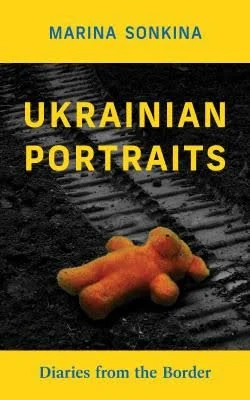
When the war in Ukraine erupted, Russian-Canadian author Marina Sonkina dropped everything and flew to the Russian-Ukrainian border. Having come to Canada as a refugee with two young sons, she knew she had to help. Today, we ask her about how her experiences at the border became her new book, Ukrainian Portraits: Diairies from the Border (Guernica Editions, September 2023).
When the war in Ukraine erupted, Russian-Canadian author Marina Sonkina dropped everything and flew to the Russian-Ukrainian border. Having come to Canada as a refugee with two young sons, she knew she had to help. Today, we ask her about how (and why) her experiences at the border became her new book, Ukrainian Portraits: Diairies from the Border (Guernica Editions, September 2023).
For review copies or media inquiries, please contact us.
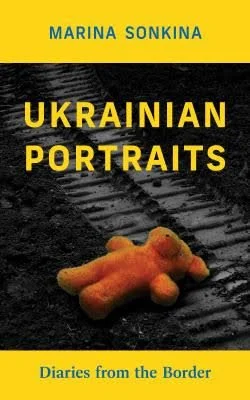
Ukranian Portraits: Diaries from the Border. Available for pre-order now.
Q: Your newest book documents your time at the Ukrainian/Russian border as a volunteer, helping women and children fleeing the war. Did you leave for the border knowing you'd write about it, or did this realization come during or after your experiences?
A: No, I absolutely did not know I was going to document my experience. As I said in the preface to my book, my desire to go to the border came out of a certain helplessness. I knew that Putin would inflict the most brutal devastation on Ukraine, and yet couldn't do anything about it. So I decided to do the little I could. Returning from the camp to a small hotel after ten-twelve hour shifts, I was emotionally shaken and exhausted by what I saw and heard. Often I couldn't fall asleep. I started writing down people's stories as a way of helping myself to cope but also to somehow honour the suffering of women and children I met. I also thought their voices should be heard. When I returned to Vancouver, I saw I had a little book.

Author Marina Sonkina.
More about the book:
At the outbreak of the war in Ukraine in February 2022, Canadian author Marina Sonkina flew to the Ukrainian-Polish border to be one of the first respondents at the border for Ukrainians fleeing the war. There, working with the JDC—Jewish Distribution Committee—she used her knowledge of Russian and some Ukrainian to try to help women and children in the transition camp. The suffering on a massive scale was beyond what she could possibly expect.
More about the author:
Marina Sonkina is a scholar, a former CBC producer, and the author of several collections of short stories, among them, Expulsion and Other Stories. Having come to Canada as a refugee with two young sons she did not hesitate to help Ukrainians fleeing the war. Her experience at the Ukrainian-Polish border is reflected in her latest collection, Ukrainian Portraits: Diaries from the Border.

Power Q & A with Steven Mayoff
We’re delighted to be interviewing author and lyricist Steven Mayoff, whose most recent novel, The Island Gospel of Samson Grief, is coming out this fall with Radiant Press. Masterfully disrupting the idyllic picture often painted of Prince Edward Island, The Island Gospel According to Samson Grief is a darkly funny and thrilling story of spiritual dissonance and cultural satire in Canada's most wholesome province.
We’re delighted to be interviewing author and lyricist Steven Mayoff, whose most recent novel, The Island Gospel of Samson Grief, is coming out this fall with Radiant Press. Masterfully disrupting the idyllic picture often painted of Prince Edward Island, The Island Gospel According to Samson Grief is a darkly funny and thrilling story of spiritual dissonance and cultural satire in Canada's most wholesome province.
There’s much to unpack in Mayoff’s stunning and layered novel, but our question is actually about how his novel echos themes in his concurrent creation, Dion: A Rock Opera—a musical reimagining of the ancient Greek tragedy The Bacchae by Euripides, for which Mayoff is the lyricist and Ted Dykstra is the composer. Dion: A Rock Opera is the first original production developed by Toronto’s prestigious Coal Mine Theatre and will receive its world premiere on its stage in February 2024.
Interested in an advance review copy of The Island Gospel of Samson Grief or have a press inquiry? Contact us.

Q: You are a lyricist as well as an author and your latest play is opening in Toronto next year. There are some thematic similarities in these works. Namely, the shared theme of political autocracy versus spiritual agency. Was this a coincidence, or would you say one work informed the other? Or maybe they were created in a symbiotic sort of synergy? We're fascinated!
A: My novel The Island Gospel According to Samson Grief was written roughly from 2016 to 2020. The musical theatre piece Dion: A Rock Opera was created by myself and composer Ted Dykstra from 2020 to 2022. There was definitely some overlap in terms of events that informed both works, mostly dealing with the political upheaval that was happening in the U.S. during the Trump administration.
The novel had a very long gestation period that started quite soon after I moved to PEI in May 2001. Having lived in Montreal and Toronto most of my life, the contrast of living in a small and relatively secluded rural community gave me the illusion of somehow being hidden from the world. But after the 911 attacks, that illusion was shattered and, like many, I realized there was nowhere to hide from the changes our world was going through. When I discovered that there was no synagogue on PEI, despite having a small but active Jewish community, the wheels soon began to turn. I knew the story would be about a reclusive painter, who is enlisted by figments of his imagination, in the form of Judas, Fagin, and Shylock, to build PEI’s first synagogue at the behest of a deity known as the Supreme One.
By the time of Donald Trump’s surprising rise to power, I was well into the novel. Much of the MAGA movement is made of evangelicals who think God put Trump in the White House. I started to think: if that was true, to what end? This started me on the thematic path of political autocracy versus spiritual agency and helped me develop the sinister turn the story takes later in the novel.
I’ve known Ted Dykstra since 1981 and for much of that time we have collaborated as lyricist and composer. During the Covid lockdown in 2020 Ted asked me if I would be interested in turning the Greek tragedy The Bacchae by Euripides into a rock opera. The play is about Pentheus, the king of Thebes, returning home to find that Dionysus, who is half mortal and half god, has taken the women of Thebes and made them his followers. This leads to a feud between Pentheus and Dionysus and a battle of wills. In our version Dionysus, who we call Dion, entices not only the Theban women, but all of society’s disenfranchised groups to follow him, thus starting a movement of social rebellion. After reading the play a few times, my research included watching university lectures on The Bacchae on Youtube, which helped my understanding of the play. But I found an interesting parallel when I saw how disastrously Trump was mishandling the Covid crisis. I thought, if our rock opera portrayed Pentheus as a Trump-like figure then it only stood to reason that Dion was a force of nature, similar to Covid. That idea greatly influenced the language I used in my lyrics, as well as pushing a theme of Nature versus Civilization.

The Gospel According to Samson Grief by Steven Mayoff. Will be available wherever books are sold this fall 2023.
More about the book:
Samson Grief, a reclusive painter from Prince Edward Island, is confronted by three red-haired figments of his imagination in the form of Judas Iscariot, Fagin, and Shylock. They claim to be messengers of “The Supreme One”, a genderless deity who has decreed PEI to be the new Promised Land, who also wants Samson to build the Island’s first synagogue. Scared, confused, and seriously doubting his sanity, Samson eventually, though grudgingly, accepts the challenge amid increasingly bizarre obstacles in a new dystopian world.

Steven Mayoff. Image credit: Thelma Phillips.
More about Steven:
Steven Mayoff (he/him) was born and raised in Montreal. His fiction and poetry have appeared in literary journals across Canada, the U.S., and abroad. He is the author of the story collection Fatted Calf Blues, winner of the 2010 PEI Book Award for Fiction; the novel Our Lady of Steerage; and two books of poetry Leonard’s Flat and Swinging Between Water and Stone. Steven lives in Foxley River, PEI.

Power Q & A with Melia McClure
Canadian author and actor Melia McClure joins us for this Power Q & A to talk about her exceptional new novel, All the World’s a Wonder, and her masterful use of voice to create unforgettable, vibrant characters. You’re not going to want to miss this!
Canadian author and actor Melia McClure joins us for this Power Q & A to talk about her exceptional new novel, All the World’s a Wonder (Radiant Press, 2023), and her masterful use of voice to create unforgettable, vibrant characters. You’re not going to want to miss this!

Melia McClure, author of the absorbing novel, All the World’s a Wonder, published by Radiant Press, 2023.
Q: Your book positively sings with the chorus of your characters—each so distinct and beautifully authentic. Would you say that being an actor has helped develop your ear for voice?
A: My experiences as an actor are integral to my process as a writer. I approach writing as a performer, attempting to be a conduit of the voices of my characters. I need to be able to both hear the voices and perform them; if I can see my characters on stage or in a film, then the narrative is abuzz with energy and unfolding in interesting and surprising ways. Self-possessed character voices always supersede any preconceived ideas I might have about where a story is going. I attempted to dramatize this creative process in my novel All the World’s a Wonder, in which the Playwright is forced—sometimes in a violent fashion—to allow her characters to direct her work. I once had an acting coach who said, “Get out of your own way,” and I apply that advice to the craft of writing; in other words, I step aside and let the characters talk in whatever way they want to talk.
The same acting coach also said, “Judgment doesn’t allow you to play anything.” That wisdom speaks to the compassion required of an actor, and of a writer as well. To play a character or write a character, it is imperative that the artist allow the voice they are channeling to exist in all its flawed glory. Some of my characters tend to traverse dark, traumatizing territory, falling down moral tunnels that push the possibilities of redemption.
My love of capturing authentic, uncensored voices has led to mixing screenplay and playscript with prose to not only elevate the novel to a voice-driven live performance, but also to highlight the dramatic, role-playing aspects of our everyday existence. Still, even without those stylistic experiments, it is the characters speaking to me from beyond the curtain that direct the day. Sometimes what they say is witty, sometimes crude, other times funny, occasionally poetic or devastating. If I were on stage playing this character, I ask myself, what would I say? What would I do? How would I feel? The characters have the answers. As a writer, it is my privilege to get out of the way and let them be.
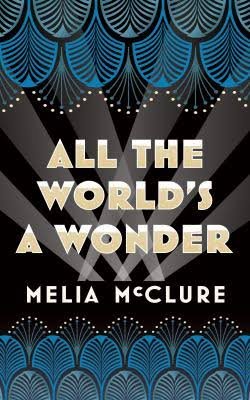
All the World’s a Wonder is available wherever books are sold. Also, at Radiant Press!
More about All The World’s a Wonder:
A playwright possessed by her muses, an actress desperate to succeed, and a doctor haunted by a lost love. Three people cross time and space to meet through the playwright’s bizarre creative process: to create, the playwright must become her characters; to tell her tragic story, the actress must speak from the grave; to heal his harrowing past, the doctor must surrender to his patient – the playwright.
More about Melia McClure:
Melia McClure is the author of the novel The Delphi Room and continues to delve into the eccentric as a writer, editor, and actor. As an actor, she has traversed a range of realms, from a turn as Juliet in an abridged collage of Shakespeare’s classic to the sci-fi universe of Stargate Atlantis. Melia studied writing at The Writer’s Studio at Simon Fraser University, and her fiction was shortlisted for a CBC Literary Award. Born in Vancouver, she has since traveled the world in search of the ever-shapeshifting muse. www.meliamcclure.com.
For review copies of All the World’s a Wonder or press-related queries, please contact us.
Power Q & A with Jason Heroux
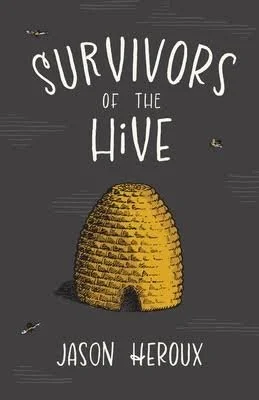
We’re tickled to be joined by the incomparable Jason Heroux for this Power Q&A to talk a little about the impulse to get surreal and his latest book, a collection of short stories, Survivors of the Hive (Radiant Press, 2023).
We’re tickled to be joined by the incomparable Jason Heroux for this Power Q&A to talk a little about the impulse to get surreal and his latest book, a collection of short stories, Survivors of the Hive (Radiant Press, 2023).

Q: Surrealism. It’s a part of so much of your work—not just your notably and wonderfully surreal short story collection, Survivors of the Hive (Radiant Press, 2023). Is surrealism a conscious choice for you? And if so, why? Or is it more of an intrinsic gravitational pull—a way you make sense of things perhaps unconsciously? Or a bit of both or something else entirely?
A: When I sit down to write a poem or piece of fiction, I don’t purposely start from a surreal perspective. I begin with an image, or a scene, or a bit of dialogue, and see where it leads. I find things eventually take a surreal turn, simply because surrealism gives me the most freedom to go where I please. The text becomes an exciting open road, destination unknown. At the same, I feel “reality” is more surreal than we give it credit for. Very little “makes sense.” Or at least that’s been my experience so far. For example, one divided by one somehow still equals one. And all rainwater on earth is now no longer safe to drink. We’re not living in a dream, but it can feel that way. Why not write about how strange and unreal the whole thing feels?

Suvivors of the Hive (stories) by Jason Heroux. Available anywhere books are sold, including from Radiant Press.
More about Survivors of the Hive:
Loss. Grief. Centipedes. Silence. The word “no.” The word “yes.” A high school poetry contest that may or may not be linked to the end of the world. The characters in this collection are under attack. A grief-baffled son hopes to save an innocent insect from a toxic genocide, a daughter struggles to accept loss while visiting a community overwhelmed by denial, a sorrow-stricken father recalls his bizarre final conversation with his only child; the individuals in these stories discover how difficult it can be to let go of what’s gone in order to live with what’s left.
Get your copy today. For press inquiries, contact us.
More about Jason:
Jason Heroux is the author of four books of poetry: Memoirs of an Alias (2004); Emergency Hallelujah (2008); Natural Capital (2012) and Hard Work Cheering Up Sad Machines (2016). He is also the author of three novels: Good Evening, Central Laundromat (2010), We Wish You a Happy Killday (2014), and Amusement Park of Constant Sorrow (2018). Jason holds a BA degree from Queen’s University, and was a finalist for the 2018 ReLit Novel Award. He was the Poet Laureate for the City of Kingston from 2019 to 2022. He lives with his wife Soheir, and their three cats, Akira, Pablo, and Neruda in Kingston, Ontario.

Power Q & A with Jerrod Edson
We invited Jerrod Edson, Canadian author of six books, for a quick chat with us about his wild and wonderful latest work of speculative fiction, The Boulevard (Galleon, 2023). We’re delighted he joined us!
We invited Jerrod Edson, Canadian author of six books, for a quick chat with us about his wild and wonderful latest work of speculative fiction, The Boulevard (Galleon, 2023). We’re delighted he joined us!

Jerrod Edson.
Q: Your new book, The Boulevard, has a curious (and endearing) dedication. It reads:
My father, Paul Edson, read an early version of this story before he passed away, and when I asked what he thought, he grinned and said, in typical fashion, “It’s different.”
This book is for him.
We've got to agree with your dad. Your book rests on a pretty wild premise: Ernest Hemingway, Vincent van Gogh, Satan, and a train ride through Hell. God planning an unannounced visit. Panic and darkness and hilarity ensue. You make it work, but we've got to ask: how did you come up with this idea?
A: The idea for this story had been brewing since 2000-2001.
While in university, I worked at Chapters, and during the Indigo takeover, new CEO Heather Reisman was coming to visit our store. My manager was in a panic getting the store up to speed for Heather’s visit.
During that time, I was perusing a Far Side calendar and came across a cartoon with Satan in Hell, arguing with a repairman.
I had one of those lightbulb moments: What if God planned a visit to Hell and Satan was in a panic to get Hell up to speed? I knew it was a good idea for a novel, but I also knew I wasn’t ready to write it. I made notes and worked out ideas for years, making Van Gogh the focus, before finally sitting down to a first draft around 2014.

More about Jerrod:
Jerrod Edson was born in Saint John, NB, in 1974. He is the author of six novels. Notable books include The Goon, shortlisted for the Relit Award and named the best New Brunswick novel of 2010 (Telegraph Journal), The Moon is Real, winner of the 2013 David Adams Richards Prize, and The Dirty Milkman, listed as a top book of 2005 (Ottawa Xpress). His most recent novel, The Boulevard, is his first work of speculative fiction and focuses on the life of Vincent van Gogh. He lives in Mississauga, ON, with his wife Leigh and daughters Hadley and Harper.
For press inquiries or review copies of The Boulevard, contact us.

RSW's Marg Huntley on Book Publicity and Marketing
One of my professor’s frequently says that the publishing industry exists at a rather contentious intersection between art and commerce. But I want to tweak his metaphor a little. I say that the publishing industry is less of an intersection and more of a grown person with one foot on either end of a child’s seesaw. With one foot on art, and the other on commerce the person wobbles around vicariously in the middle.
Our very own Margaret Huntley has been busy completing her Masters in Writing, Editing, and Publishing in Australia, and we asked her to share with us (and you!) how what she’s been learning has shaped her thinking about book marketing and publicity.
We absolutely love her answer. Keep reading!
Hi everyone! I’m Margaret, and I’ve been with the River Street team for over four years. I’m currently residing in Brisbane, Australia and am halfway to completing my Masters in Writing, Editing, and Publishing.
I’ve found the best way to describe by Masters degree is with the phrase “publishing is the business of books.” Because you can write incredible literature, and even have it published, but if no one buys it at the store then no one is paying their bills. My Masters is similar to a degree in marketing and publicity in that I am learning how to sell a product by engaging public interest. But publishing is a distinct form of publicity that requires additional care.

Meet Margaret!
One of my professor’s frequently says that the publishing industry exists at a rather contentious intersection between art and commerce. But I want to tweak his metaphor a little. I say that the publishing industry is less of an intersection and more of a grown person with one foot on either end of a child’s seesaw. With one foot on art, and the other on commerce the person wobbles around vicariously in the middle.
As someone who loves art for the sake of art, but doesn’t love the starving artist lifestyle, this is a balancing act I’ve struggled with my whole life. And I know I’m not alone. The reality is that writers are artists first, but that doesn’t magically exempt them from living under capitalism. The publishing industry pulls commerce into literature in order to empower artists to keep on creating. The industry certainly is far from perfect and has its fair share of barriers that are in the process of being torn down. But in all its faults and wobbles, there is an ongoing struggle to balance art with commerce.
This is one struggle that I am excited to be in the middle of. I’m learning so many valuable things at the University of Queensland that I’m excited to implement at River Street as we take on more publishing clients.

“our present tense / was not too late”: Review of Time is a Mother by Ocean Vuong
Time is a Mother, Ocean Vuong’s latest poetry collection, is a timely piece of writing in more ways than one. The work grapples with the immediacy of our ever-fleeting lives, reflecting on his mother’s death, while stubbornly refusing to submit entirely to grief. Vuong’s earlier poetry collections as well as his debut novel: On Earth We’re Briefly Gorgeous, earned acclaim for their intimate depictions of raw emotion. Vuong’s newest work is no exception.
“our present tense / was not too late”: Review of Time is a Mother by Ocean Vuong
Publisher: Penguin Press, 2022.
Review by: Margaret Huntley
Time is a Mother, Ocean Vuong’s latest poetry collection, is a timely piece of writing in more ways than one. The work grapples with the immediacy of our ever-fleeting lives, reflecting on his mother’s death, while stubbornly refusing to submit entirely to grief. Vuong’s earlier poetry collections as well as his debut novel: On Earth We’re Briefly Gorgeous, earned acclaim for their intimate depictions of raw emotion. Vuong’s newest work is no exception. Time is a Mother is rich with enjambments, metaphors, and allusions that persistently draw its readers into the chaotic cacophony of human experience that is the present moment.

Too often we encounter writing on the subject of loss to be stagnant, giving the tragedy complete autonomy over our emotions. But Vuong resists this cliché by sprinkling light and hope in amongst the grief. For instance, in the poem “Amazon History of a Former Nail Salon Worker,” Vuong’s mother’s lost battle with cancer is told with a stark detachment in tone, painting the loss as devastatingly jarring. Instead of the book staying in that space of sadness, however, subsequent poems such as “Reasons for Staying” spark optimism by focalizing the little things that make each day beautiful.
But make no mistake, Vuong does not sugarcoat the very real experience of grief. A melancholy ache is still present even in the moments of hope. That ache is not ignored but is embraced much in the same way that a woven carpet combines different threads to make a masterpiece. The dark strands combine with light ones, and in order to truly admire the carpet’s beauty, one has to stand back and take it all in at once.
When experiencing losses in my own life, many friends and family told me that the grief would come in waves, and they were right. One minute I’ll feel just fine, and the next I’ll be swept up in isolated sorrow. Time is a Mother works in much the same way. Vuong expertly navigates the fluctuation of human emotion in his writing. Some poems are unapologetically hopeful, others are angry, others are pessimistic, and more all at once. Each piece bleeds into the next, pulling its readers along, sometimes eagerly, and sometimes reluctantly.
Another parallel to our lives is that this poetry collection is not long. In only 100 short pages, Vuong weaves together an artful story of loss and hope, pain and joy, desperation and confidence. Before I even had a chance to realize what was happening, it was over.
And is that not how our life goes? Everything happens and it happens so quickly. Then, it’s over and we wonder where all the time went. Though this reality is not a sad thing. For the inevitability of our death is what makes our lives worth living in the first place. And luckily for us, “our present tense / was not too late.”

Power Q & A with Bob Henderson
Bob Henderson is an outdoor educator, writer, and resource editor for Pathways: The Ontario Journal of Outdoor Education. Additionally, he has been resource editor for Nastawgan: The Quarterly Journal of the Wilderness Canoe Association since 2008. Bob is also one of the editors and writers of Paddling Pathways. He joins us here for our Power Q & A.
Bob Henderson is an outdoor educator, writer, and resource editor for Pathways: The Ontario Journal of Outdoor Education. Additionally, he has been resource editor for Nastawgan: The Quarterly Journal of the Wilderness Canoe Association since 2008.
Bob is also one of the editorial forces behind Paddling Pathways: Reflections from a Changing Landscape, published by Your Nickle’s Worth Publishing in 2022.
Bob joins us for our Power Q & A series.

Paddling Pathways, available from Your Nickle’s Worth Press.
Q: What’s the takeaway you’d like readers to glean from this collection of personal essays?
A: The takeaway would be some questions: What would a reflective look at paddling in Canada look like in 2022, one that reflects changing landscape?
What might it mean for us to shift pathways and create narratives that no longer focus on competing, completing, and conquering as central motifs for how we understand the natural world or wilderness travel?
Consider what life might be like if there were less completion and more community, less asserting and more relating, less shouting and more listening, and maybe even less human and more more-than-humans.

Learn more about Bob at www.bobhenderson.ca.

RSR: Stella’s Carpet by Lucy EM Black
If you do not have an appreciation for Persian carpets you will by the time you finish Lucy EM Black’s novel Stella’s Carpet. After reading Black’s vibrant descriptions of their artistry and rich history, I found myself searching the Internet for images of the patterns she writes about. But this is not a novel about carpets. At the heart of the story is a dysfunctional family with many secrets.
Stella's Carpet by Lucy EM Black
Publisher: Now or Never Publishing 2021
ISBN: 1989689264
186 pages
$19.95
Reviewed by: crystal fletcher
If you do not have an appreciation for Persian carpets you will by the time you finish Lucy EM Black’s novel Stella’s Carpet. After reading Black’s vibrant descriptions of their artistry and rich history, I found myself searching the Internet for images of the patterns she writes about. But this is not a novel about carpets. At the heart of the story is a dysfunctional family with many secrets.

Stella’s Carpet by Lucy EM Black, available wherever books are sold.
As so many of us can relate to love, family, friendships, and relationships are messy, and Stella’s family is deeply entrenched in complicated. Her beloved grandparents—Stan and Maria Lipinski, are World War Two Holocaust survivors unable to escape the horrors and atrocities they were forced to endure during the Nazi and Russian occupations in Poland. Their daughter Pamela has grown up under the weight of their trauma, which has left her miserable and often unbearable to be around. Because she is in her mother’s direct line of resentment, the thread of the elder Lipinski’s trauma continues to weave through the family line infiltrating Stella’s psyche. Stella compensates by endlessly battling to appease a mother she will never be to and cautiously navigating her world by avoiding relationships with her colleagues and students.
And then there’s William Wheeler, Stella’s father, who has a distant relationship with his family, but a close one with his ex-wife Pam’s parents. So much so, that William and his new wife—the beautiful Fatima, who is a survivor of the Iranian Revolution—have named their son after Stella’s grandfather.
The true mastery of Black’s novel is that it explores family dynamics through the lens of love, loss, grief, reconciliation, and redemption. It is structured in short chapters with the voices of Black’s characters intertwined throughout. There is nothing random in this approach as it provides the reader with snapshots into their lives—their struggles, their secrets, and the impact of their decisions. At the end of book, much like the threads of a luxurious Persian carpet, Black has effortlessly woven a tale about the consequences of intergenerational trauma and the desire by all to be accepted and loved.
When I closed Stella’s Carpet for the last time, I was not finished with Stella’s story, because as good books do, they leave us reflecting upon what we have read. As Black skillfully demonstrates in her novel, war has a devastating impact on families long after the treaties have been signed. Today, as wars rage on in Ukraine, Yemen, Syria… the list goes on, I found myself wondering about all the wrath this is causing—and will be causing—on many families for generations to come.
About Lucy EM Black:
Author of The Marzipan Fruit Basket and Eleanor Courtown, Lucy E.M. Black’s award-winning short stories have been published in Britain, Ireland, USA, and Canada. A dynamic workshop presenter, experienced interviewer, and freelance writer, she lives with her partner in Port Perry, Ontario.
About crystal fletcher:
crystal fletcher is the host of all about canadian books and the author of Beauty Beneath the Banyan. She loves books, Reese’s Peanut Butter Cups, and exploring the world.

REVIEW: Body & Soul: Stories for Skeptics and Seekers, Edited by Susan Scott
When I was the managing editor of a national infertility blog, the Executive Director gave me free rein to highlight voices as I saw fit. I created the schedule, coordinated the topics, and nurtured the writers using editorial experience, empathy, and compassion.
She left me with one stipulation, however. “We don’t publish anything that discusses politics or religion.”
I was crushed. Not simply for the writers but for myself.
Body & Soul: Stories for Skeptics and Seekers, Edited by Susan Scott, Foreword by Alison Pick.
Publisher: Caitlin Press, 2019.
ISBN: 978-1-987915-9-38
$24.95, 240 pages
Reviewed by Lori Sebastianutti

When I was the managing editor of a national infertility blog, the Executive Director gave me free rein to highlight voices as I saw fit. I created the schedule, coordinated the topics, and nurtured the writers using editorial experience, empathy, and compassion.
She left me with one stipulation, however. “We don’t publish anything that discusses politics or religion.”
I was crushed. Not simply for the writers but for myself.
As an Italian-Canadian, raised in a Catholic home, my faith and religious practices have infiltrated all aspects of my life, including a decade-long infertility struggle. Were there not important stories in there to share with the world?
The E.D. was not alone in her directive. As a writer, I’ve listened to podcasts where editors explicitly tell listeners that they’re not interested in publishing work that focuses on religion or faith. Understandable in a secular society. Except that for women, silence distorts, and leaves us facing one more void.
Was there anywhere I could turn for hope that my stories were worth telling?
Enter Body & Soul: Stories for Skeptics and Seekers, edited by Susan Scott. This groundbreaking collection rectifies this invisibility with powerful writing that complicates simplistic notions of spirituality, religion, faith, ceremony, and practice. The anthology features 28 vivid personal essays by queer, non-binary, racialized, Indigenous, immigrant, and settler women, trying to reconcile lived experience with centuries of iron-clad tradition.
Several voices speak to the many familiar crises gripping organized faiths: patriarchy, homophobia, misogyny, and a history married to settler colonialism.
Whether in the collection opener, “Unfinished Journey,” by Jagtar Kaur Atwal, or “Mother and Child,” by Dora Dueck, Christianity’s failure to embrace queerness is on full display. The forbidden fruit of female sexuality blossoms in “My Uterus is a Tree,” by Victoria poet Meharoona Ghani, and in “A Real Woman,” by Toronto novelist Heidi Reimer. Zarqa Nawaz’s “Writing from the Inside” and Sigal Samuel’s “The Kabbalist in the Kitchen” take on patriarchy with wit and warmth. And the hard, necessary work of decolonizing faith courses through “In a Canoe, Chasing my Métis Grandmother” by Carleigh Baker and “Star Women” by Jónína Kirton.
Where I feel Body & Soul ultimately shines is in the stories of women who freely choose a spirituality that suits their lives. In “Bad Jew, Good Jew,” Ayelet Tsabari proclaims herself an atheist at age 10, after the early death of her father: “it is in writing that I grasp for the unknowable and the sacred, and search for meaning, for something bigger than myself.” Similarly, Betsy Warland’s “Twenty Pages and a Razor Blade” claims that the sacred is contained within the narratives of our lives, and that we often turn away from them out of fear. “When we finally surrender to them our surrender is a sacred act,” writes Warland, and “what’s left out, or obscured, is often what’s needed.”
After I finished Body and Soul, I sat down and wrote an essay that centred on a crisis of faith I had been reckoning with for years. The courage of these 28 women inspired mine, and gave me permission to set myself free.
Susan Scott’s bold call for luminous, wildly diverse stories that move both “skeptics and seekers” is what’s needed right now. Stories of the inner lives of women are the stories of our collective past, our urgent present, and a future filled with hope.
About Lori Sebastianutti:
Lori is a writer and teacher from Stoney Creek, Ontario. Her essays have appeared in The New Quarterly, The Hamilton Review of Books, and The Humber Literary Review. You can read more of her work at https://lorisebastianutti.com.

Review of Voice: Adam Pottle on Writing with Deafness
The first time I heard the term “voice” in relation to a book was in high school. The definition remained fuzzy, far harder to pinpoint than theme, setting, point of view, and characterization. A writer’s voice seemed somehow part of her style, but I didn’t really know what that meant, either.
Mostly, an author’s voice seemed extremely important: Voice helps distinguish one writer’s work from another and makes a writer unique.
Okay. But what is it?
University of Regina Press, 2019
ISBN: 9780889775930
$18.95, 162 pages
Reviewed by Marion Agnew.
The first time I heard the term “voice” in relation to a book was in high school. The definition remained fuzzy, far harder to pinpoint than theme, setting, point of view, and characterization. A writer’s voice seemed somehow part of her style, but I didn’t really know what that meant, either.
Mostly, an author’s voice seemed extremely important: Voice helps distinguish one writer’s work from another and makes a writer unique.
Okay. But what is it?
I got a better sense from trying creative writing myself. Early, I’d try to “sound like” other writers on purpose, partly for fun and partly to try on identities. (Hemingway, anyone?) I paid attention when other people lauded a writer’s “unique voice” (like Barbara Kingsolver or Miriam Toews). I developed opinions: I enjoy a voice that serves a work’s characters, instead of spotlighting the writer herself.
When Voice: Adam Pottle On Writing with Deafness came along. I knew I had to read it.

Voice is available from University of Regina Press.
And wow, this book. It combines creative nonfiction, memoir, and sage writing advice. Searingly honest, it’s full of rage and beauty and a palpable, energetic love of the written word. It’s transparent and full of longing to be “heard.” It commands and rewards a reader’s reflection.
Adam Pottle began losing his hearing in childhood and wore hearing aids relatively young. In Voice, he describes how those facts have affected, and continue to affect, his relationship to language and writing. Of course, it’s impossible to completely separate language from other elements of his life—his love of hockey and music, his ambivalence toward others in the Deaf and hard-of-hearing community whose experiences are different from his, and his family relationships.
He describes his path to learning language and developing his voice—both literal and literary, his speaking voice and his voice in writing.
Like a hearing person, he grew up speaking English. Learning ASL at an older age meant he’d always be somewhat “outside” the Deaf Culture’s core of fluent, native ASL speakers. But like a Deaf person, he found (and continues to find) the hearing world too impatient and thoughtless to adjust to his communication needs. Even institutions that “mean well” are reluctant to provide accommodations unless constantly reminded and pressured to do so.
He writes, of his work with a speech therapist in grade five,
“I didn’t want to speak like him. I wanted a dynamic voice, my own voice, a voice that could barrel through the air and make any room I spoke in seem like an arena, a voice that pinged people on the ear and forced them to listen, a voice that could thwack people’s funny bones and crack their hearts in two, a voice like Rodney Dangerfield’s or Marie Fredriksson’s or Krusty the Clown’s.”
In the second part of the book, he addresses writing and writers directly, considering topics such as stereotypes, ideas, text, and observation. He points out that the hearing world has an uneasy relationship with silence, but that silence can be a very effective storytelling tool. He describes the Store of Stereotypes, where many writers “shop” for typical characters, and he enumerates his strategies to avoid those stereotypes while he wrote a novella about the Holocaust.
His descriptions of how he uses language encapsulate how carefully he has reflected on language itself. Because he experiences English through captioning and through senses other than hearing, his relationship with English is “uneasy,” similar to those for whom English is a second language.
I write according to how words feel rather than how they sound. Words are tactile. I feel like I can hold them in my hands and throw them at people; I feel like I might scratch myself on their edges; they roll around in my mouth like barbed marbles. I shove and bend and crank words to form images and rhythms that I hope snag the reader’s attention.
He is certainly successful: This book captures and holds a reader’s attention.
In recent years, the term “voice” has also developed a broader meaning: in an #ownvoices book, a person writes about an experience they’ve personally lived through. Because Voice shares Pottle’s unique relationship to language and the hearing world, it’s is a valuable contribution to this definition of “voice” as well. It demonstrates the ongoing, grinding issues around accessibility, and the hoops through which people have to leap, again and again, to access a world that’s readily available to hearing people.
Writers should read Voice for its thorough contemplation of and love for language. Non-writers will find interest in its generous open window into Pottle’s life.
And anyone organizing an event, especially as the pandemic recedes and in-person gatherings become more possible, should add “all forms of accessibility” as a value to incorporate into their event from the earliest planning stages. Books like Voice show us what we’re missing out on.
Marion Agnew studied American Sign Language for several years. Her essay collection, Reverberations: A Daughter’s Meditations on Alzheimer’s, came out in 2019. For more about her, see www.marionagnew.ca.

Margaret's 2021 Summer Reading List
If you’re like me, your favourite summer activities include: reading on the beach, reading by the poolside, reading in your sunny backyard, reading in the park, and reading on the couch during rainy days. With all that reading, it’s easy to run out of material. I’ve compiled a list of my favourite reads that I think everyone should check out this summer. Without further ado, here they are:
By: Margaret Huntley
If you’re like me, your favourite summer activities include: reading on the beach, reading by the poolside, reading in your sunny backyard, reading in the park, and reading on the couch during rainy days. With all that reading, it’s easy to run out of material.
I’ve compiled a list of my favourite reads that I think everyone should check out this summer. Without further ado, here they are:

Translated from Italian, this four-part novel series follows the lives of two friends who grow up together in a poor neighbourhood in Naples, Italy. By following their lives, you learn so much about politics, feminism, history, and friendship. It’s a beautifully written series that I recommend to everyone I meet.
The Marrow Thieves by Cherie Dimaline
This exciting and spiritual dystopian novel is written by a Canadian Metis author. The well-written, action-packed story of survival reflects a long history of resistance from Indigenous peoples to systemic racism and genocide in Canada.

This bio-text was by far my favourite read on my syllabus this year. The text is constructed by short, one-page stories from Wah’s life. With poetry and nuance behind every expertly phrased sentence, the text unfolds a narrative that grapples with mixed-race identity in rural Canada.
Tornado Weather by Deborah E. Kennedy

I haven’t read this book since I bought it over five years ago, yet I still remember it fondly. The novel tells the story of a young girl’s disappearance, but it does so by jumping between multiple people’s perspectives, giving each character equal importance. Reading this novel was immersive and captivating.
The Interesting Narrative of the Life of Olaudah Equiano by Olaudah Equiano

This self-published memoir from the late 1700s is just as relevant and powerful today as it was when it was originally published. Equiano describes the details of his life as well as his internal struggle to find himself amongst racial oppression.
N or M by Agatha Christie

Christie’s WWII spy novel was my most recent read after buying it at a thrift store this summer. The book features an intricately plotted mystery that makes for a fun story. There are also surprisingly modern ideas of womanhood and marriage present. That said, many of the ideas around nationalism and race should be read with a more critical eye.

It may sound like I am kissing up to my boss with this one, as this is her recently published memoir. But I assure you that I would recommend this memoir even if I didn’t know her at all. The eloquent writing draws you in to experience moments of beauty and joy interwoven with moments of pain and suffering right alongside Ghadery. When you finish the memoir, you are left with expanded empathy for people with mental illness and bi-racial individuals.
You’ll notice that this list is all over the place in terms of genre, which is intentional. I wanted there to be something for everyone on here.
Happy summer reading!