
Power Q & A with Liz Johnston
Q (adapted from a question from Laurie D. Graham): The Fall-Down Effect deals, in part, with climate change and environmentalism. Did writing the novel change how you think about the climate crisis? Did it help you come to terms with your climate worries, or did it exacerbate them, or complicate them, or put anything in perspective?
A: Writing this novel, and thinking about it in the ramp up to its publication date, has done all of these things. Researching forest fires especially, I sometimes felt like River does watching clips and news stories about the fire that puts his mom on evacuation alert, sadness “like a log across his chest,” and I’d struggle with what can seem like an inevitability, that “from now on things [will] just get worse and worse.” There is a lot of climate grief in The Fall-Down Effect. Characters reflect on the increasing frequency and severity of forest fires; activist and government-worker characters alike feel, at times, defeated when they think of the environmental and climate costs of the logging industry; parents worry about the world their children will inherit. And yet, at the same time, each of the characters also tend to and preserve their hope for and connection to the natural world. None of them are going to quit caring for and about the planet. None of them will give up the fight and there’s nothing they can do.
Looking at the effects of climate change, I grieve, but I actively work against despair. Writing helped me clarify my hopes, and it reminded me of some of the reasons we have to hope. The characters in my novel, yes, they sometimes feel defeated; they certainly grieve what has been lost. But not all that is lost is irrevocably lost (which is not to peddle a false belief that we’ll magically be able to reverse the damage done by reckless extraction or unchecked carbon emissions). More to the point, some things—species, habitats, ecosystems—are not yet lost and still need to be protected. Like my character Tom in his job with Parks or Di working with conservationists, I find hope being in community with others who value trees for more than their timber; who care about plants and animals and their fellow human beings; who have a deep regard for life on this planet. I also find hope in the ways my characters change and learn and, perhaps, start to decentre themselves when they contemplate what it might take to fight for the earth over the long term.
I’m pretty late to Rebecca Solnit’s Hope in the Dark, a book recommended to me almost a decade ago by a friend who saw me struggling to cope with all the wrong in the world. Now that I’ve finally started it, I expect it will become a talisman for me. I am taking so much heart from Solnit’s message against defeatism, despair, and cynicism. She reminds us to look to history to counter that sense of inevitability River lets overtake him in the scene I mentioned above. For better and worse, the future is dark, as in unknowable, and time and again in our past, the unexpected has happened. What might at one time have seemed a certain outcome never came to pass. Or something that no one predicted did. And so there’s always a reason (dare I say an obligation?) to act. I’m talking less here about the accuracy of climate scientists’ predictions, which we need to heed, than about what might happen societally, politically. We cannot consider the destruction of precious ecosystems a done deal when there’s still time to do things differently.
But along with that, climate change is not, in my view, a problem that’s going to be solved by technological solutions. We can’t plunder every last old-growth forest, keep burning oil until wildfire season runs yearlong and we can no longer grow food anywhere for all the droughts, and then expect some miraculous, revolutionary advancement in carbon capture or whatever to rescue us from the brink. I believe we need to choose, as a society, to live differently than we have been. And sometimes it’s hard to look at the greed and corruption of the powerful and direct our hope that way. And then sometimes you stumble upon a story like this one about my hometown, Revelstoke, and the Columbia-Shuswap Regional District passing motions to push the provincial government to protect an old-growth forest. Who knows whether this push will ultimately be successful, but it’s a reminder that communities are every day working together to try to effect change for the better.
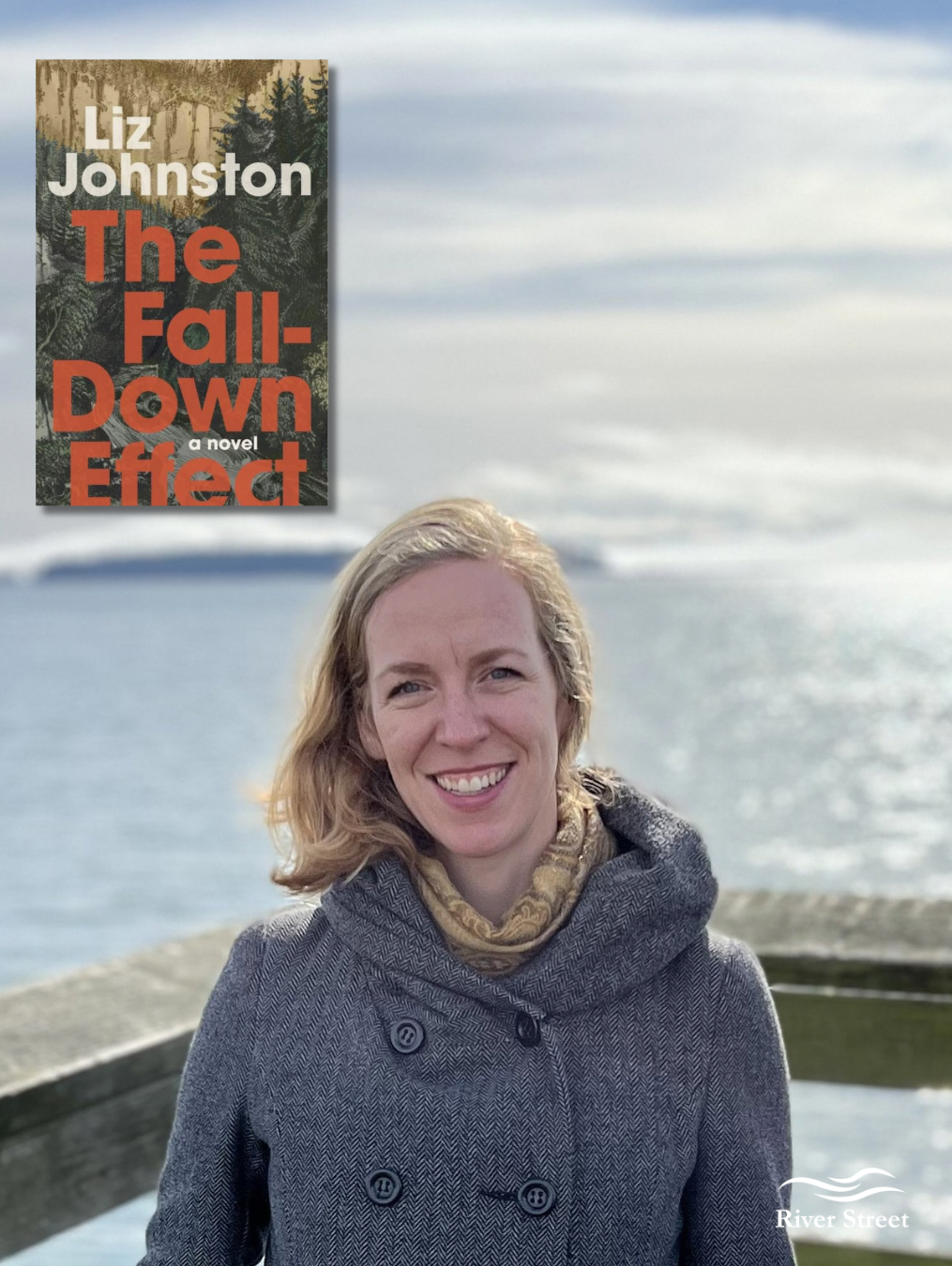
Exploring protest, climate change, and fractured family relationships, Liz Johnston’s eagerly anticipated debut novel, The Fall-Down Effect, asks what we really owe people in our lives when we are fighting for a greater cause.
As a child in the late 1980s, Fern is the wild heart of her tree-hugging family—quick-tempered and yearning to spend every minute in the woods of the small Pacific Northwest logging town where they live. She is also most like her environmental activist mother, Lynn, who chafes against the demands of motherhood and yearns for the protests of her youth. As tensions escalate, Lynn leaves her partner, Tom, and their three children, telling herself she will devote her life more fully to fighting for the earth.
At nineteen, Fern commits her own radical act of protest, which authorities label ecoterrorism. When Fern goes underground, her parents and siblings—responsible grad student Sylvia and budding artist River—struggle to make sense of her actions while also trying to cover up her absence. Fern’s secret proves impossible to keep, and when she becomes a wanted woman, the rest of the family trades blame. Years later, when Lynn takes shelter from a forest fire in the home she left so many years before, the family is forced to confront their regrets during a fraught, baggage-filled reunion.
LIZ JOHNSTON grew up in Revelstoke, B.C., and now lives and writes in Toronto. Her essays and short stories have appeared in Poets & Writers, The Fiddlehead, The Humber Literary Review, Grain, The Antigonish Review, and The Cardiff Review. Johnston is an editor of Brick, A Literary Journal. The Fall-Down Effect is her debut novel.