

BLOG

Review of Guy Elston’s The Character Actor Convention by Callista Markotich
Let us accept the crowd-fostered confusion of person. Let us precariously enjoy the close-call near-cliché which hugs us with homely familiarity: are we nearly there yet? Let us reconsider the title: The Character Actor Convention. Convention – is this the only Convention we may find? Or not?
Let imagination Uber you there.
Say you’re this Convention’s keynote. You’ll be in the Grand Ballroom looking out at the attendees. You’d better be at the top of your game, addressing the wild, earnest characters there assembled. There’s room for insecurity – there’s this, from the actors:
We applaud, but it could be an act.
Here in the title poem, the characters are slippery, we and they blend, and there’s that guy, yes, him and one startling you, and the imitable, inimitable I, at first, casual and in charge:
at the fin, I pocket my lanyard, picture you,
front centre on a billboard, sigh performatively
while fading to black
and then, poof! self-extracted from the speaker’s function, bringing no closure to this meet.
I had a final line — I forget.
The convention closes, as ever, on a question:
Are we nearly them yet?
Let us accept the crowd-fostered confusion of person. Let us precariously enjoy the close-call near-cliché which hugs us with homely familiarity: are we nearly there yet? Let us reconsider the title: The Character Actor Convention. Convention – is this the only Convention we may find? Or not?
For Guy Elston employs conventions. For example, well-chosen direction and flow of some poems come through the canal of an epigraph; an epigraph chosen to introduce, inspire, illuminate and add authority. Guy Elston does not turn his back on this convention, But, a poet of invention, humour and courage, he upheaves the convention early and airily and as readily as is fair.
For example, here is the epigraph, from Wikipedia, that introduces The Great Sheep Panic of 1888
…when tens of thousands of sheep fled from various fields across some 200 square miles of Oxfordshire.
Immediately, in the first line, the author creates a segue:
It’s that word panic
I take offense to.
And he’s off! In this poem he creates a nostalgic monologue by a survivor (sheep) who waxes poetic on the panic, which is really much grander thing: a revolt, its opening complete with a small selection of vernacular expressions which (irritatingly) trivialize such heroic purpose:
Are you feeling Ok?
Do you need a snack?
Here are figureheads,
…big horns suited our purpose,
but Benny wasn’t the real brains, or brawn;
martyred leaders,
Ruby, with her wolf -sharp hooves,
with her rabbit pellet eyes … leading the herd;
and true believers.
…and footrot Leon,
he believed more than anyone.
Here are the tragic remainders, reminders, regrets,
Thing is, it’s not just the fence,
the dogs, the whistles, the shearing,
and a sadness, a sense of futility.
I know she had a final epiphany.
She just never told us what it was.
His epigraph ably steers us, unsuspecting, from panic to mock epic, with sympathy for the sheep.
At times Poet Guy Elson skydives into allusion, a convention, surely — sometimes into deeply respectable and cherished pieces of literature. Twice the dramatic titles of Robert Browning are launchpads for gypsy titles which roam the poems into simpler? terrain. From the beseeching oration in which The Bishop Orders His Tomb, we hear in the hyperbolic asks of the Bishop of Saint Praxed only the faintest echo as The Stick Insect Orders His Tomb. We hear the Bishop pleading with nephews—sons mine; my boys, he calls them, while the straight-speaking stick insect addresses “kids” and is not the least prescriptive in his wants. And, though the Bishop seeks motifs and materials of epic grandeur, deeply desiring to better and best a rival bishop, a cool inversion awaits us, if we reduce his wants to this:
Put me where I may look at him! Here is the Bishop, active and vengeful.
For Elston’s Stick Insect ultimately asks this:
Bury me somewhere,
anywhere, I might be sensed. Here is the Stick Insect, passively existential.
But, finally, Stick Insect, too, lays one kind of unkind common denominator in which he too seeks a certain satisfaction:
One vanity.
Let me stick in one giant’s maw.
Too, Guy’s title His Last Cigarette has an auntie in a high place, on a cold-hearted Duke’s wall. The title My Last Duchess by Robert Browning is evoked in a swish; “the curtains I have drawn for you” open in this poem too, as Cigarette confesses his yearns, hopes and dreams. The “he” of this poem has evidently decreed it: My last cigarette. Pity the Duchess. Pity the cigarette, their shared mortal question:
Why stamp me out, so cinematic?
With poetic aplomb and hocus-pocus, the author is capable of igniting that conventional sentinel of poetic response, affect. In Produce, the speaker of the poem, a pumpkin, addresses his fame-seeking father, directly:
Dear Father.
Poor Father.
The poem is sad. It is full of entreaty. In spite of greedy futility of parental desire for fame, a selfishly motivated kind of love, akin to the phenomena of Svengalian control, it sorrows for a flawed and failed relationship. The setting, a necrotic autumn fair, is by itself is a symbol of fleeting glory and dying beauty. There is pathos:
Poor father.
Couldn’t you ever see,
just once, the future?
Can we agree that thes emotions are not unique to the pumpkin? Can we not think of cases where this very pain is not pumpkin pain? Rolling past the pumpkin personification, we can imagine a human sorrow, a child’s distress, and the pumpkin speaker helps us do so, when we consider that, heartrendingly, his pain is not merely for himself, but for the misguide sacrifices of his father:
(you)…wrapped me at night.
Fed your life into mine.
Poor father.
That’s Guy Elson’s offering.
The same thing happens in The Whale. We’re at the portal of the affective domain with the first line:
I never really knew my dad.
And then, the diction of the poem passes us from the ready-at-hand anthromorphism into a sense of all-too-human dejection and helplessness. There is the steady flow of futility in the poem, as the whale mourns his opaque genesis. Who wouldn’t ?
God provided a huge fish.
God’s casual creative wave. How dismissive.
Worse than silent seas, passing ships, no echo-song.
Then, it’s bound to pluck the heartstrings of a poet, that a poem saved Jonah in the belly of the whale!. Don’t we hope that’s true? A light shines! We think about this. We think about how scripture is poetic, and the whale and all, are scriptural. And besides, there a life-line for us to grab here:
No-one’s big enough to swallow poetry.
We can feel emotional about that.
Joan of Arc’s appearance in The Stake, which initiates the collection, does it too, for me, at least. My heart has always been warmed by Joan. She is a hero, a feminine character breaking the mould, already sung, not only in hagiographic literature, but by other poets, and Guy Eston gives her a laugh at the end of the first poem. I find that moving.
Oh, I’ll burn, Joan laughs.
I do every time.
And I feel edified that she is in charge:
Your move.
I really like that.
When Joan appears again, in For a Good Time (this may be idiosyncratic), I respond. I enjoy reading her name again in this collection, and that a reverse Joan of Arc can be envisioned:
Stop getting burnt.
The treatment of my favourite martyr in The Character Actor Convention touches me, in that ineffable way that poetry can, and must.
There are other examples. In No More Worlds, Guy Elston uses a homely geography to create an ownership. Personally, I “see” that cement square on Queen and Bathhurst in my mind’s eye. I almost see Golden Alex, or someone akin. Does the poet know how affirming that is? Surely.
You will leave this convention with plenty of swag!
There are sonic mementos: sink-eyed, days-crazed; cicada backtracked sticky,
and cameo images that turn mnemonic; wolf in a tree, prick eared, wet-eyed.
There are catchy, keeper turns of phrase: If why is not the question, neither’s how
and
adjectives are the canned laughter of language
and unique juxtapositions: wolf-sharp hooves/rabbit pellet eyes …
Unpack that bag and array the curios along the worktable and try them as titles to see if they wouldn’t jettison us into marvel and fantasmagoria. In contrast, Guy Elson’s style is to title his poems straight; poems exactly about what the titles suggests. But if his title does not promise an extraordinary content: (Sunday Drive, Automatic Feeder,) the legerdemain begins. The Work is suddenly about mushrooms. Their work. Other poems which have more exotic titles, such as Halloween Training for Horses and Dead Pheasant at Casa de Montejo tidily stay precisely within the realm of what the title provocatively suggests.
Examine Sunday Drive. The title smacks of Americana. In the first lines we are treated to Pepsi and confronted with the consumer image of the strip mall. See the ad in your mind’s eye? A two -tone Chevrolet practically swings into being; there’s a fun-loving frivolity to the exclamation marks employed in the poem, Sunday Drive! But here the drivers are lab rats, albeit, the scientists learned joy from training them. That’s how Guy Elston takes us in!
Blow a kiss. The poem ends, nevertheless, with a rare explicit tug on our human conscience:
….Race the raised expressway
Separating us from our indifference.
In Automatic Feeder, the title again unveils the subject. It is truly just an automatic feeder. But in the opening line it is the speaker of the poem who addresses the soulless machine:
I’d spend every moment of my life
below you mouth open , hoping, gaping
After savouring the musicality of open, hoping, note the stance of ambiguous reliance on the purveyor of nutrition. There is mourning for active food-procurement, the adventure and possibility of surprise and reward:
so this is how it ends, my prowl, my sleuth.
and the poem closes with a juxtaposition of bravado and capitulation:
….I am the ship’s cat
the captain is going down with, singing hymns
or purring at plastic.
Suppose we’re not alone in the room, reading this book. This happens: an eyebrow rise /a smile /a chuckle /a belly laugh. Husband, wife, roomie, “other” says: What? And we can’t express it simply – we say: You have to read this poem!
The poem H20, for instance, initiates hilariety by becoming, immediately, an address to O by H. and beginning with the query:
O, were you really worth
two of me?
Humour is sustained by the poet’s loyalty to the scientific concepts of H and O, and their elemental marriage in H2O, in which the H recalls the partners at times together:
drip drip
plonk
but, jibing, remembering O’s insults and H’s own retorts:
A fork in a world of soup
you called me. A dick
in a world of dicks
….
air headed
puffed up
grandiose
H recalls the cosmic:
For a spell the planet turned
to our yearly release
but H sees O finally in a dubious role on earth:
Last I heard
you were dosing up wildfires
Yet, H anchors his address with a nostalgic touch of sentiment:
But O,
when we were fresh,
when we flowed…
I Swear is a another very funny poem which ….. allow me: You have to read this poem!
Three Star Resort determinedly offers bathetically humorous images, painting a slightly-off vacation venue, tongue in cheek, its diction suggesting the not-quite-OK stay (note brackets):
(a friend of a friend checks themselves out).
It is a resort of last resort, exercising the ambiguity and reality that attend the choice:
How lucky we are to know how lucky we are.
Would we stay again?
We’d have no choice.
Funny, not funny, funny.
Finally, from the ultimate poem To Whoever is Writing Me, this luscious line:
You are confused.
Guy Elston, you may mean me. Yes, I have been confused, often, deliciously, provocatively so. I feel my right brain poised to make meaning and settle appreciatively in its director’s chair, while my left brain plays jacks in the sand with the kids. I could quote The Whale.
That’s my problem.
Recently, somewhere very accessible – maybe on Facebook – I read this statement: “The things I enjoy reading most are the ones that make me think, sometimes a bit uncomfortably”. Whether or not I’m a full yea on that, I can relax. No need for discomfort; in his poem The Whale, generous Guy Elston gives us cover:
No-one’s big enough to swallow poetry.
If that’s not reassuring enough, there’s an assertion in Dead Pheasant at Casa de Montejo that secures us comfortably within the norm:
…the only universal human word
is huh?
Note should be taken though, it is the dead hare who gives this assurance.
—reviewed by Callista Markotich
Callista Markotich has enjoyed a life-long career as a teacher, principal and Superintendent of Education in Eastern Ontario. Her poems appear in numerous Canadian reviews and quarterlies from The Antigonish Review through Vallum and in several American and British magazines and journals. Her poetry has received first and second place awards and a placement in the League of Canadian Poets Poem in Your Pocket campaign. It has been short-listed and Honorably Mentioned in several Canadian contests and nominated for a Pushcart Prize and the National Magazine Awards. Her suite, Edward, was a finalist in the 2023 Gwendolyn MacEwen Poetry Award and the 2024 Toad Hall Chapbook Contest, with The Poets Corner. She is a contributing editor for Arc Poetry. Callista’s first collection, Wrap in a Big White Towel (2024) was published by Frontenac House. Callista lives gratefully on the banks of Lake Ontario, traditional territory of the Anishinaabe and Haudenosaunee nation, in Kingston Ontario, with her husband Don of fifty-nine years.
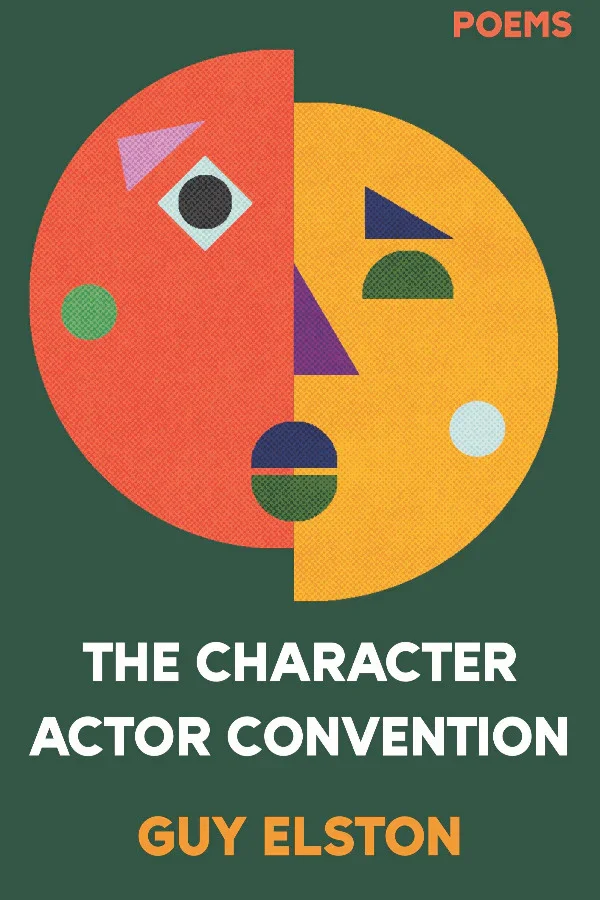
The Character Actor Convention by Guy Elston, Gordon Hill Press/The Porqupine’s Quill, 2025.

Excerpt from NMLCT by Paul Vermeersch
Poetry that explores our “post-truth” society, NMLCT holds up a mirror not only to nature, but also to its unnatural distortions and facsimiles. Imagine The Matrix retold by the reanimated cyborg bodies of the Brothers Grimm.
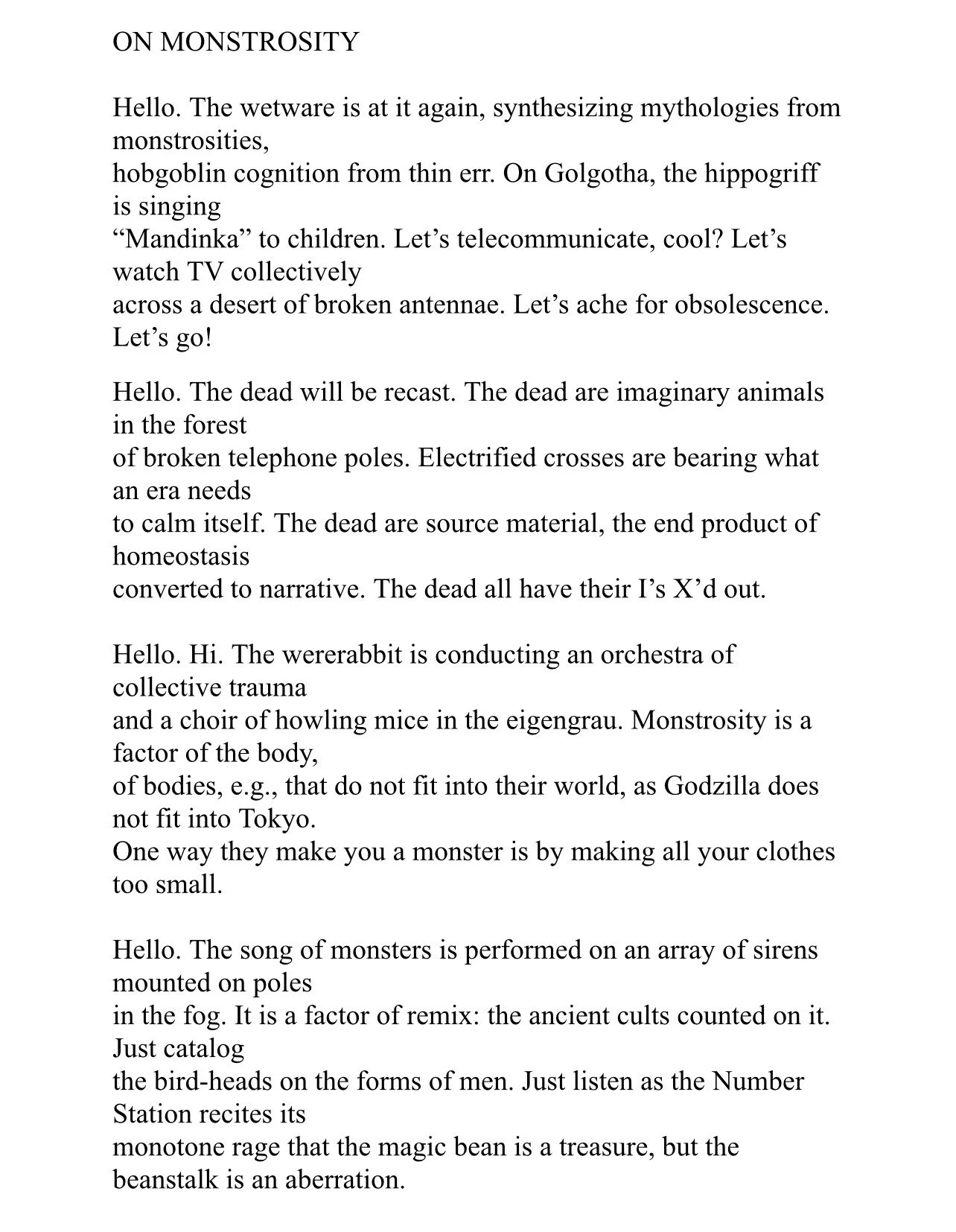
Excerpt from NMLCT by Paul Vermeersch. Published by ECW Press. Copyright Paul Vermeersch. Reprinted with permission.
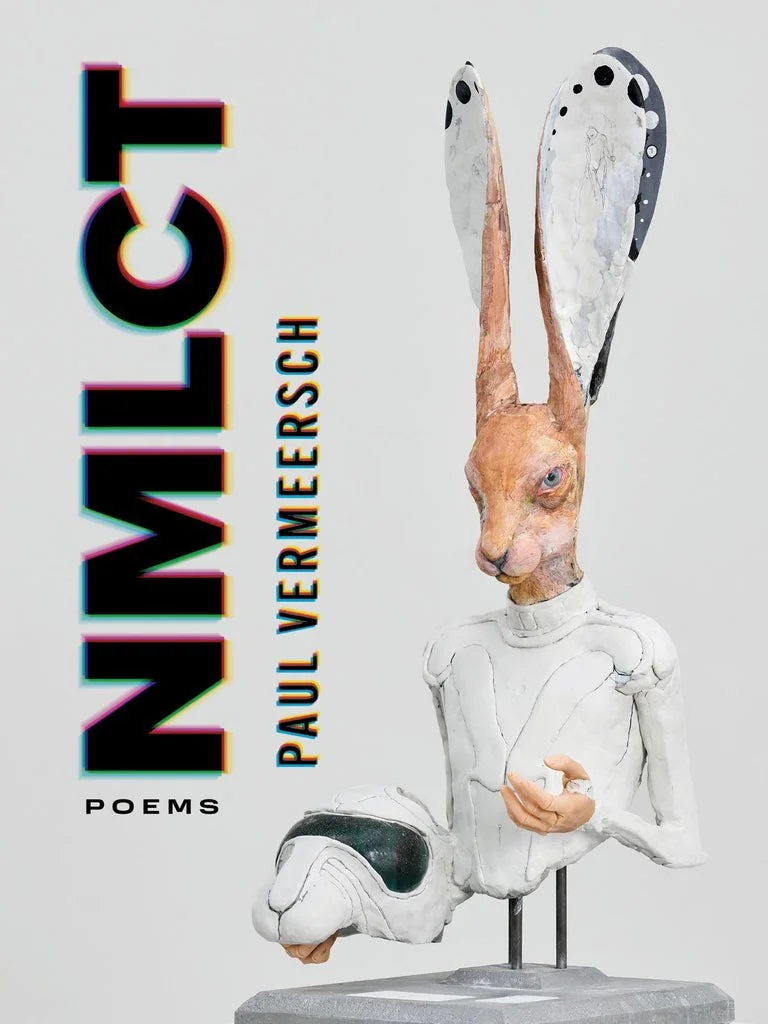
About NMLCT:
Poetry that explores our “post-truth” society, NMLCT holds up a mirror not only to nature, but also to its unnatural distortions and facsimiles. Imagine The Matrix retold by the reanimated cyborg bodies of the Brothers Grimm.
“Paul Vermeersch has become more daring and emphatic with every poetry collection, and this book is a blistering mourner’s lament: audacious, brutal, compassionate, and darkly ecstatic. ‘What on earth,’ he asks, ‘has happened here, and when? Who is the astronaut and who is the ape?’” — Stuart Ross, author of The Book of Grief and Hamburgers and The Sky Is a Sky in the Sky
Fables and fairy tales collide with virtual reality, artificial intelligence, and monstrous myths in a world where no one knows what to believe. In his eighth book of poems, Paul Vermeersch responds to the increasing difficulty of knowing what is real and what isn’t, what is our genuine experience and what is constructed for us by The Algorithm. In a “post-truth” society rife with simulations, misinformation, and computer-generated hallucinations, these poems explore the relationship between the synthetic and the authentic as they raise hope for the possibility of escape from MCHNCT (Machine City) to NMLCT (Animal City), where the promise of “real life” still exists.
All precisely 16 lines long — identically formed as though mass-produced — these poems are themselves artificial creations, products of the imagination, sometimes disorienting but always vivid. In NMLCT, Vermeersch gives us his answer to an existence in thrall to the artificial. But it also foretells a different future, one where the air and the grass and the trees, and all the life they engender, might always be genuine and sensed and safe.
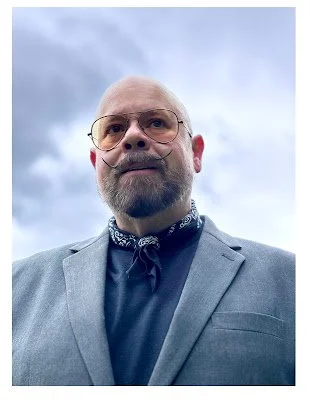
Photo of Paul Vermeersch by Bianca Spence
Paul Vermeersch is a poet, multimedia artist, and literary editor. His last book of poetry was Shared Universe: New and Selected Poems 1995–2020. A professor of creative writing and publishing at Sheridan College, he also edits his own imprint, Buckrider Books, for Wolsak & Wynn Publishers. He lives in Toronto, ON.

A Workshop Junkie Comes Clean
The last time I attended a writing workshop was in 2014. It was the Tone + Text opera workshop in Vadstena, Sweden at the Vadstena Akademien, a school for opera artists. I was there as a librettist. This was part two of the workshop, which lasted four days, culminating in a showcase of scenes written by librettists who had been paired with composers at part one, also a 4-day affair that took place the previous year.
By: Steven Mayoff
The last time I attended a writing workshop was in 2014. It was the Tone + Text opera workshop in Vadstena, Sweden at the Vadstena Akademien, a school for opera artists. I was there as a librettist. This was part two of the workshop, which lasted four days, culminating in a showcase of scenes written by librettists who had been paired with composers at part one, also a 4-day affair that took place the previous year.
Prior to Tone + Text, I had been attending writing workshops on a fairly regular basis since 2003, at least one, and more often two, a year. With only a couple of exceptions, the majority of these were not merely one-day sessions, but rather fairly intensive week-long workshops. I would describe these as sleepaway camps for writers.
Since those last workshop in Sweden, I have often wondered about this decade of attending writing workshops. I suppose I could have taken a creative writing course at some university, but I doubt it would have been the same. I was in the fortunate position of being able to devote much of my time to writing. The workshops were brief respites from the solitude of my efforts. I was also able to take a variety of workshops that addressed my interest in different forms of writing.
But somewhere along the way, the brief respites became necessary stopgaps.
In 2000, I was still living in Toronto. A playwright friend had suggested that we adapt one of my short stories into a radio play and use it to apply to a radio drama workshop at the CBC. We were accepted into the workshop and developed our rough script into a 10-minute radio play, which aired on CBC the following year, after I had moved to Prince Edward Island. We then wrote a second 10-minute radio play, which aired in 2002. We also attended a second radio drama workshop, this one involving collaborations with composers in Banff, Alberta in 2003. This produced a third 10-minute play, airing that same year.
But the workshop that got me hooked and really started me on my decade-long jag was the Maritime Writing Workshop in 2004 at the University of New Brunswick campus in Fredericton. I didn’t know what to expect and I was nervous. Of the different categories of workshops – poetry, art criticism and fiction – I chose the latter. Along with my application, I had to submit a story that I wanted to work on. I brought a story that I had been sending out to various magazines without much luck. Although in my late 40s, I was still something of an emerging writer with a slowly growing number of literary journal publications under my belt. Perhaps this workshop would illuminate the hidden flaws in this particular story and possibly suggest some helpful tips for getting it into print.
On the first day, after we had registered and been shown to our rooms in the on-campus residence, the writers met with their respective instructors and fellow group members in a brief orientation session that would be followed by an informal meet-and-greet. There were ten of us in total. We sat in a circle, regarding each other warily, as our instructor, the short story writer Richard Cumyn, gamely tried to get us to talk about ourselves. And while everybody seemed nice enough, no shyer or bolder than myself, I started to have doubts about how beneficial this week would be for me.
My fears were quickly dispelled after we broke out of our groups to wander and mingle with each other. I found myself in casual conversation with Richard. He immediately wanted to talk about my story. To my surprise he had a couple of suggestions to improve it. What struck me was the passion he had for writing. It didn’t surprise me to find out he had been a high school teacher. He reminded me of the few good ones I’d had back in the day, the kind that made learning an adventure. Late 40s or not, I suddenly felt the fire in my belly that can shed years off anyone’s psyche. That night in my room I found myself mulling over his advice and happily concocted possible new scenes to write. Things were happening faster than I had expected and I felt pleased.
Even more pleasing was how quickly our group gelled, evident from the first proper session together. A genuine camaraderie seemed to be emerging, not to mention mutual respect for each other’s work. The spirit of constructive criticism was apparent in our assessment of each other’s stories. Unfettered by the fear of hurting a fellow writer’s feelings we always spoke plainly, pointing out flaws, making suggestions, but always with the intention of supporting whoever was in the hot seat.
The suggestions that Richard had made about my story on that first day resulted in me writing two new scenes. I finished first drafts in time for the morning when it was my turn to be in the hot seat. After the group had assessed my story, I read the new scenes to them. I didn’t have that much experience reading to an audience, yet there I was reading these scenes aloud to the group, giving them nuance and point of view, eliciting laughter from my audience. From that moment something in me changed. To say I fell hard for the workshop experience would be a vast understatement when you consider that I went to another week-long workshop only a month later.
That one was with Tapestry New Opera Works in Toronto. The Composer/Librettist Laboratory, or the Lib/Lab for short, was a yearly event. My playwright friend, with whom I’d written the radio plays, had done it, so I thought I’d give it a shot and applied. Although I consider myself primarily a fiction writer, I also write poetry and song lyrics. I had collaborated on a sung-through modernized adaptation of The Picture of Dorian Gray, with a long-time composing partner, so I did have some experience as a librettist, although that was not a requirement to get in the workshop.
The Lib/Lab had four librettists, four composers, two accompanists on piano and six opera-trained singers (three male, three female). There were two instructors, one for the composers and one for the librettists. Librettists and composers were paired together, given a theme, and had to write short scenes, which would then be performed by the singers. It was essentially a series of tag-team matches as, throughout the week, each librettist got to write with each composer and the scenes were performed at the end of each day. There was a certain amount of overlapping, which was nerve-wracking, especially for the composers, but also great fun.
In an attempt to gain some insight as to what drew me to writing workshops, I will look at the years I attended all of the Great Blue Heron Writing Workshops, which took place for one week every summer from 2005 to 2010 at the St Francis Xavier University campus in Antigonish, Nova Scotia. It was there, maybe not so coincidentally, that I first heard the term “workshop junkie” although not pertaining to me specifically. Nevertheless, the term lodged itself in my consciousness and I often wondered if that was what I had become. I still took my interest in going to workshops as a positive sign of my commitment to being a writer and an integral part of my development. I considered my attendance to be part of my ongoing education. There were many things I liked about writing workshops in general and the Great Blue Heron Writing Workshops in particular.
I liked the camaraderie, being with people who were there because of their interest in writing. Some participants, like myself, had published and worked at their writing with serious intent, while others had never written anything before but wanted to improve their ability in expressing themselves on paper or word processor screen. There were many people from other professions, mostly doctors, although once there was a young minister with whom I had some interesting conversations. I remember a psychiatrist who read us an amazing poem about her conflicted feelings when having to commit a patient to an institution.
No matter what brought any of my fellow participants there or their degree of writing experience, I truly felt we were all on a level playing field in wanting to become better writers. While those of us who may have been more accomplished could offer advice to others, I also felt that the so-called neophytes had something to offer as well: an almost innocent sense of wonder that served to remind everyone, or me at any rate, that passion and curiosity, rather than ambition, were at the heart of writing well.
I also liked the instructors and I had some pretty good ones, with whom I felt privileged to study under. Anne Simpson for poetry was one of the GBHWW’s organizers and had won the Griffin Poetry Prize for her collection Loop. Sheldon Currie for screenwriting, even though he was mainly a fiction writer, was best known for his novel The Glace Bay Miner’s Museum, which had been adapted into the film Margaret’s Museum starring Helena Bonham Carter. I also took poetry with Anne Compton, winner of the Governor General’s Award for her collection, Procession. There was Alistair MacLeod, the well-respected writer of short fiction, whose novel No Great Mischief won the Dublin Literary Award. I took fiction workshops with him in 2007 and 2009. In Great Blue Heron’s final year of 2010, I took playwriting with actor, director and playwright Daniel MacIvor, who had won the Siminovitch Prize among many other theatre awards.
It was in that final year that, with teasing affection, I was presented with the Great Blue Heron Writing Workshop’s Extreme Participant Award for returning year after year. The award was a slim folder with brochures from every year of the workshop’s existence. I was touched, even proud, and yet, somewhere in the back of my mind, I questioned what it really said about me. Still, even if there was a silent rebuke in the honour, I accepted it with good humour and what I considered to be a healthy dose of humility.
Looking back, one thing that kept me returning to Great Blue Heron was the noticeable (by me at least) change in my personality. In general, I am a textbook example of an introvert. In groups of two or more I tend to listen rather than speak, unless I have something very specific to contribute. But at the Great Blue Heron, I found myself becoming more outgoing and social. It was a change of personality that I welcomed in myself. Possibly because of the novelty of it. Or possibly, I felt I had found my tribe.
But the main lure was the opportunity to bring with me a work-in-progress and, by the end of the week, be able to return home, knowing what I had to do to take the story, poem or play to the next level. Whatever other pros or cons there were in attending all those workshops, that was what mattered most to me. Being able to push ahead and improve whatever I was working on. It was all part of the process of developing myself as a writer, no matter what anyone else thought.
And I soon became aware of what some thought and the perceived drawbacks of going to workshops for so many years. My first clue came during a week-long workshop in Prince Edward Island.
During some free time away from the group, my instructor and I were chatting about the workshop and the dynamics of our group. My instructor then said she was surprised to have me in the group, that I seemed more like a colleague than a student. I wasn’t sure how to take this. At first it felt like a compliment. I sometimes found that certain instructors treated me seriously as a writer. This was yet another reason I often returned to the workshop environment. While I had some writer friends, it was in workshops that I often felt genuinely recognized as a writer.
I suppose I used workshops as a substitute for not having the kind of recognition I craved after I started getting published.
But when I thought more about my instructor’s comment, how she felt more inclined to treat me like a peer, it seemed that maybe I had outgrown writing workshops but didn’t know how to let go. It was strange to think of my instructor’s comment and feel so empowered yet kind of humiliated at the same time, although I’m sure it was not her intention to make me feel that way.
The second clue was from a much more straightforward comment, this time from an ex-instructor with whom I had stayed in touch for a number of years after our workshop experience together. My second book, a novel, had just come out. My ex-instructor also had a new book coming out and one of us had suggested a straight swap. I’m not sure how workshops came up. Possibly I had mentioned doing the opera workshop in Sweden.
My ex-instructor’s comment left no room for interpretation. He advised me flat out to stop going to workshops because, with two books out now, workshops had become a liability for me. If others in the writing and publishing communities saw that I was still going to workshops it would undermine my credibility. No one would take me seriously as a writer, even though I was getting my work published.
I don’t mind admitting that such a blunt piece of advice was a small blow to my self-confidence, but only because I knew beyond any doubt that what he was saying was true. I was disappointed in myself for not seeing it on my own. Or more to the point, for seeing it and choosing to ignore it.
This gave rise to a different backlash within myself: a need to defend my choices. All I wanted was to facilitate my development as a writer. So what if I did it by going to workshops? Why did I have to knuckle under to the public perception others might have had of me? What’s wrong with experienced writers going to workshops to get a fresh perspective on their ingrained notions of the craft? Why couldn’t I continue going to workshops just as long as it was still working for me?
But then I had to ask myself if workshops were indeed still working for me.
If I was being honest with myself, I had to recognize that, at times, I felt as if I was covering old territory in workshop sessions. I knew I was at a point where this phase of my writing life, the workshop phase, was over. I suppose I was merely embarrassed that I had to be given gentle and maybe not-so-gentle reminders by my ex-mentors.
Yet, I have no regrets.
One of the best things I learned in workshops that served me well later on, was how to critique another writer’s work in group sessions. It was not easy to do at first, because you want to say something intelligent and not come off sounding like an idiot in front of everyone. But on the other hand, it did become easier because it’s always easier to look objectively at someone else’s work rather than your own. And when I started to consider the advice I gave other writers about their work, and then asked myself whether I was taking my own advice, I found the key to what is the most important technique a writer needs to learn: self-editing. Going back to reread one’s own work as if it was somebody else’s. A bit of playacting to fool oneself into a semblance of objectivity.
I met many interesting people during my workshopping years. I even made a few friends who I still stay in touch with to this day. And I won’t lie, I sometimes miss the excitement of arriving on the first day and the relief of going home on the last day. Workshops started off as a nice break from my day-to-day struggles with procrastination and triumphs of productivity. Then they became something else, a substitute for something I lacked: that sense of coming to terms with my journey. Not just the slowness of it, but the big fat question mark that always seemed to loom at the end of the road. Workshops started off as stepping stones toward the writing career that I thought was my due. Then they became bubbles of pretence, a kind of rehearsal for some expected arrival.
While I still justify my years of writing workshops as an ongoing education, it’s been all these years away from them that have become the true learning experience. A change of attitude: the slow transition from coveting a writing career that might or might not be in the cards for me to recognizing, accepting and valuing the writing life that I have been carving out for myself all this time. It still includes struggles and self-doubt and periods when packing it all in feels all too tempting. I guess the only reason I haven’t given it up yet is the same as when I relax with a good book or beaver away at a story. I just want to know what happens next.

Author Steven Mayoff.
About Steven Mayoff:
Steven Mayoff (he/him) was born and raised in Montreal. His fiction and poetry have appeared in literary journals across Canada, the U.S. and abroad. He is the author of the story collection Fatted Calf Blues, winner of the 2010 PEI Book Award for Fiction; the novel Our Lady of Steerage; and two books of poetry Leonard’s Flat and Swinging Between Water and Stone. His acclaimed novel, The Island Gospel According to Samson Grief, was released by Radiant Press in 2023. Steven lives in Foxley River, PEI.